Sensofusion plans IPO

Sensofusion Oyj Plans an Initial Public Offering and Listing on the Regulated Market of Nasdaq Helsinki

Sensofusion Oyj (“Sensofusion” or the “Company”) is a Finnish drone detection and mitigation company that designs, develops, and sells software-driven solutions with the goal of protecting people from autonomous weapons. The Company operates through a full detect-and-mitigate ecosystem consisting of four stages: target detection using multiple detection technologies, combining detection data into a single operational picture, presenting the operational picture to operators and autonomous systems, and mitigating threats using multiple methods.

The Company is planning an initial public offering and share sale and the listing of its shares on the regulated market of Nasdaq Helsinki Ltd (“Nasdaq Helsinki”) (the “Listing”). The planned initial public offering and share sale are expected to consist of the offering of new shares of the Company (“New Shares”) for subscription in a share issue (the “Share Issue”). In addition, Haave Oy (the “Main Shareholder”) and certain other existing shareholders of the Company are expected to offer existing shares of the Company for purchase (together with the Share Issue, the “Offering”).

Sensofusion aims to preliminarily raise approximately EUR 300 million in gross proceeds through the Share Issue by offering New Shares for subscription. Sensofusion intends to use the proceeds from the Share Issue to fund its growth strategy, including: (i) accelerated research and development investments to develop its own software, detection technologies, mitigation technologies, artificial intelligence capabilities, and satellite capabilities, (ii) expanding production and testing capacity in relevant market areas, and (iii) further strengthening the Company’s balance sheet and financial headroom.

Mutual Pension Insurance Company Elo, Mutual Pension Insurance Company Ilmarinen, certain funds managed by OP Fund Management Company Ltd, and Mutual Pension Insurance Company Varma (together the “Anchor Investors”) have undertaken, subject to certain customary conditions, to subscribe for shares of the Company in the planned Offering for a total of approximately EUR 170 million, based on a pre-money valuation of the Company of no more than EUR 1,300 million.
Tuomas Rasila, Founder, CEO, Board Member, and Largest Shareholder, comments:

“Many wonder why take a company public when it could remain private. I want Sensofusion to grow larger than its founder. At the same time, I intend to continue as CEO even after the planned listing. Equally, I want more people to have the opportunity to join our mission to defend humanity against autonomous weapons. This company is not up for sale; it is being driven forward, together with our new owners.”

Timo Ahopelto, Chairman of the Board, comments:

"Sensofusion is a Finnish company that has spent ten years building technology against the threat arising from two megatrends—artificial intelligence and robotics. We protect people from autonomous weapons. The listing enables this work to be carried forward even faster.

The Anchor Investors have committed to subscribing for a total of approximately EUR 170 million in the offering. We are extremely pleased to work with these owners."

In the 2025 financial year, 87.2 percent of Sensofusion’s net sales came from the EMEA region\u003csup\u003e\[1\]\u003c/sup\u003e, 9.1 percent from North America, and 3.7 percent from the rest of the world. Sensofusion’s net sales are not materially tied to active conflicts, and for example, in 2025 only 7 percent of net sales came from Ukraine. In the 2025 financial year, net sales were strongly concentrated on defense and security authority customers, accounting for 98.5 percent of net sales, while civilian customers accounted for 1.5 percent.\u003csup\u003e\[2\]\u003c/sup\u003e

Key Strengths

Sensofusion’s management considers the following factors to be Sensofusion’s key strengths and competitive advantages:

  • strong position in a significantly growing market;
  • pioneer in drone detection and mitigation innovations;
  • direct customer relationships and vertically integrated business model;
  • battlefield-verified performance and continuous improvement cycle; and
  • strong financial profile and value creation model.

Strategy

Sensofusion’s mission is to defend humanity against autonomous weapons. The starting point of the Company’s strategy is the view that drones have permanently changed warfare, and that traditional defense systems alone are not sufficient to respond to the rapidly developing, cost-effective, and quantitatively growing drone threat. Sensofusion’s goal is to turn this dynamic to the defender’s advantage by developing drone detection and mitigation solutions that improve faster than the threat environment changes. In the management’s view, in a rapidly developing market, competitive advantage is created not only by the best current technology, but by the ability to convert capital, operational feedback, and technological expertise into new products and product improvements faster than competitors.

Sensofusion’s growth strategy is based on three key strategic priorities:

  1. expanding the integrated detect-to-mitigate product portfolio;
  2. growing independent defense capabilities through direct customer relationships; and
  3. disciplined and profitable business scaling.

The webcast will begin at 11:00 a.m. EEST:

EDIT: Sensofusion company presentation event on Thursday, October 1, 2026, at 6:00 p.m. EEST.

Interview with CEO Tuomas Rasila:
64 Likes

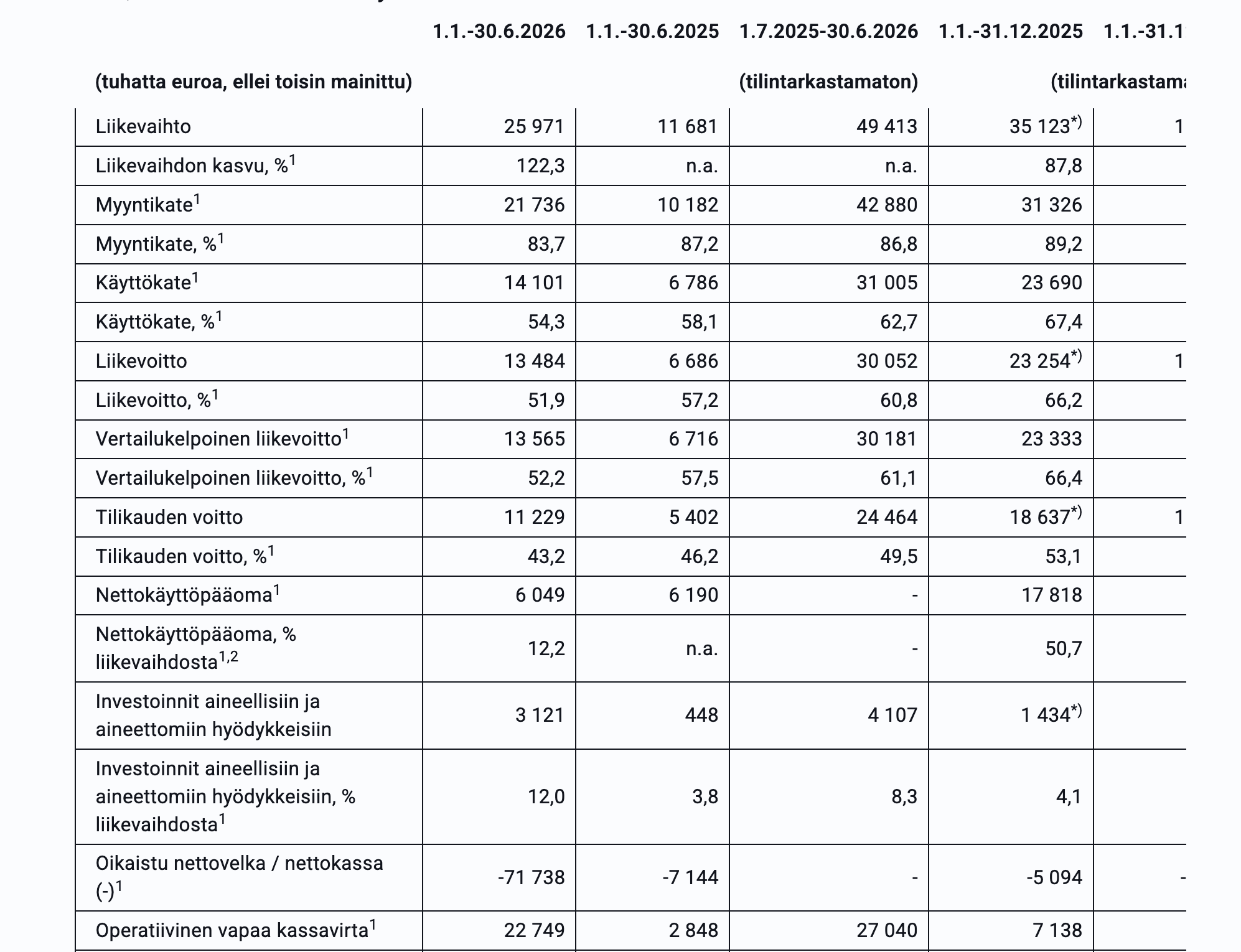
Very interesting company. An operating profit of EUR 30 million over the trailing 12 months and a staggering operating margin of 60.8% are fairy-tale figures for a company with EUR 49 million in revenue. That said, in this kind of drone manufacturing and counter-drone business, there are countless companies of all kinds (such as the sad Summa Defence), so that in itself does not yet mean a successful or good product.

The paragraph below is, in my opinion, the most essential regarding the counter-drone business.

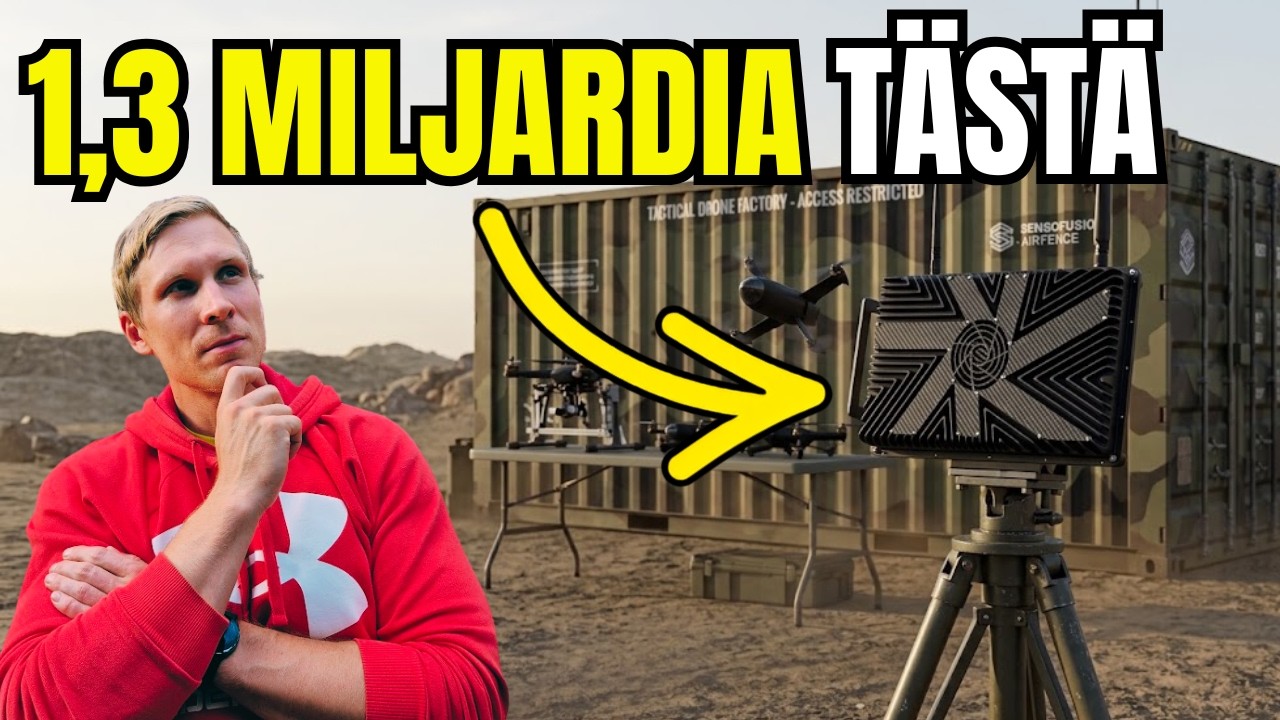
Hundreds of the Company’s Airfence 7 and Airfence Mini products are in operational use around the world. The Company’s products have proven their operational capability on battlefields. Based on customer feedback and field experience, Sensofusion is, in the Company management’s assessment, one of the only Western players whose products are in use in two conflict zones significant for counter-drone operations, namely Ukraine and the Middle East. In addition, a significant portion of the Company’s products have been sold to customers for developing peacetime defense capabilities.

What does that actually mean? Are the products in use at the front lines in Ukraine and/or for the protection of other important targets, or have they been placed in the protection of so-called secondary locations where they haven’t seen real action because the performance or price-to-quality ratio isn’t sufficient for hotter spots (though it can still be said that they are used in Ukraine and the Middle East)?

According to the website, Airfence is indeed a cool product, but for an investment decision, it would be important to hear unfiltered comments from end-users and gathered data on capability and its lifecycle in a real situation.

If anyone can provide answers to the questions below, I would gladly know more.

Where and how are the Airfence products used exactly?
How well do they work?
What do the end-users say about them?

A story can sell a lot, just as Nikola got far before things fell apart, but nothing weighs heavier in this case than the genuine, freely expressed opinions of Ukrainian end-users.

44 Likes

Since the company doesn’t report its order backlog, I was left wondering about the last 12 months – if H1/2026 revenue was 25.971 million, then H2/2025 was 49.413 - 25.971 = 23.442 million. Growth between the halves of the year is indeed nearly 11%, but only 11%. At that pace, annual growth will also remain around 20%, which doesn’t easily justify a valuation of 1.3 billion.

Another thought I have regarding the order backlog is the ultimate payer of these products and Ukraine’s share of the orders. If the war ends or EU countries (Germany) scale back their support, will the business run out of growth?

17 Likes

[quote="Osakepartio, post:3, topic:82660"]\nIf the war ends or EU countries (Germany) slow down with their support, will the business growth stop?\n[/quote]\n\nWars aren’t ending, and neither are drones. Word has it that Sensofusion’s solution is on the roof of Benjamin Netanyahu’s office providing protection, and there are surely countless similar needs out there.\n\nAn extremely interesting IPO, I don’t know if there will be ADR shares to trade in the US at some point, but if there are, demand is likely to be quite high.

10 Likes

That 1.3 billion valuation sounds pretty wild, though. How do others justify it to themselves?

11 Likes

Someone might compare this to Ondas’s valuation (USA), for instance, but a growing drone company that is already strongly profitable instead of perpetually floundering in an unprofitable growth phase? It certainly sparks interest, but the previously noted potential slowdown in growth makes me doubtful. A company like this definitely requires strong proof of products, partners, and business legitimacy, especially since Finnish investors likely still remember the mess with Summa.

However, it’s the kind of company that, under favorable conditions and if the valuation were even somewhat reasonable (I can’t evaluate that yet), could pull off a rare Kempower-style IPO.

4 Likes

ONDAS market cap is about 4.5 billion, heavily loss-making but growing fast

So 1.3 billion isn’t bad in today’s world.

4 Likes

Thank you for the good questions! We will pick questions from here for the Q&A session of our ITF event starting shortly.

Welcome to join us live: https://sensofusion.videosync.fi/itf-2026

A recording of the discussion will be available later at https://ipo.sensofusion.com

Mikko Hyppönen
Sensofusion Oyj

137 Likes

A very interesting IPO (Initial Public Offering) indeed!

I strongly feel that defense against drones is here to stay. Russia has itself announced that it aims to significantly increase drone production over the next few years. Therefore, even if the war in Ukraine were to end, ready-made defense systems will be needed to counter the threat.

Personally, I see Hyppönen as a very smart person, and the fact that he joined this company boosts my confidence immensely!

25 Likes

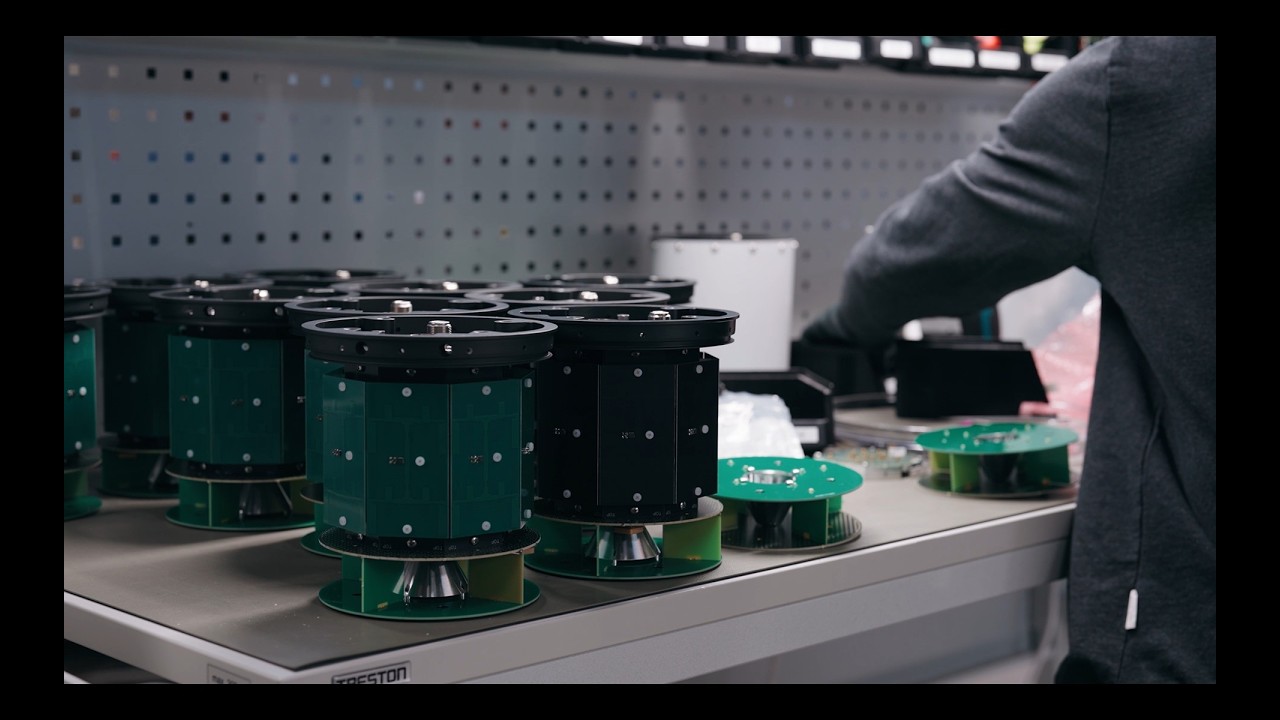
Let’s add a direct link to a YouTube video (approx. 6 min) picked from the IPO pages, where Mikko Hyppönen introduces Sensofusion’s technology and products on a factory tour:

18 Likes

Sensofusion’s company presentation event is next Thursday at 6:00 PM. A virtual factory tour is also coming up. :factory:

18 Likes

Can we expect the prospectus to include information on how much revenue the top 10 customers have generated? Based on a quick browse of current information, it’s impossible to say much of anything about customer concentration risk. The order backlog would naturally be of interest as well (or an outlook on it if it’s not published, i.e., how far ahead the company accepts orders or has visibility into future demand).

5 Likes

Good analysis, here is some more.

Did the revenue stall at 25M per half-year?
Is the reason a production capacity expansion issue, drying up of sales, or a bad product?
Is there a global market, are sales made to both parties in every conflict?
Or is only one party chosen in conflicts? Or is it only offered to “trusted” partners? Is Israel, the USA, or China a trusted partner?
What is the billing model if updates are made weekly? Is the product sold as hardware with a certain lifecycle or as a continuously billed service?
What has the order flow been per quarter, Q3/25->Q3/26?

5 Likes

Markus brings up familiar facts and thoughts about the company, e.g., Sensofusion’s revenue has grown by about 100 percent per year in recent years, the operating profit margin is over 60 percent, and the return on capital employed is in the triple digits. The company has also grown so far without external financing, and the founder-CEO still owns a stake of about 80 percent in it.

According to his estimate, the post-offering EV/EBIT would be around 35. He ponders how much of the peak profitability is based on a sustainable competitive advantage and how much on the exceptionally favorable market conditions in the defense sector, but if growth continues and margins hold up - the current valuation could quickly look more moderate.

https://x.com/ValueByMarkus/status/2102830547605008874


13 Likes

If this topic has already been covered somewhere, feel free to just link to it, post an article, or something similar. But to what extent is the intelligence data obtained from various systems usable with equipment from other suppliers? Let’s say, for example, that you want to shoot down approaching hostile drones using missiles, automatic anti-aircraft machine guns, drones (other than Sensofusion’s Interceptors), or similar assets that Sensofusion’s business doesn’t cover. They likely have their own radar at least for short-range detection, but still.

Similarly, one could imagine that if human soldiers start receiving AR-style smart visors in their helmets or something similar, how easily can Sensofusion’s situational awareness regarding drones be shared with them?

Is there, for example, experience of this from Ukraine or the Middle East, or has this been everyday practice for so long that it’s no longer relevant? Asking as someone who isn’t familiar with this subject beforehand.

3 Likes

HS Visio writes about Sensofusion and interviews CEO Tuomas Rasila. An interesting piece, though it is for subscribers only.

A few takeaways:

THE STOCK EXCHANGE LISTING is exceptional in many ways.

The company’s founder and CEO Tuomas Rasila owns approximately 82 percent of Sensofusion. If the listing proceeds as planned, the value of his stake could be estimated at around one billion euros.

Typically, in growth companies at this stage, businesses have had to raise a lot of capital from investors over the years, and with every funding round, the founders’ ownership stake has decreased.

Rasila financed the early-stage product development himself with the proceeds from his previous software companies, and external investors were only brought in once the company had already grown to be profitable. This is why he has an unusually large ownership stake in the company as it goes public.

SUCH strongly entrepreneur-led companies are quite rare on the Helsinki Stock Exchange. Rasila emphasizes that an entrepreneur’s relationship with their company is different from that of a hired CEO, and the listing does not change that.

However, Rasila wants to take his company public at an early stage because he is driven by the idea of building a company greater than himself with a 50-year time horizon.

“The stock exchange is the right place for Sensofusion to remain an independent company that is not sold to anyone and is not dependent on a single individual,” says Rasila.

“We have good momentum right now and plenty of room to grow. I don’t want to think that we would only list when there’s nothing left ahead. I think investors also deserve an investment target that still has a path ahead of it,” says Rasila.

Rasila wants to protect the company from making hasty operational decisions or selling off assets just to achieve short-term revenue forecasts provided to the stock exchange.

Therefore, Sensofusion does not intend to provide, for example, quantitative guidance on full-year revenue or profitability.

The list of Sensofusion’s product development projects seems breathtaking for a company with only about 130 employees. Is there a danger that resources are being spread too thin?

“In our field, the only sensible posture is to have at least a prototype underway for every method of detection and interference. If we had focused only on our first product, we would be at great risk in a military situation defined by rapid change,” Rasila comments.

The company is expanding its international production during the current year in Canada and the UK. At the Vantaa factory, production space is being multiplied with three new land acquisitions.

10 Likes

Here this listing is happening at a really good time for the company, the market is running hot and the sector is very interesting. Naturally, therefore, the company is priced ambitiously based on future expectations.

From an investor’s perspective, there are a few big questions you should think about and answer for yourself before investing:

Will the market remain “hot” and growing in the future? When the war in Ukraine eventually ends, will European governments have the interest and money to invest in these and other defense investments? Or will things be forgotten once the war ends. Of course, there are plenty of conflict hot spots elsewhere in the world so some market will always exist, but this investment is based on strong growth, not the current level of business.

The company is raising a large amount of new capital, will this capital be utilized at current, top-tier margins, or will the return on capital drop? In other words, will the new operations be made profitable with top returns?

Political risk. The defense industry is a sensitive sector and politics are volatile these days. Who uses whose products is a sensitive question and situations can change rapidly. In other words, will there be enough growth markets where the products are accepted both now and in the future?

Valuation. The company is priced according to high growth; for an investor to get a return, the company must grow significantly and profitably. Traditional safety margin thinking does not apply in this case, but rather the logic of startup investing fits this better.

An interesting company and industry in any case.

13 Likes

Let’s add one more thing to that list:

The pace and management of technological change. The technologies used by both the company and its competitors are developing rapidly, and a certain kind of continuous race is underway here. How is it ensured that the company does not stumble in the race.

6 Likes

It is certain that drones are not going away anywhere, regardless of who the operator is. I wouldn’t be surprised at all if in the future all critical parts of society were protected by some kind of drone defense/detection system. The list of places where protection is needed besides borders is really long! Airports, ports, hospitals, important factories, energy, etc. etc.!

6 Likes

Jussi Halmeenmäki’s analysis of Sensofusion’s IPO:

11 Likes