Below is the summary of Kevin Warsh’s speech following the FOMC meeting. The speech was still ongoing at the time of writing (July 29, 2026). This analysis is based on X (formerly Twitter) and other available sources, mixed with some personal thoughts.
The speech was in progress at the time of writing (during the Q&A) and was just concluding by the time this analysis was finished. It also includes real-time reactions on X during the address. Markets jumped at the start of the speech; rates were held steady (a 9-3 split, with three dissenters wanting a rate hike), and no clear hint was given regarding a September hike, which is typical of Warsh’s style.
Key messages from Warsh (based on the speech and some X reactions):
• Dovish reaction initially: No clear message of a September hike → short-term rates fell as markets priced in a lower probability of a rate hike.
• “Good family fight”: Warsh called the 9-3 vote a “good family fight.” He emphasized that the dissents do not represent the mood of the entire room. There was broad consensus in the discussions regarding the Fed’s ability to achieve price stability. This has been his recurring phrase: he wants open debate within the Fed without pre-arranged outcomes.
• Data dependence: “The problem with data dependence is the data and the dependence.” He emphasizes trends over individual numbers and does not want to create the impression that the Fed reacts to every single data point. This reinforces the shift away from the old “forward guidance” culture.
• Inflation: A clear stance here; no tolerance for a higher target. The Fed intends to deliver a 2% inflation goal. He rejected suggestions that the committee would be willing to ease. On X, this was interpreted, among other things, as hawkish (higher rates for longer).
• Markets and communication: Rates are higher than they were 42 days ago; the markets have made their own assessments. This information helps with the next decision (7–8 weeks from now). The Fed does not support any specific market move, but monitors them closely. “Watchful thinking, not watchful waiting,” i.e., active reflection rather than passive waiting.
• Press conferences: Warsh committed to holding press conferences through the end of the year. This is a small, forward guidance-type promise of transparency and accountability to households. He emphasized that he is more confident than ever in the Fed’s ability to deliver on its mandate.
• AI and productivity: Warsh responded directly to the impact of AI investments. He sees AI capex (machinery and software up 20% y/y) as real growth now (on the demand side), but in the long run, it will boost productivity and improve supply → not necessarily sustained inflationary pressures. This was interpreted by the market as a neutral or slightly positive signal for the tech/AI sector.
• Task forces: The Fed uses five task forces (communication, data, productivity, etc.), but the final decisions are made by the committee itself. External experts (e.g., Marc Andreessen) help but do not dictate the policy.
• General tone: “We are going to be judged by how we perform.” The focus is on performance, not speeches.
• Market reactions and X analysis: The speech was followed very closely in real-time on X. Markets rose as the speech began, fitting the “no clear signal of a September hike” expectations. Many analysts saw:
-
A hawkish pause or cautious line: No promises of cuts, inflation as the priority. No forward guidance → more volatility on data days, as markets don’t receive advance signals.
-
A shift in communication: Warsh is moving away from the old “Fed talks, markets react in advance” model. There is no intention to cause surprises, but the Fed is no longer trying to signal its next move in advance.
-
Some saw the message as a September hold (i.e., no hike in September), because the Fed wants to let the markets (especially regarding productivity) price themselves without Fed “interference.”
-
General mood: Warsh is not a “central casting” type of speaker (he lacks major charisma), but the content is clear and principled. He wants the Fed to focus on its core task (price stability) rather than bailing out the markets.
Broader context (what else is found regarding the FOMC speech): Warsh has been in office for a short time and is actively changing the Fed’s culture: the goal is less talk, more internal debate, emphasizing data trends, and strict inflation control. He previously used his “good family fight” phrase during his confirmation hearings and congressional testimony. The current situation (inflationary pressures, potential geopolitical factors such as the Iran conflict) makes the chosen path challenging.
Summary of market interpretation: The speech reinforced the hawkish general impression without a concrete promise of a September hike, meaning in the short term, there was relief (rates aren’t rising immediately), but in the long term, the “higher for longer” risk remains. Volatility may increase as markets learn to live without the Fed’s hand-holding guidance. This is a real-time snapshot of the current sentiment and the impression Warsh gave. The speech is still continuing with a few questions. Overall, Warsh spoke very carefully and, in the end, didn’t say anything particularly significant.
Market reactions at the very end:
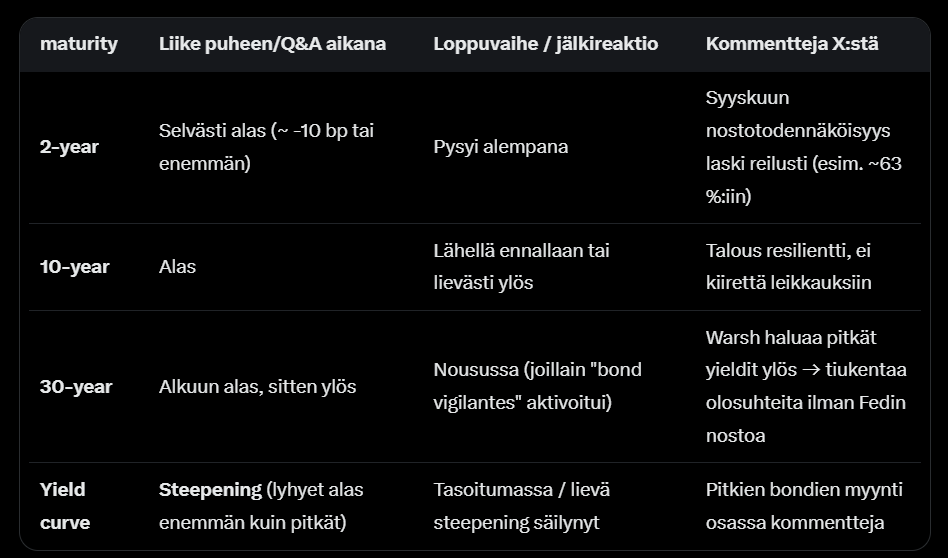
- The dollar weakened (EURUSD jumped +0.6%), long-term rates rose (e.g., US30y jumped), US02y fell, gold rose.
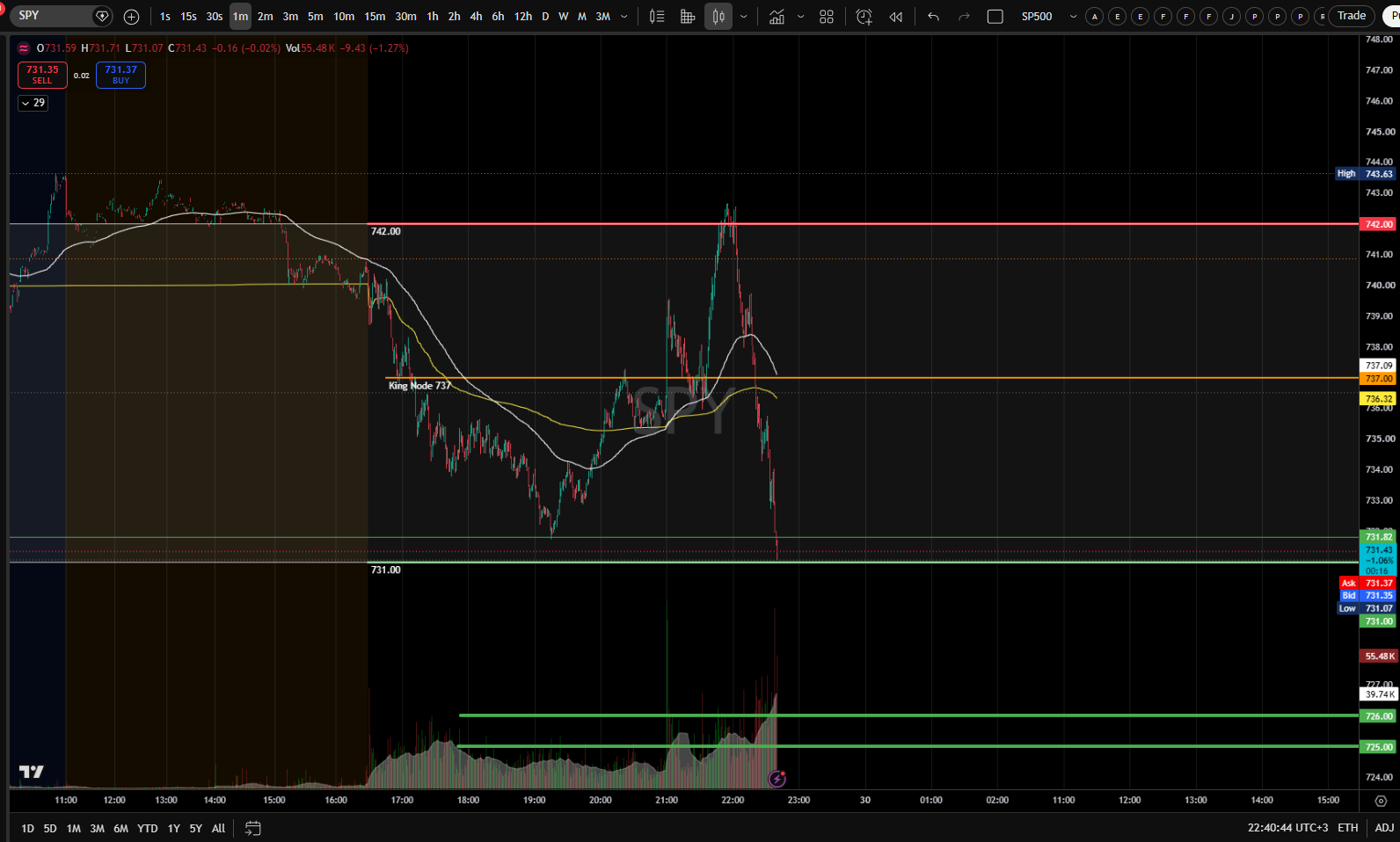
- Stocks initially moved sideways upward or, for some, jumped strongly from a deep dip once the speech began, so there was no clear hawkish shock. By the end, futures hit resistance and fell sharply.
- On X, it was interpreted that Warsh is talking hawkish (high rates for longer) but is letting the markets do the heavy lifting, which would allow the Fed to avoid harsh hikes itself. Many are now expecting a September hold; the situation remains in a “wait and see” mode.
Initial market reactions:
Attached is the anticipated daily movement of SPY 1min (i.e., almost the same as SPX) and the range based on yesterday’s and today’s options (SPY 731-742). So far, it has stayed within the range they suggested, and the top level of SPY 742 acted as clear resistance during the speech, from which it dropped to the bottom of the range. Outside the range, there are a few clear support levels lower down (yellow VWAP and white EMA113 locked on 1min).