The war will likely continue over the winter, and the European economy will take a hit. The future looks bleak. Some experts can already see indices bottoming out from the graphs, but…
Excerpt from the article: Ukraine’s success guides Europe’s economic development
This time, inflation is being driven up by rising energy prices. Rapid austerity measures are already being prepared, but major changes will take years. When gas reserves begin to deplete next summer, attention will turn to the root cause of the problem: Russia, which is fighting in Ukraine.
The situation will not ease until the war ends. Therefore, Western military aid and Ukraine’s military success may now be the most important factor in Europe’s economic development.
The end of the war probably won’t immediately open pipelines from the neighbor (some of which in the Baltic Sea have already been blown up), will it?
Europe’s energy infrastructure will have to be partly rebuilt practically in any case, unless a miracle happens, peace comes to earth, and Putin becomes Europe’s top friend, allowing gas to flow freely through the remaining pipelines.
Otherwise, inflation could become bumpy. Currently, energy prices are collapsing in Europe, and LNG ships can’t even get into ports that are full of vessels as gas storage facilities are bulging. This winter should go quite okay unless there are really severe frosts or, for example, Norway’s gas pipelines explode.
However, winter 23/24 is still an interesting question mark. On the other hand, Brussels has never consumed so much ‘kampawiineri’ (a Finnish term for a certain type of sausage, used here metaphorically for crisis negotiations/food) in tackling a crisis. Everyone surely has the motivation to save Europe from a bigger crisis, or the future of the entire EU project is at stake. That will certainly motivate them to find solutions.
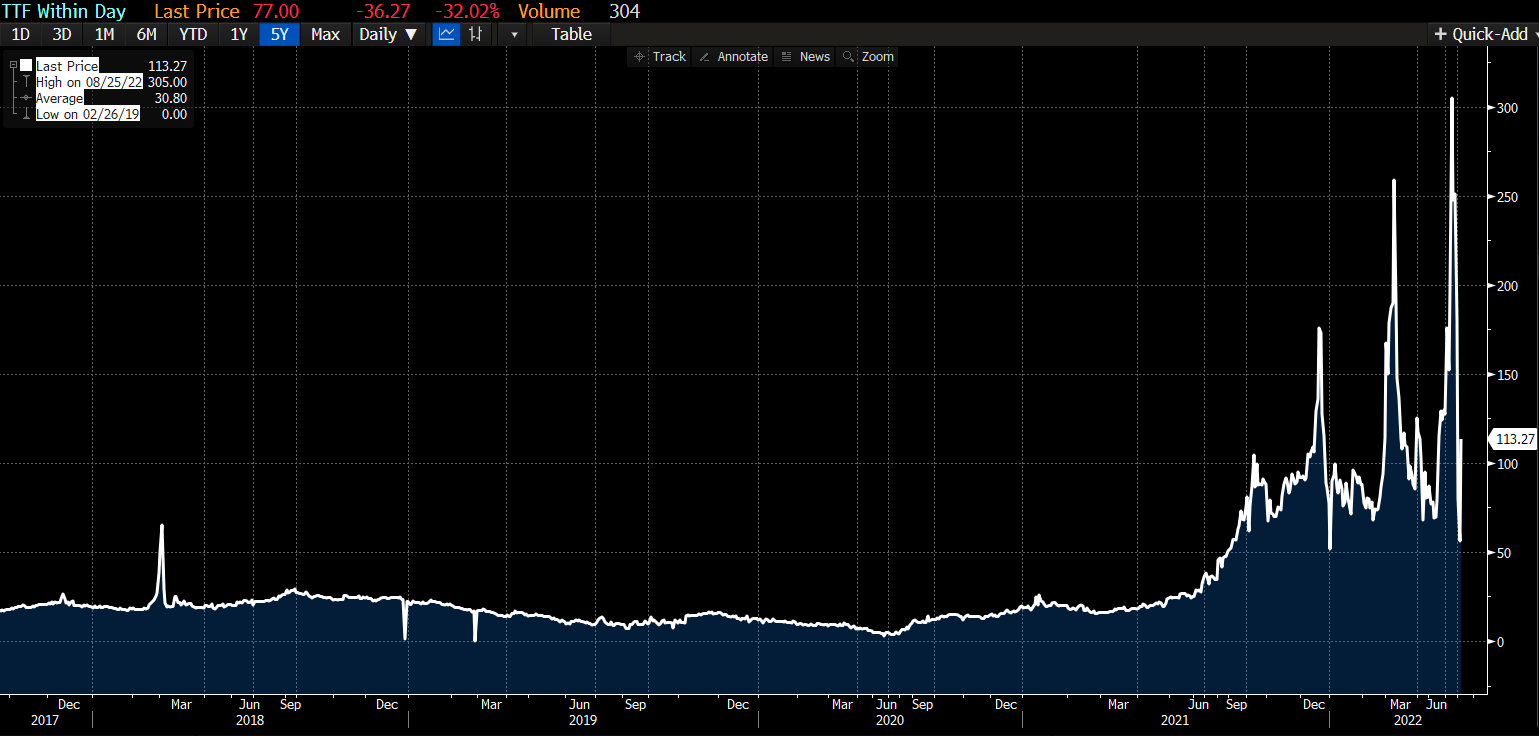
Addendum: here is the daily spot price of gas in the Netherlands, quite a fluctuation. Gas can be 300 euros per megawatt-hour or 50 euros.
" Some officials have begun signaling their desire both to slow down the pace of increases soon and to stop raising rates early next year to see how their moves this year are slowing the economy. They want to reduce the risk of causing an unnecessarily sharp slowdown. Others have said it is too soon for those discussions because high inflation is proving to be more persistent and broad."
…
Investors in interest-rate futures markets now expect the Fed to raise rates to 5% by the spring, according to CME Group. Last month, most officials projected lifting rates to at least 4.6% next year.
If officials decide to raise rates by 0.5 point, or 50 basis points, in December, they would have reason to worry about triggering another market rally, said Kathy Bostjancic, chief U.S. economist at Oxford Economics. “The equity market has been so eager to see pivots by the Fed,” she said. “Fed officials have to explain that 50 basis points is still a meaningful increase.”
It’s important to remember that each of these individuals has given their own views in recent days. However, the actual decisions are made collectively, and Powell’s views carry significant weight in that process.
Just a reminder to those longing for a pivot, it doesn’t necessarily lead to an immediate stock market rally. And of course, these talks are just about slowing down the pace, not a pivot. https://twitter.com/nickgerli1/status/1579873616451502081
I can’t think of a single aspect in which Europe is now in a better position to face an energy shock than in October 1973. Now the value of Snap and many other big US tech companies is halving or falling by a third from their current values because interest rates are rising and profits are even growing splendidly, but compared to earnings expectations, they are disappointments. There is really good, expert, and in-depth discussion on this forum, thanks to all the writers. For the past 14 years, new stimulus has been added to the markets almost continuously, and it has been clearly observable that liquidity quickly ends up in the stock markets, so such a change in direction could cause a 1929-style crash or similar. Now, the reduction of liquidity hasn’t even fully begun, and there is already great nervousness observable in the markets at the same time as the economy appears to be heading into a recession. The economy was already cooling before Corona. The Corona crisis made the situation critical on both the demand and supply sides. Europe will take a bigger hit from the current situation than the United States, and the actions of central banks will differ. For a decade, the ECB has followed the Fed’s policy. However, massive stimulus led to a new economic boom, which is now cooling down again.
In the 70s, it was more like the Fed de facto wrestled with labor unions. Workers had collective power, and that was one of the key factors behind persistent inflationary pressures.
Currently, the Fed is wrestling with Corporate America.
The latter:
has so far defended its margins with excellent success by aggressively raising prices (succeeding because households first enjoyed 11 years of economic expansion from 2009-20 and then the oddities of 2020-21)
is holding onto employees tooth and nail and recruiting more just in case, due to the trauma of massive demand but no workers
I don’t think Corporate America will find it fun to wrestle like this for much longer.
The struggle will likely end at the start of a recession, with demand, pricing power, and consequently margins collapsing more sharply than usual.
Gradually, then suddenly.
Not the end of the world, but a peculiarity of this cycle.
Oh, if only one could predict how this will affect various securities.
My portfolio consists largely of US/USD-listed global companies, whose earnings are not (directly) dependent on US consumer demand; instead, business is done either outside America or with the government.
With some quick math, one might imagine that this collapse in US demand → recession would be a very positive event, even directly for the stock price of a company like the one I described, as the FED would start loosening the reins when the causes are found outside the company’s own field of operation (US domestic market), but I’m afraid reality isn’t quite so simply rosy
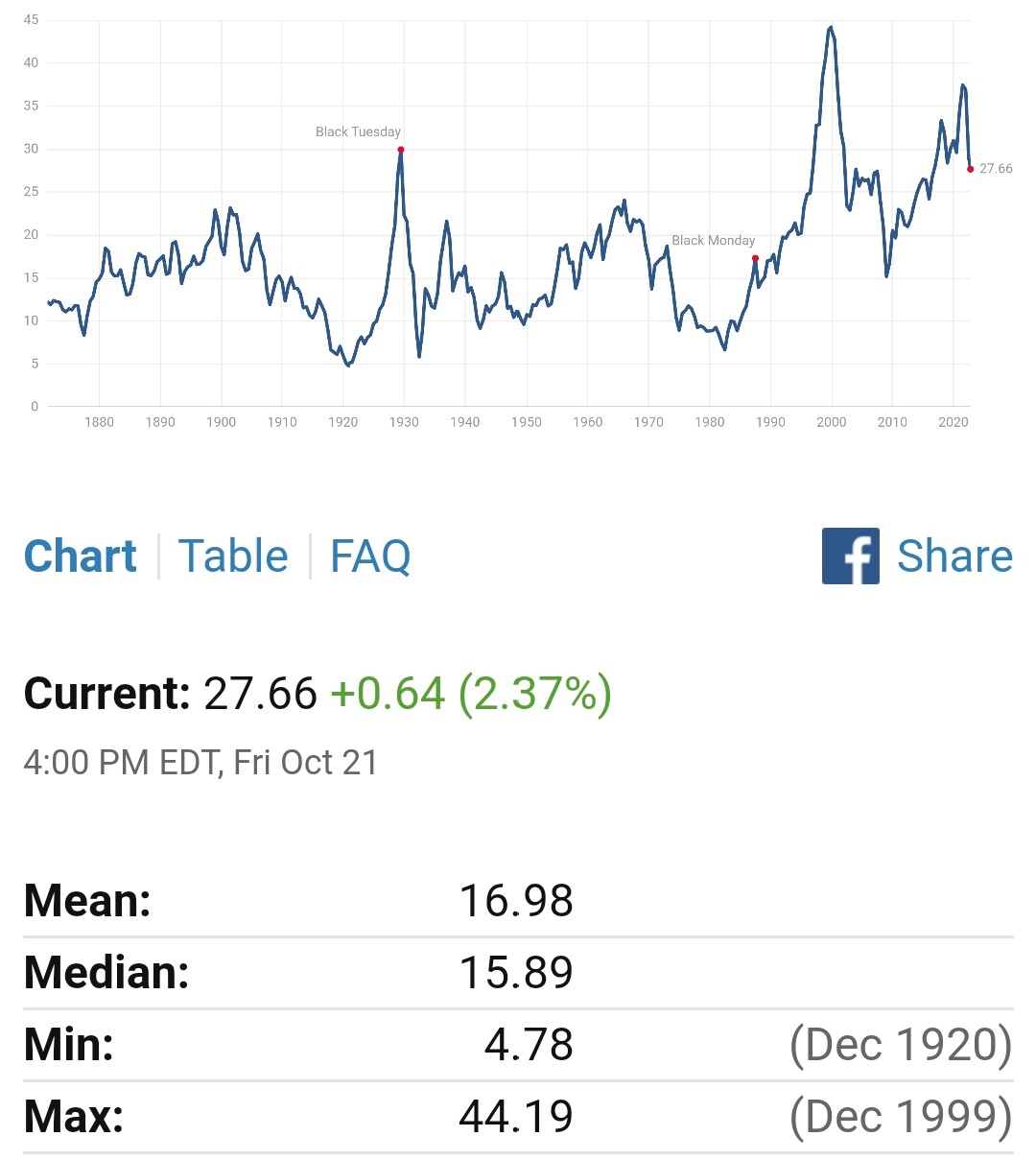
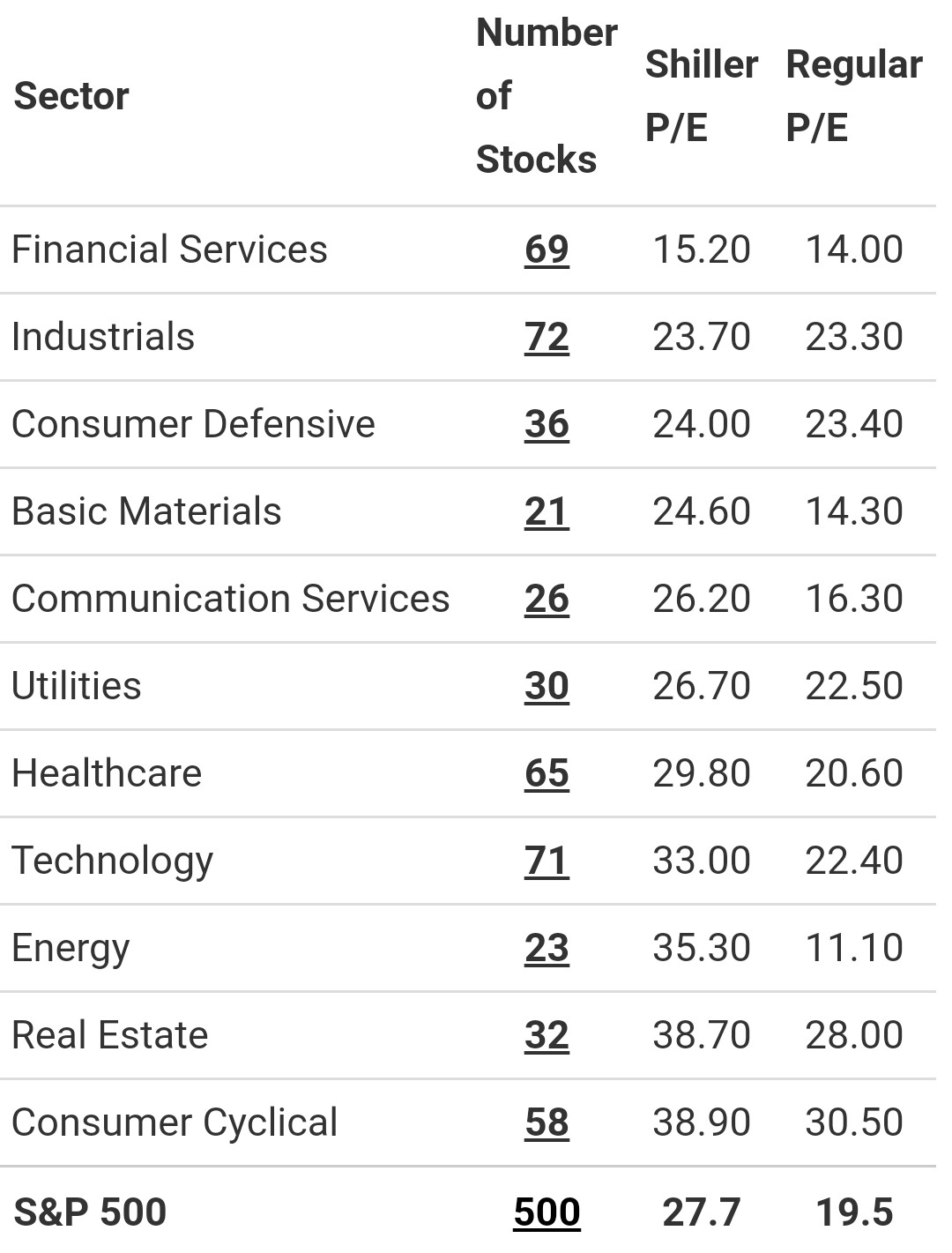
The CAPE Ratio (also known as the Shiller P/E or PE 10 Ratio) is an acronym for the Cyclically-Adjusted Price-to-Earnings Ratio. The ratio is calculated by dividing a company’s stock price by the average of the company’s earnings for the last ten years, adjusted for inflation.
 Gas can be 300 euros per megawatt-hour or 50 euros.
 He probably transforms into a fly during the day on the ceiling of the Fed’s headquarters.