Stock Market Direction (Part 2)

The “Stock Market Direction” thread features analytical discussion on high-level market movements and the economy.

Inquiries regarding share price changes belong here Kurssien ja niiden muutosten kyselyt, kauhistelut ja hehkuttelut (Osa 3) - Sijoittaminen - Inderes forum

The Coffee Room can be found here Inderesin kahvihuone (Osa 2) - Sijoittaminen - Inderes forum

This thread is a continuation of the comment: Pörssien suunta (Osa 1) - #10391 käyttäjältä Expaco_b - Osakkeet - Inderes forum.

Previous thread:

23 Likes

A good example of the stock market’s direction is an American company called CoroWare Inc. 0 employees and operations ceased in 2018. The stock (COWI) is being traded? What is this?

4 Likes

A few takeaways from this morning’s video.

In recent days, with GameStop, Nokia, and WSB sucking up all investor attention from many directions, many have commented that the market is crazy or in a bubble. Naturally, such sharp and rapid overshoots are characteristic of bubbles.

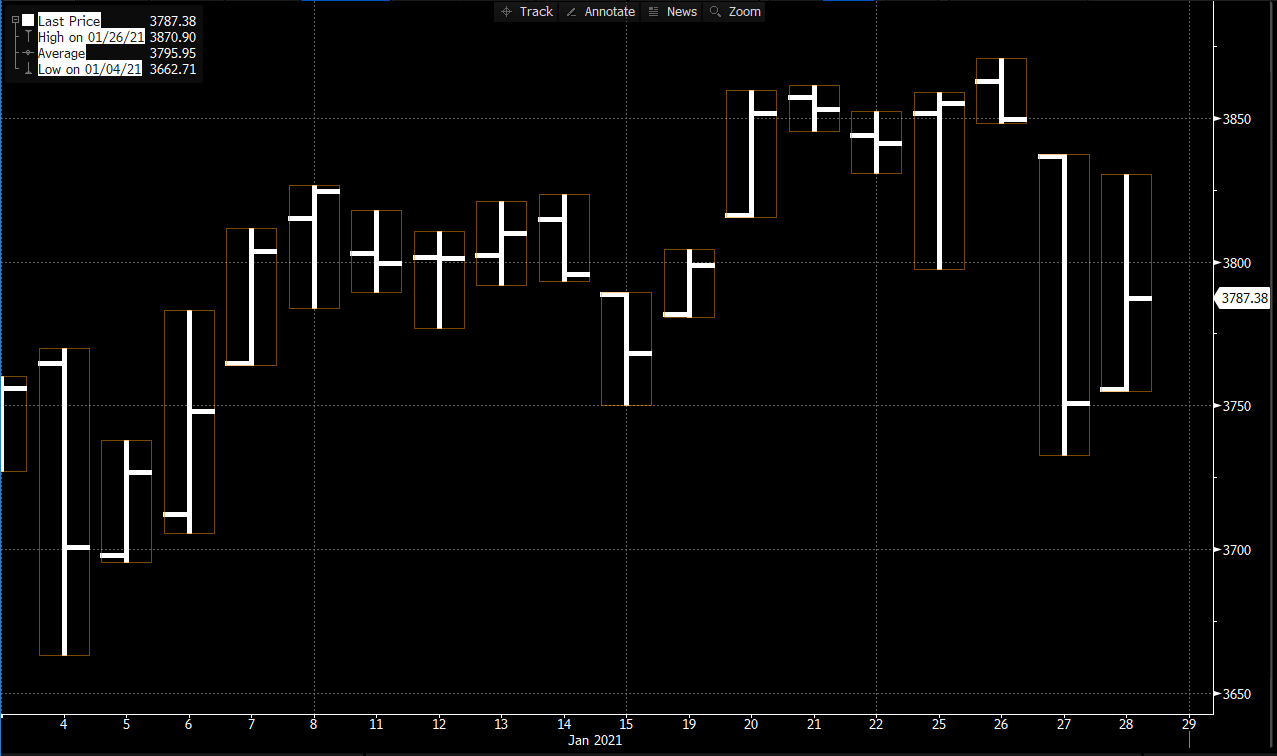
However, I would venture to point out that most of the market is just plodding along normally. Look at the S&P 500, for example. It hasn’t really moved anywhere in January:

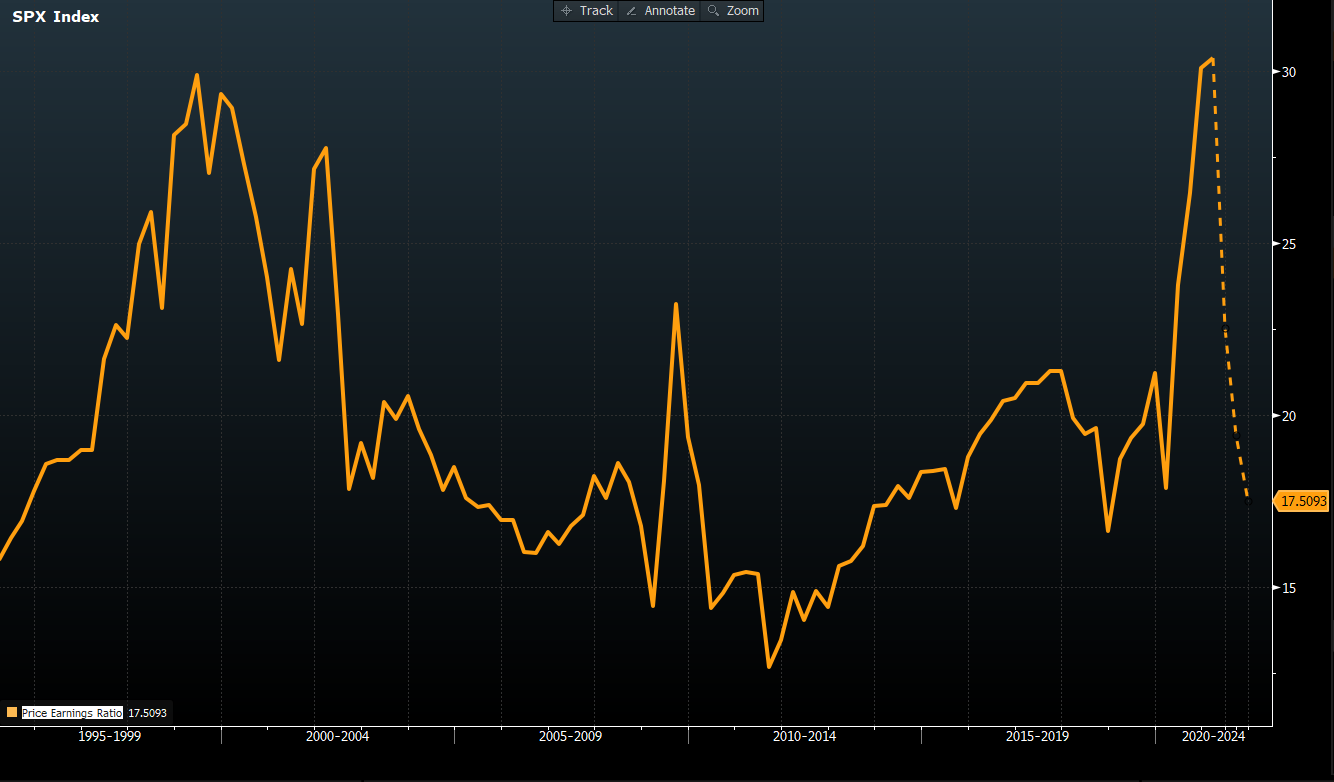
Okay, the stock market is expensive now. In fact, talk of a bubble gains traction from this, as the P/E ratio is at the same level as during the dot-com bubble. However, earnings are expected to recover after the coronavirus, and then the P/E would normalize quite a bit, as seen from the dashed line in the chart.

The stock market is by no means cheap, but it’s not hopelessly expensive either, generally speaking, if one can look a little further ahead (something that certainly seems difficult for many :D).

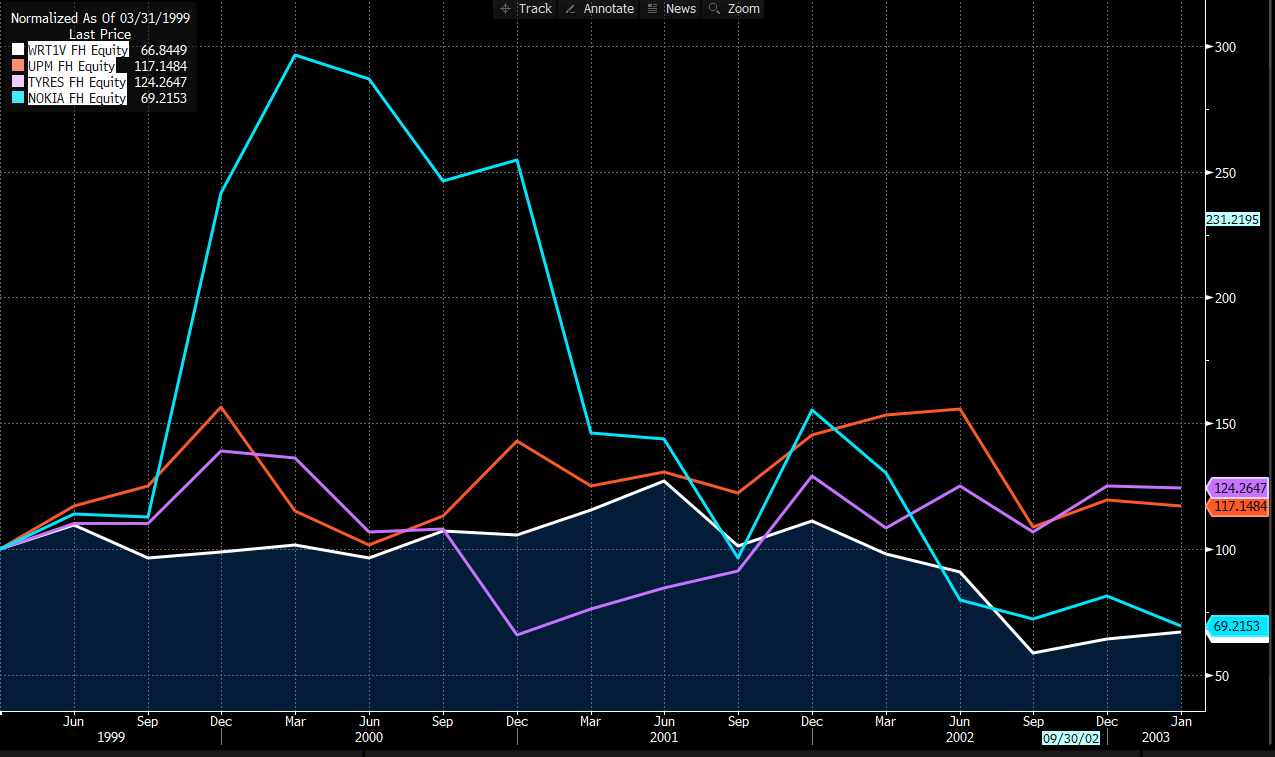
The stock market is also not homogeneous. Here’s a bit of a recap from yesterday on how some value stocks developed during the dot-com bubble. This is just an example, but the 90s dot-com bubble was a pretty total full-body bubble, yet even then one could make good stock picks during the bubble.

For example, Berkshire Hathaway practically countered Nasdaq. It halved as Nasdaq rose, but also bottomed out at exactly the same time Nasdaq began its three-year, -80% bear market.

NASDAQ_vs_BRK_A

In the Helsinki stock exchange, experienced investors always talk about how they loaded up on cheap KONE, Sampo, etc. when the IT sector was boiling. Unfortunately, I couldn’t get a KONE graph from Bloomberg for that period, but here’s Nokia vs. UPM, Wärtsilä, and Nokian Renkaat. Indeed, money rested quite well in UPM, for example. Sampo, Nokian Renkaat, etc. multiplied tenfold in the bull cycle that followed the dot-com bubble. KONE has been one of the best stocks of the 2000s, so there are always opportunities, even in a boiling market.

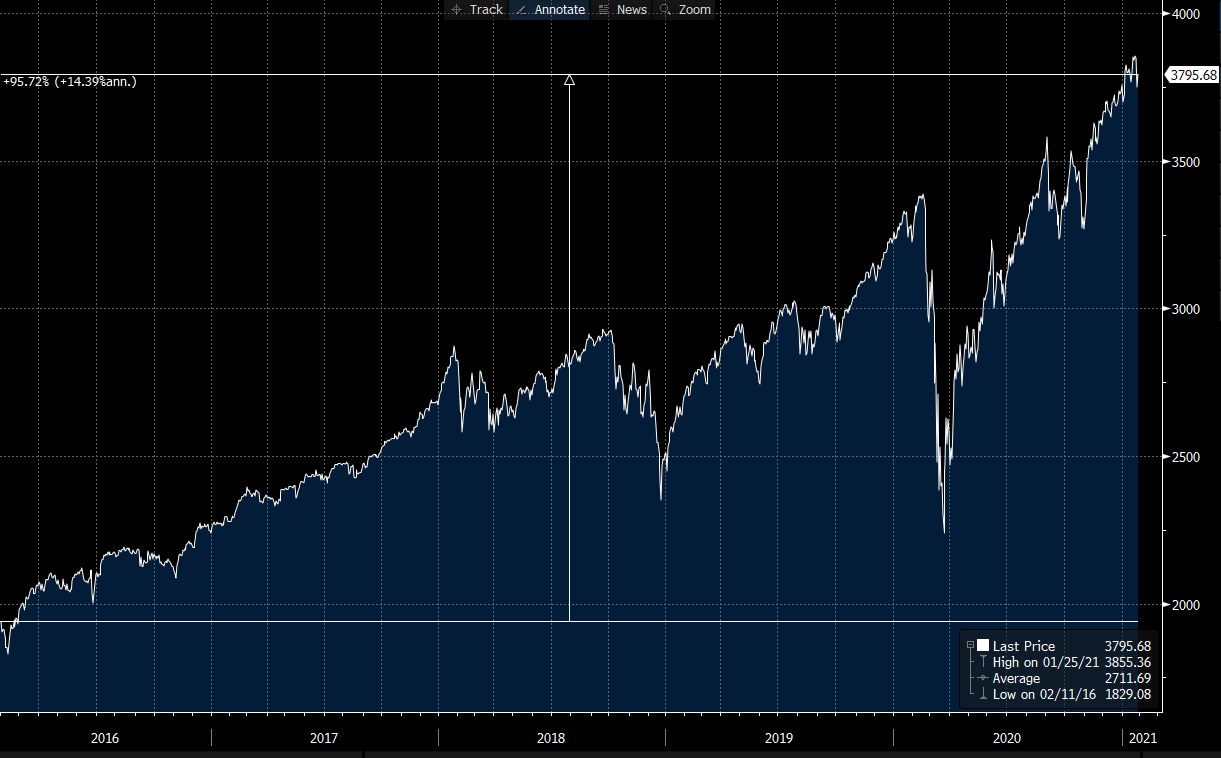
Here’s one more observation. From 1995 to 2000, the S&P 500 rose +300%, or about +25% per year. Now, from 2016 to 2021, the stock market has risen about +100%, or 14% per year. This also speaks volumes about the fact that even at the index level, we haven’t risen at a classic bubble-like pace.

So, it’s always a stock picker’s market, even if times aren’t the best right now. Read analysis and make good stock picks. :wink:

93 Likes

So, if earnings grow according to forecasts (which practically never happens) and price tags don’t grow, then in just a couple of years, we’ll be at somewhat reasonable levels relative to earnings. Against this, the US stock market still feels expensive to me.

5 Likes

Can you run a similar chart where BRK is replaced by the MSCI World Enhanced Value Index?
https://www.msci.com/documents/10199/174e3915-2087-4c5b-815b-c1b7ea1ccbbf

2 Likes

That’s a good point, that usually earnings don’t just drop like berries from a bush exactly as expected.

I’ve been thinking a lot about the same thing, and note that not being in a bubble doesn’t mean the stock market couldn’t just muddle along for the next couple of years, seeing -20% drops: who knows? But in the current zero-interest rate environment and mega-stimulus, it’s hard to see a bigger ruckus unless corona changes in such a way that the rug is pulled from under our feet and the stimulus is simultaneously withdrawn.. However, who really knows these things. It’s good to stay humble and think about what’s most likely.

8 Likes

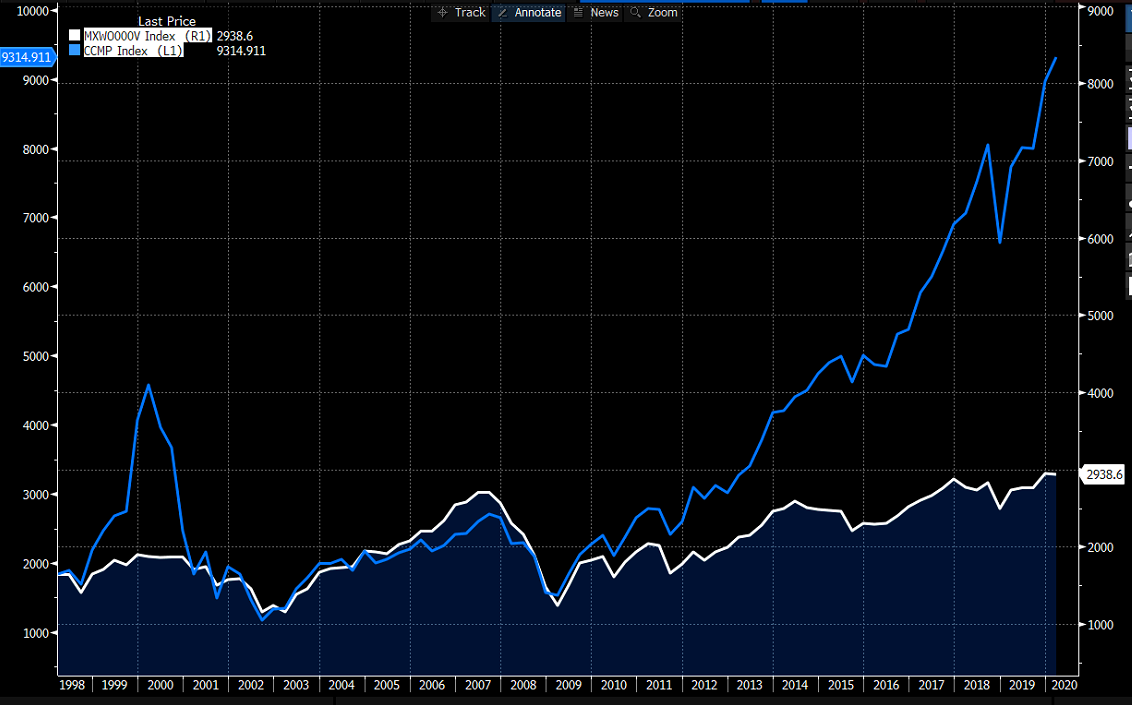
Here’s the chart. Amusingly, the Nasdaq index still beats the value index during that period :smiley: However, it’s deceptively easy to manipulate these interpretations and narratives based on the chosen time frame. For example, if the starting year were '98, a year that could be argued as the true beginning of the bubble, the value index’s performance would be slightly more favorable.
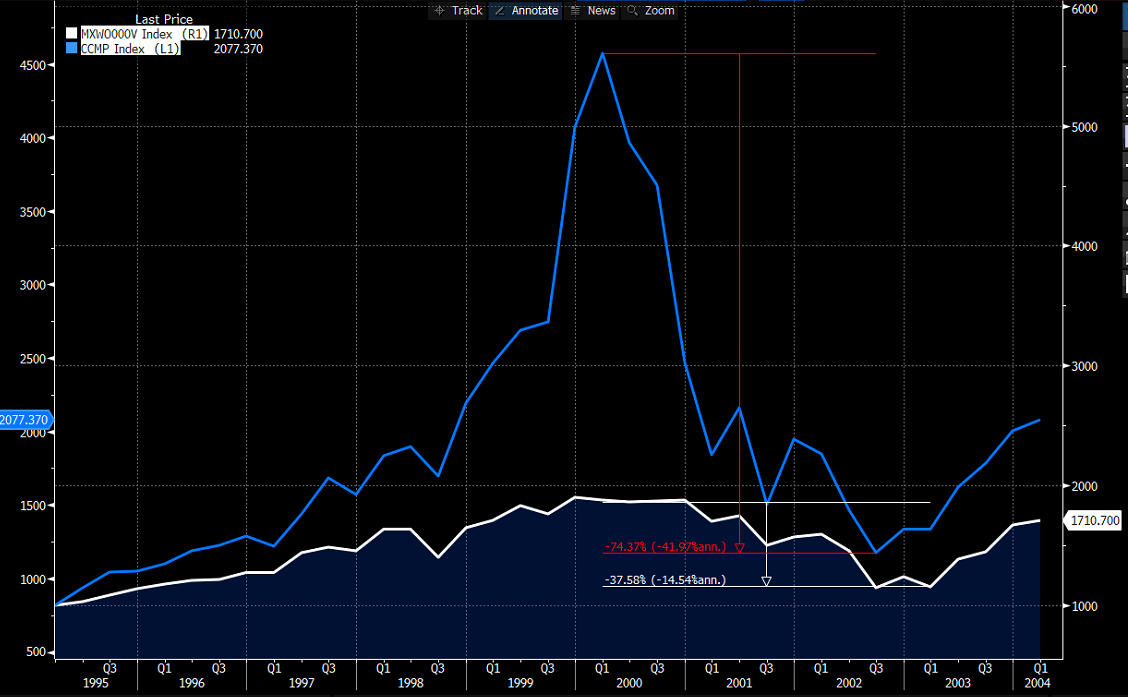
The value index also took a hit of almost 40% in a couple of years. Nasdaq -74%. It’s good to note, though, that many tech stocks fell over 90% and never recovered.

The performance of value stocks has been dreadful to watch in the long run:

14 Likes

In the midst of the acute GME crisis, a question arose in my mind as a novice:

Does the market need shorts to function effectively? What is their function in the big picture? Do they have one, or are shorts just a piece glued onto an already well-rolling package that someone invented to make money in a new way?

So, if this mess were to escalate to the point where shorting was banned, or for some reason no one dared to short anything anymore, how would that affect the market?

Of course, it would create ripples, but let’s think a couple of years ahead and beyond.

Just thinking…

6 Likes

If there’s one thing Wall Street’s slick-haired guys are good at, it’s inventing new ways to make money. Sometimes, over time, these schemes get out of hand. CDOs were once a brilliant invention where everyone won. Investors got ever better interest returns with seemingly lower risk, investment banks got sales revenue from selling them, loan originators got fees, real estate agents got commissions, consumers got cheaper mortgages, and home builders got jobs. Over the years, greed grew, risks became obscured, and the rest is history.

I admit I haven’t looked into whether shorting has some higher market function very closely, but I would suspect that someone, a long, long time ago, just realized that lending stocks could make money.

5 Likes

The theory is that they increase liquidity and help in forming the so-called correct market price. Perhaps they even smooth out volatility by acting as a brake when the situation heats up.

7 Likes

I continue to support allowing short selling, perhaps there could be a limit, for example, that a maximum of 50% of the share capital could be shorted - there has always been a risk of infinite loss in shorts, and only the size of the investment in long positions.

Controlling manipulation would be the key thing, how can it be determined that someone has manipulated the price, or is it then limited only to manipulative trading and accepted that millions of discussion forums cannot be condemned for it - and in them, media literacy is assumed from the people.

2 Likes

I see the biggest problem with shorting as the fact that so-called naked shorts still haven’t really been eradicated, even though they should be illegal. Some market participants have slightly different rules than “ordinary people.” Additionally, some kind of limits would be good. The logic is probably that if someone is stupid enough to short into 100% free float, they deserve to get hit hard when the market corrects the situation (see GME right now). Perhaps these “smart” hedge funds should be given a bit more child-proofing based on blocks and regulations…

6 Likes

Of course, we can discuss what it means to “need something.” Civilization as we know it probably wouldn’t collapse if short-selling wasn’t allowed, but short-selling does have its benefits. As mentioned above, it increases liquidity and makes the stock market more efficient. In practice, short-selling enables smoother operations, even if it can sometimes cause overreactions.

Another significant point is that short-selling provides a financial incentive to address accounting fraud and other forms of deception. There are many professionals who actively seek out scams and frauds because they can make money by shorting these companies. Financial supervision agencies simply do not have the resources for such activities, nor necessarily the capabilities. As I understand it, all, or practically all, major frauds have been exposed precisely because financial supervision agencies have scrutinized companies that have been heavily shorted. No short-selling → weaker financial supervision.

15 Likes

Yup, this is probably an even more significant factor.

Short sellers often have a bad reputation because they often shoot at the wrong target, and short stories are clearly orchestrated attacks, but often they also expose real hoaxes. The most famous is probably Enron. Interestingly, during the financial crisis, it was precisely the establishment that considered short sellers criminals! :smiley: Back then, short selling was even restricted.

From recent times, Nikola is probably the best-known short case, and it wasn’t a wasted target either, as all sorts of things were revealed…

11 Likes

Several functions. Short sellers have a motivation to seek and expose scams and other wrongdoings in the market, which reduces their number and saves other investors’ money. Short sellers can also, in some situations, prevent overvaluation situations from occurring.

Take for example Finnair’s over 100% surge in the summer, when Finnish small investors rushed to buy the stock at a huge premium at the same time as the same stock could have been bought cheaper through subscription rights. The situation arose because Finnair could not be shorted and arbitrage could not be directly utilized. As a result, Finnish small investors collectively paid several million too much for the shares.

10 Likes

Naturally, even when short sellers start spinning a load of baloney to get their short positions back to zero, they’re way off base, and the supervising authorities don’t have the resources to do anything about it. In theory, the market corrects these situations too—if the short sellers’ stories lack a basis in reality, the stock price shouldn’t be bothered by them in the bigger picture. But there can be volatility—it dips when a short seller says that Teslas are exploding every other minute, until dip buyers, who have realized that the stories are exaggerated nonsense, buy the dip…

5 Likes

Now Verner has produced the kind of curves I’ve been looking for, albeit at the stock level. I’m preparing to be able to buy from new lows. It may be that they won’t come for a while, but there are many signs in the air.

1 Like

If shorts are so effective, what explains Tesla’s market cap? Nothing.

Short sellers have created their own casino within the stock market.

Then, when companies like Tesla and Nokia approach each other in market value, the markets (shorts) are effective.

P.S. I own Nokia, not Tesla. I reasoned myself that this is how it should go, it hasn’t been easy to convince myself that I’m right.

4 Likes

You can even get Kone at a huge discount if the sales side panics. Even today, you could get stock deals where the dividend yield goes over five, and nothing has changed in the market for the company.

This kind of situation always comes at the end of a bubble, and then it’s good to have money and patience to wait for that Kone, or Neste. Nothing yet guarantees that there will be a collapse, but the possibilities for it are there, and a deep dip is quite justified. A recession is unlikely because the stock prices are expensive. When prices fall enough, panic sets in, and even good companies are sold haphazardly. That’s why we can get Kone really cheap.

2 Likes

Mäkinen previously wrote a good article about shorting:

6 Likes