Bofa kicked off Q3 reporting for major US banks. I think it went slightly above forecasts.
https://twitter.com/DailyFXTeam/status/1581968362707750912?s=20&t=oQDiPPCP_dflHqinOBEYtg
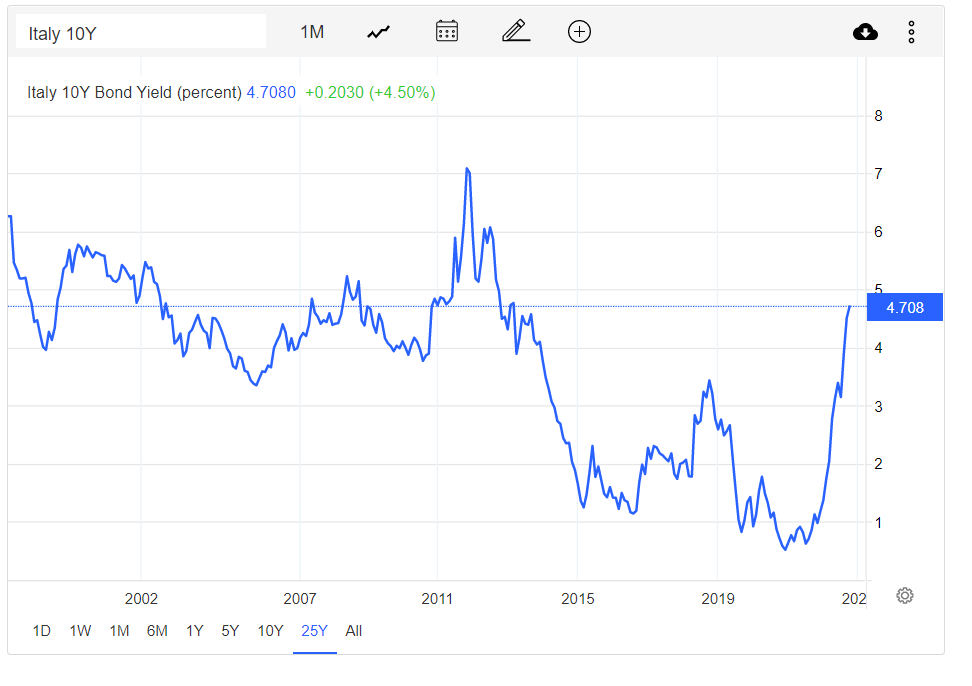
Italy’s 10-year yield is already reaching Eurozone crisis levels. No wonder the situation is mentioned in almost every warning. Italy’s borrowing is still supported by the ECB through continued QE measures, as maturing bonds are reinvested. Even a small change in interest rates causes a huge change in the cost of debt refinancing when the debt-to-GDP ratio hovers above one hundred percent.
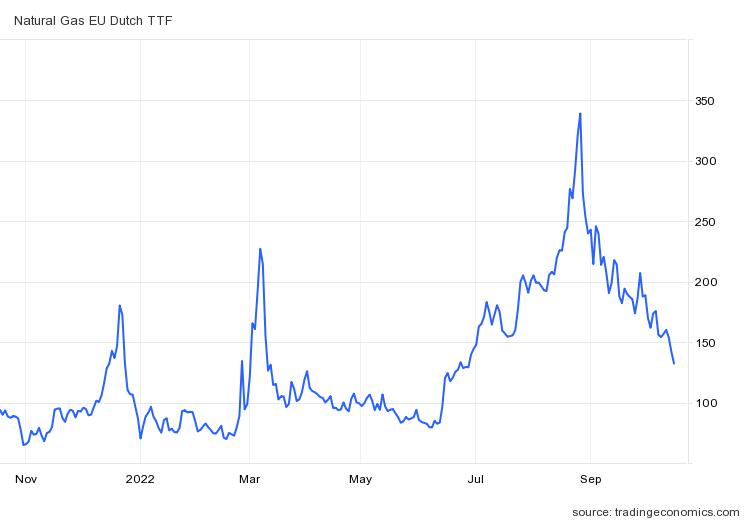
In Europe, energy prices have fallen significantly from their autumn peaks. Oil prices have decreased nicely globally, and in Europe, natural gas and electricity prices have dropped significantly. It can probably be stated that the threat of an energy crisis has largely diminished.
Image of gas prices in Europe:
Of course, it’s important to remember the context if the time horizon isn’t just a spot moment. When inventories are filled at any cost (expensively) and the weather is very warm, there can’t be any other direction if there are no buyers in the market. The same applies to oil where volumes are negligible.
For the direction of stock markets, more relevant factors can be found in the reasons that caused TTF to a. rise initially and b. fall now.
A. Russian gas ran out. This is unlikely to change.
B. This did not improve due to an increase in supply but rather due to filled storages and favorable weather during this shoulder season.
So, when it comes to the supply/demand ratio, a clear decrease in inflation in the long run requires correcting this ratio. Looking at historical charts, one could easily conclude this to be a boom/bust when capex is booming, and the same has been seen in container rates where inflation has eroded purchasing power and thus demand, while an armada of new supply arrives from factories.
In energy, however, I don’t believe this traditional cyclical pattern is currently playing out; instead, it’s more purely demand-driven. If it’s not happening due to increased supply but from inventories (which might last for the winter but no one has figured out how to fill them next time because US LNG is also in high demand in Asia) and demand destruction (which practically means recession/depression if it works, or else demand would rise again), then there is still a problem to be solved for which no clear answers have emerged. Every energy professional currently speaks of a tougher winter coming only a year from now, and that is a rather worrying thought from the perspective of transitory ideas. This spot price decrease has also been achieved by buying ridiculously expensive gas.
Everyone can have their own opinion on the matter, but in my opinion, the energy crisis has not subsided, but the recession is deepening. From an investor’s perspective, it wouldn’t be any more positive if these prices were to fall for a longer period due to a depression, especially since (even though I consider OPEC’s cut to be very political) that recession will certainly not ease the supply side, but rather the opposite.
So, gas has become cheaper, but if we declare this a celebration and the energy crisis over because Germany’s storages are quite full, that’s a rather poor starting point for arguing that the trend would be permanently downward. At least not unless factories and other operations are restricted for a longer period, but even that wouldn’t be positive for the markets and would create bottlenecks for new sectors that have been forced to cut production due to expensive energy.
Well, or could it be seen as an indicator of an upcoming recession? I’ve understood that inventory levels are such that we should get through this winter relatively easily. In the case of an energy crisis, it might be more worthwhile to consider the winter of 2023-24. Short-term prices reflect uncertainty, which is why that price spike occurred.
Then, a bit more broadly about raw materials and their prices in general:
China is intrinsically linked to raw materials and their consumption, which is why China’s postponement of data publication is quite a concerning signal about demand development.
Simply put, declining demand lowers raw material prices. But how do interest rates relate to this equation?
Interest can theoretically also be considered the cost of holding inventory. Rising interest rates practically decrease a company’s interest in holding inventory, ultimately leading to a decrease in raw material prices.
Institutional investors trade in raw material markets but never concretely own “oil, gas, or copper.” However, they determine their prices. Government bond yields are becoming attractive to institutional investors. This creates an incentive to move away from raw material markets, simultaneously lowering their prices.
High interest rates also mean a larger discount factor. For commodities that cannot be replenished, this encourages consumption today and reduces consumption in the future. In theory, this should at least lead to an increase in supply and thus lower prices. This is somewhat controversial, as there are no signs of this; rather, the situation may be the opposite, and the literature on the subject is not very unanimous either. The situation is also complicated by tremendous uncertainty about the future and politicians’ interference in market operations through regulation, etc.
Lastly, there’s the exchange rate effect. Raw materials are traded internationally, largely based on dollars. If the dollar’s value rises, it lowers raw material prices. The dollar has now strengthened unprecedentedly against almost all other currencies. While raw materials feel expensive in Europe, and they still are, they may nevertheless “look” cheaper due to the exchange rate effect.
Generally, during stagflation, raw material prices theoretically should not fall but remain stable or rise, so in itself, the worst-case scenario might not materialize.
@Antti_Jarvenpaa has made an interesting 4.5-minute set on the dollar. 
Topics
00:00 Start
00:38 The dollar strengthens – and for good reason
03:10 The dollar helps Finnish companies
04:00 The dollar pays, for example, Finnair
In my own words, a little on the same theme that @Marianne_Palmu has brought up.
When there is broad, strong confidence in the economy that public finances are structurally close enough to balance, there is an excellent foundation for price stability.
In such a situation, it is relatively easy for the central bank to combat inflation in an exceptional situation where there happens to be inflationary pressure.
The deeper the assumption that public finances are structurally very unpleasantly in deficit, the greater the uncertainties associated with the central bank’s inflation control.
The most difficult combination is when, at the same time as long-term confidence in public finances erodes, short-term stimulus and subsidies are thrown into the flames of inflation.
The central bank then tries to compensate for this with its own surprisingly limited and clumsy means.
I’ve interpreted it as Napier seeing that change occurring particularly in state-issued guarantees. That is, the state guarantees loans to the private sector, which encourages the creation of new money (=indebtedness), even if the economy is otherwise sputtering. QE and government deficits are not new, but the attitude towards deficits has certainly become more nonchalant.
As for the capex boom and those sectors, Finland’s stock exchange may actually be among the clear beneficiaries during that time. There are quite a few investment-driven industrial companies listed here, with their main markets in Western countries.
Regarding the future of inflation, those sectors are a bit concerning. If new money is “printed” to make weapons, then society’s resources will be directed there more, meaning the price of everything else will rise. Weapons, in turn, do not lower the prices of any CPI basket products. Similarly, climate change-related energy investments will produce cleaner energy in the future, but the same electricity/energy produced through them will likely cost more. The transition to them also requires a massive use of minerals and bottlenecks are likely to be plentiful (=inflation). Sometime in the very distant future, the situation may, of course, be different. Also, nearshoring, by all logic, increases costs versus offshoring, because otherwise the latter development direction would never have been pursued.
Regarding this common belief, it would be interesting if someone studied the net effects of this debt melting. In Europe, government spending exceeds revenues, and most expenditures are inflation-indexed, meaning deficits are likely to grow even further with inflation. Similarly, rising interest rates increase the deficit, even if they are below inflation. The Debt/GDP ratio may still decrease if the GDP component just grows at least at the pace of inflation, but what happens then, if/when the debt-driven investment boom ends, or what if those public investments don’t succeed and real economic growth remains negative?
Be that as it may, it is very possible that we recently experienced a major change in the nature of inflation and interest rates. Zero interest rates may have become history for a long time, and 3-5% interest rates combined with an even higher inflation rate may be the reality in Europe for a long time to come. Such a change would mean that very different types of stocks and investment strategies would perform well in the future than in the previous 20 years.
Exactly. Much has been said about the credibility of central banks, but that confidence must also extend to economic policy decision-making. This has somewhat receded into the background in recent years, as this confidence risk has been externalized to central bank balance sheets. Now that central banks’ hands are tied due to inflation, that confidence is being tested again, most recently in Britain.
The British government’s U-turn in economic policy yesterday was certainly a sensible decision and showed that, even today, one cannot do whatever one pleases on the public spending side without some form of disciplinary action from investors. Below is a macro commentary on the topic:
Are we turning around today? I’ve been waiting for this…

With these figures, despite the high percentages, we are not yet on the brink of disaster, but my ongoing concern about the development of employment is not easing.
If this development continues, the depth of the upcoming recession is mere guesswork. The price of energy, in particular, is punishing all of Europe, so it’s hardly a local phenomenon.
The majority of bankruptcies are likely to be in small service sector businesses - for now. More detailed statistics on this matter do not seem to be available yet.
Rising interest rates and inflation, coupled with increasing unemployment, will lead to stagflation. This, in turn, means that stock markets may soon lack direction.
Edit: Taloussanomat’s article on the subject.
The number of person-years in companies that filed for bankruptcy was almost 1400, which is about 550 person-years more than in September of the previous year.
A ray of hope shines through the comments of the American Giant’s CEO…
… bank customers have enough money to spend and are still spending it!
https://www.wsj.com/articles/bank-of-america-ceos-optimism-defies-economic-gloom-11666026195
High inflation and rising interest rates haven’t done much to weaken the health of the American consumer, Bank of America Corp. Chief Executive Brian Moynihan said Monday.
The customers’ resilience and health remain strong, Mr. Moynihan said Monday on a call with analysts after the company reported its third-quarter earnings.
Linking today’s “Vartti” (Quarterly) video here for future reference. Most of the charts in the video are already here, so I won’t re-post them.
In the video, I went through the Napier argument about the upcoming investment boom, which has been discussed here. Also included were discussions about bank earnings season, inflation, and guessing the bottom.
Many benefits are indexed, but they can always be de-indexed. Wages are a large expenditure that doesn’t have to follow inflation hand-in-hand. Corporate subsidies don’t have to follow inflation, etc.
The decrease in the debt-to-GDP ratio is the key. The nominal amount of debt will likely continue. But if an investment boom inflates the economy faster, this is not a problem.
The essential point is that debt is nominal. Therefore, its real value shrinks rapidly when inflation rages.
If these don’t succeed, then it’s stagflation. However, we probably don’t need to worry about that right away (“in the long run we are all dead”…).
Yep. In addition, the energy situation in the Nordic countries is much better.
The sample size there is terribly small and as such, it’s only suitable for entertainment. But in that small sample, portfolio managers have been ahead of analyst consensus.
And so, perhaps a small bit more support for the idea that the consensus forecast for forward EPS year-over-year will go significantly into negative territory over the next six months.
By the mid-50s, the economies of the United States and West Germany had proven to be tremendous success stories. This has been seen on the forum as a great precedent for post-war prosperity.
In my view, one big element in this was that the taxation of the big winners in the national economy (well-off households and companies) was clearly tighter than ever before.
Now there isn’t even a slight move in that direction. Almost everywhere in the Western world, corporate taxes and income and capital taxes for the well-off seem to be close to their 50-year lows, and no change is in sight.
Are 40% corporate and capital gains taxes needed everywhere in the Western world now?
Capex related to combating climate change resembles the reconstruction of Germany.
If Germany had not provoked war against Britain in 1939 and declared war on the United States in 1941, there would have been no need for reconstruction.
Instead of reconstruction, that capex could have been used for something net-beneficial.
Similarly, causing a climate crisis first and then using capex to combat it is worse than not having caused the crisis. In that case, the capex could have been used for something net-beneficial.
At the end of 1939, the US had an unemployment rate of 17% and a low capacity utilization rate.
During the war and in the years that followed:
The Fed took a risk with YCC during the inflation storm of the late 1940s.
The risk did not materialize. Households and companies were not left with a catastrophically inflationary mindset.
The prospect of a splendid supply-side situation and a structurally balanced public economy (no chronic unhealthy spending spiral, tax increases) led the Fed’s risk-taking to prove wise.
As for Germany, Marshall Aid was crucial for reconstruction. Nothing similar to that manna from heaven appears on my maps for capex to combat climate change.
All in all, none of the positive aspects of the 40s-50s are repeating now.
We are not jointly taxing well-off households and companies; we are not raising the level of education; there is no idle labor reserve or capacity at all; there is no sufficient cheap energy; there is a poor age structure and the acquired benefits distributed by bloated public sectors, as well as unfunded pension promises.
Am I exaggerating the negative, and am I overlooking something positive?
Guesswork and Justification for Stock Market Bottoming in H1/2023
The bank’s monthly global fund manager survey “screams macro capitulation, investor capitulation, start of policy capitulation,” strategists led by Michael Hartnett wrote in a note on Tuesday. They expect stocks to bottom in the first half of 2023 after the Federal Reserve finally pivots away from raising interest rates.
https://finance.yahoo.com/news/bofa-survey-screams-capitulation-rally-083316856.html
Ping @musa_2 the floor is yours… you can continue 
Good points.
Especially in terms of labor availability, there are now big differences. One could say that from that side, there will be no inflation-alleviating force! Unless miracles happen in immigration, but in that area, Western countries suffering from labor shortages rarely make sudden moves. There is plenty of population in the world, but education and opportunities are unevenly distributed.
Combating climate change has perhaps been rather fragile until now, but actions like the Inflation Reduction Act are promising signs. China is an egregious polluter, but even there, people are literally carbonizing as cities turn into thick patches of pollution.
The more the situation escalates (heatwaves, wildfires, biodiversity collapse), people will surely start to wake up, demand action from politicians, and slowly money will be directed to tackling this problem. And the private sector is not standing idly by but is also taking action right now.
This too can be messed up, but if climate change mitigation is messed up, then stocks might not be the biggest concern.
During the Corona era, politicians have gotten a taste for steering the economy, and in this matter, it is not necessarily a bad thing. It is difficult to imagine that this problem would be tackled without centralized guidance and pushing.
The money for this will certainly be found: humanity is wealthier than ever. Capacity might be tight, but it can be increased by investing more. (Yes, it will take years and inflation will accelerate, but then again, should we just stand by idly?).
Money is not an obstacle, but as you noted, taxes are not generally tight globally. I’ll just flash the MMT card a bit that tax revenues are not the only source of funding for the public economy, but steps have already been taken to tighten taxes. For example, the global minimum 15% corporate tax.
The paradox of capitalism is that capital tends to concentrate, and on the other hand, it requires a more even distribution of “gummy bears” so that consumers can afford to consume the goods produced by capital owners.  In many countries, massive income transfers already exist, and I wouldn’t be surprised if they were tightened further in some places. So, not necessarily in Finland, which already has high taxation, but generally worldwide.
We live in a mixed economy, not 100% capitalism or socialism, and this mixed economic soup has proven to be reasonably functional and adaptable over the last hundred years. Surely it will slowly adapt to today’s challenges as well.
The analogy to the 1940s-1960s is, in my opinion, good and apt, but the differences you raised are important to acknowledge. However, energy in the world is reasonably priced (e.g., the share of oil expenditures in GDP is much lower than in the 1970s). Technology is at a completely different level and already capable of meeting challenges. Education has deteriorated in many countries (unfortunately also in Finland), but intellectual capital is also greater than ever, and structures for utilizing it exist. Entrepreneurship also seems easier than almost ever, almost anywhere in the world.
Such a small optimistic boost in a bear market chain shall be allowed. So, costs from this fun will come in the form of taxes, inflation, and everything else, but one person’s expenses are always another person’s income.. Many opportunities too!
Such a development is entirely possible and positive for stocks, but it will take time: we are now talking about changes over several decades.
The worst thing for stocks right now would probably be the declaration of austerity policies around the world. Yes, inflation would go away, but so would economic growth and hope for the future.
Stock investors are not interested in what has just happened but in what will happen in the future.
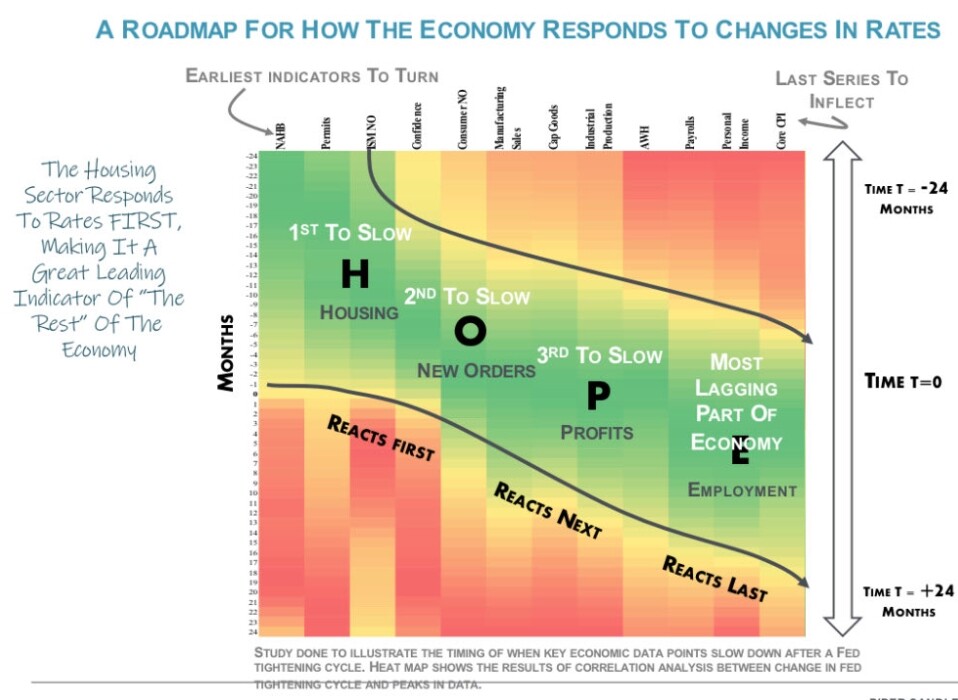
Below is one visualization related to this theme.
I value Liz Ann Sonders overwhelmingly more than all other chief strategists. Yet, it’s not the word of God but the interpretation of imperfect people.
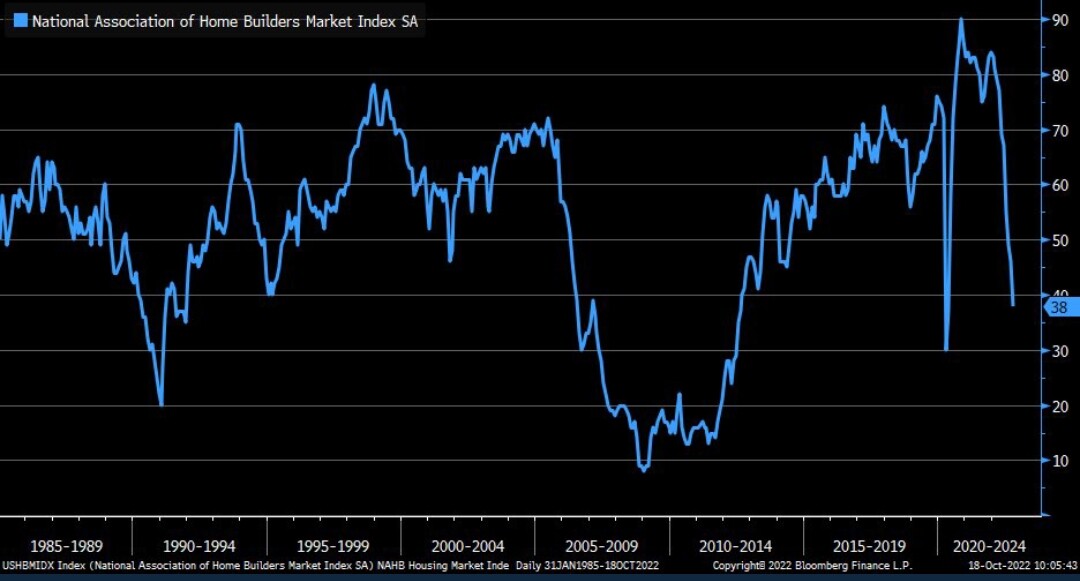
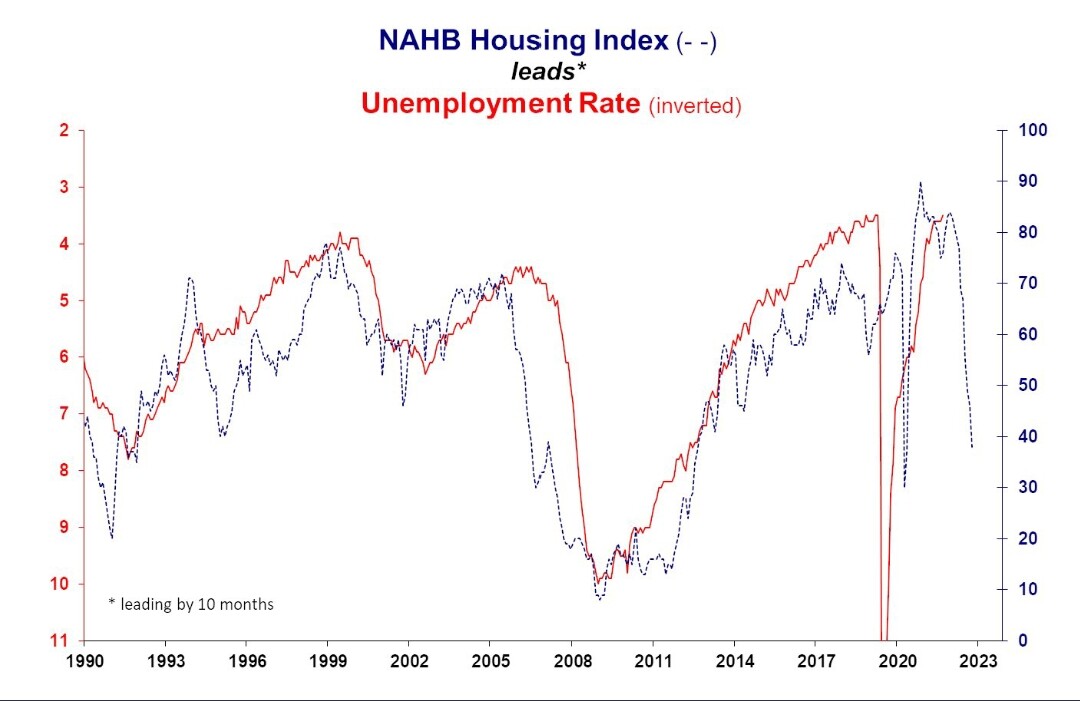
The housing market is souring very quickly.
Another visualization that is also not the word of God. But it’s good that there’s an effort to look forward, not backward.
If someone happens to wish for stocks to perform as strongly as possible in the short term (which net buyers should obviously not wish for), the path to good performance in the next quarter or two would probably be for something sufficiently large to collapse in the financial system as quickly as possible.
That something would be suitably large enough that the Fed would immediately stop rate hikes and/or QT. But, of course, not an Armageddon. Just suitably large.
If the financial system continues to function as smoothly as it has so far, monetary policy tightening will continue, and the risk of a deep recession will increase?
@Verneri_Pulkkinen, you have some very good points!
Let me elaborate further on my previous tax talks.
During the Vietnam War, the US fought that war while simultaneously trying to improve society without raising taxes on the well-off and corporations. The result was that the spirit of inflation got out of the bottle well before the first oil crisis.
Indeed, in the late 40s and early 50s, partly due to tax policy, the public finances in the US and West Germany achieved good credibility.