Yessss, “transitory” might be making a comeback after all. JPow was right then, maybe just overshot a bit before the turnaround?
It will be interesting to see at what point the market believes this, will a couple of slightly better inflation figures be enough to make everyone change their minds, or…? Also, what if inflation developments in the Eurozone and the US differ significantly, and currency exchange rates shift considerably? Especially in the US, consumer prices have historically long ignored developments in the rest of the world; that is, it has been joked that the US has had a strong export product: (consumer price) inflation. Perhaps there will be a bit of a correction in connection with this mess?
If we set the limit at roughly a billion market cap, according to the morning report forecasts on December 30, 2021:
Large caps, earnings change 2021==>2022
improve, 19 companies
weaken, 10 companies
Small caps, earnings change 2021==>2022
improve, 84 companies
weaken, 14 companies
both years unprofitable, 10 companies
Given such strong general optimism, I assume that in the unprofitable group, the clear majority are improvers according to Inderes’ forecasts for 2021==>22. I didn’t bother to check.
However, for example, in Finland, First North has offered a huge amount of fantastic returns, which has ultimately largely come from well-executed business operations.
One can always speculate about the level of risk, but it’s unnecessary to leave returns on the table by being averse to smaller companies. A small percentage of one’s portfolio can be dedicated to these very well.
When you’re dealing with big company stocks, you’re swimming in the ocean with sharks.
With small company stocks, you’re playing in a children’s pool, and sharks don’t bother to go there; there’s too little to bite. On the other hand, things are often much sleepier, and often nothing happens between quarterly reports, so aspiring pro traders are disappointed when they don’t get +10% in a day.
You can make profits either way, but among the sharks, it’s easier to get hit in the jaw when the market surprises you. When dealing with small company stocks, you can have some kind of advantage and have time to react to changing situations, unlike with big companies whose stock has already moved when bots read the news before you could even say “cat.”
I’m certainly not against small-cap investing. The point was just that if you switch from a 15-stock large-cap portfolio to a 15-stock small-cap portfolio, the profile inevitably changes a lot. For example, earnings forecasts must be treated with even more skepticism.
Inderes does a lot of small-cap analysis, and I assume that community members are heavily involved with them.
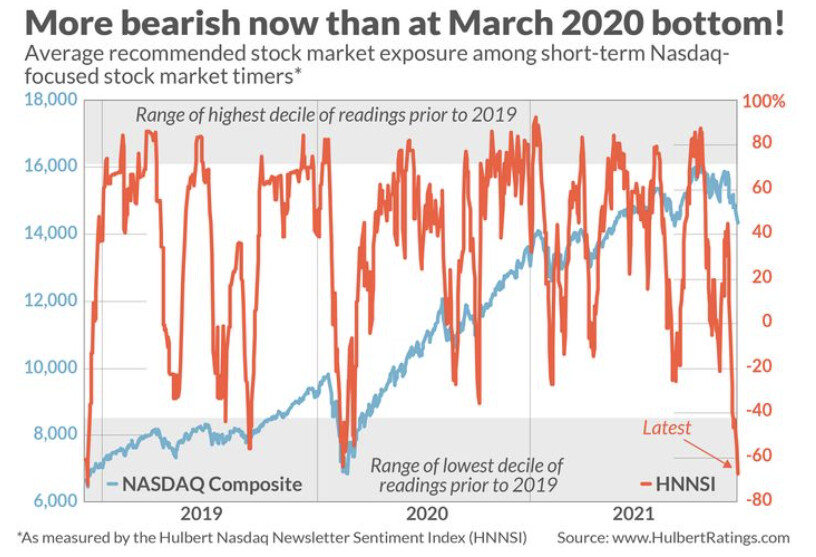
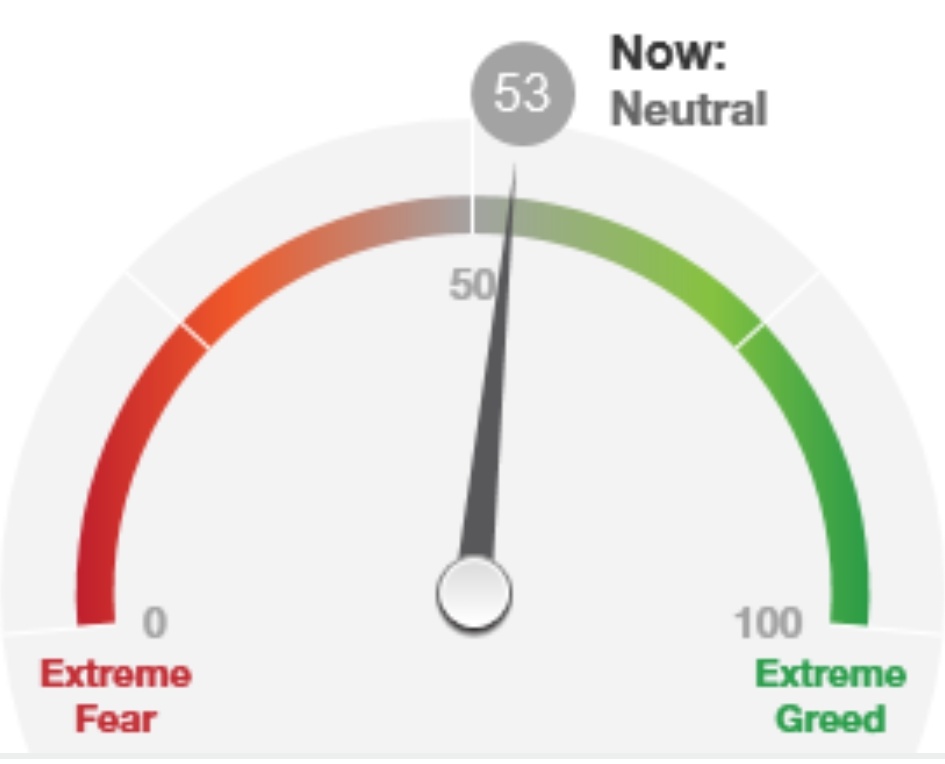
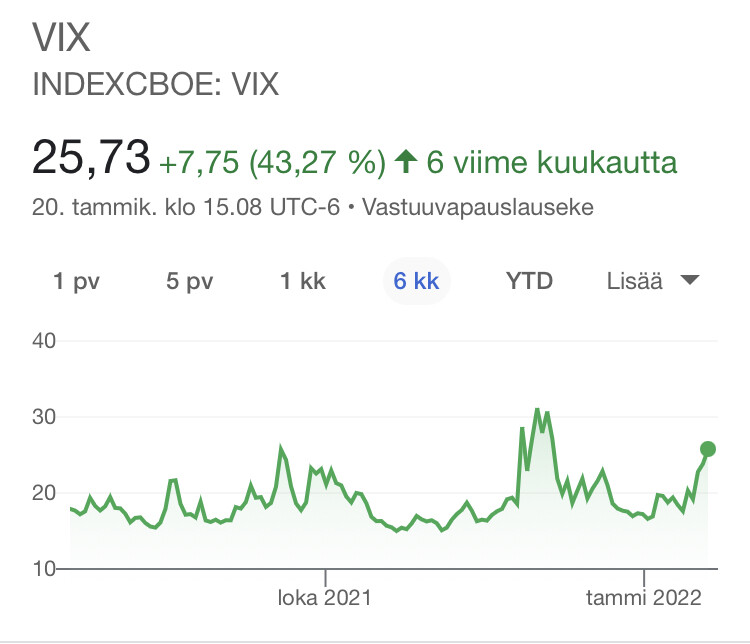
But last time when the Nasdaq clearly dipped below the 200-day moving average, F&G was screaming crimson red. Now it’s as if nothing happened.
Could this truly be a sharp, deliberate, sector rotation without major panic?
But now we’re moving into the realm between price speculation and elementary technical analysis, so maybe this isn’t the right place for these discussions
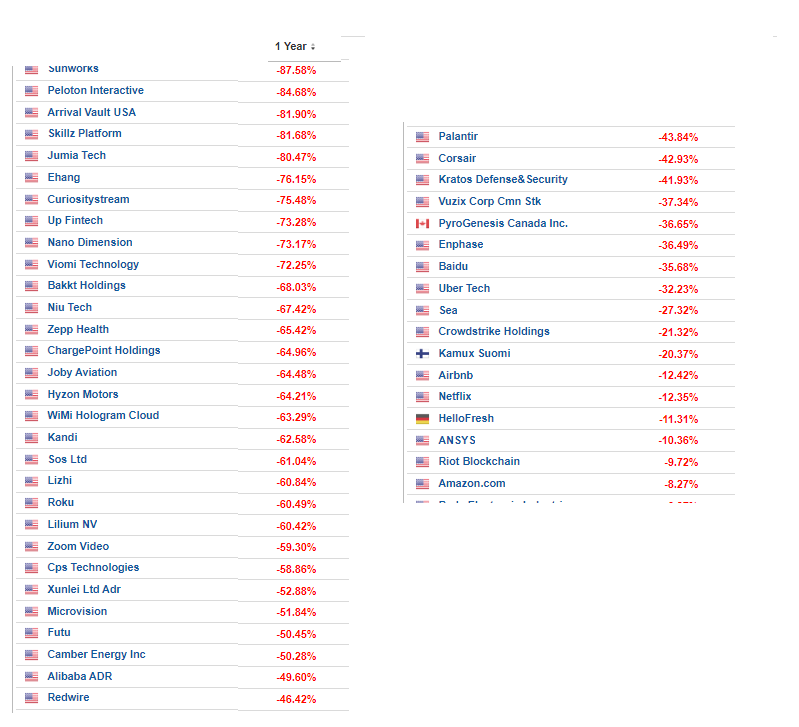
A proper bloodbath at the end of the day, and it’s taking extra rounds in the after-hours. Amazon under $3000 for the first time in a while, Shopify under $1000.
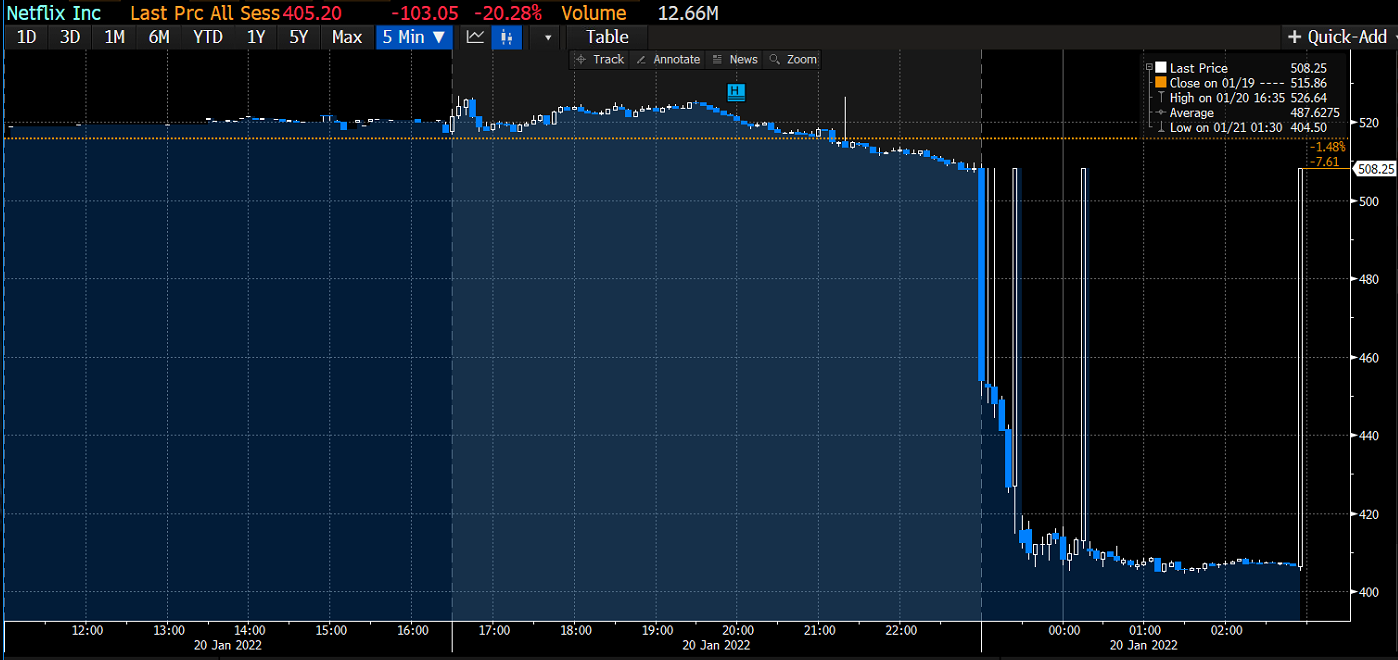
Netflix, the hot tech stock of the 2010s, released its earnings overnight after the market closed. The Q1 subscriber growth guidance of 2.5 million was well below expectations. In the current market climate, the stock plummeted 20% in after-hours trading.
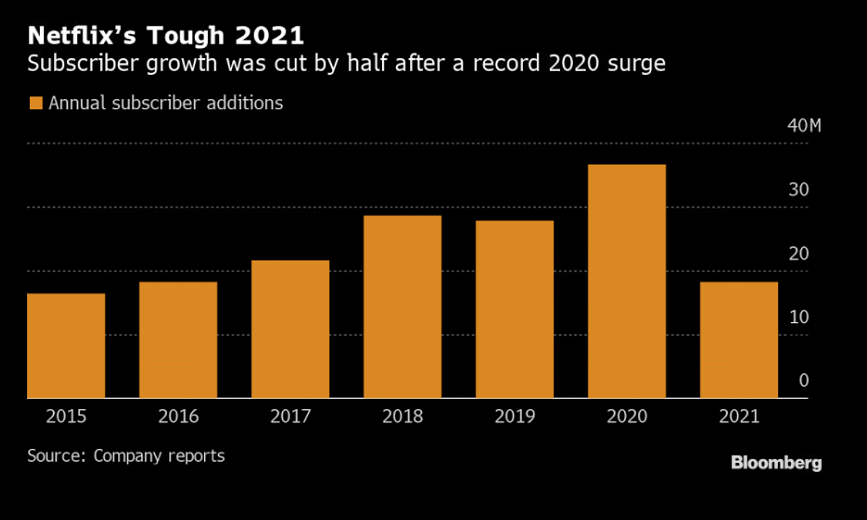
The company’s growth was already slower in 2021 after a strong 2020, but for this year, the consensus expected an addition of 25-30 million, which will likely be revised downwards.
My watch list stocks, on the other hand, haven’t moved much. It really depends on the stocks you’re following. Mine are largely from the boomer category.
I’ll have to follow today to see if this was just a one-day anomaly or if growth has already been hammered into the ground and we’ve shifted more strongly to an index level.