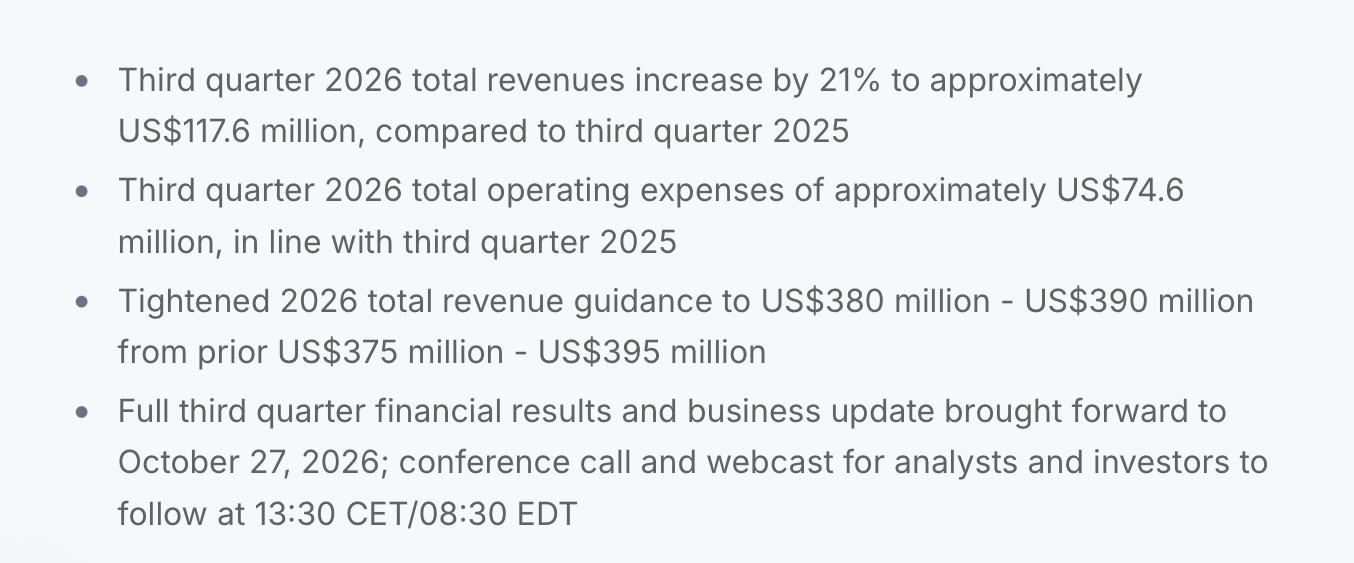
Sama data, eri johtopäätökset. No tää on tätä. Välillä miettii veteleekö tuo FDA kotiinpäin. Pharming kuitenkin näyttää pystyvänsä etenemään asianmukaisesti eri maiden lääkehyväksyntäprosesseissa.
4 tykkäystä
Mielenkiintoinen yhtiö, jonka Pohjolan_Eka on ansiokkaasti tuonut esille.
Sijoituspäätöksen pohjaksi lähden mielelläni worst case scenariosta. Tarkastelen tässä aluksi vain Ruconestia ja luvat saaneen Joenjan osuutta, sitä mikä on plakkarissa tai todennäköisesti tulossa.
Ruconestin patentti päättyy sen tiedon mukaan, jonka löysin, tänä vuonna. Alkuvaiheen HAE-kohtauksen hoitoon tulleet uudet lääkkeet vähentävät sen myyntiä väistämättä. Kuten CK on todennut, sillä on jatkossa rooli ensiapupoliklinikoiden arsenaalissa.
Riittääkö Joenjan APDS-myynnin odotettu nousu kompensoimaan. Ruconestin myynnin laskun?
Mukana mahdollisesti olevien OECD-maiden APDS-potilaiden määrä on luokkaa runsas 1000 henkeä prevalenssilla 1/ miljoonasta. Jos Joenjahoidon penetraatio on varovasti laskien 50%, on vuotuinen myynti luokkaa 200 MUSD. Joenjan patentti päättyy Usassa 2032, pidennysanomus on sisällä. Japanissa se päättyy muistaakseni 2038. Epävarmuustekijöitä jää luvan saamisessa mm. EMA:lta.
En tässä pohdiskele enempää käynnissä olevia tutkimuksia Joenjan käyttöindikaatioiden laajentamiseksi. Potentiaalia voi hyvinkin olla, mutta olen vähän myös skeptinen Joenjan mahdollisuuksista hieman epämääräisten immunodefisienssioireyhtymien suhteen, jotka voivat olla monietiologisia (vrt Diamyd ja vain tietty haplotyyppi). Mitokondriotauti ja sen lääkehoito ovat mielenkiintoisia, mutta paljon on vielä varmistettava.
Tämän vuoden arvion mukaan liikevaihto on luokkaa 400MUSD, josta tutkimuskulut 100M, myyntikulut ja hallinto 220M. Jos huonolla skenaariolla mennään, eivätkä uudet tutkimukset tuota tulosta ja ne lopetetaan ja jää viivan alle 300MUSD myynnillä vielä sen verran, että nykyinen arvostus voisi olla perusteltu.
6 tykkäystä
Ruconestista hyvä muistaa että se on biologinen. Biosimilaarien osalta kilpailu ei ole ihan yhtä aggressiivista koska kehittäminen on kalliimpaa ja hyväksyntäprosessi vähän vaativampi. Tällöin myöskään ihan polkuhintaisia kilpailijoita markkinoille ei pitäisi tulla.
6 tykkäystä
APDS perusesiintyvyyden ilman uudelleenmäärittelyitä arvioidaan olevan 1,5 per miljoona ihmistä. Japanissa on hieman yli 7 miljoonaa lasta tuossa ikähaarukassa, joka tekisi potilasmääräksi hieman yli kymmenen. Kuitenkin koska kyseessä on autoimmuunisairaus mikä vaikuttaa elinikään negatiivisesti, niin lapsikohorteissa voisi odottaa olevan isompi esiintyvyys (koska aikuisista osa on jo kuollut), eli varmaan puhutaan matalista kymmenistä. Tämä potilasmäärä tietysti laajenee sitä mukaa kun Joenjan hyödyistä ja toimivuudesta saadaan lisänäyttöä VUS/PID/CVID -tapauksiin. Suurin positiivisuus tässä mielestäni liittyi siihen, että lääke ylipäätänsä hyväksyttiin, mikä antaa toivoa myös amerikkalaisten lasten FDA-luvan saamiselle ilman kalliita uusia lisätutkimuksia.
Tämä onkin oikeastaan se mielenkiintoisin asia yhtiöstä sijoittajan näkökulmasta. Huonossa skenaariossa arvostus on perusteltu ja hyvässä skenaariossa yhtiö on räikeästi aliarvostettu. Rakastan tällaisia ‘vedonlyöntejä’, missä voi voittaa yhtiön onnistuessa paljon rahaa, mutta myös epäonnistumiselle riskit ovat rajatut, kun suojauksien ansiosta löytyy nopeasti tukeva lattia.
5 tykkäystä
Euroopan EMAlta positiivinen lausunto Joenjalle:
Pharming Group N.V. today announced that the Committee for Medicinal Products for Human Use (CHMP) of the European Medicines Agency (EMA) has adopted a positive opinion recommending marketing authorization for Joenja® (leniolisib) for the treatment of activated phosphoinositide 3-kinase delta syndrome (APDS), a rare primary immunodeficiency, in adult and pediatric patients 12 years of age and older.
- If approved, Joenja® (leniolisib) would become the first approved treatment in the European Union for activated phosphoinositide 3-kinase delta (PI3Kδ) syndrome (APDS), a rare primary immunodeficiency
- Decision based on Phase II/III clinical data demonstrating statistically significant impact on measures of immune dysregulation and immunodeficiency
- Final European Commission decision expected in Q2 2026
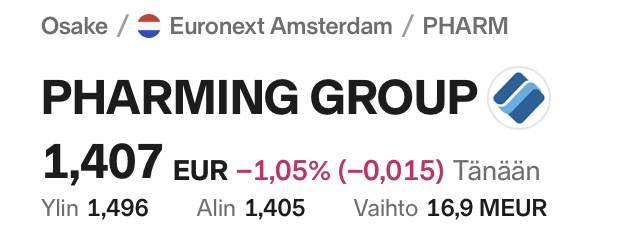
Sijoittajat villiintyivät positiivisesta uutisesta ja kurssi lähti ansaitusti nou…hetkinen eihän tämä edes nouse 
4 tykkäystä
Ei ole dataa mutta mutulla 90%sti lopullinen päätös noudattaa boardin kantaa. Ehkä tämä oli jo priced in 
2 tykkäystä
Ensi viikolla olisi odotettavissa tiedotetta FDA:n vaatimuksista, että mitä Joenjan laajennuksen hyväksyntä Amerikkaan vaatii ja millä aikataululla Pharming aikoo edetä. Näkisin itse tässä kohtuullisen riskin negatiivisille uutisille, vaikka Japanissa data hyväksyttiinkin. Amerikassa on aina suurista kohdemaista heterogeenisimmat potilaat ja vaikuttaa olevan haastavampaa saada dataa lävitse ja tulkittua yhtä edustavaksi verrattuna kansallisvaltioihin.
3 tykkäystä
Läpimurto tässä saattaisi heijastua negatiivisesti Pharmingin osakkeeseen.
2 tykkäystä
Lisäksi Joenjan osalta no news is bad news. FDA on jo järjestänyt kuulemisen negatiivisesta hyväksynnästä ja jos siinä vaadittaisiin vain kosmeettisia muutoksia tilastodataan, niin jatkosta olisi jo ihan varmasti tiedotettu. Hiljaisuuden vuoksi odotan, että tulee lähiviikkoina negari, missä kerrotaan vaadituista lisätutkimuksista ja lääkkeen lapsilaajennuksen viivästymisestä jenkkimarkkinoille. Sinänsä euromääräisesti tuo ei ole mahdottoman paha homma, mutta osakkeen kurssin sentimenttimielessä ikävä takaisku.
3 tykkäystä
Nytkö se sitten kävi, että liikevaihdon kasvu pysähtyi? Ohjeistus säilyi toistaiseksi vielä ennallaan:
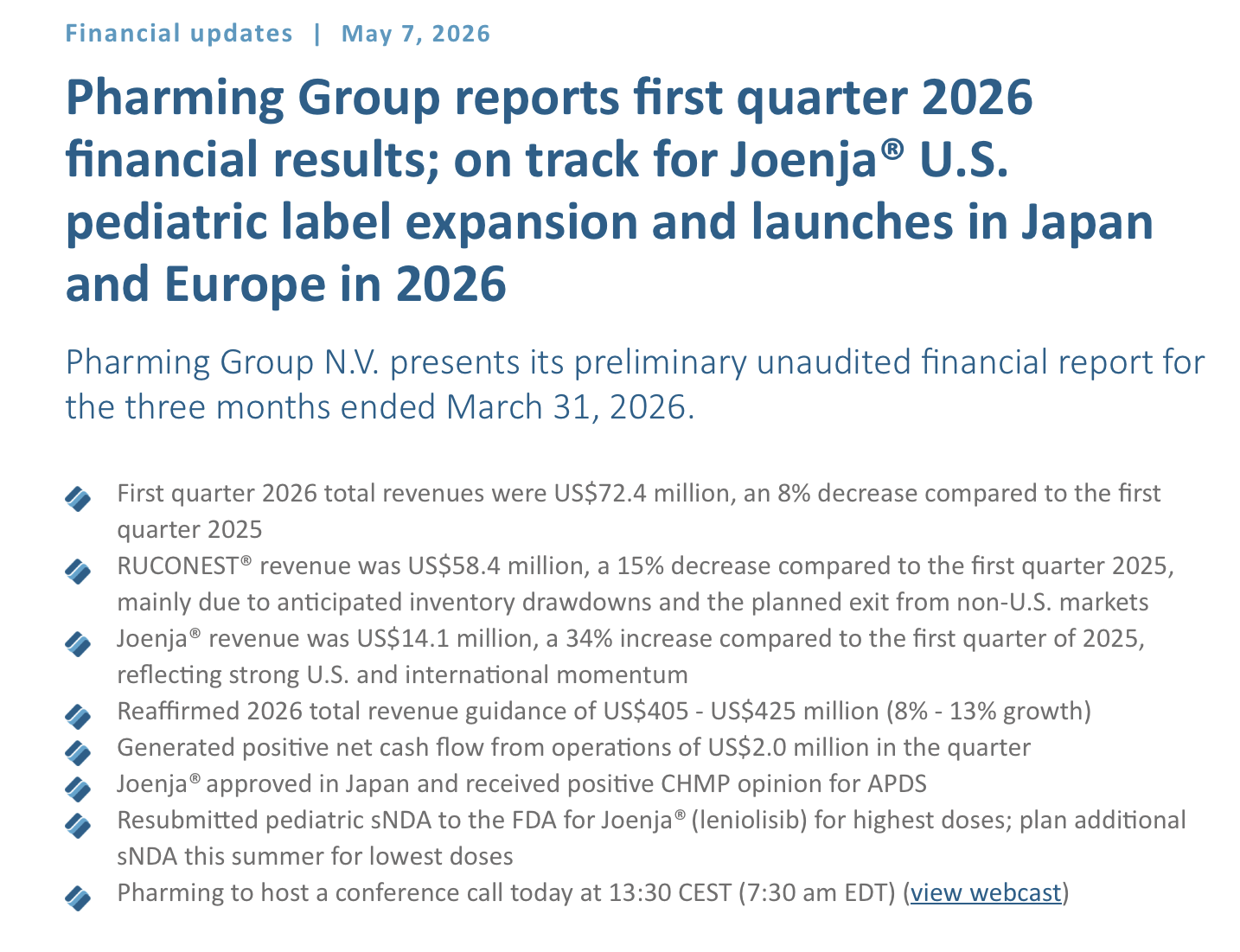
Joenja sentään kasvaa hyvää vauhtia ja ilmeisesti tuo yhdysvaltain FDA-hakemuskin saatiin laitettua uudelleen sisään ilman ongelmia. Eivät pirulaiset tiedottaneet asiasta.
5 tykkäystä
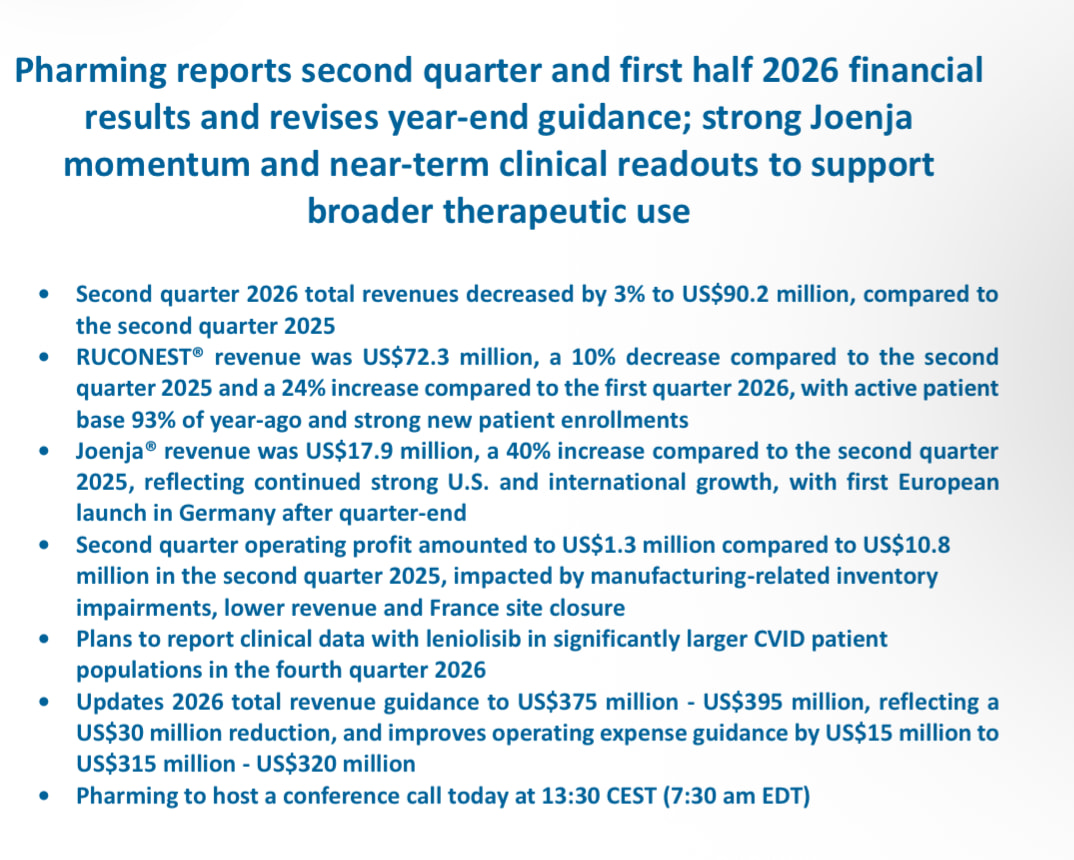
Voimakas reaktio pörssissä, neljänneksen lasku tänään. Näen sen paniikkireaktiona. Joenjan nouseva myynti 1-2 v sisällä ja Ruconestin hupenevakin myynti perustelee tämän hetken kurssin, vaikka tämän ja ensi vuoden trialin vetäisivät vesiperän.
5 tykkäystä
Joenjalle luvat Euroopassa:
The first European launch is expected in Germany in Q3 2026, with additional launches anticipated pending completion of national reimbursement negotiations.
6 tykkäystä
Ja FDA:lle uutta lupahakemusta vetämään aiemmin hylätyn kaveriksi. Kurssi ei kuitenkaan tästä palkitse, vaan aiemmasta lääkehylkäyksestä tulee pysyvä kuoppa kurssikehitykseen:
3 tykkäystä
4 tykkäystä
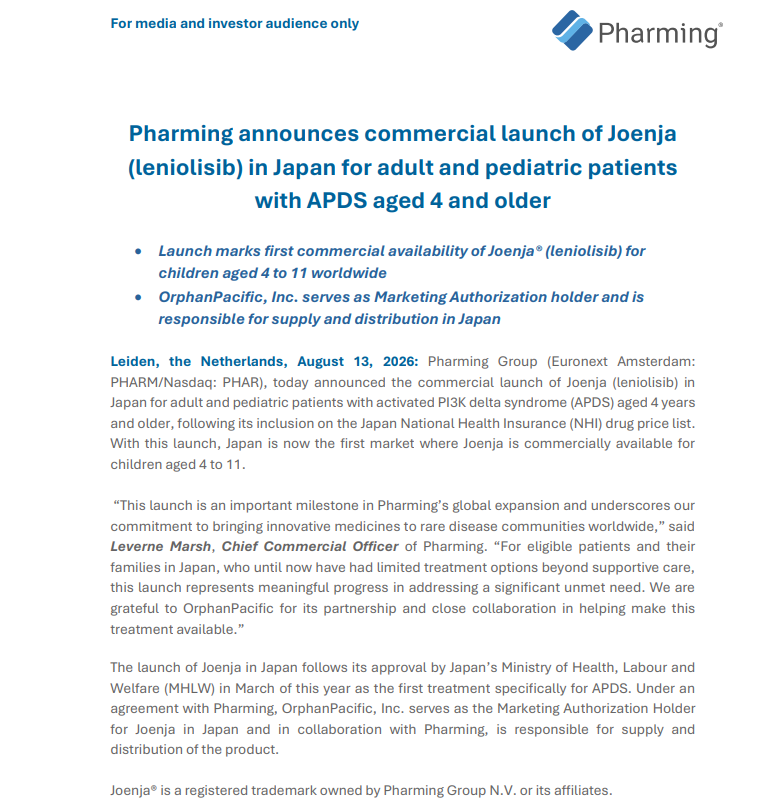

Iso juttu myös USAssa?
- FDA approval expands Joenja indication to include children with activated phosphoinositide 3-kinase delta (PI3Kδ) syndrome (APDS) ages 4 to 11 who weigh at least 27kg
- Newly approved Joenja doses are expected to be available in October
3 tykkäystä
Toimarille monoa: Pharming announces CEO transition | Pharming
Oiskohan Chouraqui halunnut viedä firmaa vähän aggressiivisemmin eteenpäin investointien kautta ja hallitus enemmän kulukuria…Esim. erimielisyys pääoman allokoinnista, M&A:sta tai uudesta in-licensing-diilistä.
Ja kenties erimielisyys siitä, kuinka aggressiivisesti CVID/leniolisib-ohjelmaa pitäisi viedä eteenpäin positiivisen PoC:n jälkeen.
Toki voi olla jokin muu henkilökemia-, governance- tai muu asia, josta ei ole julkista näyttöä…
Epäilen pientä dippiä uutiseen. Tai no Pharmingin ollessa kyseessä ei voi hullut ylilyönnitkään mahdottomia 
2 tykkäystä
Markkina ei välittänyt, mutta kontrolloimattomassa tutkimuksessa leniolisibilla oli positiivisia vaikutuksia määrätyillä PID (primaari immuunipuutos) - potilailla.
Jos tästä kehittyy jotain, TAM kasvaa merkittävästi…
4 tykkäystä
PID faasi 2:n tutkimustulos oli kiinnostava ja lupausta antava. Tosin aineisto oli hyvin pieni ja ehkä epähomogeeninenkin, vähän kuin tapausselostuksia muistuttava. Jos faasi kolmoseen mennään, odotusarvot ovat suuret. Tilan prevalenssi on kertaluokkaa suurempi kuin APDS:n.
CVID faasi 2: n tulokset tulevat tällä kvartaalilla. Tämä on etiologialtaan aika epäselvä primaarinen immuunipuutostila, jossa voisi olettaa Joenjan tehon olevan epävarmempi. Tila on kyllä yleinen, 1:25000.
Miksi sitten kurssi ei värähtänyt PID-tutkimuksen tuloksesta? Luultavasti pelkoja on kahdesta syystä: Pelko Ruconestin myynnin laskusta ja viikko pari sitten tapahtuneesta äkillisestä toimarin erosta.
Toisaalta tämän vuoden aikana on tapahtunut useita positiivisia Joenjaa koskevia lupapäätöksiä, jotka ovat lähes kaksin/kolminkertaistaneet markkinapohjan.
Joenjan käyttöindikaatio on ilmeisesti luonteeltaan sellainen, että sen penetraatio markkinoilla on hidas, FDA-päätöksestä on jo kulunut 3,5 v.
2 tykkäystä