NextCell

Nextcell-yhtiöstä alkoi kertyä pienestä koostaan huolimatta niin paljon juttua Diamyd Medical-keskustelussa, eikä Diamyd enää lue yhtiötä liitännäiseksi yhtiöksi, joten päätin tehdä erillisen aloituksen tätä varten.

Nordnet: Nextcell (NXTCL )
Nextcell Pharma Home

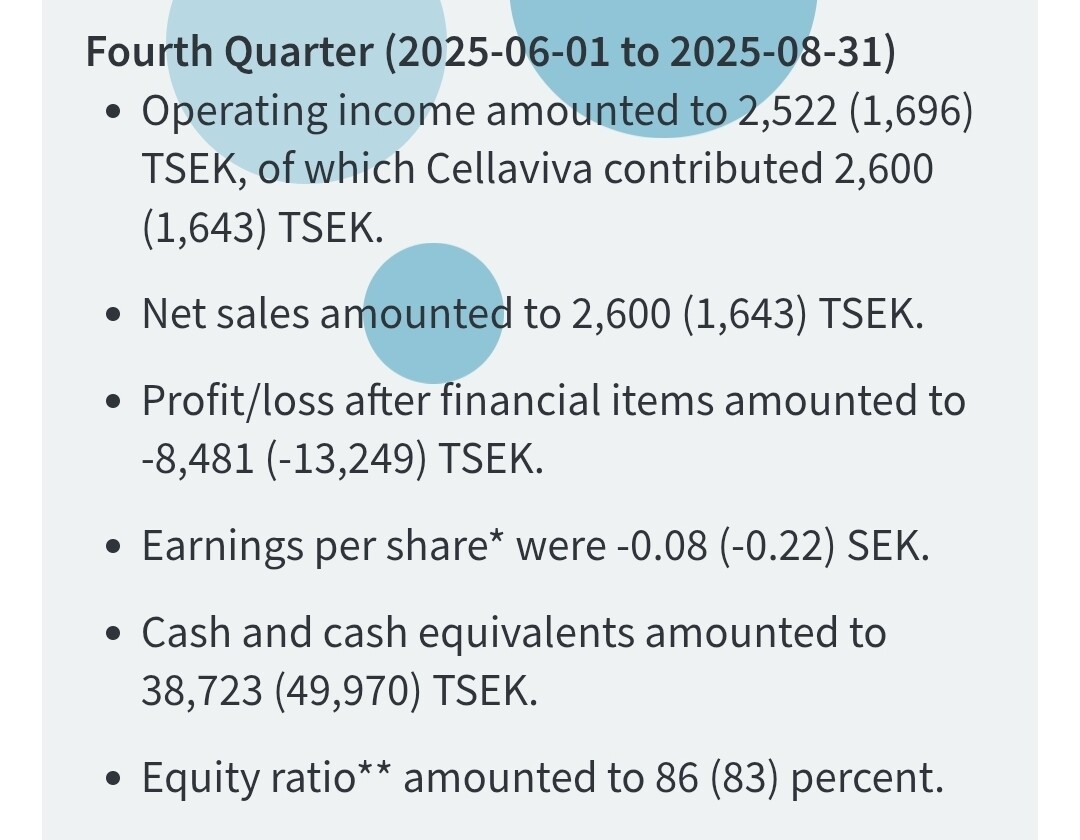
Ruotsalainen life science -yhtiö NextCell Pharma on siis kliinisen vaiheen biotekniikkayhtiö, jonka päätähtäin on kehittää kantasoluhoitoja autoimmuuni- ja tulehdussairauksiin. Yhtiö on kirjoitushetkellä markkina-arvoltaan miniskuulinen 10M € - mutta juuri siksi koen sen niin kiinnostavaksi. Yhtiö on mielestäni poskettoman halpa potentiaaliinsa nähden.

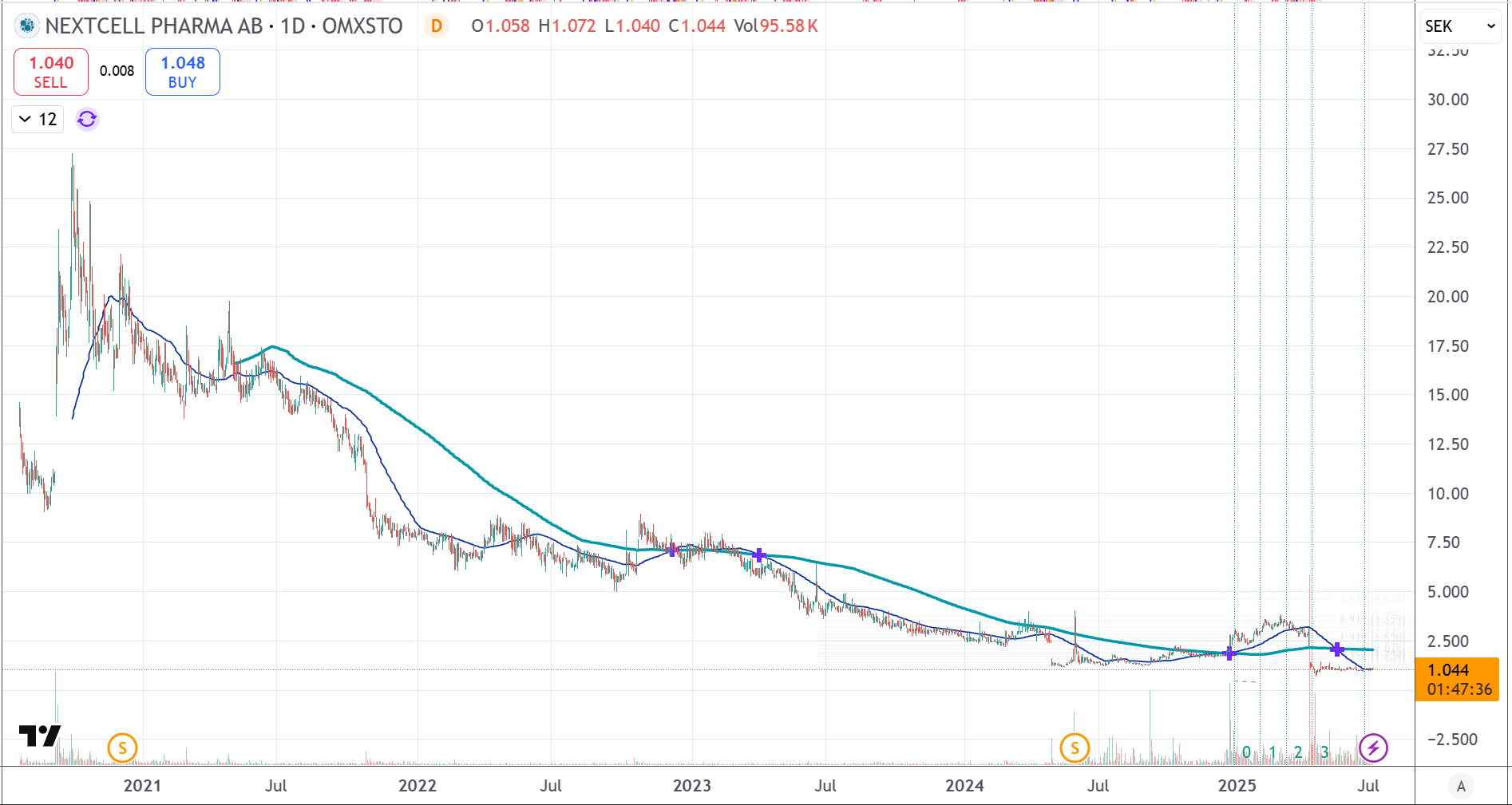
Ennen kun jatketaan eteenpäin, sopii painottaa, että kuten osakkeen historia näyttää, kyseessä saattaa olla myös tyypillisen small cap biotechnin tapaan loistava mahdollisuus polttaa rahansa, jos matka jatkuu samanlaisena:
Protrans-kantasoluhoito
Nextcellin hoitojen ytimessä on Protrans-kantasoluhoito, jota ensimmäisenä pilotoidaan tyypin 1 diabeteksen hoitoon. Tavallaan kyseessä on siis Diamyd Medicalin kilpailija, vaikkakin lähestyminen eroaa hiukan. Lisäksi mainittakoon että Diamyd medical omistaa suht merkittävän osan Nextcellin osakekannasta.

Nextcellin tuote Protrans on tuotteena huomattavasti geneerisempi ja sillä on potentiaalia toimia hoitona useille autoimmuuni- ja tulehdussairauksille, joista TD1 on vain ensimmäinen tutkimusputkessa. NextCell Pharman ProTrans-soluterapia perustuu mesenkymaalisiin stroomasoluihin (MSC), jotka on valittu NextCellin algoritmilla niiden optimaalisen immunomoduloivan toiminnan perusteella. MSC-soluilla on laaja-alaisia tulehdusta hillitseviä ja immuunijärjestelmää moduloivia ominaisuuksia, mikä tekee niistä potentiaalisen hoitomuodon useisiin muihinkin sairauksiin diabeteksen lisäksi. Esimerkiksi toukokuussa 2025 Naturessa julkaistu tutkimus tukee sitä, että Nextcellin käyttämällä hoitokeinolla voisi olla potentiaalia myös esimerkiksi Alzheimerin hoitodossa. Nextcell onkin jättänyt patenttihakemuksen ProTransin käytöstä keskushermoston (CNS) ja hermostoa rappeuttavien sairauksien hoitoon jo vuosia ennen kuin Naturen artikkeli julkaistiin. Tämä patenttihakemus on tiettävästi vielä vireillä useissa maissa, kuten Australiassa, Kanadassa, Euroopassa, Hongkongissa ja Yhdysvalloissa.

NextCell on myös aiemmin maininnut kehittävänsä kantasolutuotteita, jotka voisivat mahdollistaa ja lisätä elinsiirtojen, kuten munuaissiirtojen, hyväksyntää elimistössä. Kantasolujen immuunijärjestelmää moduloiva kyky voisi auttaa estämään hylkimisreaktioita. Yleisesti ottaen MSC-soluja tutkitaan laajasti regeneratiivisessa lääketieteessä kudosten korjaamiseksi ja uudistamiseksi. Vaikka NextCellin pääfokus on immuunimodulaatiossa, ProTransin solut voivat teoriassa tukea myös kudosten paranemista monissa vammoissa tai sairauksissa, mutta tämä ei näytä olevan Nextcellin fokuksessa tällä hetkellä.

Kantasoluthan ovat varmasti tulevaisuuden lääketieteen kärkeä ja olemassa on jo runsaasti näyttöä kansasolujen hoitopotentiaalista. Pelkkiä kantasolujahan ei kuitenkaan voi patentoida, mutta Nextcell on onnistunut rakentamaan monivaiheisen patenttisuojan tuotteensa ympärille. Protrans-hoidossa kyseessä on NextCellin algoritmisella menetelmällä valikoitu, puhdistettu ja valmistettu solukoostumus jota käytetään tiettyjen autoimmuunisairauksien hoitoon. Nextcellin patenttisuoja kattaa:
Tuotepatentteja: Itse ProTrans-soluvalmiste, joka on määritelty sen ainutlaatuisen solukoostumuksen kautta.
Menetelmäpatentteja (Method): Teollinen prosessi, jolla ProTrans-valmiste tuotetaan (ns. “valinta-algoritmi”).
Käyttöpatentteja (Use): Edellä mainitun tuotteen käyttö tiettyjen sairauksien, kuten tyypin 1 diabeteksen, hoitoon.

Yhtiön rakenne ja liiketoiminta-alueet
Katsotaanpa tarkemmin, mistä muista palikoista kokonaisuus rakentuu. Lääkekehitys on paketoitu Nextcell-emoyhtiöön, mutta poiketen tusinabiotechnistä, yhtiöllä on myös kasvavaa perusliiketoimintaa joka tuottaa jo jonkin verran kassavirtaa. Käyttökate (EBITDA) on toki edelleen negatiivinen, ja tulos per osake (EPS) miinuksella. Tämä on odotettavaa tässä vaiheessa, koska isoimmat tulovirrat tulevat vasta mahdollisten lääkehyväksyntöjen ja kumppanuuksien myötä.

Uudet liiketoiminta-alueet: NextCell Pharma on äskettäin ilmoittanut “strategisesta yhteistyöstä” FUJIFILM Irvine Scientificin (nykyään osa FUJIFILM Biosciencesta) kanssa. Tämän yhteistyön tavoitteena on tarjota tutkijoille ja alan toimijoille integroitu ratkaisu, joka tukee uusien solu- ja geeniterapioiden kehitystä ja validointia. Kyseessä on siis uusi vertikaalinen liiketoiminta-alue.
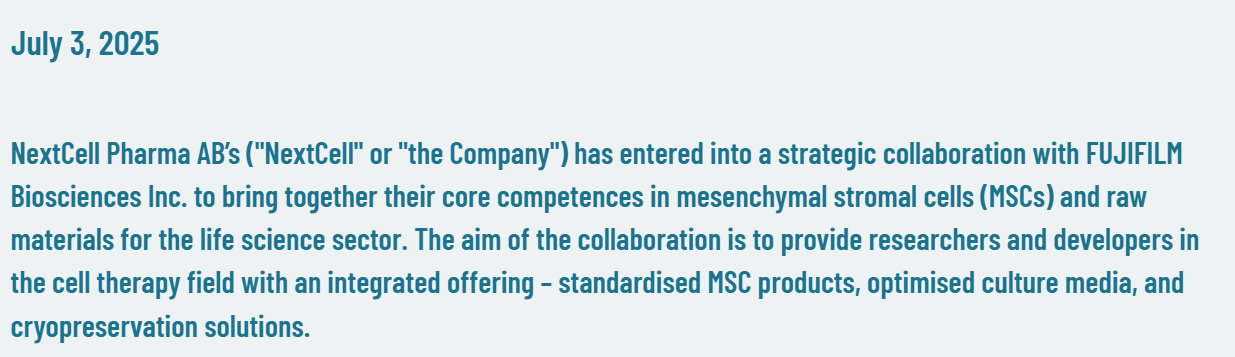
Cellaviva-tytäryhtiö : Tämä on pohjoismaiden suurin perhesolu/kantasolupankki, eli ne säilövät syntymän yhteydessä napanuorasta ja kudoksista kerättyjä kantasoluja tulevaa käyttöä varten. Tää tuo kassavirtaa ja on tukijalka tutkimukselle. Tulevaisuudessa Cellaviva voisi laajentaa palveluitaan tai toimia jopa kaupallistamisen alustana tietyille kantasoluhoitoille. Statuksen osalta tämä toimii suht vakaasti ja tarjoaa jo jatkuvaa tuloa. Viime kvartaalissa myynti oli vain SEK3.2m mutta kasvua 39% YoY. Solupankkitoiminta itsessään voi olla valtavan arvokasta tulevaisuudessa, vaikka Protrans hoitona ei löisikään läpi.

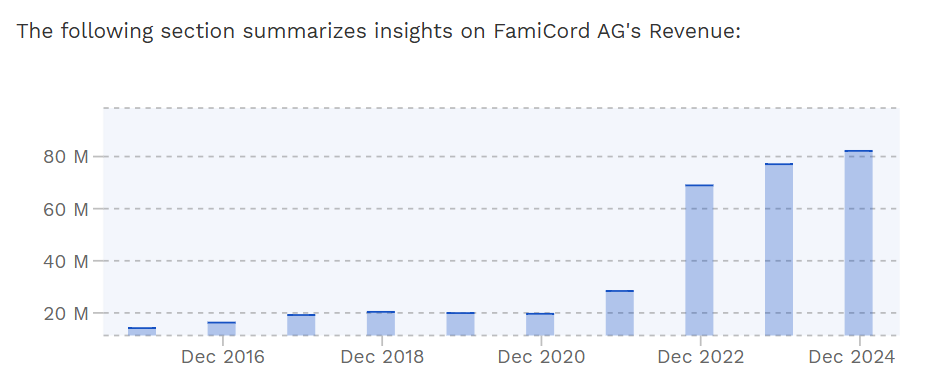
Lisäksi NextCell omistaa 8,5 % osuuden FamicordTX:stä, joka on CAR-T-soluterapiaan keskittyvä syöpähoitoihin erikoistunut startup-yritys. FamicordTX on tytäryhtiö puolalaiselle FamiCord AG:lle, joka puolestaan pyörittää euroopan suurinta solupankkia kovilla kasvuluvuilla:<, jotka tukevat myös Cellavivan liiketoimintapotentiaalia
Qvance AB : Vuoden 2024 lopussa perustettu 100% omistettu tytäryhtiö, jonka tehtävä on toimia solu- ja geeniterapioiden sekä muiden biologisten lääkkeiden laadunvalvontapalveluna (Quality Control, QC) ja analyysipalveluna. Tällä vastattiin olemassaolevaan tarpeeseen, sillä pohjoismaissa ei ole riittäviä alan tarvitsemia laboratoriopalveluita. Qvancen odotetaan tuottavan liikevaihtoa jo 2025 aikana, ja sillä jo nyt on olemassaoleva kumppanisopimus bioMérieux:in kanssa. Qvance tavoittelee GMP-lisenssiä lähiaikoina, mikä mahdollistaisi liiketoiminnan laajentamisen sopimusvalmistamiseen. Big Pharmaa palveleva sopimuslaboratorio voisi itsessäänkin kattaa koko Nextcellin markkina-arvon muutamien vuosien päästä, koska kilpailijoita on hyvin vähän pohjoismaissa.

On siis äärimmäisen positiivista että osaksi nextcelliä ollaan kehittämässä laajaa repertuaaria liiketoimintaa, mikä viestii siitä että johdolla on luottamusta siihen että kalliit lääketutkimukset tuottavat tulosta, eivätkä siten kaada koko muuta puljua mukanaan.

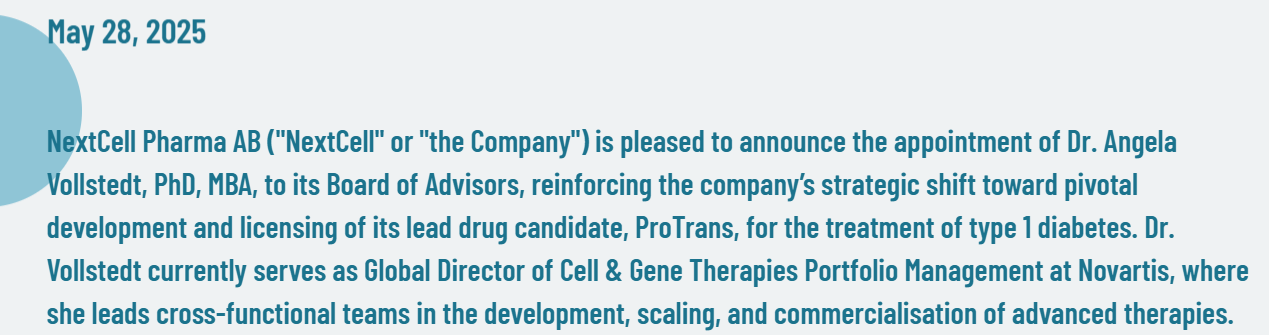
NextCellillä on myös vahva neuvonantajaryhmä (Advisory Board), johon on viime aikoina nimitetty todella kovia nimiä, joilla on syvät juuret Big Pharma -maailmassa esimerkiksi Novartis, Eli Lilly, Sanofi tai AstraZeneca kaltaisissa jäteissä. Itseasiassa Novartiksen tällä hetkellä istuva kansainvälinen portfoliojohtaja on hiljattain nimitetty neuvonantajaryhmään. Tästä herääkin kysymys, onko Novartis iskenyt silmänsä kiinni Nextcelliin?
Matka hyväksyntään tulee kestämään vuosia ja faasien onnistumisessa on runsaasti epävarmuutta, mutta kun pelkästään TD1 hoitona potentiaalinen peak sales lasketaan miljardeissa ja faasin 3 rahoittava sopimus olisi potentiaalisesti satojen miljoonien arvoinen, voi kyseessä olla varsin kannattava lottolappu jo lähiaikoina firman markkina-arvon ollessa vain 10M € luokkaa.

Protrans-tutkimukset
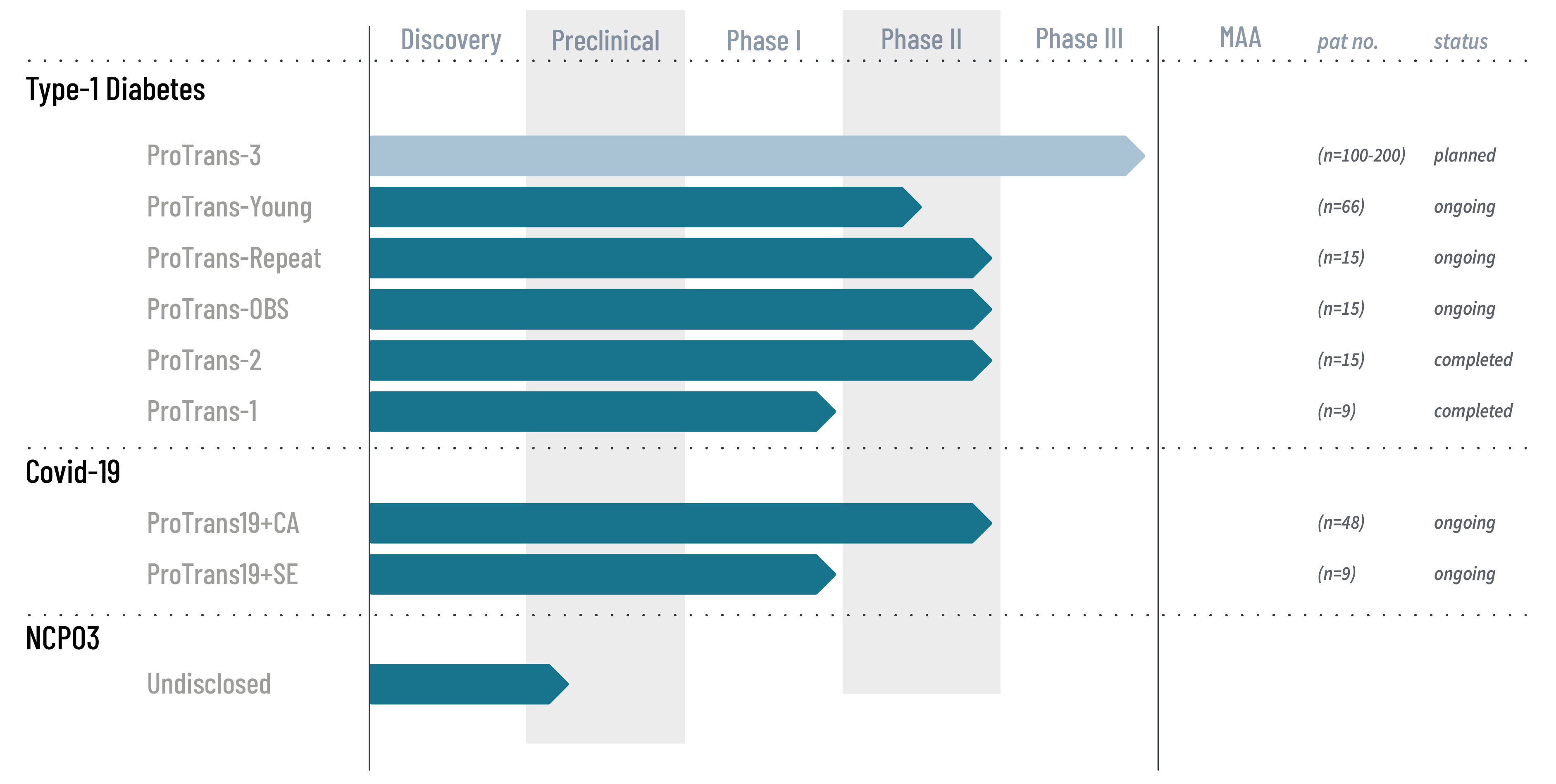
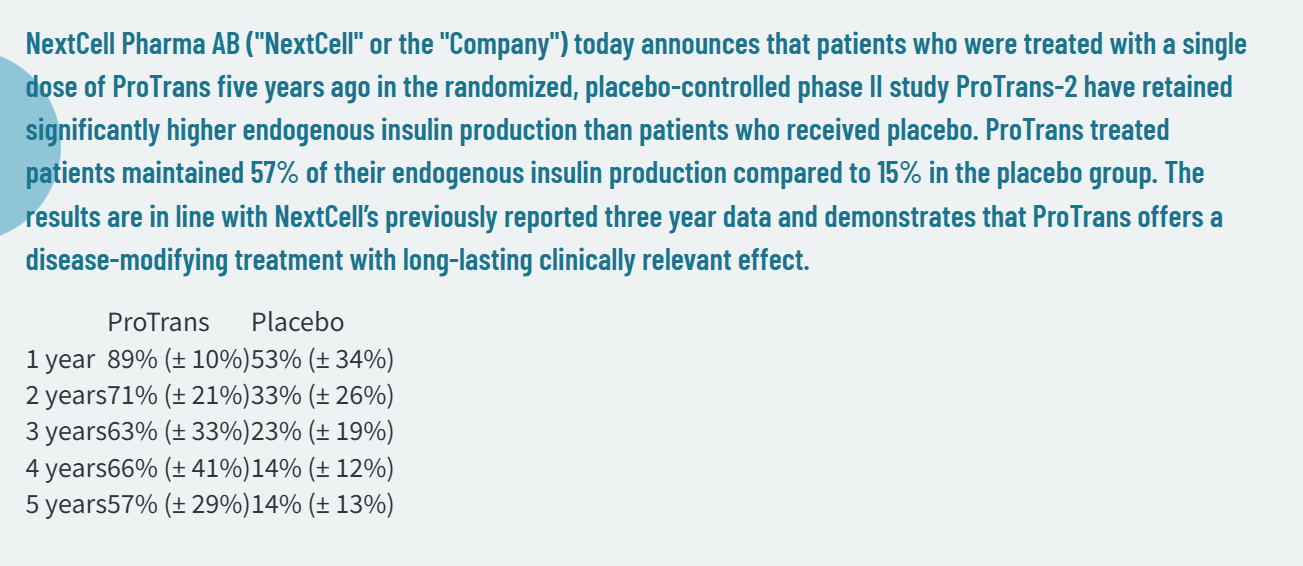
Yhtiö on toteuttanut useita pieniä tutkimuksia ja tulokset ovat olleet lupaavia, vaikkakin otannat ovst olleet pieniä. Esimerkiksi vuonna 2023 julkaistussa Protrans-2 tutkimuksessa ProTrans-hoidetut potilaat säilyttivät keskimäärin 90 % omasta insuliinintuotannostaan yhden vuoden kuluttua hoidosta, kun lumeryhmässä vastaava luku oli 53 %. Tulos on äärimmäisen kova verrattuna muihin vastaaviin. Toukokuussa 2024 julkaistut tiedot 5 vuoden seurantatutkimuksesta osoittivat, että ProTrans-ryhmän potilaat säilyttivät keskimäärin 57 % insuliinintuotannostaan viiden vuoden kuluttua, kun lumeryhmässä vastaava luku oli 14 %. Kyse oli yhdestä hoidosta: Protrans-repeat osoitti, että toistuva hoito voi säilyttää ja jopa parantaa insuliinintuotantoa kuuden vuoden ajan. Erityisesti suurimman annoksen saaneet potilaat säilyttivät keskimäärin 91 % insuliinintuotannostaan kuuden vuoden kuluttua ensimmäisestä annoksesta.
Keväällä 2025 julkaistiin 1 vuoden tutkimustulokset nuorten ryhmään kohdistetusta tutkimuksesta ja osake koki karun 70% pudotuksen, sillä tilastollista merkittävyyttä ei onnistuttu saavuttamaan yhden vuoden aikaikkunassa. Totesin tämän kuitenkin heti totaaliseksi ylireaktioksi 1 vuoden tuloksille, sillä tulokset osoittivat kuitenkin vahvaa trendiä ja nuorten ryhmässä poikkeaville tuloksille on erittäin perustellut syyt, johtuen ajoituksesta suhteessa diagnoosiin ja nuoresta iästä (diabeteksen tunnettu retentiovaihe). Koko Protrans-young -tutkimus on kuitenkin viisivuotinen. Myöhemmin yhtiö myös julkaisi tiedotteen jossa tuloksia analysoitiin pitkälti päätyen samoihin johtopäätöksiin omien alustavien ajatusteni kanssa. Tuloksia on avattu myös viimeisimmässä kvartaaliraportissa.

Osake ja valuaatio
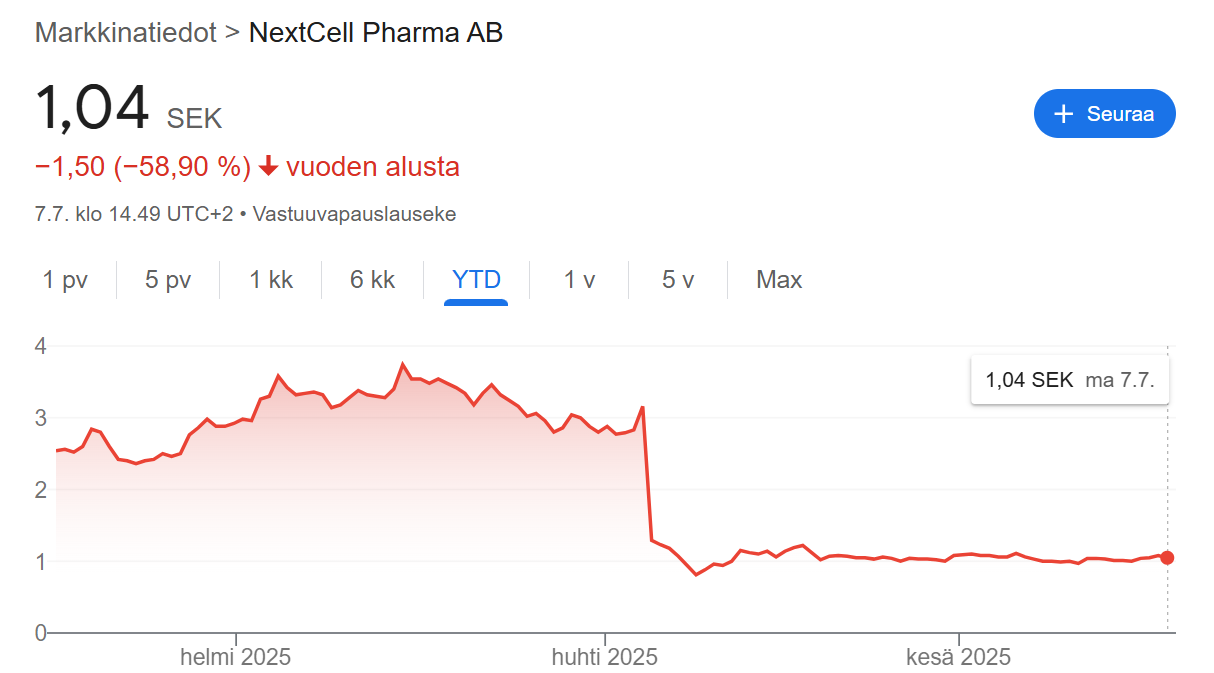
Markkina ei kuitenkaan ole vielä palautunut tuosta kevään 2025 laskusta, ja osake on halpa kuin saippua, vaikka aiemman tutkimusnäytön perusteella faasin 2 onnistumistodennäköisyys on erittäin hyvä. Jos esimerkiksi käytämme Redeyen 4.5 SEK valuaatiossa (4.5 SEK) käytettyä parametrina 650M $ arvoisesta markkinointisopimuksesta vuonna 2027, tämä viittaisi että markkina hinnoittelee faasin 2 onnistumistodennäköisyydeksi poskettoman huonoa 10-15% todennäköisyyttä, mikä kuitenkaan ei ole perusteltavissa tutkimustuloksilla.

Parhaimmillaan osake on ollut vuonna 2022 melkein 20 SEK paikkeilla, eli melkein 2000% korkeammalla, diluutiot huomioiden noin 5-kertaisella markkina-arvolla.

Lähitulevaisuuden ajurit
Vaikka Redeye puhuu sopimuksesta vuonna 2027, yhtiö on viestinyt että pyrkii saamaan ison kumppanin faasin 2 aikana, ja siitä viestivät myös panostukset neuvonantajaryhmään. Nextcell toteutti hiljattain annin 2025 Q2 aikana, minkä myötä toimitusjohtaja on kertonut yhtiön olevan rahoitettu 2026 loppuun asti. Riski mahdollisista uusista diluutioista on toki korkea, mutta en usko sen realisoituvan ainakaan ennen 2026 kevättä tai kesää. Hyvässä skenaariossa yhtiö saa kumppanisopimuksen solmittua ennen sitä. Todennäköisyyksiä tälle voi vain arvella, mutta kumppanisopimus veisi yhtiön heittämällä ainakin kertalukua isommaksi. Toisaalta partneroitumista saatetaan joutua odottelemaan siihen asti, että täysi 1 vuoden välitulos ProTrans-Young -tutkimuksesta saadaan 2026 kesän jälkeen. Tuolloin mukana on myös of 7-11-vuotiaiden otos. 2025 aikana voidaan kuitenkin odottaa vähintään viestintää vähintään Qvancen liiketoiminnan käynnistymisestä ja sertifioinnista, tuotekehityksestä Fujifilmin kanssa, uutisia patenttihakemuksien etenemisestä.

Päivittelen sisältöä ajan kanssa.

24 Likes

A quick summary of the company as an investment.

-The risks of losing money in biotech are naturally very high
-It will take years for the company to bring ProTrans to market. The focus should therefore be specifically on partnering, which could happen much sooner.
-A potential negative driver for the stock could be Diamyd’s partnering. On the other hand, a significant partnership agreement could also be seen as a positive signal for Nextcell.
+The company has been pretty much driven into the ground, and I don’t consider it likely that there would be significant downside potential at this valuation before a new dilution, which currently seems to happen later in 2026, unless a marketing agreement is reached before then.
+Parallel vertical business areas are developing rapidly, and the company has the potential to become profitable even without ProTrans.
+Although the company is making losses, costs are currently relatively small and reasonably well managed.
+The spring 2025 dip appears to have been a one-off and has not formed a trend.

For technical traders; The stock has held its ground well for a couple of months after the dip, and it has recently reached numerous long-term averages (50D, 21D, 50 4H, 50H, 200H…) and is currently knocking below the historically significant 50D average.
Screenshot_20250707_173952_TradingView

The 50/200H cross and 9/21 4H will probably be achieved tomorrow, and although they haven’t been particularly good buy signals in the past, they could help push the price above the hovering 50-day average.
Screenshot_20250707_174727_TradingView

In previous instances, a 50D MA crossover has led to short but good rallies (although, of course, the news flow during the trend naturally contributed to these)

  • March 2024: +53%
  • July 2024: +24%
  • October 2024: +60%
  • December 2024: +108%

I bought the company during the spring dip, and the goal is to hold the shares with a reasonably large weighting, but to start significantly reducing them from spring as the potential dilution risk approaches. If things go well, I’ll capture a positive price change before the decline brought on by dilution. If a partnership materializes within this timeframe (which is likely an improbable scenario), the stock’s decimal point could shift to the right. If a positive rally doesn’t occur, I don’t believe there’s much room for further decline at this very low valuation before either dilution or research results change the outlook.

11 Likes

Thanks for the comprehensive opening. What follows is a bit of rambling. First, I agree that the market reaction to proyoung’s preliminary results has been an overreaction; the market practically interpreted the study as a failure. However, the honeymoon phase in that group of young people diagnosed less than 6 months ago likely occurs in over half of the subjects and will certainly overshadow the drug effect.

A breakthrough for ProTrans would indeed be quite a bombshell. Although the use of stem cells is commonplace in the treatment of blood cancers, only 1 actual drug based on mesenchymal stem cells has entered the market in the US - Ryoncil. The dialogue with the FDA was not entirely linear - the company had to provide additional evidence regarding product homogeneity and the cell selection process.

I think the FDA will similarly scrutinize ProTrans in due course. It would probably be beneficial if the process were as in-house as possible.

It’s not yet clear to me how in-house the entire manufacturing of ProTrans is.

It has now become clear that ProTrans uses cells obtained from umbilical cord versus Ryoncil’s bone marrow-derived cells. The umbilical cord is, of course, superior in terms of availability. I can’t extensively compare the pros/cons of different sources.

So, this is full of question marks, but at this price, considering the potential, it is indeed attractive, especially considering those side businesses.

7 Likes

Thank you for your comment and excellent insights!

Thank you for the comprehensive opening. What follows is a somewhat scattered writing. Firstly, I agree that the market reaction to ProYoung’s preliminary results has been an overreaction; the market practically interpreted the study as a failure. However, the honeymoon phase in that group of young people diagnosed less than 6 months ago will likely occur in over half of the subjects and will certainly overshadow the drug effect.

Yep. Patients were likely enrolled significantly sooner after diagnosis (less than 6 months), which is why the remission phase is very strong. Additionally, during puberty, T1D behaves somewhat differently, with the remission phase being stronger than in adults. In practice, statistical significance was not achieved precisely because the results of the control group were also so good, with their insulin response even improving in some places.

Earlier initiated drug treatment is also well justified, as this allows cells to be protected before they are completely destroyed, and hopefully the difference to the control group will be significant in 3-5 years.

ProTrans-Young’s 1-year follow-up results for the entire cohort will be available after next summer, which will also include the youngest children. The unfortunate thing is that it’s quite expected that the response in younger children will also be somewhat similar. Will they publish the 2-year interim results for adolescents in spring 2026? That would at least be quite sensible to dispel doubts from the initial results. However, I haven’t seen any indications that they intend to publish them.

A breakthrough for ProTrans would indeed be quite a bombshell. Although the use of stem cells is commonplace in the treatment of blood cancers, only 1 mesenchymal stem cell-based drug – Ryoncil – has entered the market in the USA. The dialogue with the FDA was not entirely linear – the company had to produce additional evidence regarding product homogeneity and the cell selection process.

.

Yep. Mesoblast’s value climbed to over 2 billion dollars when approval came, even though sales didn’t exist yet. This gives an indication of the potential of stem cell therapies and why NextCell as a company is ridiculously cheap.

NextCell has certainly followed Mesoblast closely. The core of NextCell’s ProTrans is its selection algorithm, which aims to identify MSC cells with optimal immunomodulatory function from umbilical cord tissue, and it is designed to improve product homogeneity and predictability, directly addressing FDA concerns. The algorithm received a US patent recently in May 2025.

I think the FDA will scrutinize ProTrans in a similar way when the time comes. It would probably be beneficial if the process was as in-house as possible. It’s not yet clear to me how in-house the entire manufacturing of ProTrans is.

NextCell has built its own production facility in Sweden, which was completed in autumn 2022, and it is intended to be capable of initial production volumes. However, the company has stated that the facility’s purpose is also to prepare for the transfer of technology to a larger commercial partner or contract manufacturer. My understanding is that this laboratory is the same one where Qvance operates and for which GMP certification is being sought this year.

4 Likes

It has now become clear that ProTrans uses cells obtained from the umbilical cord versus Ryoncil’s bone marrow-derived cells. The umbilical cord is, of course, superior in terms of availability. I cannot compare the pros/cons of different sources more broadly.

Availability is completely superior. Collection is painless and does not require an invasive procedure. Thus, cells can also be easily stored in a cell bank for future use.

I do not have the professional expertise to explain the benefits of bone marrow (BM-MSC) vs. umbilical cord (UC-MSC), but Google’s Gemini Pro helped with this:

  • Proliferation capacity: UC-MSCs generally have a higher proliferation capacity and can form more colonies than BM-MSCs. This is important for producing large numbers of cells.
  • Younger age: UC-MSCs are “younger” cells, which may mean better vitality and fewer age-related changes compared to cells obtained from adult bone marrow.
  • Immunogenicity: UC-MSCs often have lower immunogenicity, which reduces the risk of rejection.
  • Non-invasive collection: The collection process is non-invasive, unlike bone marrow collection.
    Bone marrow MSCs have been the most studied and used MSC sources for the longest time, so there is a lot of clinical experience with them. Some studies have found BM-MSCs to have a better ability to differentiate into certain tissues, such as bone and fat, than UC-MSCs.
  • Stronger immunomodulation: Some studies suggest that UC-MSCs may have a stronger immunomodulatory and anti-inflammatory effect compared to BM-MSCs, which is key in the treatment of autoimmune diseases such as type 1 diabetes.
  • In some studies, UC-MSCs have been found to be more effective in certain regenerative applications, such as tendon or heart tissue regeneration, while BM-MSCs have a better ability to regenerate bone.
  • Abundance: Umbilical cord tissue is abundantly available, and a large number of MSC cells can be isolated from it. This is important for the development of allogeneic (“off-the-shelf”) products that can be widely used for patients.

Mesoblast’s choice for bone marrow cells is quite natural, because when Mesoblast was founded in 2004, I don’t believe there was any research on UC-MSCs. They were discovered and began to be studied considerably later than BC-MSC cells. Studies on the use of UC-MSCs in humans only began in 2007, and for the first time, unknown human UC cells were used to treat another human in 2011. Nextcell may indeed be a real pioneer in this.

Nextcell can be said to be a spinoff from the stem cell research started at Karolinska Medical University in the early 2000s. Apparently, the research group at Karolinska University conducted cutting-edge research and was among the first to demonstrate the ability of MSC cells to cure dangerous diseases. According to Gemini, specifically this Karolinska study published in The Lancet in 2004 was key in MSC treatments breaking through and companies like Mesoblast being founded.

6 Likes

image

Tangible assets on the balance sheet amount to approximately 12 MSEK, likely related to this factory? That figure sounds a bit small. But it’s good that it exists.

Certainly, and lessons have likely been learned from the pioneer’s setbacks. I had to dig up Mesoblast’s press releases for that 2020 FDA rejection. It required another controlled trial and the statement: “The FDA also identified a need for further scientific rationale to demonstrate the relationship of
potency measurements to the product’s biologic activity

This, of course, links to NextCell’s selection algorithm. However, the operation of this specific algorithm has not been presented in any published studies on ProTrans (understandably, as it’s difficult to make a sensible publication about a trade secret), so investors simply have to trust the company’s assurances here. But there must be something special about the technology, as it has been patentable. Patent description is quite a behemoth; I don’t quite have the interest to go through that, but precise algorithm operation or practical efficacy/functionality data is unlikely to be found there either.

3 Likes

In fact, a surprisingly precise explanation of how that validation works seems to be found there. It lists all the different measurable markers, their scoring in relation to change levels, and the weighting of the scores. Based on that description, I believe a skilled person should be able to replicate the method, once they get past the patent jargon barrier.

I read through that patent a bit, just out of interest in the subject. What has always bothered me about these MSC methods is that even though MSC originally refers to a stem cell (mesenchymal stem cell), none of these therapies depend on the stem cell properties of these cells. Instead, the effect seems to be based on immune response regulation. Nowadays, the MSC abbreviation is probably more often used for the term mesenchymal stromal cells, or as also mentioned somewhere, medicinal signaling cells.

Anyway, that validation seems to be based on co-culturing cultured MSC cell batches and the patient’s immune cells, followed by measuring various markers reflecting the immune response.

The results from the same examples based on weighed total score are shown in Table 169 (1×[IDO]+1×[PI]+1.5×[PGE2]+2×[HLA-ab]+1×[FluoroS]).

IDO = indoleamine-2,3-dioxygenase → reduces immune cell proliferation
PI = proliferation index
PGE2 = prostaglandin E2 → regulates MSC immunomodulation
HLA-ab = patient’s anti-HLA antibodies against the cell transplant, less = better
FluoroS = fluorospot assay, measures a bunch of different inflammatory cytokines

A large part of those FluoroS measurable cytokines are actually the same molecules encountered in various immuno-oncological contexts (e.g., often in Faron’s thread). It’s possible that these MSCs are potentially the same cells that contribute to the creation of an immunosuppressive tumor microenvironment, i.e., CAFs or cancer-associated fibroblasts. In this case, however, these cells aim to curb an excessive immune reaction. The role of CAF could also be indicated by the fact that one of the markers mentioned in that patent is HLA-G, which functions in the inhibition of NK cells and macrophages.

In yet another assay, the HLA-G expression in the drug product, for example MSCs, may be measured. HLA-G has been identified as a naturally occurring tolerance-inducing molecule. It has restricted expression under physiological conditions but can be upregulated e.g. in response to IFNγ, IL-10 and PHA. The drug product, for example MSCs, may have low levels of intracellular HLA-G and express low levels of soluble HLA-G (sHLA-G) but stimulation with IFNγ or IL-10 will result in increased levels.

4 Likes

Good point, the balance sheet total indeed does not match the description “built its own production facility”.

Screenshot_20250710_134630_Google

Here’s a more detailed breakdown: Nextcell has not built an entirely new facility but leases premises from the public sector on the university campus. It has been operating here for about a decade, and in 2022, the premises were expanded, and new cleanrooms were built there. The old premises have Class D cleanroom laboratories, and the premises expanded in 2022 have Class B cleanrooms and a QC lab used by Qvance. The new expansion is not particularly large, 350m^2, but labs aren’t usually that big anyway.

2021: The stem cell company NextCell Pharma AB (“NextCell” or “the Company”) announces today that they have entered into an agreement with the property manager Hemsö and the clean room supplier QleanAir, to build a full-scale production facility. This new production facility will be directly connected to the Company’s existing office and clean room in the Novum building, next to Karolinska University Hospital in Huddinge.

Nextcell actually outsourced Protrans production to FamiCord right from the start as it did not have Class B lab facilities required by the EU GMP standard. Soon, with the GMP certificate, production can be done and developed in-house. In addition, commercial-level Protrans production will require more contract manufacturers.

2021: NextCell’s establishment of the new full-scale GMP facility is key in the bioreactor manufacturing process development as the primary purpose of the GMP facility is to prepare technology transfer to a potential partner or additional contract manufacturer in addition to the PBKM FamiCord Group

13M SEK still seems low compared to a generic SME company, which is at least partly explainable.

  1. It was found that Nextcell uses an older procedure for leasing according to the IAS17 standard. Consequently, leased lab facilities are not treated as capitalized “right-of-use” assets on the balance sheet, but payments are recorded as an ongoing expense. The leasing payment was at least 3M SEK per year in 2023, meaning that on the balance sheet, for example, with a 5-year contract, this would be 15M SEK, which would be discounted and capitalized to both liabilities and assets on the balance sheet.

  2. Nextcell has received several grants and has approximately 10M SEK in “Prepaid Expenses and Accrued Income”, which is likely largely grant money from achieved milestones that has not yet been used. For example, a Eurostar 500k € grant was awarded for a project planned for 2020-2023 related to Protrans production. Even though the project was planned for 2023, this could well be a remnant because the production facility is not ready and all EU-level grant programs were delayed by about a year during the pandemic. Furthermore, in large EU projects, the final payments tend to come significantly late after the projects conclude. This grant will likely be capitalized on the balance sheet as the process progresses, if possible.

  3. Although the facility’s labs are essentially ready, a very large part of the GMP facility’s costs relates to permit applications, validation, and other work that may not be fully or has not yet been capitalized on the balance sheet.

  4. Nextcell is a relatively small company where the management consists of researchers and is likely hands-on with certifications, patents, research and development, equipment acquisitions, and permit applications. However, IFRS standards prohibit capitalizing administrative salary costs on the balance sheet, regardless of what they do. In such cases, the balance sheet of small companies is thus distorted compared to larger ones.

  5. This is not helped by the fact that IFRS rules regarding the capitalization of patent application and research costs and materials are extremely strict anyway. I’m guessing that Nextcell might perhaps justify capitalizing Protrans R&D costs by transitioning from the research phase to the development phase in 2025/2026. At that point, the focus will begin to shift from Phase 2 research to commercialization, and the first results of the Protrans-Young study will support Protrans’s functionality as a technical product. The balance sheet of small biotechs is typically quite small.

  6. Nextcell operates very closely with the university and apparently, in practice, on the university campus rather than in its own facilities. Possible shared usage rights or operation in public sector facilities might also limit how many costs are capitalized on the balance sheet? An accounting expert might be able to correct this.

  7. Nextcell was founded in 2014, and tens of millions of euros have been spent. Most of this has gone into research activities, and most of the equipment from the old lab has likely been depreciated over 5-10 years. The fixed assets on the balance sheet were quite negligible before the 2021 lab investments.

That 13M SEK therefore most likely represents almost exclusively equipment acquired for the new lab.

2 Likes

Screenshot_20250714_124927_Chrome

Fujifilm’s and Nextcell’s collaboration has been highlighted in a new Genetic Engineering & Biotech publication, which discusses Fujifilm’s new investments in the pharmaceutical industry.

Screenshot_20250714_124855_Chrome

https://www.genengnews.com/topics/bioprocessing/end-to-end-fujifilm-rebrands-life-sciences-companies-positioning-itself-as-drug-development-cycle-leader/

Could the collaboration ultimately lead to the licensing of Protrans?

1 Like

I conducted an in-depth analysis of NextCell Pharma’s valuation, and I wanted to share a summary of the key findings and calculations. The analysis is based on the sum-of-the-parts (SOTP) method, which I believe is the most suitable way to value a company that has both a high-risk drug development project (ProTrans) and more stable cash-generating subsidiaries (Cellaviva, Qvance).

Here are two key scenarios: the current base scenario and a hypothetical scenario where a partnership agreement is reached this year.

1. Current Valuation
This scenario represents the current situation, where there is significant uncertainty associated with the outcome of the ProTrans-Young study. The valuation is risk-weighted to reflect this uncertainty.
Target price: 5.01 - 6.86 SEK

Assumptions and Parameters:
Valuation method: Sum-of-the-parts (SOTP).
ProTrans value (rNPV): 453.2 million SEK.
Phase II study Probability of Success (PoS): 45% - 65%. I would say 45% is still conservative, even though it is higher than the typical Phase 2 success probability. However, Redeye uses a 40% success probability. I base the 65% upper limit on the very strong existing evidence from studies published so far.

Cumulative Probability of Success (Phase II → Approval): 23.7% - 34.3% [3]
Timing of partnership agreement: 2027 (after positive study results) [4]
Total deal value: 650 million USD [4]
Upfront payment: 130 million USD (20% of total value)
Royalties: Average 15%
Peak Sales: 1.4 billion USD
Discount rate (WACC): 16%
Value of other businesses: 87.5 M SEK.
Cellaviva: 62.5 M SEK (based on 5.0x EV/Sales multiple)
Qvance: 15 M SEK
FamicordTX ownership: 10 M SEK (placeholder value) [12, 13]
Number of shares: 111.39M

The base scenario reflects significant upside potential compared to the current share price level, but naturally involves considerable clinical risk.

2. Hypothetical Valuation: Partnership Agreement 2025
This is a purely hypothetical scenario that answers a previously posed question: what would be the company’s value if it succeeded in forming a partnership already this year? Such an agreement would eliminate a significant portion of the clinical risk and accelerate the realization of cash flows. The company has clearly already hired big pharma representatives for its advisory team and shifted discussions towards a partnership.

Target price: 13.16 SEK
Changed assumptions for the calculation:
ProTrans value (rNPV): 1,358.1 M SEK.
Phase II study Probability of Success (PoS): 100% (assuming the agreement is based on sufficiently strong evidence that Phase 2 can be expected to pass)
Cumulative Probability of Success (Phase II → Approval): 52.8%
Timing of partnership agreement: 2025 (two years earlier than in the base scenario)
Other parameters (total deal value, royalties, peak sales, WACC, value of other businesses) have been kept the same as in the base scenario for comparability.

The current valuation (5.01 SEK) prices in significant risk but at the same time offers considerable upside potential if the study succeeds and a partnership is formed as expected in 2027. The partnership scenario (13.16 SEK), in turn, highlights the potential inherent in the stock if the risk were to be removed earlier than expected. This figure illustrates how much of the value is currently tied up by the uncertainty of a partnership agreement.

It is also worth noting the bear scenario of the analysis, where the ProTrans project fails completely and its value is reduced to zero. Even in this case, the value of the company’s other parts (Cellaviva, Qvance, FamicordTX ownership) and existing cash is, according to my calculations, approximately 0.97 SEK per share. This supports the view that the current market price of approximately 1 SEK hardly gives any value to the success of ProTrans, but practically only prices the company’s existing businesses.

The analysis is somewhat in line with Redeye’s valuation.
Screenshot_20250715_141348_Chrome

In a situation where NextCell would receive a 130M USD upfront payment, it would of course be a bit odd if the entire company’s valuation was almost in the same ballpark, if a partner buys the rights to ProTrans and funds Phase 3. The entire valuation is almost entirely based on the upfront payment, and future potential cash flows from milestone payments and royalties are weighted years into the future through uncertainties and a high WACC. At this stage, it is also not really possible to guess whether Nextcell would succeed in generating new productive business with the money.

6 Likes

Thanks Mauski and others for the quality content!

Was the market reaction a consequence of the results or of the market reaction itself? Before the results, the cash balance was already visible, and everyone knew the company was dependent on funds from warrants. The fact that the result was not strong meant that the valuation at which money could be obtained from warrants was lower. In addition, the absolute sum obtained is lower, which in turn means that financing risks increase, which practically means that the negotiating position in partner negotiations weakens. But even more importantly, the valuation at which additional financing might need to be raised decreases, which means greater dilution and a larger discount, which puts new owners in a better position compared to old ones, which means that owners should prepare to capitalize the company, which could mean selling shares. Furthermore, considering all risks, as the warrants’ intrinsic value sharply decreased as the expiration date approached, the incentive to exercise them disappeared, which forced the company to seek paid guarantees.

If the share price had remained at the 3 SEK level, at least double the amount of money would have been obtained with less dilution. But that did not happen, and the result was a negative spiral, the risk of which always exists if financing is dependent on uncertain funding sources. The share price has continued to fall, front-running the offering, so the market does not yet appear to have failed at this stage.

However, over 36.5 MSEK was successfully raised, which was a great success. However, it was cheap money in terms of dilution, given the situation.

The guarantors had to be paid a 15% commission, which corresponds to an effective subscription price of 0.85 SEK, or a 21% discount to the share price. In a larger offering, the discount would certainly be greater, but this can be used as an upper limit for the valuation at which money would be available.

An agreement would mean a tenfold increase in the share price, and that is naturally very unlikely.

Here, the financing need that must be met to reach mid-2027 should be considered.
ncell2

Currently, a realistic subscription price would be around 0.5 SEK, and if the financing need were conservatively 50 MSEK, that would correspond to 100 million new shares, or 46% dilution. That sounds drastic, but it is realistic in this market situation.

However, it would probably be more sensible to raise, for example, half now and half later with warrants, possibly at a better valuation, once good clinical results have been obtained. But this only demonstrates that the per-share price is difficult to estimate when the number of shares could be anything in a couple of years.

4 Likes

You are most likely exactly right. Let’s say it was an overreaction, if it was only due to the results.

The susceptibility of biotechs operating on external financing (=~share issues) to a negative stock price spiral when cash runs low has become quite familiar in recent years. There is something paradoxical about this phenomenon.

In the US, things are done big if necessary. Diamyd’s/Nextcell’s competitor SAB Bio received a capital injection of 175M, more than 5 times its market cap, from a consortium including BP Sanofi. The financing took place through a share issue with a discount of as much as 32% to the previous day's closing price... The share capital will grow from 9 million to 109 million, and apparently almost double again if all Warrants are exercised (284M were available from these). That’s some dilution :grin: I had to go through Sab’s results and compare them to Diamyd’s, but I haven’t had time yet.

6 Likes

The pace is wild, and with fixed-price warrants on top, to squeeze out the last drops from old shareholders. Perhaps almost half a billion in capital is truly needed if the treatment requires a hospital visit with infusions at the sponsor’s expense?

Please post them here then. Should Tzield also be included as a reference, even though it’s stage 2? Sanofi’s Q2 results are also coming next week, and Tzield will likely surpass the $200 million milestone in total sales. No wonder money is found for developing better solutions if a 14-day infusion can already achieve such sales.

Let’s look at SAB. Their product is humanized Anti-Thymocyte Globulin, meaning the product contains antibodies against T-cells of the immune system that mature in the thymus. Currently, ATG derived from rabbits and horses is used. These are very potent immunosuppressive (weakening the body’s defense) drugs, used in special cases, e.g., in organ transplants.

The best information on the efficacy of ATG comes from 1-year and 2-year results obtained with rabbit ATG in recently diagnosed T1D patients. Conveniently, the primary endpoint is the same as with Diamyd, C-peptide response or its change from baseline in the MMT test. Only the reporting method differs, so the treatment effect had to be calculated.

In any case, at 1 year, the ATG result was this:

“At 1 year, the AUC C-peptide geometric-like means were ATG/GCSF 0.528 nmol/L (95% CI 0.435, 0.627), ATG only 0.646 (0.547, 0.750), and placebo 0.406 (0.324, 0.494)” From this, the derived treatment effect = 0.646 / 0.406 = 1.59

Compare to Diamyd Phase 2; DR3-DQ2 group: where a treatment effect of 1.557 was reported.

image

So the results are practically on par: ATG 1yr vs Diamyd 15 months.

It should be noted that the mechanism of action is not T1D specific. In that experiment, rabbit ATG was given in one group with a white blood cell growth factor, but the treatment response was only obtained if it was not given → bad thing, ATG effectively depletes white blood cells and exposes to side effects.

In the 2-year results, the response was still only in the group that did not receive the growth factor.

SAB’s product value proposition is its humanization, which avoids the “serum sickness” side effect. I believe that white blood cell depletion cannot be avoided in any way, and the fact that efficacy is only without white blood cell growth factor is a bad thing.

And indeed, SAB is only now moving its product into Phase 2 with fresh funding. Phase 1 was tested in healthy volunteers, and safety was stated very generically: “generally well-tolerated and demonstrated a favorable safety profile that supports the chronic dosing of SAB-142 in an ambulatory setting”.

In biotechs, I use a simple three A’s classification. It comes from Mode Of Action, EfficAcy, and VAluation. Each is qualitatively assessed. Diamyd is in the AAA category. SAB’s MoA is non-specific, though well-known. Efficacy looks good, but the actual product has not yet been clinically tested, and side effects related to white blood cell destruction are to be expected. No points for valuation, considering the massive dilution and presumably massive cash burn. Would that make it one A overall.

4 Likes

Nextcell’s Q3 (March 1 - May 31) was released last week. The stock rose by about 30% at its peak last week and finally broke free from months of resistance.

Screenshot_20250729_115927_Chrome

Nextcell general overview
-Not very big changes in the figures, the result has slightly decreased mainly due to increased costs -10.3M SEK (-8.8M SEK 2024). However, for the 3rd quarter, results and costs are improving.
-Some kind of dispute with the supplier of the new production lab, which is not seen as particularly significant.
-Cash reserves at the end of May were 16.7M SEK (this will be supplemented by the summer share issue of +34M SEK after expenses).
-The CEO praises the collaboration with Fujifilm Bioscience. Apparently, the collaboration is still under wraps and no further details can be given yet, but for the first time, Nextcell implies that this collaboration will also lead to financial stability.

Screenshot_20250729_133847_Chrome

Cellaviva
-Sales grew by 14% compared to last year, but this will only be reflected in the revenue figures at the end of the year when the services rendered are invoiced retrospectively.
-Management describes increased demand for various testing services, which is why Cellaviva is launching new tests for cell bank customers (at least a saliva test for newborns and a fertility test) which apparently support cell banking operations. No further details.

Qvance
-No revenue yet, but technical preparations should be well underway and on schedule. All key core systems and equipment are now installed.
-Customer project ramp-up begins in Q3. Earlier, there was talk of some kind of collaboration with bioMérieux. The report mentions active meetings with potential new customers.
-GMP application in Q4.

Screenshot_20250729_114301_Chrome

Management’s talk of financial sustainability paints a positive picture. Ultimately, a 10M SEK burn rate is not terribly large that it couldn’t be covered if Qvance gets Big Pharma clients and the Fujifilm collaboration yields something valuable. Before that happens, however, a rights issue can be kept in the preliminary calendar for early 2026.

3 Likes

The stock has clearly come down amidst the silence, and at least the temptation would be to buy more shares towards the earnings release.

In the video, Qvance’s CEO Lindsay Davis states that services have been offered to customers for 2 months. Full GMP-certified services will start in 2026Q2. At the end, she mentions:

We have a very long waiting list of customers so this is why we have to get going a little bit faster. We are already making revenue and break even is just around the corner.

However, the earnings report does not specify Qvance’s share of the costs. I recall, however, that some of the lab investments have been made through Qvance.

I would expect an improvement in results every quarter from now on. In this release, I would expect 3-3.5M in revenue and an EPS of approximately -0.12 (-0.14).

4 Likes

I made a couple of critical and very lazy mistakes here

  1. I didn’t notice that the earnings release time is a bit unusual, possibly due to a change to the fiscal quarter. The reported quarter already ended in August. For this reason, even though Qvance has stated that it has been generating revenue for a couple of months, it didn’t show up in this report at all.
  2. I didn’t take into account the increased number of shares in the EPS figure. So the EPS was “better” at -0.08, but due to point 1, it was worse than I expected. Cellaviva’s larger sales, on the other hand, do not represent any growth; the same has occurred in other quarters earlier this time of year.

Qvance’s sales will therefore only be visible in the report to be published in February, which covers the period from the beginning of September to the end of December.

3 Likes

You have commendably analyzed this somewhat peculiar company. Thank you for that.

The company’s substance is indeed clear, and its application Protrans, which has demonstrated its efficacy in early-stage studies, and in my opinion, a high-quality phase two is well underway.

I mean the company’s valuation. The market cap is under €9m and is trending downwards. The stock is not just a penny stock, but also a centime stock. This is an exceptional situation for a serious drug development company whose product in advanced phase two has clear potential.

The financial situation is naturally explained by the company’s long development phase, burned capital, and heavily diluted stock. On the other hand, operating costs are very reasonable. The most essential point is that phase 2 is investigator-initiated, and if I have understood correctly, the company only funds Protrans. Therefore, they can manage with a light budget. This is a significant advantage that has not been reflected in the valuation.

The involvement of affiliated companies has its own peculiarities, but in the short term, their value is difficult to assess. The investor will not be left empty-handed even if Protrans fails completely.

What explains the company’s low valuation? Naturally, sentiment is at rock bottom after all these years. Funds will run out next year, and without a directed share issue, progress cannot be made, if even then. This lowers the valuation, but still, the valuation is puzzling. Information provided by stock exchange releases is only part of the information. A long study involves many people, as researchers and subjects, and despite double-blinding, more or less indirect information about the study’s success circulates. This is, of course, a problem for all drug development.

The interim readout in H2 next year is important; if evidence does not start to emerge, they will be in trouble. The situation changes if research evidence comes. The problem also seems to be that the investigator-initiated phase 2 is progressing slowly.

Still, why is the MC in the mud?

I am not here to ponder the quality and evidence of the research so far.

1 Like

This feels exceptionally cheap. It felt that way before, but now we’ve clearly slid below the issue price. There seems to be numbness and fear of a declining trend among small investors, as nothing has been heard for a long time.

One thing the company could be criticized for is its investor communications. It doesn’t really promote the company properly, not even during share issues. Communication is lazy and narrow, and it doesn’t reach many people. The stock is completely unknown to the public. Both Nextcell and Qvance do repeatedly represent at various events, but these are mainly scientific and an internal niche within the biotech sector, and the communication is not aimed at investors.

The company’s management and staff are, as I understand it, hands-on with research and lab operations, and investor communications is a secondary task handled half-heartedly. According to the CEO’s LinkedIn updates, investor communications is indeed on the CFO’s shoulders, and in September, that person changed. However, the quiet period has continued since early summer, with the exception of quarterly reports. It is concerning that a new CFO has still not been announced. Partly probably for that reason, the latest quarterly update was completely empty, lacking substance.

The trading volume here is very small, so I wouldn’t be too alarmed by the decline, even though the falling curve is certainly annoying.

3 Likes

New information has emerged about this small company, which has provided very little information. CEO Mathias Svahn gave two presentations yesterday, the addresses of which are on the company’s website. They provide new information about the company’s commercial activities other than the ongoing phase two study for T1D.
More interesting is the latter Redeye event and its Q&A session.

Nextcell’s second subsidiary, Qvance, is a quality control company for stem cell production, as I understood it. The equipment, personnel, and their training are ready. An internal quality system is under preparation, and its certification application will be submitted by the end of this year, with completion expected around Q1-Q2 next year. The operation is the first of its kind in Sweden. Commercial activity has already started, and one agreement is in the bag. Svahn predicts the operation will be profitable by the end of 2026.

The second subsidiary is Cellaviva, a stem cell bank whose operations are expanding beyond cells obtained from umbilical cords to include, for example, placenta-derived cells. The subsidiary also provides tissue bank-type services, and cooperation is at least being planned in the field of ophthalmology.

Nextcell entered into a cooperation agreement with Fujifilm Biosciences late this summer, but more detailed information has not been received. Now Svahn stated that the intention is for Fujifilm to become a global distributor of Nextcell’s products to stem cell research organizations. Apparently, the large company Fujifilm is slow, and operations did not start already in September, as intended, but he estimated that it would start next year.

Of course, these are only plans at this stage and await implementation, but they may contain commercial potential whose extent is difficult to estimate. However, it is essential that this company has, as Maiski has noted, a good chance that even if Protrans’s phase two study were to completely fail, investors would not be left empty-handed.

The CEO stated that the company’s annual expenses are around 30mSEK, and funds are sufficient until the end of 2026, before which is ProtransYoung’s second readout. Last summer’s first readout was a disappointment for investors, as has been noted here, but Svahn also emphasized the significance of the honeymoon effect.

He also hinted that new news would come before the interim readout in late summer 2026.

The company’s market cap has fallen to below 8m€ during the autumn.

4 Likes