Diamyd Medical - World's first diabetes vaccine

Diamyd Medical - Developing precision therapies for type 1 diabetes

Nordnet - Diamyd Medical B (DMYD B)
Nordnet - DMYD TO4B warrant

Diamyd Medical is a Swedish pharmaceutical company listed on First North, whose main product is the Diamyd vaccine, intended for the treatment of type 1 diabetes. The Diamyd vaccine is an immunotherapeutic treatment that aims to slow down or stop the progression of the disease. It is reportedly the world’s only drug that addresses the root cause of type 1 diabetes.

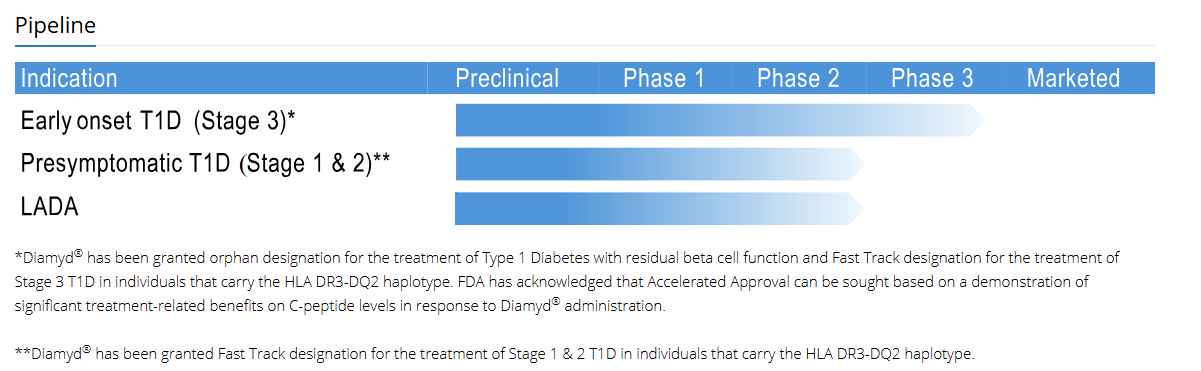
The company has three drug therapies in its pipeline, of which the vaccine that slows down the progression of diabetes is in Phase 3. Results from the study are expected in spring 2026, after which there is an opportunity to rapidly enter the market, as the drug has all the fast-track designations granted by the FDA that are known: Orphan Drug, Fast Track, and Breakthrough.

History:
Development has been ongoing for a couple of decades, and the company first advanced to Phase 3 roughly 15 years ago. To their disappointment, however, statistical significance was not observed, and due to this, a billion-dollar agreement with J&J was canceled. However, researchers noted that although statistical significance was not achieved in the overall population, some patients responded remarkably well, and insulin production was maintained more robustly with just a couple of vaccines. Diamyd did not discard the drug but continued research, which revealed that a specific genotype of type 1 diabetes responded strongly to the drug. This genotype is present in approximately 40% of diabetics.

Based on my own interpretation, that previous Phase 3 barely missed statistical significance. If the target group had been limited specifically to the selected genotype at that time, the result would have been very clearly positive. Furthermore, it was later observed that the effect is better if the vaccine is administered directly into a lymph node. In addition, it has been possible to increase the vaccine dosage as long-term evidence of its safety has accumulated.

A new Phase 3 is currently underway, which I predict, based on this gut feeling, will likely succeed. Since there are simply no other treatment options, and no side effects have been observed in decades of research, even weak statistical evidence would likely be sufficient for market approval.

Drug Development Pipeline
Screenshot 2025-02-18 123337

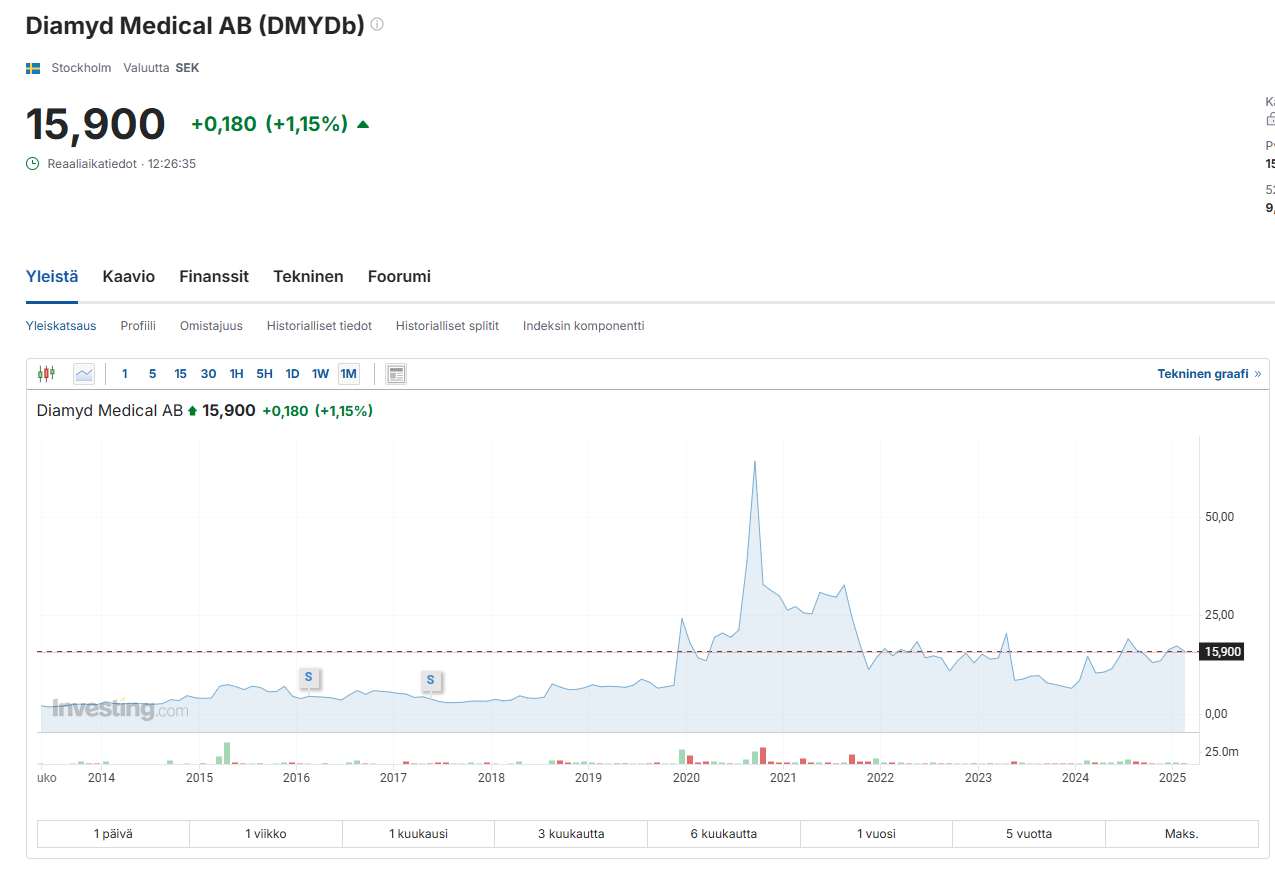
Stock History
Screenshot 2025-02-18 122919

The stock’s market cap (mcap) is approximately 140 million at the time of writing. Roughly estimated, the company has funds for perhaps a year, but it continuously receives various grants and subsidies. Additionally, there are currently 4TOB warrants on the market from which approximately €10M can be raised. However, in my opinion, it is quite clear that the company will need a marketing and distribution agreement within the next year. Also, the last distribution agreement in 2010 was concluded approximately a year before the Phase 3 results.

Patents:
The company has several pending and approved patents.

  • Insulin-based antigen therapy: Diamyd Medical holds patents for the use of insulin-based antigens in the treatment of autoimmune type diabetes in patients with specific genetic markers (HLA DR4-DQ8). This patent, granted in South Korea and valid until 2035, represents a significant step towards precision medicine in diabetes treatment.
  • GAD autoantigen: Patents protect the use of the GAD autoantigen in the treatment or prevention of autoimmune type diabetes, especially in individuals with the HLA DR3-DQ2 gene. GAD is a key component of Diamyd®, their antigen-specific immunotherapy.
  • Intralymphatic administration: Patents cover a specific method for administering Diamyd® directly into a superficial lymph node. This route of administration is used in their ongoing Phase III DIAGNODE-3 study.
  • GAD in diabetes treatment: Diamyd Medical holds an exclusive license from UCLA in the United States for a patent, valid until 2032, for the treatment of diabetes using GAD.

Other highlights:

  • The company has its own factory in Sweden, which should be able to produce the drug substance for global demand, as the doses are in the nanogram range.
  • According to market analyses commissioned by the company, market prices for the treatment are as high as 150,000 - 200,000 USD, so even with a small customer base, cash flow could reach billions.
  • Numerous Phase II analyses showed significant treatment responses. In principle, Phase 3 only needs to replicate previous results.
  • If a close relative has been diagnosed with type 1 diabetes within 6 months, they can receive free Phase 3 investigational treatment: Diagnode-3 Diabetes Trial

Links to research publications:
Intralymphatic GAD-Alum (Diamyd®) Improves Glycemic Control in Type 1 Diabetes With HLA DR3-DQ2 | The Journal of Clinical Endocrinology & Metabolism | Oxford Academic
Association between treatment effect on C‐peptide preservation and HbA1c in meta‐analysis of glutamic acid decarboxylase (GAD)‐alum immunotherapy in recent‐onset type 1 diabetes - Nowak - 2022 - Diabetes, Obesity and Metabolism - Wiley Online Library
# Intralymphatic Glutamic Acid Decarboxylase With Vitamin D Supplementation in Recent-Onset Type 1 Diabetes: A Double-Blind, Randomized, Placebo-Controlled Phase IIb Trial

25 Likes

Hugely interesting company; thanks for creating the thread!

How familiar are you with competitors’ products, for example, Sana Biotechnology?

image

https://ir.sana.com/news-releases/news-release-details/sana-biotechnology-announces-positive-clinical-results-type-1

4 Likes

Sana Bio does not develop a diabetes vaccine, so in my opinion, it’s not a very good comparison for this.

Sana’s technology is based on modifying cadaver donor islets to be immunosuppressive, and in the future, perhaps the production of stem cell-derived immunosuppressive beta cells using the same technology. That diabetes vaccine aims to affect the disease at an earlier stage, when patients still have functional beta cells remaining. Beta cell transplants come into play at a later stage, when the patient’s own beta cells have already been destroyed.

In addition to Sana, companies like Vertex Pharma and CRISPR Tx are also working on these stem cell-derived beta cell therapies. Among these, CRISPR Tx also develops immunosuppressive beta cells, but CRISPR Tx’s technology relies on the knockout of the B2M gene and the transfer of the transgenic HLA-E gene into transplant cells, whereas Sana’s suppression is based on the knockout of the B2M gene and transgenic CD47.

9 Likes

How familiar are you with competitors’ products, for example, Sana Biotechnology?

Good point, to which I can offer a couple of thoughts based on my own gut feeling. I have somewhat tried to familiarize myself with the TD1 field and Diamyd’s relationship to other treatments. There’s no hard fact to be found anywhere about this, so it shouldn’t be taken as a medical fact.

In my understanding, cell-level treatments like these have enormous potential for TD1 treatment. However, the problem with them is that even though insulin production can be restored through stem cell or islet cell transplantation, it doesn’t necessarily eliminate the original problem related to the autoimmune reaction that slowly destroys one’s own cells.

Diamyd’s drug suppresses this autoimmune reaction. This means that an early diagnosed pre-stage of TD1 can perhaps be kept completely under control, and the progression of diagnosed TD1 can be slowed down or stopped. In principle, it’s possible that the body could also restore insulin production in the long term, but there is no evidence of long-term re-dosing, and it is likely a generally accepted medical truth that the body’s insulin-producing Beta cells do not generally regenerate.

Therefore, it is likely that the treatment of type 1 diabetes in the future will be based on both the suppression of the immune reaction and cell-level insulin production regenerating treatment, and the competitor you mentioned might go hand in hand with Diamyd. I have a gut feeling that this is precisely why Diamyd’s founder is also involved in a company called Nextcell Pharma, which develops stem cell therapies. Diamyd also owned 20% of the shares of said company last year, although the ownership has apparently been reduced recently.

As for Sana Biotechnology’s situation, the unfortunate truth seems to be that the company doesn’t yet have a single phase 1-3 study under its belt. This means that potential market entry would optimally be 10 years away.

5 Likes

SANA released preliminary good data from a Phase 1 trial last month, but otherwise, yes, its journey to becoming a medicine is still long. Kurssien ja niiden muutosten kyselyt, kauhistelut ja hehkuttelut (Osa 3) - #8464 käyttäjältä jerej - Sijoittaminen - Inderes forum

1 Like

The only real competitor is Provention Bio’s Teplizumab, which barely made it through the phase but received market authorization because there is nothing better. The company was sold to big pharma in 2023 for approximately 3 billion. Teplizumab has drug approval only for “delay of onset” treatment. Diamyd is the first to seek approval for “Early onset TD1” treatment, i.e., slowing the progression of late-onset diabetes, with two others in an earlier phase. In addition to Diamyd, there is reportedly not a single Phase 3 drug in the pipeline for the root cause of type 1 diabetes worldwide.

This “delay of onset” effect has only been studied with Diamyd in a small population. However, if the results are similar with a large sample, Teplizumab will be discarded, at least for those with the HLA DR3-DQ2 haplotype for whom the drug is effective.

Here we see Teplizumab’s delaying effect. It slows the progression of stage 2 diabetes to stage 3 by approximately two years. In the study, patients received daily IV infusions for two weeks. It is clear that this kind of treatment cannot be carried out year after year. The median time to diagnosis for those receiving the drug was 59.6 months, and 27.1 months for placebo.
Russell_DrugDelaysT1D_graphic

Correspondingly, with Diamyd, two injections were given, and the median time was up to seven years longer for those who received the drug. However, the sample size here was very small, so the uncertainties are significant.
Screenshot 2025-02-18 171103

However, Diamyd has also performed better on shorter-term metrics (the level of C-peptide, indicating insulin production, 1-2 years after treatment) which are used in “Early onset TD1” treatment.

Indeed, in studies, the disease progresses despite the drug. However, this alone has enormous market potential. It must be noted, however, that studies focus on measuring the effect of 1-3 vaccines after a couple of years. Despite the study design, nothing currently rules out the possibility that the drug could, for example, be administered regularly again, thus potentially keeping diabetes at bay for an entire lifetime. The same does not seem to be as easy with Teplizumab, due to its administration method and serious side effects, which include liver dysfunction and cytokine release syndrome. No significant side effects have yet been observed with Diamyd.

7 Likes

And regarding its market potential: Even though Teplizumab has only a moderate effect on beta-cell preservation, even though the 14-day infusion treatment is cumbersome and poorly accessible, and even though it has market authorization only in the US and only for “delay onset” treatment, it is projected to have sales of 390 million dollars in 2027… even though its patents expire already in 2026.

image

Source: 2023_Drugs-to-Watch-Report.pdf

2 Likes

Currently, the company’s concern might be the exercise of 4TOB warrants. These would raise approximately 100M SEK if the exercise rate remains good, and the company would need short-term capital. These specific 4TOB warrants were issued a year ago, at which time 3 TOB warrants were also distributed, expiring in autumn 2024. For those, the exercise rate was excellent, reaching 95%.

However, the previous warrants had a 12 SEK strike price. But the 4TOB strike price is predetermined at 16 SEK, and for some strange reason, two warrants are required per share for exercise. The share price has, however, fallen to around 16 SEK, and the warrants expire in 6 weeks. Thus, the warrants only have time value, and the clock is ticking.

The company’s founder, however, mentioned in an interview held a couple of weeks ago that “we have ongoing partner negotiations that will enable it [the 100 M SEK fundraising from warrants].” Insight Direkt-Dagen: bolagspresentation av styrelseordförande Anders Essen-Möller

At the 26:07 mark, Ulf Hannelius also mentions: “absolutely have an interest in entering into a partner agreement BEFORE the reading, so that the partner can be part of the preparations”. So Diamyd aims to conclude a partnership before the Phase 3 preliminary results.

This would align with previous practice in 2010, when a partnership was formed a year before Phase 3 results. We are now at the same point, which makes the warrants very attractive speculative securities: If Diamyd announces a big pharma partner as a distributor, the lump sums from the agreement alone would likely be many times the company’s market value, plus royalties on top. If this happens before the warrants expire, the 0.5 SEK warrants would instantly turn into gold. But if it doesn’t happen, the warrants are highly likely to expire worthless.

Here’s a play for the gambler.

4 Likes

Apparently true. It seems to be only the 4-week readout of the first patient… and a total sample of 2 patients. Phase 1 also seems quite short, ending already in the summer of this year.

I didn’t even know that such short and small phases are possible, even though it’s only phase one. However, studying the actual response and durability requires years and hundreds of patients.

Due to FDA’s special designations, Diamyd has an exceptionally short Phase 3, and market authorization can be applied for after an 18-month readout from 180 patients. The 18 months will be complete in March 2026, and according to the latest information, patient enrollment for this schedule target was completed on time.

4 Likes

Starting position secured. Let it mature and develop like good drinks. The risk is big, but what if things go perfectly…
Just investing in the Helsinki Stock Exchange probably already meets the criteria for risk investment, so this probably doesn’t change things.

2 Likes

Yeah, this one will probably win even if it ends up in the red.

Yesterday, news broke that the CFO is being replaced.

Diamyd Medical announced today that Anna Styrud, CFO, has decided to step down from her position. During her 15 years as CFO, she has successfully navigated the financial markets and played a key role in shaping the company’s current strategic position.

A slight negative share price reaction is noticeable.

1 Like

Correction of an essential factual error in a previous message:
Screenshot 2025-02-20 132941

More precisely, it is not about “suppression” of the immune system. Suppression would mean that the patient would constantly have to take medication that suppresses the immune system. Generally, this refers to the overall suppression of the entire immune system. These are used, for example, as anti-rejection drugs in organ transplants, and the side effects are severe.

Diamyd is not a suppressant, but a drug that modifies the immunology of a specific antigen, enabling long-term effects. Since I have spent time on this, and tinkering with medical text is a time-consuming endeavor, I might as well try to explain my understanding of the mechanism of action in plain language:

  • In type 1 diabetes, the enzyme GAD65 produced by the human insulin-producing beta cells becomes an anti-autoantigen, which causes the immune system to mistakenly attack it, leading to the destruction of beta cells.
  • Although chemically a certain protein is in principle always roughly the same sequence of amino acids, proteins are not identical because the protein undergoes post-translational modifications. The protein is thus folded in different ways and various compounds (Glycosylation, phosphorylation, acetylation…) can attach to it, affecting the protein’s function and recognizability. Thus, proteins produced by the body can fold incorrectly and form structures that the immune system interprets as foreign.
  • Approximately half of Western people have the HLA-DR3-2 haplotype, which means that
  • However, the immune system is not static; it has the ability, for example, to recognize new threats (formation of immunity from a vaccine) or adapt to some new proteins. This “familiarization” of T-cells with foreign substances occurs via the cells’ HLA system, which transports amino acid chains identified as threats in pieces to T-cells, after which T-cells learn to recognize them.
  • The HLA DR3-DQ2 haplotype is a gene mutation carried by about a quarter of the Western population and half of type 1 diabetics. The mutation causes changes in the process by which the HLA system presents internal and external proteins to T-cells. Because of this, the mutation does not only cause type 1 diabetes but also celiac disease and sarcoidosis, among others.
  • For example, in Finland, carriers of this haplotype have a 45-fold increased risk of developing type 1 diabetes.
  • Diamyd’s drug contains a GAD65 protein that is identical in amino acid chain, but is a version of the GAD65 protein produced in the laboratory with engineer-like precision and control, which, as it were, “familiarizes” T-cells with the individual’s own natural GAD65 variations.
  • In addition to the protein, Diamyd, like vaccines, contains an adjuvant that activates immune system processes to accelerate the effect.
  • Because of this action, Diamyd is called a “vaccine” and therefore has the ability to affect the body’s immune system long-term.

The difference to Teplizumab is significant:

  • Teplizumab is something between a traditional suppressant and a modifying drug.
  • Its action is based on the drug attaching to a specific CD3 receptor on T-cells, partially reducing its activity. So, it is essentially a “targeted suppressant.”
  • This CD3 receptor is responsible for the TD1 autoimmune reaction, but it is also responsible for many other immune reactions. So, the targeting works like a shotgun.
  • As expected, the drug therefore has broader side effects related to immune system weakening in the short term. Some side effects were observed in all patients, and a significant proportion (75%) of patients, for example, experienced temporary lymphopenia (white blood cell deficiency) (Figure below).
  • 14.3% of drug users discontinued treatment due to severe side effects in the study.
  • Even worse: the CD3 receptor also participates in fighting cancer cells. It is therefore possible that the drug increases the risk of certain types of cancer in the long term.

Screenshot 2025-02-20 142132

11 Likes

Interesting company and product. I may not have much to contribute in-depth to this or any other pharmaceutical business, but for some reason, I have a perspective on the treatment of this particular disease.

I was thinking about the business case in the initial post and the market analysis done by the company, especially if the product’s pricing is in the range of $150-200k per dose. So, I’m considering the product’s market potential with that case, where the treatment delays the actual onset of the disease requiring insulin therapy but is not a cure.

For an individual patient, this is certainly a treatment that improves quality of life for several years, but when considering the opportunity costs of insulin therapy versus the benefits achieved, I somewhat doubt the pricing of this product. Of course, the payer for the treatment is an insurance company, which has made its own calculations and pricing based on whether the cost of the treatment makes sense. Of course, I only have a gut feeling about the total costs of insulin therapy, but I believe we’re talking about prices in a completely different ballpark than hundreds of thousands over that time horizon.

If one considers Finland and our healthcare system, I don’t see how such a treatment could be offered through public healthcare, precisely because of the total costs.

But I will follow with interest what becomes of this company and product :slight_smile:

4 Likes

Well, conclusions can be drawn from those sales volumes, for example, from the sales figures of the inferior drug Teplizumab.

Total costs in the US vs. Finland are likely completely different. When in 2010 Diamyd made an agreement with J&J, it also specifically retained the exclusive right to market and distribute the drug in the Nordic countries. For example, compare that to a bypass surgery easily costing 120k USD in the US, when you can get it in Finland, even privately, for a tenth of the price.

1 Like

Diamyd has recently been involved in state-funded projects where, among other things, national early-stage screening for type 1 diabetes was proposed.

https://www.inderes.fi/en/releases/diamyd-medical-ab-conference-on-the-future-of-type-1-diabetes-screening-organized-as-part-of-the-asset-partnership-coordinated-by-diamyd-medical\u0026ved=2ahUKEwiDkvvt3tKLAxWxIRAIHcYeFmoQFnoECB0QAQ\u0026usg=AOvVaw0tIa5SgeywqIAPb8uo2-WD

Screenshot_20250220_185755_LinkedIn

2 hours ago, according to a LinkedIn update, the Swedish state-owned company APL has visited the factories.

APL manufactures and packages pharmaceuticals for other parties, among other things. It has significant operations in Umeå and recently decided to invest 4M in increasing production capacity. Coincidentally, Diamyd’s factory is also located in Umeå.

https://press.apl.se/posts/pressreleases/apl-investerar-40-miljoner-kronor-i-umea

1 Like

Screenshot_20250220_183447_Chrome

Today we also received patent news.

3 Likes

One should also not look solely at the “opportunity cost of insulin therapy”.

Type 1 diabetes is significantly more difficult than type 2 diabetes. A person with type 1 has to live completely around insulin injections and carbohydrate counting. Alternatively, one has to use an automatic insulin pump that is attached to the body 24/7 and also costs something like $5,000-10,000 per year with its sensors, the manufacturer’s own insulins, and devices.

So I’m thinking about the product’s market potential in that case, where the treatment delays the actual onset of the disease requiring insulin therapy but is not a cure.

At this point, it must also be noted that the studies were conducted with the method of “3 injections of 4 nanograms at monthly intervals and follow-up measurements after 15 months”. In this case, the effect was delaying the disease, and that was also the entire purpose of the study, which is sufficient for market approval. However, this does not mean that re-dosing or higher doses would not have a better treatment response. In small trials, it has also been observed that re-dosing retrospectively is safe and does not cause complications, and still has a good positive response.

Nothing actually rules out the possibility that the drug could actually be used in the future, for example, by injecting it every 6 months, with larger doses. Or that, for example, a year of intensive injection therapy could completely stop the progression of the disease. Practice sets limitations for this:
-If Diamyd wanted to seek approval for “stopping” or “preventing” diabetes, the phase 1-3 studies would also need to be designed with this endpoint in mind
-The results would not only be significantly riskier because they are harder to achieve, and the studies would likely last years longer. Such a study would be significantly more expensive
-In Phase 3, higher doses or a greater number of injections cannot be used than what has been found safe during Phase 1-2

My understanding is that it is quite common for Phase 3 to first be defined for a treatment and purpose that maximizes the probability of market entry cost-effectively, rather than maximizing the results. After a successful Phase 3, new studies must then be conducted to demonstrate treatment response from additional doses. At this stage, the company can recruit the same population that received the drug during the study or those who have already received the drug from the market for a follow-up study, which in practice must correspond in its methods to a Phase 3 study, which is why it is cheaper to conduct than before.

4 Likes

And in fact, this is exactly what Diamyd seems to be doing.

Clinical Trials Register - Redosing with Intralymphatic GAD-Alum in the Treatment of Type 1 Diabetes: The DIAGNODE-B Pilot Trial

Diagnode-B is a Phase 1-2 study investigating the safety of redosing, and patients were recruited for follow-up from previous DIAGNODE studies. In this case, redosing means administering only one 4-nanogram vaccine. Positive results were announced a couple of months ago.. Since only safety is investigated first and because follow-up studies apparently have milder criteria, the sample size was only 6 individuals. Therefore, if Diagnode-3 passes, I assume that based on its population, Diagnode-3B will be initiated, focusing on demonstrating the clinical response of redosing with a large sample size.

It may be that once the treatment response is first demonstrated with single treatments in Diagnode-3, and then the redosing of a single vaccine is shown to be safe and effective in Diagnode-3B, these will open up the possibility for market authorization for continuous annual redosing. At this point, studies are usually continued in so-called Phase 4, where a drug that has received market authorization, its efficacy and safety, are monitored while it is in active clinical use.

2 Likes

I personally consider opportunity cost very relevant for the business case, from the perspective of who pays for the treatment, and taking into account the risk of whether the treatment is even beneficial for all individuals with the gene marker, as current phase studies indeed focus on delaying the onset of the disease. It’s perfectly fine to speculate whether this product is a permanent cure for the disease; that would be wonderful, but in light of current information, I don’t see a factual basis for this speculation on my part.

I quickly looked into the costs of type 1 treatment in the US market and found a couple of different sources that talk about an average treatment cost of $12k-$18k, including insulin, treatment supplies, and clinic visits related to disease management. For example, Estimation of Annual Health Care Costs for Adults with Type 1 Diabetes in the United States - PMC and Insulin Cost and Pricing Trends - AAF

There are currently two models of insulin pump therapy: a more traditional pump, which is about a $10k one-time investment to start treatment, plus, of course, ongoing costs for insulin and other supplies. The other new pump type is a disposable patch pump, which the user wears for an average of 3 days and then replaces with a new one. This doesn’t have a large initial investment but significantly higher ongoing usage costs than the traditional pump. And these costs are generally covered by insurance in the US.

But to return to the core of my message, I believe it is essential for the business case of this drug or company that a payer for the treatment is found and that there is a significant benefit compared to current treatment methods and costs. As a layman, I would see risks in the effectiveness of the treatment (which is now being studied and validated in phase 3), the generalizability of the treatment, and its benefit to the patient (market size for the product and the number of paying customers at the stated pricing → achieved benefit versus cost and opportunity cost). And all this is based on the fact that it is about delaying the start of insulin therapy, not preventing the onset of the disease for life. If that delay had long-term benefits, e.g., a proven reduction in costs associated with diabetes complications, it would certainly increase the national economic benefit of paying for treatments, but currently, the main benefit of the treatment appears to be “only” a temporary improvement in the patient’s quality of life.

With these pharmaceutical companies, it’s easy to get lost in the technical medical “hype” and the marvels of what has been invented, sometimes forgetting the bigger picture and other perspectives.

2 Likes

1736862716580 (1)

Today, a three-day conference for a small group began in Boston. Diamyd is one of the main speakers. Big Pharma is very widely represented. Including big shots from companies such as Pfizer, Eli Lilly, Astra Zeneca, Novartis, Abbvie, Moderna, GSK, as well as a small number of smaller firms. A great place to negotiate partnerships.

According to the program, Diamyd is also set to release new data tomorrow. We’ll see what it is.

1 Like