TransMedics - Organ Transporter

Company IR pages

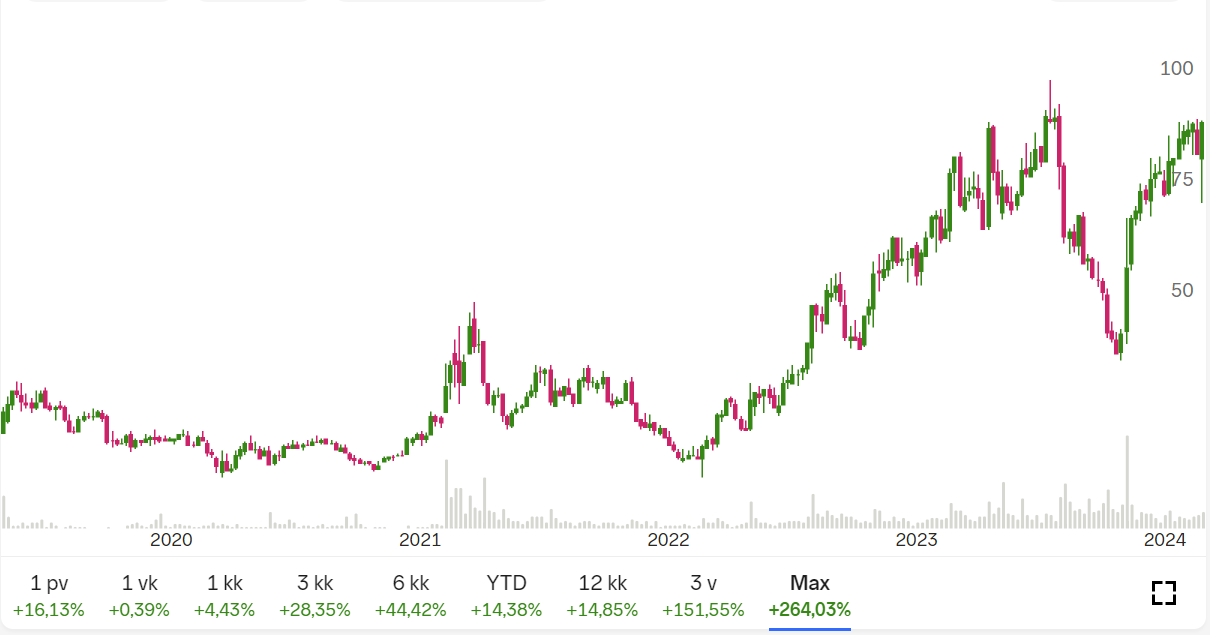
TransMedics was founded by its current CEO Waleed Hassanein in 1998 and has been involved in organ transplants in some capacity since its inception. At the time of writing, the company’s market cap is around $3 billion.
image

TransMedics’ most important product is the patented OCS (Organ Care System), which is a portable, multi-organ normothermic preservation and assessment device that mimics human physiology, minimizes ischemia (lack of blood flow), and allows for organ optimization during transport. The device is the only FDA-approved platform suitable for the transplantation of several different organs. Additionally, starting from Q4 2023, the company launched the NOP (National OCS Program), which essentially means the company has offered its own transportation services (air and ground) for organ transport. Previously, the company used third-party providers, which proved to be expensive, unreliable, and even dangerous. With this aviation service, the company can provide both organ preservation and transportation.

The company just released its Q4 2023 report, which was their first quarter with a positive net income (GAAP). Revenue grew to $81.2 million, up +159% y/y and 22% q/q. In terms of organ volume, this meant 1,000 → 2,300. The company aims to reach an annual rate of 10,000 organs by 2028. 97% of revenue comes from their transplant business, and about 95% of the company’s revenue comes from the United States. The company works with several organ transplants: liver, heart, and lungs. Of these, by far the largest “sector” is the liver, accounting for 73% of total transplant revenue, heart 23%, and the rest, 4%, from lungs. Revenue outside the U.S. grew +51% y/y but indeed only accounts for about ~5% of revenue.

The company also has a service business, which includes additional amounts charged for surgical procurement and organ management, as well as amounts charged for organ procurement and transplant logistics, including air and ground services. During 2023, the company acquired 11 aircraft to provide its own “courier service” for organ transport; they intend to expand this number to 15-20 by H2 2025. Previously, transplant centers and TransMedics had to rely on charter flights or smaller local operators that were not available 24/7/365, unlike TransMedics’ aircraft. This service provides at least a slight competitive advantage. During Q4, the company was able to perform 35% of flights with its own aircraft, and the goal is to increase this share to 80%.

Regarding market shares: according to the company, they have a 17% market share in liver transplant volumes, a 16% market share in hearts, and a 4% market share in lungs. According to the company, there is clear room for growth here, and their innovative technology has even expanded these markets by increasing the probability of successful transplantation. The service business accounted for 39% of transplant-related revenue. For the full year, the service business gross margin was 29% and the product business gross margin was 77%.

Guidance provided by the company for 2024:

  • Revenue $360-370 million (49%-53% growth y/y)
  • Gross margin 63%-64% (64% in 2023).
    Traditionally, the guidance provided by the company has been very conservative and is raised throughout the year.

If the company seems interesting, I recommend reading/listening to their latest quarterly report, where you can find a lot of information related to the company.

25 Likes

Thanks for the post @weeirdo

Any idea how much using the OCS costs now in 2024? I only found figures between $40,000 and $80,000, and all those numbers were from 2022 or earlier. You could churn out some pretty nice profits if costs could be brought down by even 5%. Let’s take an annual pace of 2,000 organs as an example.

40,000$ * 0.95 = 38,000$
40,000$ - 38,000$ = 2,000$
2,000$ * 2,000 = 4,000,000$

4 mil a year. A mil a quarter. And of course, the figures scale to a completely different magnitude if we’re talking about, say, 20% lower costs and an annual pace of 10,000 organs, which the company is aiming for within a few years.

In with a small position.

3 Likes

A very interesting and high-potential company. As I understand it, they have the best and only FDA-approved device of its kind for organ transplantation, which creates a sort of monopoly position, at least for the time being. There are certainly risks from a regulatory standpoint, as this article explains: EXCLUSIVE: Rep. Gosar Accuses TransMedics Of Holding Lifesaving Medical Devices ‘Hostage’ — Vows Oversight | The Daily Caller

“After FDA approval was achieved in 2021, TransMedics began to change the entirety of its business model,” Gosar stated. “Almost immediately, the cost of the one-time, disposable cassette utilized to encompass the organ during transportation and perfusion increased from the initial $7,000 to greater than $60,000 per disposable cassette.”

“Instead, TransMedics created its own team of individuals as the sole source for any initiation of the OCS device and labeled this the National OCS Program, or NOP. Transplant centers could no longer purchase the medical device, rather lease the device and request the necessary TransMedics personnel for any OCS heart, liver, or lung organ recovery. Costs for TransMedics surgical recovery are approximately $20,000 per request,” Gosar continued.

I see this as the company’s biggest risk for now. While the US is perhaps the most free-market-oriented country, this still causes some uncertainty regardless. However, if there isn’t a major setback on the regulatory front, I see the company’s potential as massive. International expansion is still largely pending, and in the future, new organs could potentially be added to the transport scope (e.g., kidneys), thereby increasing the market size. The aging population in Western countries is increasing the need for transplants. I’m still wondering where more organs will come from and whether that could become a barrier to growth. I’ll have to consider whether to enter with a small position.

4 Likes

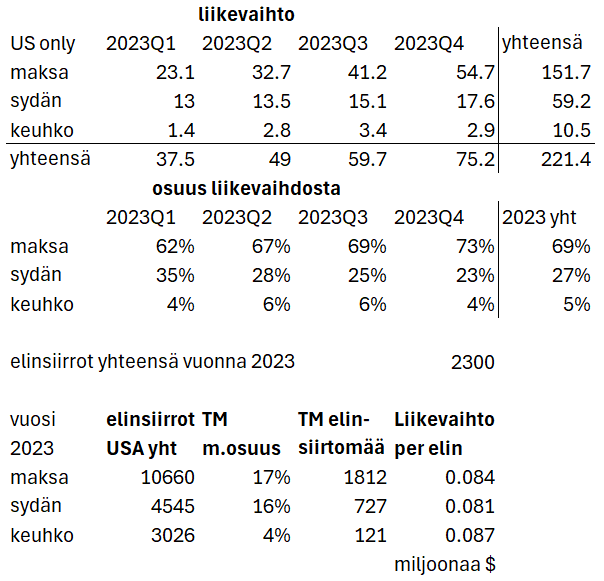
Based on my educated guess, revenue is approximately $80,000 per organ. Below are some calculations I’ve done. Based on these, roughly the same amount could be billed for all organs.
image
I got the total number of transplants here. I selected “Transplant” as the category and chose the different organs individually.

With a unit price of $80,000 and an annual pace of 10,000 organs, revenue would reach $800 million in 2028, if the target is met. This would represent a revenue CAGR of ~27% for the next five years.

And perhaps to answer your question: according to my calculations, the price per transplant would be ~€38,000.

Regarding the regulatory risk mentioned by @Chuckecheese, TransMedics’ CEO has already responded to this message/allegation (response here). In short: in my opinion, all allegations were refuted very convincingly. This senator’s (or whoever the representative is) top donors include “Health professionals,” and there may have been some pressure from them to react in some way. This is, of course, purely speculative.

image
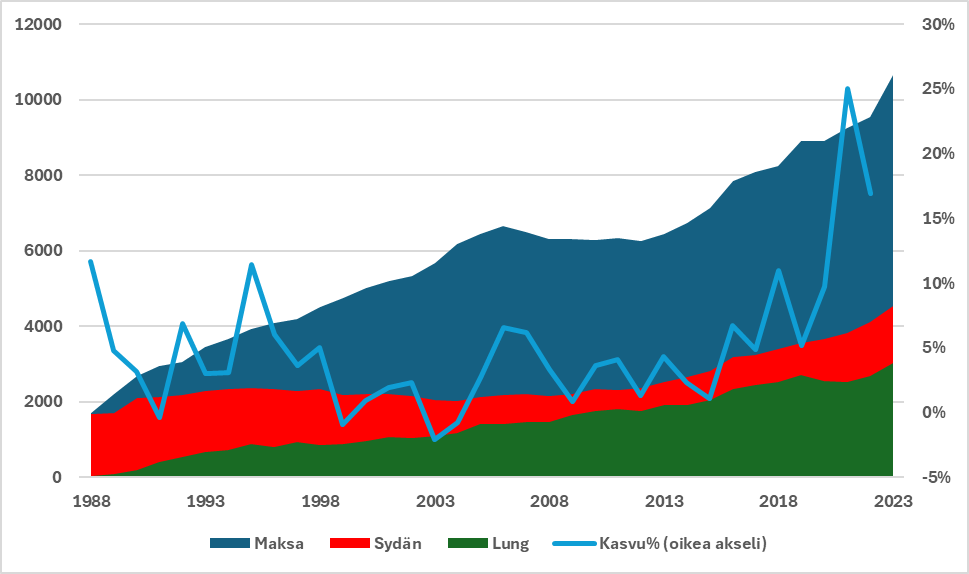
According to OPTN statistics, the number of transplants for these three organs has grown at a CAGR of ~4.8% since 1988. This pace accelerated in the late 2010s, likely driven by technological advancements and organs remaining “healthy” during and after transplantation. TransMedics discussed this during the Q4 call, noting how the number of successful transplants has grown significantly faster with their technology than before, which is likely (at least partially) true. There will always be demand for organ transplants as people seek longer lives by replacing failing organs with “new spare parts.” In the long term (10+ years), the number of available organs may well become a bottleneck for growth, but in the medium term, growth can be driven effectively by gaining market share.

7 Likes

TransMedics’ management recently participated in the MedTech conference (the webcast can be found on their IR pages), where analysts had the opportunity to ask them questions. I didn’t notice anything new on the first read, but some points could be highlighted as a recap:

  • They emphasized that they are still the only company offering a portable device suitable for multiple organs. (Competitors offering services for a single organ include, for example, OrganOx and XVIVO)
  • On the price elasticity of TransMedics’ service: transplants will always be expensive and will be needed almost regardless of the price, meaning demand will likely remain at the same level even if the price rises.
  • In three years, they believe their OCS technology will still be the most important part of their value chain. The logistics side (planes) is only a catalyst for increasing the accessibility of this technology.
  • A question was asked regarding how they have exceeded their own guidance in previous years and how they could continue this trend. The answer highlighted these points: “growing our transplant volume, growing our center volume, reviving the lung program, growing the DBD in hearts and livers.

I came across another SeekingAlpha article from a couple of days ago, which presented the company and its investment case. It seems mandatory to create a user account to read the article, so I have written down points below that haven’t been mentioned in this thread before.

  • US TAMs for different organs according to SeekingAlpha’s calculations, with TransMedics’ market share in parentheses: Liver $900 million (17%), heart $370 million (16%), lungs $263 million (4%). Together, these lead to a TAM of over $1.5 billion (in the US), which is growing at an annual rate of about 12%.
  • With an enterprise value of just under three billion dollars and an attractive patent portfolio, the company is a potential acquisition target for a larger healthcare player.

And perhaps most importantly, the highlighted risks:

  • The growth demonstrated by TransMedics and the EBITDA margin fluctuation between 60-70% attract competitors to the field. Currently, however, TransMedics has strong competitive advantages thanks to their OCS technology and logistics side.
  • Can management execute their strategy and maintain high growth, thereby meeting expectations? The company’s valuation requires the growth spurt to continue for it to be justifiable.
5 Likes

The New York Times wrote about organ transplants and related technology; email registration is sufficient for reading access (you don’t even need to verify the user). TransMedics’ product is visible in the image and the company is mentioned in the body text, though perhaps not in such a flattering tone. However, the main topic of the article is positive for the company, namely the technology (TransMedics’) that has revolutionized organ transplants. The article also included a link to a study showing that TransMedics’ OCS device reduces post-transplant complications. The study only concerned liver transplants.

All in all, I think the article was good publicity for TransMedics.

5 Likes

More good news for TransMedics (TMDX). Johnson & Johnson has made an acquisition offer for Shockwave Medical (SWAV), another medtech company manufacturing medical devices. The purchase price was 13.1 billion dollars, which represents a ~14.2x CY2024 estimated revenue multiple for SWAV.

Currently, TMDX’s corresponding multiple is ~7.6x even after the share price rise of recent days, if using analyst data found on Yahoo Finance (366 million dollars, which is at the midpoint of the company’s own guidance!!). A 14.2x multiple for TransMedics would mean a market cap of ~5.2 billion dollars, or a share price of ~160 dollars.

What makes this even better for TMDX?

TMDX is projected to grow 2x faster than SWAV. SWAV’s revenue growth forecasts for 2024 and 2025: +26% and +23%. For TMDX, the same figures are +52% and +34%. The difference is in the profitability and cash flow profile, where SWAV has already achieved a couple of profitable and cash-flow-positive years, while TMDX is only at the beginning of its life cycle in terms of profitability (Q4 was the first quarter with a positive net result). For TMDX, massive investments in aircraft are slowing the achievement of positive cash flow, but I believe this year will be the first in which TMDX’s operating cash flow is clearly positive.

Edit: dollar signs changed to words

4 Likes

https://twitter.com/i/spaces/1rmxPMOLOEbKN

I came across this podcast episode where TransMedics was discussed. It didn’t provide any information that hasn’t been mentioned in this thread before, but there are a couple of things worth mentioning. It should be noted that both speakers in the podcast own the stock.

Timestamps for the topics below:
6.25 Discussion on TransMedics begins
8.50 Revenue development
13.25 Talk about the company’s guidance. Both speakers believe TransMedics’ actual revenue will be significantly higher than their guidance; they even suggested a figure of $500 million, which would be ~107% y/y growth. They believe the market will accept lower margins if growth remains at this level.
15.30 Market share. They speculate that TransMedics’ market share in organs would rise to at most the ~50% range because their devices wouldn’t be needed for shorter-range transport, but would mainly be used for coast-to-coast type longer-range journeys (i.e., longer organ preservation times). To this, I would comment that their device significantly reduces the risk of post-transplant adverse effects, which serves as a selling point for shorter trips as well. Additionally, it would likely be easier for these transplant centers to receive all their reliable service from the same company, regardless of distance.
20.30 Talk about aircraft acquisitions and the impact of the logistics business on margins. With the transplant business’s gross margin at 60-70% and logistics at 30-35%, they believe the company is capable of a 20% net profit margin.
25.20 On competitors
28.45 On valuation
36.20 Risks. They highlighted valuation risk, meaning the company management must continue to perform excellently to justify their valuation. If the company’s own guidance is not clearly exceeded, things could go poorly, but there have been no signs of this yet. Another company-specific risk mentioned was xenotransplantation, i.e., the use of animal organs for humans, but science doesn’t seem to be far enough along in this regard yet.

4 Likes

TransMedics reported its Q1 results late last night. Excellent performance from the company.

  • Net revenue of $96.9 million (consensus ~$81 million) in the first quarter of 2024, a 133% increase compared to the first quarter of 2023
  • Generated net income of $12.2 million (consensus ~$0.4 million) or $0.35 per fully diluted share in the first quarter of 2024

Revenue and profitability were clearly above expectations. Additionally (less surprisingly), the company raised its guidance for this year regarding revenue to between $390-400 million, which would represent 61-66% growth y/y (previous forecast $360-370 million). Growth on a q/q basis was 19.5%.

9 Likes

TransMedics reported its Q2 results yesterday, consensus expectations in parentheses. Strong growth continues and an excellent guidance raise. Expectations were beaten on every front.

  • Total revenue of $114.3 million (98.9) in the second quarter of 2024, a 118% increase compared to the second quarter of 2023
  • Generated net income of $12.2 million (10.7% margin, consensus expected 7.2%) or $0.35 per diluted share in the second quarter of 2024
  • TransMedics is raising its full year 2024 revenue guidance to be in the range of $425 million to $445 million, which represents 76% to 84% growth compared to the company’s prior year revenue. TransMedics’ prior 2024 revenue guidance was $390 million to $400 million.

My own estimate for the full-year revenue is +$460M, meaning I expect further guidance raises in the next quarter as well. Consensus expected only $401M before this report. Regarding the aircraft, the count is 17 and the target was, I believe, 20 by the end of this year.

It’s noteworthy that last quarter the guidance was raised by $30M and now it was raised even more, by $40M. Again, I repeat the same mantra that TransMedics’ management has always been conservative with their guidance in the past, so we’ll likely see more of them, as I mentioned above.

5 Likes

The stock will be added to the S&P 600 SmallCap index starting October 1, 2024.

Tranmedics

1 Like

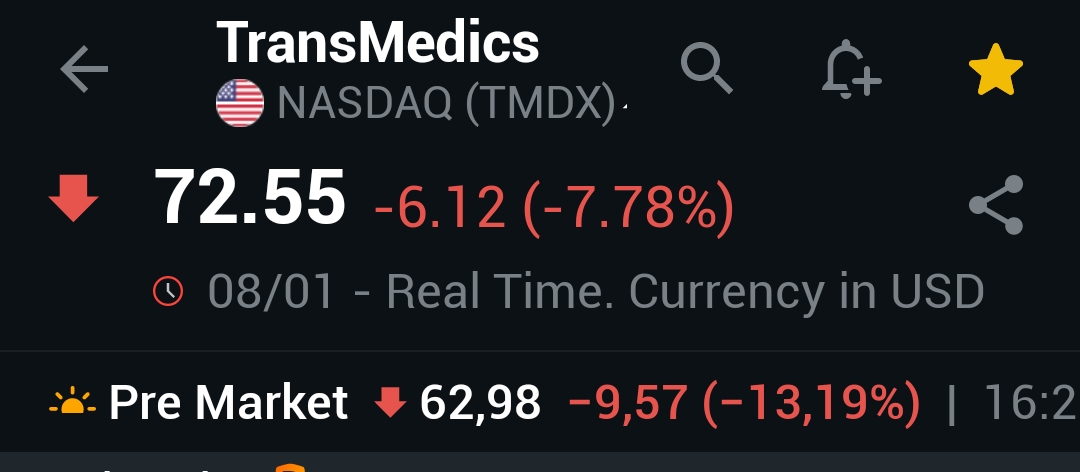
Q3 is out. Not as strong a performance (relative to estimates) as in previous quarters. The company had warned in advance that Q3 would likely be slightly softer, as aircraft were being maintained during the quarter. The market responded with a -28% drop in AH, with the stock hitting a low of $86. AH ended at -24%. Over the past month, the stock had already fallen over 30% from its highs, so expectations weren’t exactly sky-high, which made the reaction even more surprising. In my opinion, a clear overreaction from the market, which should have been aware of the weaker quarter.

  • Total revenue of $108.8 million in the third quarter of 2024, a 64% increase compared to the third quarter of 2023 ($115M expected)
  • Generated net income of $4.2 million or $0.12 per diluted share in the third quarter of 2024
  • Owned 18 total aircraft as of September 30, 2024

The company did not change the guidance it provided in Q2. The company still has an excellent chance of hitting its guidance ($425-445M revenue). They have generated $320M in revenue so far this year, so reaching the midpoint of the guidance range would require $115M in the final quarter, representing ~5.8% q/q growth.

I’ve also been following the company’s performance, and now, in typical US market fashion, the price reaction is strong and perhaps overblown this time. A good buying opportunity for those who got it under $90. If it continues to slide in the coming days, I might have to jump in myself. I bet the price will quickly return to over a hundred.

These aircraft are the reason why I prefer competitor Xvivo Perfusion as an investment. I don’t understand why Transmedics wants to get its fingers burnt with them. It is hard to believe that the same or even a better logistical solution couldn’t be achieved through networking. The shoemaker should stick to his last. For long stretches, this type of business is challenging from a cash flow perspective, and the situation isn’t helped by aircraft maintenance if the company insists on owning the aviation infrastructure itself.

5 Likes

Brian Stoffel’s quick look at various future scenarios regarding TMDX. Brian highlights three different scenarios:

Bear case:

  • Not related to the future, but the company did not gain market share in Q3
  • A new treatment method, NRP (neurothermic regional perfusion), which is cheaper and hospitals can perform it themselves without equipment from external companies
  • More ethically questionable, the patient is kept “alive” after death by maintaining circulation until closer to organ donation. This keeps the organ in better condition for donation.
  • The NRP method can only be used for DCD (donation after circulatory death) cases, which accounted for approx. one-third of 2023 organ donation types (the rest being DBD, donation after brain death)

Bull case:

  • Behind the weaker quarter were two temporary and short-term issues: 1) planes in maintenance and 2) a typically weaker season due to seasonality; according to management, the quarter was even unusually weak in terms of volume.
  • The situation normalizes, and the company continues to gain market share and grow strongly.

Nuanced case:

  • Currently, over 100k people are waiting for organ transplants (in the US), of whom ~17 die daily.
  • NRP could be a more economically viable solution and could increase the number of organs available for transplantation.
  • The market grows faster due to NRP’s impact, and TMDX focuses on its own specialization, i.e., performing organ transplants even over long distances with its own logistics and OCS device, as well as performing DBD organ transplants.
  • TMDX’s market share would be smaller than currently expected.
2 Likes

TransMedics named as short idea with $0 target by Scorpion Capital Scorpion Capital said in a newly-issued short report that in “20 years of shorting, TransMedics is the most extreme and grotesque healthcare fraud we have encountered, not only for its scale, but because it is predicated on the exploitation of the most vulnerable patients.” The short-seller adds in its report, in which it calls out a price target of $0 for the stock, that the firm is “shortly filing a Citizen Petition with the FDA requesting suspension of PMA (Premarket Approval) of TransMedics Organ Care System, in conjunction with a public letter to members of Congress probing abuses in the US organ transplant system.”

https://x.com/ScorpionFund/status/1877720068324204735?t=ULDAasalA_OnhWr53p68UA&s=19

3 Likes

TrandsMedics’ Q4 results were released some time ago.

The company’s market share has grown significantly, and it is progressing towards its goals regarding its equipment. Revenue grew compared to the previous quarter, albeit slightly slower than before, which was, however, expected during quieter seasons. Full-year growth was significant, and both the quarter and the fiscal year ended profitably.

Forecasts are set at a reasonable level and do not offer big surprises – in either direction.

https://x.com/StockSavvyShay/status/1895220170034917837

image
image
image

4 Likes

In Q4, TMDX generated 121.6mUSD in revenue, exceeding forecasts by ~11%. EPS was also above forecast (0.15 vs 0.2). They forecast 20-25% (530-552mUSD) revenue growth for 2025. Revenue grew by 83% in 2024, while also turning into a profitable company.

On X, there are a few accounts that track TMDX’s aircraft movements and flight volumes. For example, @ManthanTweets1 publishes daily figures on flight volumes. With these, the number of flights during Q4 was determined to be 1757. This means that each flight generated an average of 69.3 thousand dollars in revenue. In the call, the company’s CEO stated that they had an average of 14 aircraft (out of 21) in use per day and are now focusing on improving aircraft utilization and efficiency.

During Q1, if TMDX continues at the same pace as it has in January and February, there would be approximately 2050 flights, resulting in revenue of ~142mUSD (at an average of 69.3 thousand dollars per flight). If we assume that TMDX does not acquire more aircraft, utilization remains the same (i.e., flights per day remain the same), and revenue per flight does not change, then revenue would be ~568mUSD for 2025. With these assumptions alone, they would exceed their given guidance.

Regarding valuation, I’m leaving a screenshot from Jonah Lupton’s tweet from yesterday. Jonah is definitely worth following if you’re interested in TMDX and US small caps.
image

4 Likes

According to the tweet, TransMedics appears strong from both a business and market perspective.

Financial figures are stable, growth continues, and the stock seems to be bottoming out. The company is recession-proof, so, according to the tweeter, it could be an attractive long-term investment.

https://x.com/WealthyReadings/status/1902354666693755153

image
image
image

3 Likes

Q1 has concluded according to the calendar, and now is a good time to review the company’s aircraft movements for the past quarter.

During January-March, TransMedics’ own aircraft (21 units) made a total of 2114 flights. In my previous message, I mentioned that flights generated an average of ~$69.3 thousand in revenue during Q4. Consequently, during Q1, revenue of ~$146.3 million would have been generated based solely on flight data. The 2025 guidance was 530-552mUSD, so I expect a raise in guidance in connection with the Q1 report.

4 Likes