Virtuix - Ultimate Omni VR gaming experience now also for home

Virtuix is doing a €15M crowdfunding round to launch a home version of its Omni VR gaming platform (this is an unlisted company).
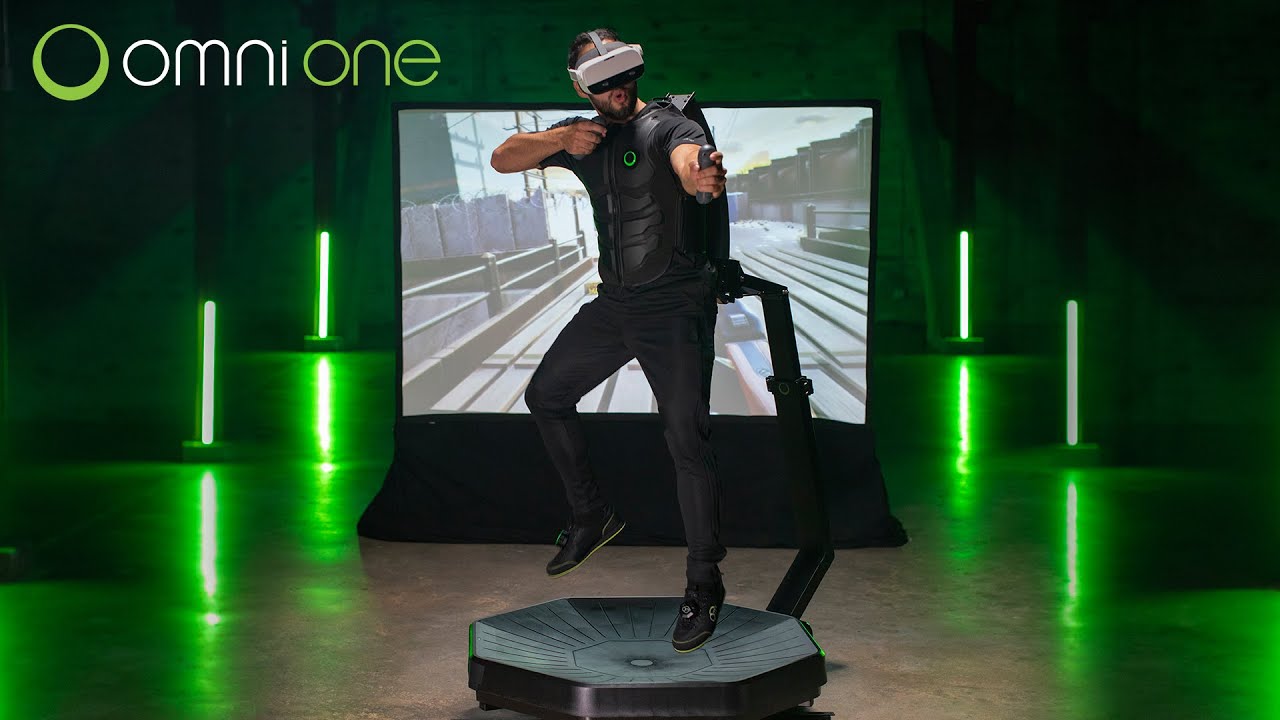
I’m not a very active gamer myself, so I haven’t tried this before, but the system itself looks really cool, and the materials have good introductory videos:
https://invest.virtuix.com/hustle?utm_source=hustle&utm_medium=0105

The company is currently generating about $10M/year in revenue with its existing public devices, and the potential for these home devices is, of course, enormous. The device costs about $2000 USD, so selling just 10,000 units would generate $20M USD in revenue, and their estimated service and game sales of $45 USD/device/month would add another $5.5M USD, bringing the total to $35M USD/year. Then, of course, if they manage to sell 100,000 units, you can add a zero to the revenue.

The company’s valuation after this funding round is $80M USD.

It’s worth getting the investor PDF from their website (you need to order it via email); I couldn’t add it here as it was too large. Overall, the materials are very well-prepared and concise, so I won’t go into any more detail about the case.

As an extra incentive, investors (because this is a crowdfunding) get a 40% discount on the future product if they end up buying one (or since the discount is in the form of a gift card, it can apparently also be given/sold to someone else).

I know there are many people interested in the gaming industry on the forum, so I posted this here for that reason. I don’t have any money invested in the company myself (at least not yet), but I’ll have to look into it a bit more to see if I should invest a few bucks, and I’d love to hear comments from others if they have any experience with Virtuix’s previous VR devices, as I’ve never tried one myself.

What perhaps worries me most about it is that the device is quite large (even though they say it folds up easily) and it’s quite expensive, so is there really a large enough customer base for these? Since I’m not a “gamer” myself, I have no idea how big the market for something like this is (although it does say something that even a non-gamer like me would almost be ready to order one if there was just some empty space in my apartment to put it :smiley: )

11 Likes

Interesting opening!

I play on PC quite a bit, and I definitely see a few future trends in this case:

Gaming: Gaming is certainly not going to decrease globally. New players are constantly entering the gaming market, and new platforms are continuously emerging. Development is moving at such a furious pace that the price of these devices might well come down in the coming years (also a threat).

VR: Why go outside when you can see the scenery safely at home within four walls, curtains tightly closed? VR games already look quite good, they run rather smoothly, and the hardware is relatively affordable. Based on entirely empirical research, at least in my circle of friends, VR devices have become incredibly common in the last three years. I don’t believe this trend will stop here. Now you can truly step inside the game world and experience game situations as the game character would.

Health: With COVID and other germs rampant outside, wouldn’t it be nicer to get your daily obligatory heart rate boost and step goal by virtually playing CS (not a paid advertisement)? An hour or two spent on the server with friends easily gets your daily workout done, and you don’t even need to know if the sun is shining outside. In other words, if before you played in a dark room, sitting on a kitchen stool, now at least movement is included in that same combo.

I haven’t participated in the fundraising myself, but I will look into it. The trends, in my opinion, are on the side of this technology. The only question is whether this is the specific company that will break through with it.

2 Likes

@Ituhippinen, it’s easy to jump on trends. I’m on my second pair of VR glasses now during the pandemic, and you really can do a quick exercise break with them and even work up a sweat without a treadmill.

On the hype page, “Includes a standalone VR headset (no PC or cables needed)” catches the eye. In practice, there’s only one such device, the Oculus headset owned by Facebook (which I also own). Considering the amount of money Zuckerberg has poured into product development for Oculus and the head start it has in headset software development, a serious competing device isn’t coming anytime soon, if ever. From this, we can conclude that they are either trying to sell themselves to FB or somehow trying to gain Zuckerberg’s favor.

In itself, this idea is logical; I don’t believe PCVR will ever become a mass entertainment due to the tinkering involved, as using standalone headsets is as straightforward as, for example, mobile games, so they have the potential to break through with the masses (those non-gamers :wink:). FB/Oculus also strongly believes in this.

Virtuix also had a somewhat deflated Kickstarter crowdfunding for pretty much the same product; after many delays, they realized they couldn’t manufacture the product at the promised price and refunded the crowdfunders.

Clearly, they are trying to spin this into a Peloton-type complete package for every home, so there’s production potential, but on the other hand, there are still quite a few “buts” involved…

2 Likes

Oh @SijoitusSeppo, what have you done? Usually, I don’t even glance at these crowdfunding companies, because they’re where the leftover companies end up—the ones that couldn’t secure funding from real investors. And honestly, the investor materials had a strong taste of bullshitting.

However, the product is genuinely interesting, and the VR market has a huge need for hardware of that type, though in Europe, maybe 1000 € cheaper, and growth in Asia is difficult. Luckily, Americans have too much money at their disposal. I genuinely have to consider this now, because it’s currently really hard to get into the VR market sensibly other than by buying Facebook.

You can order those directly from the factory, so we can’t certainly say it’s Oculus-based technology. Moreover, the company’s other products use, for example, HTC Vive, and consumer products won’t be part of Facebook’s ecosystem, so this link to FB/Oculus is quite weak at this stage.

On the software side, the thinness of the content library is a bit worrying. Porting and AAA content production won’t be as easy as promised in the materials. Still, there are certainly opportunities for big success here.

It’s also possible to test the products in Finland: (except during Corona now)

I completely agree about crowdfunding and have been ranting about it here on the forum. That’s exactly why I put this here, so that people would challenge it a bit and maybe I could get rid of my own bullishness :smiley: What interested me here was specifically the product, because it is pretty awesome technology and there is indeed a really good chance that if they get the domestic market open and things take off, some big player (Microsoft, Sony) will buy it out with a good premium and be able to scale it in a completely different way.

This is understandable, of course, that it hasn’t attracted much interest from game companies before, as there have only been those public game centers and a small installed base. These are always chicken-and-egg problems, and certainly, at first, they’ll need to throw money on the table to get games out.

It is indeed its own closed platform and game store, and now, of course, at the beginning, the hardware sales bring in a large part of the revenue, but once the installed base grows, the majority of the revenue will come from the monthly fee of the game platform (I think it was $15/month) and from the games they sell in the game store.

On the Seedinvest website, it was just mentioned that it doesn’t matter where in the world the investor is from (I recall only Canada was excluded for some reason). There would be no secondary market for this, so the only ways to get your money back in due course are either an IPO or another company buying out the entire firm. So it is indeed a long-term risky investment.

EDIT: Oh, and happy birthday to @Pohjolan_Eka :wink:

2 Likes

VR is one of my favorite topics, and I’ve used both consumer and enterprise-grade headsets. I haven’t tried this solution yet, but based on this, I’d be tempted to, for example, with that 360xp :slight_smile:

As a first concrete point, this solution seems difficult to place in most homes, at least in apartment buildings. The images in the presentations, in my opinion, didn’t reflect reality well. For consumer use, I think an affordable wireless headset like the Oculus Quest is best, as it doesn’t require any special gadgets. The Quest is clearly the best-selling consumer VR headset on the market.

The most important question is whether there is realistically anything more than a pure HW play? VR consumer SW ecosystems are currently controlled by Facebook and Valve, and I don’t see that changing in the near future. HTC and others are trying to push their own stores, but their success hasn’t been that great. The best scalability and potential lie precisely in these SW platforms.

In my opinion, their solution works best for B2B use, which is what they have been doing so far. It won’t exactly be a rocket ship, but possibly a nice growth company. Many smaller VCs seem to be involved. Are they trying to leverage crowdfunding to take advantage of market euphoria, or have they had difficulties getting larger follow-on tickets from VCs?

I’d be happy to follow the development and hear your views if there’s any interest.

2 Likes