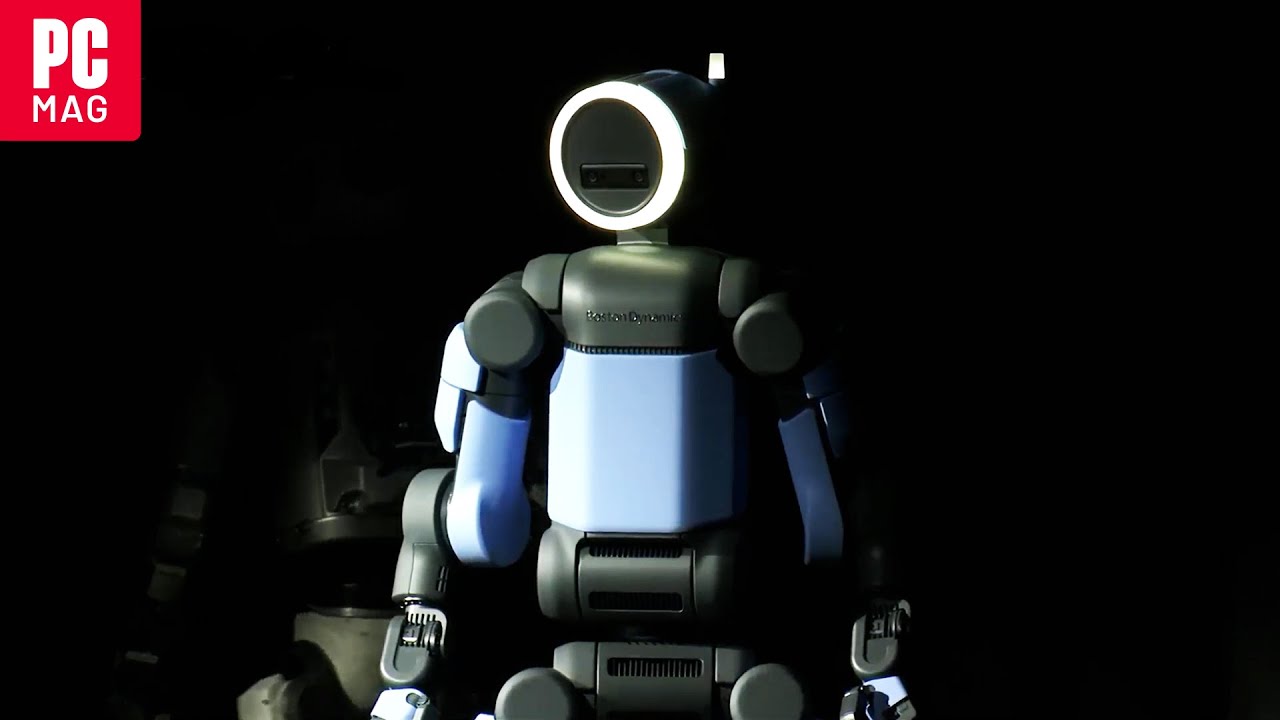
An updated version of Boston Dynamics’ Atlas has been released. It looks quite smooth, even though the movements are not autonomous.
An updated version of Boston Dynamics’ Atlas has been released. It looks quite smooth, even though the movements are not autonomous.
How did the Tesla forum comment on/react to the Finnish company DonutLab’s announcement yesterday?
" World’s first all-solid-state battery. Production Ready Today"
Below are threads from a few X users on the topic:
https://x.com/LinusEkenstam/status/2008288638145032302?s=20
https://x.com/VoltaWagen/status/2008550084871385411?s=20
Personally, I don’t understand much about the subject, and I remain skeptical of the release until third-party test results are available. 
It’s quite interesting, much like all the battery news showing lab breakthroughs, startup robot projects, and NVIDIA’s autonomy demos. In the business of new battery chemistries, startup press releases and revolutionary videos usually appear at the stage when a new funding round needs to be launched. Traditional solid-state batteries have required cleanroom-level production, especially regarding moisture control, and scaling hasn’t yet succeeded except in semi-solid production. However, DonutLab didn’t reveal much about the battery chemistry, so it’s difficult to say anything about mass production either.
The example of Northvolt and Tesla’s 4680 show how difficult it is to scale the battery business, even if the product works perfectly in the lab. The Chinese manufacture the production equipment and know how to calibrate it, and they don’t share clear instruction manuals online. Hopefully, DonutLab secures funding and gets mass production running so that we have alternatives to Chinese industry. Tesla can then buy cells from there, just as they buy them from elsewhere.
If the upcoming electric motorcycle works, then the battery is likely functional.
3 posts were merged into the thread: Inderes Coffee Room (Part 10)
So, did it turn out that the safety driver was supposed to be removed multiple times and the “final deadline” was 31.12? As far as I understand, they are still there. So, tripping up Waymo wasn’t that easy after all?
Additionally, did it turn out that even though Nvidia’s tool is still in its early stages, it provides a framework that allows for a so-called shortcut to get quite far in autonomous driving (even if nowhere near the finish line)? Was that the final indication that autonomous driving isn’t Tesla’s exclusive domain (which it never was)?
Be that as it may, in my opinion, this removed the valuation premium for the future autonomous driving “lead” from Tesla’s value. Who can reasonably include large sums in Tesla’s valuation because of autonomous driving anymore?
What is left to justify the ever-increasing multiples? Optimus? It’s starting to feel like we’ll be left holding the bag.
Gary Black puts it well on Twitter; every bull should understand this. Autonomous driving is becoming a highly competitive field, and Tesla is certainly not a technology leader.
Everyone scoffed when I suggested a few years ago that others would solve for unsupervised autonomy around the same time as TSLA, but with five competitors already completing 750K paid unsupervised autonomous ride-hailing trips per week and a half-dozen OEMs likely to launch L4 autonomous driving options as part of their own EV offerings using $NVDA chips and software stack in 2026, investors are starting to understand that unsupervised autonomy is about to become table stakes for every automobile manufacturer and $TSLA will not be the only one who solves for it. With $UBER (+9.6% this week) likely to begin offering a self-driving option on its app at a reduced price as soon as regulators pass autonomous driving standards, we can expect unsupervised autonomy to be democratized quickly via ride-hailing platforms over the next couple years.
In practice, any car manufacturer can get a ready-made L4 stack from Nvidia, and Nvidia has completely different resources for developing AI than Tesla—orders of magnitude larger, in fact.
FSD was supposed to boost Tesla’s car sales, but that hasn’t happened; Tesla’s sales are in continuous decline even in countries where FSD is available. Legacy automakers are constantly developing better EVs than Teslas, and once they start using Nvidia’s stack, they will also achieve autonomy very quickly. Where are Tesla’s competitive advantages? Uber and Waymo will reap the rewards in the taxi segment accordingly, as Tesla doesn’t have any infrastructure or scale ready yet, no permits, etc.
Optimus is badly behind schedule, a large portion of the project’s key personnel has fled to competitors, and there is no visibility into how many of these robots will sell, when, and how much profit they will generate.
All this for a company with a forward P/E of around 300 or so.
Which of the bulls dares to write a credible investment case for Tesla that uses numbers to show how someone buying at current prices will get a good expected value for their investment?
Which manufacturer will be the first (after Tesla) to deliver a car that allows anyone to drive across the USA without interventions, and when do you estimate this will happen?
It probably shouldn’t be difficult to answer if Tesla is indeed not a technology leader.
What does it matter who succeeds in this and on what exact date? We are discussing the big picture here. It’s starting to become clear that even if Tesla were the first to create a complete solution for autonomous driving, the competitors are right on their heels, and it’s not realistic to expect that Tesla would have any kind of moat or several fabulously profitable years ahead in this area.
It’s the same pattern as with electric cars years ago. Tesla was supposed to become the world’s largest automaker, and growth was supposed to continue in a straight line drawn with a ruler into the far future because “legacy” manufacturers were supposedly hopeless and unable to compete with Tesla’s superior product.
I believe that in the case of FSD, competitors will pull alongside and overtake even faster, because you don’t need to establish factories, organize global supply chains, and solve physical world problems for this; you just need to crunch bits in a data center.
I asked specifically to gauge views on how close competitors are perceived to be. That ordinary consumer’s coast-to-coast is, in my opinion, a pretty good general yardstick. Demo drives are not a good metric. Tesla made a demo video in 2016, and it took nearly ten years before that same drive could be done by anyone in a Tesla, anywhere. Mobileye and Waymo also showcased several impressive demo drives in the 2010s, and in 2026 Waymo has no chance of driving coast-to-coast. Hardly anyone talks about Mobileye anymore. They probably just pivoted to humanoid robots, so the rocket is about to take off there too.
Nvidia has indeed been grappling with autonomy longer than Tesla, and now the latest building blocks and simulators are once again on sale for legacies. Great. Nvidia is a fine company and has plenty of resources, but until we see what the technology can do in the hands of the average consumer, it might not be worth hyping it up too much.
Where does NVIDIA (or a car manufacturer) get the data for all the thousands of edge cases so that training is effective and safety is ensured? NVIDIA’s Thor chip has a lot of computing power, but the training scaling is missing. The moat is still vertical integration. Tesla can update the entire system via OTA (Over-the-Air), while Mercedes waits at the dealership for integration-tested bug fixes from NVIDIA, Luminar, Bosch, the map provider, their own software, etc.
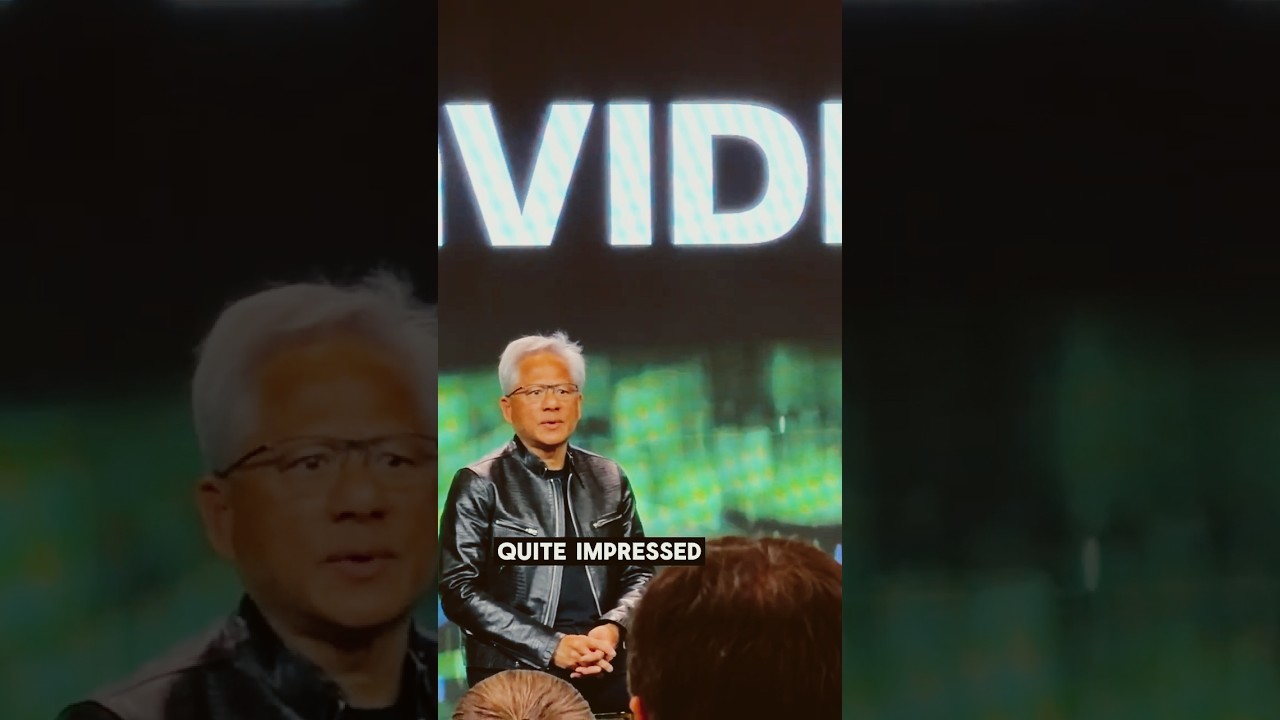
This is a platform race, just like all the others. NVIDIA’s Jensen likes Tesla as a customer and would, of course, like Tesla to use expensive NVIDIA chips instead of AI4 or AI5. Car manufacturers can compete with other software as long as NVIDIA’s hardware is involved. Jensen’s praise for Tesla’s expertise appears constantly in various media.
By the way, the federal-level SELF DRIVE Act is under consideration in the US, which would replace most state-level autonomous driving regulations. Here again, the level of ambition for innovation differs from the EU’s UNECE regulation; while the EU wants to regulate lateral acceleration in advance, the US SELF DRIVE Act is based on self-certification, where the NHTSA then assesses after the fact that driving without a steering wheel and pedals, for example, is performed safely.
I don’t quite understand why, for instance, Mercedes wouldn’t have a sufficient amount of data for autonomous driving development, or at least significantly less than Tesla. As I understand it, Mercedes has been developing autonomous driving for years, as have many other automakers. There are at least as many Mercedes, VW, BMW, and other brand vehicles on the road as there are Teslas, so it is at least possible to collect data.
Mercedes doesn’t have thousands of cars in city traffic driving themselves, filming traffic, and registering every driver intervention—and the intervention situation can be improved afterwards through simulation. Additionally, Mercedes (and other German manufacturers) certainly follow German privacy laws, meaning driving videos are the driver’s property, and all identifying information in the driving videos (license plates, people) would need to be anonymized before processing. For the Chinese, this is certainly easier, but their autonomous fleet isn’t very large either.
If the Mercedes CLA with LiDAR and NVIDIA software sells well in the US for a few years, it is certainly possible that they will have over a thousand cars recording autonomy data then. Tesla currently has hundreds of thousands of self-driving cars recording edge cases.
All the major players have data for development—or rather, for struggling with this issue. You have to be involved in the “impossible” when everyone else is, just to maintain credibility in the eyes of the average joe.
But even the combined data of those players isn’t nearly enough. Nor is the computing power or anything else. A human’s neural network and its experiences are not easily replicable by a machine. Life experience beyond what is just collected from the road is required.
The grandmother who will drive a steering-wheel-less Tesla in Finland hasn’t even been born yet. It requires heavy regulation, infrastructure building, etc., and even then, the car won’t work on our cabin roads. In the city, when every pole has xxG, there might be some benefit. Cars will recognize the environment, it’s maintained, and vehicles communicate with each other. But by then, drone transporters will have already taken over the skies.
It would be nice if we didn’t rely on guesswork.
Or what is the basis for that claim that Mercedes might have over 1,000 cars?
And as I understand it, the correct way to talk about Tesla is that they are self-driving cars that a human monitors at all times.
So not self-driving, but an advanced cruise control.
I’ll comment on some of the topics under discussion here. I haven’t bothered to participate more actively in the debates because, in my opinion, there is quite strong tunnel vision on both sides. But here are some of these thoughts:
At least in aviation, autopilot is autopilot, even if it can’t perform all human tricks. Additionally, in fault situations, it can disengage and tell the human to fly the plane. In driving, L-levels are fine for defining the level of self-driving or lack thereof, but my own view is that if a car drives itself, then it drives itself (even if the boundary conditions are strict and a human supervises, etc., etc.). If it can’t drive itself, then a human drives it all the time. Even if a shitty autopilot only works in certain conditions and situations, it is still an autopilot nonetheless (both in aviation and in driving). Note, I am not taking a stand on the meaning of the acronym FSD, but on the fact that the car simply drives itself, even if only on the highway in summer weather.
Steering-wheel-less cars are unlikely to be in traffic in all weather conditions anytime soon, at least in Europe, at least not without a remote connection. In this case, too, I would compare the development to the development of aviation. After all, things like the Global Hawk fly in the sky among air traffic with the autopilot on, but it still has to be possible to control it remotely.
Then a comment on Tesla’s phantom braking. Last winter, I experienced phantom braking frequently in my American crude product (raakavalmiste), especially on narrow roads in winter conditions when a truck was approaching. This winter there hasn’t been any, even though conditions have been very challenging in places. So, at least for my part, phantom braking is no longer a valid fault but was already fixed by an update that arrived sometime during the snow-free season.
ps. So far, the worst and most dangerous driving assistant I have ever used in a car has been in a 2024 model year Skoda Superb. On a road with tar patching strips parallel to the lane, it identified them as lane lines and repeatedly tried to steer the car into the oncoming lane or the ditch. The first time, a head-on collision was narrowly avoided; the situation was that surprising. I wonder why, for example, Tekniikan maailma doesn’t mention anything about these, even though it’s a significantly more dangerous feature than, say, a car slowing down in its own lane (aka phantom braking) 
Well. That’s how it is. On the other hand, at least in my experience from being on a plane, there have been significantly fewer pedestrians, intersections, dog walkers, etc..
So in principle we’re talking about the same thing, and in principle a completely different thing.
But now we are waiting for when the safety driver is removed. And what the number of cars moving without a safety driver will be. Whether it’s 10/100/1,000/10,000/1,000,000, none of us know.
In aviation, the purpose of autopilot is not to replace human pilots; rather, it is one pilot assistance system among others. In road traffic, if autopilot remains just an assistance system, its financial potential is orders of magnitude smaller than if the human driver doesn’t have to monitor the driving at all. If I could buy a car in which I can focus on working while the car drives itself, its value to me would be roughly my hourly wage*commute time (+ the comfort value of leisure driving). If, on the other hand, I have to supervise the driving, I treat it like cruise control — a nice feature that I can pay something for, but definitely not hundreds of euros a year.
It’s true that in both aviation and maritime traffic, the autopilot plays more of an assistant role, as these systems essentially follow a pre-defined route quite blindly, don’t they? I mean that, aside from some potential minimum depths/altitudes etc., they steer the vehicle somewhat blindly to a pre-determined location, allowing the pilot/captain to even take a nap? In short, autopilots in aviation and maritime contexts execute defined commands, whereas the target level of autopilot in cars would also involve making decisions independently.
The difference between automotive FSD versus aviation and maritime autopilots is quite substantial, given that there isn’t much other traffic out there—and when there is, they tend to actively announce their presence. I understand that solo ocean sailors, for instance, use autopilot for a significant portion of the total time to allow for sleeping, eating, and so on. In these cases, while the captain is sleeping, the boat’s autopilot maintains the course based on GPS and heading, regardless of whether a tanker or some other obstacle appears in its path.
Apparently, the safety driver is staying after all…  Waymo continues to operate without drivers, but supposedly that’s the “wrong way” to self-drive.