The Psychology of Investing

Voiko tosiaan olla niin, että Inderesin foorumilla ei ole ainoatakaan sijoittamisen psykologiaan keskittyvää ketjua? En ainakaan haulla löytänyt.

Siivotaanpas tämä foorumin häpeätahra saman tien pois ja aloitetaan suuri sijoittajapyskologia-keskustelu!

Lähden nyt kirjoittelemaan aiheesta ihan lonkalta ja katsotaan mihin päädytään. Aloitetaan vaikka määritelmästä (wikipedia):

Psykologia (vanha nimitys sielutiede) on tieteenala, joka tutkii ihmisen mielen sisäisiä tapahtumia kuten tunteita, muistia, ajattelua ja käyttäytymistä. Laajemmin psykologian harjoittamisessa on kyse mielentapahtumien ja käyttäytymisen lainalaisuuksiin liittyvän tiedon soveltamisesta ongelmanratkaisussa.

Sijoittajapsykologiasta ei löytynyt näköjään oikein mitään järkevää määritelmää. Eri lähteissä aihetta oli kyllä jotenkin koitettu määritellä – joskus hyvin, joskus vähän vähemmän hyvin – mutta määritelmät ja kirjoitukset näyttivät keskittyvän pääasiassa käyttäytymistaloustieteeseen ja erilaisiin vinoumiin. Mielestäni yksittäisiä vinoumia tarkastellen saa kyllä käsityksen yhdestä sijoittajapsykologian osa-alueesta, mutta suurin osa sijoittajapsykologian hienouksista jää käsittelemättä.

Mutta ei hätää. Kaiketi ihan hyvän määritelmän saisi jo pelkästään muokkaamalla tuota edellistä psykologian määritelmää.

Sijoittajapsykologia on ala, joka tutkii ihmisen mielen sisäisiä tapahtumia kuten tunteita, muistia, ajattelua ja käyttäytymistä sijoittamisessa.

Mennään vaikka tällä.

Voi olla, että lähden nyt sukeltamaan aiheeseen mielestäsi hieman liian kaukaa, mutta olen vakaasti sitä mieltä, että sijoittajapsykologiassakin on ensin hyvä laittaa oma pesä kuntoon. Ja omalla pesällä tarkoitan tässä yhteydessä esimerkiksi itsetuntemusta, omia psykologisia piirteitä ja ominaisuuksia sekä ylipäätään ymmärrystä psykologisten tekijöiden vaikutuksesta ihan kaikkeen.

Mennään heti esimerkkeihin, niin saadaan vähän paremmin otetta. Aloitetaan vaikkapa uskomuksista:

Millaisia uskomuksia sinulla on sijoittajana? Kenties seuraavanlaisia:

  • ”En kestäisi, jos häviäisin rahaa.”
  • ”Minä olen taitavampi sijoittaja kuin muut.”
  • ”Minulla pitää olla uusi auto.”

Mitä luulet, onko näistä esimerkkiuskomuksista hyötyä sijoittamisessa? Tunnistatko ylipäätään toimintaasi ohjaavat uskomukset? Voisitko jatkossa kenties paremmin huomata ne ja niiden vaikutukset tunteisiisi, ajatuksiisi ja käyttäytymiseesi, sekä mahdollisesti korvata ne paremmilla uskomuksilla?

Tai hei. Nyt tuli mieleen hyvä. Tapojen voima ja ihmiselle ominainen uomakipittäjyys:

Millaisia tapoja sinulla on sijoittajana? Kenties seuraavanlaisia:

  • Käytät paljon aikaa klikkiuutisten lukemiseen (vaikka voisit käyttää saman ajan esim. analyysien tai osavuosikatsausten lukemiseen)
  • Myyt voittajaosakkeesi heti kun ne ovat nousseet (vaikka voisit antaa voittojen rullata, jos kerran liiketoiminnan tulevaisuus on valoisa)
  • Menet jatkuvasti katsomaan kurssi- ja tuottokäyriä (vaikka voisit käyttää saman ajan esim. analyysien tai osavuosikatsausten lukemiseen)

Todennäköisesti sinulla on sijoittamisen lisäksi muillakin elämän osa-alueilla hyvinvointia heikentäviä tapoja. Päivitä nekin. Vähän sporttia arkeen, aikaisemmin nukkumaan ja päivittäin terveellinen päivällinen yhdessä vaimon ja lasten kanssa. Ja lopeta se kännykän räplääminen. Lue mieluummin vaikka kirjaa (juu, tiedän, kuulostaa keski-ikäiseltä ja tylsältä). Jos muuten haluaa lukea tavoista lisää, niin sekä Charles Duhiggin että James Clearin teokset ovat ihan timanttia.

Nyt moni varmaan jo miettii, että aika ohueksi katosi punainen lanka, kun mies puhuu päivällisistä ja linkkailee jotain sportti-hyvinvointi -valmentajan höpinöitä. Johtunee siitä, että olen vain itse niin tolkuttoman innoissani tästä aiheesta, että ehdin jo unohtaa teidän kanssasijoittajien toiveet. Ei se mitään, lähdetään kohta kerimään tätä takaisin sijoittamisen pariin. :blush:

Pari sanaa vielä itsetuntemuksesta ja oman arkielämän psykologiasta. Aiheesta on tehty ihan valtavasti hyviä kirjoja. Lue edes yksi. Ne tarjoavat lähes poikkeuksetta sellaisia oivalluksia, joista on hyötyä myös sijoittamisessa, jos nyt psykologian maailma ei muutoin kiinnosta. Pätevät ja asiantuntijavoimin kirjoitetut self-helpitkin ajavat usein asiansa, kunhan katsoo, ettei kenenkään puoskari-hampuusin kirjoja mene sokeasti uskomaan. Mutta psykologian parissa työskentelevät asiantuntijat ovat tuotteliasta väkeä ja esimerkiksi seuraavilla pääsee jo hyvään alkuun:

  • Mielen voima -kirjasarja - Virolaisen veljekset
  • Psyykkinen valmennus – Tossavainen & Peltonen
  • Joustava mieli & Kohti arvoistasi – Arto Pietikäinen

Kun olet käyttänyt pari-kolme vuotta psykologisten self-helppien, avoimen yliopiston psykologian perusopintojen ja psykologisten podcastien tonkimiseen, onkin aika tutustua käyttäytymistaloustieteeseen. Ja mennään nyt äkkiä sen pariin, ennen kuin joku alkaa syyttää puoskaroinnista.

Käyttäytymistaloustiede:

Otetaan alkuun taas esimerkki ja otetaan se ihan sieltä helpoimmasta päästä:

Fear of missing out ( FOMO ) is the feeling of apprehension that one is either not in the know or missing out on information, events, experiences, or life decisions that could make one’s life better. FOMO is also associated with a fear of regret, which may lead to concerns that one might miss an opportunity for social interaction, a novel experience, a memorable event, or a profitable investment.

Otetaan perään vielä elävän elämän tapahtuma, joka kuvaa mielestäni fomottamista:

Joku tunnettu foorumilainen (myöhemmin TF) tekee uraa uurtavaa analyysiä pörssiin listatusta yhtiöstä ”Turska X”. Hän saattaa päättää analyysinsä avaamalla Turska X:lle jopa oman ketjun. Hän on löytänyt tästä yhtiöstä merkittävää potentiaalia ja ostanut itse osaketta salkkuunsa. TF kirjoittaa vielä ”Ostin/myin juuri äsken” -ketjuun pienen jutun Turska X:stä ja siitä, että on tehnyt merkittävän sijoituksen yhtiöön.

Se mitä tapahtuu tämän jälkeen, kuvaa mielestäni hyvin FOMO-ilmiötä.

Ensin keskusteluun saapuvat Kari ja Jari: ”Otettu pieni avauspositio Turska X:ää.” Sen jälkeen Seppo, Tero ja Minnakin saapuvat paikalle: ”Otin myös Turska X:ää. Hyvät perustelut TF:llä”. Tässä vaiheessa fomo voi olla vielä varsin pientä ja kyse on ehkä enemmänkin tunnetun sijoittajan peesailusta (joka lienee vähintäänkin sukua fomolle).

Nyt Turska X on kuitenkin saanut jo merkittävää huomiota Ostin/myin juuri äsken -ketjussa ja paikalle saapuvatkin karmit kaulassa ja ostohousut kahisten Matias, Markku, Mirkku, Kinkku, Timo, Kari ja Kerttu. He kertovat kovaan ääneen ostaneensa myös Turska X:ää (osa jopa koko salkun varallisuudella). Kari ja Kerttu, jopa kertovat viesteissään, että fomosta johtuen oli pakko ostaa. Tämä porukka on kaikkein suurimmassa vaarassa joutua fomon uhriksi. Lopulta voidaan olla tilanteessa, jossa yhtiöön sijoitti yhden iltapäivän aikana sata foorumilaista, joista vain yksi teki analyysin.

(Ja juu, sinä et tietenkään ollut yksi fomon uhreista, vaan pitkään valmisteltu ja ostosignaalin antanut analyysisi Turska X:stä vain sattumalta valmistui juuri tuona kyseisenä iltapäivänä.)

Kokeneemmat sijoittajat harvemmin lähtevät kaiken maailman hype-juttuihin mukaan ilman omaa analyysiä. Todennäköisesti se johtuu kokemuksen tuomasta rauhallisuudesta ja viisaudesta. Jotenkin en kuitenkaan jaksa uskoa, että kaikki kokeneet sijoittajat olisivat täysin immuuneja FOMO:n kaltaisille tunteille kaikissa tilanteissa. Ehkä he vain ovat parempia tunnistamaan sellaiset tunteet ja ajatukset, joita ei ole pakko uskoa ja lähteä seuraamaan.

Jos haluaa ottaa sijoittajapsykologiasta vain välttämättömät osat, kannattanee keskittyä käyttäytymistaloustieteeseen:

Käyttäytymistaloustiede tai behavioraalinen taloustiede on taloustieteen tutkimussuunta, jossa tutkitaan psykologisten, sosiaalisten, kognitiivisten sekä tunneperäisten tekijöiden vaikutusta ihmisten ja instituutioiden taloudelliseen päätöksentekoon sekä niiden seurauksia markkinoihin ja resurssien jakoon.

Behavioraalinen rahoitus (engl. Behavioral finance ) on siihen läheisesti liittyvä tutkimusala, joka pyrkii tarjoamaan psykologisia ja kognitiivisia selityksiä erilaisiin rahoitusmarkkinoilla esiintyviin anomalioihin. Behavioraalisen rahoituksen tutkimusasetelma pyrkii huomioimaan sen, ettei ihminen kykene tietokoneen tavoin toistamaan täysin rationaalista päätöksentekoa. Vastoin rahoituksen akateemisen tutkimuksen valtavirtanäkemystä, markkinoiden tehokkuuden koulukuntaa, behavioristinen rahoitus näkee, että sijoittajien järkevistä pyrkimyksistä huolimatta heidän rationaalisuutensa on parhaimmillaankin rajallista.

Käytännössä käyttäytymistaloustiede keskittyy esimerkiksi erilaisiin kognitiivisiin harhoihin ja vinoutumiin. Heitän nyt ihan lonkalta muutaman esimerkin:

Tappiokammo (loss aversion) = Tappiot sattuvat enemmän kuin voitot antavat tyydytystä. Voi johtaa esimerkiksi tappioiden ja epäonnistumisten välttelyyn, ja sitä kautta lamauttaa päätöksenteon. Voisi ajatella, että tappiokammo johtaa myös esimerkiksi defensiiviseen päätöksentekoon:

https://twitter.com/Salkku_Mauri/status/1470085081616338945?s=20
https://twitter.com/Salkku_Mauri/status/1470085083738611712?s=20

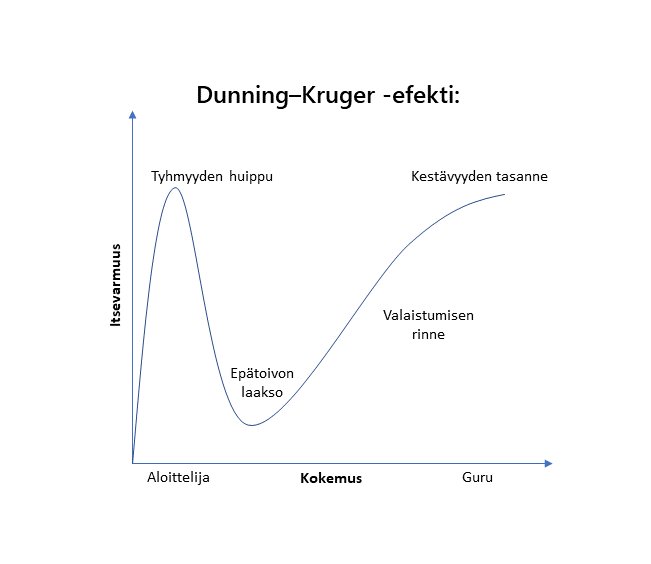
Ylivertaisuusvinouma on kognitiivinen vinouma, jossa yksilö yliarvioi itsensä jossakin suhteessa kuten vaikkapa jonkin taidon hallinnassa. Lisäksi tyypillisesti mitä huonompi yksilö on kyseisessä taidossa sitä enemmän hän yliarvioi osaamistaan. Tämän voi katsoa johtuvan siitä, että kun yksilö ei hallitse taidon suorittamista, ei hän osaa myöskään arvioida osaamistasoa.
Jos haluat perehtyä tarkemmin käyttäytymistaloustieteeseen, niin lue ainakin seuraavat:

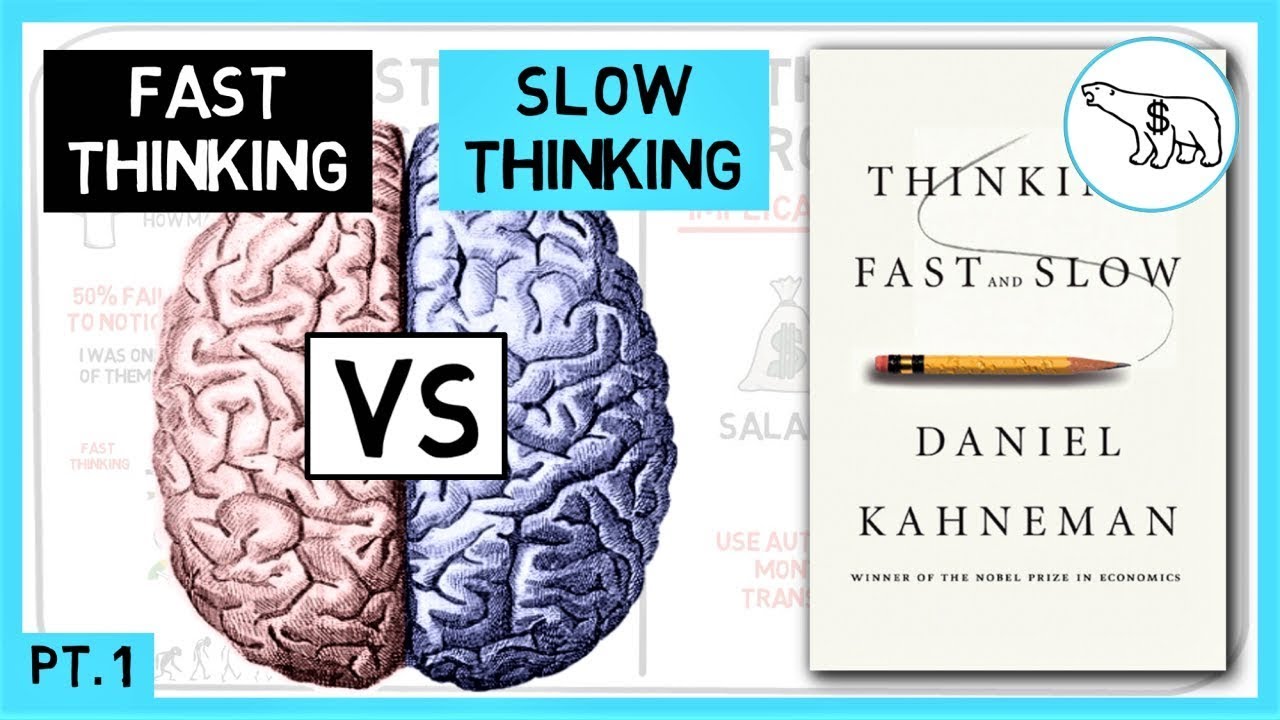
  • Ajattelu nopeasti ja hitaasti - Kahneman
  • Väärin käyttäytyminen - Thaler
  • Signaali ja kohina - Silver
  • Riskitietoisuus - Gigerenzer
  • Petos ja itsepetos ihmiselämässä - Trivers

Erityisesti Thalerin kirjassa on esimerkkejä ihan sijoittamisestakin, mutta toisaalta kaikki tarjoavat sijoittajalle hyviä esimerkkejä. Kun vain opit kunkin vinouman logiikan, voit varsin näppärästi lähteä soveltamaan niitä sijoittamisen maailmaan, vaikka esimerkit kirjoitta olisivatkin terveydenhuollosta, vedonlyönnistä, urheilusta tai parisuhteesta.

Ylipäätään Terra Cognitan kirjat on lähes aina sairaan kovia, ja antavat hyvää ajattelemisen aihetta laajemminkin talouteen, yhteiskuntaan ja käyttäytymiseen.

Paljon jäi vielä sanomatta, mutta mennään nyt alkuun vaikka tällaisella avauksella. Ja muista, että sijoittaminen on X prosenttia sijoittamista ja Y prosenttia psykologiaa, ja Y > X. Prosentit saat päättää itse.

:slight_smile:

182 Likes

A great start and a very interesting topic! Hopefully, this thread will have a long life, as discussions on this topic tend to open up more new thoughts and questions than they provide answers to previous ones.

14 Likes

Great opening by Mauri. I’ll bring up one psychological phenomenon that’s worth thinking about in life in general.

You’re walking down the street and stub your toe on a concrete barrier. Which thought comes to mind?

  1. What idiot put this concrete barrier here?
  2. What an idiot I was for not seeing the concrete barrier! I’ll probably walk into a lamppost next if I don’t pay more attention.

If your answer is 2, you feel that you have the reins of your own life in your hands. You have a sense of control, and things happen at your initiative, not to you. You are active, not passive. You understand that you cannot control where concrete barriers are placed, but you can control whether or not you walk into them.

Of course, the division is not entirely binary. All of us have both ways of thinking, but some have more of one and some more of the other. However, one can develop their thinking in the direction they believe to be more useful.

It feels like my generation and younger, in particular, are always ready to blame bad luck. I haven’t encountered the same “unlucky, unlucky” phenomenon in older people.

66 Likes

Yes! Thanks for this opening. I’m a psychology student, but I haven’t really delved into the psychology of investing, even though I’ve been involved in investing for about three years now. However, I’ve noticed that certain life skills also apply in the investment world. For example, awareness of one’s own behavior, emotions, and thoughts is, in my opinion, a very useful skill. I read this forum a lot, as I learn a great deal here about both things and investment behavior. Something that constantly makes me wonder is the phenomenon where the reaction is to sell when the market goes down and buy when it’s at an ATH. (For me, it’s the exact opposite. I don’t like to buy after a big rise, nor do I panic even if the price drops). Mauri, you’ve clearly researched the topic, so could you comment on this kind of behavior or perhaps suggest where one could read more about it?

28 Likes

Now this is the “MOTHER” of all threads! The very first thing anyone starting to invest should study is indeed a little bit about investment psychology, and having read the forum, a refresher on this topic wouldn’t hurt even for the more experienced… :wink:

8 Likes

This is one of my favorite topics in investing, and over the past few years, I have personally strived to develop this aspect within myself. I am more aware of myself as an investor and better recognize the psychological challenges in my own investment activities. This has helped me adapt my strategy to suit my own mind. I also better understand what I am not, or at least what I am not psychologically capable of – this way, I stay away from such areas (short-term trading, industries, companies, countries).

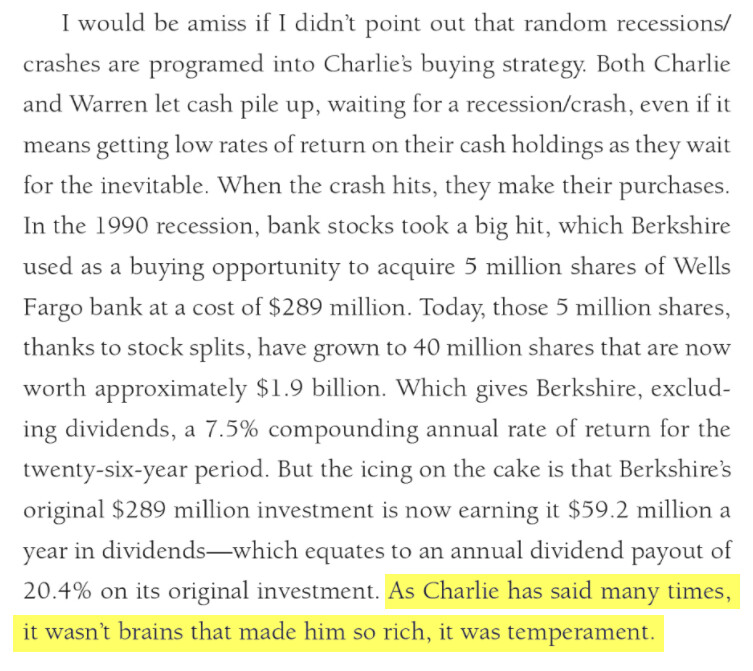
One of my favorite figures has been Charlie Munger and the books related to him. Here’s a snippet from “The Tao of Charlie Munger,” which serves as a good single example of the importance of the psychological aspect:

The longer one has invested, the more important psychology and its development become. Or at least, one begins to understand its importance as the years accumulate. In the beginning, these things were not really thought about, but rather had to be learned the hard way – in my case, especially patience and waiting.

32 Likes

This is indeed an interesting point.

I would identify that this is very much about responsibility, taking responsibility, and bearing responsibility. Perhaps in its starkest form, taking responsibility is evident in, for example, a seriously ill person’s struggle for recovery or a neglected child growing into a well-adjusted adult. In neither case can you (any longer) influence what has happened, but you can take responsibility for your own recovery and well-being. And in fact, you should do so, because it cannot but improve your prognosis, well-being, and the meaningfulness of your life.

Of course, it’s easy to talk about this when one has lived a relatively normal life without the most terrible adversities. But in my opinion, the mindset is similar even with smaller problems, although accepting them is probably often easier.

I’m currently reading Jordan Peterson’s latest book, and yesterday I came across a chapter on taking responsibility:

Rule 4: Notice That Opportunity Crouches Where Responsibility Has Been Abdicated

“It is likely, inevitable, that the adventure of life will frustrate, shake, and disappoint you, as you answer the call of conscience, bear your responsibility, and strive to put yourself and the world in order. But it is precisely there that deep meaning is found, which provides direction and offers guidance.”

Rule 7: Work as Diligently as You Can on At Least One Thing and See What Happens

“Heat and pressure transform carbon into a crystalline, perfectly precious diamond. The same can be said of a human. We know that the diverse forces of the human soul are often not in harmony. We do things we don’t want to do, and leave undone things that should be done. We want to be thin, but we still munch on treats on the couch. We lack direction, are confused, and paralyzed by indecision. Temptation pulls us in every direction, even though we said we wanted something, and we waste time, procrastinate, then get anxious about it and still don’t change.”

If this theme interests you, then Jari Sarasvuo’s monologues chilling on Areena are this stuff at its best. There are a few hundred hours of excellent speeches there, even for car journeys.

19 Likes

If you want to know how you react to bear markets, then studying investment psychology won’t help, nor will any virtual portfolios. This is one of those rare things that can only be found out by trying.

Perhaps a slightly negative picture, but people generally have a very sensitive attitude towards the euros they’ve earned.

17 Likes

I partially agree and partially disagree.

It’s probably true that the ultimate truth of how you react to a bear market can only be found by living through it.

But you can still prepare for it by practicing psychological skills and increasing your awareness of psychological phenomena, such as cognitive biases. This gives you better opportunities to influence your behavior when emotions or thoughts threaten to take over. And yes, it’s possible that your behavior will still go awry, but I believe the likelihood of success will improve.

Experts sometimes say head (knowledge), heart (emotion), hand (behavior), and sometimes hand, heart, head. In my opinion, most experts in the field believe that the loop can go in any order, which would support the idea that knowledge or understanding can influence behavior, and that experience is not the only path to wisdom, even in stock market crashes.

Edit:

However, I want to bring up one point here, which you might also have been getting at. Virtual portfolios or other “pseudo-activities” don’t always motivate learning as well as so-called real activities. In such cases, the problem is usually that when something is superficial, you also neglect learning and approach studying, self-development, and even reflection superficially.

So, even if you do exactly the same things in both cases, having your own skin in the game (you should also read Nassim Taleb) will probably make you work harder, concentrate more intensely, and ponder more diligently what else you could do better. This is assuming that the pressure doesn’t become so intense that having your own skin in the game starts to impair your ability to think, make decisions, and concentrate.

27 Likes

A really interesting topic. I’ve noticed the same thing myself: the more experience you gain in investing, the more significant the psychological aspect becomes. I’ve accepted that I can never beat the professionals, people smarter, more skilled, and more experienced than me in crunching numbers, who have the time and interest to dedicate ~12 hours a day to it. Instead, I can compete with almost anyone on the psychological side.

The most important lesson, instead of dreaming of getting rich quickly, is truly internalizing the power of compound interest. Many people in my inner circle who earn more than me have problems with this; for example, they have never even started investing because “I can’t be bothered to chase after 10% annual returns.” Instead, these same people constantly have new schemes in mind with which they believe they will get rich quickly this time. They are all also united by blind faith, a certain arrogance in their own abilities, instead of realizing how people don’t value what they don’t know. This often leads to what is called risk. Especially when this unconscious, missing “area” is often supplemented by beliefs based on personal experiences that happen to fit the narrative and confirm one’s own opinion.

In addition, also admitting one’s own limitations and the critical thinking that results from it. If I get an idea, I try to think about it from several different perspectives and consider why experts in the field (whatever the matter may be) would disagree. Because in my experience, we underestimate the things and the number of things we don’t know. Simply because we don’t know them. We know something about topic X and imagine that’s all there is to know about it; the rest we unconsciously fill in ourselves, each in the way they see fit. Stories are always more appealing than facts, and it’s easier to get on board with them when they support one’s own opinion. For this reason, I don’t bother to follow the corona discussion at all, for example. For the third year in a row, vaccine critics and other cranks continue to argue against experts in the field with their gut feelings.

My third strength is long-term perspective, which is a consequence of internalizing the compound interest phenomenon. Many people seem to sell based on the share price curve. The basis for selling for a large part is “well-risen price,” “stagnant (often negligible timeframe) price,” or “fallen price.” I hold rising shares, I hold “stagnant” shares (in fact, I hate the word altogether, as it seems to be used nowadays in situations where a hype stock’s price hasn’t risen 10% in the previous week), and I monitor falling ones. This year I haven’t made a single stock trade, excluding dividend purchases, because I haven’t seen the need for them. I follow companies’ business operations, specifically in light of data, facts, and numbers, and I make moves if the business moves against my desired direction in the medium term. Softness in even one or two quarters is not a reason for me to sell. For many, it seems to be, probably misinterpreting numbers or even not interpreting numbers at all, based on some noise that is irrelevant in the big picture. “Trust in company X was lost because the price is stagnant and thing Y happened.”

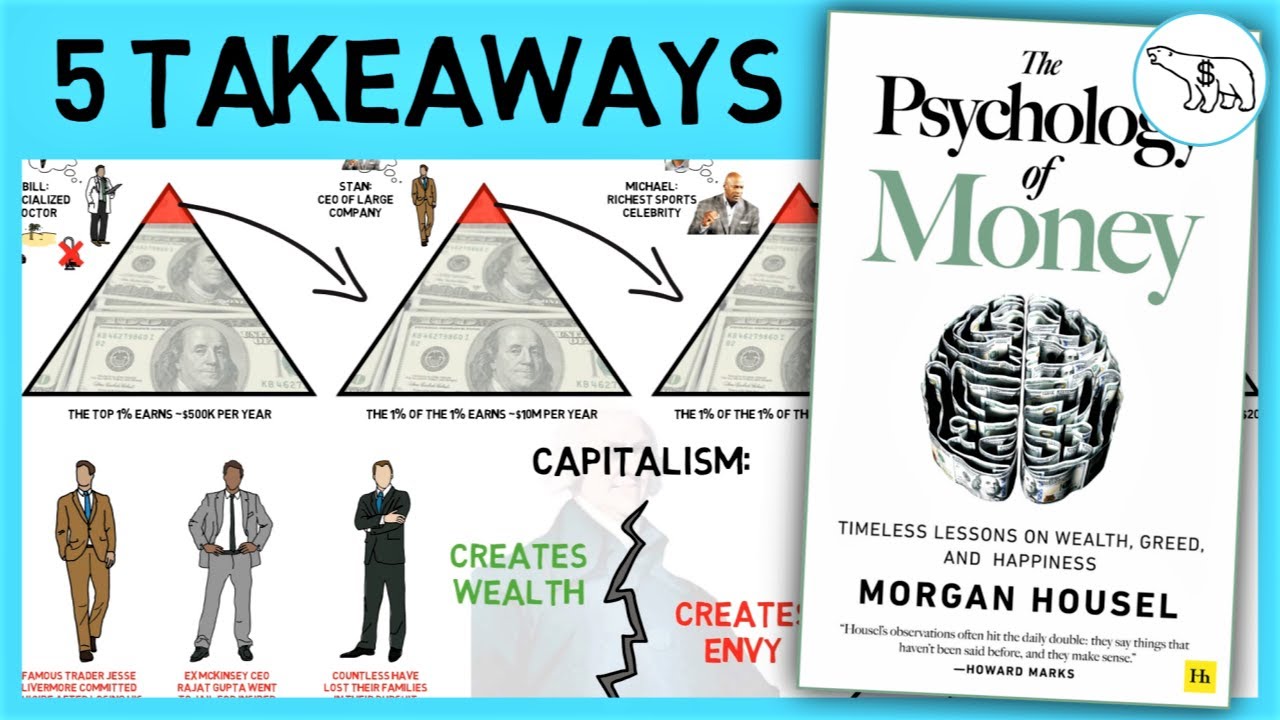
I am currently reading Morgan Housel’s Psychology of Money, which has gone to number one on my list of all-time best investment books. I’ve playfully said among my acquaintances that this book should be the first book read to children right after the ABC book. And in the end, it’s not even far from the truth. Timeless wisdom for many different life situations. Every sentence is like it came straight from my own pen (if I could write); I just find myself nodding in agreement now and then while reading and relating the book’s text to situations I’ve experienced in my own life.

I still have a lot to improve on; I felt a pang in my heart when I read @Mauri’s opening post. I often find myself anxious about not doing something, but I still don’t do anything about it. I fiddle with my phone far too much and, above all, unnecessarily, read clickbait news, neglect exercise, read too little, and generally concentrate poorly. I am aware of all this, but I either don’t do anything about it or I keep postponing it. This is a good New Year’s resolution for myself.

Happy New Year to everyone, equally!

64 Likes

Good topic, and as @Bondi already aptly stated, perhaps the greatest benefit is the emergence of new thoughts and questions.

A few more books in addition to those already mentioned, which look at the matter from the perspective of shorter-term trading:

The new trading for a living: psychology, discipline, trading tools and systems, risk control, trade management / Alexander Elder.
The psychology of trading: tools and techniques for minding the markets / Brett N. Steenbarger

Many of the same things that Kahneman, Taleb, etc., discuss in their books.

Perhaps the most essential point raised in these is the evaluation of one’s own actions and motives, and in this, a diary can be of great help (and this is related to the fact that our memory is not stable but reshapes itself according to events, meaning that afterwards we perceive things differently than in the moment).

6 Likes

By far my favorite topic in investing, which my upcoming investment book will also cover very extensively - once I get the manuscript finished first! In the same way that Inderes lacked discussion on the topic, I realized that there isn’t a single book written by Finns on this topic in Finland either, so I had to fix that :slight_smile:

For me, probably like many others, Kahneman was the first contact with the matter, but another equally good one is Dan Ariely’s Predictably Irrational. I completely agree with @nunogomes that the psychology of investing and money is so incredibly interesting because it is not limited to investing, but to our entire lives. Habits, emotions, biases, all of them make us the person we are, and even if we knew every one of these things, we would still make mistakes because of them - which I find extremely interesting.

I could go on forever, but since I have already written over 300 pages on the topic, I hope to be able to share it with everyone sometime next year (perhaps for the famous Christmas markets, heh). And @CapuK Sounds strongly like behavior resulting from recency bias, FOMO, and of course anchoring. Both Kahneman and Ariely explain these well with many different studies, if you are interested in reading more.

35 Likes

Actually, there’s another aspect to the distress of a bear market, and that’s invested wealth.

Small amounts of wealth, where even large monthly losses can be mostly offset by salary income, are precisely those buying opportunities where even a thousand euros can generate significant returns for the portfolio. For example, a 20k portfolio might not have been a problem during the COVID-19 dip if one could shovel, say, 500€ of new money into stocks per month. The absolute loss in the downturn was small, but the relative returns on purchases were quite nice.

With a medium-sized portfolio, one starts to have power over their own life. You can pay off loans, buy a car, a Rolex, etc. On the other hand, monthly savings start to be quite negligible relative to the portfolio’s size, and the portfolio can fluctuate many times the amount saved. For example, with a 200k portfolio, one might have lost up to three average Finnish annual salaries when driving into the COVID-19 pit. The threshold for putting in new money rises.

With a large portfolio, such as over a million, the situation eases again. Often, there have already been previous downturns, and investment wealth is only a part of total wealth. For example, dividends might cover essential living costs despite a stock market decline.

In fact, these stages follow quite accurately the self-confidence graph previously published in Mauri’s thread.

39 Likes

It will be great to have this book on the shelf eventually. Is the book generally about investing, also including the psychology of investing, or was it specifically that the entire 300-page work focuses solely on this psychological aspect?

This is a topic I would write about myself if I were to practice any kind of investment writing.

This was completely new to me. I’ll have to order it.

I’ve been on the verge of ordering this a couple of times. Most recently, I was supposed to order it as a Christmas present for myself, but since it wouldn’t have arrived by Christmas Eve, I didn’t order it. Maybe I should place an order for this one now too.

6 Likes

Great thread opener @Mauri

Regarding “loss aversion”, I remembered an empirical study (n=1) I conducted last year, during the early stages of my investment career :face_with_hand_over_mouth: I only got over a €50 loss when other stocks had risen by €500. It was also interesting to note that a new stock falling to a -5% loss after purchase was annoying, but when a previously bought stock had first grown by 20% and then fallen by 10%, it hardly evoked any emotions.
I just chose the “Behavioral and Psychological Economics” course for March, and with that in mind, I’m listening to the audiobook Behavioral Economics: The Basics (Corr, Plagnol) (about 8 hours long, available on Nextory, among others). I’m just scratching the surface of the topic, but I’ll be following this thread immediately :+1:

12 Likes

A good metric to measure the dominance of emotions in an investor’s decision-making is to ask about the leverage ratio of their investments. In practice, all loans, such as housing and student loans, can be paid back whenever one wishes. This means that if a person buys stocks while simultaneously having any kind of loan, they choose not to pay down the loan and instead put the money into stocks. The net result is the pure fact that they have effectively taken out a loan for investments. So, if a person invests, for example, 20,000 euros in stocks, and they have more than that in a housing loan, their portfolio is 100% leveraged with debt.

99% of investors with a housing loan claim that their use of debt for investments is 0%. These individuals are deceiving themselves and base their investment decisions purely on emotions.
Which group do you belong to, emotional or rational investors, based on the above?

4 Likes

Wouldn’t, by the same logic, every tenant be in debt for the rest of their life’s rent according to IFRS 16 unless they plan to live under a bridge in between? So, 100% leverage!

12 Likes

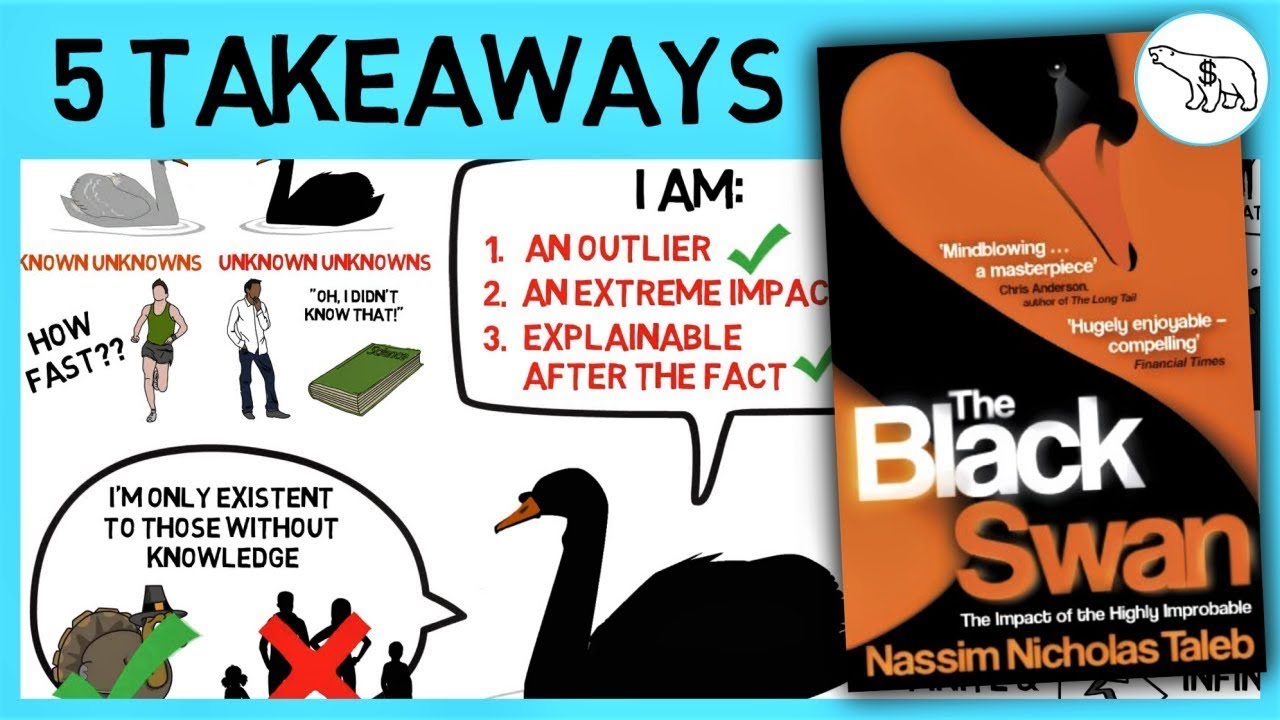
There are summary videos of books related to the psychology of investing on The Swedish Investor’s YouTube channel. It’s worth watching them, at least if you can’t get your hands on the books. For example:

20 Likes

I didn’t quite get the connection…

I didn’t quite understand what you were getting at with that mortgage example either. If you have a mortgage, pay it down according to the plan, and use money for investments, you’re fooling yourself if you don’t keep your portfolio 100% leveraged. Sorry, but that makes no sense.

I just threw in an investment term. Companies using rental properties can have huge debt commitments. This is also the case for those living in rented accommodation.

4 Likes