Experiences as an investor - personal stories - for inspiration or lessons

I’ve been actively following the forum and trying to find a thread where one could write about personal feelings, experiences, and anecdotes from their investing career. It would be interesting to read various investor experiences - to hear how starting to invest, successes, and failures have affected each person’s life.

How has investing changed your life, and what other benefits has it brought besides potential returns? Or has it only caused harm, even though we believe in the thesis that “investing always pays off”?

I’ve noticed how some forum posts have touched upon these themes and revealed the authors’ own thoughts and insights during their investment journey. I would have wanted to revisit these touching and inspiring descriptions after the first read, but they get lost so easily in the flood of messages.

These personal writings have often reflected not only the current market sentiment but also the author’s own feelings and reflections on what has ultimately proven wise in investing in the long run.

I believe that each of us has investing-related stories - for inspiration and learning - that would be worth telling.

39 Likes

My journey as an investor is still very much at the beginning, but I will nonetheless write down my own observations from my experiences over the past year and a half at the start of this thread.

I have already noticed that the goal I set at the beginning, to beat the bank account interest rate - which, by the way, has not been achieved - is still only one part of this whole.

I could not have possibly understood how much more content and interest in pondering life’s phenomena starting to invest has brought into my life and thinking.

Could the goal of investing really be more than just making money grow?

Well, I have found meaningful things to do in my free time and gotten to learn new things. The fact that I decided right from the start that I wanted to invest in direct stocks has added an extra flavour to this.

Through investing, I have

  • learned to take better responsibility for my own finances
  • learned about myself and my reactions through phenomena related to investing
  • learned logical reasoning and new mathematical concepts
  • learned the laws of economics
  • learned about the effects of the economy on society

This world of investing has been like learning a new language for me :smiling_face:. It keeps my brain cells active and often comes to me in my dreams. And thanks to the investor community on this forum, I have come to understand that investing is only a part of life - and at least for me, I shouldn’t build my future financial management solely on it. :yellow_heart:

69 Likes

Cheap becomes expensive.

Through investing and after learning a few hard lessons, I have concretely learned through losses how cheap options or merely looking at the price can lead to losing a lot of money in the long run.

In the early days, I did significant damage to my portfolio by buying something speculative or otherwise a weak case cheaply during market downturns. “-50%, -80% from the discount bins” I learned the hard way that if a stock has fallen significantly, either on its own or alongside the broader market, it still has room to fall another -100% from there. The only solid ground is found deep in the sea of investments, near 0 euros.

Nowadays, I better understand the fundamentals and potential reasons for a decline, which naturally leads me to still buy companies at lower prices, but only good companies or with a conscious, calculated risk. In market-wide declines like the ones seen this year, truly good buying opportunities at reasonable prices sometimes emerge. But my understanding of what is “cheap” has changed.

This same realization has also carried over into everyday life; nowadays, I tend to buy higher quality goods and think in advance, “does it make sense to save 200 euros on this phone, which I’ll have to replace in 2 years, compared to buying a decent one right away?”

35 Likes

How to put this briefly…

Buy stocks for a year on Nordnet and Coinbase, incurring brokerage fees that are about 30-70% of the price, and only then realize the mistake. Thousands of euros lost in these mistakes.

Selling those same purchased items too hastily. Thousands of euros lost in these as well.

Now, these mistakes have been corrected just in time, and we’re at the bottom. I no longer have the energy to actively trade and churn.

Now, I’ll quietly observe from the sidelines, hoping for a recovery within the year.

29 Likes

My investment journey started under quite unpleasant circumstances. The person who had been managing my investments passed away, and I was suddenly in a situation where I had to start learning these things myself. The portfolio contained various stocks, and honestly, I didn’t know how I should have handled them, and I imagined that I absolutely had to do something. The world didn’t make it easy for me; a pandemic then hit, and I panicked. I ended up making some quite foolish moves (I still do, but less frequently).

Actually, I wish all of you who manage the portfolios of your wives, children, relatives, etc., would consider whether it’s truly beneficial in the long run. Based on my own experience, I believe that everyone should manage their own portfolio. That doesn’t mean that advice can’t be given, and preferably with justification, so that the learning gradually sinks in.

45 Likes

Here are some situations and perspectives that quickly come to mind, both from my own experience and from observing others:

  • If a company’s product is in development and looks really good → it can be a complete bust. (e.g., Case Talvivaara and the nickel leaching pools, many people lost their money. Pekka Perä’s face on the front page of every financial newspaper.)
  • If a company’s business relies heavily on one product or customer → the risks of collapse are high if the product no longer succeeds or the customer relationship is lost. (Many companies in 2008)
  • China has a lot of potential and extremely attractive valuation multiples, but ultimately even more pain in the boat. After a few bad experiences, the entire country is under a personal boycott, and I gladly leave the opportunities offered by China for others to seize.
  • Invest in high-risk targets moderately; you’ll realize the risks when they materialize a few times.
  • Do not base investment decisions solely on forum posts or analyses, but also research the business yourself with as neutral a perspective as possible. If the industry or company doesn’t quite make sense to you, there are other companies available, and you can start over with the same process.
  • If you know an industry well, research companies in that industry, and you will have a better chance of choosing a winner among competitors.
  • Getting rich quick rarely happens; aiming to beat the index is already a great achievement.
33 Likes

My most educational experience was the loss I incurred after my all-in investment in Nokia in the spring of 2001. I believed that the share price couldn’t fall much further from 26 euros… We all know what happened. I lost 24,000 Finnish markkas.
That experience stung so much that I had to try again. Nokia, battered by Microsoft and Elop, became an attractive buy around 2011-12. I managed to pick up several lots for under two and three euros. That’s one of the few times my timing has been roughly accurate. Well, what did I learn from this: It’s worth diversifying :+1:

32 Likes

When the corona crisis hit, I sold almost my entire portfolio as the profit accumulated over years began to approach zero. The thought that the money I had earned with hard work and effort would vanish into thin air as stock prices continued to fall was too much for me at the time.

About six months ago, I watched one of Warren Buffett’s many interviews on YouTube. In it, Buffett explained that the fluctuation in a stock’s price means nothing to the owner if the company is good. The stock market constantly shouts out different offers for all possible companies, but a shareholder doesn’t have to care one bit about this auction. If the company is good and its long-term future is okay, then just continue to be an owner. The value of a company’s stock will certainly follow the company’s ability to make a profit in the long run.

In that YouTube video, Buffett managed to explain the matter so clearly and brightly that even I understood it. Now, this recent drop in stock prices honestly hasn’t felt like anything. I happily continue as an owner with the companies I bought for a very long hold, and with growing index savings of a few hundred every month. It has been much more pleasant to invest when there is no longer fear associated with the activity!

48 Likes

Thanks for your stories! I’ve gained exactly the kind of learning and inspiration I hoped for when starting this thread. Plus, reading personal investing stories is my passion :yellow_heart: I’ve also realized that there are probably as many stories as there are investors, and as the investing years accumulate, more and more are added.

And I couldn’t resist commenting on your posts at this early stage of the thread! :blush:

@Moleman
This is probably the most common trap inexperienced investors fall into at first – buying as many cheap stocks as possible from the discount bin – and trusting that some of them will quickly rise to new ATH (All-Time High) figures. Although “quality is rarely cheap.”

@Datamonni
You were brave to share your story! “Churn and burn” (veivaa ja vatkaa) still seems to inspire many of us, and what’s fascinating about it is that it can sometimes lead to significant profits. However, in these churnings, many of us beginners initially fail to understand how significantly expenses weaken returns.

@Tipitityy
The crucial insight you mentioned is that understanding investing grows best when you are personally responsible for your own assets. And realizing that investing doesn’t necessarily mean you always have to act and be active. Someone on the forum has noted that a successful investor spends most of their time doing nothing.

@tebiz
You compiled good points in your post about the riskiness of investing; regarding attractive valuation multiples or country-specific risks and mere future promises, the narrowness of a company’s product, or relying on others’ analyses.

@Jyrki6
Thank you for sharing the lesson related to your all-in Nokia experience. After these, one probably returns to the markets wiser and with a new diversification strategy.

@tripsykero
Your story exudes optimism and confidence as an insight: “a company’s stock value is guaranteed to follow the company’s ability to make a profit in the long run.” This post gives just enough faith to the thesis that investing always pays off.

14 Likes

-About half a year ago, Fortum was an extremely stable, reliable, and sure profit-maker and dividend payer with no risks, meaning it was an excellent purchase by Buffett’s criteria.

4 Likes

Thank you for visiting and commenting on the thread.

Without taking a stance on your comment, I think in this context that these investment situations also make for quite some investment stories.

Otherwise, I think that the investor experiences and stories of those writing in this thread should be respected as they are - at most, one can thank and encourage them with a separate message if a post has particularly touched them.

I think it’s very brave for someone to dare to share personal moments from their investor journey on an open forum for others to read.

10 Likes

One experience that comes to mind, which is not usually emphasized much in books on the subject, is that one should learn to know one’s own temperament. It tends to influence decisions, perhaps more so in the inexperienced than with experience. For example, I am prone to contrarianism, as one might guess from my username. I naturally stay on the fringes of the herd and observe the situation from there. I have learned that it is not an end in itself to disagree with the market; sometimes it’s better to just go along with it. On the other hand, I absolutely cannot buy P/S 30 companies, even if everyone is shouting their names. Someone else might have the opposite tendency. It helps if one asks oneself, “Did I take into account my own tendency to make decisions based on xxx?”

This also relates to the fact that through self-knowledge, one learns to evaluate information that floods in from all sides. Information sources often have their own biases, which create distortions when the story is told from mouth to mouth in different media, often by like-minded individuals. For this reason, more information does not always help in making better investment decisions.

20 Likes

I’ve learned quite a few lessons about investing along the way. I’ll try to elaborate on them below.

Tolerating uncertainty is part of stock investing. Nothing is as uncertain as predicting the future. However, the value of a stock is, in principle, the discounted present value of the cash flows produced by the shares. No one actually knows this precisely. It’s the same in life in general. Sometimes you face curveballs in your career, personal finances, relationships, or hobbies. Stock investing teaches you that you can’t control everything. So, it’s worth focusing on things you can influence or manage.
Long-term perspective has been an important lesson for me. I still have a small slice of index funds in my portfolio that I haven’t touched in 15 years. In direct investments, there are several stocks I’ve owned for over 10 years. Patience is a virtue, both in stock investing and in other aspects of life. If you react to every rustle around you, you usually can’t see the forest for the trees. I try to find stocks that compound interest. Then, the task is to keep an eye on the stock to ensure the business remains high-quality. I sell if the company deteriorates or if I’ve made a mistake.
Risk management. Fortunately, I’ve consistently diversified sufficiently. Because of this, I’ve never lost sleep over losses. I’ve also learned that it’s not worth buying a company with too much debt, as it’s difficult for such a company to withstand difficult times.
Personal financial management: I also avoid debt in my own life. Being debt-free means having the option to take on debt if necessary. This option is not available to those whose loans are maxed out even in good times. I understand that this approach is not possible for everyone. However, some choose a more extravagant lifestyle that closes this path in life.
Better understanding of the economy and surrounding society: Society wouldn’t function without the goods and services that companies produce. The taxes paid by companies and employees then finance the public services we need. Work and entrepreneurship are the foundation of well-being. I feel great about capitalizing the economy in my own way, as it ultimately shares well-being with all of us. Society also needs owners and providers of capital. Without capital, companies would not have the prerequisites to operate or offer jobs to people.
Developing logical-mathematical thinking: When you stop to ponder things more carefully and deeply, your understanding of them grows. When you learn the logic of a new industry, you simultaneously develop your ability to understand new things.
This also helps in managing emotions: If QT is down 50%, I don’t necessarily need to rush to do anything. I can calmly monitor the situation and buy/hold/sell in the way I deem best. Over time and with deliberation.
Emotions have their place, but in stock investing, it’s better to focus on being analytical. The stock market doesn’t care about my feelings, so why should I react emotionally to market movements?

31 Likes

Technical issues in online trading can hit hard, for example, through lost profits. Years ago, it happened to me when I bought shares of Suominen, a company that was struggling as a penny stock at the time, at what I thought was a rather cheap price. I held onto them for a few weeks, and when the price rose slightly, I thought I’d place a sell order at what I considered a thoroughly good price, with the thought in the back of my mind, “this won’t bite, that’s for sure.” Then, I neglected to follow the company for several weeks, and several good news items came out about the firm, so the stock price bounced up quite briskly. My clumsy sell order, of course, went through, but I was annoyed that I was left watching the company’s stock’s taillights as it picked up speed. I was left licking my fingers. Shipwrecks can also be caused by stop-loss settings when a stock’s price unexpectedly drops relatively much, and with bad luck, it happens that you sold the shares at a loss and the price is already flourishing again. That’s when the investor’s temple vein really throbs.

9 Likes

These are quite the times for a beginner. I’ve had personal experience with investing for almost two years now, and I continuously gain more knowledge and inspiration from you fellow investors.

Though, I don’t think I need quite this much more learning about these bear market sentiments :sweat_smile:

It feels like I’m a pawn on a platform where the markets are fighting against me and constantly winning – or rather, winning more and more each day.

Nevertheless, the hobby continues, persistently. And I’m sticking to my investment plan.

I don’t know what would happen in the game if I were to give up. What exactly would one give up in this battle? One’s own mind? The markets? Or would one give up this battle mode?

Accept that market timing cannot be beaten except by luck?

And that starting exactly when it’s most educational might, in five years’ time, turn out to be the very best moment to start investing. Perhaps only then will I understand all that was learned about investing in these early years?

Some of you have already shared in the coffee room how you survived previous bear markets, and that the best way to survive is precisely not to sell at the bottom. This is good encouragement for a beginner like me, when the losses are — quite sufficient. I could read more of these stories.

Perhaps it’s that feeling of trust that one occasionally gets from experienced writers on this forum, which gives one the energy to continue this diverse hobby. :pray:

33 Likes

What a tough earnings season week it’s been. I’m already pinching too much from my sleep to spend more time on investment matters. It makes no sense, because when you’re tired, your ability to absorb things is worse, etc. However, I thought I’d tell my investment story in a concise package.

Since childhood, I’ve saved my money; my biggest expenses as a child and teenager were gifts for other family members. Saving was always in my blood, so about 15 years ago, when I bought my first apartment, I already had quite a bit of money saved up for it.

I paid off loans at a brisk pace, and I’ve never really spent money on anything. Perhaps the biggest non-essential investment in myself has been a wool coat costing about 100 euros in the last couple of years. I must say, though, that I just received a phone worth about 140 euros for Christmas, and sometimes I get something like that from my family, even though I haven’t asked for it and sometimes I’ve even tried to prevent it. Of course, I’m grateful for everything I receive, even though I naturally want to manage on my own.

Back from the background to the investment story… I had been thinking about investing for a long time and finally got enthusiastic when a couple of friends also practiced it. In 2018, I started regularly putting money into index funds, and I think I bought Nordea and YIT when an unknown old man recommended them at the gym. I didn’t really know anything about investing, but I did know that low-cost index funds were a good thing - I should have stuck with them if returns were the only thing on my mind… :wink:

In 2019, I bought more familiar stocks and Biohit because it sounded exciting, and its price had fluctuated and sometimes been high. I also bought LeadDesk because it sounded great, and participating in offerings was worthwhile. Well, that’s how it was, “a bit” random, and I read a bit here and there… purely on gut feeling. :smiley:

Then in 2020, I got really excited about investing, and even the corona dip didn’t feel bad because I lost much less than others. From then on, especially in the summer, I started putting money into stocks that I had learned about through Inderes’ materials and the forum. I really bought Digia because it was involved with the income register, which even then caused a lot of headaches for many parties, and I thought it could cash in on the public sector with that. Marimekko also ended up in my portfolio because it seemed to be doing well, but the stock’s value had fallen. Hydrogen-related things also became familiar, as did many other stocks about which I understood very little… just “gut-feeling hype FOMO.”

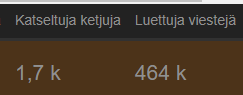
Last year, 2021, I started reading everything possible on the Forum as best I could. My current statistics:
image
I had guessed closest in the Forum’s Nokia “earnings quiz,” so I got Premium. I started reading Inderes’ materials even more, especially the analyses. Then I read books and started discussing investment matters a lot with different people. Investment topics were with me from morning to night, and I really started studying all sorts of things related to investing. I did repeat almost all the mistakes an investor could make, but perhaps with better information, even if the choices weren’t the best in hindsight.

Well, and at the beginning of 2022, I got this moderator job, and only then did I really get properly involved in these things, as if I hadn’t been already. :smiley: My portfolio came down at a brisk pace month by month, so I “had to” slowly start examining things from new perspectives, learning different things, such as investment psychology and, for example, macro matters. I also started looking at myself and my actions more honestly + more self-critically, engaging in more precise self-reflection, and at the same time being more open without being naive.

2018: Good year, bought low-cost index funds, and most importantly, I started investing.

2019: Risky stocks and gut-feeling acquisitions, I didn’t really follow any guidelines.

2020: Hard work, misunderstanding, and clear mistakes that should have been avoided, for example, “gut-feeling hyper-FOMO.” In addition, the basics were still forgotten, and self-criticism.

2021: The same mistakes, but fewer, yet still many. :smiley: The important thing was that I tried very hard, but I could have used more self-criticism and discretion and focused on the basics.

2022: The same mistakes, but fewer, yet still quite a lot. I’ve given “my all,” but perhaps I should focus more on certain things than reading and following everything… the basics are still forgotten. I am still a beginner!


In almost every aspect of my life, I could have focused on the very basics and learned them more. After that, I could have focused a bit more on the basics to internalize them, and then, once I had mastered the basics, I could have continued to focus on them and learn more.

The fast pace and incredible hyperactivity have certainly led to me having a feel for many things, but damn… I should have often or always stopped and focused and gradually taken things properly in hand. There are many long-time investors who, in the end, have a lot to improve on in the basics, but then they can overcomplicate things and focus too much on trifles and all sorts of irrelevancies.

By solidly internalizing the basics, avoiding the worst blunders, and having long-term persistence, one can go far – one should not forget those simple basic things because of which big losses and other foolishness occur. One must learn them and always keep them in mind.

I took shortcuts here, being tired, but I guess you got some point from Recruit’s story. I am an excellent cautionary example because I still make a fair amount of the mistakes I mentioned earlier, and I still don’t really master even the basics very well. I try to fight with myself every day; my biggest adversary is not the markets, but myself. More than bad luck, there has been my own foolishness. :slight_smile:

I believe in the future in many ways; I’m getting help for the hyperactivity that has plagued my whole life, and in my opinion, I am very diligent and persistent despite my hyperactivity. My playful goals are to have over 500,000 euros in debt-free assets in about five years and one million euros in over ten years. And these goals are not impossible in any way, and if I become a better-than-average investor, I will fly even further. :sunglasses:

Phew, what a soaring and confused text from a tired me; thanks if you made it this far. Good cheer and patience to everyone! :slight_smile:

47 Likes

My feelings in November 2022, having started investing at ATH prices

It can’t be true!
Is this what it feels like when fighting spirit is turning into vigor?
And vigor is turning into hope?

At the beginning of my investing career, I’ve already experienced enough decline and disappointment, almost despair, as my portfolio has melted despite regularly investing new money.

But this belief in investing is not yet on strong footing - not at all. I look at the green color of my portfolio mostly with the feeling that

“Well, what is this supposed to be?”
“Oh, so now the market is turning upwards?”
“This won’t last anyway.”

But hope has crossed my mind, and I even smiled once. :yellow_heart:

And since I’m still supposed to be a net buyer for years to come, I don’t even know what to wish for right now. :sweat_smile:

24 Likes

It has now been 24 years since, inspired by a newspaper advertisement, I started investing 600 Finnish marks per month in the Odin Norden fund. That marked the beginning of my “real” small-scale investing, which has continued uninterrupted to this day. Along the way, there have been all sorts of mishaps, mistakes, successes, and other minor things. In this thread, I could gradually reminisce about the old days from time to time.

One small memory is from an investment fair in the late 90s, when the market was really turbulent (the Asian crisis or something similar, if I recall correctly). The Odin fund company distributed large umbrellas at the fair “to protect investors from the storm.” It was a clever move, and the umbrella was of very high quality for a promotional item. :smiley:

One of my initial thoughts was to “buy cheap” in declining markets. I bought a lot of Merita Asia fund and Seligson’s Topix 30 fund (Japan). Well, cheap was cheap and stayed cheap; it was strongly frustrating when cheap didn’t turn valuable.

My first major success was at the beginning of the 2000s when I was in Russia and saw with my own eyes how fast and significant development in a good direction was taking place in the country. However, stock prices did not rise, and at that point, I invested my small money in Seligson’s Russia fund. The fund’s value increased more than tenfold in a few years, and I gained a little nest egg for my investments. (Since then, I gradually divested my Russian investments as the development in the country started going in the wrong direction.)

The early part was indeed chaotic investing; I got excited about this and that and invested without much thought (as the sums were really small). One silly investment was Ålandbanken’s Share Index Loan fund, which invested in equity index loans. Well, there were, of course, a lot of fees and little returns, so there wasn’t much joy to be had from that. In the tech frenzy, I got excited about F-Secure; I thought it was a good company and bought its shares. That was my biggest loss; I lost about 90% of the investment’s value and, disappointed, eventually sold the shares.

Back in the 90s, banks organized investment evenings, from which I remember not only the stock market overviews and fund presentations of the time but also the refreshments, which were sometimes abundant. Once, at Osuuspankki, a buffet dinner with wines and beers, etc., was offered, and similarly, at Ålandbanken, I sometimes ate proper meals and enjoyed drinks. I understand that such generous offerings are no longer provided to us small investors. :smiley:

Well, my reminiscing might have gone a bit off-topic, but sometimes it’s good to have some lighter matters.

53 Likes

At this point, I could offer a couple of general observations from my longer-term experiences:

  1. Markets always surprise. There are constantly “surprises,” one thing or another. There are no such things as “uncertain” times; all times are “uncertain.” Surprises can happen at any moment. That’s why it’s good to diversify, so all your eggs aren’t in the basket that a surprise knocks over. (In this regard, I still have work to do, as my portfolio has become skewed for various reasons).

  2. Investors and the media tend to see the current situation as “normal,” predicting it will continue largely the same from here on. This is a kind of wish that markets could somehow be controlled and that we wouldn’t be living in uncertain times. Then, when the situation changes significantly, this new situation is again considered the “normal” state. Until it changes again, and so on.

  3. In investing, perceptions guide us more than we realize. Since no company or anything else can truly be known inside out, and the future is difficult to predict, perceptions play a huge role. For example, Nokia, which was a true phenomenon around the turn of the millennium and considered a veritable wonder company – no one would have guessed then what would happen to the company. Sometimes perceptions are even deliberately created (do you remember, for example, the once-fashionable BRIC group).

  4. Almost always, when a sector or similar performs exceptionally well, new products (e.g., funds) are launched around it. Topical issues feel close and important, and strong return potential is often seen in them. Then, if the phenomenon fades and interest wanes, such products are typically discontinued by merging them with other funds.

  5. Investing is one of the few things where passivity is rewarded. Often, you don’t need to “do” anything but just let it be. Most of the time, you do best when you don’t do anything to your portfolio (or, as a monthly saver, let savings regularly go into a fund).

These are my thoughts for this time.

45 Likes

Investing is a fun hobby, and when you enjoy a hobby, you usually want to talk about it with other people. Back in the day, there was an interesting new listing on the stock exchange called Talvivaara, which seemed very intriguing, and I happened to mention to a relative that I had bought the stock for my portfolio. The relative was convinced by my enthusiasm and also bought Talvivaara for their own portfolio. At first, everything went well and the share price rose significantly, but then various unexpected major problems began to emerge in the company’s operations, causing the price trend to head toward the ground. I drew my conclusions from these events and sold all my shares without shedding many tears over that somewhat failed investment decision. My relative, on the other hand, said that the price had already dropped too much and it was no longer worth selling, deciding instead to remain a “long-term owner.” Well, the company went bankrupt, and that relative never agreed to discuss stocks with me again.

Another relative of mine asked around the same time how they should approach the stock market, since they heard I was doing well with my investments. I sincerely recommended a somewhat suspicious option at the time: putting their savings into several low-cost passive index funds. We debated for a while about the need for an active fund manager, but my relative eventually saw the light of reason and put the cash into index funds. Time passed, and the investments yielded excellent returns, thanks to the long bull market of the 2010s. Investing later came up again at a family gathering, and this relative congratulated themselves on the good decision to put money into index funds and even recommended that I look into this way of investing, instead of trying to engage in tedious and difficult stock picking, where it’s impossible to succeed.

It is said that people as investors are risk-averse, but in my experience, that isn’t really true. What most investors seem to want is the feeling that they are smart and successful, and to avoid negative experiences of their own stupidity and failures. The most natural reaction to an investment mistake is to put one’s head in the sand and gamble that something unexpected and positive will happen so they can “get their own back” (break even), meaning they wouldn’t have to admit their own failures to themselves.

A similar psychological pitfall can, of course, be found at the other end. If the stocks you own go up, it is terribly difficult to admit that it was just a bubble, coincidence, riding coattails, or some other reason independent of yourself. Usually, an investor seems to think that the reason for the rise of the stocks in their portfolio is that they themselves are an absolutely excellent investor who makes good investment decisions, and therefore they deserve the stock’s rise. Overconfidence in the impact of one’s own abilities on investment success is a slow and insidious killer, as many have surely experienced in recent years.

Investing is a fun hobby, but it is also a psychologically demanding discipline where, if you want to be good, you constantly have to face your own flaws and inadequacies as a human being. This makes serious discussion about stocks so damn difficult, because it is such a long and personal journey into the depths of one’s own psyche that the investor must travel themselves if they want to defeat their worst enemy. Often, in stock discussions, we aren’t even really talking about the stocks, but rather about the investors and their own identities and emotions being projected onto the outside world. Because of this, I don’t think these investment discussions and the strong expressions used in them should be taken too seriously; instead, they should be treated as entertainment and discussed with a bit of a twinkle in the eye, so that the conversations remain interesting :cowboy_hat_face:

81 Likes