The Psychology of Investing

A human spots a wild animal.

Humans are programmed with three modes of action:

  1. run away
  2. fight
  3. freeze and hope the wild animal doesn’t notice or isn’t interested

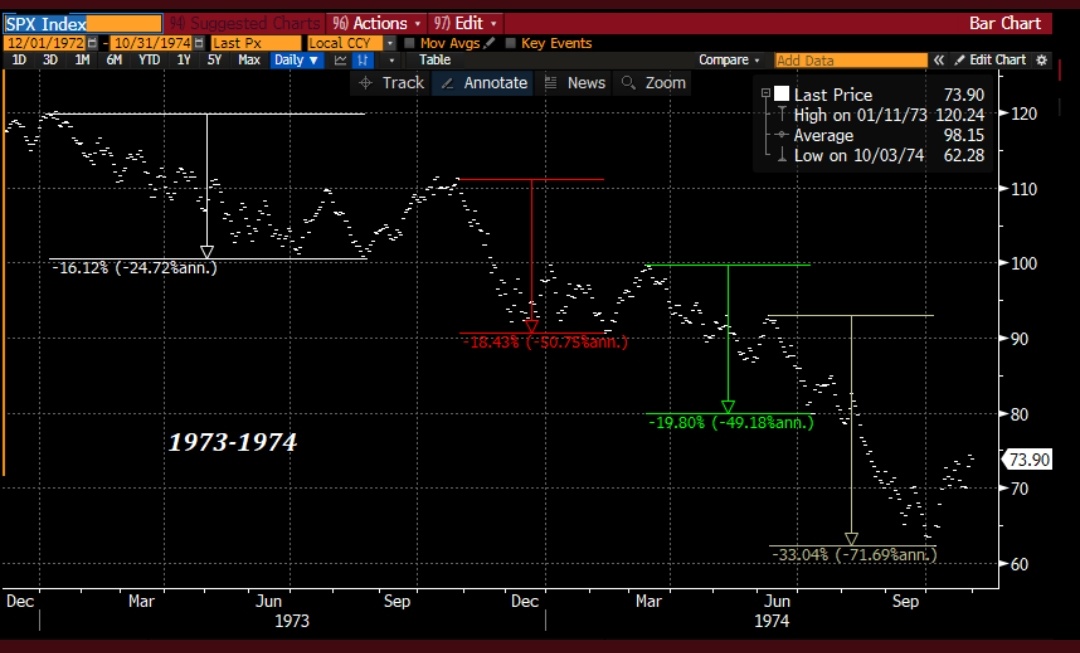
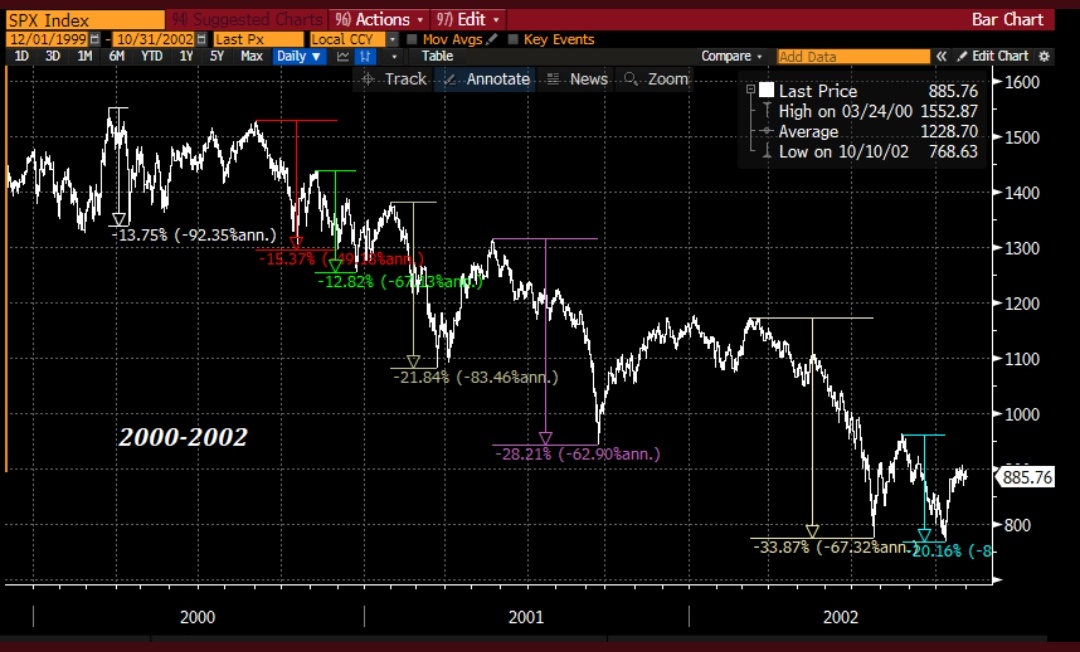
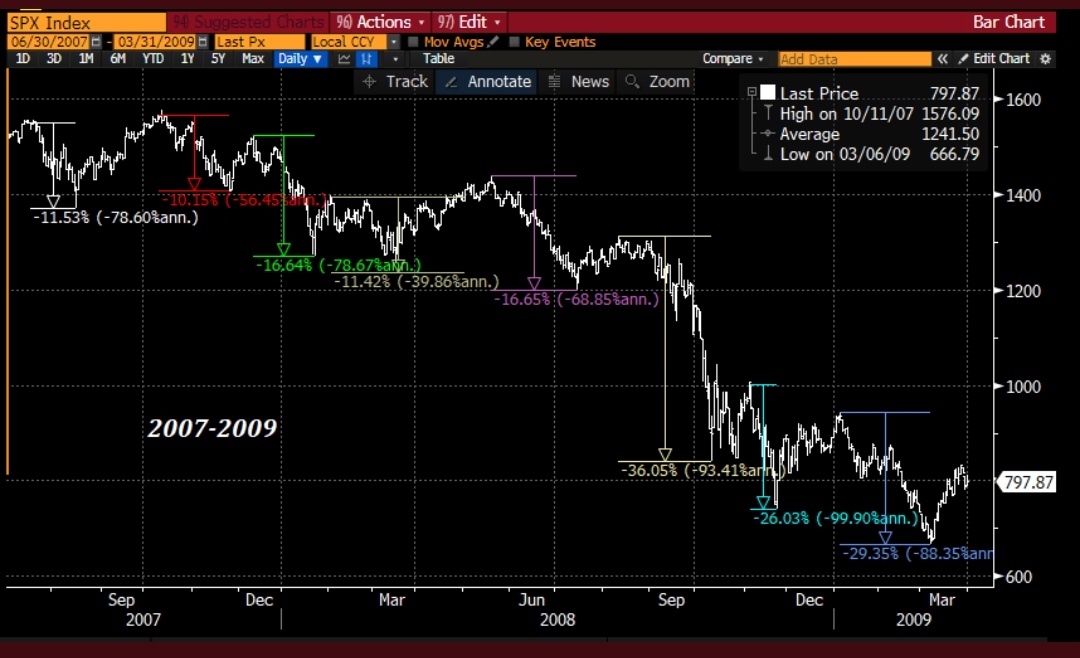
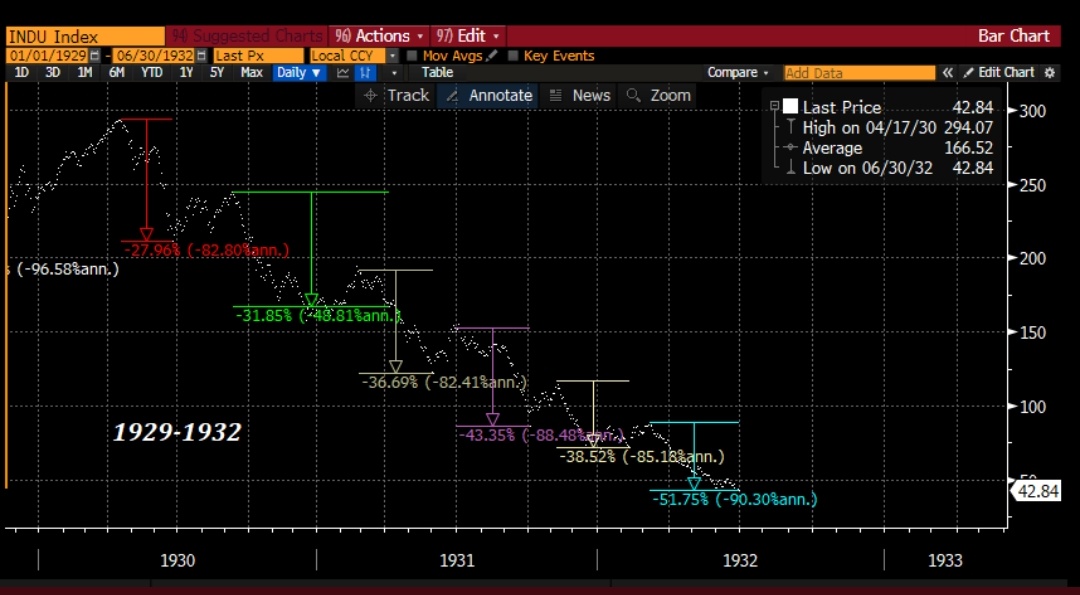
A slightly different perspective on why using any kind of leverage should not be considered by anyone before they have experienced one real bear market:

One can survive even a deep correction (e.g., Feb-Mar 2020) quite well by (3) freezing.

Then, a couple of months later, with solid ground underfoot, one celebrates oneself as a “bear market” hero for keeping their nerve.

A real bear market grinds many to dust who would have survived even a deep correction by freezing. In a bear market, an investor becomes their own worst enemy in a completely different way as many unpleasant psychological phenomena and processes get to fully “juice up.”

I have never “tilted” but I have certainly made foolish mistakes related to bear market psychology.

All this without predicting when a bear market might possibly come.


32 Likes

I already mentioned that constantly checking the general overview of my Nordnet accounts caused me a lot of stress, and I think I also expressed that for me, constant checking was not beneficial. I also talked about how much investment stress was reduced by reducing the number of visits. :slight_smile:

Thanks to this thread, I am more motivated to better and more smartly reduce this investment stress and develop my own investment thinking. Now I only open Nordnet a couple of times a day, if that, and mainly only when it genuinely feels like a good idea. Now that I open it less often, big losses are certainly annoying, but not even in the same way as before when I opened/clicked it more often. The frequency of annoyance has decreased significantly, and even the “single annoyance” is smaller - all this with just small changes.

Inspired by @lazyway, next I won’t even visit every day or for days. It’s possible that I’ll return to visiting a couple of times a day later out of my own genuine desire, but I want to try not visiting for a day or days. :slight_smile:

I have said before on this forum that the increasing openness of people in the investment world about red percentages and mistakes has helped me understand even better how even smarter people can have a bad individual year, etc. Of course, these have always been clear things to me, but nevertheless, these are important disclosures that put my own thoughts into the right perspective. The model portfolio’s last year was not very special, although its returns were high compared to how stock markets develop in a normal year, and the entire history of the model portfolio tells the truth. :sunglasses:

It’s great that various investors share their thoughts above; you can find tips for your own thinking in everyone’s writing. :blush:

26 Likes

This is what I’m aiming for; I used to glance at NN holdings’ prices ~100 times a day.

This stopped when I entertained myself by building ‘potential buys’ watchlists from various perspectives, but now I’ve been constantly tweaking these lists :face_with_monocle:

I’ve been considering switching to the following operating model:

  • I check the lists in the morning
  • if it looks even remotely possible that one of the few stocks I might buy dips enough, I place a buy order (not for the entire sum to be invested) at a price I consider a good deal
  • I close NN

I’m currently mostly just buying, but slower, more carefully, and more calmly all the time, so there’s no point in staring at Fodelia’s price, for example, when I can put in a buy order in the morning and rest my eyes for the rest of the day :smile:

10 Likes

@Sijoittaja-alokas’s (Investor-rookie) note about constantly staring at one’s portfolio made me reflect on my own actions. I’ve found myself peeking at my portfolio too often, although the main reason has been to track the prices and trends of stocks on my watchlist. At the same time, I’ve naturally checked my own portfolio’s status. I don’t feel distressed by value changes, but occasional glances disrupt my concentration on work, etc. It’s just like opening Facebook… and that’s bad; it’s simply not worth it for that reason.

Nowadays, or rather, for a while now, I’ve tried to check my portfolio status in the morning before work, during lunch, and then in the afternoon around five, after the US market opens. This seems perfectly fine to me. Despite this effort, I’ve often found myself checking at some random time during the day. But after the rookie’s opening post, I started thinking about how I could improve the situation further. Last week, I finally tried using Nordnet’s price alerts, and I must say they’ve helped… I don’t need to go and see where the prices are for the companies I’m interested in… if no notification has appeared on my phone, there’s no reason to check the situation or do anything at all. I will definitely expand their use.

10 Likes

During such downturns, one starts to ponder the psychology of investing and their own reaction to a shrinking portfolio. As the plunge steepens, the thought constantly creeps in: should I sell my OST holdings, watch from the sidelines for a bit, and then buy back cheaper later? This is illogical, as the return potential of stocks whose story/investment case has remained practically unchanged (e.g., Qt, Harvia, Remedy) continuously increases as their prices fall.

My strategy is to buy quality companies for long-term holding in both my OST (equity savings account) and AOT (regular investment account), and for OST, try to lighten up when “we rise too much” and buy more/back when prices drop due to reasons unrelated to the company. From the Covid-19 dip until today, this strategy has worked quite well, but now tighter monetary policy, inflation, and the seeming shift in sentiment generally over a slightly longer term pose additional challenges.

I have been investing regularly in stocks every month since 2010, and in recent years, I have been adding nearly €1000/month of new money to my portfolio. I will likely remain a net buyer for the next 15 years. Although, for example, @Verneri_Pulkkinen emphasizes in his videos that a net buyer should actually hope for a market downturn to buy cheaply, it’s not very comforting to be able to inject that €1000 of new money into the market when the portfolio simultaneously drops by €30,000.

Because of this, it would be important to be able to increase my cash position as described above, and I did manage to accumulate some cash in my OST from the “stump-Santa rally” at the end of December. However, I notice that I often start buying too early, and now most of my cash is back in play.

As the downturn continues, I must either watch my portfolio continue to shrink or sell against my strategy during the fall, even though the return expectations of stocks are constantly growing. My portfolio mainly consists of companies from Inderes’ model portfolio and those familiar from the forum, and the diversification is quite good, with no single stock having too much weight (1. Harvia, 2. Qt).

An intelligent investor would surely be inclined to accept a temporary decline and buy more stocks with the cash added to the portfolio. If, for example, Qt were to drop to around €80 from here, I would surely blame myself for not selling at €105 and buying back at €80, but on the other hand, it would be more regrettable if it recovered to €130-140 levels and my OST position had been sold at the bottom. Timing buying and selling is proven to be extremely difficult, and perhaps generally one should accept their own inability and understand that no one is perfect in investing, and one could always have bought/sold at a better moment.

Anyone else having similar thoughts in the midst of this slide?
27 Likes

I have very similar thoughts, especially concerning the stock savings account (OST) deliberation. I have the same companies as you, and a week ago, I ended up selling all my shares, emptying the stock savings account and converting 90% into cash. It has helped me that every month, approximately 80% of the funds allocated for investments go regularly into rolling monthly savings targets in the AOT (traditional brokerage account), and the rest into the OST. The stock savings account thus functions more as a so-called “play portfolio,” even though I don’t like that term. Sometimes I think that due to my young age, I should be balls deep in stocks, but a voice in my head told me that now is a good time to stop and calmly observe the evolving global situation. The stock savings account was about 50% in profit, so if we continue to decline, I’ll buy those companies at a lower price, but if the direction changes, then I’m prepared to accept that cashing out the OST was a “mistake.” However, experiencing this now at a young age means that perhaps next time I’ll only cash out half of the OST, or something similar.

Long story short, but as a TLDR, we can state that as long as the monthly savings in the AOT continue from this time to eternity, the OST allows for taking views and making quick and probably silly moves, but at least I’ll learn and try to act more wisely in the future.

11 Likes

Interesting contemplation that I’ve also been pondering a lot lately due to my own situation.

Regarding my active investing career, I’m not even halfway through it timewise. On the other hand, from the perspective of funds I’ve invested in the stock market so far and will invest in the future, I’ve well exceeded the halfway point (the proceeds from selling my previous apartment went into stock picking, and no similar extra pots are expected).

A market slide occurring at this time makes a bigger dent in my portfolio than the benefit I gain from the downturn as a net buyer of stocks. Still, I welcome even a 20-30% correction in prices.

Last year, in particular, saw psychological market euphoria, which is not beneficial for investors in the long run. Valuations detached from numerical fundamentals in too many cases, and the general atmosphere at times began to resemble the “Wolf of Wall Street” victory celebrations, if I may exaggerate a little :wink: If such a trend continues, it tends to end in a big crash and possibly even years of stock market slump.

Secondly, the blows to my portfolio from price declines are insignificant in the slightly longer run if the investment targets themselves develop well. The drop in prices is just the digital numbers in the account shifting to another position, which can cause distress and nervousness in one’s mind. I know the feeling :grin: But what is crucial is the companies’ performance and financial health, which will eventually be reflected in the stock price.

Thirdly, the value and balance of the portfolio at moment X, Y, or Z have little real significance; only at point A, when one intends to sell their shares, do they matter. Except for the moment of sale, rises and falls in prices primarily bring psychological pleasure or displeasure, but otherwise, they are just “nice to know” information.

If one is in the stock market for the long haul, then a healthy market is good. If one is on a short-term trajectory and seeking quick profits, then the situation can, of course, be different, and I fully understand the pain.

15 Likes

Regarding that QT example: I only see one way to avoid these “frustrations” from buying/selling, and that is to do it in batches.

If you sell 1/8 of your position in January and then again in February :rocket: :rocket:, you can praise yourself for your patience instead of pouring ashes on your head for selling everything. :+1: :+1:

E: Actually, I think I described an extremely slow selling process, but never mind :stuck_out_tongue:

3 Likes

Would it help to track buying opportunities by setting up NN price alerts? When the price drops to your buying price, you’ll get an alert on your phone.

3 Likes

I used (or tried to use) price alerts before, but that was before I installed the phone software, thanks for the reminder.

I’ll have to test it again; placing the order has just felt convenient: if the price drops to my desired level—>the trade goes through (without me doing anything extra).

I don’t know technical analysis, so there’s no point for me to stare at falling knives etc. to find an optimal buying point when an alert comes:wink:

1 Like

I greatly appreciate these shares of personal opinions and experiences. I recognize several investment biases here. I hope no one is offended, and I emphasize separately that writing about a cognitive bias does not necessarily mean one acts biasedly.

I’ll start with the survey, where 71% reported proceeding according to their investment plan. I answered myself, and the answer was to stick to the plan. Now I’ll make my own confession: I don’t follow my own plan. This is already evident in my blog post. The portfolio allocations deviate from the target, and in my latest blog posts, I’ve written that I don’t strictly follow my plan. This opens up the possibility of acting contrary to the plan when the going gets tough, leading to a bigger mistake.

Several fallacies have emerged in the thread. A generally positive thing is known, from which a wrong conclusion is drawn. Most investment books contain an example of a new technology where hype arises. Not all companies in the industry are winners; usually, a growing industry attracts entrepreneurs like flowers attract bees, and competition becomes extremely fierce, with only a few emerging as winners. A large order does not directly mean it is highly profitable for the company. In fact, there’s a high chance the company competed fiercely for the order and priced the order/project too low. From a 20-year investment perspective, the significance of a single order is minimal. Warren Buffett says stock prices cannot be predicted. He has aptly said, “follow the game, not the scoreboard.” Staring at the stock price is like watching the scoreboard. If you are at a hockey game, you make your prediction primarily based on the game, not the scoreboard. Of course, the score on the scoreboard affects your decision about the winner. You will probably still bet on the stronger team in the first period based on the game events. That doesn’t mean your bet will be the same in the second period. A forecast of the future is always incomplete. You easily end up betting on the team higher in the league table if such information is available. Similarly, you might end up supporting the same team as your friends.

Clear anchoring is visible in the thread. A company is considered cheap or expensive at a certain price level. In investing, prices are relative. If your favorite fruit at the grocery store, let’s say a banana, is €1.5/kg. You don’t like apples as much, but at a price level of €1/kg, you prefer to buy apples. Now it’s banana season, and you can get them for €1/kg. Apples need to drop to €0.5/kg for you to buy them. Apples need to drop 50% to an attractive purchase price, while a 33% drop is enough for bananas. The same principles apply to investing. People don’t necessarily calculate the actual percentages of price reductions, and I would bet that in the example above, the writer can’t say what QT’s EV/EBITDA is at a share price of €80. That’s a simple metric that takes into account earnings and debt. If we move forward, what is it in relation to competitors? What is it estimated to be after the second period, for example, in 2024, and in relation to competitors? Or has the apple been completely forgotten in this race? And by that, I mean the company. For an American investor, the apple is the favorite fruit, and Qt is the banana they want cheaper. Americans have greater investment wealth than Finns, which affects demand.

24 Likes

Good thoughts, and great to hear other opinions. I agree with previous writers that when playing the long game, it’s a good thing for multipliers to dilute and prices to settle at a more reasonable level relative to their true “value”. Unlike the last two years, when valuations for many companies were based too much on speculation and rosy pipe dreams of a possible future.

I also agree that when the decline is distressing, one can sell holdings one piece at a time, not completely, and I have done so myself. To user @Warren_Fyffet’s comment - I completely agree that in the long run one must follow the game and not the scoreboard, and I also try to do so myself. I don’t know if the comment that, for example, Qt’s valuation multipliers are certainly not clear to the previous writer, but too much attention is paid to the daily price, was directed at me, but I myself carefully follow certain multiples and how they change according to the current growth forecast.

Based on this, for example, Qt is already starting to be at quite attractive prices in my opinion. 2024 P/E 24.6 and EV/EBITDA 17.3. At a share price of €80, the multipliers are even significantly more attractive (although there are many variables to consider for these super-growth companies). On the other hand, because the market is currently in a rather unstable state and excesses happen in both directions, even large movements are more than possible.

This is precisely why I am writing in the investing psychology thread… That is, how to keep a cool head and follow a strategy when the portfolio is melting. For me, investing is about making returns rather than doing things “absolutely” right. But since markets are even more difficult to assess as a whole than individual companies, perhaps the answer to my contemplation is precisely that the best way to maximize returns is probably to rely on professional analysis and find/keep companies in the portfolio that have the ability to make a profit in the long run. Time will correct market excesses.

6 Likes

In a zero-interest rate environment, P/E ratios looking a couple of years ahead, below 25, might seem attractive. But by 2024, interest rates in the US could be around 2.0-3.0%.

The valuation of future earnings in the stock market almost always plummets when interest rates are competitive. Qt might look cheap now, but it genuinely has room to fall significantly further.

4 Likes

I was referring to your post. In my opinion, the levels of €105 and €80 seem to be historical figures derived from the share price curve, or alternatively, they could be previous purchases or just purchase levels told by a friend, which refers to anchoring. There hasn’t been much contemplation on when and why it would drop to the €80 level. I still consider Qt’s valuation tight. But, if QT were to drop to €80 by next summer, for example, has the profit grown or stagnated, and what about the multiples? If profit continues upwards at a steady rate and the share price hits €80, the multiples start to look favorable. I would expect the €80 share price level to then somehow affect demand for Qt, and I think it’s possible that the availability of automotive components could hinder QT’s growth and profitability. I believe the message implies that the world would remain the same and the same share price level would be favorable. The end of stimulus in the US and rising interest rates could still broadly lower market multiples as interest rates become a more attractive target. A P/E of 24 might not then be cheap. If Apple’s P/E is 10, is QT cheap at a P/E of 24? If the share price had been, say, €78.6, it could come from a DCF calculation.

I probably commit anchoring myself in exactly the same way. If the share price is close to €160, I consider it a peak price, even though it might not necessarily be, as I haven’t been staring at the curve. I consider €140 expensive, as I haven’t really followed the results either. In any case, I myself want the impulse to research to come from somewhere other than the share price curve or a negative percentage.

2 Likes

In my previous message, I believe we got to the heart of the matter, and for me, it’s definitely now. I no longer want to “tease” anyone who has written in the thread. My intention is not to tease, but it can easily be perceived as such. I will now move on to speak generally about pricing. If one had to buy, for example, a child’s first phone after starting school, it might be possible to get one for €79.90. Let’s agree that phone X costs €79.90. If another phone G costs €80, it feels more expensive, even though the price difference is only 10 cents. If I bought phone G myself, I would tell a friend the price is €80. If I bought phone X, I might say the price is €70. If I’m asked about the price difference between the phones, I would say they are the same price.

I started thinking about pricing randomly. The first number that came to mind was €79.90. Why? I can’t say for sure myself, but I would argue that it’s based on the price of €80 for QT, which has nothing to do with the matter. The first thing that comes to my mind with that pricing is Simo from the wardrobe saying “hey” and the price €9.90 or €99.90. I wanted to choose something else, and surprisingly it was that QT price, which has been discussed close by, and my own mentioned €78.6, which is also close.

Well, earlier you saw a contradiction in my statements. A 10-cent price difference is insignificant, but I still give it a 10-euro price difference in my statements. There is a bias in my thinking. The letters X and G in the phones somehow refer to the phones I thought could be bought at the prices I mentioned. What phones do I mean? I chose phones online that I estimated could be bought at that price with a discount. Now it would be good if someone created a survey with phones listed, and one could indicate which one is in question, and also include an estimate in percentages of how sure one is about knowing the phones.

2 Likes

I made an interesting observation about myself last week on “Black Friday”.

The value of my portfolio dropped by ~6% during the trading day, which in euros was equivalent to a few months’ gross salary, not to mention net salary. Yet, I got more positive emotion from Kamux’s positive profit warning, which is the fourth largest company in my portfolio, than the negative emotion caused by the share price drop.

I guess this tells me that the companies’ business is significantly more important to me than stock charts. After all, I’ll probably be a net buyer of stocks for the next 30+ years. Most likely until the probate, if the portfolio ever reaches a point where dividend income covers living expenses and entertainment.

It’s interesting how, in a long-term portfolio, the ratio between positive and negative emotions turns out this way. For example, in betting, even small losses (~a few tens of euros) are incredibly annoying, whereas even slightly larger wins (~a few hundreds of euros) don’t really bring me any joy; instead, at the moment of winning, my mind is mostly filled with the feeling: “Well, that’s how it was supposed to go.” I’ve noticed the same thing back in the ancient years of my investing career when I tried some quarterly report trading or similar in the stock market, supposedly based on something other than gut feeling. Or when trying to time purchases, it’s always incredibly annoying when the share price of the company I bought drops a couple of percentage points more after the purchase, and I would have saved a couple of hundred euros if I had delayed the purchase by a few hours. In a long-term portfolio, however, even larger fluctuations don’t bother me much at all. In short-term trading, the money goes directly into the everyday wallet, and one starts thinking about what could have been bought with the lost money, whereas in a long-term portfolio, the money feels more like chips, like pine cones or something similar.

Interesting.

38 Likes

I’ve been actively following Revenio for a long time, and today, as I was planning a purchase, K. Harvia’s excellent post from a year ago popped into my mind.

I continued a bit from what I’ve been pondering myself…

8/2021 Hmm, Revenio could be bought for 70€ now
8/2021 Hmm, well, Revenio at 70€ is quite expensive
9/2021 Hmm, is 64e too much for Reve.
10/2021 Hmm Damn, it went down to 54€.
11/2021 Hmm, on the other hand, 59€ isn’t that bad, but…
12/2021 Hmm, I missed the 54€ price then.
12/2021 Hmm, it’s now 57e… well, I’ll buy on the next dip and focus on cooking Christmas porridge.
1/2022: Hmmph, the price is now 43€…
1/2022: Hrmph…

Edit: And let me add that no significant changes have occurred in the company during this period; instead, it has created value for owners at a relatively well-predicted pace :smile:

31 Likes

The following is somewhat of a stream of consciousness, but hopefully the point will become clear.

I’ve recently been pondering an interesting phenomenon that I believe is deeply ingrained, especially in small investors (especially now that investing is gaining popularity) – namely, the illusion of control / the need to “do something” with one’s investments all the time, because this gives the false impression of somehow better managing the situation (even though it doesn’t affect price development in any way). I’ve recognized this in myself now that I’ve been actively stock picking for a couple of years. These are not so much about how losses or profits are viewed, but rather how one behaves when investing at a “general level.” Many would surely benefit from unlearning these habits, because even in light of research, human capacity for rational decisions is quantitatively limited, and adding such noise likely diminishes the opportunity to make meaningful investment decisions.

This can include various actions that I’ve listed below – as well as mentions of whether I consider myself guilty of them :smiley: Many have, of course, already been mentioned in the thread, but does anyone else have anything in mind?

  • Constantly checking prices and the portfolio. I am guilty of this, although I’ve finally started to gradually unlearn it.

  • Focusing on every minor piece of news or even a small individual trade, in addition to the big picture – e.g., interim reports, genuinely significant news. Okay, in the case of a small company, this might provide some informational advantage, but mostly it just adds noise around the big picture of the investment case. I’ve been strongly guilty of this and am trying to learn to move past it. Of course, riskier targets should be monitored more closely.

  • Speculating on positive (or negative) potential events for which there is no evidence. For example, “when will that positive earnings surprise come?” or “the next acquisition will probably be announced any minute now.” This is seen quite a lot on forums, and one gets the feeling that many investment cases rely too much on such less probable positive surprises than on the company’s good (or not so good) current performance. Somewhat to my surprise, I haven’t been very guilty of this. I often try to repeat to myself that “Hope is not a strategy” :smiley:

  • The “the more time spent on a stock, the better the outcome” mindset. Strongly related to the previous points, but events with real informational value are ultimately quite few (vs. the total information available). Thorough groundwork should always be done carefully, of course.

By this, I mean, for example, spending a lot of time on the company’s thread on a forum, writing posts, constantly googling the company, etc., whereby the constant buzz easily blurs the investment case. Of course, this can help to understand the case better (and it’s always good to challenge one’s own views), but many probably subconsciously think that time spent on a stock in this way would somehow be “rewarded with a price increase.” So I am certainly not claiming that every forum member falls into this, but I have at times at least recognized this in myself and consciously try to focus more on the overall picture (and, for example, write down my buy and sell rationales more clearly for myself). I also believe that this subconsciously drives many investors to unnecessary sales when the time spent on a stock is “rewarded” with a price decrease.

  • Unnecessary (not part of the investment plan) additions and lightenings. It’s difficult to generalize here, of course, but many fall into the trap of trimming their positions or adding old ones or opening new ones even without significant price movements, simply because they can’t help but act and wait in the current situation. I’ve been guilty of this many times, especially on the adding side, and it has led to suboptimal results (multiple too-small positions formed, which were eventually sold because the time spent vs. potential return was simply not reasonable).
46 Likes

Here, I’ll go through a couple of typical psychological biases that I’ve observed in myself during my investment career. Especially, confirmation bias was really strong for me in the beginning of investing, and I ended up paying learning fees in the form of lost returns because of it.

Sunk cost fallacy

This means that a person feels entitled to compensation for work already done and/or money and time invested. An example from the investment world could be that a person researches an investment target, invests in it, and then the price starts to fall. Well, a price drop in itself is nothing, but it could be that, unfortunately, the company’s fundamentals erode due to reason x, which could not have been predicted. At this point, the person should remember the rule “let your profits run and cut your losses fast,” but through this psychological bias, they might be locked into the idea that “I should get a return from this, I spent time researching it, and money is already tied up,” and at worst, buy more into falling prices even though the erosion of fundamentals is already visible; the person just doesn’t see it because they are so strongly locked into the idea that they must get compensation from this. It’s good to remember that no one or nothing in the world owes you anything; you might do thing x a lot and for a long time, and it still doesn’t lead to anything profitable. It’s just important to swallow your pride, stop if it’s not working, and think about what could work in the future.

Confirmation bias

A psychological concept that refers to people’s tendencies to perceive and emphasize their observations, interpretations, and information in certain ways. In other words, you view information through strongly biased perspectives. In investing, this could manifest as, if your cash weighting is high, you constantly see dangers around you and are sure that a crash is about to begin. Conversely, if you are heavily invested in stocks, you close your eyes or downplay dangers and believe that the rally will continue. In my opinion, investing involves weighing things from positive and negative perspectives and forming an overall picture from them. For this reason, objectivity is an absolutely crucial trait to strive for, both when evaluating an individual company as an investment target and when understanding your own portfolio in terms of when it’s the right time to increase cash weighting and when to increase stock weighting.

Have you yourself been guilty of any of these? Or do any other psychological biases that are typical in investing come to mind?

32 Likes

For me, anchoring bias is typical (which the tax authorities further reinforce with capital gains tax). For example, I bought my Harvia shares at prices between 5.00 and 6.50 euros, and now a drop in the share price from 61 euros to 46 euros doesn’t cause any particular feelings, because anything over 6.50 euros is extra profit and a source of joy. So even a big drop doesn’t feel like anything. Instead, if I have a company that I’ve bought for, say, $55, and it drops to $49, it really annoys me when it goes into a loss. Even though the drop is clearly smaller than in Harvia’s case.

Related to this, I would say that my experience has grown and eased psychological pressures. I still remember how terrible the big drop days of the financial crisis and the whole endless decline in general were, and now a few percent drops in the market don’t cause any earth-shattering emotions. When you’ve experienced a few proper downturns yourself with your own money (e.g., the dot-com bubble, the financial crisis, Covid), your “skin thickens” and you gain a certain peace of mind regarding market fluctuations. Bigger drops in my own companies are annoying, but otherwise, price changes don’t usually create a need to do anything.

26 Likes