AI Translation:
Duchenne muscular dystrophy (DMD) has long been understood as a disease caused by a deficiency of the protein dystrophin. This protein is essential for maintaining the structural integrity of muscles. Most therapeutic development has focused on restoring dystrophin through gene therapy, exon skipping, or other genetic methods. However, new research suggests that dystrophin has roles beyond structural support—it is also key in regulating muscle regeneration. This discovery has opened the door to an entirely new treatment strategy.
Drug Discovery News interviewed Frank Gleeson, co-founder, CEO, and board member of Satellos, to discuss the company’s new dystrophin-independent approach, its potential impact on those living with DMD, and what it could mean for the future of muscle diseases.
⸻
What inspired Satellos to develop a dystrophin-independent approach to treating DMD?
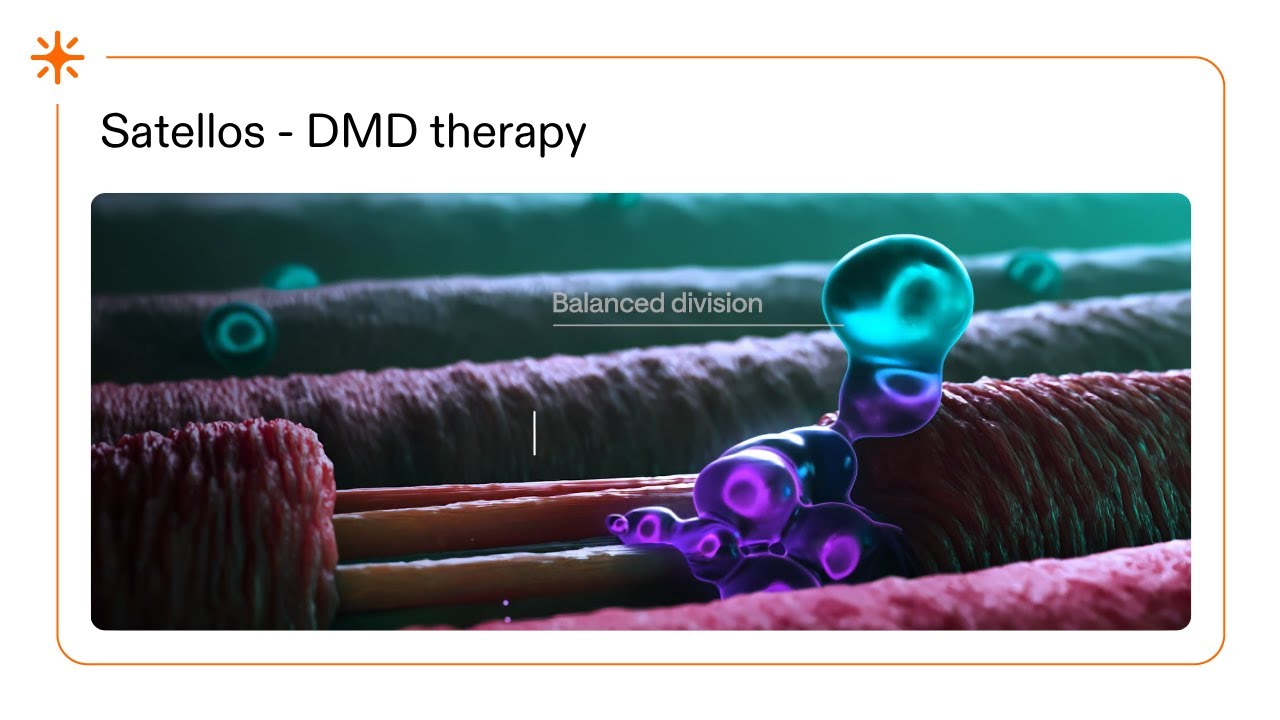
Our approach is based on the groundbreaking research of Satellos’ other co-founder, Michael Rudnicki. He observed that dystrophin not only maintains the integrity of muscle cells but also acts as a signaling molecule that initiates asymmetric cell division of muscle stem cells. This process is vital for muscle regeneration: each asymmetric division produces both a new stem cell and a muscle progenitor cell. Without dystrophin’s signal, these divisions do not occur sufficiently, leading to a deficiency of progenitor cells and progressive muscle weakness. This observation changed the understanding of DMD: it is, in fact, about failed muscle regeneration, and it guided us to focus on restoring the body’s natural muscle regeneration capacity.
⸻
Could you explain your biological approach and how it differs from dystrophin-centric therapies?
Instead of trying to genetically restore dystrophin—which does not, however, correct the regeneration problem—we aim to restore asymmetric divisions in muscle stem cells. This led to the development of SAT-3247: a novel small molecule drug that inhibits adaptor-associated protein kinase 1. By inhibiting this enzyme, we restore the cells’ ability to divide asymmetrically and produce new muscle cells.
We have demonstrated the efficacy of SAT-3247 in both cell cultures and animal models. Our approach differs completely from current therapies, which aim to replace dystrophin through genetic means. We, instead, leverage the body’s own regeneration mechanism, entirely without dystrophin.
⸻
What challenges did you face in developing a dystrophin-independent therapy and how were they overcome?
One of the biggest challenges was to question the prevailing notion that dystrophin is essential for muscle function. We re-examined clinical observations, including cases where DMD patients maintained their ambulatory ability despite a complete lack of dystrophin. This led us to investigate dystrophin as a signaling molecule.
Our hypothesis was confirmed in preclinical studies, where we showed that correcting asymmetric division of muscle stem cells restores muscle regeneration. Overcoming skepticism required rigorous scientific work and evidence based on animal models—as well as thick skin.
⸻
Your first therapy is now in clinical trials. What are you aiming for at this stage?
In September 2024, we launched a Phase 1 randomized, placebo-controlled study evaluating the safety and pharmacokinetics of SAT-3247. In the first part of the study, which is now complete, 72 healthy volunteers were treated across different dose groups. In the second part, which is ongoing, up to 10 adult DMD patients are being treated. The goal is to evaluate safety and pharmacokinetics in patients, and potentially also to identify pharmacodynamic markers.
⸻
How could your approach change DMD treatment practices if it proves effective?
In Phase 1 studies, SAT-3247 has shown a very good safety profile. As an orally administered small molecule drug, it can offer flexibility and better tolerability than current therapies. Since the drug does not aim to restore dystrophin, it could be used either as a primary or complementary therapy—potentially benefiting a broader patient population. Furthermore, because it can enhance muscle repair rather than just slow disease progression, clinical effects may be seen earlier.
⸻
Are there specific groups among DMD patients who could benefit most from this treatment?
Since our therapy is not gene mutation-specific but focuses on muscle regeneration, it can benefit all DMD patients. Based on animal studies, SAT-3247 may produce faster improvements in muscle function than current therapies. Future clinical studies will determine whether these effects translate to humans and which patient groups benefit most.
⸻
How does your research change the understanding of muscle regeneration in DMD?
Our findings confirm that in DMD, the problem is not merely structural but involves a disruption of the mechanism producing progenitor cells. This explains why some patients—the so-called “survivors”—maintain their ambulatory ability without dystrophin. By restoring this function, we can potentially improve muscle repair even in patients who lack dystrophin entirely.
⸻
Can your approach also work in other muscle or degenerative diseases?
Yes. Animal studies show that SAT-3247 also works in facioscapulohumeral muscular dystrophy (FSHD), another disease where muscle regeneration is impaired. Additionally, we see opportunities to use the drug in the treatment of muscle injuries, sports medicine, and even cancer-related muscle wasting.
⸻
What is the role of collaborators in achieving Satellos’ goals?
Collaborations are vital. We work with patient organizations to gain insights into patient needs and to navigate the regulatory process. We initially received support from the Parent Project Muscular Dystrophy (PPMD) organization, which helped with both funding and expertise. Rudnicki’s extensive connections within the research community provide access to cutting-edge research. In the future, strategic partnerships with pharmaceutical companies can accelerate development and ensure that the therapy reaches those who need it.
⸻
What is Satellos’ long-term vision for transforming the treatment of DMD and other muscle diseases?
While Duchenne is our primary focus, we see our approach as a platform technology with a broad application area. We are already exploring its use in other muscular dystrophies, injury treatment, and cancer-related muscle wasting. Our goal is to create a new treatment paradigm for muscle repair—one that improves stem cell function and restores muscle integrity in various diseases.
⸻
How do you respond to potential skepticism from the medical community about challenging dystrophin-centric therapies?
We do not reject dystrophin-centric therapies; rather, we offer an alternative that complements them. Since DMD is a complex disease, no single treatment will suit everyone. Our goal is to provide an additional option that expands treatment possibilities and improves treatment coverage.
⸻
How will you ensure that the treatment is accessible to everyone if it receives approval?
The advantage of SAT-3247 is that it is a small molecule drug, making its manufacturing and distribution easier than gene therapies. Furthermore, it is not mutation-specific, so it can be offered to all DMD patients. We aim to collaborate with regulatory bodies and healthcare stakeholders to ensure that the treatment is widely and equitably accessible.