Eutelsat, satellite operator

I am opening a dedicated thread for Eutelsat now, as the company finally seems to be taking a significant step forward as a satellite operator and a potential European alternative to Musk’s Starlink.

To start off, here are a couple of the latest news items regarding Eutelsat, followed by a bit of my own basic introduction to the company’s operations and potential.

https://www.cbc.ca/news/politics/satellite-eutelsat-starlink-musk-defence-communications-9.7038830

https://www.businesswire.com/news/home/20260112808059/en/Eutelsat-Procures-a-Further-340-OneWeb-Low-Earth-Orbit-Satellites-From-Airbus

The company differs from Starlink in the sense that it has operational satellites in both low Earth orbit (LEO) and geostationary orbit (GEO). The operator is a small player compared to Starlink when measuring LEO satellite numbers, but the disparity in bandwidth capacity supply levels out significantly when comparing the offering in the B2B/B2G sectors (Business, Government, Maritime, Aviation, Land Mobility, Military), which is where Eutelsat’s offering is focused.

A large part of Starlink’s massive satellite capacity is reserved for the consumer market, which is Starlink’s primary engine (household use, streaming, video calls, gaming, etc.), whereas Eutelsat does not offer direct consumer connections like Starlink at all.

Eutelsat’s low Earth orbit (LEO) satellites are also at a significantly higher orbit than Starlink’s (1200 km vs about 500 km), which of course also significantly balances out the geographical coverage area in comparison. The geographical coverage area of a single LEO satellite is approximately double that of a Starlink equivalent. This, combined with Eutelsat’s lack of consumer sector offerings and the latest satellite fleet ordered from Airbus announced today, makes Eutelsat a serious near-future European alternative to Starlink in the B2B and B2G business areas.

Eutelsat also has several dozen GEO satellites with an orbital altitude of about 36,000 km. GEO provides, among other things:

  • continuous coverage
  • broadcast capability
  • a backup route during interference/jamming

This is only a scratch on the surface of the whole picture, but as a satellite operator, I would position Eutelsat as a realistic alternative to Starlink when the question isn’t about the fastest internet, but rather about who controls the connection in a crisis situation and how reliable the connection is—especially for the needs and use of defense, administration, arctic operations, critical infrastructure, and geopolitical independence.

Eutelsat’s ticker is ETL:xpar and it can be bought at least on the Paris Stock Exchange…

26 Likes

The stock itself has been on the rise in recent days, following the news coverage of late. Currently, it is still nearly 30% below the level from three months ago (the time before the share issue announcement and the resulting ~20% share dilution).

Yesterday, the rally took a “breather,” so to speak. It is impossible to predict where this might go. There are still three possible directions—down, up, or sideways. From what I’ve observed, the days with gains have been strongly volume-driven.

The attached ad-hoc news article discusses the sustainability of the Eutelsat stock rally…

2 Likes

I’ve finally gotten properly excited about this, and I don’t doubt that there will be plenty of news about the company this year. It first appeared on my radar a year ago when there was news about Eutelsat’s potential to take a role from Starlink in Ukraine. However, the share price jumped to six euros, and I ended up not buying. Now the price is just over €2 and the financing is in better shape.

As can be inferred from the following battery of news from recent weeks, Eutelsat is at least in the right place (meaning everywhere) at the right time as a European provider. In terms of capability, Eutelsat is not yet a serious competitor to Starlink, but as a European alternative, it at least offers a choice if someone lacks trust in America or Musk.

Recent news:

Eutelsat has deployed OneWeb LEO satellite connectivity on passenger trains in Gabon in collaboration with Airtel Gabon as part of a state-led digitalization project. The solution brings reliable broadband even beyond the reach of terrestrial networks, improves travel comfort, and supports the modernization of public transport as well as the expansion of cooperation between Eutelsat and Airtel in Africa.

Eutelsat wants to offer its existing OneWeb LEO satellite network for use by the Canadian Armed Forces in the Arctic and estimates that the approximately $250 million solution could be deployable within a few months of a contract being reached. The company emphasizes sovereign capacity and sees its service complementing the upcoming Telesat Lightspeed system, while some policymakers also call for strengthening civilian connectivity in the north.

Eutelsat is strengthening its OneWeb LEO satellite network by ordering up to 440 new satellites from Airbus, worth approximately €2.2 billion, which will bring the total network size to over 1,000 satellites and improve its technical capabilities. Additionally, the company signed a multi-launch agreement with the French company MaiaSpace to ensure European launch capacity for the network expansion. The investments support Eutelsat’s long-term strategy to build a competitive and sovereign European satellite connectivity solution, particularly in the LEO segment.

Eutelsat is scheduled to publish its half-year results on February 13, and market analysts expect a revenue of approximately €597 million for that period. The average analyst target price for the share is 2.69 euros.

France is considering providing Eutelsat satellite terminals to Iran to restore internet access for citizens following extensive network outages by authorities aimed at suppressing serious unrest. According to Foreign Minister Jean-Noël Barrot, all options are on the table, and Eutelsat is one of the solutions under consideration; the company owns OneWeb, which is the only operational LEO satellite network alongside Starlink. However, experts say OneWeb’s smaller number of satellites and larger terminals make it more vulnerable to jamming and usage restrictions than Starlink.

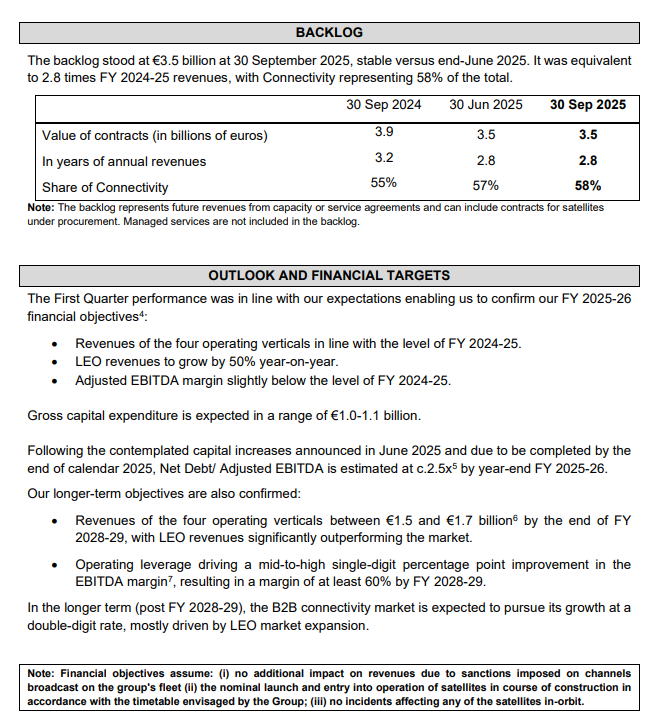
Mention of the backlog and targets from Eutelsat’s quarterly report from the autumn:

5 Likes

I haven’t looked into Eutelsat more deeply than this thread yet, but here are a few things I think are positive for the company:

  1. The only alternative to Starlink for relatively fast satellite data connections.
  2. European and likely Asian/African/South American nations and companies will probably want an alternative to a US-based firm that can cut connections if the US President so desires for one reason or another. This is exactly what happened to Russia after the 2022 invasion.
  3. This is a critical method of communication during wartime, so it is a strategic investment in European technology. I bet that in Greenland, for example, these terminals will be preferred over Starlink in the near future.

A truly interesting company, and I think I’ll read up on it more deeply over the weekend.

4 Likes

What hasn’t been brought up yet is the EU’s Iris2 development project, where Eutelsat serves as the lead architect.

IRIS² (Infrastructure for Resilience, Interconnectivity and Security by Satellite) is the European Union’s new satellite constellation project, aiming to provide secure and independent satellite communications for Europe by 2030. Eutelsat’s role in the project is central, especially through its OneWeb network, and IRIS² is becoming the EU’s third flagship space program (alongside the Galileo and Copernicus programs), strengthening Europe’s strategic autonomy.

Eutelsat is among the core players in the IRIS² project. In late 2024, the EU decided to award the implementation of the IRIS² constellation to the SpaceRISE industrial consortium, formed by three European satellite operators: Eutelsat (France), SES (Luxembourg), and Hispasat (Spain). The 12-year concession agreement between the consortium and the EU was signed on December 16, 2024, with a total project value of 10.6 billion euros (of which approximately 60% comes from public EU funds and 40% from the consortium companies). Eutelsat is a significant party in the consortium: the company acts as the lead system integrator and technical authority for the IRIS² project and is specifically responsible for the LEO (Low Earth Orbit) segment of the constellation, utilizing its own OneWeb constellation. Eutelsat has committed to investing approximately 2 billion euros in the project’s later stages, which is the largest contribution among the industrial partners.

Eutelsat has promised to open up spectrum rights to the EU for the benefit of the IRIS² constellation and to lead the design of the new satellite network segment. In return, Eutelsat expects substantial returns from the project. According to the company’s estimates, it can earn at least 6.5 billion euros from services provided by IRIS² to the EU’s anchor customers, as well as from global commercial sales of defined capacity. IRIS² will increase Eutelsat’s sellable internet capacity by approximately 1.5 terabits per second, significantly expanding the company’s business opportunities.

With IRIS², Eutelsat is consolidating its position at the heart of European space communications and as part of the EU’s strategic projects. At the same time, the project helps Eutelsat meet the challenges of global competition: it positions the company as Europe’s official counterpart to Starlink and other new satellite constellations at a time when traditional Geostationary Orbit (GEO) satellite television is in decline. With the support of IRIS², Eutelsat can upgrade its satellite constellation to the second generation and ensure its service continuity until the end of the 2020s, when the actual IRIS² network is fully operational.

Over the past year, Germany has also shifted its previously reluctant stance on the project to a positive one and has joined in developing the project further along with France, Spain, Italy, and the UK…

5 Likes

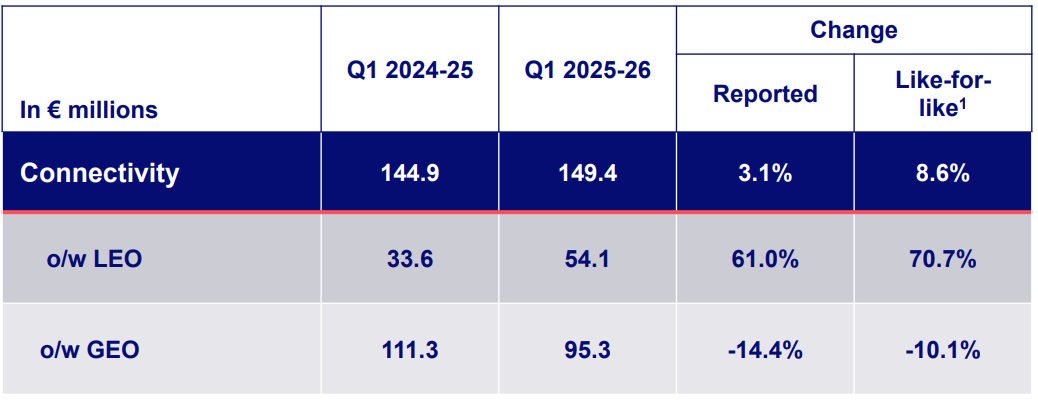
It’s wild how discussions about funding and potential almost always involve several billions. Granted, revenue has been lagging for several years, but on the other hand, during 2024 and 2025 the company has been reshaped and clear strategic moves have been made towards the potential of those LEO satellites.

image

The sums are still quite small in LEO satellite revenue (considering the valuation of nearly three billion), but of course, if the growth trajectory remains the same with the new massive investments, then maybe, just maybe.

One can also trust that France will ruthlessly favor its own in everything, so it’s nice to benefit from that for once. And if the money is lost, then let the thought of supporting an independent Europe comfort me on cold winter nights… :carousel_horse:

4 Likes

Eutelsat announced today that it has signed an agreement with MaiaSpace, a French space company founded in 2022, for the launch of future Low Earth Orbit (LEO) satellites. MaiaSpace is developing a partially reusable mini-launcher. Reusable rockets help reduce launch costs and enable more frequent launches. MaiaSpace will be the first European reusable rocket launch company of its kind and is set to begin commercial operations later this year (2026). The agreement between the companies is scheduled to take effect in 2027.

The French and British governments, two of Eutelsat’s largest shareholders, consider Eutelsat’s OneWeb a strategic asset because its satellites provide secure internet connectivity for governments, militaries, businesses, and consumers in underserved areas.

https://www.reuters.com/business/media-telecom/starlink-rival-eutelsat-signs-deal-with-europes-maiaspace-launch-satellites-2026-01-16/

5 Likes

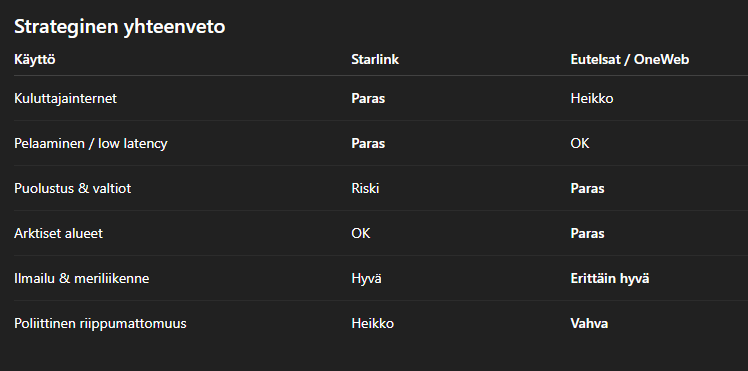
I’ve been trying to compare the performance of Starlink vs. Eutelsat regarding internet usage.

Starlink’s download peaks are around 200 Mbps and latency is 26. This is at least according to Starlink itself; there are sites that report latency being in the 50-70 range in practice. Starlink sells the connection and a relatively small satellite terminal directly to consumers. Setup is easy.

With Eutelsat, download peaks with LEO satellites would be around 150 Mbps and latency 70. Eutelsat’s satellite terminals are significantly larger than Starlink’s, and deployment is more expensive. This is partly because Eutelsat’s satellites are further away, thus requiring more power from the “terminal.” Eutelsat operates more in the market for operators/governments/military/companies. New satellites will improve the network from 2027 onwards, but I haven’t found more detailed estimates yet. GEO satellites (which are significantly further away) have a latency of 500-600ms and speeds in the sub-100 Mbps range.

Starlink has over 9,000 satellites and Eutelsat has 600 LEO (and 34 GEO) satellites. Therefore, Starlink’s connection is harder to intentionally take out of play in a military sense, as it’s more difficult to determine which satellite will connect next.

Eutelsat’s satellites are further from the Earth (LEO 1,200 km, GEO 36,000 km), while Starlink’s satellites orbit at an altitude of 550 km. Partly because of this, it’s easier for Starlink to offer faster connections.

Since Eutelsat’s satellites are further away, they move slower and a single satellite has wider coverage. This helps with internet stability and, in principle, fewer satellites are needed. In Arctic regions and the polar zones, Eutelsat’s network is supposed to work better. So, one cannot directly conclude that Starlink’s satellite network is “good” because of the 9,000 figure while Eutelsat would be left at 600 by the same metric.

Eutelsat has more extensive customer service (European style), and more emphasis has been placed on network reliability than speed. In the mining business or at sea, for example, this can be a more decisive factor than speed. In the consumer market, however, speed, latency, and setup are more important, so Eutelsat simply won’t be able to compete in that category in the coming years.

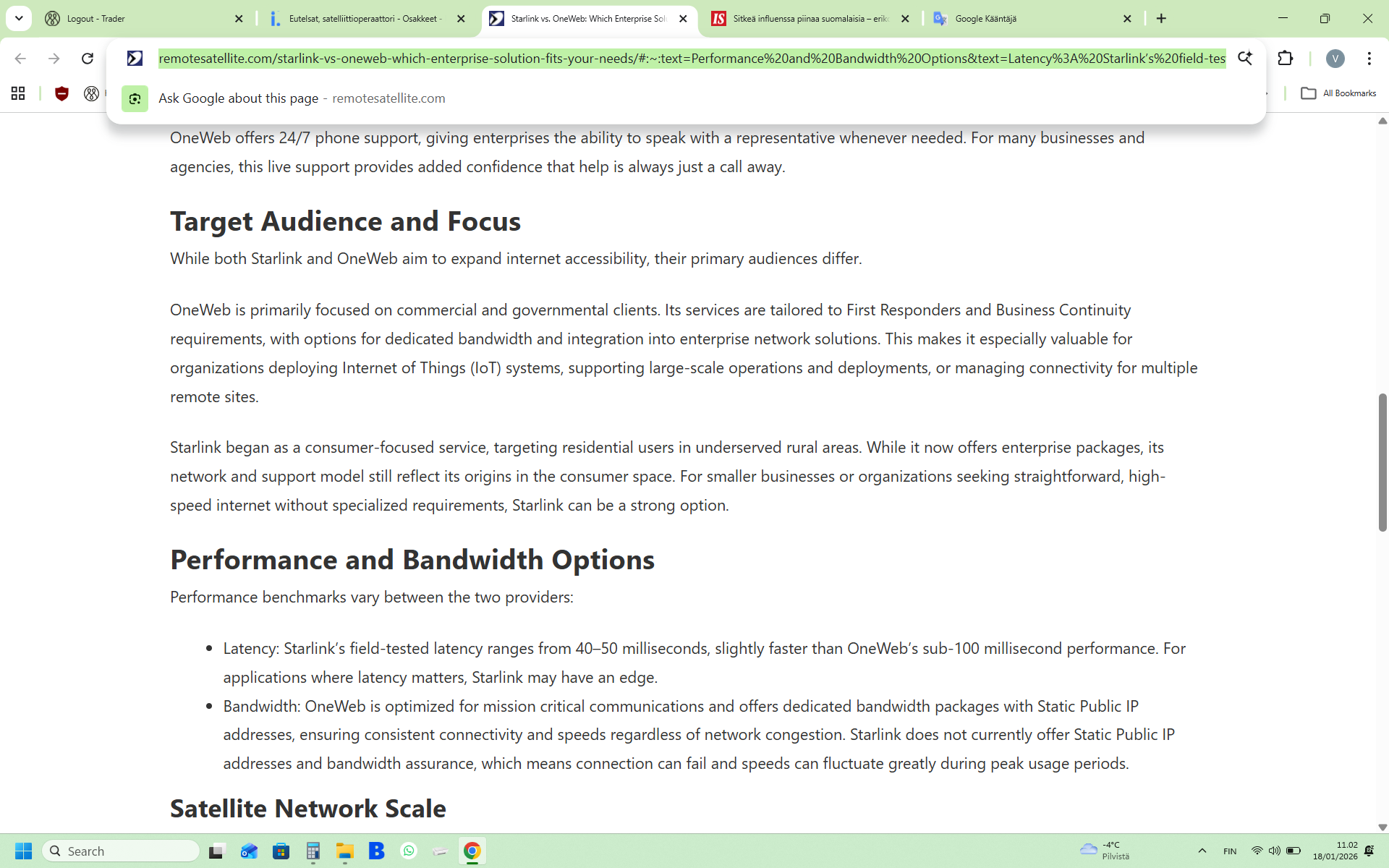
AI summary, which the various sources I’ve found seem to support:

https://www.remotesatellite.com/starlink-vs-oneweb-which-enterprise-solution-fits-your-needs/#:~:text=Performance%20and%20Bandwidth%20Options&text=Latency%3A%20Starlink’s%20field-tested%20latency,Starlink%20may%20have%20an%20edge.

Article above: Reliability in Critical Situations

When every second counts, reliability is paramount.

Starlink has earned global praise for its high download and upload speeds, particularly in areas where traditional internet options don’t exist. It’s proven to be a game-changer for rural communities, small businesses, and individuals who previously struggled to get online.

However, because Starlink’s network is still evolving, users have reported occasional service interruptions. While these may not be a problem for everyday use, they could be a concern in disaster response or other mission-critical applications.

OneWeb, in contrast, has built its network with a strong emphasis on performance and QOS – Quality of Service. Its infrastructure is designed to avoid congestion and minimize packet loss, providing steady performance even in geographically challenging regions. This reliability has positioned OneWeb as a dependable choice for industries that simply cannot afford downtime—such as energy, mining, and emergency services.

Focusing on Eutelsat, Eutelsat’s management has now completely changed during 2025:

  • Chief Executive Officer (CEO): Jean-François Fallacher was appointed CEO, effective June 1, 2025. He succeeded Eva Berneke, who led the company through the OneWeb integration since 2022. Fallacher is a seasoned telecom veteran who previously served as CEO of Orange France and led Orange operations in Spain, Romania, and Poland.

  • Chairman of the Board: Eric Labaye was appointed Chairman of the Board of Directors, effective August 4, 2025. He succeeded Dominique D’Hinnin, who stepped down.

  • Chief Financial Officer (CFO): Sébastien Rouge was appointed as the new CFO and member of the Group Executive Committee, effective November 5, 2025 (with duties fully taking over by Feb 1, 2026), succeeding Christophe Caudrelier.

  • Video Business Unit President: Aymeric Genty was appointed President of the Video Business Unit in March 202

Even though Eutelsat is a 40-year-old company on paper, the new management, new anchor owners, the OneWeb merger from a few years ago, and the latest strategic shift toward LEO satellites mean that Eutelsat should be treated like a turnaround/growth company.

And even though Eutelsat currently has a better financial situation, further share issues will likely be necessary to secure billions in funding. Much depends on Europe’s willingness to fund its own satellite projects. Partly for that reason, the ownership base has already been “Europeanized” in advance, and a decent amount of funding was sought as a foundation.
5 Likes

That was a really good link, thanks @Divinesia. I’ll highlight the most important points from that comparison which, in my opinion, matter the most regarding whether Eutelsat has realistic chances of succeeding business-wise in the near future (in my opinion, it does). My own comments are below the quotes:

“Reliability in Critical Situations When every second counts, reliability is paramount…Starlink’s network is evolving, users have reported occasional service interruptions. While these may not be a problem for everyday use, they could be a concern in disaster response or other mission-critical applications. OneWeb has built its network with a strong emphasis on performance and QOS – Quality of Service. Its infrastructure is designed to avoid congestion and minimize packet loss, providing steady performance even in geographically challenging regions. This reliability has positioned OneWeb as a dependable choice for industries that simply cannot afford downtime—such as energy, mining, and emergency services.”

Especially in air, sea, and rail traffic, intelligence and military use, and state internal security needs, the stability of connections is many times more important than whether the connection reaches a speed of, for example, 150 or 250 Mbit. In this service, the connection offered by Eutelsat is clearly better, based on OneWeb’s connection model which was originally developed for different usage needs. Starlink has developed connections primarily for consumers, whereas OneWeb, in contrast, has developed them mainly based on institutional as well as governmental and political needs.

“…reliable connection is important, but responsive customer support can be just as critical. Starlink currently relies on email-based support. While it can resolve many routine inquiries, the lack of direct phone assistance may not meet the needs of organizations that require rapid, real-time troubleshooting during urgent situations. OneWeb offers 24/7 phone support, giving enterprises the ability to speak with a representative whenever needed. For many businesses and agencies, this live support provides added confidence that help is always just a call away…”

This matter hasn’t been highlighted much publicly. The fact that a satellite connection provider offers 24/7 phone support instead of just email support is a big advantage in the deployment of new technology and its associated service. It proves to be critically important in potential problem cases and disturbance situations.

“…OneWeb is optimized for mission critical communications and offers dedicated bandwidth packages with Static Public IP addresses, ensuring consistent connectivity and speeds regardless of network congestion. Starlink does not currently offer Static Public IP addresses and bandwidth assurance, which means connection can fail and speeds can fluctuate greatly during peak usage periods…OneWeb’s enterprise-first approach is built for industries and agencies where downtime is not an option.”

OneWeb offers static IP addresses and fixed bandwidth, which Starlink is incapable of precisely because of a system developed for consumer use. Especially during peak times, this is evident in OneWeb’s smooth and stable connection vs. Starlink’s “freezing” and intermittent connections.

image

3 Likes
3 Likes

French Finance Minister Roland Lescure announced on Friday that the state has blocked the Franco-British satellite communications company Eutelsat from selling its ground stations to the Swedish private equity firm EQT Infrastructure VI. This would have been a major deal (€550 million) and was already announced back in August 2024.

France wants to keep the entire infrastructure in its “own” hands, which is understandable in the current climate. The issue was not so much the Swedish nationality of the buyers; the concept of sovereignty was simply more important.

https://www.euractiv.com/news/france-blocks-eutelsat-infrastructure-sale-on-sovereignty-grounds/

Summary

France has blocked Franco-British satellite communications company Eutelsat from divesting its ground stations to Swedish private equity firm EQT Infrastructure VI, Finance Minister Roland Lescure announced on Friday.

The planned €550 million deal to sell the infrastructure had been announced in August 2024 but Eutelsat revealed in a press releases on Thursday that it would not proceed because “conditions precedent have not been satisfied”.

Discussing why the French state had stopped the deal, Lescure told French television channel TF1 that the company’s antennas are strategic assets because they are used for both civilian and military purposes.

“Eutelsat is Starlink’s only European competitor,” he said, referring to the US company SpaceX, which is controlled by Elon Musk and has attracted scrutiny because of his political activity.

Despite Lescure’s reference to “antennas”, a Eutelsat spokesperson told Euractiv that the transaction concerned only the passive part of its ground-segment infrastructure. This includes the “facilities, buildings, and site management” of ground stations, per the spokesperson, and does not involve active components – such as “control systems and network equipment”.

Nonetheless, Lescure’s comments appear to indicate that France considers end-to-end control of ground stations – from site management to control systems – to be strategic for French sovereignty.

The decision was “in no way related to EQT as an investor”, a spokesperson for the French finance ministry told Euractiv, underlining just how rare such a decision is.

The failure of the transaction will “not impact” Eutelsat’s ability to finance its capital expenditures, notably the purchase and launch of 440 additional satellites to replace aging OneWeb units, according to the Eutelsat spokesperson.

EQT had not responded to Euractiv’s request for comment at the time of publication.

3 Likes

As anticipated, the French government provided Eutelsat with a one-billion-euro loan for the procurement of new LEO satellites. Since France previously blocked the sale of its ground infrastructure, I assumed they wouldn’t leave their “crown jewel” high and dry.

The financing will be provided by a pool of commercial banks, which will benefit from a French State guarantee, obtained through its export credit agency, Bpifrance Assurance Export for an amount of c.€975m-eq. It will be provided to Eutelsat Communications SA and will rank pari-passuwith other debts of that entity.

Additionally, news also came out this week that Marlink has signed a new agreement.

Marlink says it will deploy OneWeb LEO services on over 300 CMA CGM ships over the next nine months.

“As digitalisation becomes an increasingly critical business priority for the maritime industry, we are pleased to equip CMA CGM with a resilient, next-generation network solution, including Eutelsat OneWeb that enhances operational efficiency, safety, and decarbonization across its global fleet,” commented Erik Ceuppens, Marlink CEO.

1 Like

Eutelsat is starting to meet my expectations. One of the most significant recent advancements has now been launched on the market: the first military-grade manpack terminal. For the first time, this terminal enables connection to Eutelsat’s global LEO network in situations where traditional communication infrastructure is unavailable, degraded, or blocked.

Designed to fit into a standard military backpack and featuring a one-touch network acquisition capability, it allows for rapid deployment in frontline operations, emergencies, disaster relief, and remote government tasks. It can also operate in GPS-denied environments, meeting a critical requirement for defense users operating in contested areas.

6 Likes

It was earnings day. Things went pretty much as promised, management seemed to be on track with what they’re doing, the outlook is good, and so on. The stock is also +11%, but that doesn’t really matter much right now. OneWeb’s revenue was +50%, and that was the most important thing at this point in the story, knowing that the video segment is weakening.

Then it’s just about refinancing bonds and getting new technology satellites into orbit in the coming years. And specifically those smaller military terminals are a good sign for the future. In general, smaller terminals allow for a larger user base, and that is, of course, a good thing.

https://www.marketscreener.com/news/france-backed-eutelsat-reports-stronger-revenue-in-starlink-push-ce7e5ad3d088f72d

English translation:

PARIS, Feb 13 (Reuters) – Eutelsat reported stronger-than-expected revenue on Friday, supported by French efforts to promote plans for a European rival to Elon Musk’s Starlink. This strengthens the satellite operator as it pivots its operations toward internet services.

The company’s revenue for the first half of the fiscal year rose to 592 million euros ($702 million), beating analysts’ average forecast of 581 million euros.

Although the company remained loss-making, it narrowed its operating loss by 85 percent.

Eutelsat also cut its net debt by more than half after the French state – currently the largest shareholder – led a 1.5 billion euro rescue package last year to stabilize a balance sheet weakened by a declining video business and increased financing costs.

FRANCE DRIVES PROJECT TO CHALLENGE STARLINK

France sees Eutelsat as Europe’s only credible challenger to Starlink, as the company owns OneWeb – the only other operational low Earth orbit (LEO) satellite network.

These satellites, which were integrated into the group in a 2023 merger with London-based OneWeb, serve governments and militaries and have become strategic national security assets.

The push is beginning to show early signs of traction, even as high costs persist.

Eutelsat reported that OneWeb’s revenue grew by nearly 60 percent and accounted for about a fifth of the group’s sales, partially offsetting the steady decline in the traditional broadcast business.

However, the company must replace aging OneWeb satellites and has secured a state-guaranteed 1 billion euro loan for the procurement of 340 new Airbus-manufactured satellites.

CEO Jean-François Fallacher told a post-earnings call with reporters that the company is looking at projects to provide satellite-to-smartphone internet services in the future. This is also known as direct-to-device.

Asked about a request from the French Foreign Ministry to investigate the possibility of supplying terminals to Iran after authorities imposed an internet blackout in the country last month, Fallacher said Eutelsat supports the Iranian people as much as possible.

Eutelsat also canceled a satellite order from Thales Alenia Space, saving over 100 million euros in capital expenditure.

The company reported that it is progressing with the refinancing of its bonds, after last year’s share issue led to upgrades from credit rating agencies.

3 Likes

The sales director posted photos on LinkedIn of that new product launch; both Norway and the UK are testing it.

It would certainly be strange if there isn’t demand for that device as the year progresses.

6 Likes

The CEO’s interview was quite insightful, so I decided to share it (everything is actually known, but it’s a good summary).

Eutelsat CEO Fallacher Talks OneWeb Gen 2, Global Competition, and Sovereign Demand - Via Satellite

AI summary in Finnish:

Funding secured until 2030 — €5 billion total financing arrangement complete; approximately €1 billion/year in capital expenditures for the next two years, so short-term liquidity risk is low.

  1. GEO decreasing, LEO increasing — Currently an 80/20 GEO/LEO split, but the CEO anticipates a leveling out “within a few years.” GEO is still clearly more profitable — transition risk is real.
  2. 440 new satellites ordered from Airbus — Gen 2 / IRIS² only in the 2030s. Scaling growth takes time; competitive advantage over Starlink won’t develop quickly.
  3. Clear geopolitical tailwinds — France, UK, India as owners; €1 billion contract with the French Ministry of Defense; European sovereignty theme attracts public customers globally.
  4. Capacity already sold out in some places — Ukraine, Taiwan, Saudi Arabia sold out; indicates real demand, but also that growth potential requires new satellites before it can be fully realized.

Europe currently accounts for only about 1/4 of the revenue, so despite the hype around Europe, Eutelsat is a very global company.

What the AI points didn’t capture, which was actually the most interesting part, was Jean-François Fallacher mentioning that ground infrastructure (satellite terminals and the like) plays a big role in the new Eutelsat. Reading between the lines, one can infer a desire for better accessibility and easier installation. This will surely be a standard in the future, not a competitive advantage.

Some newer operators (Spacemobile) are trying to get satellite connectivity directly to phones without additional devices. Eutelsat is unlikely to reach that tech level even with new satellites, but on the other hand, one would assume phones will have various types of tech built-in directly in 10 years, which would help solve the problem itself.

Well, this ventured into my own futuristic speculation. I don’t have any special expertise in the space industry, so always take my musings with a grain of salt. My natural level of knowledge is more in the traditional telecommunications sector.

8 Likes

Eutelsat offers global, uninterrupted connectivity for trains, even in border areas.

4 Likes

Eutelsat struggling to break free from dependence on Elon Musk’s Starlink…:

2 Likes

Eutelsat’s U.S. division is in talks with the Pentagon and intelligence agencies interested in flying payloads on OneWeb’s next-generation constellation:

3 Likes

Could this news have something to do with today’s rise? Eutelsat OneWeb services for European military aircraft platforms…

2 Likes