Renewcell AB - Making fashion sustainable

I think this company deserves its own thread. (Yes, I boldly started the thread after mentioning in the “bought/sold” thread that I added this to my portfolio)

Let’s start with the company’s history.
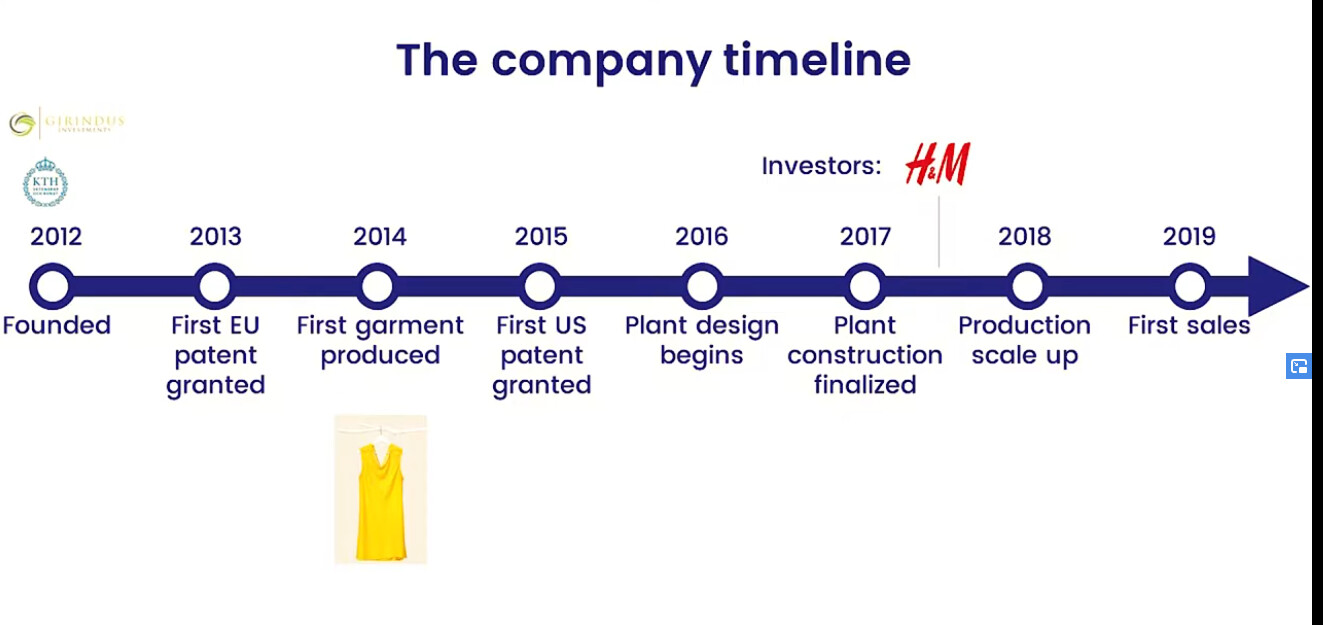
The company was founded in 2012 by researchers from Stockholm’s “Royal Institute of Technology” (KTH). Originally, the purpose was to research more efficient ways to decompose cellulose. As the research progressed, they noticed that the method could successfully decompose cellulose in cotton and viscose. The researchers became convinced of the possibility of large-scale textile recycling and the goal of making fashion sustainable.

The company’s stock market history is very recent. Trading began on the Nasdaq First North Premier Growth Market on November 26, 2020.

If the company sparks your interest, I recommend watching this presentation from 2019: https://www.youtube.com/watch?v=X6fqbBrENa4 (I’ll include some screenshots from the presentation here)
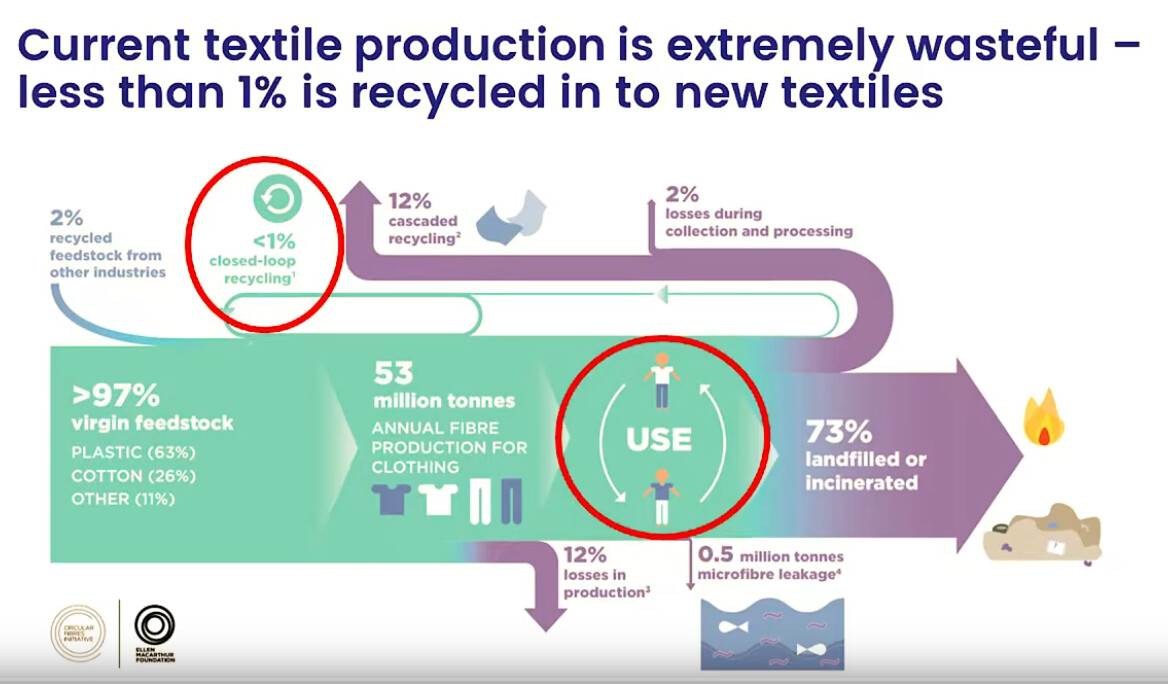
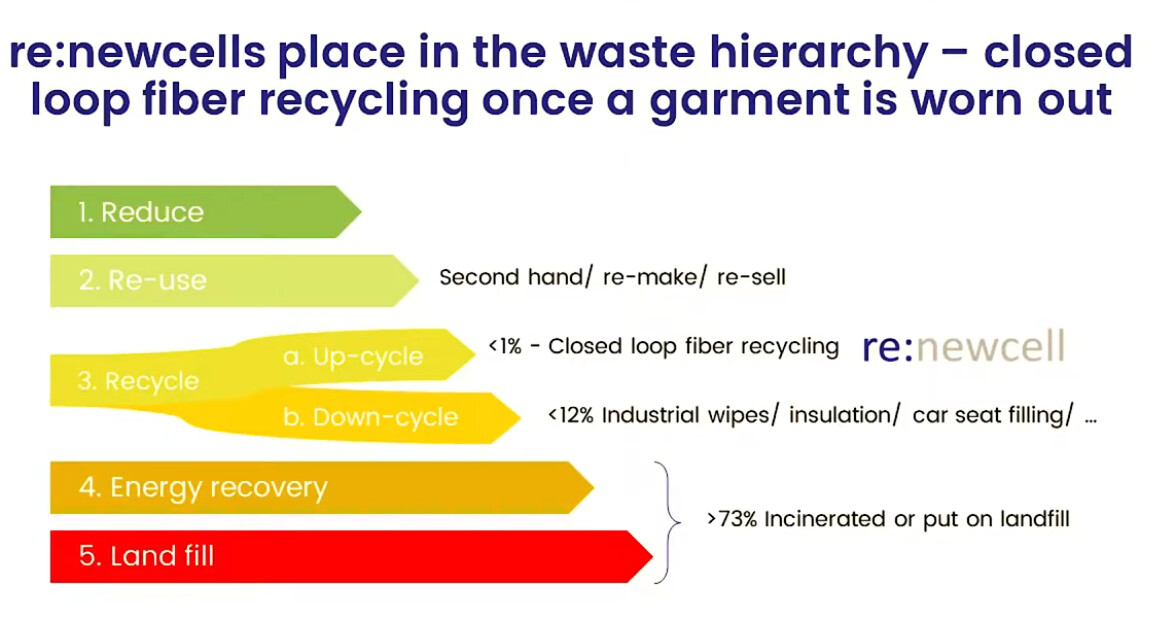
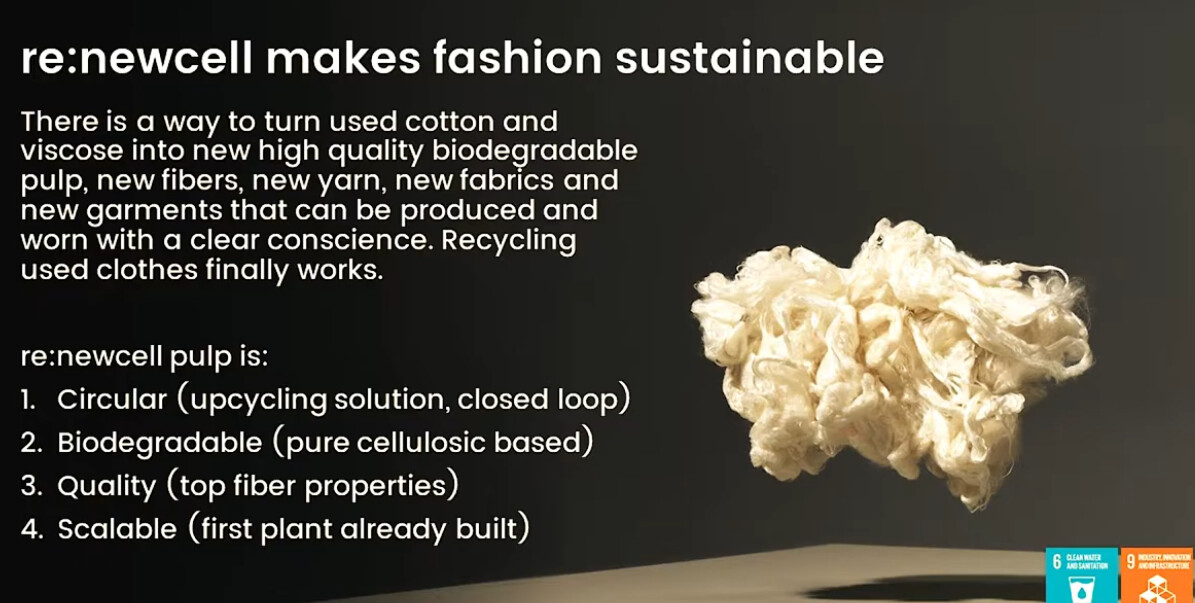
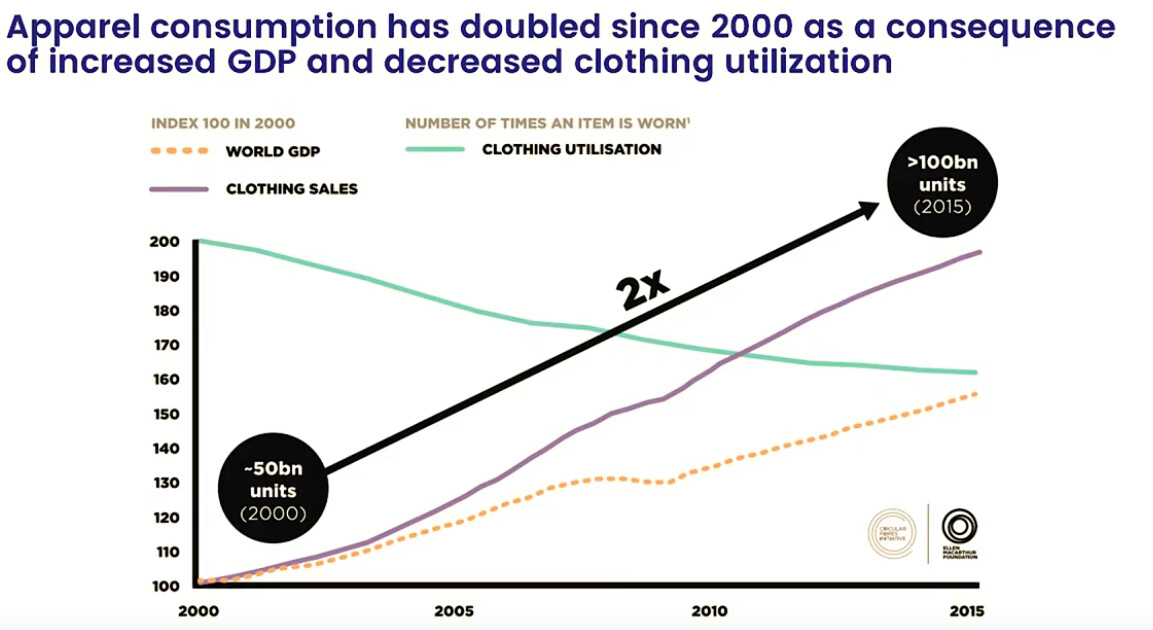
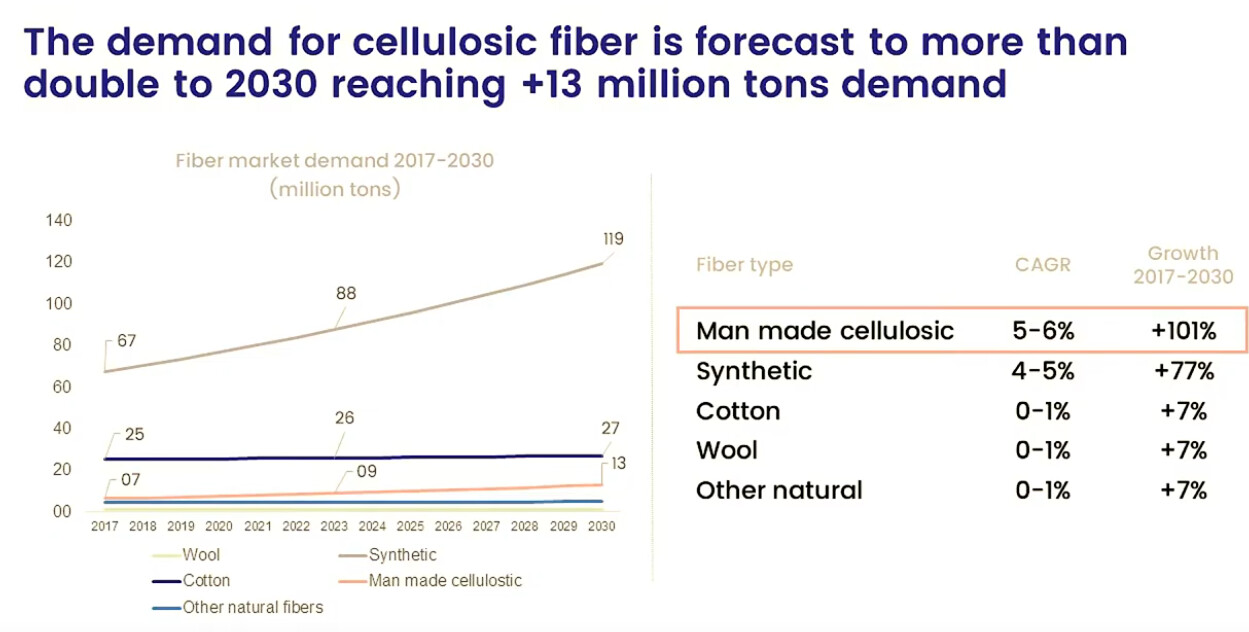
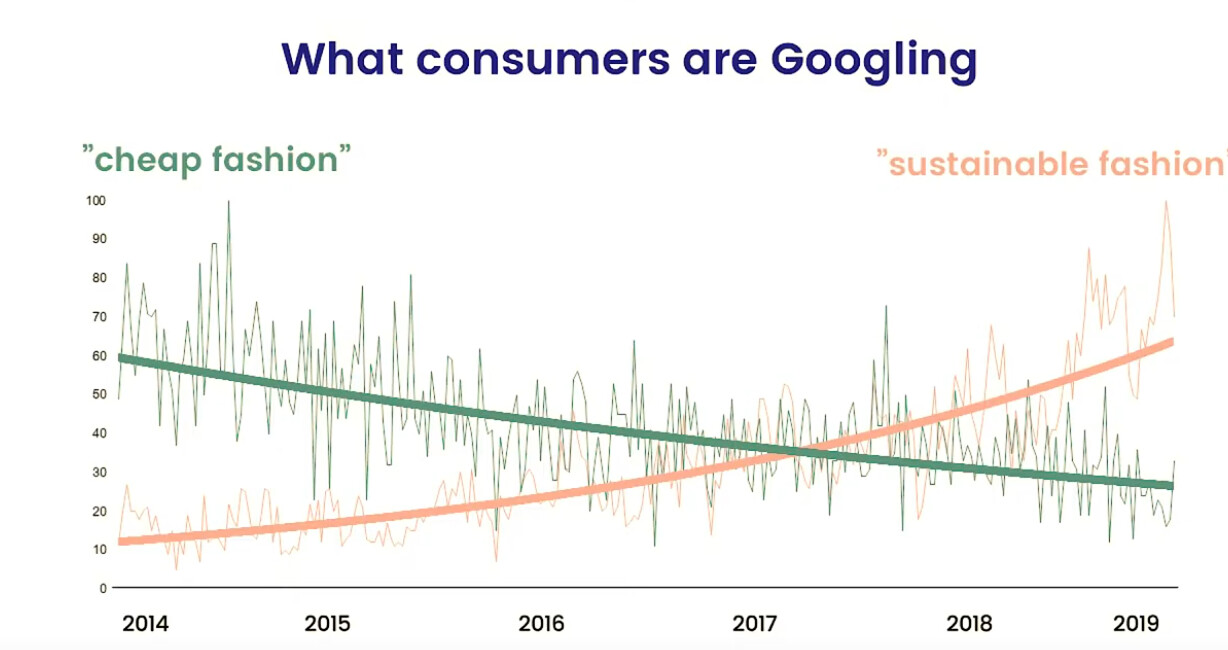
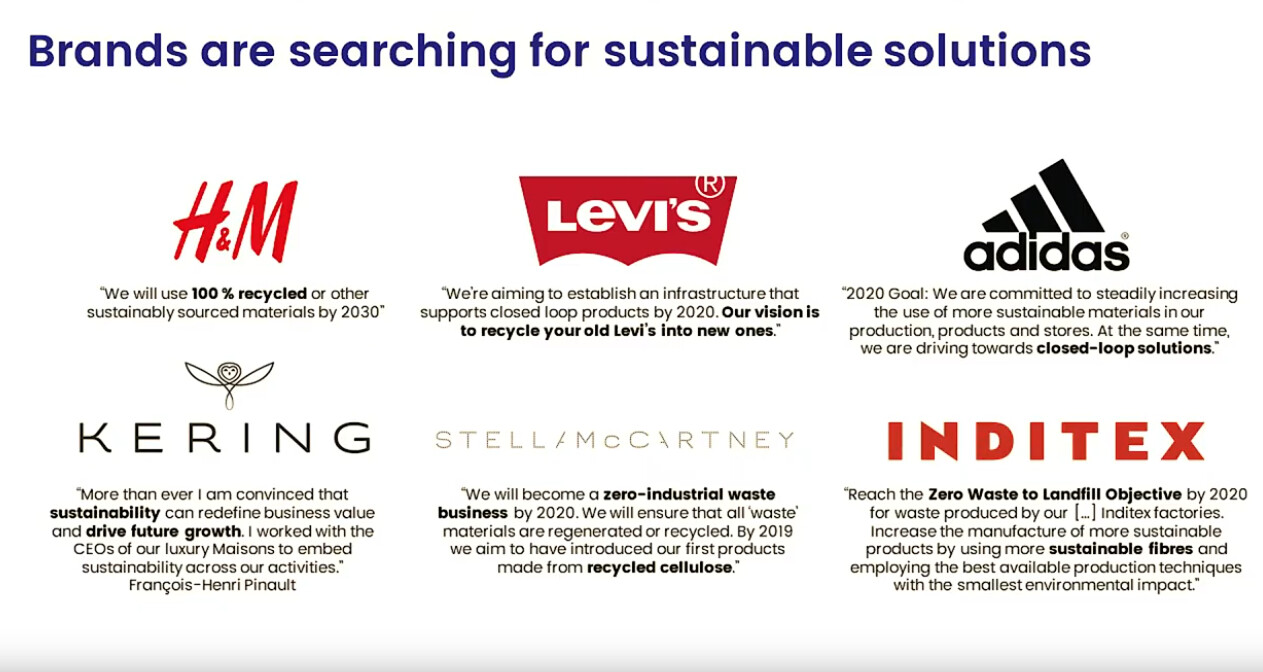
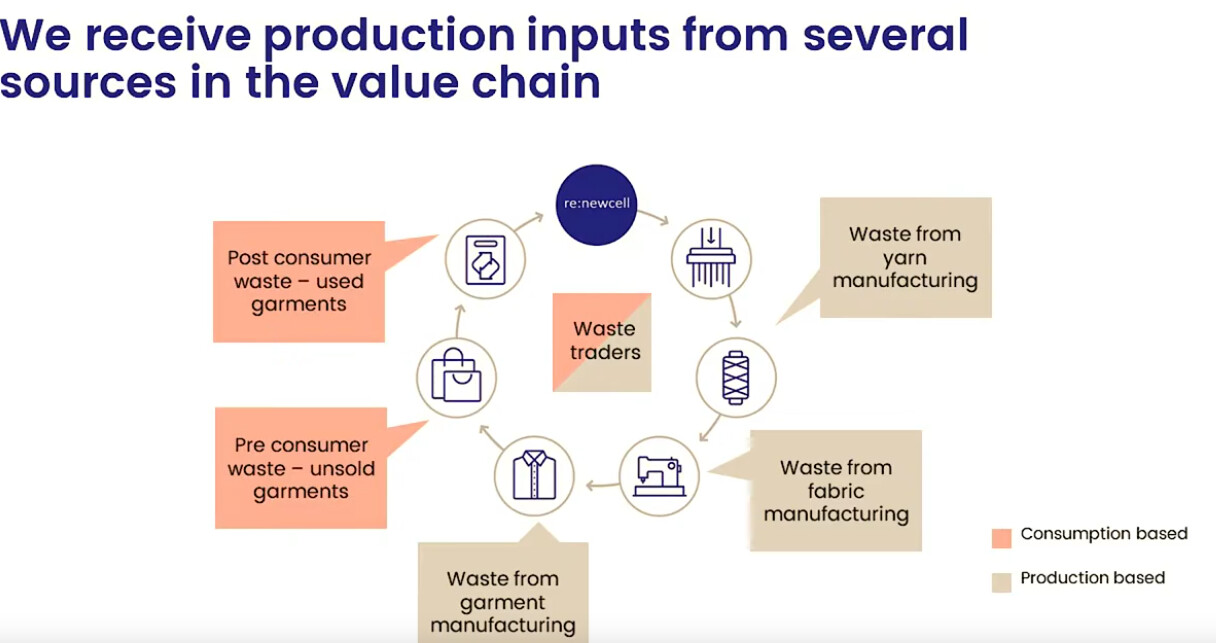
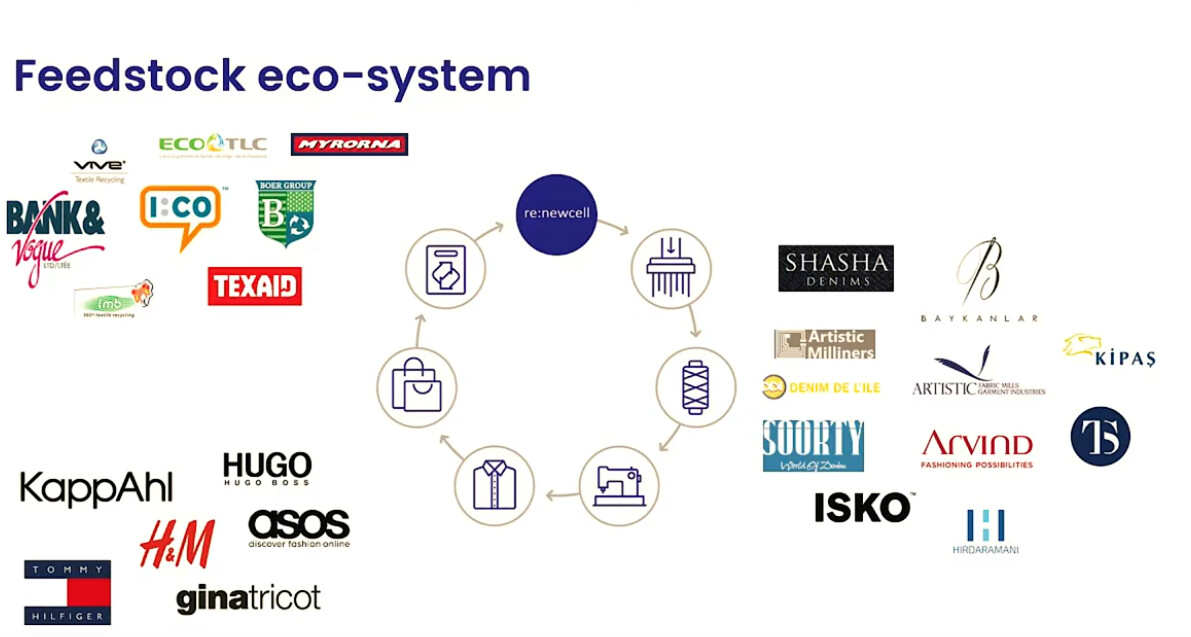
In my opinion, Renewcell has had a positive news flow this year; I’ll list a few interesting press releases here:

https://www.renewcell.com/en/hm-conscious-exclusive-becomes-the-first-retail-collection-to-feature-circulose/

H&M will become the first brand to retail a garment made from re:newcell’s breakthrough new material, Circulose®. Launching worldwide on March 26th, H&M’s SS20 Conscious Exclusive will feature a jacquard weave day dress made of 50% Circulose recycled from used cotton jeans, and 50% FSC-certified wood. It will be the first time this kind of material becomes available for customers to buy in retail.

https://www.renewcell.com/en/levis-most-sustainable-jean-ever-a-collaboration-with-renewcell/

“On July 21st, Levi’s® launches its most sustainable jean ever, a garment made with organic cotton and Circulose®, a breakthrough material made from worn-out jeans. Available as part of the Levi’s® Wellthread™ line in the 502 for men and High Loose for women, this jean represents more than five years of research in circular denim design.”

https://www.renewcell.com/en/renewcell-and-sca-sign-lease-agreement-for-large-scale-textile-recycling-in-sundsvall/

“In September, the environmental permit process began and it is now decided that Renewcell chooses to establish their new textile recycling plant at SCA Ortviken’s industrial area in Sundsvall. Renewcell estimates that this establishment will create around one hundred new full-time jobs in a plant that, at full production, will recycle 60,000 tons of textiles a year. This corresponds to about half of Sweden’s annual consumption of textiles.”

https://www.renewcell.com/en/renewcell-selected-for-the-full-circle-textiles-project-a-new-frontier-in-chemical-recycling/

“The Fashion for Good initiated “Full Circle Textiles Project: Scaling Innovations in Cellulosic Recycling” – a first-of-its-kind consortium project, launches today. As much as 73% of clothing produced is sent to landfill or is incinerated and of all new clothing made, less than 1% of material used comes from recycled sources. Focusing on cellulosic fibres, this Project aims to validate and eventually scale promising technologies in chemical recycling from a select group of innovators to tackle these issues. Leading global organisations Laudes Foundation, Birla Cellulose, Kering, PVH Corp. and Target join Fashion for Good, to explore the disruptive solutions, with the goal of creating new fibres and garments from used clothing and ultimately drive industry-wide adoption.”

https://www.renewcell.com/en/bestseller-announces-a-new-collaboration-facilitated-by-its-fashion-fwd-lab-this-time-with-swedish-innovator-renewcell/

The future is here: Today, fashion company BESTSELLER announces a new collaboration facilitated by its ‘Fashion FWD Lab’. This time with Swedish innovator Renewcell, which is pioneering a sustainable and circular recycling method. Three BESTSELLER brands – VERO MODA, OBJECT and SELECTED – are some of the first fashion brands to produce garments at market scale from Circulose® recycled material.

https://www.renewcell.com/en/renewcell-and-hm-group-in-large-scale-fashion-recycling-cooperation/

" Renewcell, a Swedish textile recycling innovator, and H&M Group have entered a multi-year partnership to replace virgin fibers with recycled textiles in fashion products. Building on the successful introduction of Circulose® in the SS2020 Conscious Exclusive Collection, H&M Group have committed to scale up the use of the material across its brands over the course of five years. The agreement, which was reached in September 2020, is the first of its kind in the industry and marks a significant step forward in the development of a circular economy for fashion."

Website: https://www.renewcell.com/en/
IR pages: https://www.renewcell.com/en/section/investors/
IPO materials: https://www.renewcell.com/en/section/ipo/
Here is the Prospectus:
renewcell-prospectus-en(1).pdf (4.0 MB)
Name: Re:NewCell AB
Ticker: RENEW
ISIN: SE0014960431
https://www.nordnet.fi/markkinakatsaus/osakekurssit/17379158-re-new-cell?accid=3

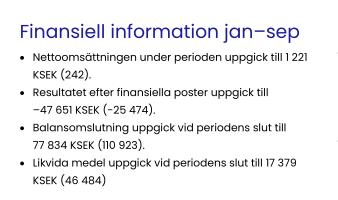
As you probably noticed, the opening of this thread was quite focused on press releases. This is practically due to the company’s “startup” phase. Here is the Q3 report, but unfortunately, it is in Swedish.interim-report-q3-2020-dated-october-22-2020-final(1).pdf (319.9 KB)
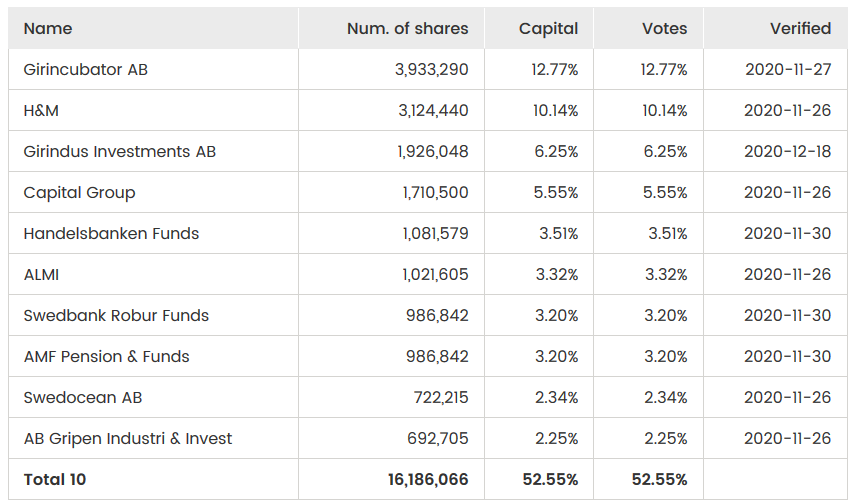
TOP 10 Owners
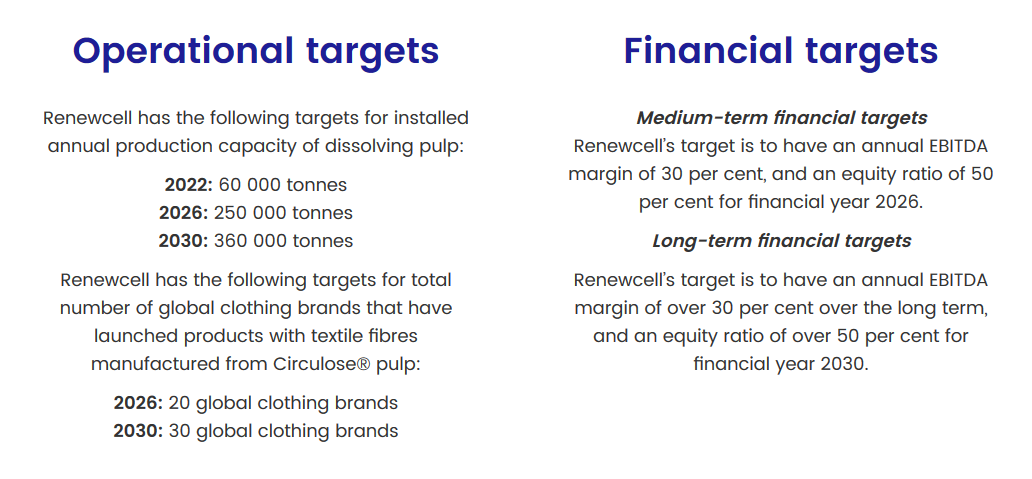
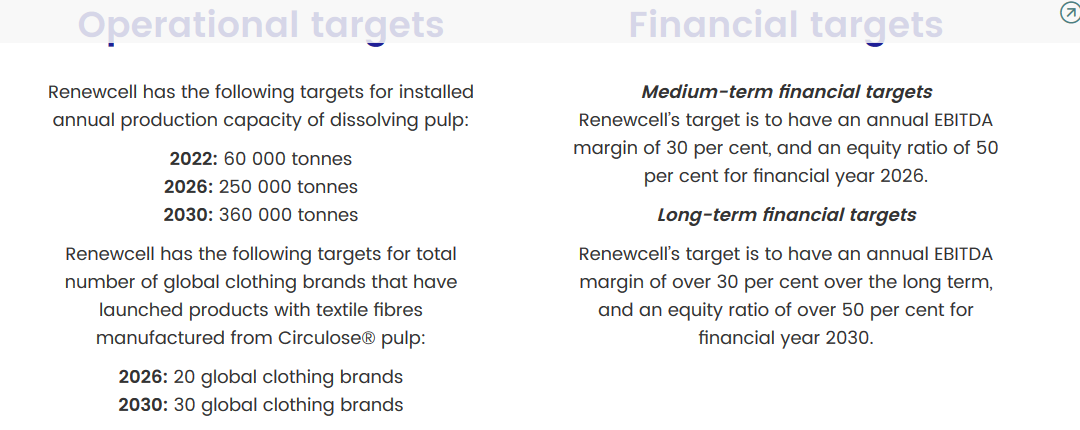
Goals:

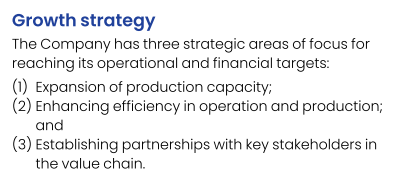
Growth strategy
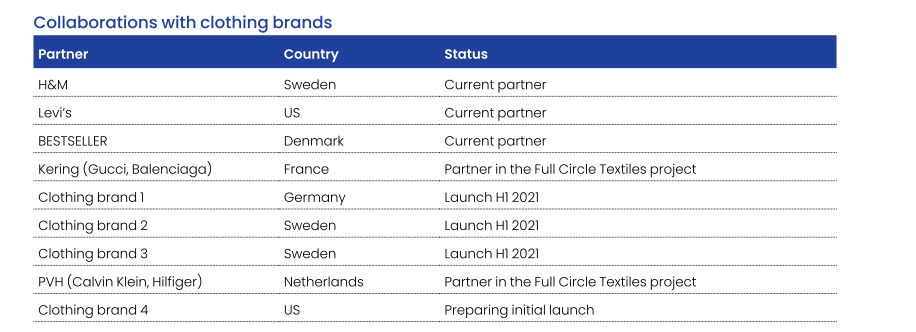
Collaborations with brands
Edit: Thanks to @keisarijokinen for bringing the company up over on Discord!
Double Edit: I’m still updating the opening post, research is ongoing.

29 Likes

This is an interesting business idea that improves the world. Thanks for bringing it up!

I was reading through the reports, and at least for my part, it remained a bit unclear how and when this company makes money and with what margins. Could you enlighten me on this matter? Textile products are not, to my understanding, very expensive to produce even nowadays. Perhaps people would be willing to pay some kind of premium for these recycled materials compared to traditional ones, but does it happen that the clothing retailer collects that premium, not the producer :thinking:. If this, on the other hand, is a “make textiles cheaper than others” business, then the calculation becomes significantly easier.
3 Likes

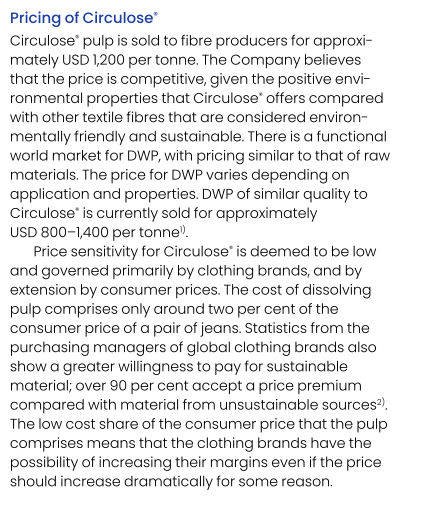
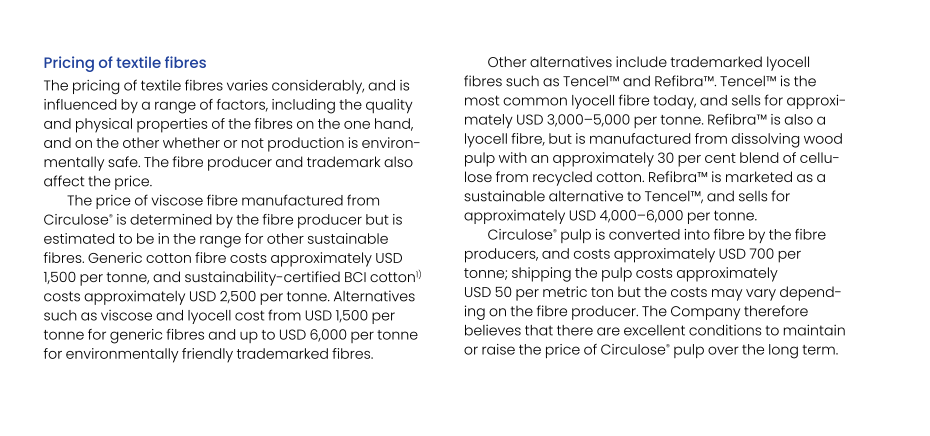
Suddenly it seems that the potential revenue is based on a premium for an environmentally friendly product.

https://www.renewcell.com/en/circulose/

It says “price competitive,” which may be true. Since it doesn’t explicitly say cheaper, it might actually be more expensive to produce, at least for now/still. Instead, the focus is on the product’s normality otherwise and that the brand can highlight “the story behind the product.”

Who collects the premium and to what extent, the raw material producer or the clothing chain, is another matter. More information would be needed.

3 Likes

What was that Finnish company that does something similar, not Sulapac, which also uses cellulose, but another one that specializes in chemical clothing recycling?

1 Like

However, the company’s product also has a direct substitute (traditional textiles), which makes it difficult to achieve absurd margins. If the producer’s price were to rise too high, I would assume that clothing chains would have enough alternatives to compete and drive down producer prices. As an investment story, this feels somewhat similar to, for example, food startups selling vegan products to S-market. Setting up factories is also generally quite capital-intensive, meaning margins should be high or volumes massive to generate good returns. The story is beautiful, and I hope the company succeeds in changing the world, but as an investment case, I don’t really understand it, so I must have missed some crucial information about how the company will make a lot of money in the near future.

4 Likes

I added more information to the opening post.

And my own thinking on this is entirely based on recycling and sustainable development. The clothing industry still wants to increase its sales, not decrease them. If this is to be done according to the principles of sustainable development, the fiber cycle must be “closed”.

In my opinion, the principle here is similar to Quantafuel. Here too, there is a plethora of competition and other entrepreneurs in the world, but the amount of replaceable fibers is so large that every operator is needed and there is enough market for them. Over time, some will grow and eliminate the smaller ones.

Edit: The Infinited Fiber mentioned by @Pikkis23 is practically doing the same thing and is a good comparison.

2 Likes

Food startups are certainly in a worse position in that there’s plenty of raw material and anyone can make “premium-priced” vegan food without technology that requires patents.

Here, at least, there’s a possibility that technology protects against entry.

2 Likes

Infinited Fiber. Also collaborates with Suominen and H&M, among others.

3 Likes

That might be a slightly inaccurate comparison, as it’s possible that by 2030, clothing made from virgin cotton can no longer be sold in the EU, or some other political decision similar to the ban on coal power could be enacted. Or it could be the same situation as with dirty electricity, where consumers refuse to buy clothes not made from recycled materials.

5 Likes

I see this as an opportunity like with fuels, where little by little, the law will mandate increasing the share of recycled fiber in textiles towards 100%.

7 Likes

Things can indeed go this way, and it might be that I’m largely stuck on these numbers and not seeing the big picture. From an investor’s perspective, it would probably be easier to jump in once such legislation genuinely starts to be prepared, more consumer behavior data is available, a few factories are already up and running, and the first couple of funding rounds have been completed. However, if the stock is constantly priced based on megatrends, then it won’t be possible to get in at a reasonable price even at that stage.

4 Likes

It’s worth remembering that textile waste collection will likely become the responsibility of municipalities in many EU countries, so agreements between private companies won’t help much if municipal companies have a different vision :wink:

2 Likes

Good discussion! This is what I was hoping for when I opened the thread.

I’d like to hear more about this from @Jekku since you’re in the industry?

Edit: Företaget Renewcell vill revolutionera klädindustrin – fabrik byggs i Ortviken | SVT Nyheter

Something in the Swedish media from October

1 Like

The EU has set a target for its member states to collect textile waste separately from other waste by 2025 at the latest. Finland is ahead of this schedule, aiming to have the collection in place by 2023. In practice, this separate collection obligation will fall on municipalities, as textile waste is not currently covered by producer responsibility. If producers were responsible for the final processing of this waste fraction, I would give more weight to, for example, the collaboration between H&M and Infinited Fiber. But because municipalities organize the collection, the matter is not quite so simple, and textiles can end up anywhere, depending on the municipal companies’ own contacts.

In Finland, the collection of end-of-life textiles has been planned so that their processing would take place centrally, for example, at Loimi-Hämeen Jätehuolto’s processing plant, which will expand from a pilot-scale facility to a larger-scale facility within the next couple of years (https://www.lhj.fi/kotitaloudet/jateasemat/poistotekstiili/). This plant, of course, does not in itself solve the problem of manufacturing new raw materials from products for use by the textile industry, as Renewcell does.

Regarding textile waste, it is very difficult at this stage to assess what the overall process will ultimately look like. One option is, of course, that municipalities pay money to, for example, H&M for them to organize the separate collection of textile waste at their own points and deliver it for processing. Likewise, it could be that a municipal waste management company collects this textile waste, in which case this company also determines where the textile waste is taken for further processing. Somehow, the municipality’s responsibility always worries me, because the decisions made there are not always necessarily based on the best available solutions.

Textile waste has a lot in common with plastic waste, as they are often made from many different fiber materials. I didn’t quickly find on the websites what qualities Renewcell can process in its process. Is only cotton suitable, or can other fibers also be included in the product? This thought came to mind mainly because, although large tonnages of textile waste are talked about, how large a percentage could be directed specifically to this process. Few textiles today are made from only one fiber, and unfortunately, the content label on washing instructions is not always accurate either.

17 Likes

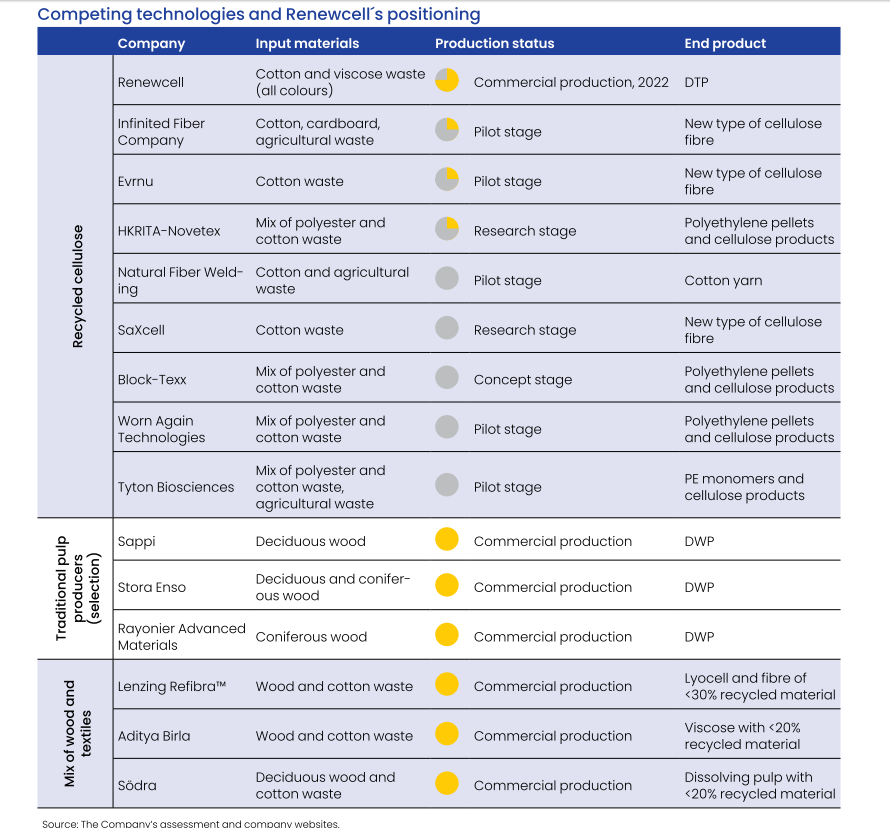
More competitors there.

Edit: I’ll add more stuff to the opening post. For example, the IPO prospectus is now there as a file, if you want to take a look.

6 Likes

Thanks to Jaska for starting this thread. This is a company I would like to invest in, but I’m a bit hesitant myself about how the business model will work. The stock has also rocketed since the IPO, so the valuation multiples are a bit scary too.

On the other hand, the demand for products like this is, in my opinion, really strong, so one would think that Renecwell would be able to carve out some profit from this pie for itself. I don’t see that the increase in demand would necessarily require any EU regulation, as clothing companies themselves are already moving rapidly in this direction. Responsibility and sustainable development are a brand advantage. For example, Marimekko (which I have in my portfolio) is heavily developing the responsibility of its clothes with its partners. I don’t remember reading about a solution like Renecwell yet, but some time ago, for example, a collaboration with a company developing natural dyes for the textile industry was announced.

Based on what I’ve learned about the industry, also through Marimekko, I see the potential as really strong. Finding margins in H&M-priced products can be challenging, but in the premium product category, I especially see the opportunity to make a lot of money. So I’m not sure if H&M’s ownership is solely a good thing. I’m also a bit worried here that H&M will steer this company with its own interests in mind, rather than Renecwell’s overall interests.

I need to continue pondering and familiarizing myself with this case.

1 Like


Here’s the Nyteknik article about the same: Renewcell gör sig redo att skala upp – och tecknar miljardavtal

Edit: @Helel exactly the same opinion on the valuation :slightly_smiling_face: if that was unclear.

4 Likes

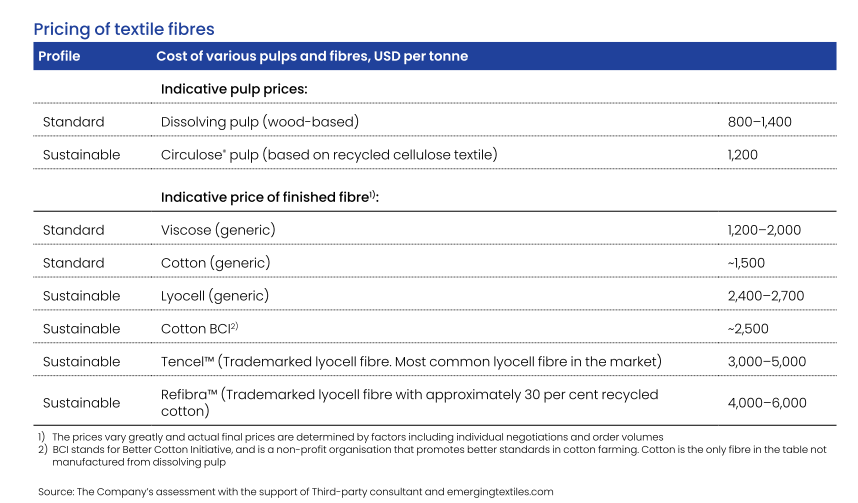
It’s interesting to directly see estimates of fiber prices and the market, which also impacts the future prospects of Stora and UPM! Stora, with its Ioncell, is building pulp lines that yield 3x the end product compared to traditional pulp.

2 Likes

So, this really is a bit more expensive than conventional fiber. The price of the fiber in the final product is not necessarily a significant factor if customers specifically want clothes made with this fiber. At the same time, conventional cotton puts price pressure on this, and it’s not certain that competitors won’t be introducing equally ESG fibers. My partner bought recycled cotton as a Christmas present, it wasn’t Circulose.

Furthermore, the trend of ethical consumption, in my opinion, is not solely on the company’s side. Fast fashion doesn’t become sustainable just by recycling the fiber. Chemical treatment, dyeing, and transportation constitute a significant part of the environmental impact. Of course, this doesn’t necessarily hinder the business.

But the valuation is incredibly expensive, which hinders investing in the long run. +100% from an already expensive IPO probably tells something about the spirit of the times, but I’ll set an alarm for 3 years from now.

4 Likes

One could conclude from this table that Renewcell’s process only works with textiles containing cotton and/or viscose fibers. Competing technologies that work with polyester-cotton blends are still in the design/pilot stage.

I’m also pondering this point raised by @Jekku. It seems that a rather small percentage of all textile waste would be suitable for Renewcell’s use. As a result, the market would inevitably remain somewhat small, wouldn’t it?

3 Likes