Inflation is cooling slightly faster than expected in the eurozone,
https://twitter.com/LiveSquawk/status/1719293672984846506
https://twitter.com/LiveSquawk/status/1719293815788564827
https://twitter.com/JariHnnikinen1/status/1719294960875250071
Over the last couple of days, I’ve updated my view on the direction of the economy by digesting a large stack of various articles and reports and reviewing the situations of several major companies. The goal was to try to see through the fog and predict the length of the recession in Finland and Europe.
BASF, often called a bellwether for the global economy, released its results today. The German chemical company announced it is cutting back on investments after its third-quarter earnings slipped into the red. The company also stated that it does not expect an easy start to 2024 either. High energy prices remain the underlying cause.
Chemical production slowed considerably in Europe due to lower demand as a result of high inflation, increased interest rates and a rise in natural gas prices. There was also a slowdown in consumer spending, BASF said, which added that chemical production on the continent declined by 6.6% on year while energy prices were around 40% higher than their average between 2019 and 2021.
Regarding Finland, forecasting is easy—a recession awaits us, the length of which is out of our hands. It is possible that the Helsinki Stock Exchange will continue to decline steadily, but in my own reflections, I consider that unlikely unless the European recession is prolonged or deepens, dragging Helsinki even lower.
I still find the Helsinki Stock Exchange attractive due to the significant drop. Many of the winners of the coming upturn can be picked up at a reasonable price, or even cheaply.
In Europe, inflation is falling slightly faster than expected. At the same time, Bloomberg reports in its TV broadcast that the Eurozone’s gross domestic product contracted against expectations compared to the previous quarter. The economy continues to recede.

Inflation is decreasing almost as expected. Based on inflation figures, one cannot expect interest rates to start falling before late spring or next summer. However, there is a slight possibility that the Eurozone’s faster-than-anticipated economic contraction will accelerate interest rate cuts if the economic trend continues to decline in the final quarter. No major surprises are likely on the way unless geopolitics introduces new surprises to the game. Unfortunately, that risk remains high.
Slightly more unpleasant statistics from our western neighbor. In Sweden, a monthly record for bankruptcies this millennium was set in October.
(Bloomberg TV)
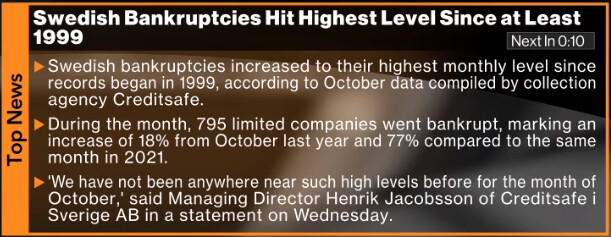
The news is grim, but I’ll flip the perspective a bit, even though I’m no over-optimist. It is indeed bleak, but I see no reason to doubt the slow economic recovery promised by economists for next year (barring new geopolitical crises or the worsening of existing ones), so I interpret news like this as a sign of potentially approaching or even reaching the bottom. I also wouldn’t be surprised if Finland’s statistics were to follow Sweden’s lead later on.
Riksbank Governor Erik Thedéen stated in yesterday’s Dagens Industri interview that “one must keep a cool head.” In Sweden, the economic situation has deteriorated rapidly, but according to Thedéen, it is essential to keep the policy rate high. According to him, the weak krona remains one of the country’s biggest problems.
https://twitter.com/FirstSquawk/status/1719689570428522597
Employment figures below expectations.
Hmm, indices are popping, the 10-year yield is dropping. Probably related to these US Treasury announcements. Someone smarter can explain if they can 
https://twitter.com/FirstSquawk/status/1719694981869244818
https://twitter.com/FirstSquawk/status/1719695021958459489
https://twitter.com/FirstSquawk/status/1719695062831923701
Guys @Tuomas_Tuominen and @Jukka_Lepikko talked about the wild swings of the earnings season, among other things. 
Earnings season is winding down, but there are still opportunities to profit from even sharp price reactions. Jukka Lepikkö and Tuomas Tuominen provide another market overview and share the latest moves in their own portfolios

0:00 Intro 1:45 Stock markets now 11:37 Market overview 22:44 A peek into the portfolios
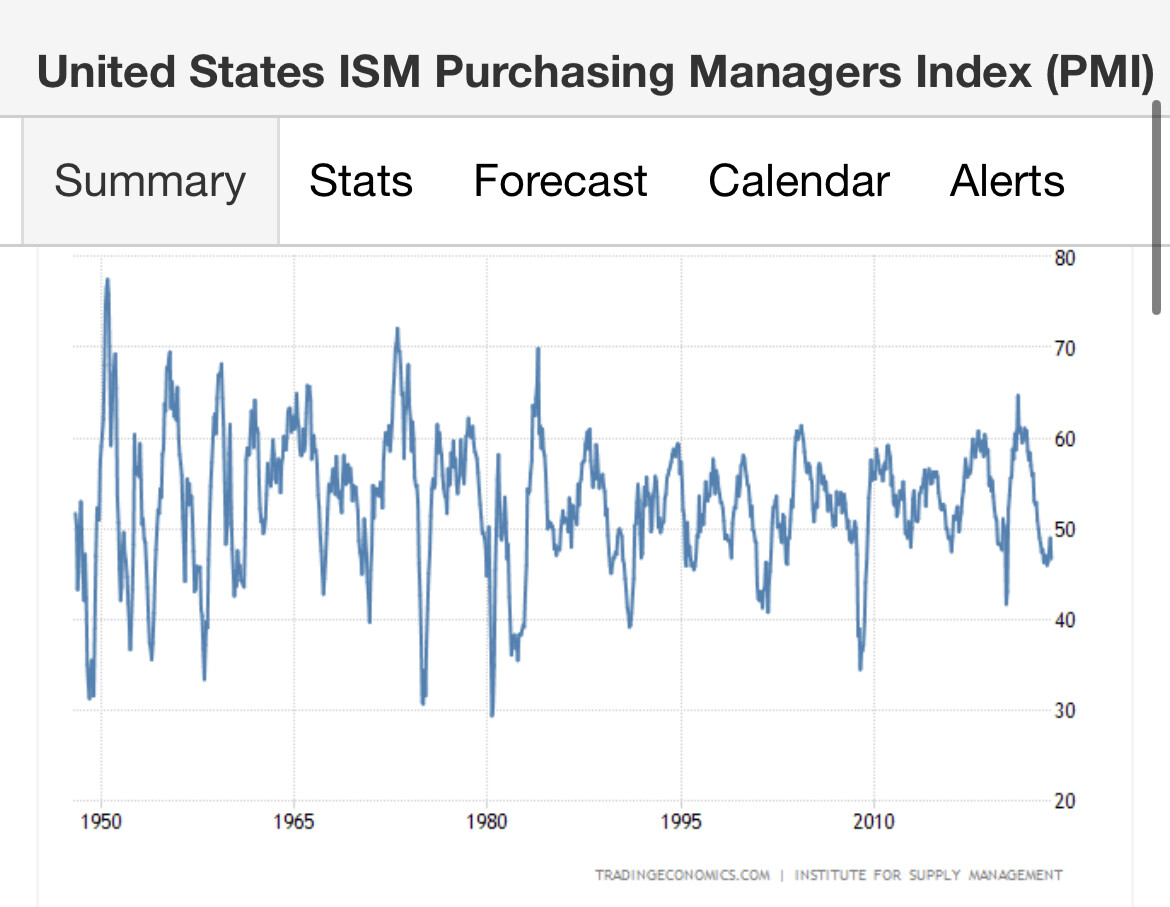
ISM Manufacturing PMI index is really weak.
https://twitter.com/c_barraud/status/1719716207908036802?s=46&t=2ioRmPR9E06CY7pIWMMRqA
Of course, in the longer run, figures come and go:
Interest rates are falling and Nasdaq💸
Alright, good evening everyone! We’ll see if we hear some horror stories in honor of Halloween tonight, or something a bit tamer. Naturally, Powell’s views on the state of the economy and the future direction of interest rates are of interest now, since further hikes are most likely no longer expected and no new forecasts will be published this time. The interest rate decision will be announced as early as 8:00 PM due to the clock change.
Key interest rate remains unchanged
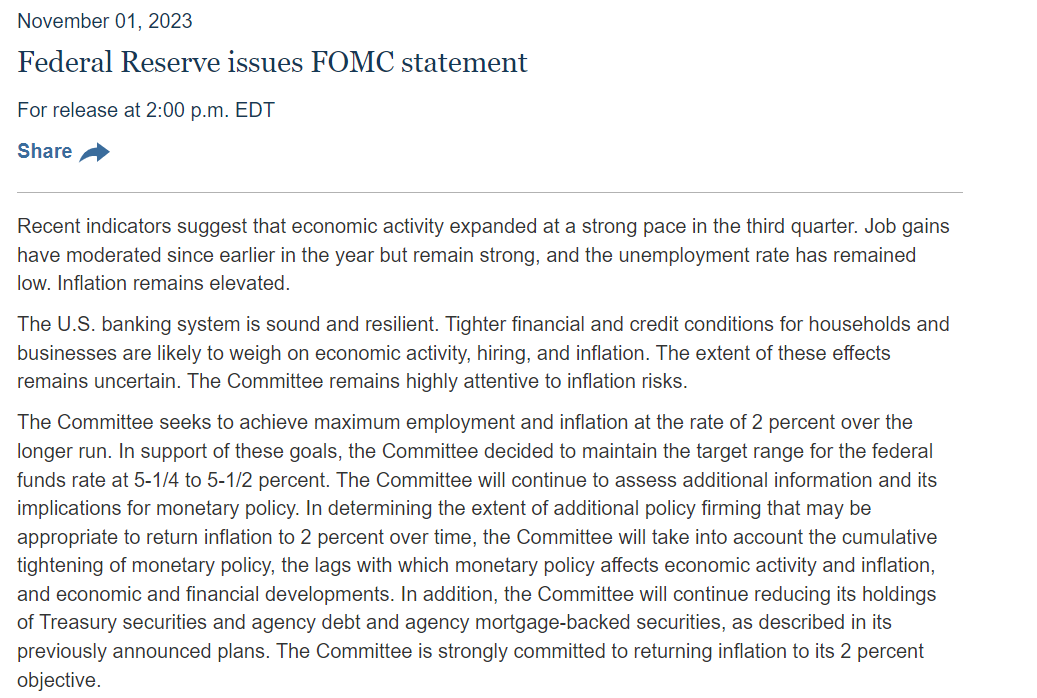
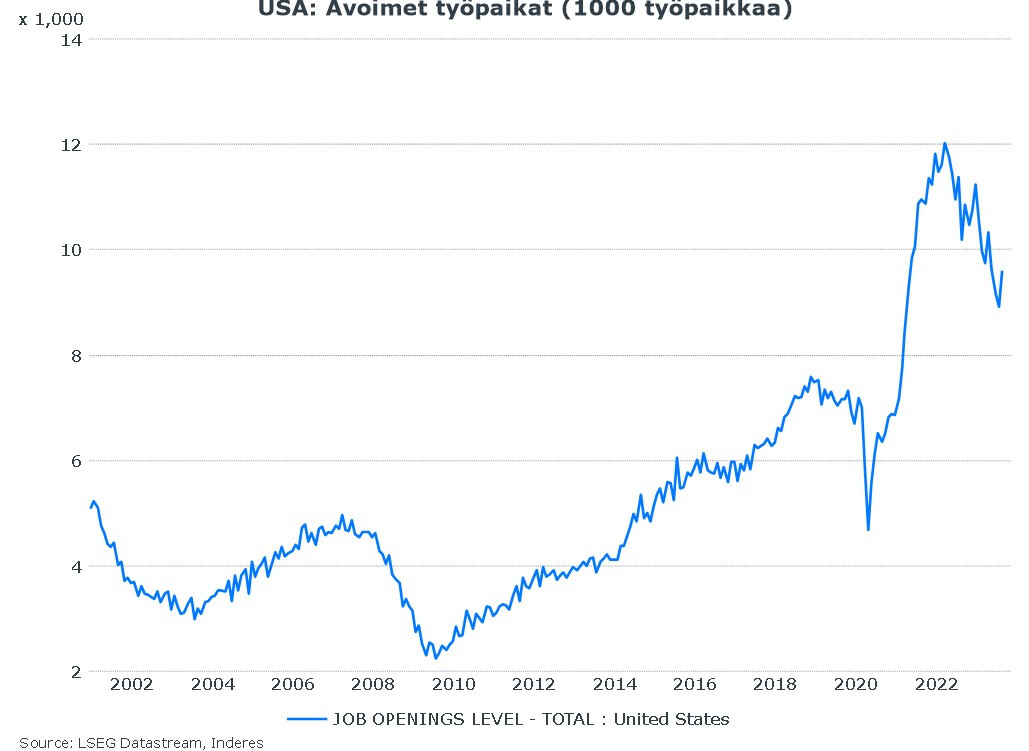
The wording of the decision itself is nearly identical to the September interest rate decision, but a statement regarding the strong economic performance in Q3 was added to the first paragraph. Economic growth was indeed strong, and according to employment data, labor market tightness is not easing anytime soon (see the figures for new jobs below, for example). It was a unanimous decision, meaning we are no longer in such a suspenseful situation as during the rate hike cycle.
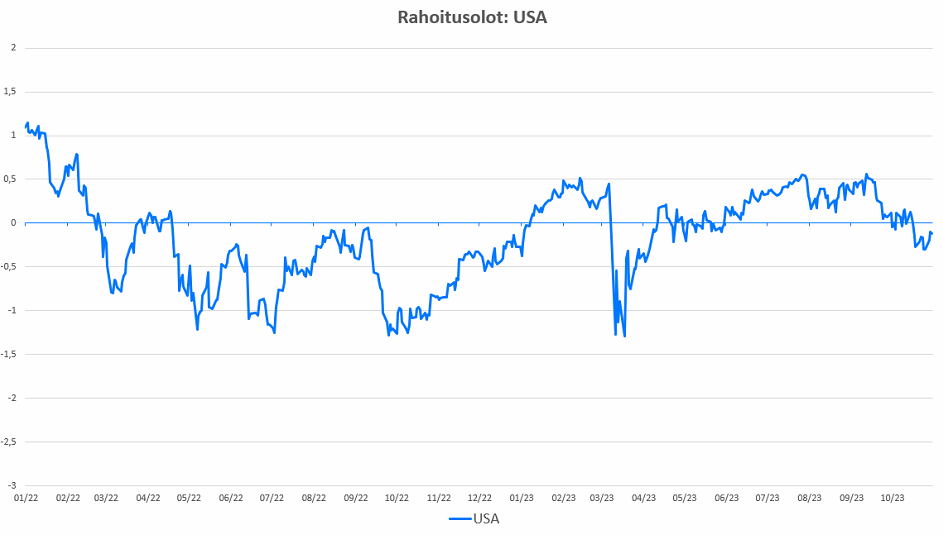
Most likely, the central bank will continue its hawkish pause, meaning Powell will state that the readiness for rate hikes remains very much present. There is likely no actual need for this, as financial conditions in the United States have tightened since September, which “replaces” rate hikes.
Follow the speech here
https://www.youtube.com/live/wm4McpKTA7Y?feature=shared
According to Powell, more persistently tightened financial conditions could have implications for the path of monetary policy. This is precisely what it’s about when financial conditions do the work for the central bank—that is, slowing down economic activity.
And there it was: talk of a readiness to also raise rates if necessary. Unsurprisingly, all doors remain open until more economic data points are received.
According to Powell, the FOMC is not considering and has not discussed interest rate cuts. Monetary policy will be kept restrictive until inflation has shown progress toward the target.
According to Powell, it has been exceptional and welcome that the U.S. economy has withstood interest rate hikes so well. The effects of the rate hikes already implemented have been seen, but uncertainty regarding monetary policy lags remains high. This is why the process was slowed down after the aggressive rate hikes; to better see what the impacts on the economy are.
According to Powell, U.S. economic growth potential is elevated (over a 1-2 year horizon), meaning there is plenty of capacity in the economy at the moment.
The rise in interest rates has not created a need for the Open Market Committee to slow down the QT program, i.e., the reduction of bond holdings and the shrinking of the balance sheet.
Powell says that inflation expectations are well-anchored and the general public largely believes that inflation will return to the central bank’s target.
Then, a question about the neutral rate (the interest rate level at which monetary policy is neither restrictive nor accommodative). Powell says that it is an important variable but very difficult to verify. In light of the neutral rate, monetary policy is restrictive, but the question is whether it is sufficient to bring inflation back to the target. No direct answer was given on whether the view on the level of the neutral rate has changed. Some academic research has been published on this, and according to the majority, the neutral rate in the U.S. has risen somewhat. However, this does not guide monetary policy.