AI bottlenecks in the value chain: From chips to electricity and infra

Opening a thread to identify AI bottlenecks. The starting shot for AI development has been fired, and in my view, development isn’t stopping for years—it’s accelerating. In the post below from the “Pörssien suunta” (Market Direction) thread, I tried to outline these bottlenecks, so I recommend reading it first as a primer.

The market is massive and will offer investors extensive opportunities over the coming years, even if many might feel they’ve missed the best rallies. I can assure you that’s not the case; by diving deep into the value chain, various subcontracting chains start to emerge that the market hasn’t focused on yet. For example, outside the USA, there are vast investment targets where money hasn’t flowed yet. I believe every investor’s portfolio should include at least one stock or ETF related to AI value chains—the megatrend is that significant. My own watchlist now contains 220 “bottleneck stocks,” and additions are made daily.

I am not an expert on AI or bottlenecks, though I study the field daily and am an AI power user. A key reason for starting this thread is so that we could collectively, through swarm intelligence, find the winners of the coming years.

I fed Claude Opus 4.7 a massive amount of information/data regarding AI bottlenecks and am listing the first result directly here. The text hasn’t been edited at all and I translated it into Finnish, so there are some slightly funny expressions. Regardless, it should serve as an excellent starting point for the discussion:

Tier 1 Bottlenecks — Atoms and Substrates (Most Asymmetric Return Expectation)

1. AXTI — Indium Phosphide Substrate The tightest bottleneck in the entire CPO supply chain. By 2026, global effective InP capacity will be 600–750 thousand wafers, with demand at 2.6–3.0 million — a gap of over 70%. AXTI controls 60–70% of the world’s InP substrate production through its Beijing facility. RS 86, and only -0.8% today — lagging behind the trend.

2. SMTOY / 5802.T (Sumitomo Electric) — InP + Japan Anchor One of the three global giants of InP substrates, and the only one operating purely in a Western alliance country. SMTOY +13.8% today, RS 77 — the market has started pricing this in. Another “ground floor” InP name to invest in alongside AXTI, providing diversification against geopolitical risk.

3. SOI.PA (Soitec) — SOI and Substrate expertise for RF front-end and photonics A quiet anchor for the silicon photonics wave. RS 78. This hasn’t taken off like AXTI yet; that’s the reason to look at it.

4. MP / LYC.AX — Raw Materials (Rare Earths) for magnets and generators Datacenter cooling motors, wind generators, EV traction — all need NdFeB magnets. Power & Grid theme +369% over 2y. MP RS 56, fading momentum figures, but this is a physical bottleneck name well past 2027. I consider this “late but essential.”

Tier 2 Bottlenecks — Wafers, Lithography, and Advanced Packaging

5. BESI.AS / BESIY — Hybrid Bonder Monopoly The Korean hybrid bonder market will grow to about $2 billion by 2028, and its share in the HBM4E era will rise to about 50% by 2028. Both Samsung and SK hynix are applying hybrid bonding in the 20-layer stack HBM5 generation. BESI and ASMPT are the two global hybrid bonder suppliers. This is the alpha bottleneck for the HBM5 era 2027–2028.

6. AEHR — Burn-in / SiC and Photonics Testing On the watchlist with RS 88, +6.75% today. A yield bottleneck for AI packaging and silicon photonics. A small name, but clearly institutional buy flow is underway.

7. KLIC (Kulicke & Soffa) — Thermo-Compression Bonding for 16-layer HBM4 The JEDEC revision (775 µm height limit clearance) kept traditional micro-bump technology alive for 16-layer HBM4, and Fluxless TCB has taken center stage before hybrid bonding. KLIC is the TCB leader. RS 85.

8. ONTO (Onto Innovation) + CAMT (Camtek) — Packaging Metrology Quality assurance for the HBM stack has become a key yield driver (metrology is a mandate in a world of $30,000 wafers where the cost of failure is existential for margins). Onto RS 68, Camtek RS 55 — both are below the hottest point, making them interesting while waiting for a catalyst.

9. LPKFF (LPKF Laser & Electronics) — Glass core packaging +7.2% today, RS 85. Glass core materials are the core of the 2027–2028 packaging trend (Intel, AMD, and Samsung are all investing). LPKFF is one of the narrowest pure-plays.

Tier 3 Bottlenecks — Optical Components (Highest Asymmetry)

10. COHR (Coherent) — EML Lasers, vertically integrated from InP substrate In March 2026, NVIDIA announced a $4 billion investment split between Coherent and Lumentum — Coherent revealed the collaboration expands NVIDIA’s access to five additional product families related to CPO. RS 83, T-17 days from earnings — one of the best risk/reward profiles on your watchlist right now.

11. LITE (Lumentum) — Same NVIDIA allocation as Coherent Lumentum is currently the only supplier shipping 200G-per-lane EMLs in volume — a critical component for next-gen 1.6T pluggable transceivers. RS 80. The EML supply deficit could reach 17% in 2026, and the shortage is expected to persist into the second half of 2027.

12. FN (Fabrinet) — The “TSMC” of Optical Assembly Almost all Nvidia/Coherent/Lumentum optics pass through Fabrinet’s factories in Thailand. RS 67 — below the peak, but this is a structural winner in all optics scenarios.

13. CIEN (Ciena) — Pluggable optics and DCI McKinsey estimates that 800G transceiver production could fall 40–60% short of demand by 2027, and the 1.6T supply deficit will be 30–40% until 2029. CIEN RS 87. A plug explosion before the CPO volume ramp in 2027+.

14. NOK (Nokia) — Photonics and optical IP via Infinera deal +11.7% today, RS 88. The market has started pricing a photonics option for Nokia. This is a “Finland bonus” where there is a clear optical bottleneck thesis but valuation is not yet overheated.

Tier 4 Bottlenecks — Power, Cooling, and the “Last Mile”

15. VRT (Vertiv) — Liquid Cooling Ecosystem A January 2026 Dell’Oro Group report stated the liquid cooling market nearly doubled in 2025, approaching $3 billion, and is forecasted to reach $7 billion by 2029. RS 86. Vertiv’s liquid cooling solutions are the final safety net for the HBM4 thermal redline.

16. MOD (Modine) — Midcap of Datacenter Cooling RS 76. The Cooling theme on your watchlist is +145% over 2y — Modine is an undervalued part of that basket compared to VRT and TT.

17. GEV (GE Vernova) — Gas Turbines and Grid Equipment Gas turbine OEM queues are ~80 GW in orders vs ~30 GW/year capacity, pushing CCGT deliveries into the next decade. Lead times for high-power transformers have stretched to as much as 5 years; before 2020, it was 24–30 months. GEV was today’s laggard (-0.9%) — an opportunity to enter on the next pullback cycle.

18. PWR (Quanta Services) — Power Transmission Construction RS 88. Datacenter grid buildout is a multi-year bottleneck, not a cyclical issue. 11 GW is in the “announced” phase without physical progress, and 25% of these projects haven’t revealed a power strategy at all. PWR is direct leverage to this.

19. ETN (Eaton) — Switchgear, busways, low/medium voltage RS 61, but modest valuation relative to growth. The stretching of transformer and switchgear lead times to 5 years makes Eaton a beneficiary of a multi-year demand pull.

20. NVTS (Navitas Semiconductor) — GaN for 800V HVDC Datacenter Architecture +10% today, RS 78. NVIDIA’s new datacenter architecture has catalyzed collaborations with TI, Navitas, Infineon, Innoscience, and onsemi to integrate GaN devices into 800V HVDC systems, and Yole Group predicts the first commercial implementations around 2027. Navitas is a pure-play GaN — small, but strategically important in the NVIDIA ecosystem.Finally, a summary. Claude included our Nokia in the Top 20 as an “undervalued” pick :slightly_smiling_face: and intentionally left out the so-called obvious memory manufacturers, such as MU and SNDK, as well as giants like Nvidia, AMD, and AVGO and the entire AI Cloud sector.

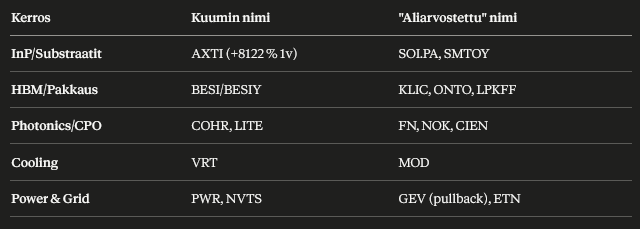
Summary of Claude’s picks:
55 Likes

A comprehensive start; Accelsius (2-phase cooling), which operates under Innvennture Inc, might climb to level 4 at some point.

This is a safer solution, and the swelling insurance premiums will decrease if this is used. It is a very fresh newcomer, though; Jim Liu will likely write a more detailed description in the near future.

Edit: ‘Comprehensive’ is probably a better adjective

6 Likes

A very simple “investment tip” for traders/investors. Although I like buying stocks into strength, stretched valuations and the massive frontrunning of the AI trend are cause for concern, and rightfully so.

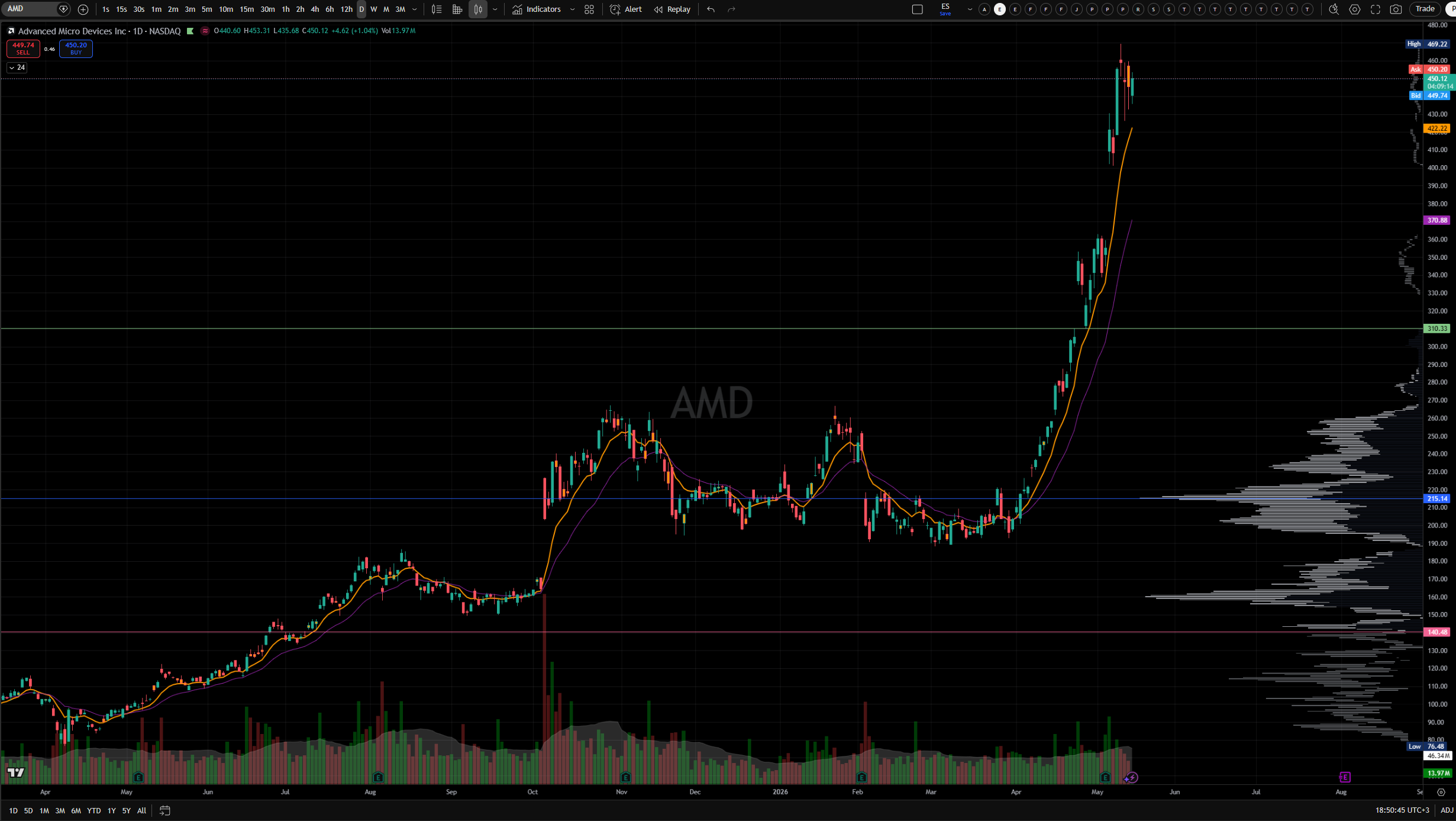
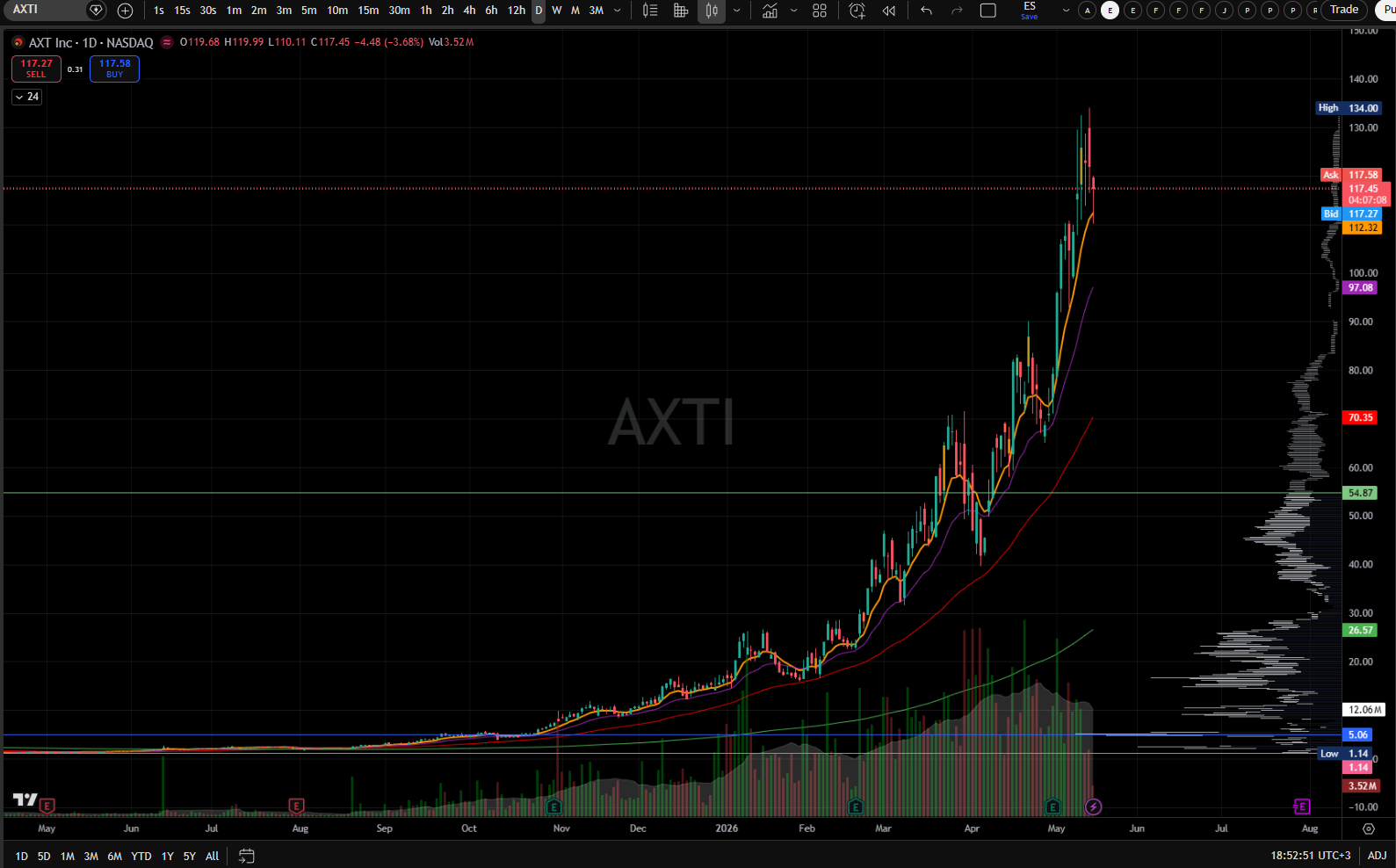
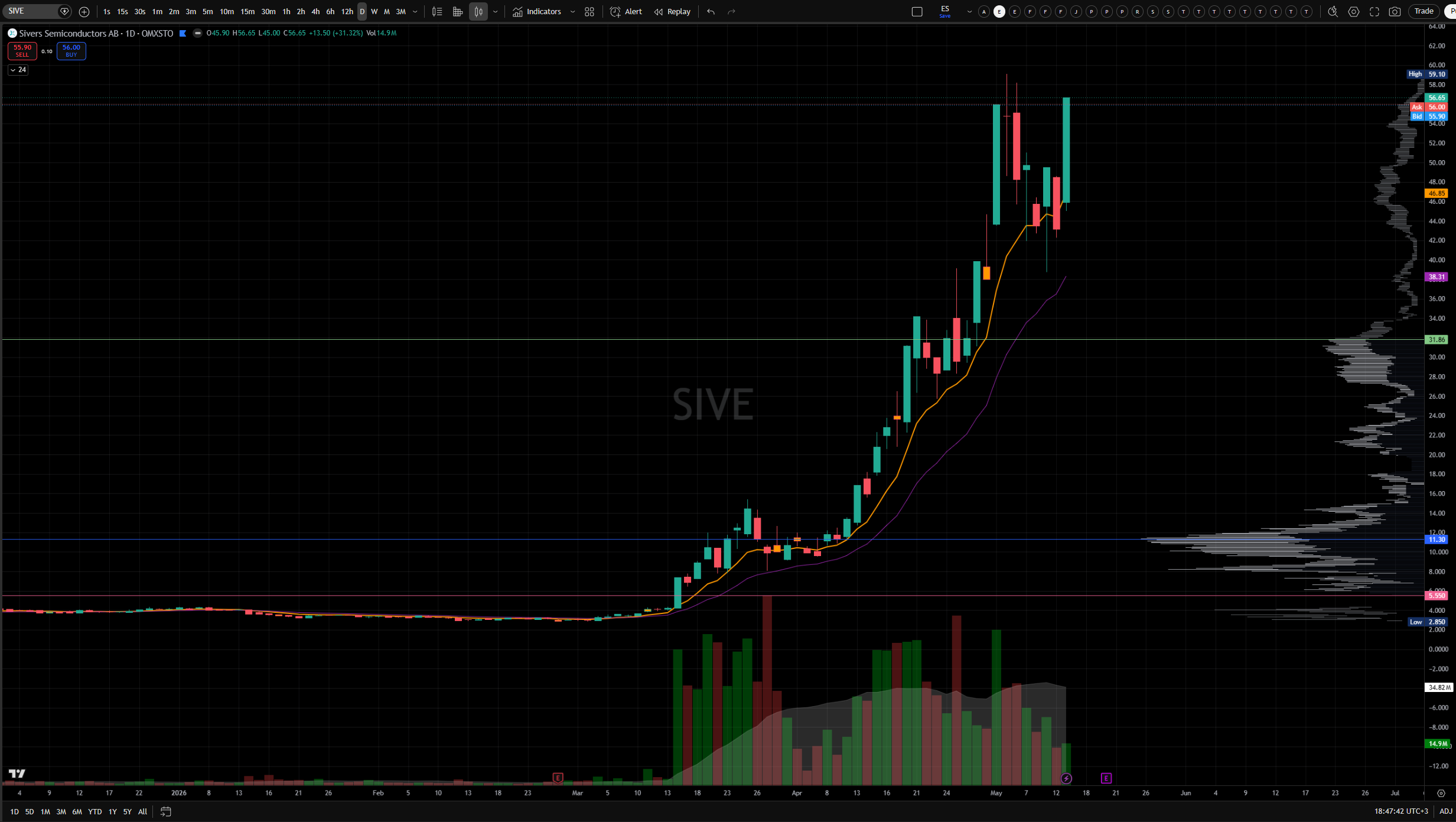
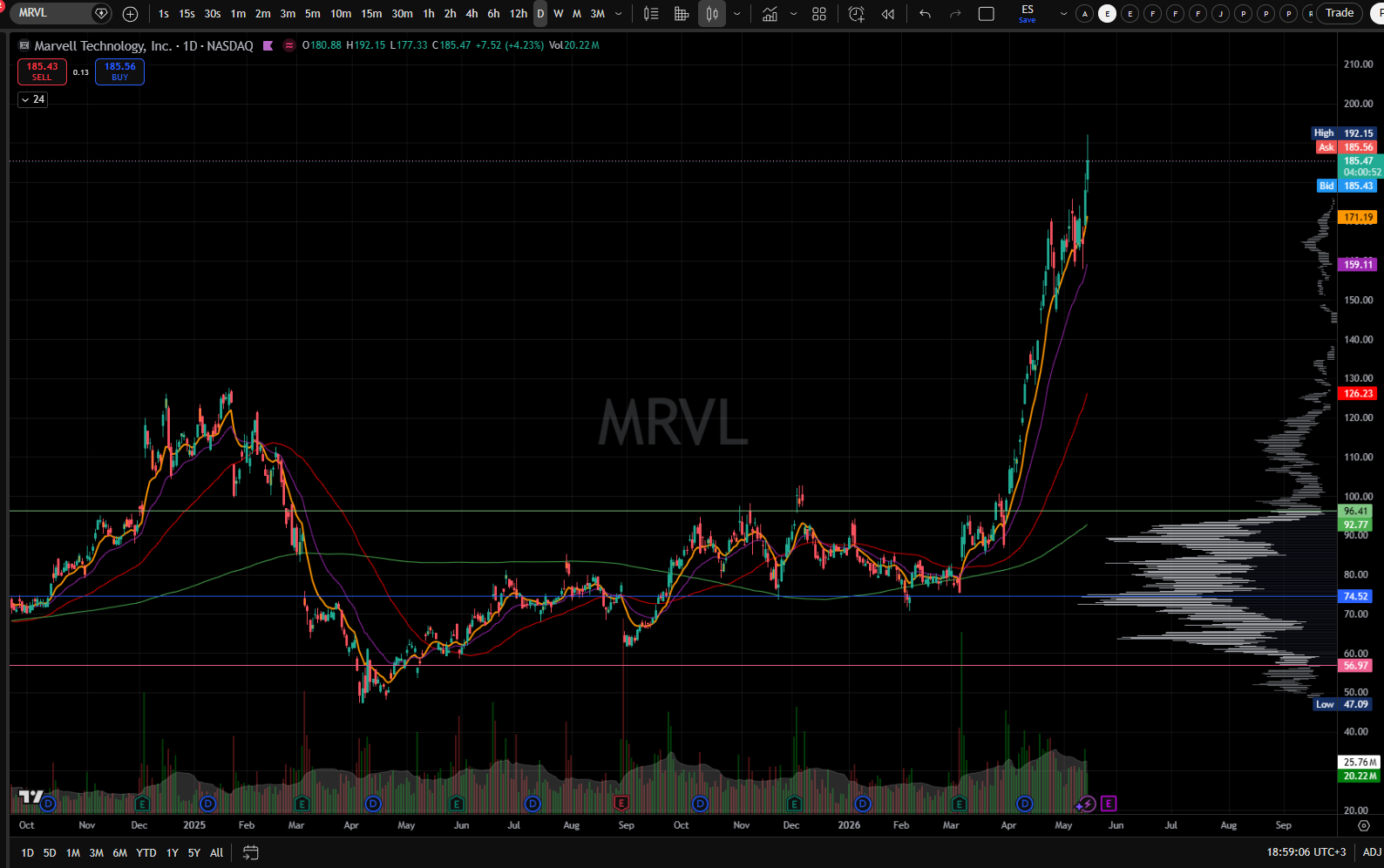
For this reason, it can be sensible to make an investment decision at the point when a desired stock in a very strong uptrend performs a so-called “pullback” to the rising daily EMA9 or EMA21 and bounces from there to continue its ascent. This usually reveals that the uptrend is set to continue and the momentary cooling off and selling pressure is over. If the EMAs start to flatten out, a consolidation may be ahead before the next move. These are pure rules of thumb in a clearly “bubbling” and historically strong bull market. Chasing stocks usually does not yield the best results unless the groundwork has been done properly.

Another point worth noting is that excessive over-analysis often leads to a situation where a basic value investor never manages to buy a single megatrend stock, and there is certainly nothing wrong with that. Sector leaders in a state of hype and powerful growth are very rarely cheap on paper, and share prices and multiples remain very tight throughout the growth phase. In March, many stocks were at very reasonable levels relative to their growth, and over the past month and a half, we have seen how quickly market sentiment can change.

Below are random examples of how stocks in hype/growth mode behave when they hit the EMA9 (orange) and EMA21 (purple) daily. As a rule of thumb, these turning downwards often causes selling pressure and triggers traders’ stop-losses. However, in a strong market, the rise has continued for several stocks once the uninformed and hasty momentum traders have been shaken out:

AMD

AXTI Inc (Red MA50 and Green MA200 Daily)

Sivers Semiconductors AB

Marvell Technology Inc (Red MA50 and Green MA200 Daily)

13 Likes

What kind of positions have you taken so far in this bull cycle/market? Which sectors interest you the most, photonics?

2 Likes

My largest position is the AI full-stack pure play Nebius (held for a long time), which I wrote about very extensively as recently as yesterday across several threads following their great Q1 results. My second largest position is AMD, and the third largest is the edge-focused microcap One Stop Systems (OSS). These are my so-called core positions.

Additionally, in photonics, I own AAOI and I sold my speculative positions in ALUM and POET; one slightly too early and the other slightly too late. I don’t have as strong a conviction or enough man-hours and background research put into those. My photonics watchlist has about 20+ names, many of which I’ve had trades in at some point. The sector is under very close observation. I will certainly open new positions in the sector, but I have also tried to concentrate my portfolio and find the so-called “sure winners” as well as stocks operating at lower bottleneck levels of the chain. So far, NBIS, AMD, and OSS have performed perfectly since before the rally and AI hype began, and I don’t want to trim them.

Other AI/foundry/chip players in the portfolio, partly acquired as technical trades in late March, include GlobalFoundries, ARM Holdings, and IONQ, which involve some speculation but where I still see long-term potential.

My most recent purchases include Pure Storage (P) and, acquired today, SOI, i.e., the French company Soitec SA.

In addition, the trading portfolio contains several smaller positions from my watchlist, many of which will likely grow into larger positions after further research. I usually buy a starter position as a trade at a technically sound entry point so that I’m motivated to research the stock much more thoroughly when I have at least some “skin in the game.” This has been a motivating strategy for years.

Fundamentally, however, I am interested in all the stocks mentioned in the opening post, and familiarizing myself with them will take a lot of time.

Regarding software stocks utilizing AI, I have looked into ZETA, MITK, and RTK, where I see potential especially if the war ends and economic growth accelerates. That could, of course, take a considerable amount of time, even years, but the stocks are all at levels that interest me and are performing excellently despite the weak market and sentiment.

22 Likes

I’ll ask the same provocative question that Altimeter’s Brad Gerstner asks his analysts regarding AI investments: why is company X a better investment than Nvidia? Is it driven by different factors? If not, why not just invest more in Nvidia?

Personally, I have diversified more broadly into semis and tech in general through ETFs, while simultaneously trying to capitalize on the blatant undervaluation of memory companies relative to their future earnings figures. However, regarding many companies (including those listed above), I have reached the conclusion that in the end, they are exactly—or at least 95 percent—the same bet as investing in Nvidia.

8 Likes

9 Likes

That is true.

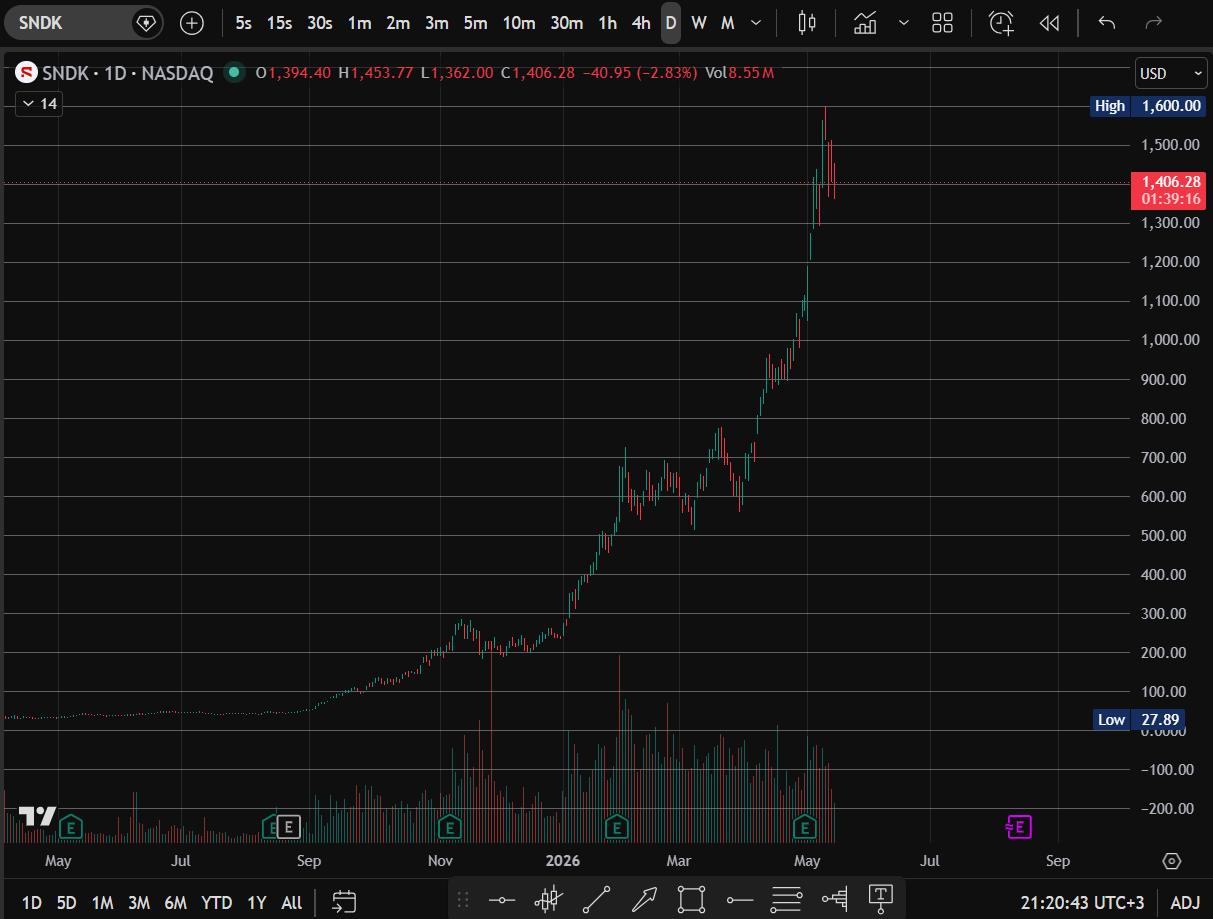
That ugly spike from top to bottom is -15%. The rise from bottom to top is about 4500%. Nvidia has its work cut out for it to jump 40x at its current valuation.

So, it seems you forgot where different firms are in their life cycles :man_shrugging:

9 Likes

I brought up Sandisk mainly because it hasn’t really been tossed around by any tariff wars or similar political agendas; instead, the company management themselves were surprised by the order backlog, and WDC has probably even started to regret the IPO price a bit :+1:

So, this has come as a surprise to everyone, including the owners of these beneficiaries.

Edit: stock market history; Western Digital originally bought Sandisk off the exchange and then brought it back through an IPO in 2025

4 Likes

One aspect of bottlenecks is considering how long they take to solve and how difficult they are. Ultimately, in this matter too, we are just turning bits into more efficient bit combinations and atoms into more efficient atom combinations. The solution blocks are thus all around us. :smiley:

In line with the theme of this thread, reflection is also complicated by rapid technological change, as all players search for new solutions. At the same time, each chip generation is staggeringly more powerful than the last.

As I understand it, NVIDIA has every incentive in the world to solve these bottlenecks as quickly as possible. For example, in a recent interview, Jensen remarked that all bottlenecks directly related to AI factories (fabs etc., as I understood it) are solvable within 2-3 years. I believe cooling, optics, etc., also fall into this category.

On the other hand, a bottleneck everyone knows about is energy production. There are already five-year backlogs for gas turbines, based on what I saw in Vernova’s materials. Although, one would think that over a timeframe of years, more and more gas turbines can be cranked out. Because if they can’t, and since AI is such a lucrative business, these data centers will eventually go as far as sourcing generators from the local hardware store to get the job done.

14 Likes

I wrote in another thread earlier that, for example, the data center projects featured in Talouselämä are hardly reflected in electricity price forecasts. In other words, investors are not hedging the price of electrical energy. If they knew they were going to be purchasing hundreds of megawatts—much like the steel industry, for instance—one would think they’d be interested.

This says something. It is either a lack of faith in the growth of data center capacity measured in megawatts, a lack of familiarity with the electricity market, or simply indifference.

10 Likes

My experience in the semiconductor industry is that the supply chain issues and price hikes caused by COVID have never returned to normal; instead, COVID served as a perfect excuse for the semiconductor industry to raise prices. Even today, you see lead times that are incredibly long, whereas before COVID they were still somewhat reasonable. Furthermore, Trump’s own actions in Iran are leading to continuous problems in the semiconductor industry. Just today, I quickly read an article stating that the price of hydrofluoric acid, a very common chemical in the semiconductor industry, has risen significantly recently. There are hundreds of these examples, not to mention what China has done over the last few years regarding rare earth metals that, for example, ASML needs for its equipment.

I bet a giant player like TSMC has solved these issues or can at least predict them based on the news, but at least here in Europe, we are struggling with constant chaos. When you add the massive current demand to the mix, the problems are not going to ease up over the next few years. There is a song that goes, “a hangover is coming, but I decide the day”—that will hit semiconductors eventually. I bet NVIDIA will be the one to decide the day.

13 Likes

Indifference may decrease once legislators start requiring a pre-agreed electricity deal as part of the permitting process, one that is aligned with the region’s power transmission capacity. Fortunately, an overreach already occurred in the “American wonderland” that might wake up decision-makers.

Lake Tahoe is a well-known remote mountain lake resort with 45,000 permanent residents. It has produced 25% of its electricity via local solar power, while 75% has been purchased from a single electricity wholesaler. Now, it turns out that AI factories offered a better price for that electricity.

They don’t know what to do now, as the existing contract is under threat of ending, and connecting to the national grid would require hundreds of millions in transmission infrastructure investments. You can find more detailed information by Googling, or just ask the AI. :wink:

4 Likes

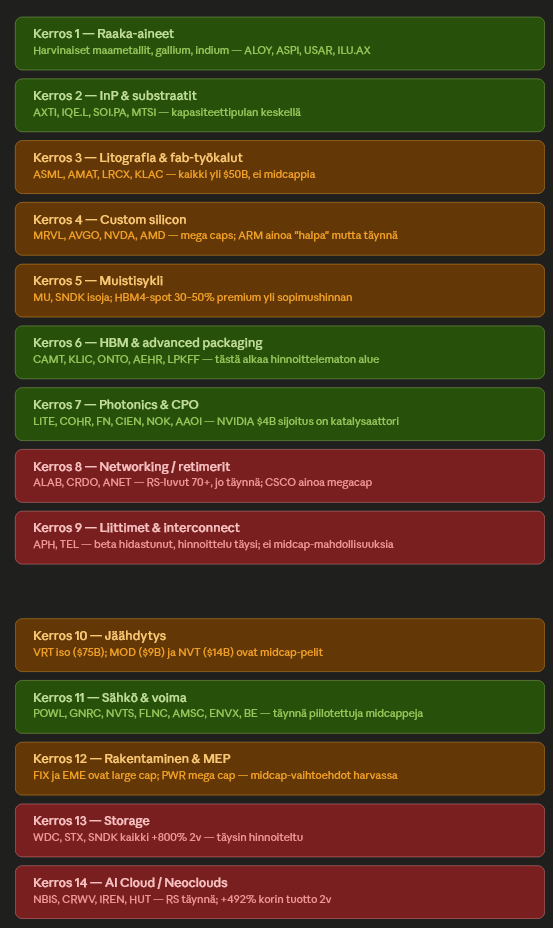
Today, as 95% of my own bottleneck watchlist is in the red and many stocks are testing their daily EMA9 and EMA21 levels due to factors like inflation fears, I am publishing a preliminary AI bottleneck table that illustrates the different layers as simply as possible. Refining and detailing this is my next task; this is a first draft of where I begin researching individual stocks and which ones I plan to move to my condensed TOP 20+ watchlist. I will consider opening starter positions in these, especially if the decline continues or consolidation begins heading into the summer.

For many bottleneck stocks, the drivers are set for late 2026 or starting from 2027, extending well toward the end of the decade. Many companies are currently solving bottlenecks for the years 2027–2028, and the market has been front-running them. Almost all data and several companies’ earnings reports support the fact that many of these drivers and bottlenecks are genuine.

For example, a recently opened monitoring position in the French company Soitec and the 10 hours spent researching it revealed how critical Soitec’s wafers and their moat-providing manufacturing technology are as photonics evolve and new standards take effect in late 2026, and as the EV recession likely eases during 2027. The research is so extensive that I won’t summarize it here yet, as I still need to organize it for myself. At this stage, I am focusing on the second layer, i.e., 2. InP & substrates. The next interesting layer is energy, i.e., 11 “electricity and power.”

22 Likes

I would like to remind you that several players in Japan and Taiwan produce SOI or CSOI wafers; our former listed company Okmetic also specializes in these. I understand, of course, that Soitec is perhaps the largest, but I see that SOI and CSOI are quite competitive.

7 Likes

I have personally worked with SOI and CSOI for the last 15 years. You clearly seem to know the market, though. In my books, the sector is very niche and sometimes it’s perhaps difficult to understand who possesses the deepest moats.

9 Likes

Among European companies, ABB and Siemens AG are interesting names. Both are involved in and benefiting from the development of AI infrastructure and power grids in the US.

Tailwinds for these companies are likely also coming from the ramp-up of the European defense industry.

A couple of random picks from recent news:

"
Siemens invests $165 million to expand U.S. manufacturing for AI infrastructure

New and expanded manufacturing facilities strengthen Siemens’ capacity to power the rapid build-out of data centers across the United States

Investment builds on nearly $700 million Siemens has committed over the past several years to expand local U.S. manufacturing capacity, including new and expanded electrical products facilities in Pomona, California, and Fort Worth, Texas

Siemens is investing more than $165 million to expand manufacturing capacity in the United States, strengthening the company’s ability to produce electrical infrastructure needed to support the rapid growth of artificial intelligence and large-scale data centers."

"
ABB raises 2026 revenue targets after Q1 orders hit $11.3B record on data center surge. AI power boom drives 18% revenue jump, margins at 23.5%. Investor alert on grid tech goldmine.

ABB Ltd just ignited a wake-up call for markets chasing the AI infrastructure wave, lifting its full-year 2026 revenue outlook to high single-digit to low double-digit growth after Q1 orders exploded 32% to a record $11.3 billion. This isn’t random luck, it’s the raw force of data center mania, where ABB’s power grid tech is becoming the unsung hero powering hyperscale AI factories amid surging electricity demands."

8 Likes

Regarding bottlenecks, I read this critical piece as a morning treat concerning how quickly data centers are actually being completed at the moment.

The text is full of juicy verbiage and sharp stabs, so it’s worth enjoying as a whole. :smiley:

In principle, the entire piece can be summarized in this sentence: “Jensen Huang has managed to sell the greatest pre-order campaign of all time.” :smiley:

Apparently, it is very difficult to concretely determine the status of data centers under construction, and in the author’s opinion, the information and statements are often contradictory.

So, I have two very simple questions to ask: how long does it take to build a data center, and how much data center capacity is actually coming online?

These simple questions are surprisingly difficult to answer. There exists very little reliable information about in-progress data centers, and what information exists is continually muddied by terrible reporting — claiming that incomplete projects are “operational” because some parts of them have turned on, for example — and a lack of any investor demand for the truth. Hyperscalers do not disclose how many data centers they’ve built, nor do they disclose how much capacity they have available.

I find this utterly inexcusable, given the fact that Amazon, Google, Meta and Microsoft have sunk over $800 billion in capex (and more if you count investments into Anthropic and OpenAI) in the last three years.

So I went and looked, and what I found was confusing.

The difference between a “partially completed” and a “finished” AI data center is unclear…

By all means prove me wrong! It’s so easy! Just show me a data center announced or that broke ground in 2023 and find obvious proof it turned on. I’ll even give you credit if it’s partially open!

The problem is that I keep finding examples of “partially complete” and those are the only examples of “finished” data centers.

Isn’t this a little insane? This is all we’ve heard about for years, everybody is ACTING like these things exist at a scale that I’m not sure is actually true!

The “bubble card” has been played. If data centers are delayed by years, or if ramping up those gigawatt-scale behemoths takes even longer, then a massive front-run has been taken in chips and everything else right now. In this case, hyperscalers are tying up massive amounts of capital in these without them generating the cash flows expected by investors! :smiley: This would be a catastrophe for AI investments.

Something doesn’t line up, and it’s exactly the kind of misalignment that happens in a bubble — when infrastructural reality disconnects from the financials. NVIDIA is making hundreds of billions of dollars and it’s unclear how much of it is from GPUs installed in operational data centers. It feels like Jensen Huang might have run the largest preorder campaign of all time.

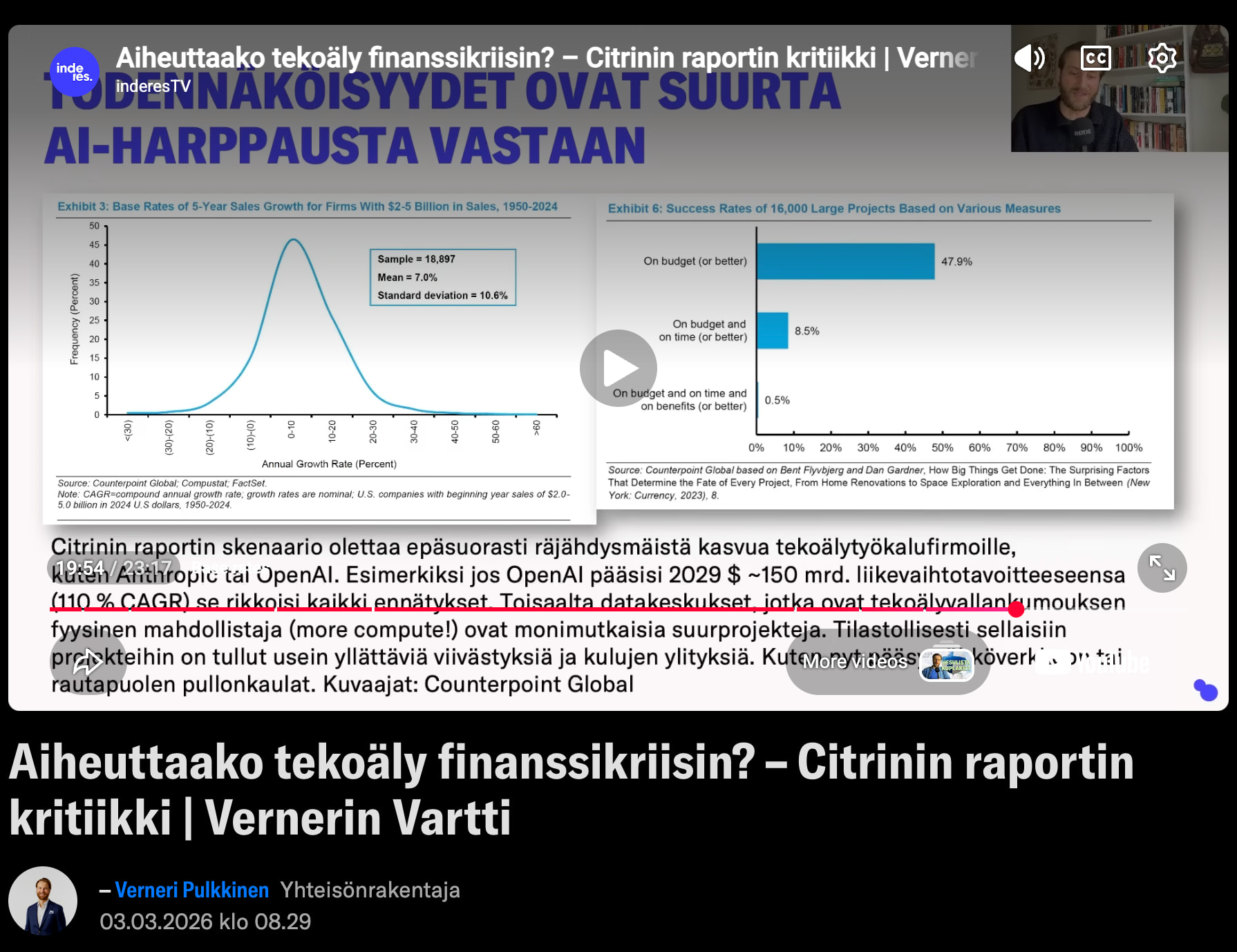
This text reminds me of a previous point I brought up in Vartti: large projects often face massive delays. I have been under the impression that, in principle, data centers have been built for decades and therefore the skill of construction itself is well-mastered. But admittedly, the scale of these “AI factories” is something else entirely, and likely connecting tens of thousands of chips isn’t quite so simple inside those soulless box buildings.

23 Likes

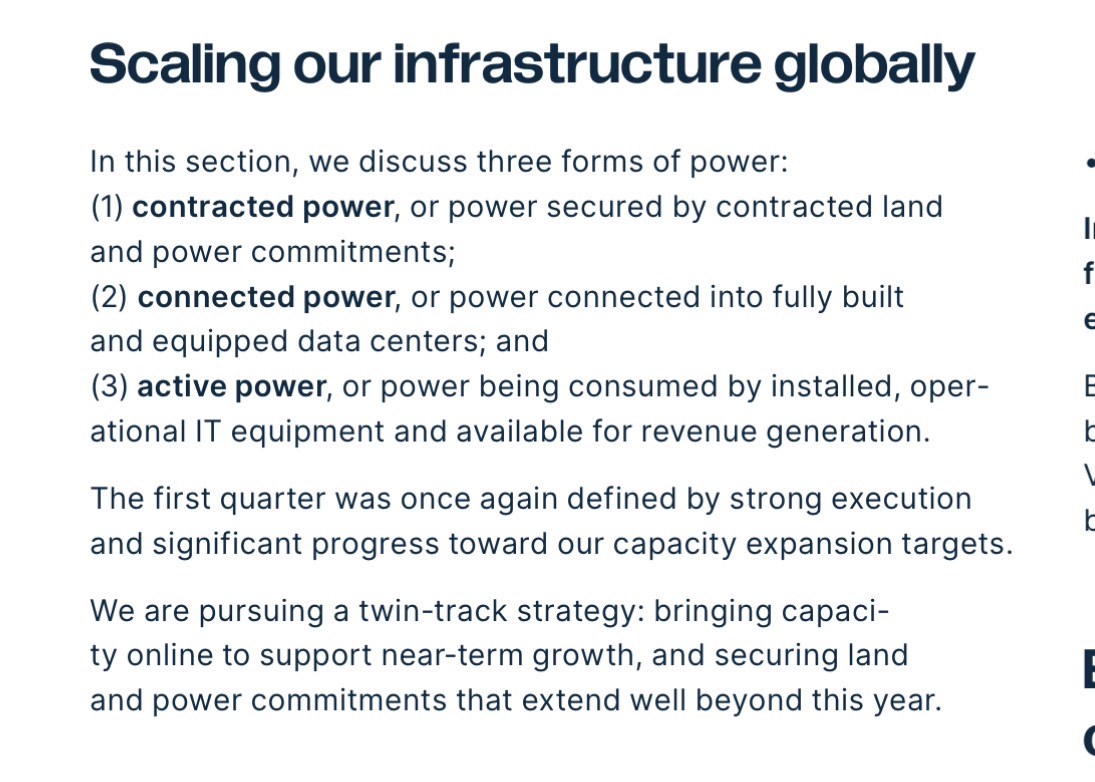
Regarding Em’s post, Nebius tried to clarify the situation in their quarterly letter:

Currently: ” We continue to expect 800MW to 1GW of connected power by year-end.”

And:

”Our contracted capacity now exceeds 3.5 GW, with owned capacity representing more than 75% of the total.

Given this momentum, we are raising our contracted power guidance to more than 4 GW by year-end, ”

However, the amount of ”Active Power” was not provided in that paragraph…

14 Likes

I asked Grok how hyperscalers’ depreciation and amortization (D&A) have increased in 2025 compared to 2024. Amazon +24%, Microsoft +53%, Alphabet +38%, and Meta +20%.

Similarly, according to Grok, comparing Q1 2026 to Q1 2025, depreciation is projected to grow: Amazon +32%, Microsoft +77%, Alphabet +44%, and Meta +54%. So, at the very least, depreciation is on the rise. It will be interesting to follow these in the coming quarters.

5 Likes