Energy Crises in Finland and Europe

Europe’s energy crisis, and especially the price of electricity, has been on many people’s minds and in their discussions, particularly in recent weeks. The topic is very significant at both societal and household levels, so I believe it deserves its own thread.

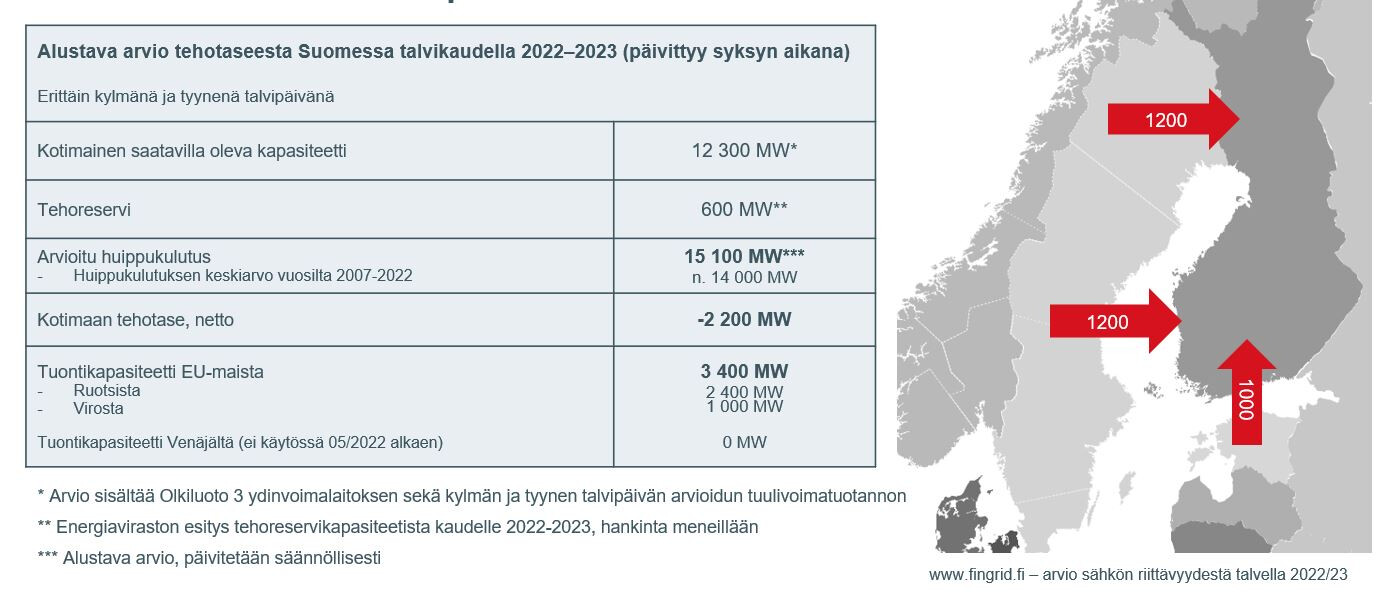
The following assessment by Fingrid of the winter power balance gives, in my opinion, a good picture of the situation: In a good scenario, there will be enough electricity, but it is also not unrealistic that rotating power outages may have to be resorted to. The biggest question marks are Olkiluoto 3’s transition to regular electricity production, winter temperatures, autumn rainfall in Sweden and Norway, and potential electricity export restrictions from Norway.

There are many interesting questions. Will rotating power outages be necessary? What will be the price of electricity this coming winter? How will households and businesses cope, and what will be the ripple effects on the economy? How much social unrest will high electricity bills cause? How long will uncertainty and high volatility continue?

By the way, a lot of information can be found on Fingrid’s website, it’s worth checking out! There’s a lot of open data available, and someone who works smoothly with data could certainly create all sorts of visualizations of the situation.

46 Likes

I myself have always preferred fixed-term electricity contracts, even if it hasn’t necessarily been the cheapest option. Usually, contracts have been renewed quite close to the expiry of the old contract, but this year I made a new contract as soon as possible for the period starting at the beginning of April. A three-year fixed-term contract at around 8 cents per kWh was made then. In a couple of locations, the renewal of old 4.4-cent contracts will come up next spring, but fortunately, these are not significant addresses in terms of electricity consumption. Unlike the contract renewed this year, which applies to an electrically heated apartment.

Out of curiosity, I have been following the price development of fixed-term contracts in comparison services, and it’s been wild. Many major electricity companies, most recently Vattenfall this week, have stopped offering fixed-term contracts altogether. The cheapest two-year contract would currently start at around 30 cents.

We live in interesting times.

If I try to reduce my own electricity consumption in a communal spirit, the first target would be an electrically heated 2000s terraced house, which is sometimes idle. And that reminded me of a question: does anyone have an expert opinion on how low the temperature in such an apartment can be safely lowered when it’s idle, with mechanical ventilation at its lowest power when the apartment is empty.

11 Likes

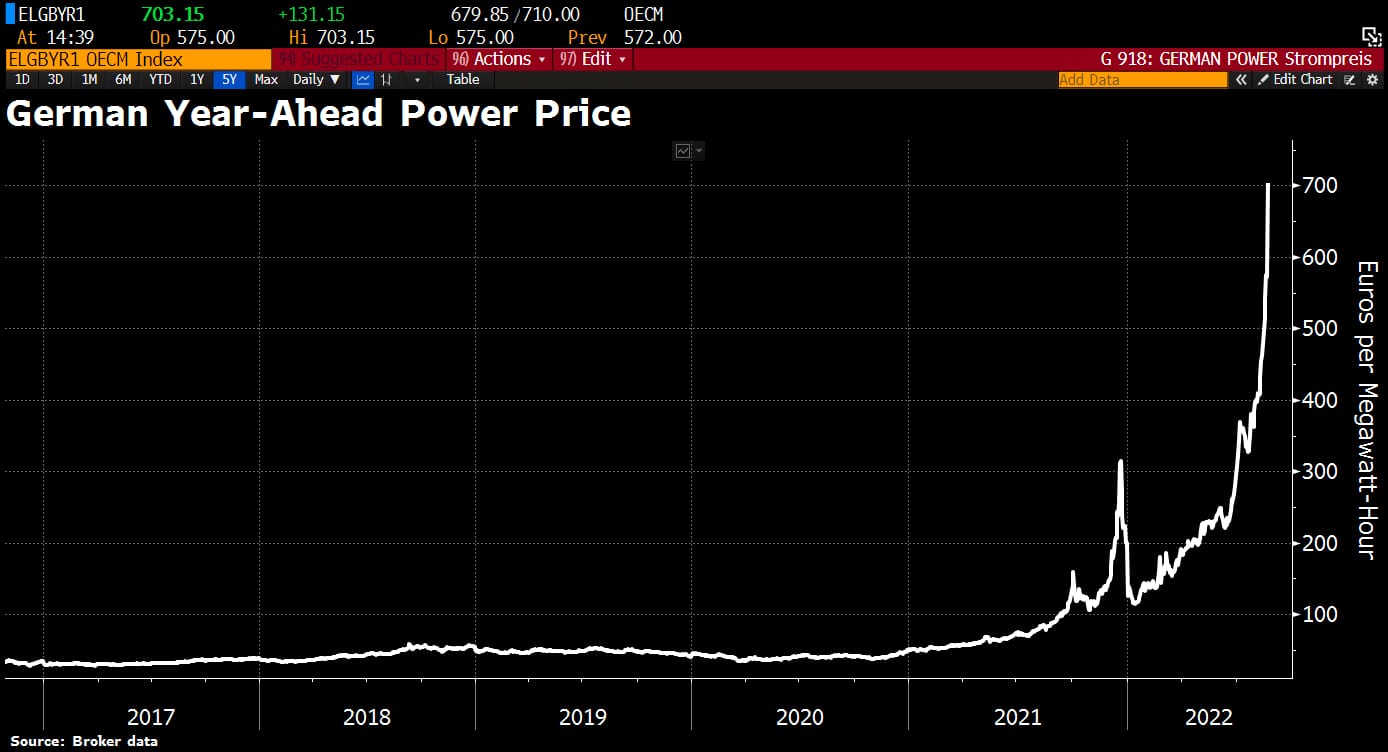
This is from less than a week ago. This mostly reminds me of Qt in 2020-2021, but unfortunately, it’s not it.

Additionally, France has already reached the 1k€/MWH level for the first time.

In Britain, experts have warned of potential civil unrest.

Let’s hope for a mild winter in Europe…

As for Finland, one factor is also, for example, the functioning of Sweden’s transmission connections. Fortunately, their disruptions are mainly short-lived.

10 Likes

https://www.tradingview.com/chart/rCUlxWWa/?symbol=NYMEX%3ADEBF2023

We’re flying high. Consumers won’t see this yet, but that day will come.

Hopefully, Norway will act wisely and not restrict energy sales too much, if at all.

6 Likes

It would be incredibly short-sighted and self-serving to start breaking up the Nordic electricity market, especially in this situation. In Norway, populists are gaining popularity by demanding that electricity produced in Norway be for Norwegians, as electricity prices have risen significantly. If Norway were to go it alone, the situation for neighboring countries would become complicated, and it certainly wouldn’t be good for Norway either. Finland and Denmark, which cannot produce the electricity they need themselves, would suffer the most.

Norway has sold electricity to its neighbors for billions in profits and, if it wanted to, could afford to compensate its citizens for electricity prices without restricting electricity exports—and it would still remain firmly profitable.

Today is a significant day in Finland, as OL3 is being restarted again, earlier than estimated today, after automation updates. Although the testing phase will last until early December, OL3 is already feeding over 800MW into the national grid, if everything works as expected. Fingers crossed.

30 Likes

An article from Helsingin Sanomat (Hesari) compiling different ways to lower electricity prices.

Measures proposed by politicians:

  • Increasing emission allowances or abandoning emissions trading altogether
  • Dismantling the power reserve of power plants
  • Demand-side flexibility in electricity consumption
  • Taxing the excessive profits of energy companies
  • Reduction of electricity VAT
  • Reduction of electricity tax
  • Electricity price cap
  • Increase in housing benefit
  • Reasonably priced electricity for everyone for basic needs
  • Reform of the electricity market model
  • Energy subsidy distributed to low-income individuals

It’s not hard to tell which are the left’s proposals and which are the right’s :sweat_smile:

15 Likes

It’s so pathetic that Finland is at the mercy of others when it comes to electricity!
Why don’t we have more of our own capacity?
There would be places for hydropower, but green nitpicking prevents it.

Go to the Tornio River. When you look at the Swedish side, peat is renewable; in Finland, it’s not, thanks to Ohisalo and Iiris Suomela.

Natural gas is fossil, but environmentally friendly when Germany and France depend on it… this is pathetic.

Finland needs to build more electricity production urgently. With these future prices, all projects are profitable.

30 Likes

What other free-flowing rivers are there in Finland, besides the Simojoki, that could still be dammed?
Destroying that last river won’t solve the energy crisis.

Yours, fish-hugger

34 Likes

Let’s start with the Vuotos (Vuotos wetland area) so we can get more capacity for a dozen different dams

Not everything can be reasoned with. A river that is already dammed and the Vuotos area, which is nothing but wetlands, is apparently an insurmountable problem.

5 Likes

We could get more out of the hydropower plants that have already been built, though this naturally requires investment.
I live a kilometer away from a hydropower plant, where water is bypassed practically all year round. So, with the amount of water, we could probably get one more turbine running…
Then, when you look at the Kemijoki and Ounasjoki rivers in the north, there are a lot of kilowatt-hours flowing freely.

Even now, south of Rovaniemi, the bypass gates are probably open.
They take what they can get from the power plant so that the price of electricity remains sufficiently high.

The same bypass operation works in Imatra too. I’ve been there as a tourist, watching the bypassed rapids roar.

Hopefully, investments in hydropower will also be considered.
Norway is celebrating with the help of hydropower… they have built more than they need, Finland has not.

4 Likes

Let’s get some nuclear power going, damn it. If Finland were smart, it would build those modern small modular reactors (SMRs). We’d become completely self-sufficient + could sell electricity too. A small plant like that takes 1-5 years to build? And an exception would be made for permits, given these times.

We’ll easily get through this crisis if everyone pitches in and uses electricity sparingly. I have exchange electricity, and I’m definitely not getting a fixed-term contract. I can play the price to my advantage in the long run. I also bought an IVLP (integrated ventilation and heat recovery unit) which dropped my consumption from 25,000 kWh → 5,000 kWh. When heating with wood during peak weather, that’s a maximally good system.

28 Likes

In Finland, hydropower has been built to its maximum capacity, considering environmental values. Much has also been lost in exchange for clean hydropower. Imatra was brought up in the discussion, although it does not have great significance in hydropower production. But the damming of Vuoksi was a huge blow to the nature of the area. Before the construction of the Imatrankoski hydropower plant, there were almost 20 rapids in Vuoksi. Not anymore.

Comparing Finland to Norway doesn’t quite work, as Norway is blessed with natural water energy reserves in addition to all other energy sources, which also do not burden nature in the same way as Finland’s hydropower construction.

Finland’s future lies in renewable energy. Solar power will remain in a single-digit margin, even though the Greens started making a fuss about it this week. In Finland, solar power is not a particularly sensible investment, except for small producers in the exceptional circumstances we are now living in. However, every panel on the roof is always a good thing.

On the other hand, a lot of wind power is still being built. The output of wind power naturally varies, but it still covers a significant part of Finland’s energy production. The Nordic market is based on balancing the situation across the Nordics. It’s always windy somewhere. As an artificial example… additional wind energy produced in Finland or Denmark can be used to fill Norway’s water reservoirs, and when the wind calms down in Finland, Norway’s hydropower will produce electricity here again.

Wind power would urgently need energy storage solutions alongside it. Next year, on an excellent day, wind turbines will cover up to 40-50% of Finland’s energy needs during the daytime, but even more so at night.

It would be great to see news about investments in, for example, wind/hydrogen combinations or massive energy storage solutions in general.

Nuclear power would, of course, be a good solution, but the next nuclear power plant would only come into operation years after the current crisis is over in one way or another. Small modular reactors (SMRs) are possibly a lighter/faster solution, but it is certainly worth waiting until at least one such plant is built somewhere in the world. Their delivery time is not a few years, and the whole idea is mainly at a conceptual level. The normal output of a single small power plant would, based on current concepts, remain at the level of 50MW and 200MW, and would at most be “only” 300MW. Nuclear power still has its own risks and difficulties.

37 Likes

https://www.imatra.fi/uutinen/2022-05-12_koskinäytökset-2022

Today there’s still a rapids show in Imatra. I recommend it to everyone who is within a reasonable distance, just go there.

Storing hydropower is difficult, sometimes there’s too much water and in winter too little…

And as Timo Soini said on Yle’s Jälkiviisaat (Afterthoughts): When it rains too much in Norway, the price of electricity goes up, and when it rains too little, the price of electricity goes up…

5 Likes

Finnish bureaucracy doesn’t proceed with real-world requirements in mind…

I agree that SMRs will be a good solution to this problem in due course. They are really safe and can produce electricity/district heating, whatever is most sensible at that particular moment.

4 Likes

Wind power should be evenly distributed throughout the country. Most of the capacity is in Ostrobothnia, so fluctuations in wind conditions are quickly noticeable. So, more to the south and north. There might be more in the east too, once we join NATO and get more advanced radar there.

8 Likes

A park with 15-19 mills is coming to Suurikangas in Luumäki. That’s pretty much southeastern Finland :wink:

6 Likes

My thoughts on the energy crisis are twofold:

On the one hand, it’s clear that Europe will experience a crunch as production methods and supply chains will be under pressure in winter.

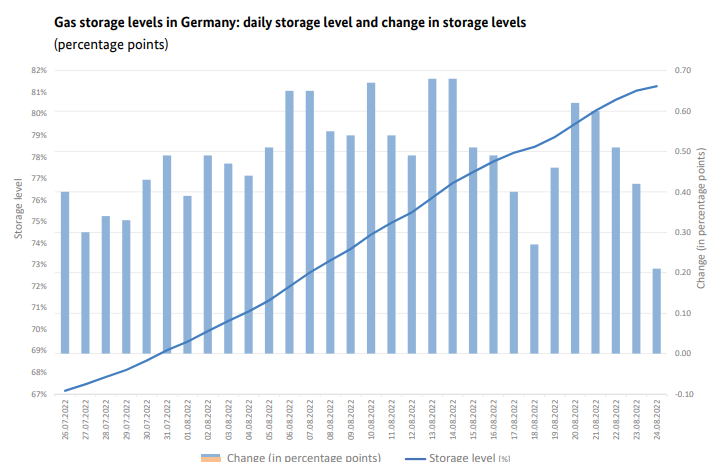
On the other hand, Germany’s gas storage levels are historically good. And the probability of getting through the winter is, in my opinion, clearly increasing. It currently looks like Germany’s gas storage facilities could reach 90%. Consumption will start to accelerate in October, but the biggest change will occur in November. Currently, about 0.3% per day flows into the gas reserves. So, a 90% or even almost 100% scenario seems possible.

This gas storage is not currently driven solely by gas from Russia.
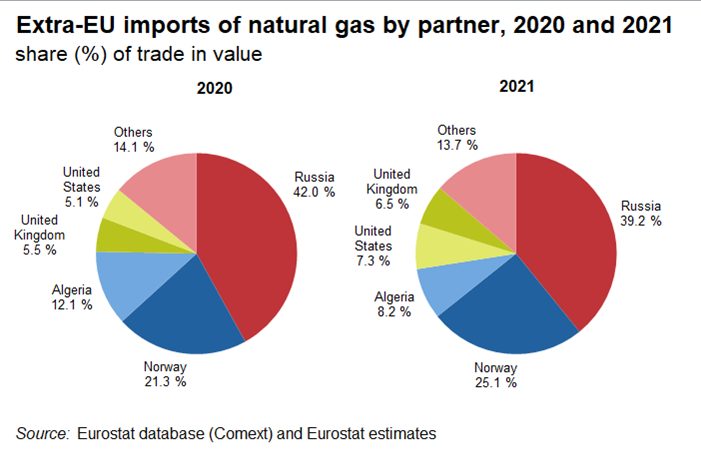
Even before the crisis, Russia’s share of EU gas imports was about 40%.


(Eurostat, 1.)

Regarding Germany’s gas imports: Looking at imports in recent weeks, the gas comes almost entirely from elsewhere.
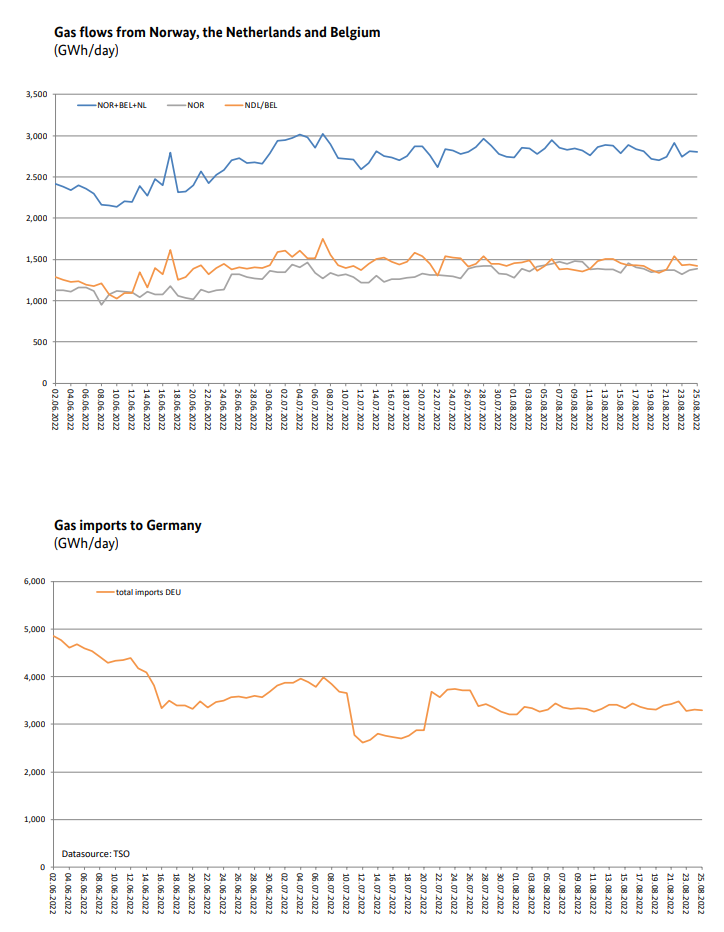
Notable are also larger flows from, for example, Norway. These flows are approaching 3 TWh/day.

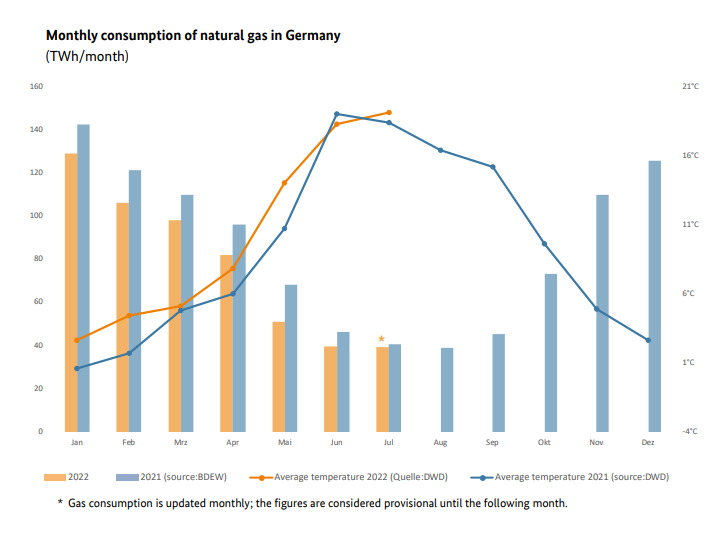
Germany’s average winter consumption was about 4.5 TWh/day as a winter (November-April) average.
In recent weeks, about 3.5 TWh/day of gas has flowed into Germany.
The current 200 TWh storage would therefore be sufficient for the winter if no major changes in gas imports occurred. These storages should hopefully grow by another 10-15%.

Gas imports from Russia to Germany are at a very negligible level. A total of about 600 MWh/day. So, merely cutting off Russian imports would no longer be enough to freeze Germany.

On top of this, there is also so-called demand destruction and energy saving measures.
In 2022, energy consumption has been clearly decreasing, and German industrial gas consumption decreased by -21% in July!!!

July is different from winter months. And industry =/= country – > But the elasticity of demand gives me a positive impression that energy will be sufficient. One should not underestimate the market economy’s ability to adapt in crisis situations.

Source:
https://www.bundesnetzagentur.de/EN/Areas/Energy/Companies/SecurityOfSupply/GasSupply/Downloads/08-Aug_22/20220826.pdf;jsessionid=212C72FE8795DC19A29A87D4FE7AE5C1?__blob=publicationFile&v=3

The situation is different in Finland:
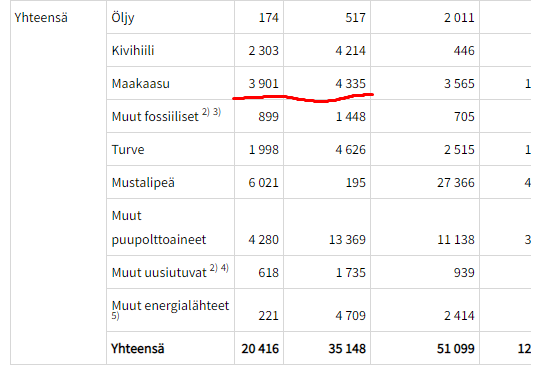
Gas, oil, and coal cover about 20% of our combined heat and power production.
Most of this is combined electricity and heat production, as these processes achieve a high efficiency of up to 80%.


(Statistics Finland)
In addition, we have condensing power production, but its share is so small due to the low efficiency of condensing power that I do not consider it here.

The start-up of OL3 production would almost completely cover the share of natural gas in Finland.
However, despite the situation, Finland will still receive natural gas, albeit at a higher price.

In addition, we import electricity in winter, and the price of this electricity will be higher.

A topic we can return to later.

But to my eye, it seems that amidst all this negative commentary, Germany appears to be getting through the winter. I would point out that Germany is different from Europe. But I consider the public commentary perhaps overblown.

Would I change it? No. It is important that we implement these energy-saving measures and save energy. Both for the upcoming climate crisis and the current gas crisis.
The only way to get people to take these actions is through strong public discussion and demand.
The current changes in the energy crisis are important for our societies for the future as well.

A 2C drop in temperature or skipping sauna sessions and other measures are a small price to pay for peace in Europe. Electricity saving measures must be taken.

But maybe we’ll get through it. I’d like to end this post with words dear to me, but freely translated from Warren Buffett. (https://www.nytimes.com/2008/10/17/opinion/17buffett.html)
“Buy European”
“If you wait for the robins, you’ll be too late.”

pps. Feel free to address factual and opinion differences. It’s good to be aware of my own logical errors.

An interesting thread on the topic.
https://twitter.com/moldvayendre/status/1562818364887552001?s=20&t=WaARpMs4Bcl9nMFtiXhDuA

1: EU imports of energy products - recent developments - Statistics Explained - Eurostat
39 Likes

There isn’t really space in the south, unless one wants just a couple of power plants here and there. It’s more cost-effective to put a dozen or more in the same area.

1 Like

No space? When you take off by plane in Vantaa, all you see is forests and fields. Immediately

Of course, larger entities can be built in the north, and with fewer people, there is less room for NIMBYism. Considering the big picture, better geographical coverage would still be a good thing.

9 Likes
1 Like