Warren Fyffet’s blog has a good summary of Kondratieff’s economic theory.
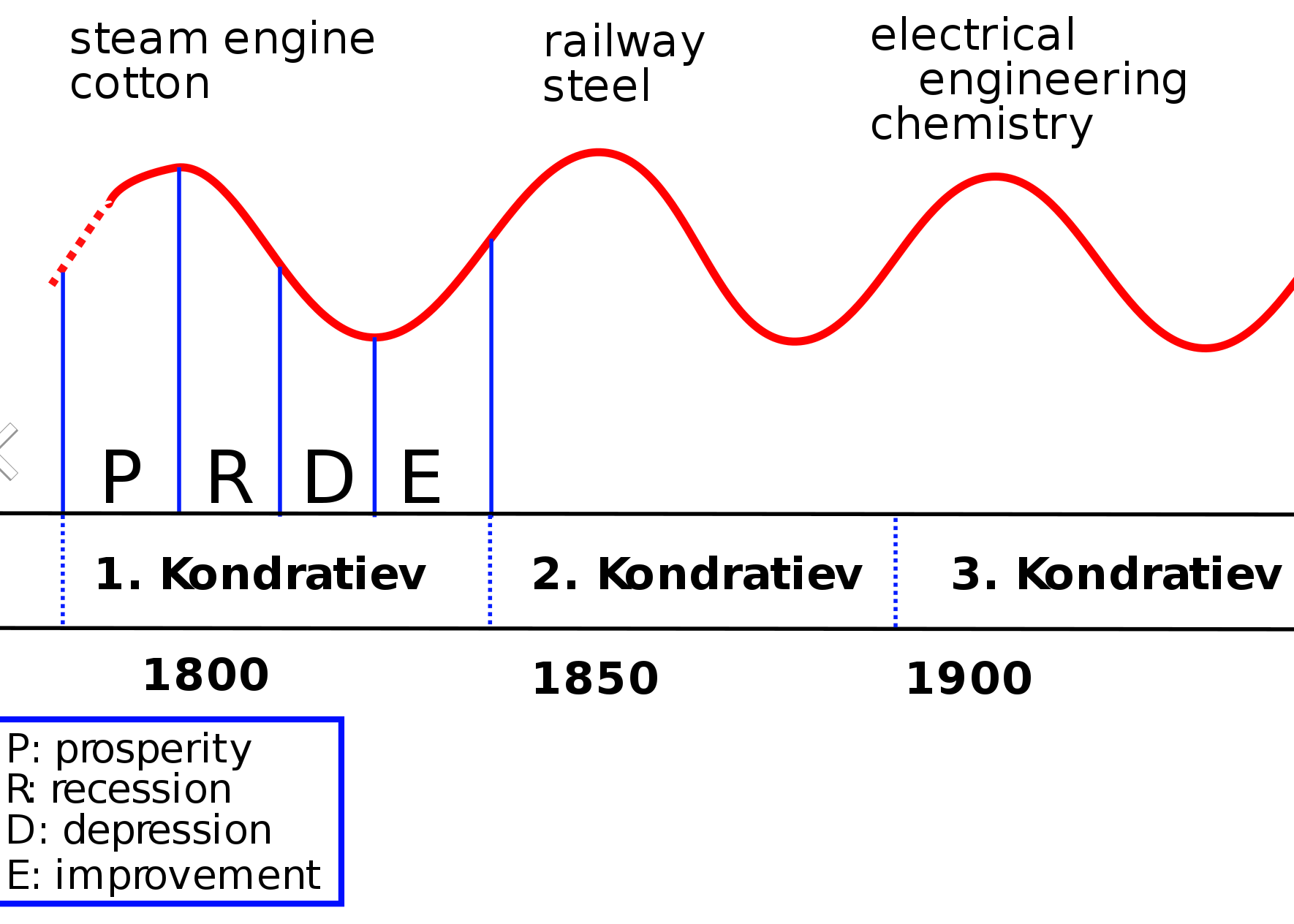
According to Kondratieff, economic development can be divided into four periods, each characterized by different economic features:
K-spring
K-summer
K-autumn
K-winter
Periods particularly favorable for stocks are spring and autumn.
In winter, stocks perform weakest.
It would be interesting to hear what phase everyone thinks we are in now? @Marianne_Palmu’s view is of particular interest.
Since the growth of indebtedness has been rapid for a long time and interest rates have fallen incredibly low, I have a feeling that we are now moving from K-autumn to K-winter.
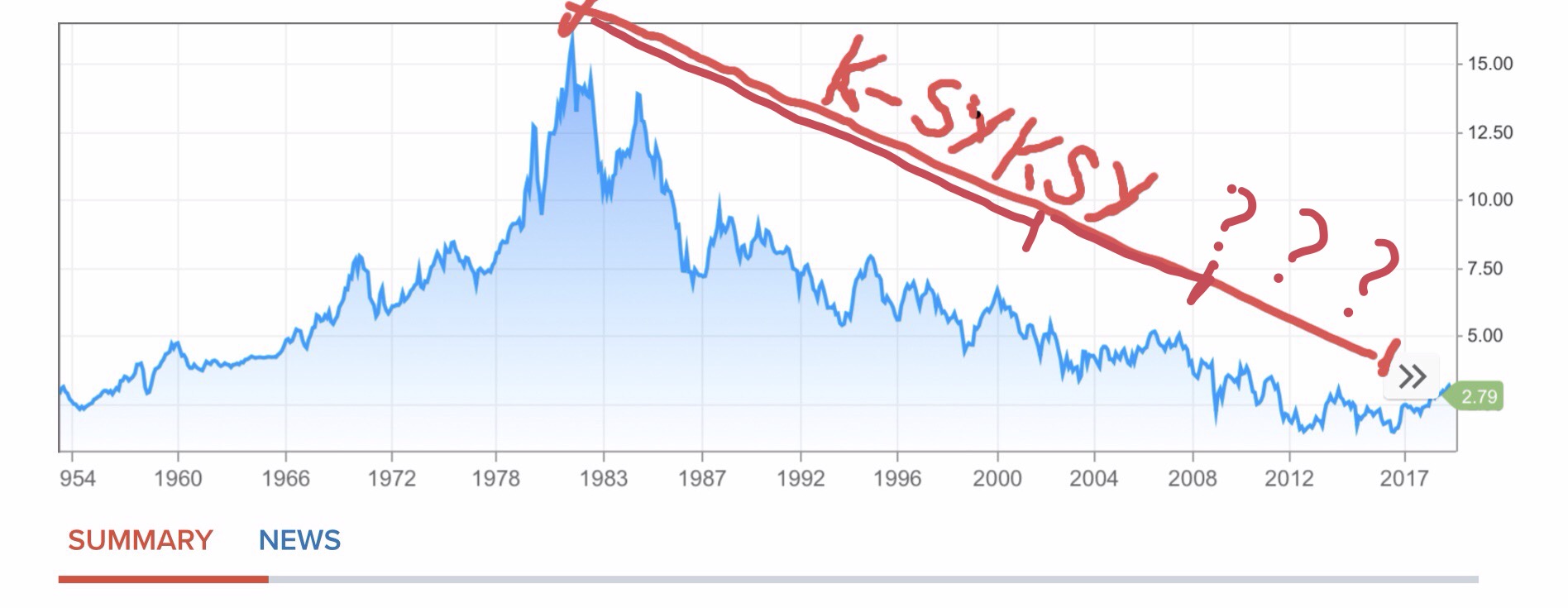
Interest rates were at their highest in 1982, when K-autumn began. Since then, interest rates have been falling, meaning K-autumn has been ongoing. Now, therefore, it would be time for the next phase, where we transition into Kondratieff’s wintering mode, when the accelerating increase in debt will come to a halt.
According to some interpretations, K-winter would have already been ongoing for a good while (financial crisis, etc.)
The image clearly illustrates the characteristics of the K-seasons.
Here is a description of the K-Winter and the US 10-year interest rate over a long period:
K-Winter
This period begins at the endpoint of K-Autumn’s indebtedness, where society can no longer reasonably take on more debt. Asset values are at their peak. Society gradually descends into an ever-faster downward spiral, where disinflation turns into deflation, and asset values fall as debt is violently wiped out of society – back to reasonable limits. Simultaneously, with deflation, the price/wage structure flexes back, and protectionism is at its peak. This is a phase lasting 15-25 years, from which society will eventually transition back to K-Spring. Debts have been wiped out through bankruptcies and economic disasters, and the price/wage structure has also returned to a state where society can only be maintained by working. An asset-heavy economy is nowhere to be seen.
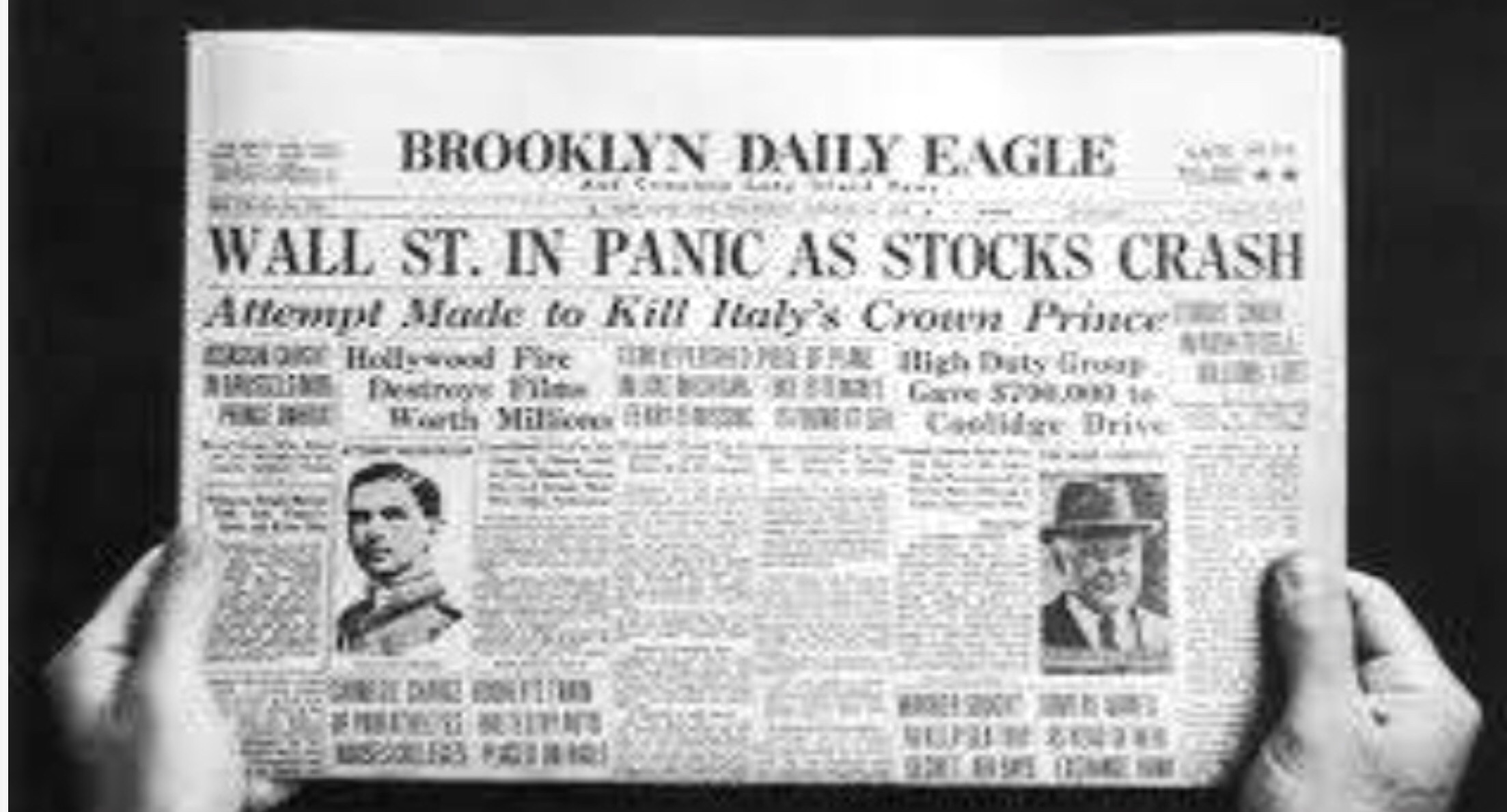
The last time K-Winter began was in 1929 and lasted about twenty years.
Not exactly a prime period in a stock investor’s life…
US 10-year interest rate:
The end date of K-Autumn and its transition to K-Winter is unknown.
The more I think about the whole picture, the more convinced I become that we are already living through a K-winter.
In the US, the credits of mortgage holders (sub-Prime, Alt-A, etc.) have been brutally killed, and vast numbers of debtors have been evicted from their homes over the last 11 years.
The accelerating increase in reckless indebtedness had, in a way, reached its endpoint.
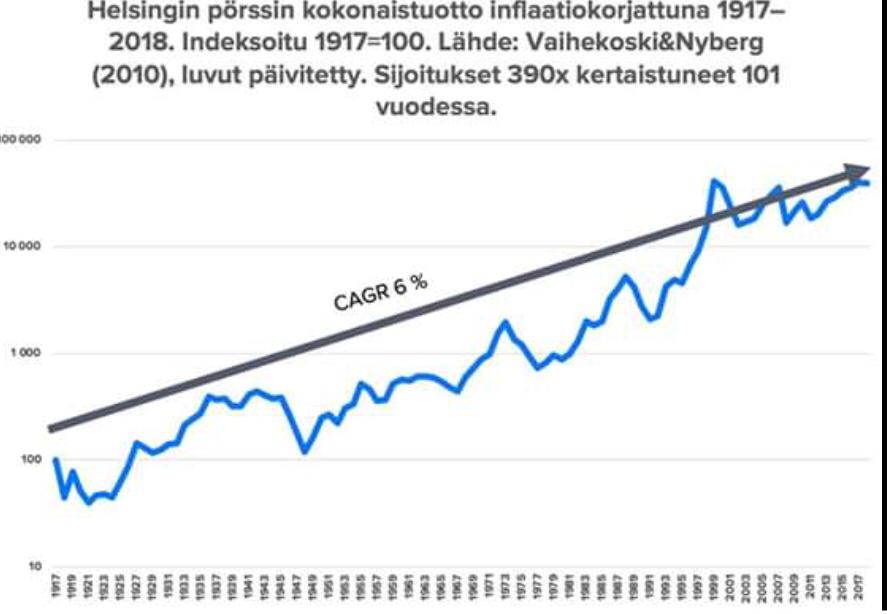
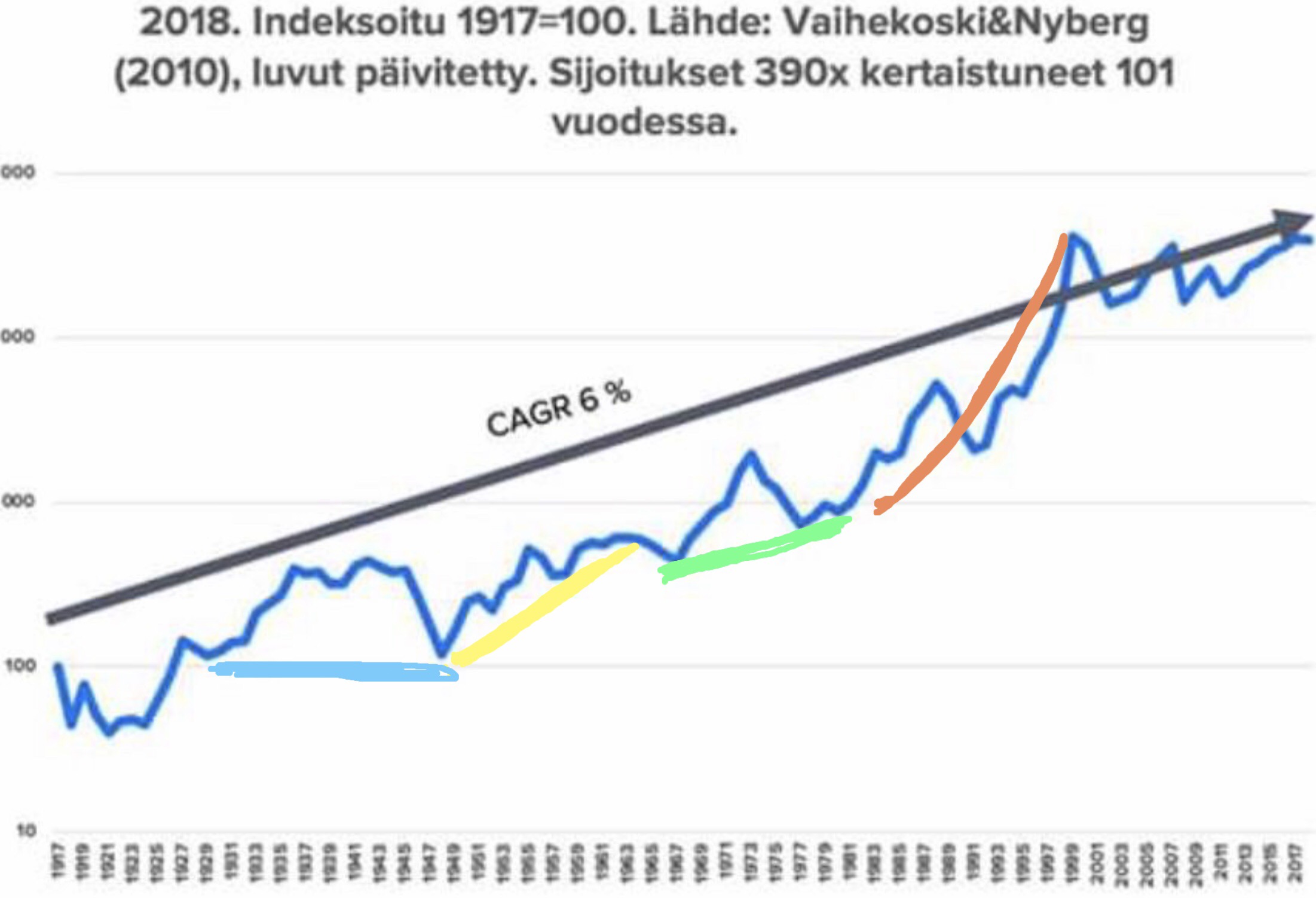
I marked the previous winter, spring, summer, and autumn in the image below as periods.
Blue = K-winter
Yellow = K-spring
Green = K-summer
Brown = K-autumn (the end of which is unknown)
According to Kondratieff’s theory, spring and autumn are the best seasons to be invested in stocks.
Based on this, during K-spring, the total return on stocks in Helsinki has increased 7-8 fold from the starting point, and during K-autumn, perhaps 30-fold (or at least several tens of times, it’s hard to guess the exact number blindly from the logarithmic scale you provided).
Not bad. You can also make decent returns in summer and winter if you manage to avoid the worst downtrends. Overall (from start to finish), spring and autumn have offered significantly better total returns.
…and let’s add now that Kondratieff’s theory is not directly based on stock market returns, even though the ripple effects of the economy’s “seasons” naturally extend there as well.
Rather, Kondratieff’s theory is based on the relationships between inflation, interest rates, wages, purchasing power, savings rates, debt levels, etc., and the consequences of their changes.
One consequence is that stock markets perform differently in different K-seasons. One cannot expect K-autumn returns from a K-winter.
At worst, a K-winter can be concretely chilling in its effects and a significantly difficult period in people’s lives.
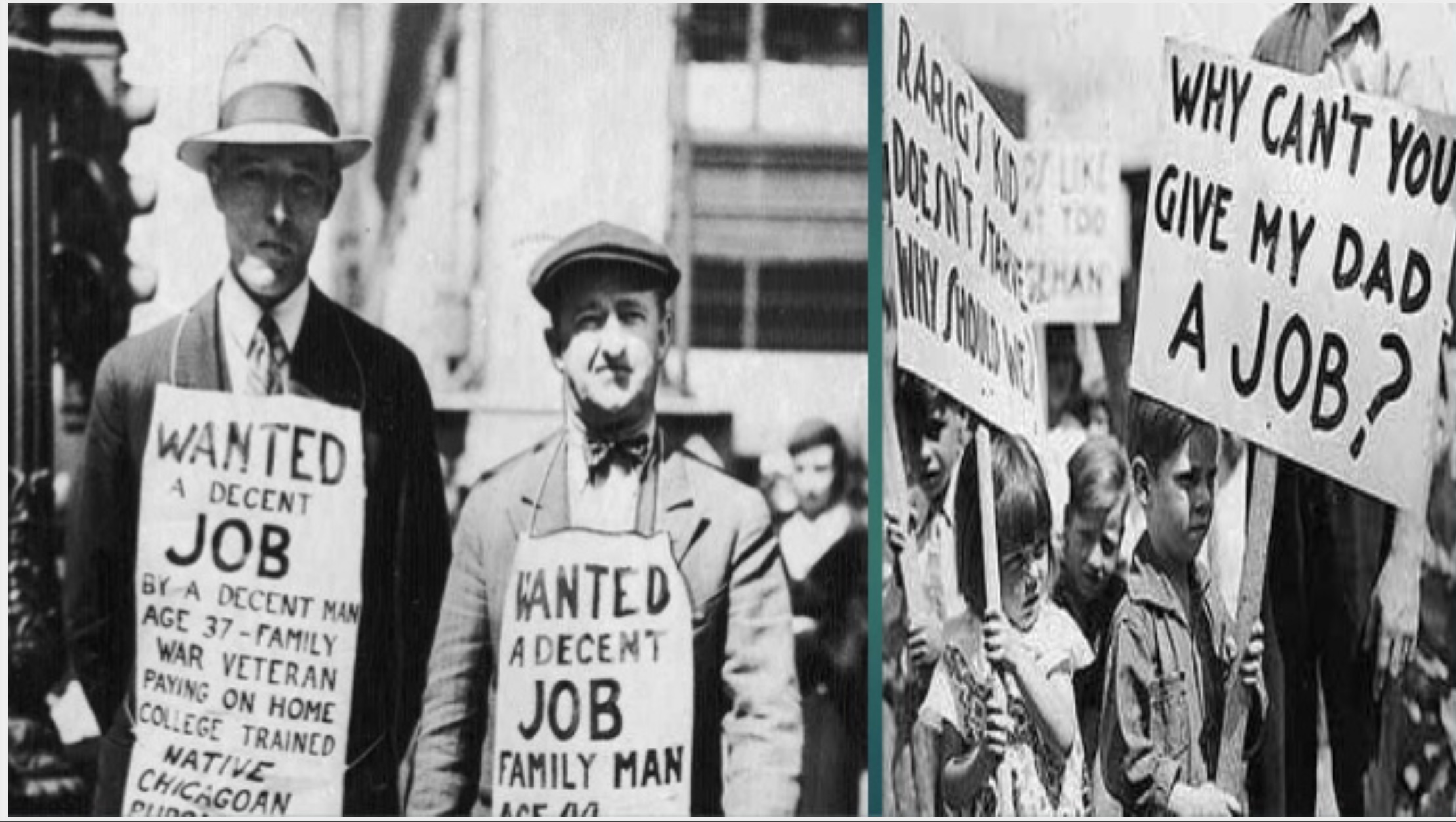
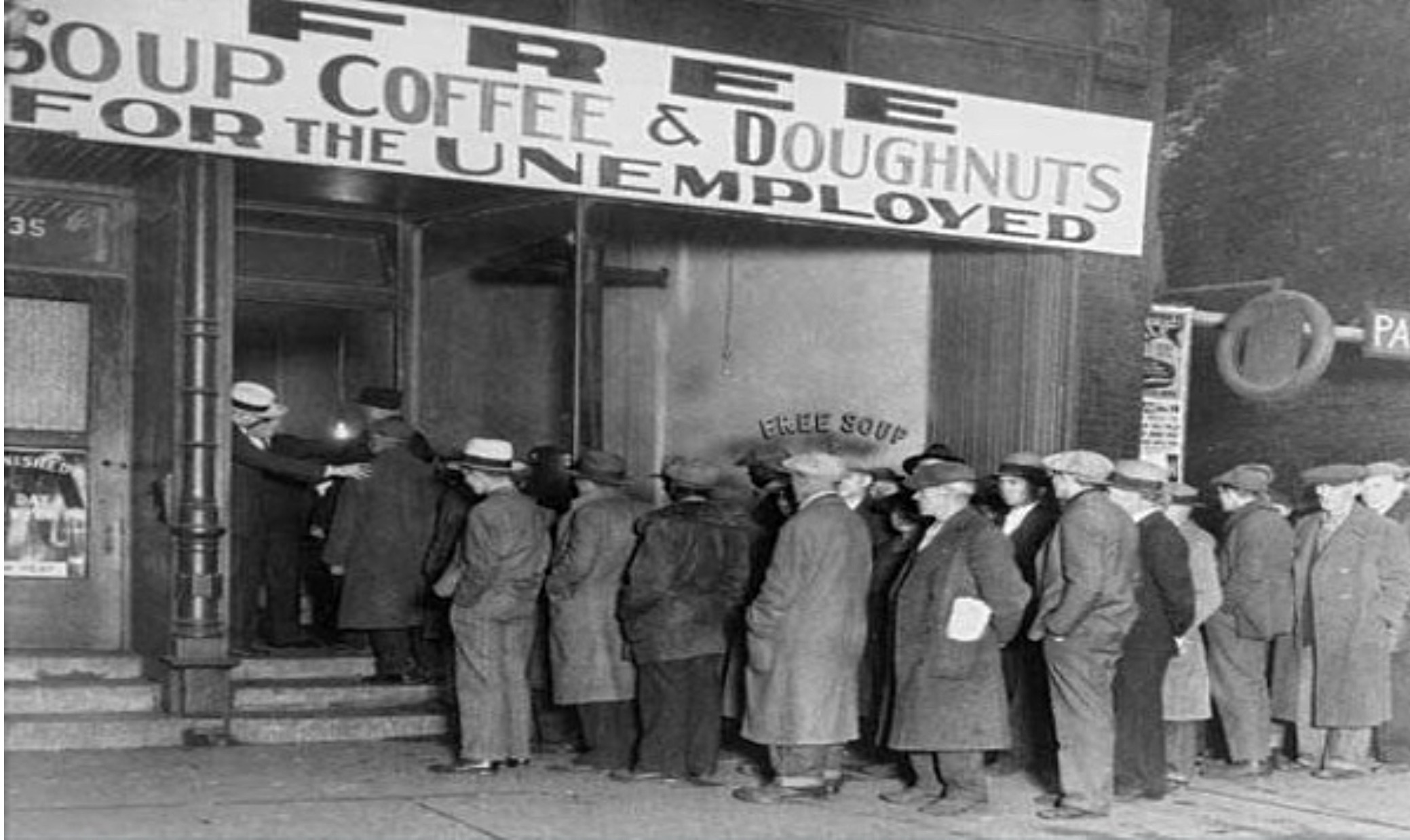
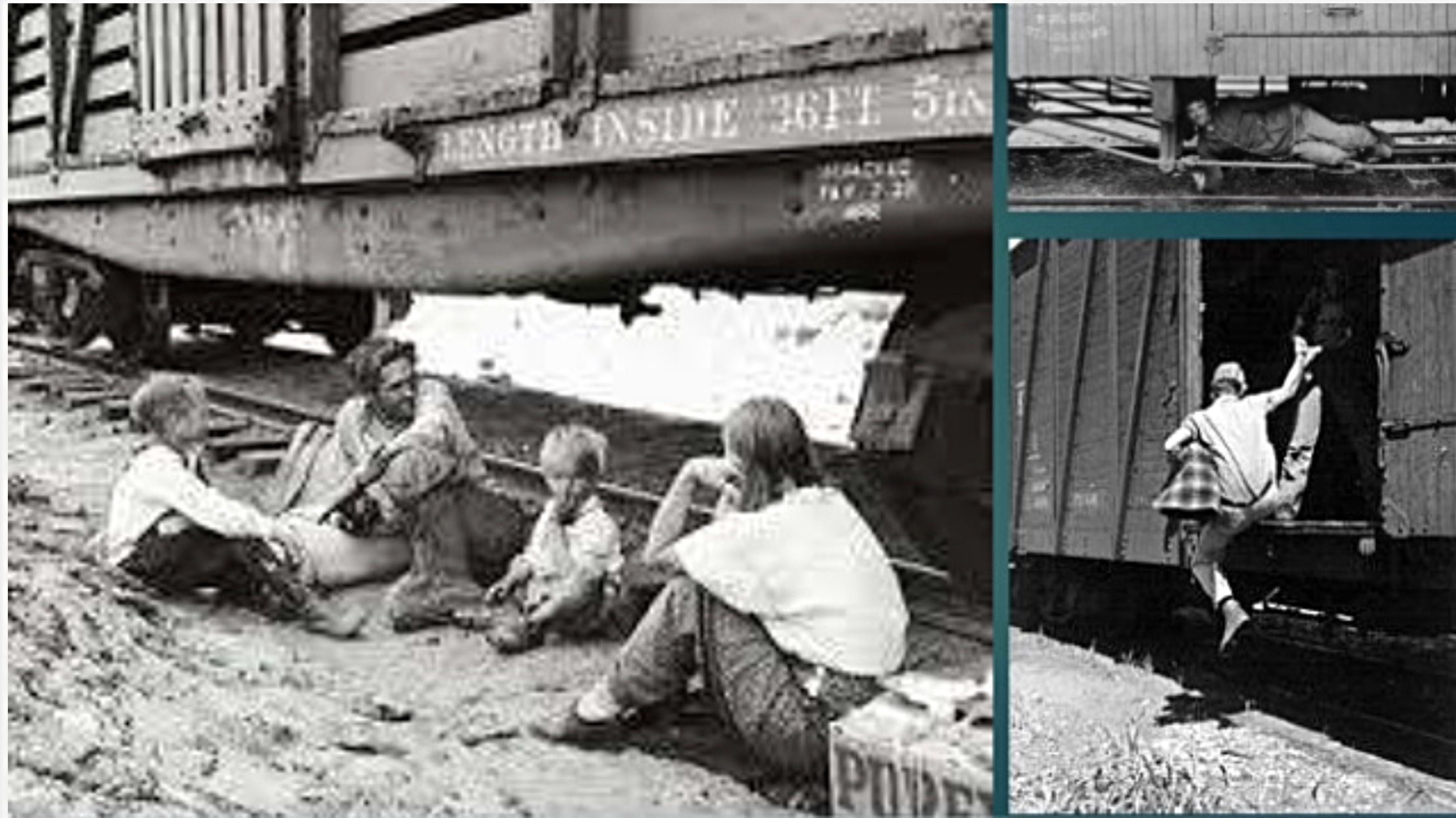
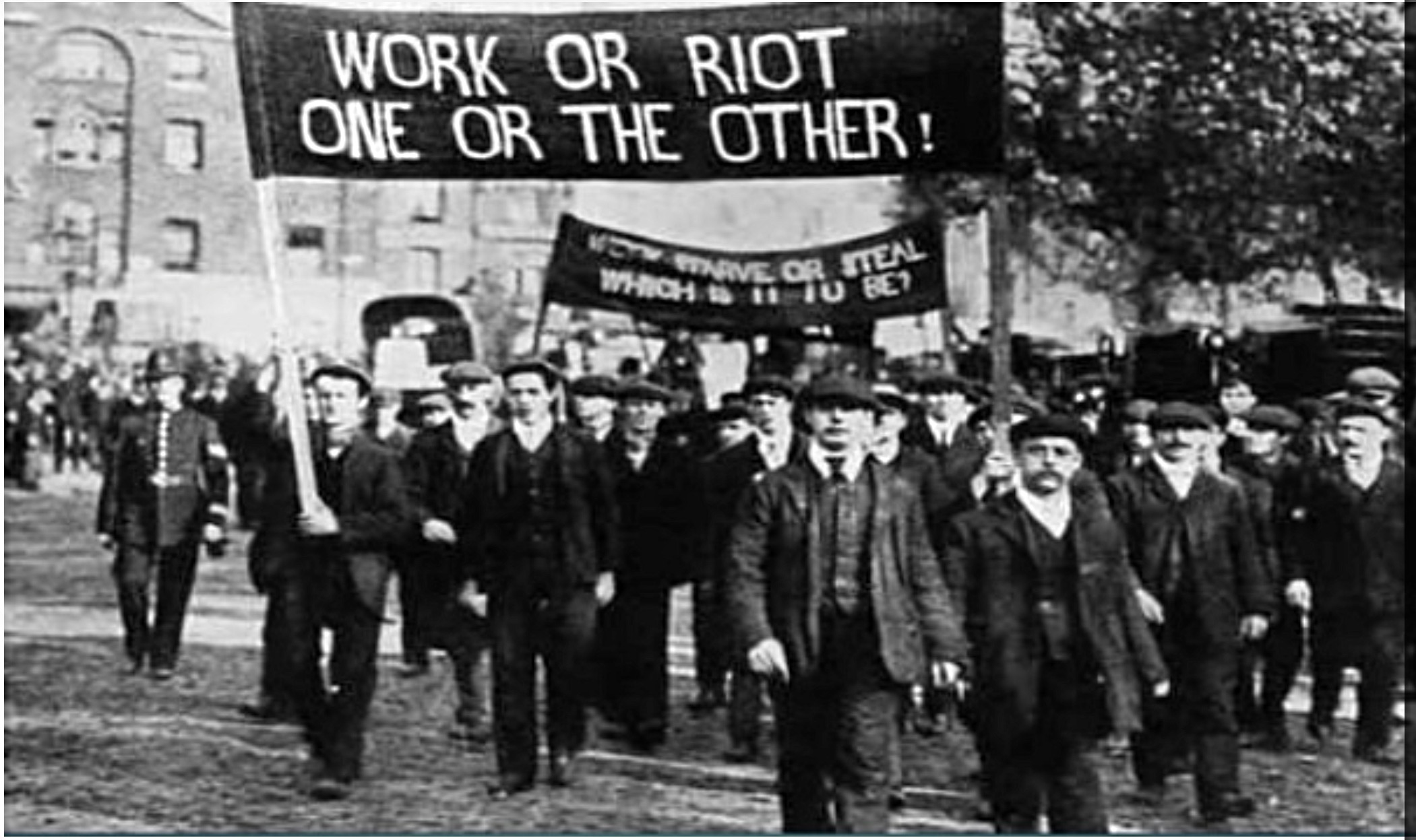
One can read about the Great Depression of the 1930s, which plagued the United States in the early part of the previous K-winter (1929-1949).
So, that was the last time a K-winter occurred; now it has either already begun or is about to begin.
When it can be a period of even a quarter of a century, identifying its start with pinpoint accuracy, even to within a year, is not easy.
As long as the debt-to-GDP ratio is rising, which is characteristic of K-autumn, the autumn is not over.
Now it would be interesting to get data on the development of US household debt-to-GDP ratio. Could @Marianne_Palmu find data? Were the peaks in the 2008 financial crisis, or is household debt still growing rapidly in relation to GDP?
Edit.
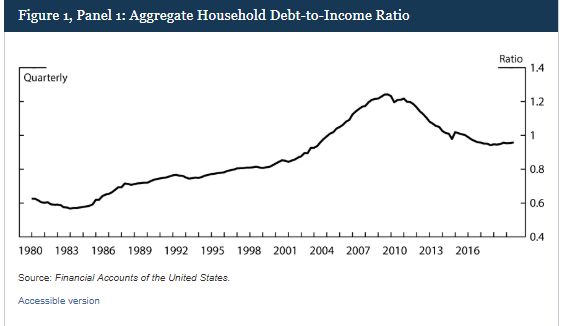
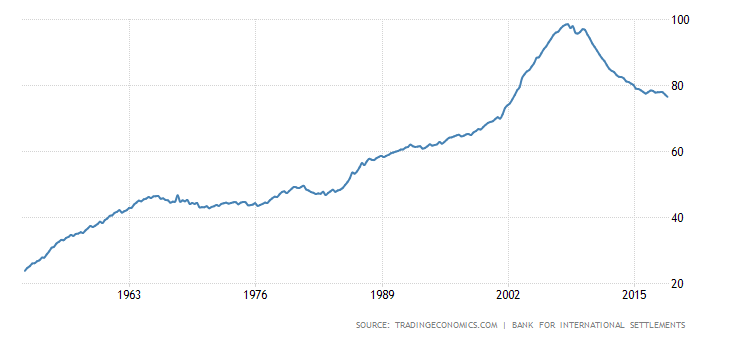
Found it. Debt accumulation per GDP started to decline over 10 years ago,
so based on that, we are in a K-winter.
Hi! That’s an interesting interpretation of economic cycles; this isn’t usually presented in basic economics courses It’s a valid idea that economic development can be divided into larger and smaller cycles that follow the rhythm of major innovations. These very long-term cycles are indeed inherently difficult to interpret and identify because a lot can happen within them.
Now to the reflections themselves: The description in the link states that “This period (K-autumn) is followed by strong societal indebtedness, which is the exact opposite of K-spring, when debt is avoided like the plague. Now things are reversed. A debt-free person is the exception in society, whereas in K-spring, the indebted person was the exception. Characteristics of K-autumn include disinflation, a fall in interest rates from the K-summer peak, and increasing indebtedness.” These signs are certainly identifiable, but the distinction between K-autumn and K-winter is vague. For example, the characteristic of K-winter, the cessation of debt accumulation, cannot yet be confirmed. Verneri also linked a figure earlier in the Stock Market Direction thread showing the growth of global debt.
Based on this, indebtedness has been rapid, and there is no end in sight. Thus, based on indebtedness data, we are not yet globally in K-winter. In addition, regional differences must be taken into account (cf. e.g. Japan and USA) in cyclical thinking, as well as central bank intervention. I fully agree that a new cycle begins through innovations, which is also a prerequisite in long-term economic growth theories.
It looks like you found a figure illustrating the debt-to-GDP ratio. Here’s also the debt-to-income ratio, which also started declining 10 years ago but is still clearly higher than before the 2000s. However, it’s positive that it has come down, meaning households across the Atlantic have some buffer.
I wouldn’t look at the Helsinki stock exchange in this sense myself, because such a large part of the companies’ turnover comes from outside Finland. The largest companies affecting the index do not reflect Finland’s economic outlook at all (think KONE, Nokia, Wärtsilä, etc.).
Clarification: of course, if Kondratieff cycles are assumed to be true, it is a global phenomenon and thus affects international Finnish companies. However, the sample in the Helsinki stock exchange is really small.
Great @Pika-Sissi that you opened a thread for this topic, even if this concept is not foolproof either. I was kind of expecting someone to open one.
A brief personal history of Nikolai Kondratieff himself: he was an economist in the Soviet Union who naturally tried to prove why capitalism would destroy itself. At that time, it was “fashionable” to try to invent all-explaining theories (with Plato, Marx, and Hegel filling bookshelves). He fell victim to Stalin’s purges in 1932 and was executed in 1938. He mirrored his theory to the 19th century, which was, of course, closer to him and could be called the era of a more modern economy in Western countries.
That said, the theory itself only rediscovered its way into the public eye in the 60s/70s, meaning that many interpretations related to the stock market, etc., are much newer. In addition, there are many other “waves” and “swings” (Kuznets, for example, regarding infrastructure investments). Kondratieff’s theory has also not been largely accepted in academic circles, and this can be attributed to the fact that it sees causes and effects that do not exist in the real world (Kondratieff’s waves may be an epiphenomenal phenomenon: they are not the cause of changes themselves, but rather secondary manifestations of other factors).


 It’s a valid idea that economic development can be divided into larger and smaller cycles that follow the rhythm of major innovations. These very long-term cycles are indeed inherently difficult to interpret and identify because a lot can happen within them.