Got a good tip about a company called Irisity AB (thanks @aspee).

The company is a direct peer to SmartEye AB, but operates in a slightly different sector.
The company is a software house, whose main product is the “IRIS” algorithm family. IRIS can be retrofitted onto new and even 5–7-year-old security cameras (hardware-independent algorithm). The sector is therefore high-end security.
IRIS product presentation video

Security-as-a-Service introduction

The core of the matter is this:
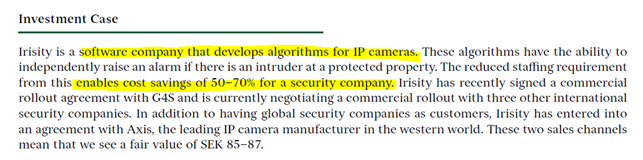
And especially this. G4S is one of the world’s largest security guard companies, but I’ll start with a small “teaser” of what this is really about. More on that below.

We are not even talking about annual billing here, but MONTHLY BILLING PER CAMERA PER ALGORITHM. A single camera can have multiple algorithms (features included), but usually 1–2 pcs.
NANO-CAP
The company had a turnover of approximately 3.7 million euros. The company’s market value is around €150m and its earnings have been negative so far. Due to R&D and marketing investments, the company is cash flow negative, but net debt-free (cash of €5.6m in Q1’21).
Typical operating environments of the technology
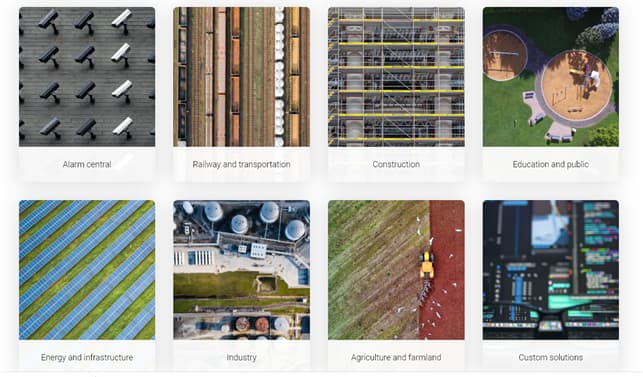
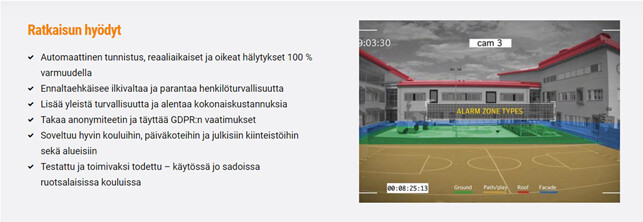
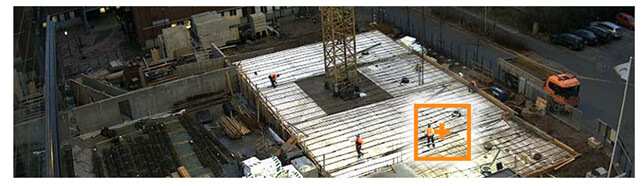
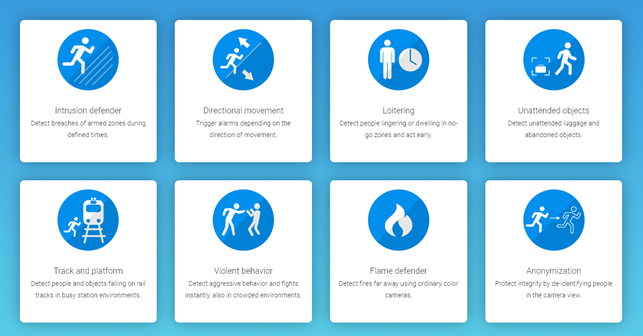
IRIS algorithm family
Note: These are constantly being further developed, which enables some kind of cross-selling / software updates from the cloud. One fairly recent development result was “fall detection”, i.e. identifying a person falling and remaining lying on the ground.
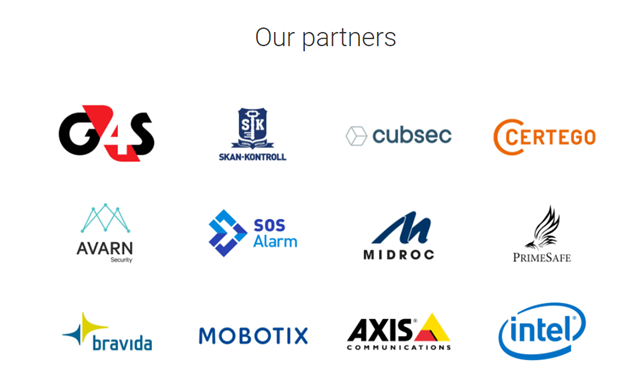
Customer base and partners
It is worth paying attention to, e.g.:
-
Axis is the leading HW camera manufacturer in the West. The software will be integrated into IP cameras in the future.
-
G4S is one of the largest security guard companies globally. Other similar partnership negotiations are also underway (presumably e.g. Securitas?).
-
Intel certainly doesn’t hurt
G4S is one of the world’s major security guard companies. Traditionally, the security industry is a very labor-intensive business, so the share of fixed costs is high and margins are low. Security companies are under constant pressure to increase business profitability and efficiency as the demand for security services grows in an unstable world.
“In the Baltics, G4S has already implemented IRIS, resulting in significant reduction in the number of false alarms which are raised within the operating center, therefore downsizing related costs and allowing officers to be more reactive to incidents.”
Case G4S Lithuania
For G4S, Lithuania has been the first playground where the technology has been tested. Experiences below:
“After testing the real-world performance of IRIS™ on customer sites for a number of weeks, G4S Lithuania decided to rapidly upgrade all outdoor surveillance cameras connected to their video monitoring center to intelligent video surveillance driven by IRIS™. The goal was clear: Significantly reduce the amount of man-power needed to monitor all outdoor cameras while providing a better service to the end customer.”
The G4S agreement is global, meaning progress will be made country by country. Regarding the aforementioned country, I have learned that:
-
IRIS was deployed in 95% of the cameras, experiences were extremely good (“extremely happy”)
-
G4S has about 500,000 “sites” in the EMEA region
-
On average, one site has 3–5 cameras, i.e., approx. ~2 million cameras in use in the EMEA region. Not all of these are new enough for the software to be retrofitted (5–7 years old or newer).
-
Irisity’s CEO estimates that 100,000 of these sites, or about 400,000 cameras, are capable of receiving the software as a retrofit.
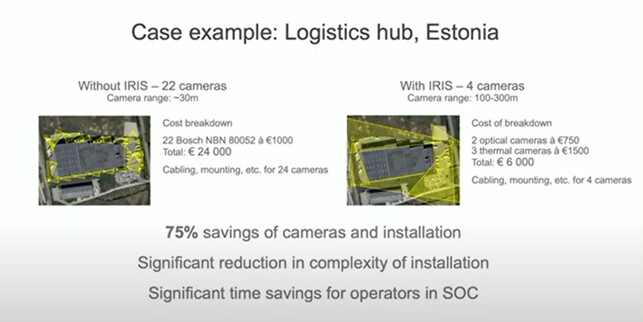
Case Logistics Hub in Estonia
Video presentations
I definitely recommend watching them. These open up the case more from the perspective of the competitive landscape and technology features, among other things.
Vator Tech Days March 2021:

Penser Bank Bolagsdag March 2021:

Mobotix and Irisity
https://register.gotowebinar.com/register/5042798345210219791
Regulatory tailwind?
The EU Commission may restrict video surveillance so that the anonymity of individuals must be preserved in general surveillance (when not investigating crimes, etc., for example).
This could be problematic for most existing security cameras because they do not include intelligence.What’s the remedy for this? Well, of course, IRIS, which is installed on cameras retroactively and includes AI-powered blurring. And of course, it would always come included in new cameras…

Market
A statement on the video surveillance market below
The report " Video Surveillance Market by System, Offering (Hardware (Camera, Storage Device, Monitor), Software (Video Analytics, Video Management System) & Service (VSaaS)), Vertical (Commercial, Infrastructure, Residential), and Geography - Global Forecast to 2025" is expected to grow from USD 45.5 billion in 2020 to USD 74.6 billion by 2025, at a CAGR of 10.4%. Increasing concerns about public safety and security has spurred the growth of video surveillance market, other driving factors include growing adoption of IP cameras, and rising demand for** wireless and spy cameras. Rising trends of artificial intelligence and deep learning is important factor to drive the market during forecast period.
From Penser’s report:

Competition
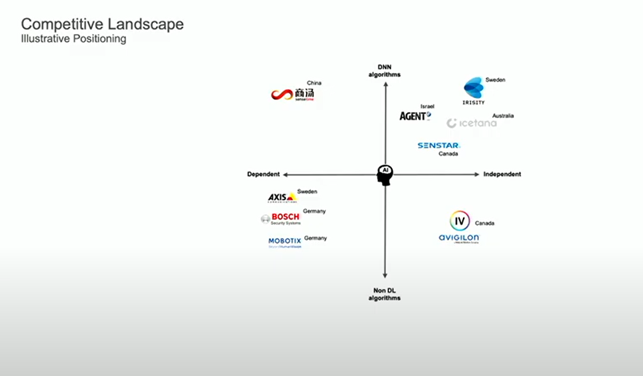
There are quite a few competitors in the West as well. Here is a good example
And graphically
Ownership Structure
The board of directors and operational management hold varying, but overall solid ownership stakes in the company. For the most part, the will of the management and shareholders is certainly aligned. The company also involves capital from a university (Chalmers) and the R&D sector (TIN Ny Teknik).
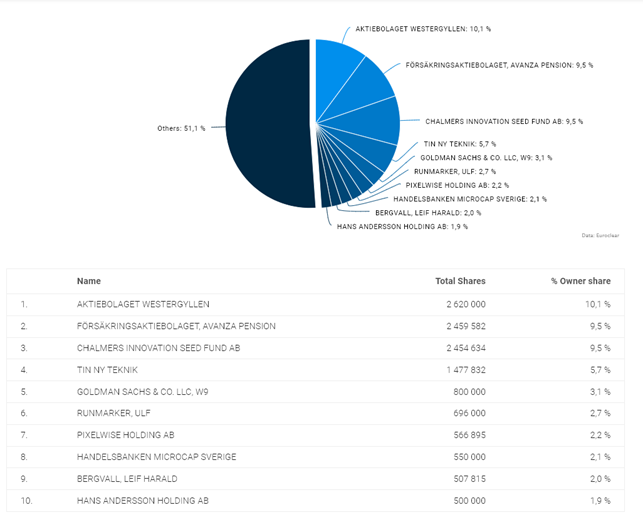
Ownership details by individual are further outlined here:
Analyst Coverage:
https://epaccess.penser.se/bolag/irisity/
May report, freely readable (SWE and ENG versions):
NOTE: Penser was possibly the bank that arranged the IPO (?), as a result of which the analyst relies quite heavily on the outlook communicated by management. There is always a risk that management paints overly optimistic pictures of growth, which in such a situation may also reflect as optimistic forecasts… I take no responsibility for these.
Q1’2021 Results and CEO Comments:
Key points:
-
The rollout of IRIS with G4S in the EMEA region is progressing.
-
Experiences in Lithuania have been extremely positive.
-
AXIS, the leading Western camera manufacturer (hardware), is integrating the algorithm as part of its IP cameras. In addition, Mobotix is doing the same for new cameras. This should start increasing volumes starting from H2’2021.
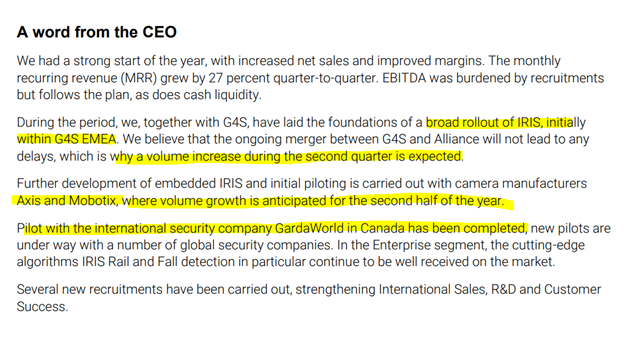
Events After Erik Penser’s Analysis
“At the vanguard of rail infrastructure safety, metro and rail operators globally are adopting AI-based analytics. In the Nordics, IRIS Rail is already being implemented in the Stockholm metro system. In addition, metro and rail operators in several countries internationally including France, Italy, Spain and Chile are also looking into implementing IRIS Rail.”
The Numbers Side
Example Calculation (G4S potential in the EMEA region over a 5-year period)
-
Assume that 50% of compatible cameras, i.e., 200,000 units, are equipped with AI over a 5-year period
-
on average, 1-2 (in this calculation 1.5) algorithms go into each camera.
-
a total of 300,000 algorithms will be installed for use
-
assume an ASP of €10 per MONTH (yes, month!).
-
This generates €36M ARR per year. Gross margins of at least 85%.
-
OPEX rises from the current €3m to say €10m à EBIT of about €20m / year.
-
For such a business, I would allow a 20x EBIT multiple à M-CAP of about €430M, i.e., ~170 SEK per share.
-
The calculation only considers G4S’s known potential for the coming years. It excludes, for example, AXIS, Mobotix, Garda, and all other security companies currently in negotiations.
-
Note: If you look at the Q1’21 CEO comment above, a pilot project with Garda has already been completed.
ERIK PENSER’S NUMERICAL FORECASTS
See the analysis report for more details. Free float 31%.
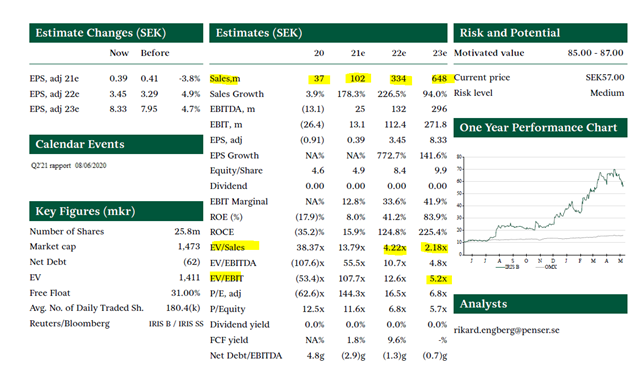
RISKS
By far the biggest risk of the case is how well the company’s marketing succeeds, i.e., whether volumes start to grow in Q2’21 (the report comes out on August 6, 2021) and especially during H2’2021. The company last confirmed this guidance in its Q1’2021 report.
The risk of success in sales should be significantly reduced by the integration of the software into the cameras of Axis and other operators via agreement. These companies handle the marketing themselves as they bring the products to their customers globally.
FUN FACT
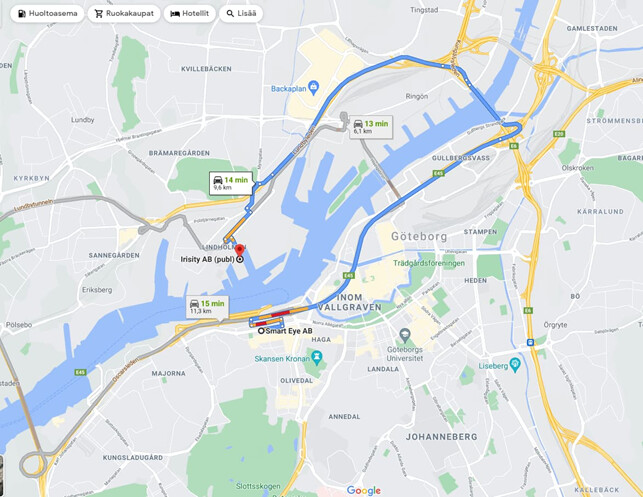
SmartEye AB and Irisity AB are both software companies creating algorithms for cameras. Both are also located in Gothenburg. In fact, the distance between the companies’ offices is really short. There is no doubt that they compete on a city level for the same talent.
DISCLAIMERI OWN A SMALL AMOUNT OF SHARES. THIS WAS JUST A SUPERFICIAL SCRATCH ON THE SURFACE FOR A GENERAL INTRODUCTION. I ENCOURAGE EVERYONE TO DO THEIR OWN RESEARCH (“DUE DILIGENCE”). THIS POST DOES NOT CONTAIN INVESTMENT ADVICE. THERE MAY BE FACTUAL ERRORS IN THIS POST, FOR WHICH I TAKE NO RESPONSIBILITY. ESPECIALLY SINCE THE POST WAS PUBLISHED AFTER 10:30 PM ON A FRIDAY. BESIDES, THE WHOLE RANT WAS QUITE HASTY. THE POST ALSO CONTAINS SPECULATIVE ELEMENTS ABOUT THE FUTURE PRICING OF THE STOCK, BUT I TAKE NO RESPONSIBILITY FOR THEM.
Now let’s just hope for the best… from Friday’s earnings report. Have a great weekend


 thanks for the heads-up. You can flag this now.


 I also see potential if toilet vandalism could be brought under control, e.g., with sensors, as cameras are not allowed in toilets.


