Thanks. First, it should be noted that the Scorpion Capital case itself was apparently a big scam. The market didn’t get stuck on it, and no one even asked about it on the conf call. According to Q1 figures and Peter Chapman, the company is progressing faster than they had previously anticipated. Quantum is a complex branch of science, so I won’t try to get smart about the details now. But they expect deals from the market; for example, a financial company might want its own machine so it doesn’t have to queue for computation time. In addition to the IonQ Aria machine, Forte is coming. The company is constantly seeking the best technologies and materials to improve the quality of computation. Oh, by the way, Chapman made one jab at Scorpion. He directly said that their machines perform differential calculus, and 1+1 can be calculated with a phone calculator. The company seems to have strong faith in the growth of its order book, as they again talked about a 9-figure order book totaling for the years 2021…2023. To me, the most significant financial information was that the company forecasts it will reach profitability with its current share capital. In summary, the company’s pace and performance are constantly improving.
IonQ has recruited Noam Zakay from IBM. He most recently served as “Program Director of IBM Quantum Europe.” Now he will lead IonQ’s two new subsidiaries in Germany and Israel.
Many probably wonder if IonQ’s technology will be the one that “wins.” I’ve pondered that myself. Ultimately, some quantum computing technology will be selected as the winner. But quantum computing is a complex whole where qubit computing is only one part. That is, a lot of different businesses will emerge in addition to building qubits. Therefore, it is possible that even if IonQ’s technology does not become a global mainstream, the stock will not collapse immediately. Because the company still has a network, processes, personnel, and expertise concerning quantum computing, the company can sell those services. And mergers and acquisitions will certainly also happen. Perhaps I’m pondering now that each of us might get the illusion that we need to guess the right quantum technology. But the answer to that will only come around 2030. For now, it seems wisest to try to evaluate these quantum companies based on how they get deals, what kind of projects they can sell their services for, etc.
Olivia Lanes introduces 6 books for understanding and deepening quantum computing.
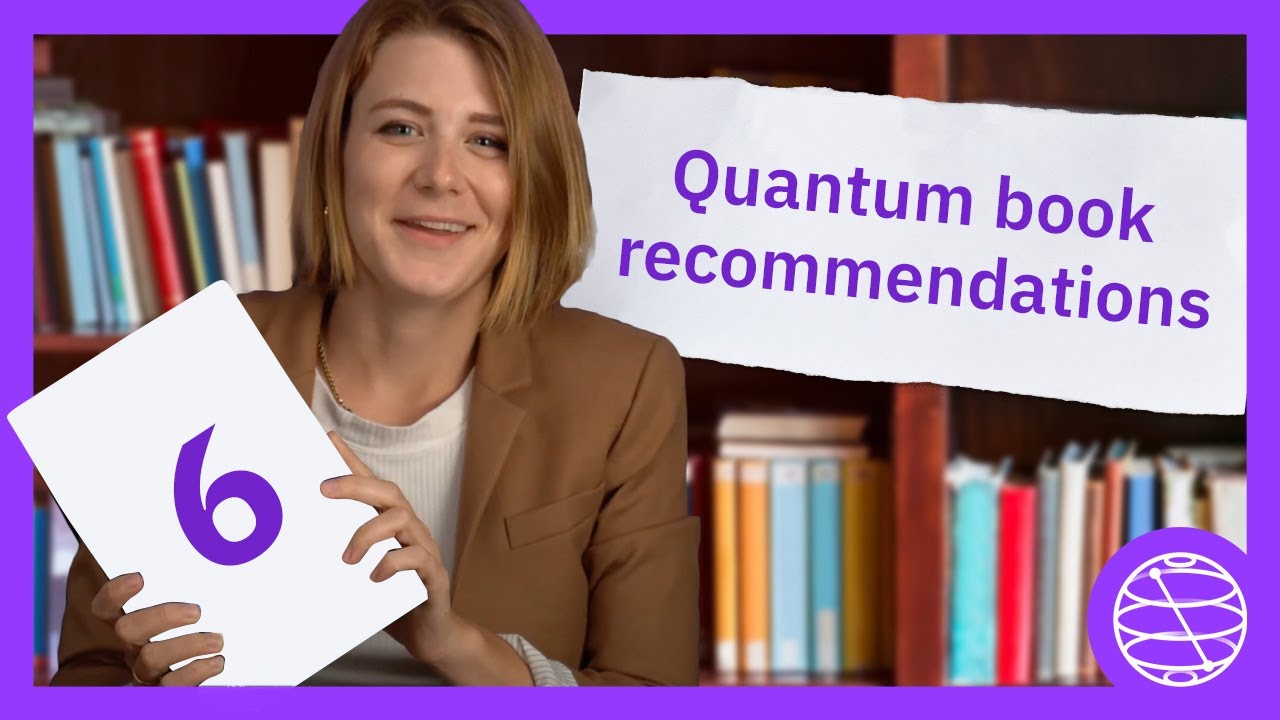
I myself bought the book pictured from Amazon based on Lane’s recommendations. It’s always good to try to understand and grasp things better. It took me a week to get through 10% of the book, but I’ve been doing the exercises with understanding. And I’m still in the traditional computing circuit diagram and gates. My wife good-naturedly laughed at my progress, but somehow I’ll wade through it in a year or two. If you can’t be bothered to read them, I can summarize the differences: traditional computing builds logic with binary numbers (zeros and ones). The book clearly shows that the number of transistors in a computer quickly rises to billions as computing demands increase. Quantum computers rely on trigonometry, linear algebra, and extrapolation. Their power extends further than bit computers.
Here’s another tangent to Cloudflare, which I follow diligently: Cloudflare is already developing solutions to protect against quantum computer breaches. The English term for this is Post-quantum cryptography (also called quantum-resistant cryptography). This feels like a science fiction story, but when you understand how a quantum machine behaves mathematically, then a quantum machine can also be misled into inaction using mathematics. The Chinese have reported/boasted about breaking traditional computing encryption algorithms with their quantum machines.

This quantum protection also involves the Finnish company SSH, most of whose products are already quantum-protected, and the rest are intended to be made so in the near future. This is important in data transfer because there is a risk that encrypted data will be intercepted and stored, awaiting a quantum computer that can decrypt it.
I’ve also been going through Mikki’s (Microsoft’s) documentation, and there was a module on MS Learn related to the topic if someone wants to delve into it with a lower threshold. The documentation is, of course, very conceptual fluff in places, and one has to resort to Wiki, etc.
Amazon also had some quantum course.
Edit: links
We get to follow the company’s baby phase, trying to learn to walk, as it’s still a SPAC less than 1 year old. Quite a promising baby, in my opinion. I personally think that the quantum winner won’t be decided overnight. Every company in the industry gets a slice of the pie, and some of those jobs are probably various support functions, testing, simulations, etc. Let’s revisit when I’ve had a chance to delve deeper into the Q2 story.
Here are some excerpts from the Q2 conference call. First, however, a few thoughts on investing. IonQ could be labeled a “ponzi techno” or a “hype techno.” If IonQ proves to be empty (i.e., it’s a hype ponzi), then I haven’t been able to detect it yet. I personally think we are at the beginning of a new mega-trend (quantum computing). From a risk perspective, I feel IonQ and cryptocurrencies are similar. Price formation is very speculative. But I personally choose IonQ over cryptocurrencies. Because if IonQ doesn’t prove to be a ponzi, then it’s possible that the company will grow significantly within the mega-trend.
Then a few more words about the mega-trend. I am trying to study and understand quantum computing so that I can better assess whether quantum computing itself is ponzi-hype. Currently, billions of dollars are being invested in quantum computers worldwide, and a lot of public money.
Based on this background, let’s examine whether there are indications that the company is a ponzi riding the wave of hype. Or is the company a proper and respectable high-tech company, as it reports (SEC Filing) and implies (e.g., Q2 conference call).
Let’s look at a few things. In February 2022, a comparative report from the quantum industry group, QEDC, was published:
February 23, 2022 | IonQ Aria Furthers Lead As World’s Most Powerful Quantum Com
IonQ’s Aria-class quantum computer was the best in the comparison. Aria had a power of 20 qubits at that time. These are so-called algorithmic qubits. Algorithmic qubits are useful for solving algorithms in practical applications.
Now IonQ announced that Aria has reached a computing power of 23 qubits. 23 produces 8x (2x2x2) more power than 20 qubits. IonQ says Aria is the world’s most powerful commercial quantum machine. In this context, it is good to realize that solving everyday problems requires machines with thousands or even millions of qubits. But one always starts somewhere and grows the power. IonQ’s conference call mentioned that IonQ is involved in a project to develop a quantum computer network, i.e., a quantum machine internet. In addition, IonQ said that their next-generation solutions have already brought promising results in increasing power.
@Juzaba already updated the thread some time ago that IonQ is now connected to Microsoft Azure, meaning that anyone can run their own algorithms on IonQ’s Aria quantum machine via the Azure Quantum Platform. I think this is a big deal! Because the community of algorithm and application developers will begin to develop and expand. I think this is really important because my unscientific observation says that more and more innovations are being brought to our benefit through market mechanisms. In IonQ’s case, there is a strong scientific foundation and a university network behind it. And through SPAC, IonQ fell into the midst of the world’s most innovative ICT market, the US market. Market forces are already shaping the company to advance solutions needed by industry, logistics, and the finance and insurance sectors.
@Juzaba already mentioned the development cooperation between IonQ and Airbus. Other recent cooperation announcements include those with the chemical company Dow and the multi-industry giant GE.
If we now summarize whether the company is a ponzi or hype company based on the information described above, it is not. Of course, one can criticize whether a company with 10 million in revenue and the same amount in losses, with 571 million in cash and a market capitalization of 1.3 billion, can be anything but hype. I personally comment on hype based on the company’s substance. Microsoft, Airbus, Dow, and GE are doing real work with IonQ. For me, the company is not hype but a high-risk company from an investor’s perspective. An efficient quantum computer would be needed to provide scenarios for different market valuations over a 10-year period; for now, I’ll just pull a number out of my hat, saying the range is 0.001X - 100X.
Let’s continue to marvel at quantum computing and IonQ; perhaps the most interesting things are yet to come.
IonQ confirmed that it has signed a $13.4 million contract with the U.S. Air Force Research Laboratory. This is the first of its kind for both the Air Force and IonQ. This deal was still a possibility during the Q2 earnings report, but not a certainty. Now, IonQ has confirmed its revenue forecast for the rest of the year. In other words, the U.S. Air Force wants to collaborate with IonQ. This demonstrates that the trapped ion system is a competitive technology for producing algorithmic qubits today.
https://investors.ionq.com/news/news-details/2022/IonQ-Secures-Contract-to-Provide-Quantum-Solutions-to-United-States-Air-Force-Research-Lab/default.aspx
Nobel laureates have applied quantum physics to various experiments and laid the groundwork for quantum computers. This news provides a new perspective that perhaps the work of these quantum computer pioneers is not just lab tinkering, but a new significant industrial sector is developing. This is difficult for an investor who likes to play with numbers. Such investors seek more mature industries. But yes, now we have once again received an indication that an industry will indeed emerge from this quantum computer business. It’s not due to the award itself, but the news explicitly states that over time, computational responsibility will shift from traditional supercomputers to quantum computers. And this will happen within the lifetime of all of us who are reading this.
Recommended viewing. In the video, theoretical physicist Sabine Hossenfelder discusses the hype surrounding quantum computers, and the company that is the subject of this thread is also mentioned in passing. Sabine has published several research articles related to quantum mechanics during her academic career.
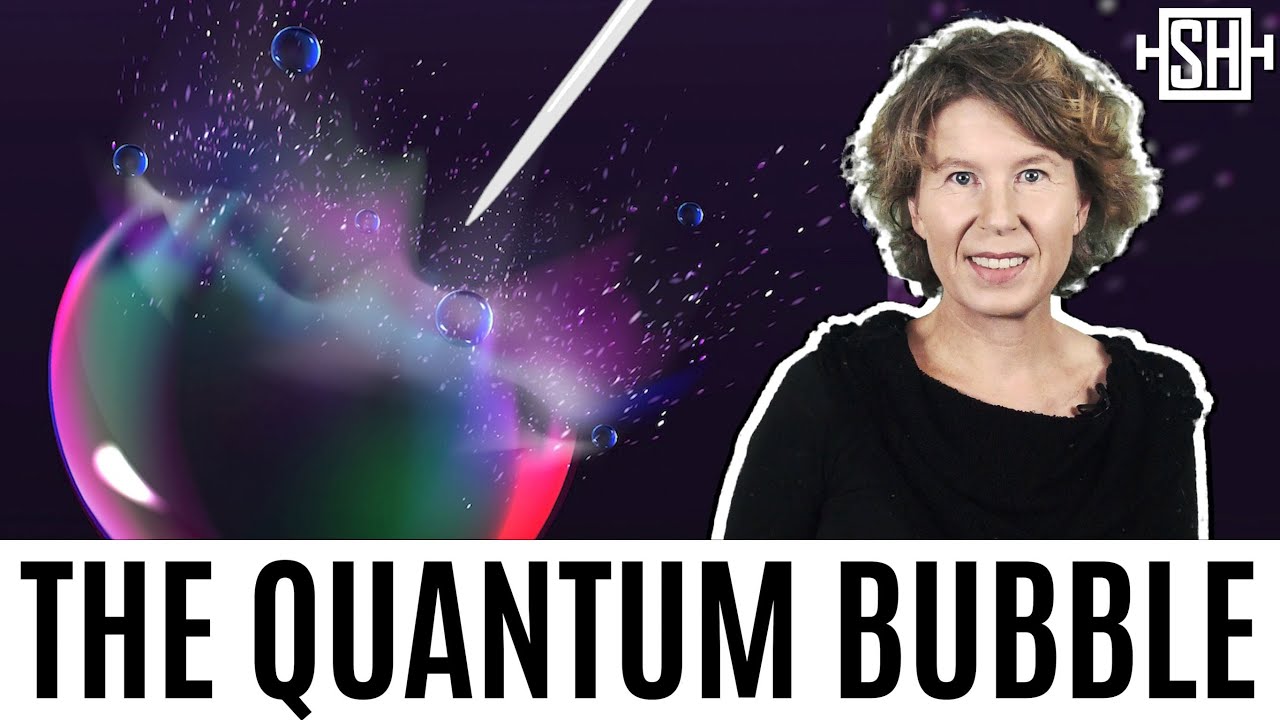

I can relate to Sabine’s videos. I find them articulate and easy to understand.
I don’t believe IONQ is an exception to the rule – they’re getting exactly those kinds of 10-30M USD orders from large companies, which then pay an agreed-upon portion of that order annually. For many large companies, it’s a matter of credibility to be involved in the Quantum Computing hype, and on the other hand, they certainly have the means to do so. I, however, remain skeptical about the matter for now.
Good video, and it confirmed my view that the first use case will be cryptography. Encryption is based on the basic idea that it is much faster to multiply two prime numbers together than to factor a large number into prime factors.
The fact that they succeeded with the number 28 means that a lot of effort is being put into this now. It’s difficult to estimate how quickly a general solution will be achieved.
Does the blog post behind the link below relate to what @kimmonev is talking about?
It’s related. Quantum-resistant cryptography exists, and that’s what this is.
IonQ is moving at its own pace. This business is still small, but the announcement of cooperation with Dell was new. The companies are learning to transfer computing processes between traditional and quantum computing.
I listened to the Q3 investor call. The main takeaway was that the company is proceeding systematically, according to its own plan. During the call, CEO Chapman stated that they aim to deliver a complete system within the next 12-18 months. So, the story is progressing. But let’s consider whether this is a bubble narrative and if Sabine’s predicted quantum winter is ahead.
There have been good points raised in this thread, thanks to @Sambadi and @Tunturisusi, among others.
IonQ is a good company for me to follow because it is listed, meaning news and stories about its development and partnership agreements are available. I kept thinking about Sabine’s bubble narrative, that is, the beginning of the quantum winter that Sabine spoke of. Physics probably isn’t changing now. So, devices are being built with the same theories. The largest sums of money are likely public grants for projects around the world. Public projects are usually completed; the projects spend the money, and everyone is happy as long as the grant money has been used appropriately according to project plans and reports. And IonQ’s cash reserves can withstand a few years of product development. What are your thoughts on the beginning of the quantum winter?