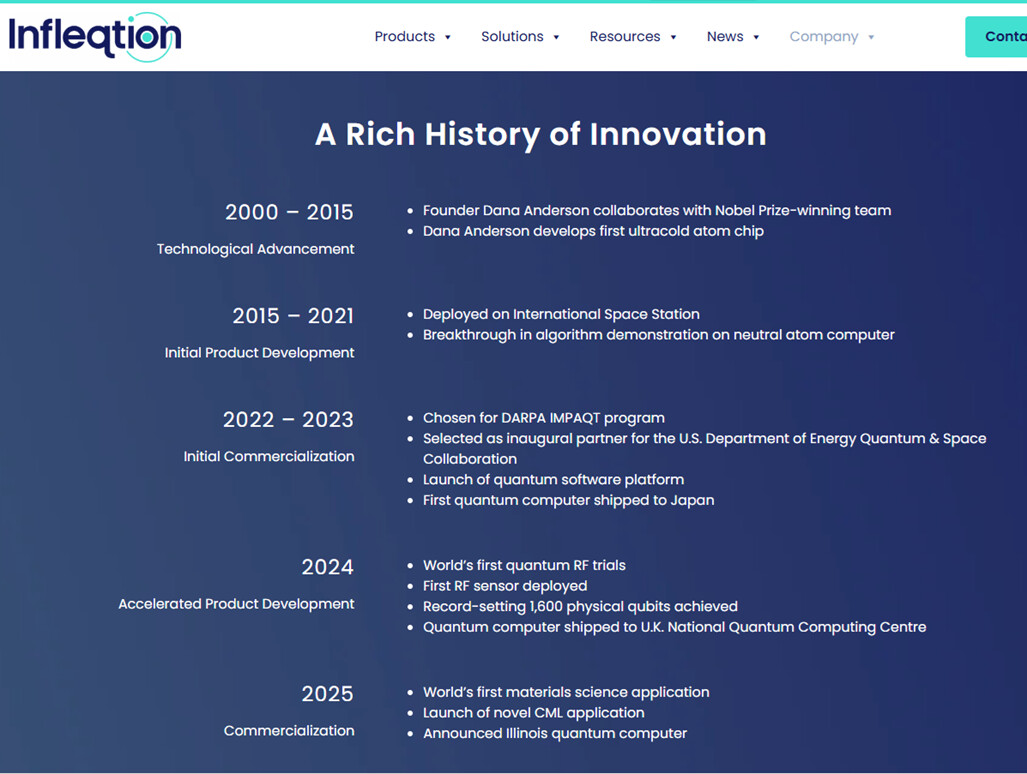
Quantum technology company Infleqtion plans to go public by merging with the SPAC Churchill Capital Corp X (NASDAQ: CCCX). The merger has already been confirmed, and as a result, the company will list on the Nasdaq under the ticker INFQ. The company was originally founded as ColdQuanta in 2007 in Colorado.
There are a few reasons why I opened a thread for this company. The company has a strong scientific foundation; founder Dana Z. Anderson served as a professor in Colorado and did pioneering work with ultra-cold atoms; he originally served as the founder and CEO of ColdQuanta. The current CEO is the company’s first venture capitalist, Matt Kinsella. During his career, Dana has been part of several Nobel Prize-winning teams, but the prize has never fallen to Dana himself because he has always been an experimental physicist, and the prizes often go to theoretical physics researchers.
In 2024, the company had a revenue of 29 million. The company’s operations are now focused on sensing and observation, where extremely precise timing plays a central role. The company is able to produce solutions that improve the accuracy of an atomic clock by several thousandfold. The company is now able to revolutionize 120-year-old radio frequency technology. This means that submarines no longer need to tow a 1 km long antenna behind them; instead, the antenna is the size of a sugar cube. Frequencies are being pushed into Terahertz. Alternatively, if the 1990s-era GPS system based on 30 satellites were destroyed, the company could provide the positioning and precision timing required by IT equipment through a ground-based solution. The company also has a satellite-based gravity product used to detect underground tunnels and the heavy objects moved within them, such as nuclear weapons. All of the above is based on the use of quantum mechanics—namely entanglement and superposition. Infleqtion’s new solutions are thus on a completely different level of precision and security than what is used in the mainstream today. The company was the first to take quantum technology into space in 2018. The company’s services are needed for tasks requiring extreme precision, particularly in the US missile defense system, as everything there is based on sensing, communication, and a high-precision clock. That is why Infleqtion (under the name ColdQuanta) was selected alongside IonQ for the Golden Dome project to provide its services.
The above represents the current foundation of the company’s business. In other words: sensors, sensing, new radio frequencies, and 1,000x atomic clock accuracy.
Infleqtion builds qubits from nature, i.e., directly from atoms. The processor operates at room temperature.
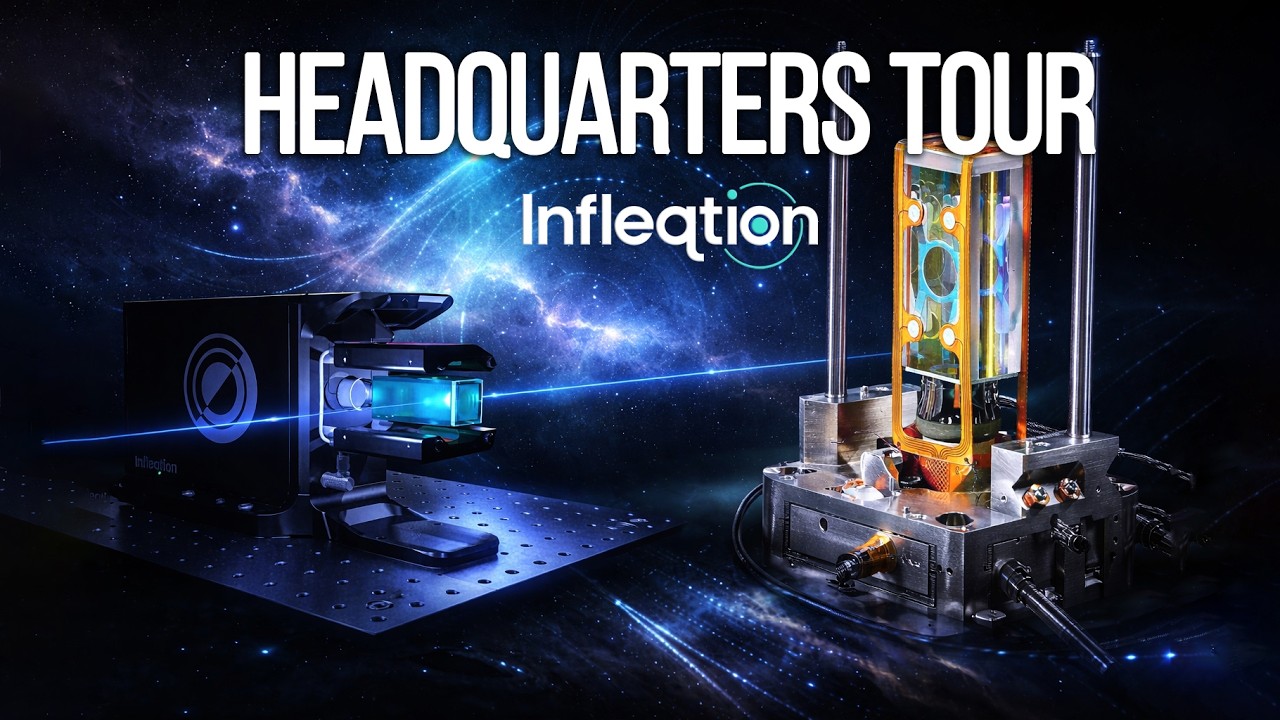
Below is a picture of the processor. It’s a hand-sized device (mötikkä). It’s similar in structure to IonQ’s processor. Both share the same idea: the device contains a vacuum where atoms are placed and manipulated—or rather slowed down—with a laser. Infleqtion slows the atom with a laser, effectively reaching absolute zero (0 K). After the acquisition of Oxford Ionics, IonQ moved away from lasers and now uses electronic control built into a silicon chip (instead of lasers). It will be very interesting to see the results of different technologies in producing logical qubits. This is one reason for the new thread—it’s interesting to see how logical qubits are achieved through different atom-handling methods (laser vs. electrical control).
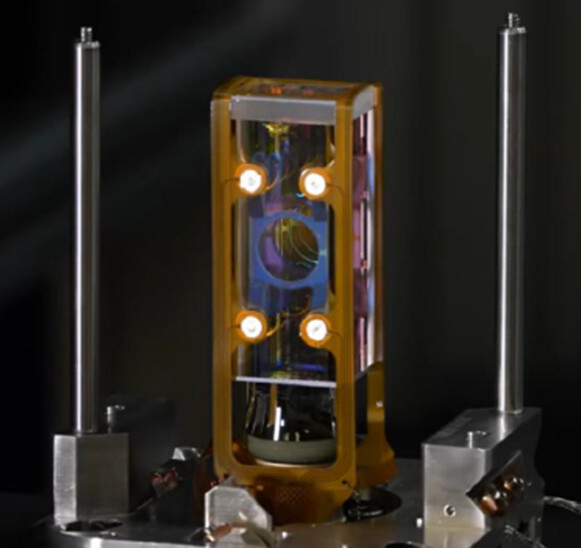
Infleqtion plans to move forward with the development of its quantum processor and believes it will achieve 100 logical qubits by 2028. The solution involves building atoms into a lattice structure inside a vacuum, which are then entangled to build a multi-qubit processor.
To summarize, Infleqtion appears to be a company whose main focus is sensing, new radio frequencies, and extremely precise clocks. The company talks about expanding into the computing side. Personally, I suspect IonQ will win in that area, but Infleqtion could be a strong runner-up. Ultimately, both IonQ and Infleqtion will make their “Golden Dome quantum careers” in areas other than computing: for IonQ, the focus will remain on quantum networks and encryption, and for Infleqtion, it will be sensing matters. The companies complement each other nicely. And both have a strong position in space.
I used this video as the basis for my post:
Inside the Quantum Era: Infleqtion CEO Matt Kinsella