Recently, there has been a lot of discussion surrounding electric car manufacturers like Nikola and Fisker. Nikola went public through a SPAC called VectoIQ Acquisition Corp. ($VTIQ). After the merger, the $VTIQ ticker changed to $NKLA, and trading continued under the name Nikola Corporation.
SPACs are often associated with so-called hype stocks, and some indeed are. However, there are also long-established companies involved, such as UTZ (a 100-year-old American company, one of the largest snack manufacturers), which is going public through a SPAC, specifically by Collier Creek Holdings ($CCH).
The hope is to generate discussion regarding SPACs, what works and what doesn’t, as well as potential new mergers and SPAC IPOs. There has been some discussion about these in the Speculation Stocks thread, but a separate discussion could provide more in-depth insights.
So, what is it all about?
SPAC, or Special Purpose Acquisition Company, is a collective term for companies that raise a significant sum of money into a fund, typically between $50M and $1000M. This financing is intended to acquire a stake in a private company and take it public.
Why would a company choose a SPAC merger instead of a normal IPO?
A SPAC is a faster, administratively lighter, and often more cost-effective way to go public than a traditional IPO. The amount of money to be raised is pre-agreed based on the capitalized funds.
The number of SPACs is significantly growing

source: https://www.spglobal.com/marketintelligence/en/news-insights/latest-news-headlines/56574037
Operating principle:
A SPAC company raises funding into a trust for an acquisition. The trust is closed until the merger, and working capital is acquired through warrants. The founders also contribute their own capital, so their own money is also at stake.
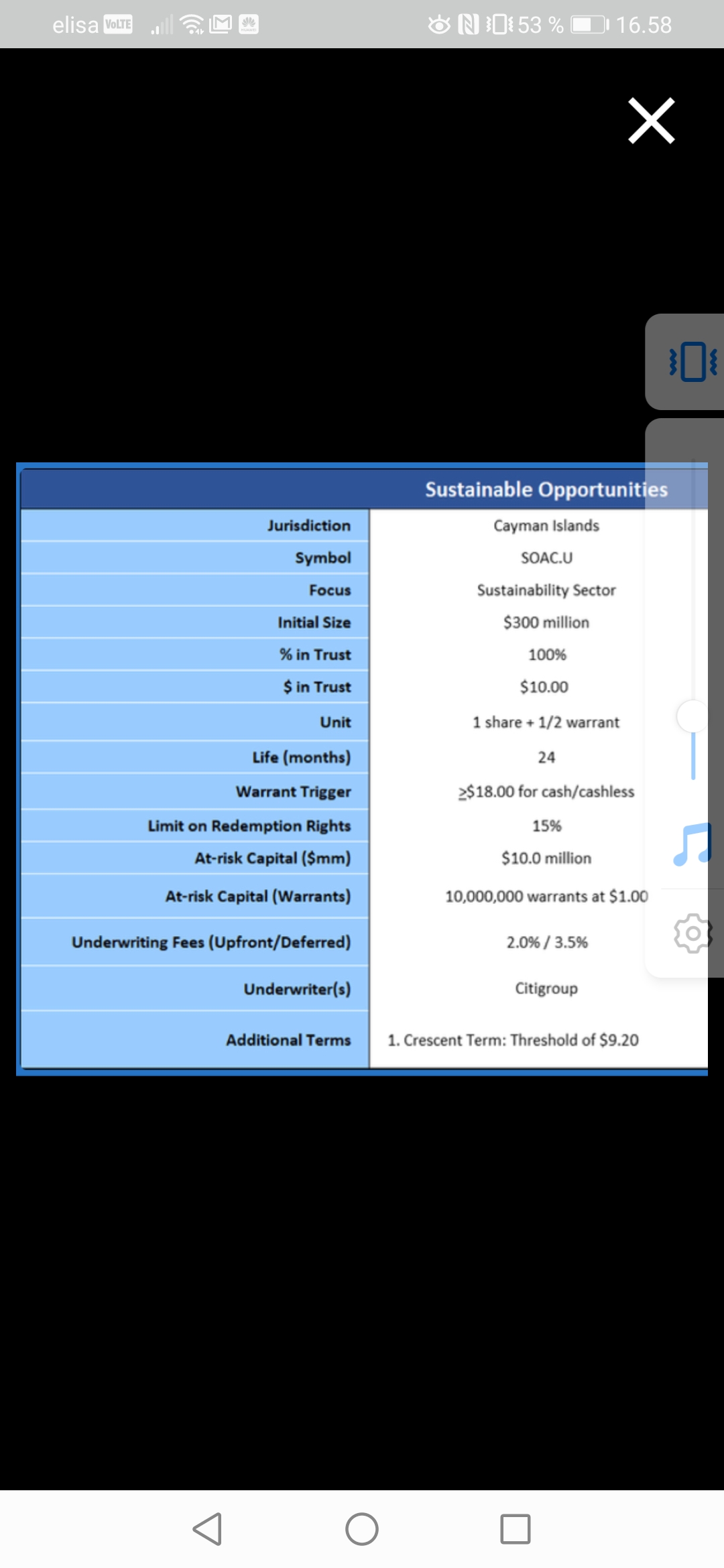
A SPAC typically has 24 months to find a suitable target company and execute a definitive merger agreement.
A SPAC starts with a Unit offering, which the company lists for public trading. A Unit includes a warrant (or usually a part of one) and a common share. Warrants thus provide the working capital to execute the merger.
Units can be separated into warrants and shares through your broker if desired. This still needs to be confirmed how it works with different brokers outside the USA. I don’t have practical experience with this yet.
Warrants can be converted into the target company’s shares after the merger. If a suitable target company is not found within the typical 2-year timeframe, the warrants expire worthless. Thus, they carry significant risk.
One great feature for investors, however, is the shares, which function like any other stock, meaning they are traded on the stock exchange. Before the merger, however, the price typically stays around $10. This is because a shareholder can ask the trust to redeem their shares at the trust’s share value (redemption rights). Typically, this is $10 + accrued interest, which practically sets a floor for the stock price. However, the right of redemption is only until the merger, after which the training wheels are removed, and the market value is determined by the company’s valuation. There is also an opportunity for a small arbitrage trade or a nearly risk-free deposit of free capital with potential appreciation, see the link below.
Source information to learn more:
What is a SPAC? Youtube video:

And more clarification, e.g., on the Accelerate Shares website:
They also have an ETF fund that utilizes the potential arbitrage and price increases of SPACs. I don’t know the details, but information can be found on their website.
A list of ongoing SPAC-listed companies, SPAQtrAQ Google Sheets: SPACtrAQ_20210110 - Google Sheets
Source:
https://spactraq.com/
Reddit - lots of discussion and also speculations and rumors about different mergers:
https://www.reddit.com/r/SPACs/
SPAC news, SEC filings, etc.


 (or rather, VW is Porsche’s parent company now).