Canatu - Specialist in Carbon Nanotube Films

CMD offered an interesting look into relevant markets for the coming years. CMD slides are available at Reports and presentations - Canatu

On the medical side, Canatu will provide its own device for analyzing sensor results – could this be the first version of the device known in Star Trek in the late 23rd century as the “tricorder” used by doctors? Below is a picture comparison, one image from the internet and the other from Canatu’s CMD slide number 52.

5 Likes

Looks similar, but a small question as to why that image has an ECG sensor and not an electrochemical sensor. Furthermore, the sensors in the demo images shown in the slides are so small that the methodologies according to Canatu’s articles are not possible with them. It’s a different matter what the expected third article reveals.

So, let’s keep calm and focus on semiconductor and automotive products. This is at least my own takeaway analysis from the CMD.

1 Like

I would have hoped for answers to these questions:

  • How confident is the management (e.g., best estimate of probability, %) that CNT will replace current technology? This may be self-evident to the management, but it should be communicated more explicitly to the market, as this is the core of the entire investment case.
  • And, theoretically, how long can current fabs delay the adoption of CNT?
  • In the Q&A section, it was asked how many end-customers (entities buying reactors) there are. In my opinion, the management answered beside the point and instead responded with how many CNT suppliers the market can accommodate. Or perhaps I misunderstood.

Tesla is also building a fab, and if successful, it would be larger than any existing advanced-chip fab. Canatu would have quite a lot to achieve with Tesla: ADAS, solar cells, and an AI fab.

4 Likes

Those bullet-point questions were discussed to some extent in the Inderes video released this afternoon: Canatu CMD: Kohti skaalautuvaa arvonluontia - Inderes

1 Like

My scattered thoughts on today’s CMD (Capital Markets Day). I thought the analysts present did a great job challenging Canatu’s management, so big thumbs up for that. In 2024, Canatu reported the TAM (Total Addressable Market) for CNT pellicles to be approximately 3 billion euros; now, management has reduced the TAM to 1.5 billion euros. This raised a valid question about whether Canatu had been a bit overzealous in their initial estimates. Canatu also seemed somewhat surprised by how slow the transition in ASML’s machines has been (400W → 600W). This was used to explain why financial targets were pushed back.

I still believe there are relevant drivers for using Canatu’s CNT pellicle, even in, for example, 500W machines:

  • 8-15% better transmittance than the current ‘metal silicide’ pellicle. This means the ASML scanner can expose wafers faster, which directly impacts fabs’ top line.
  • CNT can withstand at least 10,000 wafer exposures (ASML recommendation), and according to Canatu, even up to 15,000 wafers. My own notes say 10k wafers, depending on the power.
  • According to Canatu, by using their pellicle, if it’s estimated that a 10% better transmittance can be achieved compared to the current pellicle, 1/10 of the ASML scanner acquisition cost can be saved. This would result in approximately 180 million euros in CAPEX savings for the fab.

Regarding revenue development, it was commented that in the coming years, revenue is expected to be generated solely by the reactor business, and by 2030, the situation will shift so that royalties bring in the majority of the revenue. If this materializes, it sounds like that famous “Teukka Salama’s curveball,” but time will tell.

I have tried to estimate how long one customer can manage with one reactor, i.e., what is the throughput of one reactor. I believe this is one of the most important parameters when trying to project reactor sales. Unfortunately, management did not want to answer such specific questions and invoked trade secrets.

A couple of weeks ago, I found an article mentioning Mitsui’s pellicle transmittance for EUV light (>94%). I asked if Canatu had a similar figure and was told it would be a few percentage points better. I somewhat suspected this, as Mitsui has to use several post-process steps. At the same time, I inquired how many post-process steps Canatu has, and the answer was “fewer than 10,” which they still aim to reduce through R&D. In my notes, this emphasizes that Canatu or the customer can produce pellicles with good yield. The more post-process steps there are, the more residues remain already in the manufacturing stage, which must be removed. My own estimates suggest Mitsui might have as many as 20-30 post-process steps, but there’s no precise public number for this.

We’ll await Ate’s comments after the CMD, but Ate’s forecasts regarding the new financial targets were quite accurate.


32 Likes

Here’s the CMD comment:

A lot of interesting things were heard and seen during the day. These will be further discussed in the comprehensive report currently in progress. I expect to publish it in April.

21 Likes

I wonder how the pricing or manufacturing licensing of these Canatu materials and products will be handled with customers when moving from 500W devices to over 600W devices?

So I’m trying to understand the pricing: if the same solution is first offered with a 500W manufacturing process, where Canatu’s value proposition is a 20% improvement and alternative technologies compete on price, and then 18 months later, Canatu should get more money for the same product because the value proposition is that the customer has no alternatives for >600W devices.

Or is it a completely different product or device?

All the images on slide 52 of the presentation look suspiciously like AI-generated images (probably just for illustrative purposes). I wouldn’t draw any conclusions from them myself.

2 Likes

Canatulla as the fourth leg is the potential business development of new applications. An excellent property of carbon nanotubes as a radio wave blocker was discovered in Stockholm, reported yesterday:

https://scitechdaily.com/new-carbon-nanotube-coating-could-supercharge-6g-technology/

9 Likes

I read your message about 10 times and unfortunately, I didn’t understand the question/questions. If they were even meant for me.

1 Like

https://www.techinasia.com/news/samsung-ramps-hiring-as-texas-foundry-nears-wafer-prep

In itself, nothing new, matches what was heard at CMD regarding risk production.

Samsung now expects initial “risk production” in 2026

The site is expected to be Samsung’s first to use pellicles, thin protective membranes that keep dust off lithography masks, for extreme ultraviolet (EUV) patterning. The change aims to improve defect control and yield stability on advanced nodes, though Samsung has not officially confirmed pellicle use there

7 Likes

According to the article, TSMC has ambitious plans for its US factories. The first factories are already under construction, and plans have apparently been raised to 12 factories, presumably on the same level as production in Taiwan. Hopefully, Canatu technology will be included; it would be strange if it weren’t.

https://wccftech.com/tsmc-us-expansion-plans-grow-more-aggressive-with-twelve-planned-arizona-fabs

15 Likes

Here is a new comprehensive report on Canatu from Atte; like other comprehensive reports, this one is not behind a paywall. :slight_smile:

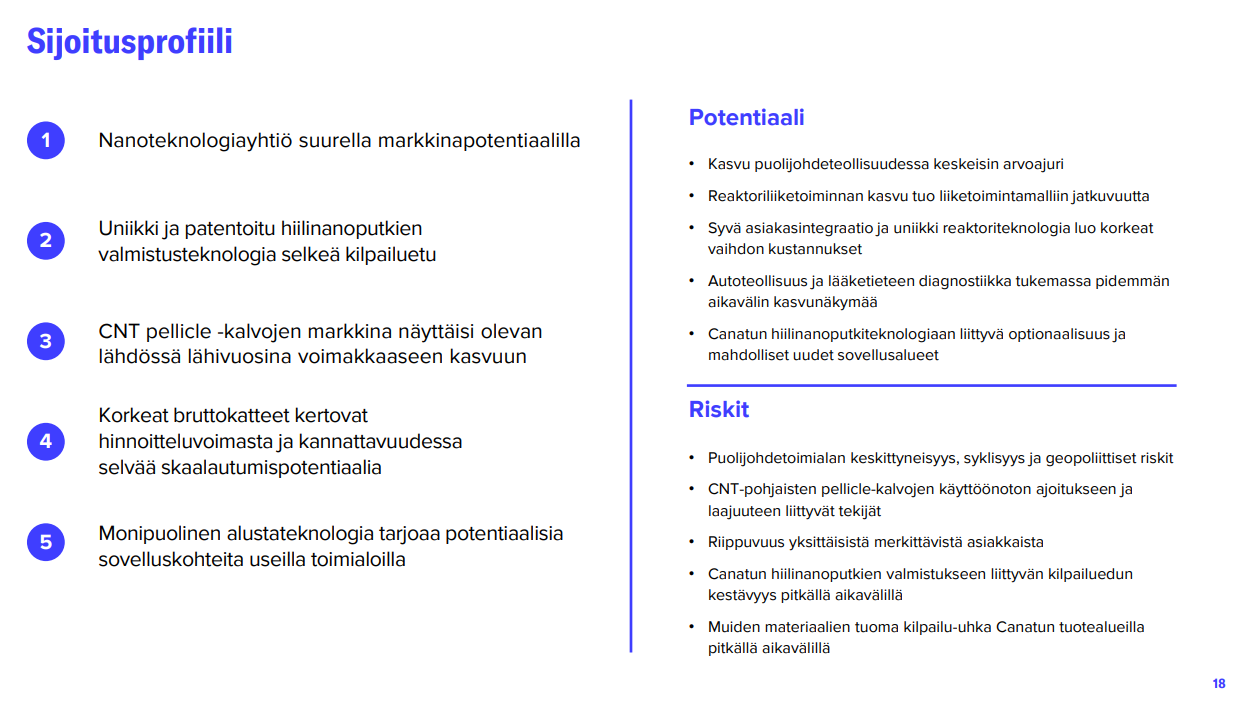
We reiterate our Accumulate recommendation and target price of EUR 8.5 for Canatu. Following last year’s weak performance, there is a clear dent in the company’s growth story, which is also reflected in the share price. Nevertheless, the market for Canatu’s CNT-based pellicle membranes is still forming, and the company’s position here appears strong. Large customer accounts in the semiconductor sector offer the company significant growth potential, as evidenced by the targets set for 2030 (revenue of EUR 100-150 million and EBIT 25-30%). At the current valuation, we find Canatu’s long-term potential attractive, but its realization still requires patience.

Quote from the report:

Achieving Canatu’s growth targets may require increasing the headcount by an average of 10-35 FTEs (full-time equivalents) per year, depending particularly on the development of new business. If the company’s growth materializes, we believe the target operating margin of 25-30% is realistic to achieve. This requires successful strategy execution, particularly in the semiconductor sector and the ramp-up of the reactor business. In our view, this is realistically achievable in light of both the company’s business and the market development trends. However, following last year’s growth disappointments, investors are unlikely to buy into these targets before there is evidence of accelerating growth.


14 Likes

Here are Atte’s comments on ASML’s results :slight_smile:

ASML, which holds a virtual monopoly in EUV lithography machines, reported its Q1 results on Wednesday, exceeding analysts’ expectations for revenue, gross margin, and earnings per share. The company also raised its full-year 2026 revenue guidance, reflecting the strong development of AI investments. From Canatu’s perspective, ASML’s strengthening growth outlook is a positive signal, as the increasing adoption of the most advanced EUV equipment is the key driver for the demand for the company’s pellicle membranes made from carbon nanotubes. A recent comprehensive report on Canatu can be read here.

9 Likes

How much of the revenue from a single pellicle flows to Canatu? Does Canatu produce it from start to finish, or just one part of it?
This is perhaps the critical question. You probably won’t get very far with just reactor sales and the sale of molecules used in CNT manufacturing.

If you can scroll up a couple of messages, there is a convenient link to Atte’s well-written extensive report, which provides the answers.

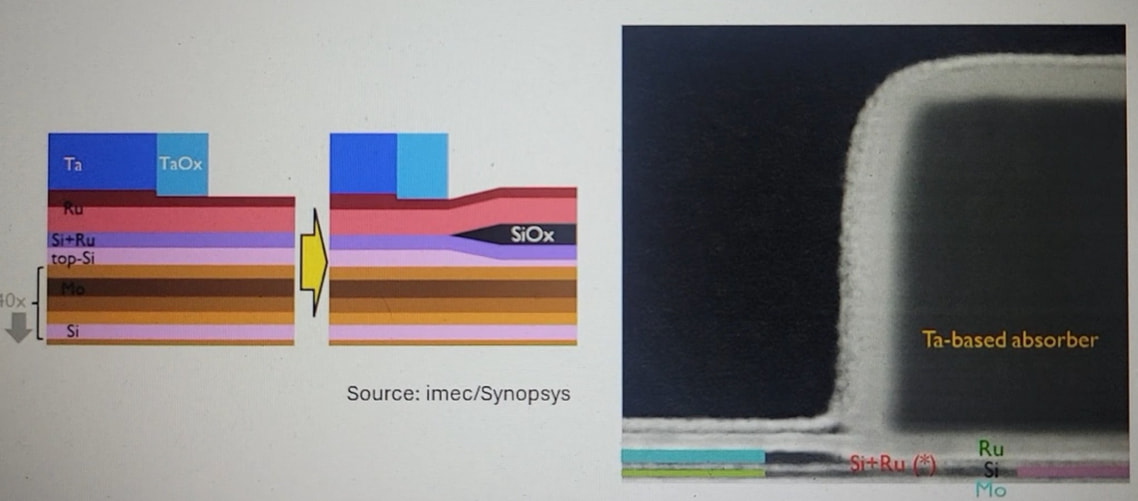
I’ve been looking into the light source of ASML’s equipment a bit, as ASML is heavily pushing from every channel how the source power will be increased to as much as 1,000 watts in the 2030s. I found an SEM image showing that the heat generated by ASML’s light source is even starting to cause deformations in the mask itself. I guess there’s some irony in this, as the pellicle’s job is to protect the mask, but now the mask itself is starting to turn into toast.

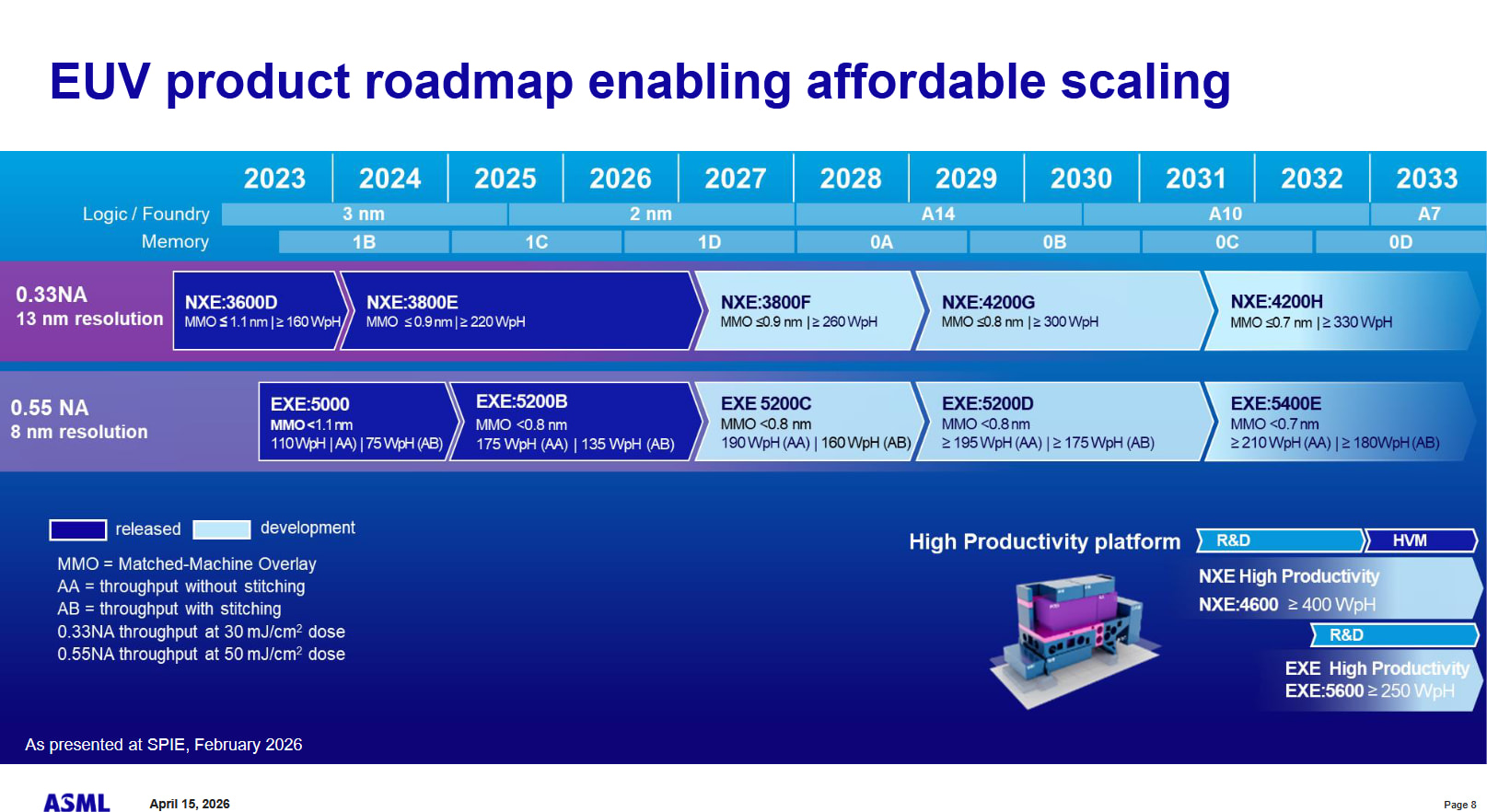
As a recap from yesterday’s ASML earnings release, here is ASML’s roadmap. Low NA is being continuously developed, and when more throughput (WpH in the graph) is desired for the equipment, one factor is that the power of the device must increase.

15 Likes

There was indeed some good information in that report!

Canatu’s first reactor customer is the Korean Fine Semitech Corporation (FST). Based on public sources, we estimate that FST’s end customer is Samsung, which is implementing EUV pellicle solutions at its Taylor plant in the United States. The Taylor plant will manufacture, among others, Tesla’s A16 chips.

We speculate that the second reactor customer is the world’s largest and most valuable chip manufacturer, TSMC. TSMC has stated it is building its own EUV pellicle production, and Canatu’s reactors would fit well into this equation.

So, would Canatu ultimately remain a reactor manufacturer for the giants rather than a manufacturer of high value-added pellicles?
On the other hand, the report also includes the following passage, which signals an interest in heading in that direction. But does it have what it takes to compete against the giants?

Canatu’s product range includes carbon nanotube membranes, which can be used in EUV pellicle films, as particle filters in EUV mask inspection, and as optical filters. In addition, Canatu manufactures and sells reactors with which the customer can directly produce carbon nanotube membranes for pellicle films themselves.

Currently, Canatu does not offer customers finished EUV pellicle films that include framing and special coating. The company supplies customers with carbon nanotube membranes for the production of these films, as well as reactors with which customers can manufacture these membranes in their own production facilities.

Well, one can hope. Perhaps the value appreciation here could be based on someone buying out Canatu entirely, thereby cutting off the production of pellicles for other players. Unless the related patents have already mostly expired, as some of the core patents have already expired or are soon to expire.

7 Likes

That reactor sales business is exactly what’s profitable… Ongoing royalties keep rolling in and spare parts sales are thriving.

6 Likes

The Korean company that was featured here a while ago apparently surfaced again.

Personally, I considered this mostly a joke company when I saw pictures of their “cleanroom” where some guy was tinkering with something wearing jeans, but based on this article at least, there might be something to it:

Awesome Ray succeeded in implementing a standard pellicle-sized membrane (11.0cm X 14.4cm) that can cover the entire exposure mask last year. Awesome Ray is planning to complete quality certification for commercialization as a next-generation semiconductor pellicle within this year. CEO Kim said, “We have set a sales target of 7 billion won this year,” adding, “The goal is to complete the quality certification of CNT-based membranes this year and synthesize the order plan.”

I don’t really have the competence to evaluate whether this is a credible company or not. As I mentioned, those leaked photos where a guy was tinkering with something in jeans mostly just raised a smile, but maybe there’s something here, or maybe not. If they pass that validation this year, then it’s clear they have a product; what technology (dry, wet) it was made with remains to be seen. I’m just wondering, if this company is the real deal, why aren’t the Korean FST and also the Korean Awesome Ray collaborating?

If EUV development slows down, it’s probably bad for Canatu. Below is a tweet by Juha Varis:

https://x.com/JuhaVaris/status/2047041570457649522


5 Likes