Canatu - Specialist in Carbon Nanotube Films

Micron (DRAM memory manufacturer) has in 2025-2026 deployed its first production line using EUV instead of the former DUV (‘1-gamma production line’). Based on public sources, they are using ASML NXE:3800D and E scanners, i.e., 500W or less. These can still manage without pellicles.

Gemini:

  • Where is it used? EUV equipment was first deployed at the Hiroshima plant in Japan. During 2025 and 2026, Micron has begun shipping its first 1-gamma process-based DDR5 and LPDDR5X memories to customers.
  • Why EUV? It enables the construction of a significantly denser and more energy-efficient memory cell with a single exposure compared to traditional multi-patterning DUV technology. According to Micron, the 1-gamma node improves bit density by over 30% and reduces power consumption by up to 20% compared to the previous generation.

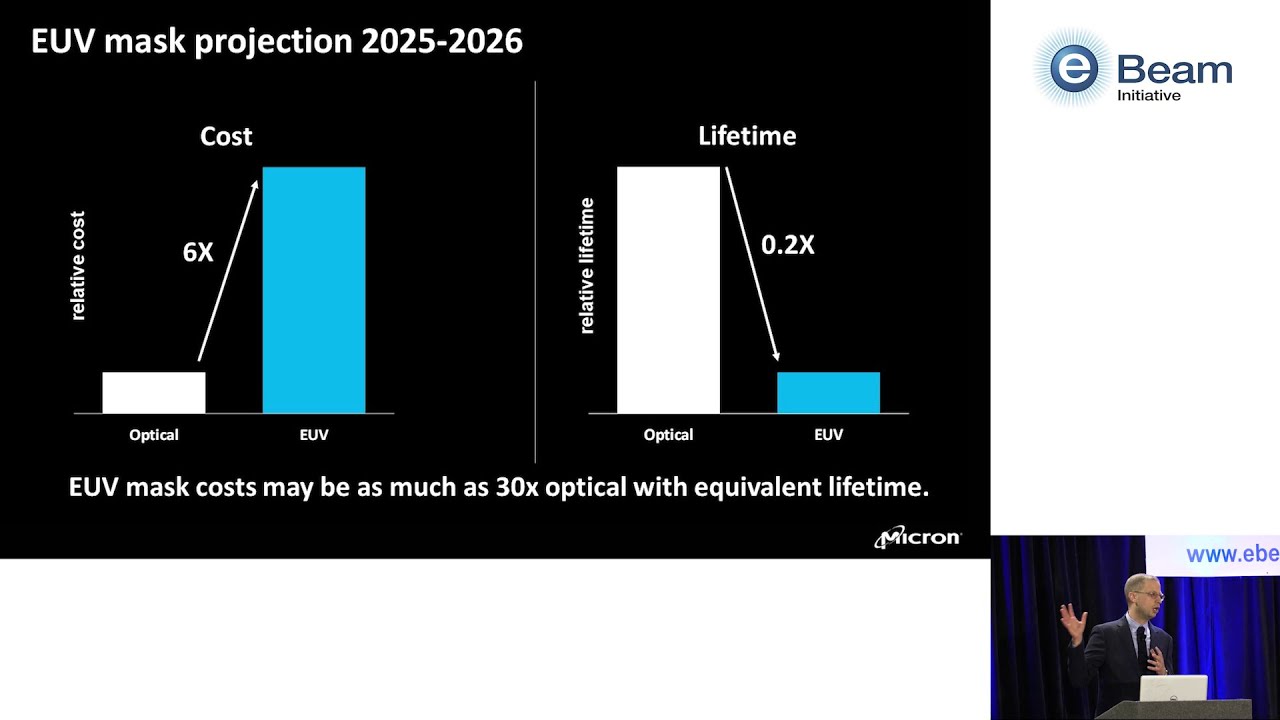
In a video from a couple of years ago, there is discussion about the use of EUV Pellicles after the 17-minute mark. The talk examines the pros and cons of these. Interestingly, around the 19:15 mark, they say:

“Maybe by the time when the industry gets into CNT pellicles it could tilt the scale more favorly”.
link:

A fellow forum member made an interesting observation about Micron and the job advertisements for their Mask Technology Center (MTC). Based on the job ad, Micron has identified an ‘industry inflection point’ regarding the adoption of EUV pellicles on the memory side. This could potentially also involve production using High NA EUV lithography sometime in the future.

link:

In my opinion, the trend on the memory side is clear: more efficient memories and even lower power consumption are needed. The transition from DUV → EUV supports this, and Micron is perhaps slightly behind Samsung and SK Hynix in this regard. In their latest memory chips, a significant portion of the layers is already made using EUV. In the future (3y+), it will be interesting to see if the same thing happens on the memory side as what is expected to happen with these other foundries as nodes advance to the next generations.

10 Likes

I don’t know which thread would fit this best, but as many of you know, the Strait of Hormuz is of great importance for Qatar’s helium shipments. Oil and LNG are usually the ones in the headlines, but if the crisis is prolonged, it could lead to significant challenges in semiconductors.

No Helium, No Semiconductors" — Samsung, SK Hynix on High Alert

As global logistics tensions escalate in the wake of the Iran crisis, South Korea’s semiconductor industry is facing supply instability for helium gas, a critical process material. Ships transporting helium have come under restrictions at the Strait of Hormuz — a key Middle Eastern shipping lane — causing disruptions across the broader supply chain. Industry voices are calling for diversification away from Qatar-dependent supply toward alternative sources such as the United States and Russia.

According to industry sources on the 11th, major chipmakers including Samsung Electronics and SK Hynix have been closely monitoring their helium gas procurement situation following the outbreak of the U.S.-Iran conflict late last month, and are exploring strategies to expand helium recycling systems.

Helium is an industrial gas essential to semiconductor manufacturing. Inside the process chamber — the enclosed environment where wafer fabrication takes place — helium is used to purge residual gases after each process step. Given that semiconductor circuits are fabricated at the nanometer (nm) scale, ultra-high purity helium with virtually no contaminants is required. Industry sources indicate that helium of up to 99.9999% purity (6N grade) is used in these processes.

The core problem is that South Korea’s semiconductor helium supply chain is heavily concentrated in a single region. According to the Korea Customs Service, South Korea’s total helium gas imports last year amounted to $226.9 million, of which 64% — or $146.84 million — originated from Qatar. The United States is the second-largest supplier, but at a 28% share, there is a substantial gap relative to Qatar. For high-purity helium used in semiconductor fabrication specifically, industry estimates suggest Qatar’s share approaches 80%, with only marginal contributions from U.S. and Australian sources.

Helium is extracted during the process of cooling Qatar’s natural gas below -162°C to produce liquefied natural gas (LNG). Helium, which is present at a concentration of 0.1–0.5% within LNG, is separated and captured during this liquefaction process. The raw helium is then shipped from Qatar to South Korea, where it undergoes high-purity refining for semiconductor applications.

South Korea’s semiconductor-grade helium supply chain is dominated by the world’s largest industrial gas companies — Linde, Air Products, and Air Liquide. These firms source raw helium from Qatar, transfer it to their Korean subsidiaries, and refine it to high purity at local facilities before supplying it to domestic chipmakers. Among Korean companies, KC Industries — a subsidiary of KC — is known to source helium from Japan’s Iwatani and supply it to Samsung Electronics.

With raw helium supply from Qatar now effectively cut off, the semiconductor industry has gone into emergency mode. One industry official noted: “If Middle Eastern volumes passing through the Strait of Hormuz are blocked, finding alternative supply at short notice is extremely difficult.”

The industry is prioritizing the United States as Qatar’s primary replacement. The rationale is that U.S.-sourced helium has proven quality and is already partially used in fabs, making it immediately deployable despite higher costs. Russian helium producers are also reportedly under consideration, given their significant competitiveness in volume and pricing — though establishing supply channels has been difficult since the Ukraine war.

There are also calls for proactive supply chain diversification even if Middle Eastern sea routes normalize following this episode. One industry official stated: “Given that helium prices have already spiked sharply on multiple occasions, this crisis should be used as an opportunity to expand new supply relationships with the U.S. and Russia to achieve more stable procurement going forward.”

https://www.hankyung.com/article/202603112644i

Rumor has it that Samsung and SK have acquired a six-month buffer stock. According to Grok, Intel instead sources its helium from the United States. I don’t have information regarding TSMC.

16 Likes

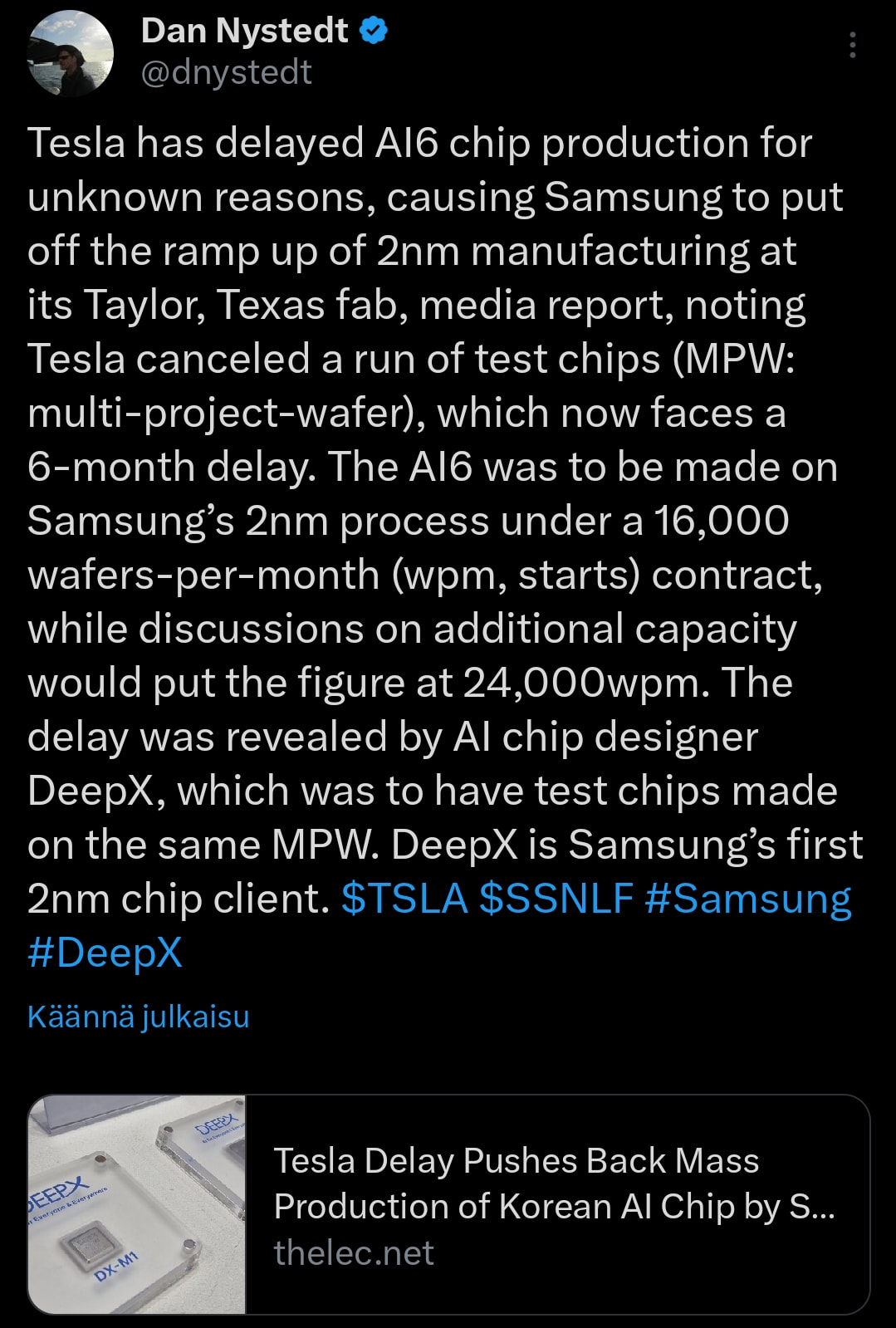
It looks like there’s about a six-month delay for the start of Canatu’s ramp-up.

I suspect the CMD was moved to the end of March so they could say one line is already ramping up. Now the CMD message will likely be a bit more lackluster.

This will also likely have a direct impact on that second reactor order expected from the same customer.

19 Likes

Market size is certainly not going to be reached anytime soon:

https://x.com/dwarkesh_sp/status/2032514120461988204?s=46&t=499WpwaAyJmQ9CLT93iGoA

1 Like

In my opinion, the CMD hasn’t actually been moved or postponed at any point; it has been set for that same March 26th date since the autumn.

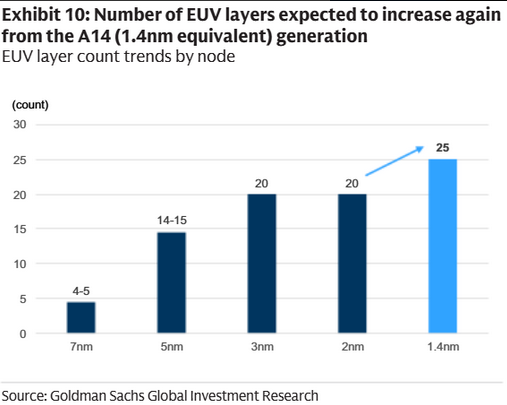
A couple of years ago, I was under the impression that when moving to high NA, the number of reticles would decrease as we move away from so-called multipatterning. The number of reticles in production is a critical parameter for Canatu, because each individual reticle also carries its own pellicle. When I listened to ASML’s conference calls last autumn, it started to emerge that this might not necessarily be the case; instead, ASML even sees the number of layers increasing. Goldman Sachs has apparently reached the same conclusion.

21 Likes

Kepler’s ASML analyst comment from March:

ASML provided detailed performance data for both its 0.55 NA High-NA and 0.33 NA Low-NA EUV platforms at the SPIE Advanced Lithography event. The update indicates that de-risking for High-NA technology is progressing faster than it did for Low-NA at a comparable stage: throughput, overlay accuracy, and availability have either been achieved or are clearly within reach. This reinforces confidence for the start of production in 2027–2028 and significantly reduces the risk of delays in high-volume manufacturing (HVM) ramp-up. The EXE:5200B has processed over 500,000 wafers (vs. over 300,000 in the last quarter), achieved a rate of 175 wafers per hour (+59% compared to the EXE:5000 rate), and delivered sub-0.8 nm matched-machine overlay with over 80% availability (4-week average).
High-NA is expected to reduce patterning costs by 18–24% for advanced logic (A14) and 35–37% for DRAM (0A) compared to Low-NA multi-patterning, directly challenging the skeptical view that High-NA is too expensive. ASML reiterated that it will achieve HVM readiness by the end of 2026 for both logic and DRAM. Regarding Low-NA EUV technology, ASML outlined a multi-generational roadmap toward the NXE:4600 High Productivity platform, aiming for a throughput of over 400 wafers per hour by the early-to-mid 2030s. Last week, we also heard about progress toward approximately 1,000 W source power, which is the primary means of further increasing productivity.
We expect that every ~14–18% increase in throughput will lead to an increase in average selling prices (ASPs), as customers prefer to buy productivity (more wafers per hour in the same factory footprint) rather than increasing the number of tools, cleanroom size, overhead, and production complexity. Given that input costs should not increase in the same proportion, this supports margin expansion through mix and better value creation. Reuters separately reported yesterday that ASML is exploring opportunities to expand into the advanced packaging equipment market. While this is not entirely new, the rationale is clear, as HBM stacking and chiplet architectures raise the requirements for optics and alignment precision. This expands the total addressable market (TAM), which consensus does not currently reflect. The impact is immaterial in the short term, but it adds further optionality to the EUV story.

5 Likes

Could this even mean ASML’s interest in acquiring Canatu’s semiconductor business? Vertical integration could be a sensible move here.

1 Like

I have received some private messages about whether it is possible that ASML would buy Canatu. I personally consider this unlikely; I’ll list the reasons briefly here:

  • ASML is a lithography equipment manufacturer, meaning they produce the equipment used to expose wafers. Although the ASML name is on the side of the machine, not all the parts in the machine are manufactured by ASML. Take Zeiss optics as an example. The reticle, also known as a mask on the forum, is not manufactured by ASML either. Pellicles, which are attached to the reticle, are also usually from different manufacturers where ASML is not involved.
  • If ASML wanted to control the entire ecosystem, in my opinion, they would also need to acquire reticle manufacturing methods. If ASML were interested in controlling the entire ecosystem, I suspect they would have acquired these competencies a long time ago.
  • Which company could then be the one to buy Canatu? I would look toward some large mask shop that wants full synergies, mask + pellicle, but I also doubt this scenario.
  • Let’s leave the door open, however, for ASML to become a serial acquirer in the future that could consolidate all the scattered businesses, but there are no indications of that yet.
27 Likes

It is hard to find anything negative for Canatu in this

Samsung moves toward second chip factory in Taylor as demand surges

The planned Fab 2 facility is estimated to span about 2.7 million square feet, the same size as the Fab 1 building currently under construction.

19 Likes

ASML has occasionally acquired companies, but these have usually already been its subcontractors. It seems they have typically had to make these acquisitions to ensure quality and reliability of supply.

1 Like

That’s exactly right. Take Cymer for example, which manufactures lasers in the United States and is owned by ASML; Cymer was acquired back in the day to secure the supply of lasers. However, it is good to understand that a pellicle, on the other hand, does not affect the operation of ASML’s equipment—it can just as well be used without a pellicle, and ASML is not a customer of Canatu. The pellicle’s purpose is to protect the mask from particles and is a so-called “nice-to-have feature”. It is mainly a problem for the FABs if they don’t want to use a pellicle and suffer yield loss because of it. That is why the dynamics are slightly different.

4 Likes

Here are Ate’s comments on the small contract Canatu received. :slight_smile:

7 Likes

Quite a lot of equipment. Hopefully something will come from there in the future towards Canatu as well.

3 Likes

Unfortunately, it seems there are no High-NA (high numerical aperture) tools included at all. Following the same cautious approach as TSMC.

As Tj. Juha Kokkonen revealed in the earnings call a couple of weeks ago, Canatu’s pellicles will also be used in standard EUV.