Alokas interviews

162. Timo Lappi

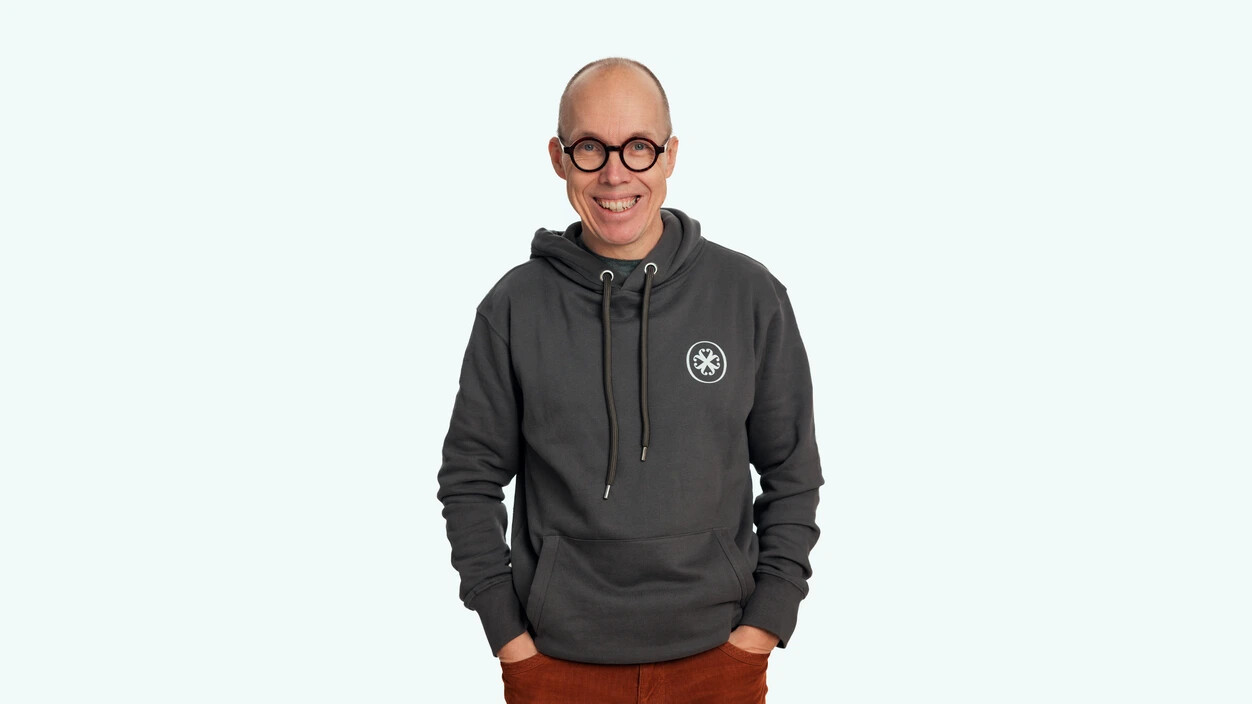
Today I had the pleasure of publishing an interview with Fondia’s CEO Timo Lappi, who radiates enthusiasm and a clearly entrepreneurial mindset.

It was wonderful to see how Timo has come to the Forum to interact with investors. Through his interviews and engagement on the Forum, I have noticed that his strengths include relaxed, convincing presentation skills and a genuine friendliness toward investors. :slight_smile:

Based on my impressions, he is also a visionary, analytical CEO whose calm confidence, deliberation, and genuine interest in people inspire trust all around him. His attitude and “story” are certainly inspiring, and he seems to have just what Fondia needs right now—especially in terms of a certain “growth-oriented mindset” and versatility. :slight_smile:
1. In fifty words, tell us who you are.

I am Timo Lappi, and I serve as the CEO of Fondia. Professionally, I describe my identity with the word Lawyerpreneur. It means a combination of a lawyer and a growth entrepreneur.

I live in Töölö, Helsinki, with my spouse and our dog Pulla. My three twenty-something sons are studying business and have already moved out on their own. In my free time, I recharge my batteries through sports, the company of friends, reading, and music.

2. Tell us three things about yourself that few people know in public.

First, I am the black sheep of my family. My grandfather was a doctor, both of my grandparents were doctors, my parents are doctors, my brother is a doctor, my cousin is a doctor, and my uncle is a doctor. I am the only lawyer in our family. I made the decision to aim for a career as a lawyer already in high school and have always felt at home as a lawyer.

Second, few people would guess from my outward appearance which sport I have won a Finnish championship in. The answer is: weightlifting, in which I won gold about ten years ago in my age and weight class.

The third is something some may already know, but I hope even more would know. I recently finished the book “Osakeyhtiön johtoketju” (The Chain of Command in a Limited Company), published by Alma Insights. It is about how a limited company’s shareholders, board of directors, chairman, CEO, management team, and personnel can best collaborate, avoid conflicts, and move in the same direction. The book contains many stories and is based on my own experiences in various roles within limited companies. Writing the book was a very interesting way to develop my own thinking.

3. What interests and hobbies do you have besides investing?

I believe in lifelong learning. Therefore, I actively read books and follow the events around me. Both fiction and non-fiction can teach you to look at things from new perspectives.

On the one hand, I get my energy from exercise, and on the other hand, it is the best way for me to unwind. It is also a way for me to meet friends during morning workouts involving weightlifting, swimming, and indoor cycling. Many thoughts have crystallized for me during a long run without company or music.

4. What is a typical weekday like for you?

My alarm clock starts the day shortly after 6:00 a.m. Unless I head straight to a morning workout upon waking, I start my workday at home with tasks that require quiet concentration. The quiet morning hours are the best for that.

I usually head to the office by 9:00 a.m. Almost every day, I remember to enjoy the fact that I can walk my roughly fifteen-minute commute. At the office, I spend most of my time meeting other people. That is at the core of my work, because I believe a good leader succeeds in their job when they make others around them shine.

I usually leave the office around 6:00 p.m. Unless I have evening plans, I might head out for a run. And before the lights go out, I spend the last hour of the day reading.

5. What are you like as an investor?

I don’t think I’m a good enough investor. I am quite impulsive and get excited about things quickly. My main job takes up so much time that I don’t have enough time to delve into investment targets in a sufficiently long-term and careful manner. Therefore, I only make relatively small investment decisions entirely on my own.

We operate with a more long-term perspective together with my asset manager. Together, we have drawn up a long-term investment strategy that we now follow. It brings a new kind of discipline to my investing. My investment horizon is long, which gives me the confidence to take on and tolerate risk. The equity weight in my investments is very high.

6. What is your investment history?

I have always been interested in stocks. Even as a student, I occasionally traded Finnish stocks. I have basically been a “buy and hold” investor. I have traded stocks quite rarely and steadily built up my stock portfolio.

About ten years ago, I started working with an asset manager. Since then, I have systematically saved for investments. It’s not as exciting as direct stock picking, but it’s smarter for me.

7. What is your work history?

I studied at the Faculty of Law and the Faculty of Business at the University of Helsinki. After graduating, I headed into the legal profession, working as an attorney dealing with mergers and acquisitions, private equity, technology companies, and general advisory for growth companies. I really liked my job and wasn’t looking for anything new when I heard about a startup in my own industry that was looking for a Co-Founder.

I transitioned from the legal profession to Fondia, where I worked as CEO and in other management roles for a good ten years. Shortly before Fondia’s IPO in 2017, I moved on as founder and CEO to build a “healthcare Fondia,” namely Heltti, in the occupational health and therapy sector.

At the beginning of this year, I returned to Fondia, initially as interim and later as permanent CEO (if permanent CEOs even exist in listed companies). I have a feeling that I have returned to a familiar industry, a beloved company, and a very interesting role.In addition to serving as Fondia’s CEO, I also act as the chairman of the board in a few interesting growth companies, namely Heltti Oy, Linio Biotech Oy, Nordic Business Group Oy, and Witted Megacorp Oyj.

8. What kind of portfolio do you have, and what are its largest holdings?

My portfolio was originally an investment advisor’s nightmare because it was so poorly diversified. My largest holding is Fondia’s shares, which I own through my company Sijoittamo Oy. In addition, I have invested a six-figure sum in the shares of Witted Megacorp Oyj. I serve as the chairman of the board of Witted.

Since then, together with my asset manager, I have gradually started to diversify my investments. We have built a well-diversified portfolio of American stocks. In addition, I have invested in Venture Capital, Private Equity, and real estate funds.

9. What does your stock-picking process normally look like step by step?

This is an area where I have a lot of room for improvement. I haven’t managed to build a systematic stock-picking process for myself that I would follow. Instead, I might get excited about a company, for example, based on a magazine article or discussions on the Inderes forum. After that, I familiarize myself with the company in more detail, following which I might make an investment decision. For example, right now I am interested in getting to know Framery and its IPO better.

10. Describe in three hundred words what kind of company Fondia is?

Fondia is a business law service company operating in the Nordic and Baltic countries, offering companies ongoing legal services (Legal Department as a Service, LDaaS) as well as traditional legal assignments. Fondia’s core idea is to make law more accessible, predictable, and business-supporting for companies. The company stands out in the market particularly through its service model, which combines the availability of an in-house lawyer with the expertise of a traditional law firm.

The LDaaS model is based on a monthly-billed, long-term partnership. It offers clients a stable and predictable way to handle legal matters without or in support of their own internal legal department. The model generates recurring and relatively predictable revenue for Fondia, which reduces the cyclicality of project-driven work. At the same time, it enables a deep understanding of the client and long-lasting relationships, which are among Fondia’s key competitive advantages.

Fondia has an established position in Finland as a strategic legal partner for medium and large companies. The company also has offices and teams in Sweden, Estonia, and Lithuania. The service portfolio covers key areas of business law such as contract law, corporate law, labor law, data protection matters, intellectual property rights, and corporate transactions.

Fondia aims to be the market leader in continuous legal services in the Nordic and Baltic countries. This is achieved by making client work more efficient, improving the employee experience, commercializing the revamped LDaaS service, and agilely adopting Legal Tech tools. The company invests in efficient, scalable operating methods and is a pioneer in its field in the application of Legal Tech.

From an investor’s perspective, Fondia is a service company that generates stable cash flow, whose competitive advantage is based on long-term customer relationships, a scalable service model, and a strong corporate culture.

11. What do you enjoy most about your work? What is the least enjoyable part of your work?

I enjoy most in my work the moments when, together with the team, we succeed in some important project. For example, winning a new customer for Fondia or successfully closing a new key person joining the team. I have also greatly enjoyed the international aspect related to my work. This autumn, for example, I have spent a lot of time with Fondia’s Swedish team.

The least enjoyable part of my work are situations where interpersonal conflicts within my own organization need attention. In my experience, these exist in all organizations. The most important thing is to address them quickly and decisively if they are observed.

12. What do you consider to be the company’s most important long-term growth drivers? And what factors do you see as the biggest risks on the path to the company’s (and the share’s :wink:) success in the future?

According to recently published information by Talouselämä, Fondia is the 9th largest law firm in Finland. According to in-depth interviews conducted in connection with Fondia’s strategy process, a corresponding place exists for a company like Fondia in the markets of the other Nordic and Baltic countries as well. If Fondia were to achieve its current Finnish market share in these other markets as well, Fondia would multiply its revenue. This is the biggest driver of Fondia’s revenue growth. The biggest driver for increasing profitability, in turn, is making client work more efficient.

The regulation concerning the operating environment of businesses is constantly changing and increasing. This also increases the demand for legal services.

On the other hand, the biggest risks are people and technology. Fondia’s business relies heavily on the professional skills of Fondia’s lawyers and other key persons. Fondia actively wants to hold on to these people. Losing people in the team would pose a risk to the business. The second risk is technology, which I have commented on in more detail below.

13. What are your three best traits as a CEO? And what do you feel is your biggest area for improvement in this role? :blush:

My three best traits are a deep understanding of the industry and a lawyer’s work, an understanding of numbers, and communication and people skills. Areas for development, on the other hand, can be found in focusing and prioritization. I should know how to say no to more things in order to advance the things in focus even more effectively.

**14. When talking about employee satisfaction, many companies measure and talk about it, but fewer succeed in turning results into actions. What is a concrete thing Fondia does differently than competitors in improving employee well-being? A follow-up question as well - doesn’t making such a change generally take a long time – even years, and how can we trust that if employee satisfaction is raised, it will stay there and no longer fluctuate?**Right from the founding phase, one of Fondian’s strategic goals was to create the best workplace in our industry. In the 2010s, we participated in a study by the Great Place to Work Institute, which named Fondia the best workplace in Europe in the legal services sector. Unfortunately, this is not the case today, and we still have work to do in improving our employee satisfaction.

Fondia’s best asset in improving employee satisfaction is that we do not operate in a traditional pyramid-shaped partnership organization where our staff would be divided into partners and other personnel. We operate in a more non-hierarchical and informal manner. With us, all lawyers get into direct contact with clients, which helps them develop faster and makes the work more meaningful. I believe that, at the end of the day, employee satisfaction is best improved by focusing on the actual work tasks rather than wellness days (tyky-päivät) and soda machines. By ensuring that lawyers have a sufficient amount of sufficiently interesting client work.

Having returned to Fondia after an eight-year hiatus, I noticed that our corporate culture had rusted a bit. I strongly believe in corporate cultures, and I also believe that corporate cultures are ultimately the responsibility of CEOs. Changes do not happen quickly. I am prepared to work for the long term to repair our corporate culture.

Building a good workplace is good business. Satisfied lawyers perform better. This ensures that the development of employee satisfaction will remain at the core of Fondia in the future as well.

15. AI has already changed many industries – at least to some extent. How do you think the spread of artificial intelligence in legal services will affect the role of a lawyer and the creation of client value over the next five years? Are you afraid that international players with their resources and more modern AI systems will take your clients away from the negotiating table?

The legal industry is currently in an interesting situation as Legal Tech applications are changing the work of a lawyer. People I know have very different perspectives on this change: some expect Legal Tech applications to soon handle a large part of lawyers’ work. At the same time, others, like one of Finland’s leading artificial intelligence experts whom I listened to a couple of weeks ago, state that the previous technology transformation from pens and papers to computers was actually greater than the AI revolution now dawning.

I believe that lawyers will get good tools from Legal Tech applications to handle routine tasks. We human lawyers will still be needed in the future, and these Legal Tech applications are good news for us. When machines handle routines, we can use the time thus saved for more demanding and interesting work. A law firm recently published a press release stating that Legal Tech applications have freed up an average of 16 hours a month for its lawyers to be used for new purposes.

I believe that this upheaval will challenge traditional partnership-structured law firm models. Sweden has provided a good example of this when Axcel Partners bought a majority stake in six Swedish law firms, whose lawyers resigned from the Bar Association as a result of the arrangement. Axcel has announced that this new company named AGRD Partners will actively invest in Legal Tech solutions. I am following this development with interest.

16. Sweden is Lextopia’s first market. Why did you start there, and do you see the possibility that this so-called “internal startup model” could also work for Fondia as a way of expanding into other countries?

I have spent a lot of time this autumn following the situation in Sweden. In my view, the Swedish legal services and Legal Tech market is ahead of the Finnish market. For this reason, we wanted to build our internal startup called Lextopia in Sweden.

The internal startup helps us be faster and more agile as we pilot various AI Native legal services. Such AI Native services could very well be low-threshold services with which we could also start exploring new countries.

17. What would today’s Timppa say or/and teach to the Timppa just starting his career?

He would say “loosen your tie”! At the beginning of my career, I focused on being a 100% sharp lawyer at work, and then took it easier in my free time. Later, I learned that the more you let your own personality show at work with colleagues and clients, the better the connection you create with both the team and the clients.

18. Why do you invest? What goals do you have regarding investing?

I invest because it is interesting and educational. In investing, the annual return is a concrete metric with which you can evaluate what you have learned and how you are doing relative to others. When you invest, you automatically stay interested in the trends and companies around you.

Of course, I also invest to gain financial security. My goal is for my investments to bring me financial independence before long.

19. Alokas is perhaps overly cautious and security-seeking in life, how could Alokas dare to take the plunge and take appropriate risks like you, so as not to get too stuck in the familiar and safe?

Thank you Alokas for the good question! In my own life, my biggest financial risk-taking moments have been related to times when I have left behind employment and become an entrepreneur. I have done this three times so far. I always remind myself at those times that usually fear is a sign that good and interesting things are happening.

In addition, before new ventures, I go through in my mind what is the worst that could happen if the venture went wrong. Usually, it’s not very bad. Once you have gone through this mental exercise, failure is no longer so frightening.

20. What do you want to thank Inderes and the Inderes Forum for?

I have long been a fan of Inderes, which has boldly renewed the practices of its own industry. One good example of that is the Inderes Forum.

Thank you to the members of the Inderes Forum. I have drawn a lot from the comments and questions of other members, both as an investor and nowadays also as the CEO of a listed company._________

Thanks, Timo!

Great to have investor-friendly Timo here on the Forum. :slight_smile: I always find it somewhat reassuring and trust-inspiring when a company representative comes down to the Forum, as it often indicates that the person trusts their company.

Many companies organize expensive events for dozens of people, but on the Forum, many companies could get free visibility while potentially reaching even thousands of readers.

Fondia’s story is at an interesting stage, and I believe that under the leadership of a CEO like Timo, the company might reach its potential. :slight_smile:

Have a great Friday, everyone!

49 Likes

In the near future,

10 Likes

In addition to the aforementioned, soon there will also be a very versatile investor, especially known from Äxä, who has been featured in various media multiple times. Furthermore, at some point, one of the “old” Forum legends will also step into the interview spotlight, if I may say so. :blush:

Have a pleasant investment week ahead!

5 Likes

Tomorrow, Friday, I will publish an interview with a versatile investor who, in my opinion, brings community to the Finnish investment scene in a great way. I also appreciate his versatile way of life: a good balance of investment matters, enjoyment, and taking care of his own well-being.

He is particularly skilled at sharing information on investment topics and highlighting things that one might not otherwise notice themselves. :slight_smile:

Have a relaxed Thursday everyone!

3 Likes

163. Jarmo Friman

I admire Jarmo for many reasons, perhaps especially for how excellently he acts as a versatile investor while enjoying his life, among other things, by traveling and indulging in culture, good drinks, and food. My appreciation is not diminished by how well he also takes care of his own fitness.

He is certainly familiar to many from Äxä (X) and other investment media. I have followed him on Äxä (X), where he is very skilled at highlighting various aspects of the investment world – even those that only a few investors can bring to light.

He is an important person in the Finnish investment world, of course, because he shares good thoughts and perspectives on investment matters and more, but also because he builds community among Finnish investors, for example, with the help of Falco. I also consider it very important that he emphasizes how essential it is to take care of oneself and enjoy life.

1. Tell us in fifty words who you are.

I am a private investor from Helsinki, born sometime in prehistoric times in the last millennium. I have a Master’s degree in Sports Science and previously worked for about twenty years at a gym I owned.

2. Tell us three things that few people – at least in the “investment scene” – know about you.

I have worked as a tour guide in Turkey and Rhodes.

I produced and hosted a few TV programs in the last millennium.

I was passionately interested in ornithology as a teenager.

3. What interests and hobbies do you have besides investing?

I play speed chess regularly. I try to travel as often as possible, aiming to visit over 100 countries. Gastronomy interests me: different food cultures, recipes, wines, craft beer.

Exercise is a lifestyle, not a hobby.

4. What is your typical weekday like?

I wake up around six. I read emails, Hesari, X, follow CNBC, think about the day’s assignments…

During the day, I follow my weekly exercise program and engage in some activities as opportunities arise. In family household chores, cooking usually falls to me.

I follow the markets as needed until the US close. On volatile days, I might make over twenty trades.

5. What kind of investor are you? 6. What is your investment history?

5.-6.

I am a contrarian investor who utilizes both classic holding and faster-paced swing strategies. I believe in value, but I also occasionally participate in momentum and special situations.

I started active investing in 2008 when I sold my then-company. Time has taught me harshly, but fortunately, there have also been wins.

7. You are a versatile investor. What asset classes make up your investment wealth, and how are different investments distributed?

The majority of my investment wealth is in publicly traded instruments. In a smaller proportion are art, valuables, etc. Apartments were sold long ago.

My largest individual positions are now GLNG, IREN, NOVO. Significant are portfolios with several companies: precious metals, uranium, other metals.

8. Which two stocks did you buy last, and on what grounds?

I bought a bit more GLNG and Trulieve Cannabis because their prices were below my estimated fair value.

9. What is your normal stock-picking process step by step?

I find interesting companies from various sources, such as financial media, social media, or through peer discussions. First, I consider whether the company is in a position that supports prevailing market trends, whether it has its own niche, a moat, etc. I quickly and superficially examine the numbers. I often take a starter position and study more. If the story convinces me and the earnings reports align, the position grows.

10. Tell us in fifty words what you think of the following as investment targets right now?

Bitcoin

Bitcoin is here to stay. Scarcity is hard currency in a world that prints money. Volatility will continue, but the price climbs during the upward phases of the cycle.

Iren

IREN = time to market! Lots of electrical capacity, a track record of ability to grow, develop, and finance, good management. Among the AI/DC winners, I believe.

Uranium

Uranium is a must when reliable electricity is needed. I believe the spot price will rise significantly in the coming years, which supports companies in the sector. I own two ETFs and a group of companies.

Very Large Crude Carrier-sector

VLCC is currently one of the best sectors in shipping because the supply and demand ratio is good in the giant vessel class. My choice: OET.

11. Which sectors do you find interesting right now, and which sectors do you think you would particularly avoid at the moment?

I am waiting for the time of raw materials. Precious metals will rise more in 2026, I believe. Copper perhaps after a dip in 2027? Uranium will rise in the next 5 years. Joker: US cannabis. Commodities = space full of interesting firms: EQ Resources, Millennial Potash, Abaxx Technologies…

12. Briefly explain the principles of contrarian investing, and what are your most important tools as a contrarian investor?

A contrarian investor considers why something is cheap and whether it is cheap for a reason or without reason. They dig through trash cans and look for places where FOMO doesn’t shine and hype isn’t heard. They consider intrinsic value and future change towards a dormant company. Contrarian investing has features of classic value investing, but also, for example, special situation strategies.

I read a lot, look for information from subscribed newsletters, search X with cashtag searches, and once I find something, I move to the selection process I described in the answer to question 9.

13. Can you tell me what Falco is? I know it somehow involves happy and smart people and investing… :slight_smile:

Falco is an informal investor community that has fun and organizes investment-related events, such as company visits and restaurant events organized by companies (e.g., Endomines, Oroco Resource, FinEx). Anyone genuinely interested in investing can join!

(Rookie’s comment: Go check out Jarmo’s account for nice pictures from these Falco events! :slight_smile: )

14. How are you able to be so well-informed about different industries, companies, raw materials, and similar things? How on earth do you manage that?

People’s personalities differ greatly. I am “holistically interested” in life’s phenomena, which means companies from many sectors also slip into my portfolio. Probably, pruning would be beneficial, but a broad portfolio composition also contains important “hobby values.” I read a lot, follow the investment scene constantly, but I don’t find it particularly stressful.

15. What is your most memorable investment-related memory? What investment-related memory would you perhaps like to forget?

Perhaps the most memorable thing is that during my time as an entrepreneur, I found good buyers to whom I sold my then-limited company. That’s when a new career began.

The collapse of Nokia and the Nokia cluster during the Elop era was an expensive lesson for me. Less leverage would have been better…

16. How do you manage your emotions in investing when the world is stormy and prices fluctuate wildly? As a trader, emotional management is certainly especially important.

Emotions are an important part of life. In investment storms, doing your homework helps, i.e., you know your holdings and strategy. Classic risk management is also important: if you lose sleep, your diversification is undone, and your stock weighting is too high. You have to think rationally: the portfolio can withstand the battering if the basics are done correctly. Here I stand, I can do no other!

**17. I appreciate that you are versatile and not just an investor – you exercise, travel, and do many other things – you truly seem to enjoy your life. Do you have any thoughts on how the rest of us could find as good a balance in life as you do?**Life is unique, says the cliché. But many sayings are true. Health first, relationships valued, the beauty of life honored. Versatility, curiosity, but also grace towards others and oneself. One must ask what one truly wants and then persistently strive towards that goal, without forgetting to have fun. Carpe diem!

18. How have you concretely enjoyed the wealth brought by investing?

Since I was young, I have wanted to travel as much as possible. The same continues. I don’t particularly value material things and objects, but rather experiences. Gastronomy is a great hobby. Architecture, art, design.

Likewise, the opportunity to meet different people around the globe is very rewarding.

19. Selling is especially difficult for a novice; they sell either too early or too late, and it’s not just bad luck. Do you have any suggestions for correcting this?

A pre-built selling program, a “stop win”, can help with selling. Stop losses also work. One shouldn’t fall too much in love with a company.

20. What would you like to thank the Finnish investment community for?

The Finnish investment scene has developed tremendously! I am grateful for the great acquaintances and friends I have met, for example, at lecture gigs, Falcon events, and for instance, at Shareholder Association events.


Thanks to Jarmo for the excellent and thought-provoking answers!

In my opinion, people like Jarmo are good role models from whom one can learn in many ways. Of course, I never mean that anyone’s ways should be copied as such, but often one can draw good things for one’s own life from different good people. :slight_smile:

Jarmo is a good example in many respects, and I, on the other hand, am a good cautionary example, especially in investing. :upside_down_face:

Happy Friday everyone!

64 Likes

Jarmo is definitely worth following on X, because he has these aforementioned good insights and shares. Here is his X account:

https://x.com/JarmoFriman


Into the weekend with a cheerful mind:

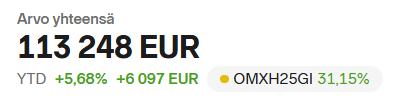
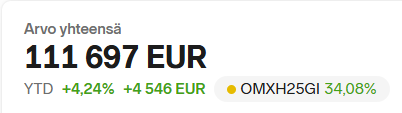
Fortunately, my portfolio recovered from the sharp morning drop:
image

However, the US stock markets haven’t opened yet, so there might be more “excitement” coming from there. :grimacing:

Have a nice weekend! :slight_smile:

11 Likes

Next week, I’m interviewing a person from the financial media who, in my opinion, does their job brilliantly. :slightly_smiling_face: I’ve also noticed that they follow the investment and financial world very broadly – even from the perspective of ordinary investors, for example, various social media and forums are clearly well-monitored by them, which I think is a great thing.

It’s also nice that they bravely agreed to the interview, even though I gave what I thought were quite difficult questions. I appreciate it. :folded_hands:

Have a nice new week, starting soon! :blush:

6 Likes

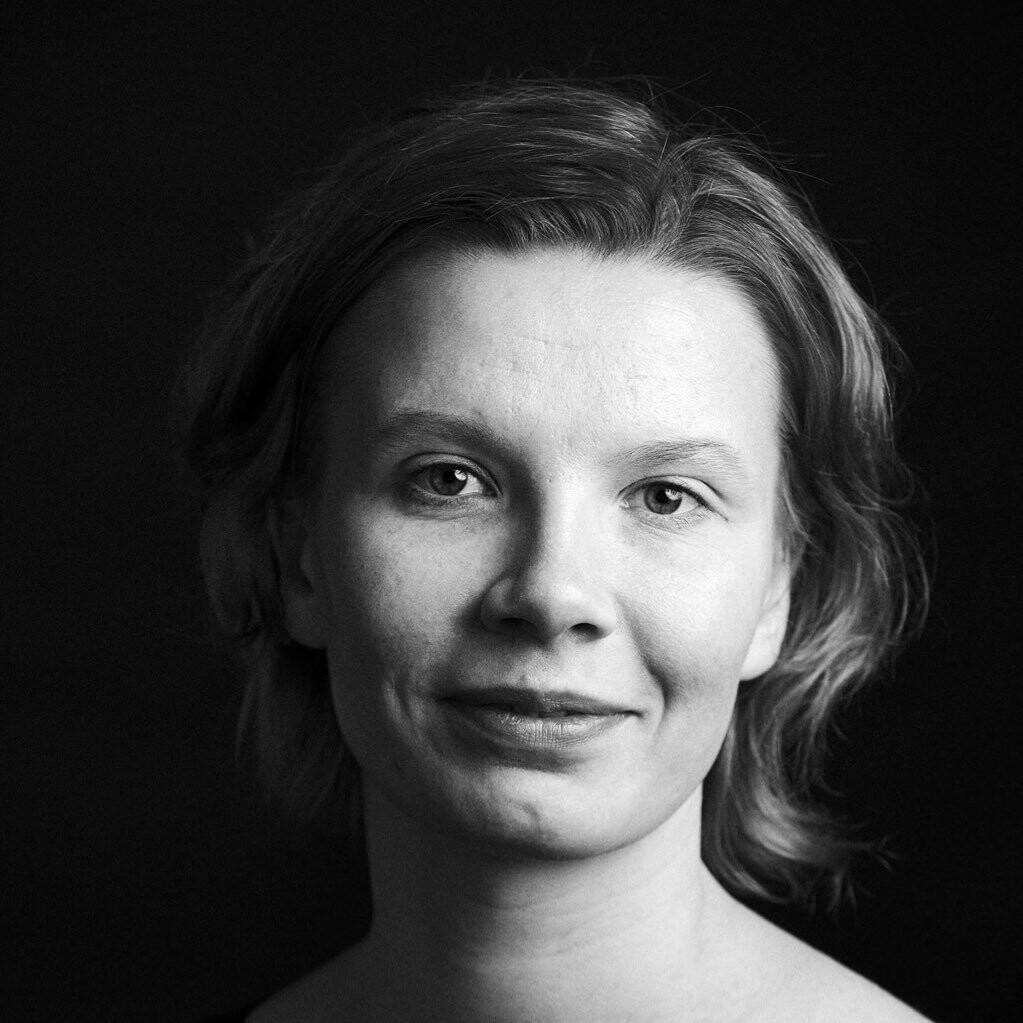
164. Maija Vehviläinen

Maija is easy to appreciate for many different reasons. First and foremost, of course, for how she, as a news manager, produces a lot of great and varied material for us investors with the help of her team. In addition, I am “forced” to praise her in particular for her courage, because as a media representative, it certainly isn’t easy to come to an internet discussion forum (well, fortunately there are a couple of other brave industry representatives here too). In any case, this courage is worth appreciating, but on the other hand, the discussion on this forum is mostly sensible and otherwise content-rich for investors.

It is also great how she follows the investment world comprehensively and also from the perspective of us ordinary investors, e.g., by being present here and on social media. I see that she appreciates the work she does with her team, and in her actions, I think both reliability and backbone are visible.

For the majority, the media represented by Vehviläinen are familiar and for a good reason – they are a valuable support in our investment activities and, e.g., in “reflections on one’s own finances”, as well as just for evening entertainment. :slight_smile: Now I will let you get to know Maija:

1. Tell us in about fifty words who you are.

I just read through my own answers, and based on them, I am a family-oriented risk-averse person. Maybe that holds true! I am also a news manager in the stock editorial office serving Alma Media’s financial publications. Our pleasant and knowledgeable team creates investment-related content for Kauppalehti, Arvopaperi, and Talouselämä. I originate from Suonenjoki in Inner Savo and currently live in East Helsinki.

2. Tell us three things that few people know about you.

  1. I suffer from severe stage fright. That’s why it’s great that public speaking is increasingly part of my job. I have noticed that nervousness doesn’t stop or even significantly decrease with experience, but you learn to tolerate it.

  2. I have lived in Russia, in St. Petersburg and Moscow, for a total of over two years of my life. In 2012, I was a higher education intern at the Embassy of Finland in Moscow. While following the liberal opposition movement in Moscow, one could briefly trick oneself into imagining that Russia would choose a different direction than the one it subsequently chose. I have applied twice to the Ministry for Foreign Affairs’ diplomatic school, known as kavaku. I succeeded encouragingly in the multi-stage selection exam, but after my second try, I abandoned my dreams of a diplomatic career.

  3. I bought one bitcoin in early 2016. Old emails revealed that the transaction was executed precisely on February 2, 2016, at the exchange rate of 343.33348 EUR/BTC. I would have made the investment of a lifetime by keeping the bitcoin I bought out of curiosity for longer, especially since the invested sum was so small that one could have lost it completely, but the bitcoin didn’t linger in my wallet for long. Looking back, I can’t really regret my bad and poorly justified investment or financial decisions, or my failures to decide.

3. What interests and hobbies do you have besides investing?

I am quite family-oriented, so during the busy years of raising young children, I have quite consciously pruned my interests down to the essential minimum. I feel I also need time free from plans and intentions. I prefer to spend my free time with my child. Nowadays, I jog a bit more goal-oriented than before. I should add fast sprints to my routine to gain some speed.

I delved into the Russian language, culture, society, and history in the past considerably more than my studies would have required. I would like to brush up on my language skills, which have suffered from underuse.

Art and culture. Previously, I used to check out new exhibitions in Helsinki’s interesting galleries and museums quite systematically; nowadays, I mostly make targeted strike missions. When living in Moscow, I often sat on the cozy rooftop terrace of the Strelka Institute for Media, Architecture and Design listening to lectures by architects; at that time, some of the best-known names in the field visited Moscow.

I studied psychology to the extent of one Open University neuropsychology course while on family leave, and I could study more.

4. What is a normal weekday like for you?

I typically go to the office around 8–9 a.m. During the subway commute, I often reply to messages and emails, browse the front pages of Kauppalehti, Hesari, and the Financial Times, and read the most interesting articles. Often I also listen to podcasts on my commute, most frequently the FT’s News Briefing. Working remotely would be an option, but I am pretty much estranged from remote workdays; all work goes smoother at the editorial office, and it’s more fun there than at home.

Workdays begin with meetings related to news planning. 1–2 times a week around 9:30 a.m., I am at the Alma House studio in Kauppalehti’s Talousaamu commenting on current market topics. The rest of my day typically goes into planning upcoming stories and editing finished ones, among other things.

After work, I either pick up my child from preschool and we spend time on hobbies or otherwise, or I go for a jog, most often straight from the workplace at Töölönlahti. During workdays, I rarely have time to properly dive into, for example, company reports or other material, so in the evenings I might still read those.

5. What are you like as an investor?

As an investor, and perhaps in life otherwise too, I am somewhat risk-averse. I tolerate falling prices even better than strong rises or long bull runs, during which I easily start to worry. On the other hand, I don’t start selling in a panic either; instead, my first concern during market drops is usually where to get cash for purchases.

There is risk, however, as I am all-in on stocks. My actual retirement savings are in index and other funds, but I dabble in stock picking on the Helsinki Stock Exchange mostly with pocket money.

**6. Could you tell us a bit about your work history?**Quite soon after returning from Moscow to Finland, I applied for a summer journalist position at Kauppalehti, thinking that at the very least I could entertain the editorial recruiters with my humanities degree. I underestimated the importance of Russian language skills and knowledge of Russia in the job market, and to my surprise, the starting point in the job interview was whether I could start even earlier.

I have been with the same employer, albeit in slightly different roles, for over 10 years. That is probably a relatively long time, but on the other hand, it is a short time to follow the markets. For example, I haven’t experienced the financial crisis, let alone the dot-com years, with my hands in the dirt or with skin in the game. You can, of course, read or hear about past events, but experiencing them yourself is different. I still experience periods in my work where my expertise and understanding seem to deepen rapidly, which is extremely rewarding.

Earlier, I had time to do short-term gigs of varying lengths at, among others, Uusi Suomi, Aamulehti, and Etelä-Saimaa in Lappeenranta. During my student days, I also worked for a while as a visa clerk at the Consulate General of Finland in St. Petersburg.

7. Could you tell us a bit about your current job and what all it entails?

My work ranges from managing news situations to planning, editing, and polishing our upcoming articles. Nowadays, the job also includes appearances such as the previously mentioned ones on Kauppalehti’s Talousaamu (Economic Morning).

From time to time, there are various projects; for example, together with Inderes, we are organizing the Pörssisijoittajan viikko (Stock Investor’s Week) event, and on Wednesday, November 26, I will be hosting the Optio stage at the Sijoittaja 2025 (Investor 2025) event at the Helsinki Messukeskus. The work has changed and diversified significantly, which is fun and educational.

8. What is your investment history like?

I managed to avoid investing for quite a long time and mostly saved into an ASP account (first-home saver’s account). I started investing after I began working at Kauppalehti in 2014.

I took a look at my first small, direct stock investments. In the summer of 2014, I bought Withsecure—then known as F-Secure—Caverion, and Nokia. Later, my portfolio seems to have acquired at least Fondia, Rovio, Lehto, and Spinnova, as well as a few index funds. I claimed earlier that I am risk-averse, but that perhaps doesn’t sound entirely accurate. I sold many of my first direct stock investments before the coronavirus years to finance the purchase of an apartment in downtown Helsinki. The apartment was sold just before the market froze.

Since then, my portfolio has shifted towards index and other fund investments, and my dabbling in small-cap stocks on the Helsinki Stock Exchange has decreased. This is also influenced by our trading recommendations, which restrict, for example, trading in stocks that are the subject of an upcoming or planned article, as well as trading frequency. If a company is interesting, we in the stock editorial team should at least have an article about it in the works.

9. What kind of portfolio do you have?

I am practically an index and fund investor as well as a monthly saver. It would probably be wisest to invest in the lowest-possible-cost global index, but I haven’t managed to throw myself into being that passive with my fund investments either. Seligson’s portfolio holds the Top Brands fund and the USA index, to a lesser extent the Asia index, Anders Oldenburg’s Phoebus, and the poorly performing Top Pharma fund, whose moment may yet come someday. I have been slightly concerned about the portfolio’s US weighting.

On the other hand, investments are also held in Spiltan Aktiefond Investmentbolag, which invests in Swedish investment companies, and an ETF investing in European industrial companies. I believe that with them and the Finnish stock picks in my equity savings account, the United States is at least not significantly overweight compared to the global index.

10. What stock did you buy last, and on what grounds?

While on a late autumn vacation, I bought Stora Enso; the justifications were mainly a balance-sheet-based miraculously cheap valuation and the upcoming forestry arrangement.

My thought was that the spin-off, which I considered practically certain, would put some pep into Stora’s multiples, even if the forestry sector cycle did not pick up significantly anytime very soon. The timeline for the arrangement extending to the beginning of 2027 was admittedly a small disappointment; on the other hand, the third-quarter result was a positive surprise.

Owning the future forest company could also be professionally interesting. Interesting discussions have taken place in both Finland and Sweden regarding the valuation methods of forests, and the best way to follow the pricing of the future company on the stock exchange is probably to see the line in one’s own portfolio.

11. What is your typical stock-picking process step by step?

I don’t really think of myself as a stock picker, so the process isn’t refined either. Risk aversion guides me to pay quite a lot of attention to valuation multiples, but I try to avoid investing based solely on them. I read a lot of analysis, especially from Inderes, but I aim to mirror the starting points and conclusions with my own thoughts as well.

12. You represent Kauppalehti, Arvopaperi, and Talouselämä; why are these worth reading, how do they differ from each other, and how do the target audiences of these publications differ?

Kauppalehti is the first, fast news source when it comes to stock exchange news. Regarding the stock editorial team, I am particularly proud of our market news desk, which follows the market even when nothing very significant is happening. Thanks to continuous monitoring, news is most often noticed there first when something happens. Arvopaperi stands out clearly as a hobbyist magazine in the field focused solely on investing. From Talouselämä, I would highlight, for example, investigative articles that often touch on investing as well, even though Talouselämä certainly has plenty of other distinctive content and its own readership.

13. What is the best part of your job? And what is the least favorite part?

The stock editorial team is a great work community—open, conversational, humorous, knowledgeable, enthusiastic about their subject, and operating with a low hierarchy.Least enjoyable, this was actually surprisingly difficult. Naturally, the work involves tolerating imperfection, inadequacy, pressure, and haste, but I have perhaps learned to tolerate all of them quite well.

14. What have been the most memorable investment market-related experiences through your work on the news front or otherwise?

Finnair’s massive rights issue may not have been a nationwide colossal news event, but for us in the stock market editorial office, it was a big deal. I think that we provide monetary value to our readers if we are able to help, for example, in special situations, and I think we succeeded then. However, the biggest credit goes to my colleagues, especially Ahti Terhemaa, by reading whose articles one was able to avoid the worst blunders.

I believe that we are currently living through a rather special period in the stock market as well, but it will perhaps only be put into perspective later.

15. Do you feel that your journalist background brings an advantage to your own investing or personal financial management? How?

Journalism involves curiosity on the one hand and critical thinking on the other, both of which are certainly useful in investing as well.

16. What do you think is an underrated or insufficiently discussed theme in the investment or economic world?

Recently, I have considered it important, for example, that we have critically yet diversely discussed private equity products offered to retail investors. On the other hand, the topic has indeed been discussed quite a lot lately, so I don’t know if the theme is under-discussed. The discussion is perhaps taking place more in financial circles than among the masses to whom the products are ultimately marketed.

Dividends are by no means an insufficiently discussed theme, but I would hope for a more emotionless attitude towards dividends. I am not for or against dividends; I mainly advocate smart capital allocation.

A listed company’s status is a mark of quality, especially from the perspective of minority shareholders, due to equal access to information and transparency. I hope it will remain so in the future. I understand that in a listed company, everyone wields power to the extent of their ownership, but following the administration, communication, and other similar aspects of listed companies also in the media is in the interest of minority shareholders. Not very many editorial offices in Finland do that, and neither do we have time for everything.

17. What is the best feedback you have received from a reader or colleague? And what is the most educational feedback?

My work involves a lot of discussion about, for example, the angles of articles. The best moments are those when the writer of the article seems to get some benefit or insights for their work from the discussions, and the end result possibly improves from the audience’s perspective. The work is largely such that it is not directly visible to the reader, and the actual work is, of course, always done by the writer of the article. That is probably why I was delighted when my friend and respected colleague Karo spent his valuable Grill Time to open a sparring discussion related to his column.

As an educational experience, I remember, for example, a somewhat heated column of mine. According to indirect feedback, I had flared up understandably but with incomplete information. I got to thinking about it and concluded that with better information, I would likely have phrased my points differently. Sometimes there is also reason to flare up. However, I believe that the more sharply one writes, the better one must know the background.

18. What are the biggest misconceptions related to your field that many might have an erroneous view of?

I have wondered at popular culture’s depictions of journalists: either hero journalists or completely immoral news-hounds. Stereotypes rarely arise from nothing, but everyday life matches neither image.

19. Alokas is a clumsy writer: typos happen and texts are sometimes cryptic. How could they get a more professional touch to their writings?

For spotting typos, AI is a pretty good buddy. I notice errors and other text issues best by reading the text in preview mode, i.e., in the view that the reader eventually sees. Would it help if one sent the text to oneself by email or message and read it through from there?

I sometimes slip into cryptisic or outright confusion myself as a writer. Often the confusion is perhaps due to the fact that it’s not entirely clear even to oneself what one wants to say. Or one wants to say too many things in too small a space. An illuminating question is sometimes what the topic or core of the text is. It doesn’t even have to be conveyed directly to the reader, but if the topic is clear in the writer’s own mind, it can help weed out the non-essentials, focus on what is important, and return to the right path when side trails beckon. On the other hand, a little stream of consciousness does suit some texts in my opinion.

20. What do you want to thank Inderes and its Forum for?

I naturally want to thank Inderes for its analysis. The tracking and visibility brought by Inderes, especially to small companies on the Helsinki Stock Exchange, is invaluable for us in the media, but above all for investors. Lights have flashed thanks to Inderes on many such listed companies that otherwise might have remained in the dark.

First of all, I want to thank the Forum for the Meme Chain, which I read almost daily and often chuckle out loud to. And additionally, for somewhat the same thing as Inderes in general: in many company chains, the discussion is unbelievably knowledgeable and even the details don’t go unnoticed. And of course, for the sense of community, which is important in many hobbies.


Thank you Maija for the interesting and nice answers! :slight_smile:

In investing and personal finance considerations, many investors have good support from, among other things, “Maija’s magazines”, then on the other hand, correspondingly for her and other media, Inderes is a really important entity, as you can read from her answers. And… it really tells you about the level of the Forum when the news manager of the stock exchange editorial office enjoys her time here. :slight_smile:

I also want to thank Maija once again for boldly writing on the Forum as well as her and her gang for the good content they produce. :folded_hands:Thank you to the readers, the likers, those who shared the interviews - you are important to me and… I wish you all a wonderfully pleasant and good-spirited Friday! :slight_smile:

39 Likes

Congratulations to OMX25 :slight_smile:

Thanks again to Maija for the interview, I’m leaving soon to interview a couple of my friends, so I won’t be around much today. :slight_smile:

Have a relaxed weekend everyone!

11 Likes

Next week, it’s the turn of a forum member for an interview, about whom someone on Inderes’ Slack channel delightedly remarked “an old veteran” (or something similar) when this forum member made a comeback after a longer break. :slight_smile:

This forum member has had interesting and even touching writings about their own life and a bit of other things too. But above all, they have had great writings about companies as investment targets and otherwise insightful thoughts on investing.

I think they are a brave investor, but it seems they also have the ability to act in such a way that despite their bravery, they don’t end up accumulating a sackful of losses. They also have the skill to write concisely about investment matters in plain language – such a good “summarizing skill” probably indicates that they have both knowledge and skill. :blush:

Have a pleasantly relaxed rest of the weekend everyone! :blush:

6 Likes

165. Pika-Sissi

At one point in the past, on Inderes’ Slack channel, I praised one of Pika-Sissi’s company thread posts that contained information, good arguments, and a genuine understanding of the investment target and its industry. Someone then happily remarked “the old hand” when they “heard” Sissi had returned to the Forum after a short break.

Pika-Sissi knows how to write engagingly about a wide variety of topics. Stories about his own life have often been delightful, and I especially remember a time when he encouraged a fellow forum member with wonderful words. Above all, however, I appreciate his clear-written posts about companies and investing. He has a rare skill for summarizing essential matters and presenting them in a way that everyone understands.

Sissi has personality and, on top of that, a pleasantly down-to-earth way of writing about investing—it feels like he otherwise knows how to approach this “sport” with a pleasantly practical mindset… and in a way that, above all, he enjoys what he is doing while ensuring that nothing major and “silly” happens (like to the former Hyzonists). :slight_smile:

1. Tell us who you are in fifty words.

Pack leader of two dogs, father of two grown-up human sprouts, life coach and educator, long-time husband.

A jack-of-all-trades toughened by the construction industry and a fake engineer who enjoys tinkering, building, and landscaping. A straightforward and honest dinosaur who strives to follow good manners and traditional values, such as respecting and helping fellow human beings in everyday situations. Not a single granny will be left stuck in the slush with her rollator if I happen to be around.

2. Tell us three things few people know about you.

I earned the funds for my first geared bicycle by picking strawberries in Suonenjoki for about a month when I was 12 years old. It was a 5-speed Tunturi with drop handlebars.

My long-term aspiration is to detach myself from the puffed-up chains of the ego. I hold modesty in very high regard.

I don’t understand the first thing about “proper number-based investing.”

3. What interests and hobbies do you have besides investing?

Developing my immediate living environment to serve aesthetics and functionality.

Summer vacations are spent, for example, tinkering and landscaping.

I photograph the surrounding living environment and its fauna, as well as local architecture.

4. What is a normal weekday like for you?

I wake up naturally around 6:30. In the morning, I enjoy 1-2 cups of coffee and breakfast. After morning routines, I pet the dogs and drive 42 km to work and the same distance back in the evening. In that sense, I am on quite good terms with everyday life, as I enjoy my job.

3-4 times a week, I go to the sauna for a couple of hours at a time and enjoy 2-3 sauna beers on the side. I give time to my own thoughts. The ritual detaches me from everyday matters and creates the personal space I crave.

5. What kind of an investor are you?

Hasty and far too active. Over-protecting my assets in a way that cuts into returns.

I don’t understand the first thing about business numbers.

Investment targets are chosen mostly with everyday logic and common sense.

Often I wait for a buying opportunity for months based on my own “logical analysis.” Technical analysis is too fancy a term to be used in this context.

6. What is your investment history?

It must have been 2004 when I bought my first stock on the stock market. It was Elcoteq—which happened, at the exact minute I was placing my buy order, to take off on a rocket-like rise fueled by a positive profit warning. I followed the rise with my buy order for the first 10%, after which I slapped the order high enough. I wondered if this is what investing is like, knowing nothing yet about the positive profit warning.

At some point (perhaps 2009–2013), quick moves were so addictive that I got seriously tangled up in warrants. In that game, you sometimes won 10,000 euros and sometimes lost 20,000 euros. Usually, though, we got out with less crashing in both directions. After losing for a while, I concluded that it wasn’t my playing field. I studied technical analysis, Japanese candlesticks, and wave theories. I licked my wounds and started practicing “situation investing,” meaning swings, aiming to achieve returns of a few tens of percent with a holding period of weeks or months.

This history probably stems from why I don’t know how to be a calm investor. Everything is for sale immediately if I sense that the price gains achieved are in danger of shrinking.

7. What kind of portfolio do you have? If one of your portfolio stocks doubles next year, which one would it be and why?

The vast majority of the wealth that could be invested in the market is now in short-term interest funds waiting for the striking moment.

A smaller portion is invested in Seligson funds and PYN Elite. In addition, Digia and Nokian Tyres have thin positions.

None of the positions in my portfolio will double in 2026.

8. What is your stock-picking process step-by-step?

There isn’t one :smiley:

Usually, I spot potential in some investment target using everyday logic, and fall in love with the idea just enough to get the motivation to figure out the background within my own capabilities.

If the timing is suitable in terms of price behavior, I might buy quickly, but if not, I can wait months for a buying opportunity. I am simple in the way that I would always like to buy at the (local) bottom or at least avoid buying at an ATH. I have plenty of patience to wait for the moment of acquisition. I am clearly more impatient when it comes to the selling moment.

9. What is your fund-picking process step-by-step?

There isn’t one.I have simply bought funds that I like and that achieve at least some diversification in the way I want.

I prefer funds that are more focused than a global index and carry a “quality stamp” based on long-term track records and returns.

10. How have you thought about your investments in terms of diversification?

The goal is to achieve a fund-to-stock investment ratio of roughly 80/20.

I plan to deviate from the usual “diversification ideal” in that the Americas, Europe, and Asia will each account for about a third of the geographic diversification of the funds. However, there is a reasonable amount of leeway here, so something like 40%/30%/30% is also possible.

As for individual stocks, I won’t be thinking about diversification at all.

11. What is your biggest investment mistake and what did you learn from it?

Investing in the smart-needle company Injeqi, which later went bankrupt, causing me to lose my entire investment capital due to the company’s inaction.

Lesson: Do not trust an investment idea, no matter how useful it seems, at a stage when there are no concrete proofs of returns anywhere other than in the company’s own hopes.

12. Name three valuation multiples that you feel are undervalued or/and underutilized?

I will not name any. Numbers and financial ratios in investing are not among my strengths. :blush:

13. What are your most important information sources for investing, excluding Inderes or its Forum? Name at least five and justify your choices.

Annual reports and websites of companies, which provide a lot of concrete, readable information about the company’s operations.

YouTube – e.g., management interviews and company presentations.

Investment-related blogs, websites, and discussion forums.

Product merchants/retailers – chatting with retailers provides up-to-date information on how sales are going.

Search engines – “googling” can help you find surprising nuggets of information, sources, articles, etc. by using different search queries.

14. Analyze these 100 as investment targets:

- Digia

I like Levoranta as CEO. Down-to-earth and understandable.

The business is grown and developed patiently with a long-term perspective, and there is a strong track record of this.

- Nokian Renkaat

The special situation that built up over recent years is unwinding and gradually shifting to new markets. I saw a lot more potential in this 1-2 years ago; now expectations have cooled as it has become increasingly clear that the consumer’s wallet has frozen and presumably continues to freeze.

- Pyn Elite

The Vietnamese market has huge growth and development potential. The annual growth figures are staggering compared to developed Western countries. In my books, that “has” to translate into excellent returns for the fund in the long run.

- 15. You must choose three Inderes members and three forum members to manage your portfolio for five years. Who would you choose and why?

I don’t have to.

I wouldn’t agree to manage anyone else’s portfolio myself, nor could I expect it from anyone else.

Everyone is responsible for their own investments is my principle, and that applies to this interview as well.

Nor have I evaluated or paid attention to individual forum members’ investment success in a way that would allow me to name successful investors from the forum. Usually, I read the forum for discussions about companies or markets that interest me myself.

16. What would today’s Pika-Sissi say to the young Pika-Sissi who has just started investing?

Go for it, life will teach you. The main thing is that you start. Be curious.

However, don’t always rush into wherever everyone else is rushing just because it’s the hot investment of the moment.

17. Do you have any concrete goals for investing, e.g., euro-denominated or percentage targets? What has the wealth brought by investing added to your life?

Wealth hasn’t really accumulated here, so that side is still firmly “under construction.”

The goal is mainly to reach a situation where, upon retirement, there is something more gathered along than just work experience. There’s still about ten years for that.

Sometimes I have set a goal for a single year, for example, and been active to achieve it (the latest was beating the returns of the Phoebus fund twofold, which succeeded).

18. How do you control your emotions in investing, so that you don’t make hasty decisions, for example?

With funds, this is easy, but with individual stocks, it seems overwhelmingly difficult. I will likely swing-trade the stocks that happen to end up in my portfolio for the rest of my life.

19. Alokas hasn’t thought enough about diversification yet. What three tips would help him build a better-diversified portfolio?

  1. Study everything about diversification.
  2. Consider how best to apply what you’ve learned to serve your own investor persona.
  3. Put the previous points into practice.

20. What would you especially like to thank the forum members and Inderes for?

The entire Inderes community has made the theme of investing and stock market companies concretely accessible to everyone. The content is approachable, and the forum is active, polite, fun, and above all, conversational. Extremes and overreactions do not clutter the discussions. Thank you.


Thanks for the nice answers, Pika-Sissi! :slight_smile:

I appreciate the fact that he is also capable of self-reflection, which isn’t the investment-financial scene’s strongest suit in general, speaking somewhat broadly, of course. Let’s take a page out of his book. :thinking:

I don’t understand the first thing about “investing using actual numbers.”

I don’t understand the first thing about business numbers.> I won’t specify. Numbers and financial ratios in investing are not among my strengths. :blush:

And those who say straight out that “I don’t understand” are often the ones who understand at least better than those who always “know” the black-and-white “truths” about any given subject. :thinking: :sweat_smile: This reminds me of when I talk with some investor about a company that I know best or almost best among the companies I follow, and this investor might state that they don’t really know the company well, but while talking with them, I notice they know a lot more about it than I do. :joy:

Thank you and have a nice weekend! :folded_hands:

47 Likes

Thanks again, Pika-Sissi! :slight_smile:

I’ve received good tips from interviewees and, of course, from other parties, but the recipient has definitely been at fault :sweat_smile: :backhand_index_pointing_down:

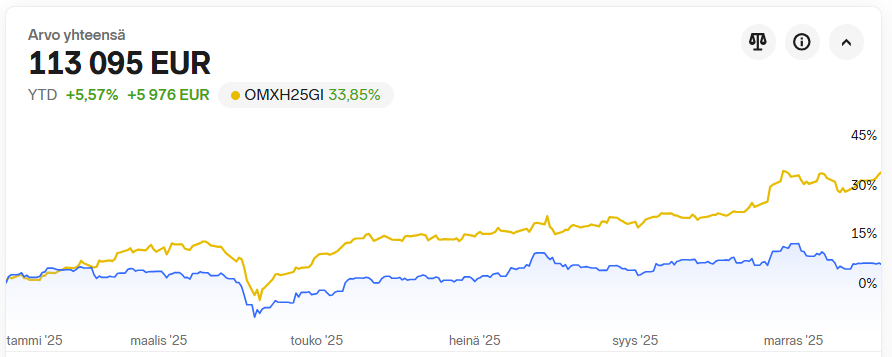
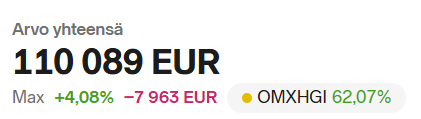
Nordnet’s investment portfolio is only 600 euros in the red for its entire investment history :slight_smile: The crypto portfolio is, of course, more in the red in euro terms (as well), but PYN Elite is in the green, even though it has slid quite a lot from its peaks. :slight_smile:

A relaxing and peaceful Friday to all! :slight_smile:

11 Likes

A Small Update and Refresh for the ‘Rookie Interviews’ Thread:

In the future, in addition to investor interviews, the ‘Rookie Interviews’ thread will sometimes feature interviews and stories where I interview someone about something of interest to investors. The first such interview will be released soon; the interviewee is someone who has already been featured in this thread, but now I will be interviewing them more about their new ventures. They have produced and continue to produce very high-quality material for investors. :slight_smile:

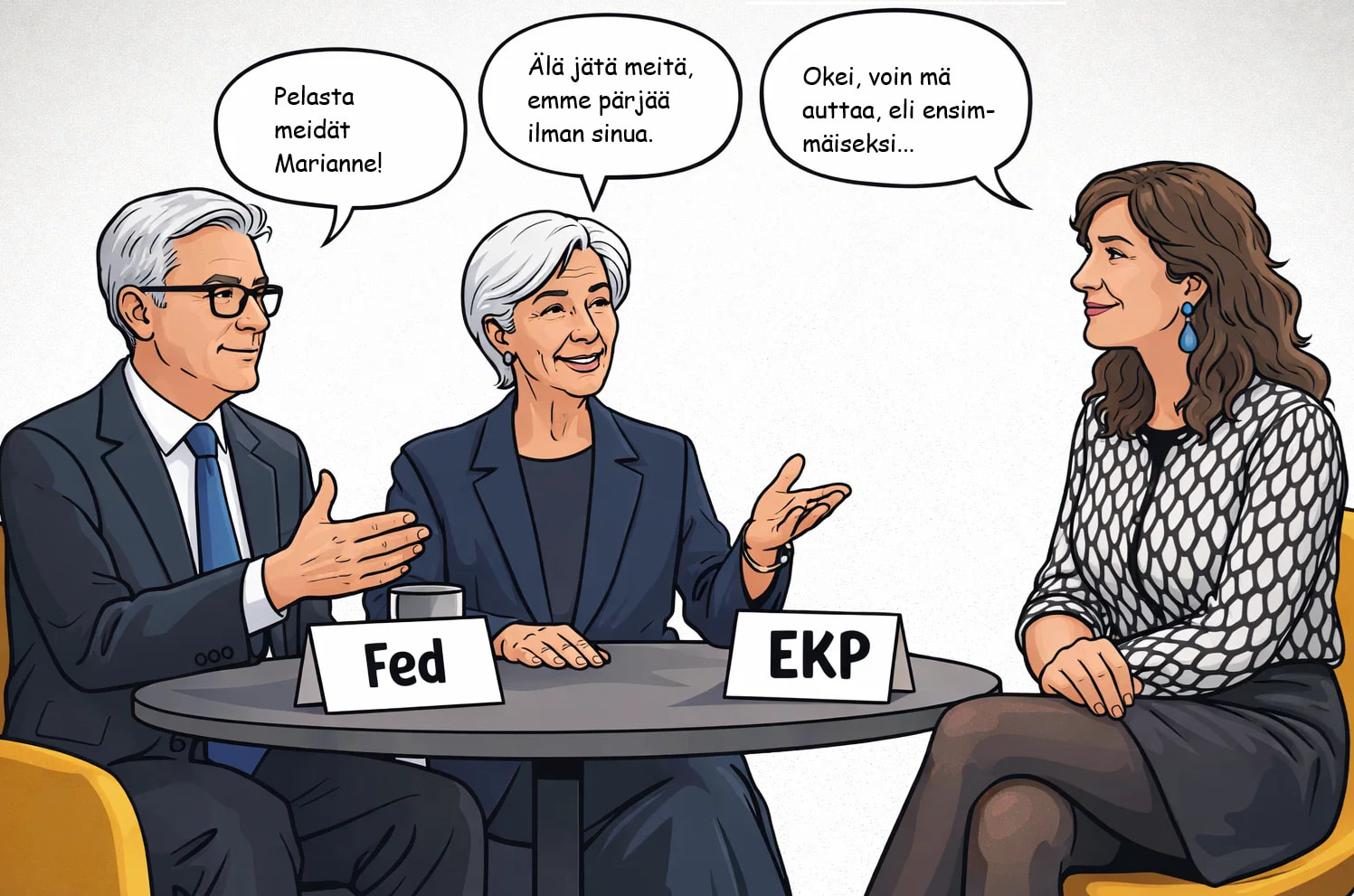
(the person on the left in the image below is not related to the text above)

Have a great investing week everyone! :slight_smile:

32 Likes

This Friday is the so-called traditional investor interview. :slight_smile: This interviewee is probably quite familiar at least to many who frequent X. He has too few followers considering the quality of his texts/tweets, but perhaps that will change with this interview.

This guy mainly writes in English on X, and many of his tweets have received a lot of attention, and that’s precisely because of their added value for investors; he indeed produces really high-quality and content-rich tweets/writings. :slight_smile:

Have a nice week everyone!

Regards,
busy and loss-making Rookie :melting_face:

9 Likes

166. Markus

Back in the day, when I came across Markus’s tweets, I thought: this guy writes really high-quality posts and tweets. Later on, I started following his excellent and versatile articles more closely—admiring with envy how I wish I could think and write that smartly myself. :slight_smile:

Markus is an analytical guy who knows how to write profoundly about companies, technology, and the markets in general, for example. He has a knack for making excellent, essential individual highlights on various topics, and overall he offers insightful perspectives on a wide scale of investment-related matters. His writings combine practicality with deeper thinking—it’s a joy to read his texts for the content alone, but they are also very pleasant reads.

He is a guy who writes quite broadly about investment and economic topics, and he is definitely worth following on X, because his posts genuinely bring good value to investors and he truly introduces new perspectives backed by facts and good reasoning.

1. In fifty words, tell us who you are.

I am an investor for whom stock picking is both a beloved hobby and a deep passion that suits my competitive and analytical nature. I have studied finance at university and currently work at a bank. I write on X and Sijoitustieto under the handle ValueByMarkus. I am particularly interested in business dynamics and identifying competitive advantages, and I write to structure my thoughts and to brainstorm with other investors.

2. What interests and hobbies do you have outside of investing?

Outside of investing, I spend a lot of time with sports. Football has been a beloved interest throughout my life both through playing and watching, but I like sports more broadly and practice several different sports. Reading is part of my daily routine, and besides investment literature, I read widely on other topics, such as biographies and technology. I enjoy continuous learning and gladly follow societal developments. In recent years, I have also taken up oil painting, which provides a therapeutic counterbalance to a sometimes hectic everyday life.

3. What does a typical weekday look like for you?

After morning routines, I either head to the office or work from my home office depending on the day’s agenda. The content and duration of my workdays vary a lot, and sometimes days stretch into the late evening. I always try to find time for sports, and during the day I follow the stock market and economy at a general level. In the evenings, I spend time with everyday chores with my partner. In addition, in the evenings I read literature, daily news, and familiarize myself more closely with various companies and markets, if there is time for it.

4. What kind of investor are you?

As an investor, I am quite omnivorous and do not invest in just one specific category. I make all my investments through stock picking and try to take a strong view if a company’s EV (Expected Value) and/or risk/reward ratio is attractive. As a baseline, I always maintain full equity weight in the portfolio across cycles, also using financial leverage. I will likely be a net buyer of stocks for several decades to come and I tolerate the volatility that strong views and leverage produce.

I do not hedge the portfolio with other products nor do I seek to add other asset classes. The long-term value creation of companies especially guides the portfolio’s largest positions, but I also take short-term views, for example, if I see an opportunity for value creation in the shorter term through a specific trigger, such as strategic corporate restructuring. I strive to combine qualitative analysis with data and evaluate companies from the perspectives of business, capital allocation, and competitive advantages. Although I follow macroeconomics closely, I do not factor it into my own investment decisions, because I do not feel I have a competitive advantage in assessing, for example, interest rates or inflation.

5. What is your investment history?

My investment history began about ten years ago with a bank’s active mutual funds. As my interest grew and I read investment literature, my strategy quickly began to evolve. Initially, I moved textbook-style to low-fee Nordic and global index funds, but soon stock picking began to interest me even more. During the first few years, I made several mistakes from which I learned significantly.

After the initial mistakes, my focus was heavily on a value-driven approach, concentrating on “cheap” valuation multiples, which yielded mixed success. After this, my approach has evolved towards growth-oriented investing, where I am willing to pay a justified higher valuation based on the company’s competitive advantages and quality. Nowadays, my investment process is also more structured, and following it along with writing out my thoughts has significantly developed my investment skills compared to my very first stock picks.

6. What kind of a portfolio do you have? How have you thought about your portfolio’s diversification?

My current portfolio contains a total of 11 companies, of which about half are Finnish and the rest global. I like analyzing smaller companies, as I feel that as a private investor I gain more competitive advantage in them, but the portfolio also includes large global companies that have a clear competitive advantage in their business. I do not invest based on a single specific criterion, which is why the portfolio contains companies with very different risk profiles and business models. The weight of the three largest companies is about 50% of the portfolio, and nowadays I aim to keep position sizes at a minimum of 5% so that the potential upside is significant.I feel that I achieve the greatest diversification benefits with my current structure, even though there is still room for a few new holdings in the portfolio. In diversification, I take industries into account to avoid excessive exposure to the risks of individual sectors. For example, previously, in 2022–2023, I invested in Finnish retail with a heavy equity weighting, and having learned from this, I am now more precise with sector weightings. The same logic guides my decisions in the current market: although I believe AI will revolutionize almost all industries in the coming decades, I do not want to keep its weighting in the portfolio too high.

7. What does your stock-picking process normally look like step by step?

I do not use a stock screener in my investment process; instead, ideas come from many different sources. When I hear about an interesting idea, I first do a quick “sanity check” based on the business and valuation. Most ideas are dropped at this stage, for example, if the business is hard to understand or if I spot issues in cash flow or corporate governance questions.

If I am still interested in the company, I do a deeper analysis: I study the business, (potential) competitive advantages, risks, and the industry. After this, I evaluate the valuation, often outlining various future scenarios from optimistic to pessimistic, from which I calculate the probability-weighted EV return and margins of safety. I keep the valuation quite straightforward—nowadays, for example, I don’t do DCF calculations, because I don’t feel they generate significant excess returns.

To support the process, I also utilize the analyses and views of others, through which I see how the market and other investors are pricing the company and, in particular, where I disagree myself. If the outcome meets my EV and/or risk/reward criteria, I allocate capital to the company, usually starting with a 5% position. The focus of the process is on identifying structural competitive advantages and analyzing the reasons for disagreeing with the market regarding valuation. I strive to keep the process repeatable, which makes investment decisions more controlled and less emotional.

Nowadays, I also like to add to existing positions if the business story progresses as expected and the valuation remains attractive. I am very cautious about lowering the average price. If a business shows structural deterioration, I take it as a signal to trim, following Paul Tudor Jones’s guideline: “Losers average losers.”

8. In your opinion, what are the three most underrated valuation multiples? Justify your choices.

EV/FCF

If I could choose only one metric, it would probably be EV/FCF. In my view, it accounts for the most important components: free cash flow and the company’s balance sheet. Of course, this alone does not tell the whole truth, and an investor must also critically consider hidden items, such as potential dilution.

PEG (Price/Earnings to Growth)

In my investment decisions, the balance between price and growth is one of the most critical evaluation points for me. The PEG ratio or other variations derived from it help assess whether the price is attractive relative to growth prospects on a company-specific basis.

ROIC

Although ROIC or ROCE do not directly account for valuation, I consider them one of the most important metrics in evaluating companies’ long-term value creation. Value is created over time from returns on capital and allocation, and I monitor this metric closely, especially in the case of M&A-driven companies. ROIC also tells how well a company utilizes its competitive advantage and is able to sustain it over the long term.

9. Share your thoughts on these companies in under a hundred words:

- Iris Energy

The company’s competitive advantages are based on energy availability and vertical integration. Microsoft’s strategic partnership strengthened its position in AI infrastructure. The valuation is supported by the $3.6B 2026 YE ARR guidance and management’s strong track record.

- Lemonade

AI technological disruption is already visible in accelerating growth and declining loss ratios. The company is moving towards positive earnings without the need for additional capital, investing heavily in growth and scale.

- Smart Eye

Next year will be particularly interesting due to European DMS regulation. Profitable cash flow is approaching, and deliveries from OEM automakers and supply chains play a critical role.

Disclaimer: I own all three companies, which are on the riskier end according to my investment criteria.

10. I spotted this on your X account: “Background in Banking & Operations.” How does your background in working life show in your investing, or does it?

My working life has certainly influenced my investing. Experience in managing a bank’s daily operations and implementing strategic and digital changes has developed systematic thinking and an understanding of processes. This experience helps me grasp how and on what basis management decisions are made, and has generally improved my understanding of business and corporate value creation. This quite universal lesson also supports investment decisions in companies outside the financial sector.

On the other hand, the effect has been two-way: the lessons learned from investing have also benefited my working life, ranging from technical skills to emotional control and the evaluation of decision-making processes.

11. You follow a lot of foreign companies; what are the top five data sources you use most when researching foreign companies, and justify your choices.

Companies’ official annual reports and interim reports

I base my analysis primarily directly on the companies’ figures and often read through old reports as well, figuring out how companies have communicated historically and whether they have delivered relative to promises. I take management comments with a grain of salt, especially if management does not have a track record of delivering on promises. In conference calls, Quartr has been particularly useful, as it provides an easy way to follow and analyze the contents of webcasts.

Reliable news servicesFor example, Bloomberg or local news sources provide up-to-date information on market changes and company-specific news that can affect the investment thesis. I also actively consume podcasts and can recommend, for example: Acquired, The Memo by Howard Marks, and In Good Company.

Industry Reports

For example, reports from investment banks like Goldman Sachs provide a good understanding of companies’ changing industries, competitive environments, and trends.

Discussions with Other Investors

Conversations with Finnish and international investors help shape different perspectives, often generate new ideas, and help both challenge and structure one’s own thoughts.

Investment Communities

I actively follow X and other investment forums, such as Inderes. They provide plenty of ideas for various companies and perspectives on the market as inspiration.

12. What three investment books would you especially recommend to members of the Inderes forum?

Narrative and Numbers – Aswath Damodaran

The book teaches how to combine a business narrative and numbers in analysis. An excellent tool for understanding why a company is priced a certain way and how to realistically evaluate future growth.

Outsiders – William Thorndike

Focuses on exceptional CEOs who created long-term value. Offers lessons in management decision-making, capital allocation, and building competitive advantage. A perspective rarely gained from financial metrics alone.

Investing for Growth – Terry Smith

Focuses on growth companies and long-term investment strategy. Helps identify companies capable of generating value over time and assessing when growth is sustainable and when it is not.

13. How do you manage your emotions in investing so that you don’t fall prey to FOMO, for example?

Previously, I have fallen into making emotion-based decisions, but I now consciously try to avoid FOMO and other investment-related biases, such as confirmation bias. The most important thing is being aware of these biases so they can be accounted for in one’s structured investment process and decision-making. Easier said than done, and I have often learned the most from my own mistakes.

Concretely, I also try to avoid quick buys and sells, and I write out my thoughts, a process that often reveals factors I hadn’t considered. Additionally, I understand that good investment opportunities arise constantly. If I miss out on an investment thesis, the market will always offer a new one, and missing a single opportunity does not jeopardize long-term returns.

14. What goals do you have in investing? Are there any euro-denominated targets?

I do not have a euro-denominated target, nor would such a target remain unchanged through different life stages. I strive to build investment wealth that provides financial freedom in the future. A key goal is also to learn and develop as an investor—a hobby I hope to continue for a long time.

I haven’t set an absolute percentage return target, but my long-term goal is to beat benchmark indices. So far, I have considered the FN25 and OMXH25GI indices as my benchmarks, as my investments remain heavily weighted toward Finland and especially small-cap companies.

15. How could Alokas over time become an investor as analytical and versatilely knowledgeable as you?

I can recommend to everyone who wants to develop as an investor to invest not just in reading, but also in writing. Maintaining one’s own investment journal helps structure thoughts and observe how one’s decisions are formed.

Focusing on businesses and companies that interest oneself has also proven useful, as a deeper understanding improves the quality of the investment process. Furthermore, sticking to processes is important. Build your own clear investment process and stick to it, as it reduces the risk of emotional decisions and supports consistent decision-making in the long run.

16. What would you like to thank the Finnish investment community for?

I would like to thank the Finnish investment community for open information sharing, a constructive discussion culture, and active sparring. Forums and discussions provide valuable perspectives, ideas, and insights, but also an opportunity to test one’s own thoughts with others. This has also been valuable for me in developing my own investment thinking.

Inderes and this forum are a great example of this in practice. Thanks, Alokas, for the questions, and happy investing to all readers!


Thanks to you too, Markus!

Be sure to follow Markus on X—it’s just foolish not to follow Markus:

Markus has also had time to write a couple of articles on Sijoitustieto:

I notice that in the end, experienced and smart investors kind of often write mostly about relatively simple things—they don’t often try to be special or show off, but rather get straight to the point without guessing. Of course, they go beyond the basics into details too, but they focus above all on the essentials and usually see the forest for the trees. :slight_smile:

Thanks and have a great Friday! :slight_smile:

40 Likes

Thanks again to Markus for the interview. :folded_hands:Please follow his account on X:
https://x.com/ValueByMarkus


:backhand_index_pointing_up:

Next week will feature a different kind of interview, which I will be doing from time to time in the future, meaning I will interview someone about a certain topic or subject. :slight_smile:

Have a pleasantly peaceful weekend! :blush:

15 Likes

167. Mikko Jylhä and his new pod: Pörssipodi

I wanted to interview Mikko because I think he makes the best podcast in Finland. Pörssipäivä was my absolute favorite, and its ending left a temporary void. Luckily, Mikko quickly continued with a new podcast, Pörssipodi. :smiling_face_with_sunglasses:

I have interviewed Mikko before in this thread, so this time the conversation focuses specifically on his new podcast, Pörssipodi. Here is a link to the investor interview I did with Mikko previously.

It’s just plain stupid not to listen to Pörssipodi. :slight_smile:

1. You are the first person who has to/gets to be interviewed by me for a second time; how are you doing these days?

Thanks for the invitation, it’s great to be back. The past year has been eventful. I did the last Pörssipäivä podcasts for Yle in September, after which I changed jobs. The year has also included some travel. In the summer, I again spent time in Poland, a country I’ve visited dozens of times. In October, I went to Tokyo. An interesting place. This was my first time in Japan. In November, I started my new job at Miltton.

2. How is your portfolio doing?

Work matters have taken up so much attention that I haven’t made any significant moves. The most important shifts in my own portfolio have been starting index investing and making my first crypto investments. For the index, I chose the STOXX Europe 600. I hope Europe gets its act together and we get back to proper economic growth. I had to place a small bet on this. Regarding cryptos, I am most interested in Ethereum and the technological possibilities associated with it. Among other things, I own Sharplink Gaming, which is an Ethereum treasury—meaning it buys Ethereum for its balance sheet. This autumn has been a rough ride for cryptos, but the ups and downs are part of the game.

Last time in the interview, I highlighted Investor AB, Digia, and Green Thumb Industries. I still trust these companies. All three have continued to perform well, even though the share price development has left something to be desired.

In the portfolio, Mandatum and Nordea have provided some much-needed uplift this year.

3. What is this Pörssipodi, has Pörssipäivä just changed its name?

Pörssipodi is Miltton’s new investment-themed podcast, the first episode of which was released at the end of November. We are continuing where Pörssipäivä left off. We discuss topics of interest to investors and meet guests ranging from CEOs to investment influencers. I did Pörssipäivä at Yle for over ten years, and at this point, it felt appropriate to update the program’s name. You could say it’s a new beginning for the pod.

4. What has remained the same in Pörssipodi, and what has changed compared to the old Yle Pörssipäivä?

Yleisradio (the Finnish Broadcasting Company) has its own specific characteristics and obligations related to public service, as its operations are tax-funded. Yle does not have its own financial editorial staff, so making the pod fell entirely on my shoulders. The new Pörssipodi operates on market terms. We can engage in commercial cooperation with companies. However, we want to hold on to Pörssipäivä’s strengths, such as in-depth discussions, diversity, and new perspectives.

5. What is the most enjoyable part of making Pörssipodi? What about the most challenging?

The best part is the great guests and a subject area that I personally enjoy. In this job, you meet capable and nice people. When investors meet, there’s always plenty to talk about. Additionally, I have excellent colleagues. Miltton has really talented, funny, and friendly people working there.

The most challenging part is creating interesting content week after week. There are far more different pods than before, and the competition for people’s time has intensified.

6. What is this Miltton, which is now your employer? How does making a pod at Miltton differ from making it at Yle?

Miltton is a consulting firm specialized in communications, marketing, leadership, and influence. We have over 400 employees and very diverse expertise from different areas of society. We offer advice, for example, for the needs of capital markets and investor relations. We help companies with, among other things, IPOs and Capital Markets Days. At Yle, the work was different because it was about public service.

7. Your title is Advisor. Do you have other duties besides producing the pod? On the new Pörssipodi pages (https://miltton.com/fi/porssipodi-puhetta-sijoittamisesta/) it says, among other things: Collaboration proposals and feedback can be sent to mikko.jylha@miltton.com. What could these collaboration proposals include, for example?

I work in Miltton’s Capital Markets team. In the beginning, making the pod has taken up the most time. Of course, I do other things in the team, and in the future, even more. Collaboration proposals include commercial partnerships. For example, when a company goes public, we can use the pod to help them reach investors.

8. Pörssipodi is just starting out (as I write this, two episodes have been released); is Pörssipodi still in the development phase, or is something new coming/in development regarding the pod? Your episodes can be heard at least on Apple Podcasts, Spotify… and where else… is it coming to YouTube, for example?

At this stage, we are on Spotify and Apple Podcasts. We haven’t ruled out the possibility of video, but for now, we are an audiocast. A good pod can and should develop along the way. Miltton has diverse expertise related to capital markets and social issues, which I want to utilize in the future. For example, in the last episode of this year, we had Victor Snellman with us, who previously worked as the CEO of the Finnish Shareholders’ Federation (Osakesäästäjät).

9. What kind of mark do you hope Pörssipodi leaves on Finnish investment culture—what would you like listeners to think or do differently after listening to the pod for a longer time?

I don’t hope for any specific mark, or that people would change their investment style after listening to the pod. It’s best that everyone makes their decisions based on their own starting points. I see my program as a series of conversations that, for their part, promote Finnish investment culture. Making radio programs and pods is a long-distance sport, not a sprint. I am pleased that Pörssipodi now offers a shift in perspective from the public sector to the private sector.

10. If you could send a short greeting to all current and future listeners of Pörssipodi, what would you like to say?

Of course, welcome to the frequency! If any questions related to the pod, guest suggestions, or feedback come to mind, emails are always welcome. Happy New Year and good market winds to you and all forum members!


Thank you, Mikko, for the great answers and thank you for the excellent pod! :slight_smile:

Based on the first episodes, Pörssipodi is exactly as good as I expected—the familiar strengths are still there, but there are also small, effective updates. Highly recommended listening! :slight_smile:

Mikon’s Pod can be found here:

Thank you and have a nice weekend! :sun:

47 Likes

Thanks @m_jylha once more! :slight_smile:

10. If you could send a short greeting to all current and future listeners of Pörssipodi, what would you like to say?

Of course, welcome to the airwaves! If you have any questions, guest suggestions, or feedback related to the pod, emails are always welcome. Happy New Year and favorable market winds to you and all the forum members!

Mikko’s contact details (and the pod) can be found here:


These types of interviews and traditional investor interviews will continue to be released in the future. :slight_smile:

Have a nice weekend, everyone! :slight_smile:

P.S.

A “cod” (turska) can be green too:

12 Likes

Hi!

For Friday, I interviewed an expert acquaintance for investors about certain important things that, of course, more or less affect everyone… who doesn’t live in total isolation.

My questions didn’t deal with current events, but concerned important matters that we investors especially follow closely and about which I wanted to know a bit more.

It’s a concise interview on a subject that is familiar as such, featuring things that are at least somewhat familiar to many, but everyone will likely get at least a little something new to think about. :slight_smile:

Happy countdown to Christmas to everyone! (though of course, it’s not a long wait anymore :sweat_smile: )

5 Likes

168. Interviewing Marianne Palmu on the Significance of Central Banks for Investors

@Marianne_Palmu has been interviewed in this thread before; a link to that interview can be found here :slight_smile: , but this time I wanted to interview her specifically about central bank matters.

I have long been interested in the operations of central banks, and my investment hobby has only deepened this enthusiasm. I wanted to learn more about the topic specifically from an investor’s perspective and look at things more broadly than just through the individual interest rate decisions of the Fed or the ECB. :slight_smile:

From the answers below, both novice and more experienced investors will gain new information and/or food for thought :slight_smile:

1. What is a central bank?

A central bank is the “bankers’ bank,” which determines the quantity and price of money in the economy. It has a monopoly as the issuer of currency, and through its monetary policy—primarily by determining interest rate levels—it regulates lending.

2. Why do investors specifically follow the decisions of the US Federal Reserve (Fed) and the European Central Bank (ECB)?

The decisions are followed because monetary policy indirectly affects the finances of many of us, both households and companies. When interest rates fall, the borrowing costs for households and companies also decrease, which, among other things, boosts investment. Additionally, central banks move the stock market through valuation levels: a decrease in interest rates makes valuation levels more attractive to investors.

3. From the perspective of a Finnish investor, what are the next most interesting or important central banks? Mention at least three with justifications.

The Swedish Central Bank (Riksbanken): Our neighboring country has not joined the euro, so it is interesting to follow how monetary policy is implemented there. Riksbanken often follows in the ECB’s footsteps with its monetary policy.

The Bank of Japan (BoJ): The third-largest central bank, which already has long experience with the zero-interest rate era. It recently raised its rates to the highest level in 30 years, so in this sense, it is swimming against the tide while others are lowering their rates.

The People’s Bank of China (PBoC): A central bank under strong government control, whose monetary policy room for maneuver is, however, currently quite narrow.

4. What are the three most important things for investors to follow regarding central banks and their operations, if we set aside interest rate decisions?

Economic forecasts. Central banks’ economic forecasts (GDP and inflation forecasts) are of great importance because they are also used as the basis for implementing monetary policy.

Communication. Speeches by central bankers have gained much more weight in recent years, and people try to find clues in them regarding the future direction of monetary policy.

Financial system stability. As the bankers’ bank, the central bank is well-informed about the state of the financial system, and especially during times of crisis, its role as a stabilizer of the financial system is emphasized.

5. Generally speaking, which sectors are most affected by central bank interest rate decisions, and why is the impact so significant on these specific sectors?

Interest rate decisions indirectly affect the finances of all of us, but among individual sectors, I would highlight cyclical industries because they are typically also the most sensitive to changes in interest rates. Examples of these include construction, industry (capital goods), and consumer goods. The financial sector is also susceptible to changes in monetary policy through net interest margins.


Thank you, Marianne, for the excellent answers! :slight_smile:

I wanted useful information on these topics that would stick in my mind, and perhaps from slightly new perspectives and more diversely, as I am used to hearing and reading a lot only about the Fed and the ECB, and even then, mostly just about interest rate matters. That’s why Marianne’s answers were very much needed, at least for myself, but I believe others gained plenty of information and food for thought as well. :slight_smile:

Thank you and have a great weekend, everyone! :slight_smile:

29 Likes