I’d like to hear some advice on stock investing, whether it’s worth starting to invest, with what kind of sum, and where to begin.
It would be nice if you could tell me how and when you started investing.
5 Likes
I’ll start briefly, as the question is really broad. There are probably many books written about this. However: one way or another, it’s worth starting, and as early as possible, to benefit from the compound interest phenomenon. I myself heard about this for the first time in the context of investing only during my post-high school business studies (I might have been asleep earlier), and I wondered why this isn’t mandatory education in elementary school.
10 Likes
You should set aside a day and read the investment strategy and other threads here from start to finish. You’re guaranteed to learn more.
It’s always a good idea to start investing, but then there are about a million different options on how to proceed. Keep the sums such that you don’t lose your house and can live normally, so don’t take out a loan until you understand how it works.
15 Likes
As a relatively new investor, I strongly agree with what @Seinakadun_Keisari says. Before you start, follow the forum and especially familiarize yourself with the investment strategy thread, the “What’s in your portfolio?” thread (especially comments where the contents of portfolios have been opened up more), and of course, the investment mistakes thread. Based on these, you will certainly gain perspective on many things and, for example, well-considered viewpoints regarding your own risk appetite.
Having been a bit more active in the markets for 1.5 years myself, I would have avoided quite a few maneuvers if I had spent even more time planning my strategy than I did then – and this forum and Inderes’ content certainly offer really good tools for this.
15 Likes
I started investing at 23, when I took a gap year from school and noticed I had a fair bit of extra cash from work thanks to my student lifestyle. I started by investing in Danske Bank’s own funds, but in October 2014, I switched to Nordnet and the “super” funds came into play.
After about a year of research, the first ETFs arrived, and I even bought some Nordea shares. Now those ETFs and Nordea have been sold off, but the fund I bought in 2014 is still clearly my best-performing investment by far.
It’s a good idea to start by creating a good budget/expense tracker and automating monthly savings into a couple of funds. It has worked well for me, and sometimes I’ve even transferred more at the end of the month. Once financial management works and self-confidence grows, you can start considering other targets.
Good luck and all the best!
7 Likes
In short:
I started in 2009-2010, first with only funds. In hindsight, a good way to start, as it’s safe and diversified. I was a student and used my student loan as initial capital, after which I added 100-200€/month. I also started picking up some stocks when the market became interesting and familiar through the funds.
In 2014, I went on an exchange and sold almost everything for traveling. I had accumulated a good amount of travel money.
From 2014-2019, I was very passive. Some funds and individual stocks.
At the turn of 2019-2020, we became active again. Immediately after that, came the corona. Now, after the corona dip, I have been much more active. Even though I was passive for a long time, I still kept an eye on the markets.
My own lessons learned: start small and safe – with what you understand. Read, research, and ask questions, and your understanding will grow. Create your own strategy and stick to it, but allow what you’ve learned to change it if necessary.
9 Likes
Here you can find Inderes’ materials related to the topic:
https://www.inderes.fi/fi/sisallysluettelo-mita-kaikkea-taalta-loytyy
7 Likes
A few thoughts:
-
Inderes investment school → read EVERYTHING on the site thoroughly, even a couple of times (i.e., the message from tyhma_raha above)
-
Books → find recommendations for basic guides from, for example, the investment literature thread (e.g., Seppo Saario’s “Miten sijoitan pörssiosakkeisiin?” (How do I invest in stock exchange shares?) is a good start for a first book)
-
Investment plan → the Inderes investment school also has a TV episode about this… you should immediately consider in writing your own risk tolerance, goals, emergency fund, allocation (the desired distribution of total wealth), etc. etc. (–> for example, I have a certain euro amount planned as an “emergency fund” and on top of that cash for larger expenses in the foreseeable future… and after that, all extra goes into stocks)
-
Time management → if digging into stocks, reading financial statements, reading analyses feels like a chore or you don’t have time, I recommend index investing / fund investing, rather than stock picking. I started with index investing, found it far too boring… ended up with stock picking and made it a beloved (and so far profitable) hobby… making excess returns compared to indices is actually possible, e.g., with the help of Inderes’ analyses and my own dedication!
-
Time, psychology, and experience → if you end up stock picking, it’s worth starting with a relatively small stake for the first 1-2 years… when I started, I remember how a -100€ change in value felt bad… from that, you must consciously try to harden yourself from any emotions when money is involved, whether it’s losses or successes (e.g., nowadays, my normal daily fluctuation is a significantly larger sum of euros)… this requires conscious self-psyching, and as experience accumulates, it becomes easier… nowadays, failures or successes do not cause much emotion… I already approach everything I do relatively rationally in my opinion.
Finally: The most important thing is to start… you have already activated yourself to seek information, you are on the right track! Remember that there are many styles. What suits one person certainly doesn’t suit everyone else. Gradually, as experience progresses, you will find your own style… that’s why it’s worth starting with a moderate amount of money and moderate expectations. Good luck for the coming days, you are joining a great hobby!
addendum:
market headlines, news headlines → this, along with self-psyching, is, in my opinion, the second difficult thing… nowadays, news headlines (KL, Arvopaperi, IS, etc. etc.) seek large readership by offering all sorts of “tips”, “horror scenarios”, “hot picks”, etc. etc. This is unfortunate for a novice investor, and I recommend approaching 99% of ALL these basic news headlines with a filter… they are MARKET NOISE aimed at attracting readers… they have NOTHING TO DO with fundamental stock analysis… so either a) as a stock picker, you familiarize yourself very well with your holdings and thus form your own picture of the company’s “fair value” and are at ease in the middle of a media storm, or b) you buy index funds/equity funds and are also completely at ease 
good luck!
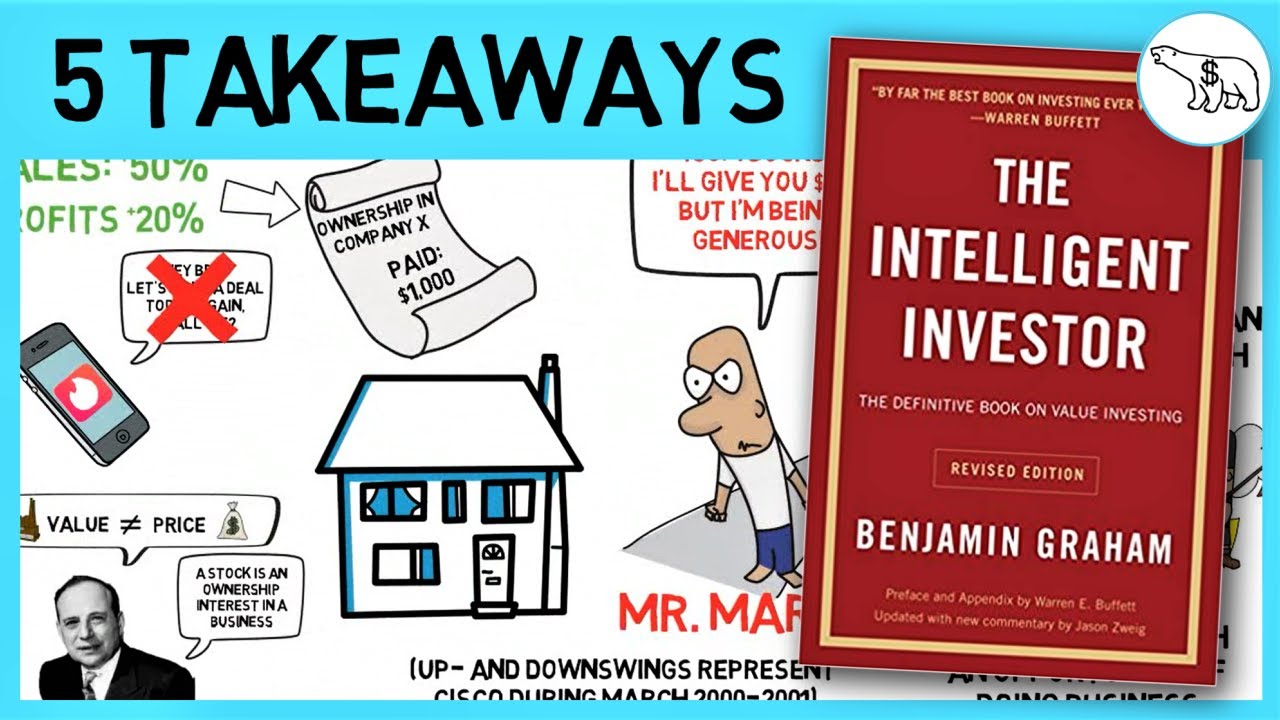
addendum 2: as a stock picker, the single most important idea in all investing for me is the idea of MARGIN OF SAFETY, FAIR VALUE, and MR. MARKET… this is my holy trinity… what is it all about? You can find out in this video!
42 Likes
Below are some tips that I think are suitable for a beginner investor:
- Make an investment plan.
- Don’t invest money you can’t afford to lose.
- Don’t invest borrowed money.
- To reduce risk, invest in an index, for example, with monthly savings. This way, you diversify your investments over time and geographically / by the number of companies.
- Direct stock picking can beat the index. If you invest in stocks, don’t invest in too many companies; concentrate your portfolio on carefully analyzed companies. More than ten companies is too many.
- Choose a broker that offers the lowest fees (trading fees and custody fees).
- Familiarize yourself with the equity savings account due to the compound interest effect. Also, familiarize yourself with how losses are deducted from an equity savings account (emphasizes the importance of good picks).
- Familiarize yourself with the taxation of profits and losses, especially selling less than €1000 annually (tax-free).
And indeed, I myself started investing with easy (and boring) index investments, saving monthly.
15 Likes
That’s pretty well said above, so not much to add, but everyone has their own style and you have to find it over time until you find a way of doing things that suits you. I myself no longer invest directly in large companies, unless there are good buying opportunities where I could get a single company cheaply (you need to have a cash reserve). In my opinion, smaller companies offer better opportunities for private investors to beat the index. The Inderes model portfolio is a good reference point to start from. Otherwise, I recommend investing in an index 
8 Likes
Everyone should start with monthly savings in a fund/index investment. This offers a safe option to get acquainted with investing and how it suits them. This also provides good diversification for the beginning. Then that first stock will not have 100% weight at any point. Then, according to one’s own interest, knowledge, and financial situation, one can modify the plan.
But the most important thing is just to start and not make it unnecessarily difficult. For me, the index investing phase lasted about five years until the COVID markets offered a good opportunity to make moves.
5 Likes
Here are a few points that come to my mind:
-
If you don’t have the time/desire to study individual companies and follow them closely, you shouldn’t invest in individual stocks but focus on funds and indexes.
-
To start, study the simplest key figures, such as what P/E ratio or ROE means.
-
Start with smaller sums and gradually increase your capital as your skills and experience grow. If you constantly start stressing at some point that you might lose your capital, then it’s good to consider whether too much of your wealth is in stocks/funds and if you should trim the pile a bit.
-
Before you invest in individual companies, if you do invest, study the company. Never invest without doing your homework or with the idea that a friend tipped you off that this is a good one, etc., but verify yourself whether the target is good. When you invest, understand that you are buying a piece of a company, not an individual stock.
-
Also, familiarize yourself with the economy more broadly and understand what factors move the stock markets and what the current valuation levels are generally, etc.
-
Seppo Saario’s “How I Invest in Stock Market Shares” (“Miten sijoitan pörssiosakkeisiin”) was, for me at least, an excellent book to start getting a comprehensive understanding of the market.
-
Don’t chase quick profits and understand the importance of patience in investing.
These are a few general tips that came to mind. Study the topic and always strive to learn more, as it will gradually open up better.
12 Likes
Even if you end up becoming a passive fund investor, which is fundamentally a very simple thing, I still recommend reading plenty of investment literature and basics. When your basic knowledge is in order, it’s much easier to stick to your investment plan and you won’t be as quick to panic, for example, when the market declines. If your investment horizon is decades and you understand how the market works, even a big bear market won’t faze you because you understand that you’re getting things cheaper now and that it’s temporary.
10 Likes
Exactly, I agree with what others have written above.
Index investing is a great way to start today. At the same time, you can learn and get acquainted with the field. You’ll find your own “style” eventually. For me, it took almost 6 years with just index funds, and now I’ve “expanded” to direct stock purchases.
Small/mid-cap companies, domestic stock exchange, and technology suit me. It would have been almost impossible to find this niche among all the possibilities.
My portfolio is steadily in the black and well diversified. No fear of coronavirus or the Fed’s money printer.
I recommend Merja Mähkä’s “Sijoittajaksi 7 päivässä” (Become an Investor in 7 Days) to start with; it’s also available as an audiobook.
7 Likes
Thanks for the answers, good advice.
Thanks especially for the book tips.
10 Likes
Don’t get into details right away, stick to the big picture.
You need an investment strategy; find one, for example, in the Inderes investment strategy thread. Weigh whether you want to invest in stocks or index funds. If you are not prepared to put in the time and effort, direct stocks may not be for you. You can try stock investing with a virtual portfolio or a small sum of money first.
As for the amount of money, three rules are enough:
- Do not invest such a small amount that nothing is left after brokerage fees. A few hundred euros is not really worth putting into stocks with most brokers. If you are really investing tens or hundreds of euros, a low-cost index fund is a safer choice.
- Keep cash equivalent to approx. two months’ living expenses + known larger acquisitions or otherwise a sufficiently large risk buffer.
- Otherwise, invest as long as your nerves can handle it. Whatever that means to you. If you find yourself making impulsive trades or worrying about daily changes, you have probably invested too much.
If after this you ended up with direct stocks, then you need to know the factors affecting stock valuation. However, this is only if you did not end up rejecting stocks in favor of index fund saving.
I recommend listening to Inderespodit to learn the basics. Do not read Kauppalehti, nor Arvopaperi or any other Finnish financial journalism. Nordnet’s Rahapodi and Trader’s Club are quite OK.
Emphasize now that if you end up with an index fund, then you need to familiarize yourself with them in exactly the same way as with stocks. It is not irrelevant which index or sector you start following. For one main index, there are numerous sub-indices that follow a subset of the index according to some rule. For example, MSCI USA follows the S&P 500 index, and MSCI USA Quality Factor, -Buyback, and Prime Value are differently formed subsets of it.
Not to mention, it’s a different matter to put money into NASDAQ than into OMXH. I would argue that saving in the Helsinki index may not lead to very large returns even in the long run. The market index develops or does not develop largely depending on the economic area.
21 Likes
It’s definitely worth familiarizing yourself with them in the long run. The biggest mistake in investing is not starting to invest. If you make the beginning too difficult, you won’t start. At the same time, it’s easy to not save. Even if you save into a losing bond fund, you’ll easily have more left than if you didn’t invest at all, as cash tends to burn a hole in your back pocket.
7 Likes
My own tip is that if you end up with funds and your gaze turns towards active funds, it’s worth remembering that with these, past returns are no guarantee of future returns. You can quickly find funds where the returns over the last decade are soaring at +500%, but here too it’s good to remember that in the long run, most active funds will lose out to the index in terms of returns.
5 Likes
My advice is to start. And, in this very early stage, you should read Seppo Saario’s book: “How do I invest in stock market shares?” Of course, there are similar thoughts in these threads as well, but in books, things are structured and perhaps easier to relate to. For me, books have provided a good foundation and insight.
3 Likes
This is absolutely true. I’ve been wondering how much brick-and-mortar banks’ balanced funds, fund-of-funds, and special funds explain this. These rarely even break even, let alone achieve index returns.
3 Likes