2.TIMONTTI
The Living Room Oracle and the most liked man on the Forum, here are some statistics:
I am really excited to have had the chance to interview Timontti, and it immediately felt great when he was totally on board right away when I asked him for an interview.
I logged into the Forum for the first time in July 2020 and wondered who this guy was that everyone was talking about and praising. It didn’t take long for me to realize why… brilliant stock picks at brilliant times, and that wasn’t even all… the timing of many buys and sells was absolutely incredible. Timontti has a certain fascinating “touch”, no comparable case comes to mind right away… he has a certain expert analyst quality, a bit of Pohjolan Eka’s rebellious common sense, but also a bit of Viljo, meaning that “sense of smell” for where the next “victim” might be. I chatted with one of the Forum’s quality contributors, and we concluded that Timontti is like combining Eka and Viljo. 
Timontti isn’t as familiar in the same way as Verneri from the previous interview, because Timontti is “just” a pseudonym. Well… maybe through this interview, Timontti will become more familiar to you as a person too, and perhaps you’ll get some food for thought for your own investing activities—I certainly did.
Timontti is one of the stars of the Forum who truly seems to see the forest for the trees and doesn’t get bogged down in trivialities, but instead keeps rising higher thanks to his “touch” and diligence.
1. Tell us who you are in thirty words.
I am a 35-year-old family man, marital status married, and a fire protection engineer by profession. Two children under school age.
In my free time, I like to hang out with my family in the yard and play. Every now and then, I try to engage in jogging, swimming, or outdoor activities, etc.
2. Tell us three things the forum members don’t know about you.
I’ve been to a job interview at Inderes. However, I ended up working in my own field.
I am not autistic, at least not diagnosed, but by nature, I tend to channel my energy and thoughts very intensely into 1–2 things I find most interesting (e.g., hobbies like investing).
These days, my favorite TV shows are, rather semi-senilely, the TV news and some documentaries. I don’t really have the patience to watch much else on TV.
3. What are your interests and hobbies? You are not allowed to mention anything related to investing.
My hobbies have included metal detecting (with a mine detector). The oldest objects I have found are from the Viking Age (800–1050 AD): a fragment of an Appelgren Type D brooch and a horse pendant. The horse on the pendant is trampling a snake. Symbolism straight out of the Viking Age. In my current place of residence, this has taken a back seat.
I used to play golf with a single-digit handicap back when I was younger and played more actively.
I recently started applied practical shooting for reservists (SRA). Any day now, I should be receiving my first personal firearm, a modernized AK-47/AKM.
As a kid, I collected hockey cards. All 3000+ of them are still saved, and we’ll marvel at them with the kids at an appropriate time.
4. What does an ordinary weekday look like for you?
We wake up at 6:00 AM. Morning routines with our crew are done around 7:30 AM, which is when I start my workday.
In my current job, I work from home. Work computer on, plus the home computer and Inderes forum open on the second monitor  The day is spent typing away at work on the computer—meetings, written work, occasionally peaceful too. The forum is browsed whenever there’s time away from work. Coffee is consumed; I can’t survive without it.
In the afternoon, I pick up the kids from daycare, and then we continue with either individual hobbies or spending time together. Small kids keep daily life quite busy. We go to bed fairly early… Very typical family life with children, in other words.
5. How would you briefly describe yourself as an investor? Do you fit into any category (e.g., growth investor, value investor, etc.)?
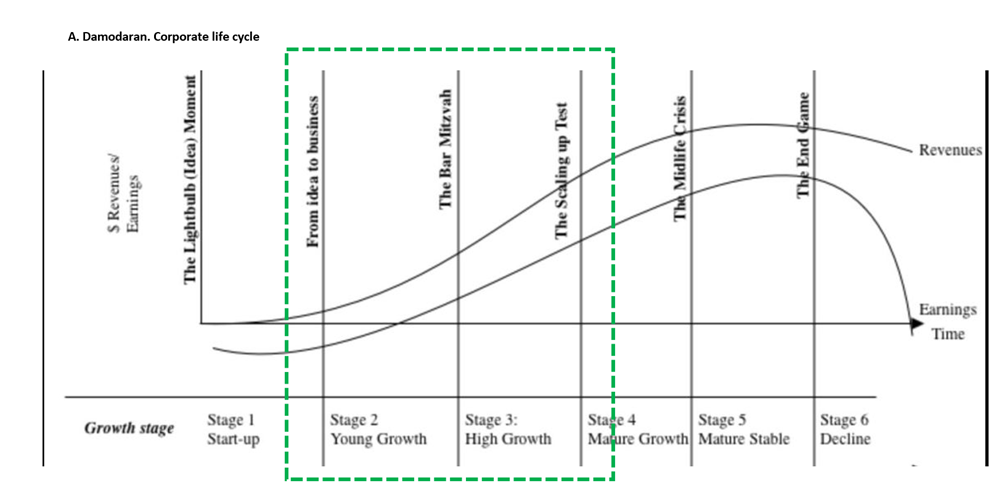
Growth investing has been closest to my heart. The risks are greater, but so are the potential rewards. Technology/software companies, which are often perceived as tricky, have naturally interested this engineer. The focus has been on Nordic companies, mainly Finland and Sweden. Alongside growth investing, I have also engaged in occasional swing trading, mostly when I have had the most time to stare at the stock market.
Software companies often offer significant scalability potential on a quite profitable basis. In an ideal scenario, the portfolio would hold about ten quality, capital-light, highly scalable growth companies… bought before the general public gets its hands on them. Usually, this requires reading earnings reports, analysis reports, etc., along with conducting active research of one’s own.
I get interested in large and mature value companies if they are offered at exceptionally low valuations (e.g., P/B, P/NAV, EV/EBIT…) and the business otherwise interests me. However, as a younger middle-aged person, I aim to seek profitable, high-quality growth over time. Hopefully, there are still investing years ahead, and profitable growth over time is the key to success on a multi-decade horizon.
Damodaran’s chart illustrates my preferred area very well.
I strive, in principle, to be a long-term investor and owner. The longest holdings in companies have been a few years, maybe 2–3 years. The reality is, however, that it pays to shift chips and allocate capital from the weakest companies to the best ones in terms of expected return and risk/reward. This creates some rotation in the portfolio over time. In an ideal situation, holding periods would certainly be considerably longer than that, but this is the sum of many factors (market conditions, stock valuation levels, etc.).
6. Could you briefly share your investing history?
I started investing in the summer of 2015. Thanks to my wife for suggesting it. So this is now my eighth year of investing. At first, I invested in index funds and a few individual stocks, among other things. In the early days, I was very nervous about even small euro-denominated losses in the portfolio. The mental side regarding money wasn’t trained for the game at all in the beginning. Generally speaking, between 2015 and 2017, I didn’t do very well in the market. Some years I beat the index, other times I generated losses for myself even in a bull market. A very typical start, then.
Sometime during 2017–2018, I found Inderes, and with that, I began to get genuinely interested and excited about stock picking and equity research. Inderes’s investment school, the educational videos made by the Inderes media team, etc., helped considerably. In addition, I read a few basic books on investing. With these, I got started and gained a basic understanding of corporate financial reporting, markets, valuation multiples, etc. Index investing became too boring; the spark to seek market outperformance had been ignited.
As a result of better dedication, I also began to achieve significant returns in 2019–2021, supported by the bull market. Especially in the years 2018–2021, I dedicated a significant amount of time to equity research. In retrospect, I can clearly see the significance of my own research and effort in the returns. All in all, this exceptional period and the returns are explained by: my own research work, good luck, and the interest rate bubble (before it burst). So, of course, not all credit goes to myself.
7. How much has your portfolio fallen from its peak percentages? What is your YTD?
The main investment portfolios are my own and my spouse’s equity savings accounts (OST). Equity savings accounts became available in Finland starting January 1, 2020. In the year preceding the equity savings account (2019), the return on the investment portfolios was +95%.
At their peak, the return on the equity savings accounts since inception was on September 7, 2022: +277% in my spouse’s portfolio (now +153%) and +294% in my own portfolio (now +174%).
From the peak in autumn 2021, the decline has therefore been around 40–45%. This year’s share of the decline (YTD) is 20–25%.
8. What percentage are you currently holding in cash? How and on what basis will you return to the market “full throttle”? How do you feel about the current market situation?
Currently, cash sits at 80%. Stocks 20%. I haven’t used leverage in investing so far. The equity savings account allows for substantial allocation shifts when necessary without tax consequences.
In a steady bull market, about 98% of macro is irrelevant information for a long-term owner—company-specific data and business drivers are what matter. However, before the bear market began in November 2021, I warned that ultra-tight valuation levels were unlikely to be sustainable once monetary tightening began. “Don’t fight the Fed” went the warning, and at extreme valuation levels, this belongs, in my view, to that 2% share of collective information that clearly matters to a stock “holder.”
This prediction turned out quite accurate, but the depth of the drop seen in growth stocks has certainly surprised me in places. Since spring, I’ve tried to enter growth stocks a few times, but almost every time the drop continued, and I booked a small loss into the portfolio. One of the most important lessons of the bear market for me has been that it is OK to use a stop-loss. This is something I never did once during the bull market. If I had still “run a portfolio full of growth papers” this year, very different negative figures would be recorded in the equity savings accounts. -20…25% is a satisfactory performance for me this year.
I am currently tracking inflation figures, market sentiment, and the pricing development of the US 10-year bond. I aim to time stock purchases for a situation where the upward trend in interest rates has leveled off or started to decline, at least on a couple of weeks’ trend. Additionally, I would like to see a few strong up days in the indices while economic news flow is still negative. Jim Cramer is a great contrarian indicator… well, that was a joke 
The plan is to quickly deploy half of the portfolio into pre-selected stocks, and the latter half if the rise appears to be on sustainable footing. So I am not necessarily trying to catch absolute bottoms, but rather paying a bit in expected returns for the benefit of having signs of the market calming down beneath us. By the time the Fed announces it is tempering policy rate hikes at the latest, stocks will likely have already started a rally lasting at least months (a new bull market). So I aim to be involved early enough, nonetheless. Purchases must generally be made before that point.
Right now, the market situation is clearly the hardest to read that I have encountered. The energy crisis could have unexpected and rapidly escalating impacts next winter. Analysts’ earnings estimates seem optimistic in places if the economy sinks into a recession, people start cutting spending, and economic activity fades. I believe we will see a significant number of profit warnings in the upcoming earnings season. It is also difficult to say what kind of return stocks will offer on, say, a 5-year horizon. It is possible that indices will trudge sideways more or less in place for years.
9. Your title is Living Room Oracle; you are known for many things, but you truly are an oracle ( Oraakkeli – Wikipedia), considering your successful, bold, and big moves in various situations. How on earth have you managed to pull off unbelievable timing on several occasions… surely that can’t just be pure luck, or is it?
The Living Room Oracle title in this case refers to a considerably flimsier second cousin of the Oracle of Omaha, whose analytical skills are a bit so-so.
A lot has been done going by gut feeling. In addition, plenty of luck has been involved. I think a great deal from the perspective of “second-level thinking” about what is priced into the market and how the most significant macro news (the 2% share) might affect index levels… what is priced in, what isn’t, etc.
When dark clouds gather on the horizon, I try to find fundamental factors or data that could help me at least reasonably think through the societal impacts of an exceptional situation. Even small “fundamental data points” are better than no information or insight at all.
An example of this would be familiarizing myself with the properties of the coronavirus (preliminary R0 estimates, fatality estimates) based on data published by epidemiologists before the virus reached Europe and the US. Twitter helped in gathering information, as a few epidemiologists made this data easily accessible. Thanks to this deep dive, I was able to see that the then-high valuations of US stock indices were unlikely to withstand the upcoming societal lockdowns and potential chaos. Thanks to this, I ended up selling stocks with a 0% YTD return in February 2020. At that stage, I was operating with a portfolio of slightly over €100k, so as an ordinary blue-collar worker, this was the hardest decision of my investing career up to that point. With an allocation move of that size, I essentially bet on seeing a significant dip of at least 10–15% in stock indices.
Of course, I couldn’t guess in advance that time either that we would go considerably deeper… and that we would recover at record speed. In any case, starting in March–April 2020, I ended up transferring the proceeds from the stocks sold from the standard brokerage account (AOT) to two OST accounts and filled the portfolios to the brim. Buying amid raging uncertainty was the second hardest moment of my investing career. So, if you want to experience more excitement in investing, extreme allocation moves will certainly bring it. Big moves amplify FOMO and FEAR to the extreme. In this case, the outcome was favorable thanks to gut instinct and luck.
10. What are your biggest weaknesses and strengths as an investor?
The biggest weaknesses certainly relate in part to the numbers side. I have found building DCF models to be such delicate and challenging work that I “prefer to fly by the seat of my pants.” However, I utilize ready-made models built by analysts as a good baseline for forming my own opinion. It is often profitable to form your own opinion, bear-base-bull scenarios with probabilities… and not necessarily consider the analyst’s forecast as the “most probable.” In addition, searching for new investment targets should be made more systematic than before (using screeners, etc.). More on that later below.
A retail investor has a few advantages, such as:
- full accountability for results to oneself only
- time
- no pressure from clients
- flexibility of investment strategy
- the opportunity to buy the smallest companies
- in Finland, sometimes a language advantage, etc.
I have found that my own strength lies in digging up information on these Nordic small-cap companies. At best, I have spent at least hundreds, if not thousands, of hours digging into certain companies (like Qt 2018–2020, SmartEye, etc.). A wide variety of information is available when you use your imagination regarding what to look for. Through one’s own activity in small companies, it is possible to achieve a distinct informational edge. Not all the gelled-hair folks in London’s glass towers are digging into these kinds of things week after week.
Example: One good tip regarding Qt was following recruitment ads (LinkedIn, etc.) to gauge the potential adoption of the technology. So, when the company itself stated its key verticals, it was easy to look up, say, the 10 largest medical device manufacturers online and then check via LinkedIn tracking how many of them were hiring for Qt expertise in-house… from that, you can at least get a rough estimate of whether Qt technology is genuinely in demand in the market. The same applies, for instance, to car manufacturers. By researching the most important verticals in a similar manner, one can get a sense of the technology’s overall market share.
11. How do you screen for suitable stocks, and how do you end up making a buy decision? Do you have a specific style that sets you apart from most other investors? How do you sift out the most interesting companies from the mass of businesses?
I don’t use screeners. I mainly follow Twitter, Nordic discussion forums, and Inderes and RedEye analyses as my schedule permits. Every now and then, interesting cases pop up there. In other words, my own interest, business model moats, etc., guide my stock picking quite a bit. I much prefer owning Evolution’s moats in incrementally growing markets over Tallink-Silja’s boats in the Baltic Sea.
I make a buy decision if the company seems interesting (business, share price, outlook, moats, etc.) while the expected return and risk/reward appear attractive enough.
12. What stocks did you buy and sell most recently? And why?
This year, I have done noticeably less active research. Family life is busy, and there have been changes on the work front, so there hasn’t been the free time and energy of recent years.
Mainly, over the summer, I have traded the following companies (buys and sells): Stockmann, Better Collective, TietoEvry, Elliptic Laboratories, Evolution, Embracer, Qt Group, Efecte, Serviceware. (bolded ones are in the portfolio today)
Not all of these fit into the bin of scalable top-tier businesses by any means, but among other things, these stocks offer good expected returns provided the economic outlook doesn’t completely rot on us over the winter. As stated above, stop-losses have also triggered multiple times this year. In addition, I have tried to make individual swing trades occasionally.
Portfolio turnover has therefore been brisk in these—brisker than I would personally prefer. In any case, the intention is to at least follow these companies, among others, and possibly hold them once the market doldrums ease.
13. If you were only allowed to see the investment-related posts of three forum members, whose posts would you choose and why?
Pohjolan Eka usually writes in-depth reflections on virtually any topic.
Verneri Pulkkinen aggregates macro matters from an investor’s perspective very actively. Macro is quite essential for an equity investor right now. Plus, his own portfolio is shared and he has skin in the game.
Arimatti Alhanko. A professional, well-reasoned views. Gets access to corporate management and is thus capable, if he wishes, of bringing insights to the forum that aren’t widely known.
14. What are your top 3 favorite threads on the Forum and why?
I’ll choose based on topicality right now:
Europe’s security situation and Russian aggression. Active tracking of the military conflict; it affects all of us at least indirectly. Security policy interests me as a topic in general anyway.
Inderes’s investment meme thread. This often makes me laugh. A great thread and a source of strength on red-ink market days. A wonderful way to maintain a positive atmosphere during tough times.
Collectively, all the company threads for the businesses I follow. They are really good sources of information.
15. You’ve been quite quiet in the company threads; have you still been following the investing world in the same way as before? Do you still read the Forum actively (leaving aside the Russia thread ;)?
I read the forum as actively as possible. Indeed, this year it has felt like my own contribution to producing fundamental information has been smaller due to other commitments and life circumstances. In addition, new investment ideas have somehow been scarce. There are hardly any IPOs, and I’ve also researched fewer new ideas.
However, the companies I find most interesting are these few “usual suspects,” many of which can also be found in the model portfolio, etc. You can build a very good portfolio out of them. These days, though, the Forum (fortunately) has very active and high-quality coverage otherwise. No man is indispensable.
16. What would you say to a despairing investor whose YTD is currently -55%?
Don’t give up. Draft a written investment plan for yourself. Now is a much safer time to buy than dozens of percentage points higher. Absolutely a buyer’s market. Buy in small tranches over the next year if needed. Play the long game; make your plan on that basis. Learn patience. Only invest money you don’t need for living expenses.
17. Does Alokas have a chance to become a good investor? Come on, you know me. Investing since 2018, yet still clueless even about the basics and total return is in the red for the entire investing history.
Yes. An investor’s quality is not judged based on just a few years, because this is a discipline where you gradually learn and improve until the end of time. The same applies to me and everyone else—for most people, passing judgment is still premature.
Hanging out on the Inderes forum alone guarantees that you stay on top of many good “risk-reward” cases just by following the forum. Of course, you need a filter, because in anonymous discussions, many opinions are also presented without solid justification, etc.
18. What has been your biggest disappointment in investing, and how did you “survive” it?
Probably no massive individual disappointments, but generally, especially in the beginning, I tended to dwell too much on lost profits: “…if I had sold then, I would be XXX higher,” “why didn’t I buy then 25% lower when everything looked bad…,” etc.
Among individual failures, I have to highlight my worst percentage loss, Pantaflix AG. I didn’t research much and didn’t know what I was doing, but I bought this “next German Netflix wonder company,” taking a loss of around -90% on it. Must have been a four-figure euro loss from that. It taught me well: don’t pick stocks if you don’t truly understand the company or the industry.
19. What are your most important sources of information in investing, and do you have an information source in mind that most don’t use, but should?
Twitter commentators, Inderes analyses and videos, RedEye analyses (with a grain of salt), forum posts, trading statistics (for small caps).
Corporate management should be challenged significantly more often; I don’t utilize this enough myself either. Fund managers often have much better access to management than we do, for instance, and thus the opportunity to obtain information that isn’t generally out in the market.
20. What do you especially want to thank the forum members for?
Thank you to every content contributor. There are huge numbers of you nowadays, as the community has grown strongly in recent years. Every crumb of fundamental data is a step forward, and there is plenty of that information available on the forum today.
Also, thank you to all company representatives who step onto the forum. That’s part of what sets this forum apart from all the others. Valuable interaction.
Thank you to the analysts for the opportunity to openly challenge and comment on views. This kind of “stepping into the spotlight” isn’t seen anywhere with analysts from brick-and-mortar banks, for instance.
I expected a lot from Timontti’s answers, but I received considerably more than I imagined. A fine man gave rock-solid, brilliant answers! Thank you very much, Timontti, and happy birthday! 
Have a great Friday, everyone! 




 I don’t reveal interviewees in advance, but if someone can get

 (okay, he had a pretty good reason not to)