The future of VaItion nimeltä Suomi Oy AB

I couldn’t find a dedicated thread for our home country’s future using the search function, so I ventured to open one; please delete it if one already exists? :thinking:

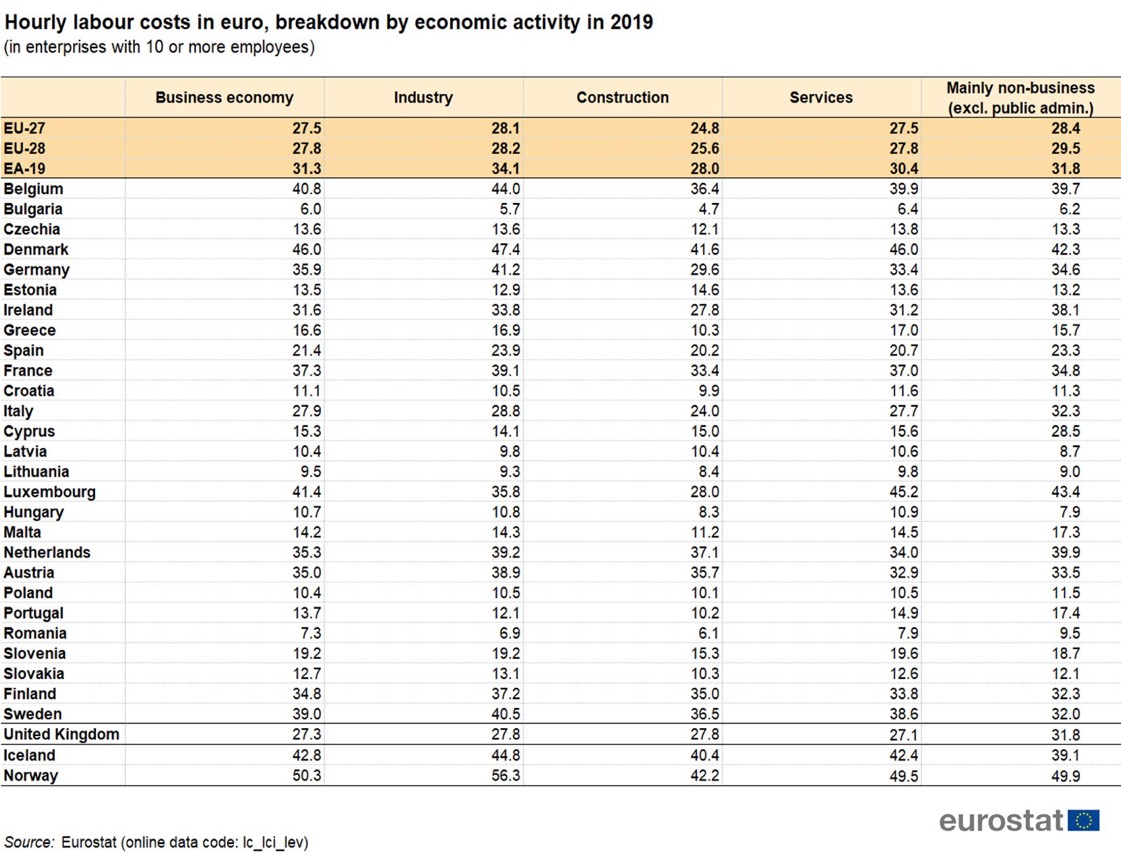
In recent days, headlines have been filled with bleak news: the closure of the UPM Kaipola mill and, most recently today, Tallink’s decision to keep the Silja Serenade in port and lay off its employees. Of course, the current virus situation is a factor, but Tallink’s Communications Director Marika Nöjd is hinting at replacing the Finnish crew with a cheaper Estonian crew.

This week’s grim news has been a continuation of the trends of recent years; Finland Inc.'s competitiveness has weakened significantly, and the country is not attractive for investments. What should be done about this? Fairly swift, and even major, strategic decisions are needed for the future :thinking: ?

17 Likes

I myself am tired of the whole topic. For 15 years now, there’s been talk about what should be done, and very little has happened. Kokoomus (National Coalition Party), Hetemäki, and many others have listed the necessary actions. We could also directly copy what Sweden and Denmark have done.

However, the fundamental problem of Finland Inc. is that we now have so many more net recipients of tax revenues than net contributors, that it’s becoming a political impossibility to make any significant reforms.

I have personally started preparing with Plan B, meaning I am ready to leave the country for an environment that suits me better if services, future prospects, or taxes reach a point where I lose faith.

Finland is a wonderful country; I love living here and my roots are here. But I also want to live in a country where my own values of justice and livelihood are realized.

61 Likes

Finland’s competitiveness is really weak in many areas, although expertise is one where Finland thrives. Finland has a lot of highly educated people in relation to many other countries, but I can’t say how that could be utilized.

How can competitiveness be improved without the process feeling ridiculously uncomfortable? Is improving competitiveness even necessary?

4 Likes

This really summarized my own thoughts well, even down to the Plan B thinking! In Finland, opinions are emerging where even working is not valued, and the enrichment of people and businesses has not been valued for a long time. On the contrary, individuals are considered foolish and the state is preferred to be strengthened (especially the current green-left). I predict a very bleak future for Finland; my most important advice to my offspring is to bravely look abroad from the very beginning.

16 Likes

Same old song here too. Relatives, friends, culture, roots, etc. It’s really not enough for some other country to be better by objective standards than Finland, and as long as I can reasonably manage in Finland, that’s enough for me.

But unfortunately, the direction has been wrong for as long as I can remember, and it’s very difficult to imagine what would turn this development around. The ratio of net beneficiaries to net payers and the state of the economy are constantly worsening, so if the necessary measures aren’t even politically possible enough to be reasonably discussed, how are they likely to succeed in the future when they become more difficult day by day?

I’m not yet looking at job ads from abroad or planning a Plan B beyond my imagination, but mentally I’m already trying to prepare for it, and I’ve half-seriously wondered where the line is that I’m still willing to tolerate?

4 Likes

It’s interesting to compare a state to a limited company. If I think about it, the state acts as a buyer and producer of services for its members (citizens). With equal voting rights, power doesn’t depend on ownership share. That’s why perhaps a more apt comparison would be Finland as a co-operative.

The focus also seems to be more on producing services than on making distributable profit.

8 Likes

Things started to go wrong with the Jäätteenmäki government in 2003. After that, there were 12 years without any action on anything important. Sipilä had the right goal but poor methods. The time had also already passed to a point where nothing could be done without someone taking offense. It’s probably pointless to even start with this government. One big factor, in my opinion, was the rise of the Finns Party. The media focused only on the opposition and let the governments be in peace, doing nothing. Now it might be too late.

13 Likes

The sense of community has eroded over the past 15 years. I notice that I have become more of an individualist. Wealth is viewed with envy. Even more taxes should be paid, because “there is room for increasing capital gains taxation for the sake of fairness.” At the same time, politicians my age and younger in the government are telling me how I should live. No way! I have implemented FIRE and can now be independent. Loved ones and friends are the most important. I cannot support this moral decay of society. The future of Finland Inc. (Suomi Oy AB) is going down the drain unless an era of pragmatic policymaking arrives soon.

19 Likes

What does this FIRE mean?

I don’t follow the political climate very closely myself, but as a young entrepreneur around 30 years old, I think things are going well, even though I’m a bit concerned about socioeconomic inequality and the polarization it creates.

I think more about the future of the entire planet, as Finland, as a small country, is very strongly involved in its development. Whether we, as a nation, can significantly influence matters outside our country is very speculative (great power politics, climate change…)

5 Likes

Twitter gives a slightly different picture.

2 Likes

It’s not reported because perhaps news media aren’t as impartial as they claim, but rather push their own ideology. Finnish media has elegantly carried out these opinion-shaping operations too. Of course, when the journalist corps has been trained by Taistoist professors who received instructions from the Soviet Union, it’s completely understandable that critical and logical thinking has been forgotten.

9 Likes

Financial Independence, Retire Early

So you earn enough capital/passive income to stop working for the rest of your life. Usually long before retirement age.

6 Likes

Having lived abroad for nearly 10 years, I can say that Finland is perhaps the best place to live precisely because the state secures one’s back at all costs—a functional defense, benefits, early childhood care, education, infrastructure, you name it. The purpose of the state is to keep citizens safe and well, and all parties support this approach, but their views on how to ensure this in the future differ. I won’t take a stance on which party has the best starting point, but selfishness and individualism are not it.

However, the most unpleasant aspect of living in Finland is the introversion of Finns, which leads to talking past each other and stubbornly defending one’s own opinion. Finland cannot move forward as a community if Finns don’t change their spiritual outlook and worldview. Finland is a major player on the global stage for its size and constantly influences world politics, as Navalny’s transfer to Germany demonstrated. Average folks might not notice this, but one simply has to trust that Finland knows what it’s doing. The erosion of trust in authorities is a major threat, and everyone can help prevent it. Of course, authorities must also be held accountable for their actions.

32 Likes

The future of the company called Finland Ltd. AB is very bleak if more people actually imagine it to be a company. The purpose of society is to provide services and security to people even in circumstances where making a profit is not possible. You only have to look across the pond to easily see what happens when this is not taken care of - guillotines in front of the White House and at Bezos’s doorstep. I hope that our already buried equalizing education system has been able to produce enough enlightened individuals for such thinking to stay away from Finland. I know, however, that this is a fool’s wish, having watched for years how services have been corporatized.

8 Likes

Quite horrible to follow from either side. There is no common ground, nor will there be at this rate. And on the other hand, I don’t know how WE would meet those who don’t understand economics. I speak from both sides, as a former unemployed person, a current sick leave taker, and some kind of investor.

Finland’s problem is radicalism. Wouldn’t believe it at first glance? On the other hand, one understands this and the actions with leftist ideologies, but this is nowhere near a sustainable foundation, and it’s probably pointless to mention this. There is thus no upper limit to raising taxes and all kinds of fees. Artificial respiration is probably the right term for the whole thing.

The latest nonsense is probably this six-hour workday. I’ll add myself to the group of low-wage earners and nurses; the nursing shortage is laughed at from the left, even though attempts are made to help it. This will collapse the healthcare sector in an even worse direction - even if it can’t even be reversed anymore. Work will have to be done even harder and faster now, because there are no nurses, and no more are coming. More nurses will only leave the field. We know the aspirations of healthcare companies and municipalities: they crave savings from the healthcare sector and spinal cords.

Let’s return to economics at the end of this jumble. It is truly sickening and hopeless to follow any discussion from the perspective of those who do not understand economics. The discussion takes on radical and fanatical features.

On the other hand, I understand. Who wants to lose their job? Finland is a land of endless bubbles into which more air is pumped. I just want and hope that everyone would be safe and good to live in Finland, experience justice, and not be punished for their work and money for reasons beyond their control.

I apologize for the confusing message, 4 months of antibiotic poisoning endured by ak, money and financial security is everyone’s right.

2 Likes

In my opinion, the biggest problem is the Finnish (and possibly others’) absurd resistance to change. The unemployment benefit system does not really encourage people to train for new professions; instead, those trained in dying fields are offered all sorts of nonsense IT/job search courses, instead of taking the bull by the horns.

Another problem I see is unconditional social security. In my opinion, cities could involve these citizens who have fallen into support networks by mandating them to clean parks and streets for at least 9 months a year. These individuals who have fallen into support networks would get, for example, exercise and fresh air 3 days a week, a warm soup, social encounters, and social welfare would be able to monitor them. Taxpayers, in turn, would at least get value for their money.

Thirdly, I see a problem with the Finnish education system. It has a lot of good, but especially universities of applied sciences are really weak. In my experience, contact teaching (lessons) has significantly decreased. It is important to remember that a higher education degree does not bring any added value to society, but rather the expertise it provides. Finland cannot afford to produce B-class engineers etc. We need world-class experts here. Now, there is an attempt to artificially create various higher education titles that could just as well be completed as apprenticeships. Or what does the forum think about Estenomeja or Sports Instructors (UAS)?

I consider Sanna Marin’s idea of 6-hour working days to be quite good, with the difference that it unfortunately does not work in operative and low-wage sectors. Already now, various top experts working in companies can work as they please. Unfortunately, Sari the cleaner cannot increase her productivity so much that a pay rise would be justified.

Finally, I consider our completely unfair penalty system, which is rather an income transfer to criminals, as an area for development. Or do you consider it reasonable that getting caught is merely a necessary evil for a serial thief, while a student may face financial problems for cycling without a light? Drug addicts steal bikes, and the police mostly wait for the bike to turn up on another job. Decent citizens pay for these stolen bicycles and other property through higher insurance premiums and deductibles. At the same time, the consequences for the thief (if caught at all): a round zero. To put it bluntly, every car, bicycle, sneaker, or any item that helps its owner to work, is more valuable than the addict who stole it.

Humanism is a noble idea, but in my opinion, people are given the same value at birth. Their actions determine it from then on.

22 Likes

You are mixing up terms now. Humanism is a human-centered worldview, instead of explaining the world and human actions through supernatural and divine intervention. The philosophical intrinsic value of a human, to which you refer, is instead the basis of equality and it is constant throughout a person’s life. That is why there is no death penalty in Finland. If we go down the path of valuing people based on their actions, we live in an authoritarian country - China is already doing this to some extent. It would be cool if these thoughts were taken a bit further than “I feel like it would be nice.”

8 Likes

If it’s any consolation to compare with other countries, in almost every developed economy, the situation seems to be that a smaller group of the entire population pays net taxes: after all, only about half of the population works in general, and a large portion of this group earns lower wages. This is the case, for example, in the United States, where less than half of the population pays taxes, and half of this tax-paying group paid 97% of the taxes…

Uneven distribution of income combined with progressive taxation and an aging population naturally tends to cause such situations everywhere where the economy has developed.

It would be interesting to dig into studies on how this setup affects politics in different countries, etc., or if all developed countries have this same fundamental problem. Do net recipients vote as actively, are they organized as effectively as net payers, etc.?

What I wanted to bring up is that Finland is certainly not alone in this boat (either).

9 Likes

Competitiveness is an aspect that can be debated from every angle, depending on what you look at. Perhaps the salaries of paper workers in a declining paper industry are too high…

One often hears that there is no investment in Finland because of a lack of competitiveness, as the thread starter also notes. Yet, this lack of investment actually plagues several developed economies, even Germany.

If Germany, where the Hartz reforms ensured (with consequences not so pleasing to the rest of Europe…) competitiveness, does not attract investment, then is the problem solely one of competitiveness?

What if the problem is a global lack of demand, or even the wrong products? If the cause of the symptom is a lack of demand, not weak competitiveness, then improving competitiveness would primarily increase owners’ dividends. That probably doesn’t bother us forum members, but from the perspective of the economy as a whole, it’s mostly shifting money from one pocket to another, which impacts demand and savings.

Domestic demand has been one of the driving forces of the Finnish economy in recent years. If wages and benefits are cut, domestic demand will certainly take a hit, but what if foreign demand for our products doesn’t pick up, and investments still don’t come?

These are difficult problems for which there are no simple solutions.

It often feels like the country has somewhat frozen, hoping for a new Nokia that would fix both the sustainability gap and other problems. Hope is notoriously a bad strategy, but there doesn’t seem to be any urgency in correcting the current situation, and the pressures for it are so far minimal: a lot of talk and hand-waving, less concrete action.

19 Likes

Competitiveness encompasses many areas where changes would be desirable, yet for some reason, the discussion usually devolves into wages. Centralized agreements make labor markets rigid, and local agreements are shackled by trade unions (AY). Even win-win agreements, beneficial to both employers and employees, are not a given if the AY doesn’t approve. I would argue that even a moderately higher wage level than competitors would be accepted by companies without major objections if the necessary compensation could be gained through flexibility and maneuverability.

Of course, the AY is not solely to blame. The relative weakening of education quality and reduced investment in research (higher education) erode national human capital, which is mainly the state’s responsibility.

The state’s response to these problems has recently been to primarily increase targeted corporate subsidies. I understand that the pandemic, or rather the restrictions and lockdown that followed, provided acceptable grounds this time. However, in the long run, artificial competitiveness built on subsidies only distorts markets and creates more problems, reminiscent of a scene from the movie Dumb and Dumber. Looking ahead, companies don’t need subsidies; they need a fair, stable, and lightly regulated playing field for free competition.

Regarding factors of production, I would pay particular attention to capital. Finland is capital-poor, and the current strong progression in income taxation acts as an effective stopper to the enrichment of the middle class. Most people can forget about pursuing financial independence. The average age of those who do achieve it is constantly increasing (I have no data to support this claim), and by the time retirement age approaches, they are no longer willing to take entrepreneurial risks. Although capital no longer knows national borders in the same way it used to, investments are more easily directed to areas that investors truly know, meaning domestic capital is more valuable to the Finnish economy than foreign capital (risk premium).

Entrepreneurship is often highlighted in modern analysis when examining factors of production. Finland’s ever-increasing regulation, bureaucracy, and slow processes, coupled with the scarcity of capital, are the worst poison for entrepreneurship. The significance of entrepreneurship for the regional economy is easily seen when comparing Ostrobothnia to the rest of Finland, especially Eastern Finland.

10 Likes