Training - Well-being for body and mind

There are quite a lot of physiological differences here. Personally, I’m apparently so closely related to our distant tree-climbing cousins that I don’t need straps, neither consciously nor unconsciously. I suffered from golfer’s elbow for a long time, and back then I used straps for help; it provided immediate relief.

I would argue that generally, trainees can achieve a cleaner stimulus for the back in rows and other back movements if they use straps. The forearms will keep up with just a few pulling movements done without them.

3 Likes

I’ve personally gone with a simple mindset regarding straps: as long as grip isn’t the limiting factor, I don’t use them, and if it is, I do. :smiley: In practice, this means I use straps for short, heavy sets of deadlifts and rows, but for longer sets, I don’t.

5 Likes

I took a 10-day break from training; I was feeling strangely weak because of my stomach, but that’s over now and everything is okay. At the same time, I thought my nagging shoulder would get some rest and peace. Mistake—rest is not always good if it’s the kind of pain you can train through; sometimes it’s the opposite. After a couple of sessions pushing through the pain slightly, I can train almost normally again.

The following points are good to remember regarding injuries.

  1. You can, and often should, continue training within the limits of the pain.

  2. 2 days is the turning point; if the sore spot is slightly more tender after training, there is no need to worry, but if the worsening pain continues for more than 2 days after exertion, it is advisable to have the injury examined by a professional.

  3. Often, it happens that it feels a bit more tender immediately after training but eases up the following day—a sign of recovery.

3 Likes

Regardless of the sport, the longer you have been training, the better you get to know your own limits and potential injuries. I certainly recommend avoiding training through an injury if it occurs suddenly during the workout in question. In most situations, I don’t believe the benefit gained from the training is worth the risk of potentially worsening the injury. Long-term injuries that are already known and are being rehabilitated through sensible training are a different matter.

3 Likes

This could have been elaborated on enough to make it clear that this applies on a general level. Any new pain occurring in the middle of a single workout should, naturally, be taken seriously.

2 Likes

I could make a few observations about my own progress again. I only recently figured out why my heart rate wouldn’t rise, my body couldn’t handle any training properly, my set endurance was dropping like a stone, and gym sessions sometimes felt like beating a dead horse. Despite CPAP therapy, my sleep was terrible; deep sleep consisted of a bunch of short fragments, and I didn’t wake up a single morning feeling truly rested. Now that I’ve finally gotten my deep sleep back to normal thanks to CPAP adjustments, a rested man wakes up in the morning and my thoughts flow in a completely different way. I can also push my workouts to the limit without it resulting in anything more than normal muscle fatigue. I was honestly starting to have a “what on earth” feeling, as I wasn’t ready to classify myself as old just yet.

I made that observation about recovery by combining my own feelings, data from the CPAP machine, and data from my Huawei GT Pro 6 watch. Now, my average resting heart rate during the night is around 44, and for a few mornings, the watch has been concerned because my heart rate dipped to 38 during the night :sweat_smile: (thanks to genetics, not brilliant fitness—at least not yet). HRV has risen to over 60 ms.

As for running, I’m currently doing cycles of 5 min walking and 7 min running in hilly terrain at a 6 min/km pace. The goal is to increase the running portion by 0.5 min per session and eventually run the entire 5.1 km loop. I could probably push through it right now if I had to, but I’ll get used to the impact first.

If there’s something to grumble about, according to the watch, my stride leans 51.2% to the right; apparently, I should pay a visit to a physio…

Gym workouts are moving along, and I’m gradually getting more intensity out of them. There were a frustrating number of two-week flu stints again this spring, so I’m not hitting any PRs (Personal Records) just yet. At least the working weights for front squats and bench press have exceeded 90 kg.

The plan is to have a consistent summer of training and trim the fat rather than jumping straight into max weights. My weight has been fluctuating between 86–90 kg lately. Motivation for dieting usually disappears the exact moment a new bug starts circulating from daycare through the family :grin:

5 Likes

I have a Polar GritX2 which basically reports that recovery directly through the Nightly Recharge function. I’ve personally found this to be a pretty good feature as it always compares to your own values—meaning the baseline rises as you “improve.” I’m mainly interested in how you managed to “adjust” that deep sleep. In my case, the biggest impact came from not eating anything at least 3 hours before going to bed. Still, if I make the mistake of having an evening snack, the watch definitely tells me the next morning that the Nightly Recharge is poor…

3 Likes

Exactly. A light portion usually doesn’t affect things much, but if you eat anything heavier or fattier, it definitely shows.

Another thing the watch shows clearly is that even a single serving of alcohol (in the evening) affects your sleep. At least for me, my sleeping heart rate immediately jumps slightly higher, which you wouldn’t necessarily guess.

4 Likes

Most things revolve around that CPAP treatment. I managed to get the mask leaks down to zero and the pressures to a level where the night isn’t full of micro-arousals.

Regarding eating, I find that I sleep better if I eat in the evening. Nothing crazy, but a normal evening snack helps in becoming tired and deepens sleep. I’ve also tried not eating, which resulted in waking up hungry and having difficulty falling back asleep.

As for supplements, I use magnesium in the morning/daytime 2*100mg, but not in the evening. In the evening, the effect is the same as with alcohol: tissues relax too much and sleep quality deteriorates. This also seems to prevent migraines.

Alcohol consumption is pretty non-existent; an occasional beer and maybe a couple of times a year more than that. Apparently, even one beer containing alcohol during dinner at 5 PM affects sleep, based on what I’ve tracked via my watch and how I feel. Since a beer goes particularly well with grilled food in the summer, I’ve often chosen a non-alcoholic version. This one has become a personal favorite: Estrella Damm N.A. 0,0% 0,33l alkoholiton oluttölkki | S-kaupat ruoan verkkokauppa

I usually drink a large cup of coffee in the morning and sometimes another at 12-1 PM, but often not even that. For some reason, my migraines seem quite sensitive to the amount of caffeine.

On training evenings, I’ve taken a couple of grams of glycine to make it easier to fall asleep and to calm the nervous system. It might help, or it might not; I’m not entirely sure if this is of any use anymore.

About routines:

I try to keep the routines of the last hour of the evening relatively consistent. Evening snack, a book, or some calm series on Netflix, and as soon as I start feeling sleepy, I brush my teeth and go to bed. I avoid aimless phone scrolling during this last hour, and I don’t do it in bed either. The blue light filter and “Do Not Disturb” mode also turn on automatically at 10 PM every night.

I aim to ensure that the wake-up time doesn’t vary by many hours between weekdays and weekends; instead, I keep the rhythm within about a one-hour window.

If I wake up during the night or the kids wake me up and I can’t fall back asleep, I listen to a podcast with my eyes closed and then fall asleep again at some point.

In terms of books, I would recommend Henri Tuomilehto’s Nukkumisen taito (The Art of Sleeping).

Overall, I would recommend finding routines that fit your own life, making them easy to repeat so they don’t become a forced chore.

8 Likes

Could you elaborate on this more? I might be dealing with something similar with my CPAP. Thanks in advance!

If you aren’t familiar with it, download the Oscar app: OSCAR - Open Source CPAP Analysis Reporter

Learn how to interpret the values there, such as leaks, AHI, etc., and reflect those against how you are feeling. For AHI, a good target value is under 5, and large leaks must be below 25% for the device to function correctly. My own AHIs are under 3 on a long-term average, and for example, leaks this week were 1.2 L/min one night and 0 L/min for the others.

Then regarding the device itself—I assume everyone in Finland has a ResMed machine.

What is the humidification level? Does water accumulate in the mask? I keep mine on manual, and now in the summer, the humidification level is 0. If this is too high, the result is larger leaks. In the winter, the setting is usually 2.

What is the tube temperature, if you are using a heated tube? I have this turned off in the summer as well. In winter, the setting is 19 degrees.

Pressure range? For years, I used a pressure range with the auto-setting; it never worked optimally, but despite the range, the pressure fluctuations caused leaks and awakenings. I changed my pressure to a fixed setting (9, the previous was 9–11 if I recall correctly), leaks dropped to zero, and sleeping became easier.

EPR value: I personally find it best to keep this at 1. This means that during exhalation, the pressure is effectively 8.

Check the setting for how the device reacts to pressure changes if a variable pressure range is in use. By default, the response is faster, but there is also a “slow” option.

Also, it’s worth hanging the hose so it comes from above, so you don’t wake up to the mask leaking when you turn over during sleep.

Regarding mask types, find one that suits you. I have personally gone through over 10 different masks over the years, both through public healthcare and with my own money. The AirTouch N30i works best for me, though used with a chin strap and mouth taped shut. I’ve also tried numerous full-face masks, but for one reason or another, they just don’t fit my facial structure. It’s actually strange that for the first few years I could sleep with my mouth closed, but for some reason, that just isn’t possible anymore :roll_eyes:

As for the pillow, the most suitable for me seems to be this Unikulma model. It’s adjustable, so I recommend trying it in-store if you feel your current one isn’t good. Astro | Ergonominen tyyny

Before that, I managed to try an X amount of Tempur pillows, Uinuja, a few Jysk pillows, and heaven knows what else.

During a cold, it’s worth asking for a prescription spray that keeps the nose open, like Ryaltris. It makes CPAP treatment significantly easier.

Even though my own cause for sleep apnea is a pure “manufacturing defect”—a large tongue, tonsils, and a slightly small lower jaw—weight management and lifestyle habits help, but they don’t eliminate the symptoms, even when I’ve been under 10% body fat.

No matter how much the device annoys you, you shouldn’t give it up if there is a clear need for it. If you change anything, I also recommend logging what was done and when, and tracking the changes. You should also have the patience that if you’ve slept well for 5 nights with certain settings and then have one bad night, you don’t immediately overhaul everything.

Those are the things that first come to mind.

4 Likes

A tough result and credit where it’s due, but the training volume makes me skeptical. It sounds unbelievable that a powerlifter would train 4-5 times a week for 12 hours total—meaning three hours at the gym at a time.

1 Like

He is indeed very tough. :slight_smile:

I know that some strength athletes spend a surprisingly long time at the gym, but the effective working time likely remains under two hours; however, I suppose there are always exceptions who train over two hours even in this sport. :slight_smile: On the other hand, if I followed some of the programs I’ve seen, with all the warm-up sets, it could take almost two hours.

It could also be that he told the reporter that he spends about three hours at the gym in total or twelve hours a week, but didn’t mean he is actively training that entire time. :slight_smile:

3 Likes

Since everything has to be turned into a healthy competition, my own AHIs for the past year average 1.13 :wink:. There’s room for improvement in the mask seal as it’s 9.38 L/min, though even that is “excellent” according to ResMed’s charts. I use a nasal pillows mask, I think it’s the AirFit P30i or something like that :thinking:. Those “cradle” masks that sit on top of the nose caused the skin to peel off my whole snout. Humidity level 3 and tube temp 22 summer and winter, as the bedroom temperature is as stable year-round as if I were living in a cigar humidor :grinning_face_with_smiling_eyes:

3 Likes

That’s a really good AHI for a yearly average!

I used to have leakage over 20 l/min myself and I tried adjusting everything possible. My eyes got incredibly dry from it.

Speaking of eyes, has anyone else developed proper eye bags as a result of CPAP therapy?

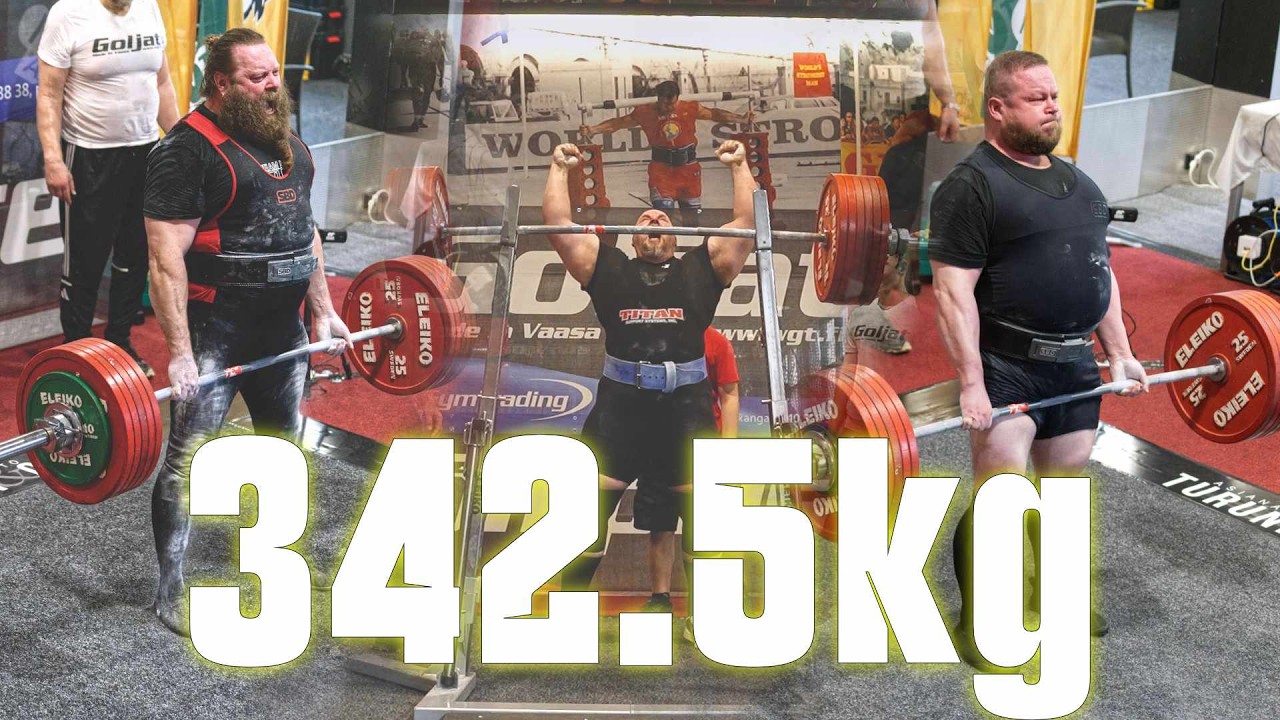
The big masters boys were lifting some serious iron :slight_smile:

I didn’t really have time to film much at the championships since I had so many lifters to look after, but I managed to scrape together a small compilation of Saturday’s events. A summary of the performances from the medalists in the -120kg and +120kg classes.

It was nice to see a good rise in the level of competition in the masters categories over the weekend, especially in the 93kg and 105kg classes which really stood out.

1 Like