Nythän mä vasta hokasin, että tämä suomalainen menestysresepti -ohjelman tuomari on Tokmannin uusi toimitusjohtaja.
5 tykkäystä
Ja kyllähän sekin jotain maksaa, että iso määrä joulusesonki-tavaraa kerää pölyä Mäntsälässä seuraavat kymmenen kuukautta. Mielestäni ihan hyvä, että tuolle vaihto-omaisuuden määrälle tehdään jotain.
6 tykkäystä
Tämä uutinen tuo luottamusta Suomen talouden nousuun ja samalla piristää kotimaista kysyntää. Tämän uutisen olisi voinut liittää jokaisen kotimarkkinayrityksen keskusteluun. Hyvä on tulossa ensi vuodesta. Ihmiset heräävät kulutuskoomastaan ja kaikki kotimarkkinayritykset kiittävät.
Suomen USA-diilistä repesi riemu: ”Työtä ja toimeentuloa tuhansille” | Kauppalehti
2 tykkäystä
Ehkä ei nuo joulukuset ratkaise kovinkaan muuta kuin ehkä ahventen kutupaikkoina, kuten Kreate teki viime jouluna. En sen sijaan miellä oivana jatkuvaa kotimaisen yrityksen mollaamista. Eikös meidän pitäisi vaalia kotimaisia yrityksiä Rustaa, Claes oholsonia ym. vastaan. Onhan varsin epäisänmaallista koko ajan moittia kotimaista yritystä. Tuumatkaa ja miettikää, onko tosiaan tämä kotimainen yritys jotenkin huonompi kuin nämä ulkomaalaiset.
11 tykkäystä
Minä en ainakaan havaitse keskustelussa mitään sellaista, joka antaisi aihetta ajatella, että kukaan toivoisi Tokmannin häviävän ruotsalaisille kilpailijoillensa. Itsekin kallistun sen puolelle, että Tokmanni saattaa vielä pettää sijoittajat huonolla neljännen kvartaalin tuloksella ja sitä koskienhan keskustelijat ovat tänne ketjuun tuoneet omia havaintojaan asiasta.
Mielestäni siinä ei ole mitään ristiriitaa odottaa Tokmannilta huonompaa tulosta kuin mitä he itse ovat ohjeistaneet ja samalla toivoa yrityksen kaikesta huolimatta menestyvän hyvin niin kotimarkkinalla kuin Ruotsissa. Myöskään kilpailevien yritysten osakkeiden ostaminen jälkimarkkinalla ei ole eikä sitä pidä mielestäni pitää mitenkään epäisänmaallisena tekona.
5 tykkäystä
Järkevää mietintää ja hyvä niin. Kuinka käy neljänneksellä olennaista. Havainnot kuinka ovat todennäköisesti vain kotimaan markkinoilta ja ilmeistä on, että osa kokee näistä alemyynneistä merkittävää. Kumminkin on tärkeintä asiakasvirta ja ostoksien kokonaissumma, joita ehkä harvempi on havainnoinut. En itse väitä siinä erityisesti, mutta havaintoni Vantaalla ovat olleet hyviä. Mutta vain Vantaan havaintointina. Kai me kaikki toivomme ,että Suomen talous olisi kasvussa ja sitä Tokmannin kasvu kertoisi?
4 tykkäystä
Tämä kauppapaikka varmasti kannattaa.
17 tykkäystä
SOK:in operatiivisesta avainhenkilöstöstä kovaa imua Tokmannin remmiin.
Sampo Päällysaho
Päivittäistavarakaupan johtaja 2020-2026
Kim Strönsholm
Vice precident, category management and procurement 2020-2025
Vice precident, sourcing and fresh food 2016-2020
12 tykkäystä
Noista rekryistä voisi päätellä, että ruokapuoleen tullaan panostamaan lisää. E. Ja niinhän se on myös viestitty, joten johdonmukaista toimintaa.
10 tykkäystä
Tämä saattaa olla erinomainen kauppapaikka, mutta erinomainen symbolinen kuvaus Tokmannin tämän hetken suurimmasta ongelmasta. Olen pari kertaa keväällä ja kesällä tässä ketjussa selittänyt sen kriittisen logiikan, joka on vähittäiskaupan kannattavuuden taustalla - erityisesti saturaatiovaiheessa. Compareable Growth! •
Yksinkertaistettuna 3 tapaa kasvaa:
• Ylivoimaisesti paras kasvu - vanhassa myymälässä. Ei (merkittäviä) investointikustannuksia, saat kasvaneen myynnin ja skaalaedun 100% kaupan prosesseista! = entistä kannattavampaa kasvua!
• Uudella myymälällä, ilman kannibalisaatiota (esim. ensimmäinen myymälä uudelle paikkakunnalle). Investointi kustannukset haittana, mutta saat kasvaneen myynnin ja skaalaedun n. 25-35% kaikista kaupan prosesseista = lisää myyntiä, ja hieman lisää kannattavuutta
• Uudella myymälällä ja kannibalisaatiota. Kyllä hieman uutta myyntiä, mutta investointikustannukset taakkana. Kasvaneen myynnin skaalaedun vain 25-35% prosesseista, mutta kannibalisaation myötä yhden tai pahimmillaan useamman muun myymälän myynti laskee, ja skaalaus on näissä yksiköissä negatiivista. (Esim myynti tippuu -10% mutta keskuslogistiikka-, sisälogistiikka, kiinteistö, kiinteistöhuolto, energia, sähkö, siivous, myymäläkalusteet ja henkilöstökulut pysyvät samalla tasolla). Nettovaikutus skaalaeduissa negatiivinen ja parhaimmillaankin vain nollassa.
Kivistön uudesta myymälästä on 10 km säteellä jo 5 muuta Tokmannia! Varisto, Tammisto, Myyrmanni, Kaari ja Konala. Kivistön Tokmannin mikrosijainti määrittää, että myös tähän myymälään saavutaan pääasiallisesti autolla. Lisäksi kun KT-kaupassa yleisesti tiedetään, että autoilevan asiakkaan keskiostos on vähintään 3X, voidaan päätellä että tuo 6. Myymälä (10km säteellä) tulee 100% varmuuudella aiheuttamaan kannibalisaatiota (autoilevilla asiakkailla) läheisissä myymälöissä.
Tämä myymäläavaus on tyyppiesimerkki Tokmannin-taudista: kasvua on Suomessa tarjolla vain Ähtärissä (6000 eläkeläistä), Kivistössä näennäisesti erinomaisella ostovoima-alueella, mutta omaa kannattavuutta syöden ja investointiraskaalla Spar-konseptilla, joka laskee kannattavuutta ja edelleen arveluttavalla kilpailukyvyllä.
Syytä vältellä kunnes Tokmannilla toimiva resepti eli 12M rolling comp growth JA kasvanut kannattavuus.
PS. Pääkaupunkiseudun investoinnit (myymälät) ovat strategisesti kaikista riskialtteimpia. Kun ensimmäinen Costcon, Amazonin, Actionin tai Tedin myymälä tulee Suomeen, se kannibalisoi eniten PK-seutua. Näistä kaikki eivät tule, mutta joku/jotkut tulevat korkealla todennäköisyydellä.
20 tykkäystä
Rohkenen epäillä, että noinkohan tuo keskiostosten ero pätee halpakaupassa ihan noissa mittakaavoissa. Ja toinen asia on sitten vielä se, että paljonko asiakkaiden kulutuserot ovat ostokertaa kohden ja paljonko vaikkapa kuukausiasiointia kohden.
Huomioida kannattaa myös se, että suurissa kaupungeissa se autoilevan väestön osuus on ollut jo pidempään laskussa. Vantaalla se on toki poikkeuksellisen suurta, mutta silti laskemaan päin. Esimerkiksi 2019-2023 henkilöautojen määrä tuhatta asukasta kohden laski Vantaalla 3 %. Toki varmasti on niin, että lasku painottuu nuorempiin ikäluokkiin, joille taas kivijalkakaupoissa asioiminen ei ole yhtä itsestäänselvyys kuin kaleveille ja ritvoille.
Se tietenkin on totta, että tuolla alueella neljällä Tokmannilla tehtäisiin suurempaa myymäläkohtaista liikevaihtoa kuin viidellä Tokmannilla.
Taitaa Ähtärissä enää olla reilu 5000 asukasta. Onneksi parituhatta kesäasukasta tuo varmasti mukavaa lisää myyntiin.
7 tykkäystä
Tokmannin hallitukseen ehdolla: Katarina Gabrielsonilla on laaja kokemus vähittäiskaupan alalta. Hän on toiminut urallaan useissa johtotehtävissä, muun muassa toimitusjohtajana, liiketoimintayksikön johtajana, osto- ja hankintajohtajana sekä markkinointijohtajana. Hänen ydinosaamistaan ovat muun muassa strateginen ja muutosjohtaminen, kansainvälinen liiketoiminta sekä kuluttajaliiketoiminnan kehittäminen. Tällä hetkellä hän työskentelee Oriolan toimitusjohtajana. Gabrielson on Ruotsin kansalainen.
14 tykkäystä
Kuinkakohan mahdollinen tulosvaroitus on tässä vaiheessa?
1 tykkäys
Mielestäni melko epätodennäköinen. Jos sellainen kuitenkin tulisi, rapauttaisi se ainakin minun uskoani firman johtoon huomattavasti siitä kuin jos tulosvaroitus olisi annettu kuukausi sitten.
Tokmannin myöhäisin Q4:ään liittyvä tulosvaroitus on käsittääkseni annettu 16. joulukuuta. Tuo oli vuonna 2022. Ja tuolloinkin jäätiin vain muutama prosentti aiemman ohjeistuksen alalaidasta.
14 tykkäystä
Luulen, että vielä ei voi huokaista helpotuksesta, sillä Dollarstoren luvut ratkaisevat negarin kohtalon. Toki mitä pidemmälle mennään niin sitä paremmalta näyttää. Dollarstoren hankinnan myötähän Tokmannin Q4:n julkaisu siirtyi vasta maaliskuulle, kun aimmin Tokmanni raportoi lukuja jo kuukautta aiemmin helmikuussa. Tämän luulen johtuvan siitä, että Ruotsin lukuja saadaan pääkonttorille hitaammin kuin Suomen.
25 tykkäystä
Vaikkapa tuo vuoden 2022 tulos julkaistiin 10. helmikuuta 2023. Viime vuoden tulos julkaistaan 6. maaliskuuta 2026. Ero siis noin 3,5 viikkoa. Olettaisin, että ainoa syy ei ole vain edellisen vuoden lukujen ynnäyksessä, koska esim. tulosohjeistuksen antaminen monen maan toiminnoille on astetta haastavampaa.
No, kovin voimakkaasti ei pidä lähteä tulosvaroituksen riskiä vähättelemään, koska niin tehdessä se lävähtää tunnin sisällä uutisvirtaan. Mutta kyllä se myy-nappi on itsellä herkässä, jos tammikuun puolivälin ylityttyä ei olla niitä Ruotsin lukujakin saatu ynnäiltyä yhteen siinä mittakaavassa, jotta tiedetään pysytäänkö ohjeistuksessa. Semminkin, jos kyse ei ole mistään sadantuhannen euron alittumisesta ohjeistuksen alalaidasta, vaan jostain merkittävämmästä summasta.
12 tykkäystä

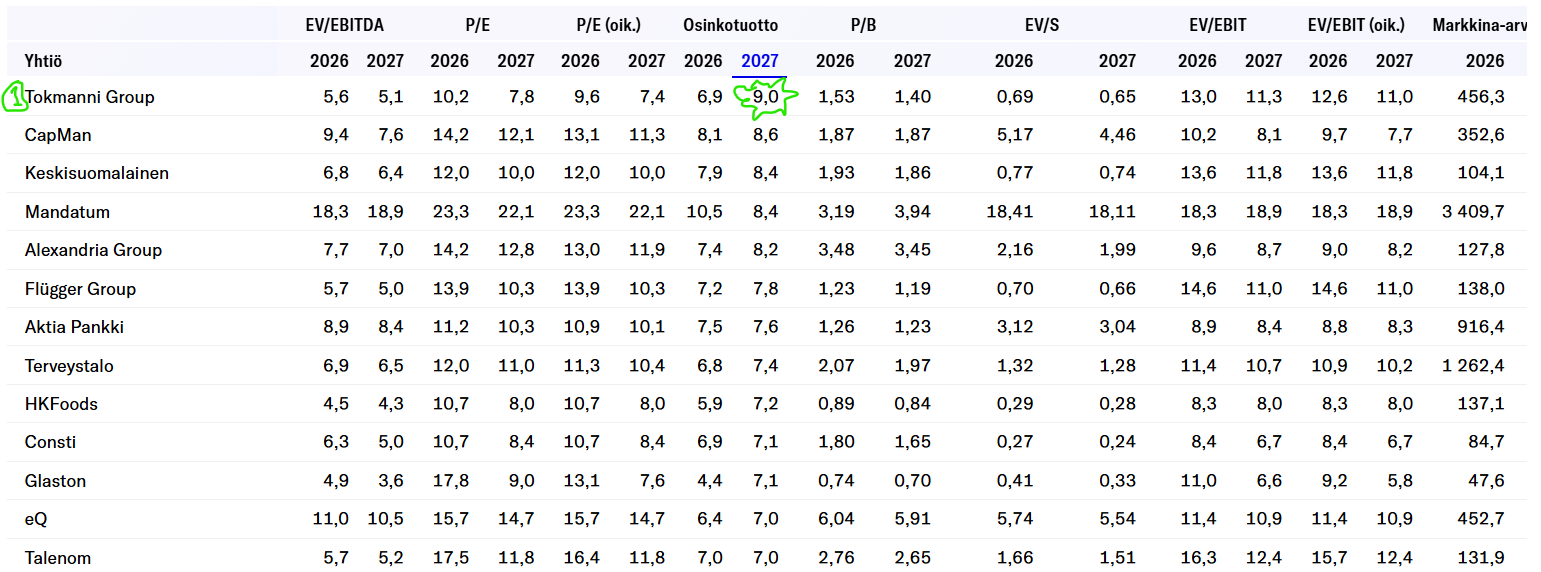
Viime vuonnahan Tokmanni peruutti 2.osinkoerän maksun (hallitukselle annetulla valtuutuksella) eli vuoden 2025 puolittui. Mitenkähän mahtaa olla osingonmaksukyky tänä vuonna…
10 tykkäystä
Epäillä kyllä sopii tuota taulukkoa, ainakin Tokmannin osalta. Minullakin oli Tokmanni OST-salkussa osinkojen takia, mutta myin pois kun peruuttivat sen toisen osinkoerän. Nyt on lisäksi tämä Dollarstone-ketjun heikohko tulos rasittamassa, niin itselleni olisi kyllä yllätys jos osingot pysyisi korkealla. Toisaalta, kukapa näistä mitään varmaa pystyy ennustamaan?
2 tykkäystä
Tämä on ihan fiksu liike.
Tokmannilla on riittävän kattava edustus edunvalvonnassa. Rautiainen hallituksessa ja Ojanen lakivaliokunnassa Kaupan liitossa. Lisäksi kun vielä Milttonin, Ellun Kanojen ja/tai Kreabin avainasiakaspäälliköt ovat kertoneet, mihin suuntaan eduskuntaryhmien kanta on kääntymässä, niin on varmistunut mihin asentoon uusi apteekkilainsäädäntö kääntyy 2026.
Nopeasti tsekkasin, niin huh huh…Arkadianmäellä on ollut viime vuonna aiheen parissa vilskettä. https://avoimuusrekisteri.fi/
Hyvä Tokmannille. Tuo hieman lisää myyntiä, toki heikolla katteella verrattuna Tokmannin Kiina-import-coreen. Eli hieman yläviivaa, mutta hieman katetta alas ajaen.
Mutta ehkä tärkein johtopäätös. Tokmanni pidä. Kesko, lisää!! Apteekkilainsäädännön muutoksen realisoituessa suurin suhteellinen hyötyjä on Kesko.
Tiedetään mitä Mr. Tokmanni laittaa ensi vuonna tarjouslehden kanteen. 5 pakettia buranaa kympillä!
7 tykkäystä