Talga is an Australian company that owns a mine in Sweden extracting graphite needed for electric vehicle batteries, and the company is also building a factory to process that graphite into finished anode material. Preliminary permits have been obtained, and operations are in the early stages. The mine is world-class in terms of size, quality, and cost, and demand for the products is growing rapidly. Below, I will outline several points about the company and hope to spark a discussion on the topic.
Before going any further, it is good to know that the company’s shares are listed in Australia, Germany, and the United States on markets that are not accessible, for example, through Nordnet. If you want to buy the stock, it can be done through major foreign brokers and semi-domestically via Mandatum Trader. It may be that purchasing through other domestic brokers is not possible.
When talking about battery materials, most people think of lithium. However, there is only a limited amount of lithium in batteries—depending somewhat on the battery chemistry—and only in the cathode. Graphite is used as the anode material, and there is usually more than five times as much graphite in an EV battery as there is lithium. It can either be mined from the ground or produced synthetically, for example, from a byproduct of oil refining (petroleum coke). Synthetic production is extremely energy-intensive, as the material is heated to over 2000 degrees Celsius for several days, resulting in high costs and high carbon dioxide emissions. On the other hand, the synthetic product is purer than natural products and fetches a better price. For battery metals, practically only the degree of purity matters for battery performance, whereas for graphite anode material, flake size and crystal structure also have a significant impact on battery operation.
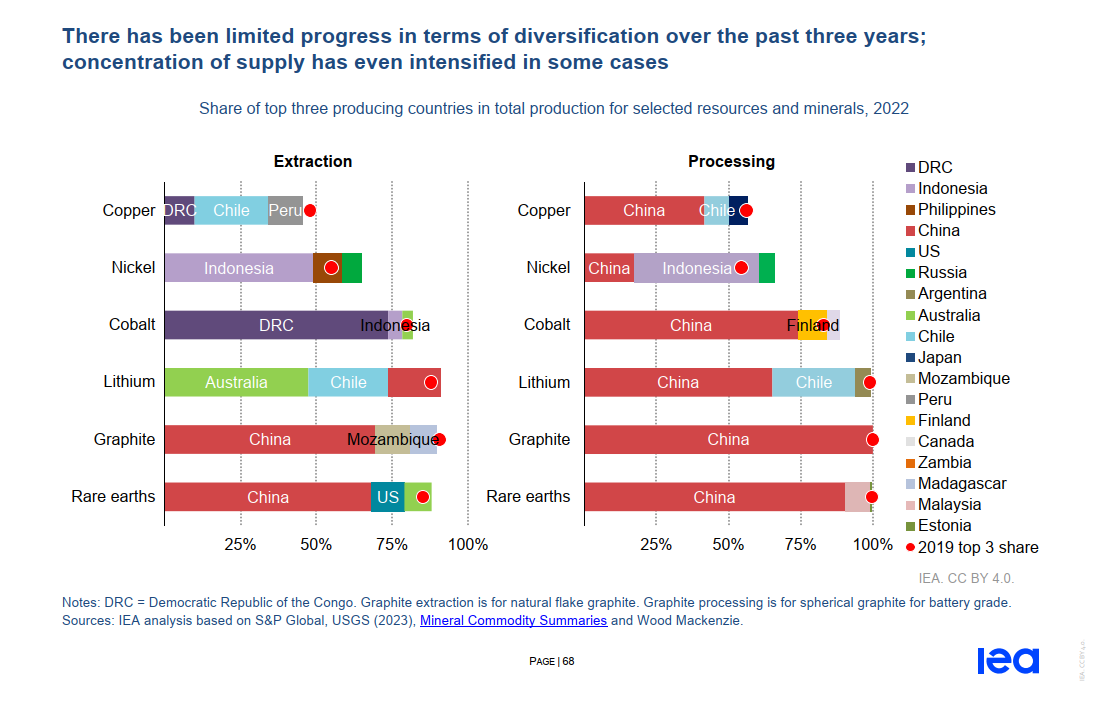
More than half of the world’s graphite currently comes from China; after that, Mozambique, Madagascar, and Brazil are major producer countries. Most of the produced graphite is exported to China: over 90% of anode precursor material production takes place in China, and even the production of finished anode material is heavily concentrated in China and neighboring countries. Such concentration is, of course, risky from a European perspective, especially in the current climate of emerging trade wars. China, for instance, recently banned the export of gallium and germanium, in which it holds as dominant a position as it does in graphite.
As with many battery materials, the demand for graphite is currently projected to significantly exceed supply in the latter half of this decade. Of course, the addition of new mines not yet included in calculations and an increase in synthetic graphite production could ease the situation.
Talga has a mining area in Vittangi, Northern Sweden, east of Kiruna. This is a very large and high-grade deposit in terms of graphite quantity, where graphite can be found right at the surface, and depending on the spot, it makes up about 20-40% of the soil. The material is therefore relatively cheap to mine and process further. Additionally, the flake size of Vittangi graphite is well-suited for batteries.
Talga is vertically integrated, meaning it intends to manufacture finished graphite anode material suitable for battery factories from the graphite it mines itself. The company plans to do this in Luleå, which has sea access to the world. According to its own statements, the company utilizes high technology to produce high-quality coated anode material, and it also has a research center in Cambridge, UK.
The company has its first environmental permits for both the mine and the anode material refinery. These have been appealed, and decisions on the appeals will come eventually. However, the company has the authority to advance its plans in the meantime. In the initial phase, the company’s production target is 19,500 tonnes of anode material per year.
For implementation, Talga still needs funding. A 150 million euro loan is coming from the European Investment Bank (EIB), and the company is also seeking other non-dilutive funding. However, more dilution is expected before production is in full swing.
Summary of the company’s pros and cons, first the pros:
-
World-class graphite resources: Very large and pure.
-
Due to cost-efficiency, margins can be good or excellent. Even if the price of graphite drops very low—which seems unlikely—cost-efficient production is what remains profitable the longest.
-
Production is in Sweden. The EU aims to increase stakes in the green transition within the union’s borders, and Talga’s graphite fits this goal perfectly.
-
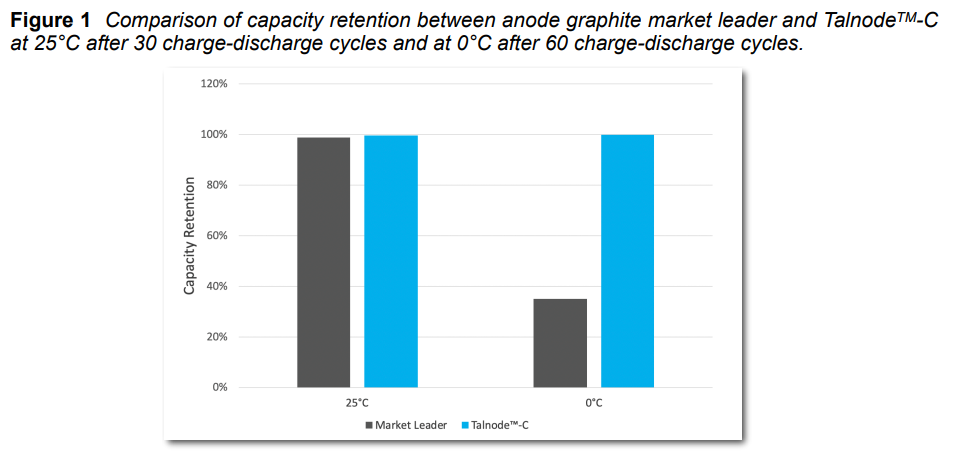
Clean Swedish hydropower is used in manufacturing. Talga’s graphite anode production results in 95-99% lower carbon dioxide emissions than its competitors.
-
Talga is vertically integrated, meaning it plans to do everything from mining to the production of finished battery material. In my view, this offers clear competitive and cost advantages.
-
Talga already has MoUs (Memorandum of Understanding) for graphite supply with companies like Mercedes-Benz, Stellantis (Citroën, Fiat, Jeep, Opel, Alfa Romeo, etc.), and Renault.
-
Talga is researching the addition of silicon to the anode material. Silicon causes unwanted swelling, which must be controlled, but otherwise helps improve anode performance and potentially lower production costs. Since Talga is vertically integrated, the benefits flow into its own pocket instead of someone else collecting them.
-
Experienced and, in my opinion, capable management. The CEO has an ownership stake of over 4% in the company, meaning he has significant financial interests at stake.
-
The company’s market capitalization (currently just over 300 million euros) is, in my opinion, at a very moderate level. I hope for enlightened views on this from other participants.
Then the cons:
-
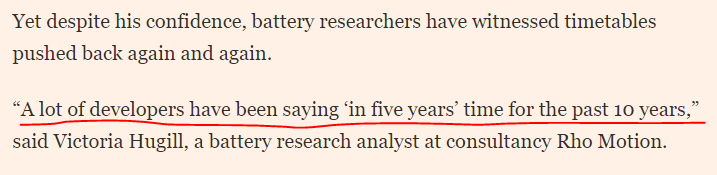
The mine and processing plant do not yet have final operating permits, and obtaining them will likely take years. So far, the decisions made have been favorable to Talga, but of course, all permits need to be finally granted.
-
No production during winter time. Vittangi is part of the Sami reindeer husbandry area, and the environmental permit stipulates that there will be no mining in winter—when the reindeer are in the area. Talga has communicated all along that it does not even intend to apply for a permit for winter mining, so this has not been a surprise at any stage. However, one could imagine it at least increases costs compared to a situation where mining could occur freely year-round.
-
The increase in synthetic graphite production based on fossil fuels is a question mark. How much cleaner can production be made? Will it become cost-efficient?
-
Stora Enso has a project where anode material is made from lignin, a side stream of the forest industry, under the name Lignode. This has been researched in Kotka, and an investment decision for the first factory is expected in the coming months. How might Lignode affect the graphite market?
A few useful links:
Company website: https://www.talgagroup.com/
Latest investor presentation (June 2023): https://talgagroup.eu-central-1.linodeobjects.com/app/uploads/2023/06/28171722/20230628_MacquarieCriticalMineralsForum.pdf
Comprehensive and, in my opinion, balanced analyst report (December 2022): https://talgagroup.eu-central-1.linodeobjects.com/app/uploads/2023/01/14125115/120822EH.pdf
From that analyst report, it could be noted that their price target for the stock is 3 AUD, but if the wildest speculation were to come true, the price would be something else entirely:”We see potential for anode production in the order of 800ktpa is possible [so now we are starting with 19.5 ktpa], based on the exploration target and assuming one day a 4mtpa underground mining operation (similar to the nearby Kiruna iron ore mine). This is substantially larger than the current resource. Our base valuation does not assume 800ktpa of anode, but indicatively if the company were to achieve such scale, it would represent around 10% of 2040 demand and would be generating in the order of US$10bn pa of revenue. This is a speculative assumption, but appears plausible based on the quality of the anode to be produced in Stage 1, the exploration target of 170-200Mt, the need to reduce CO in the anode, and the desire for the industry to move away from Chinese produced anode where possible”.
I am a novice myself in analyzing mining companies, and I hope this sparks some discussion on the topic. What are your thoughts on the company and its prospects?


 So the info is based on what the Finnish officials know.