Tungsten (chemical symbol W) is a very exceptional metal. Key properties:
Extremely high melting point: about 3422 °C (highest of all metals).
High density: about 19.3 g/cm³ (almost the same as gold).
Extremely hard and wear-resistant. High strength even at high temperatures.
Good thermal and electrical conductivity.
Good corrosion resistance.
The price of tungsten can be followed on Metal.com or the Shanghai Metals Market.
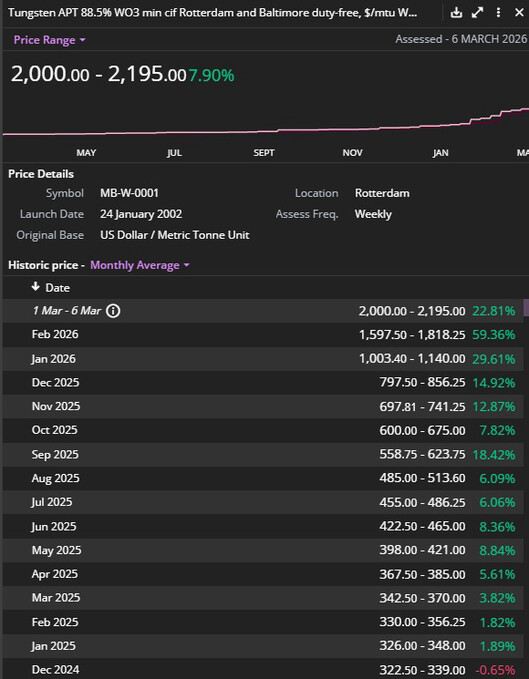
The price is measured by APT (Ammonium Paratungstate) China and APT Rotterdam, which report the daily quotation for tungsten in that market in MTU units, i.e., price $/MTU, Metric Ton Unit, or 10kg WO3.
Major applications:
Tools 55-65%
Aircraft and other engines 15-20%
Chemical industry 5-10%
Electronics 5-8%
Defense industry 5-10%
Others, e.g. Radiation shields 3-5%
Largest producers by country:
China 80%, 63,000 t
Vietnam 5%, 4,000 t
Russia 3%, 2,500 t
Bolivia 2%, 1,500 t
Rwanda 2%, 1,500 t
Situation as of March 9, 2026
China produces over 80% of mined tungsten. China has heavily restricted exports since April 4, 2025; the decision was already made in February 2025.
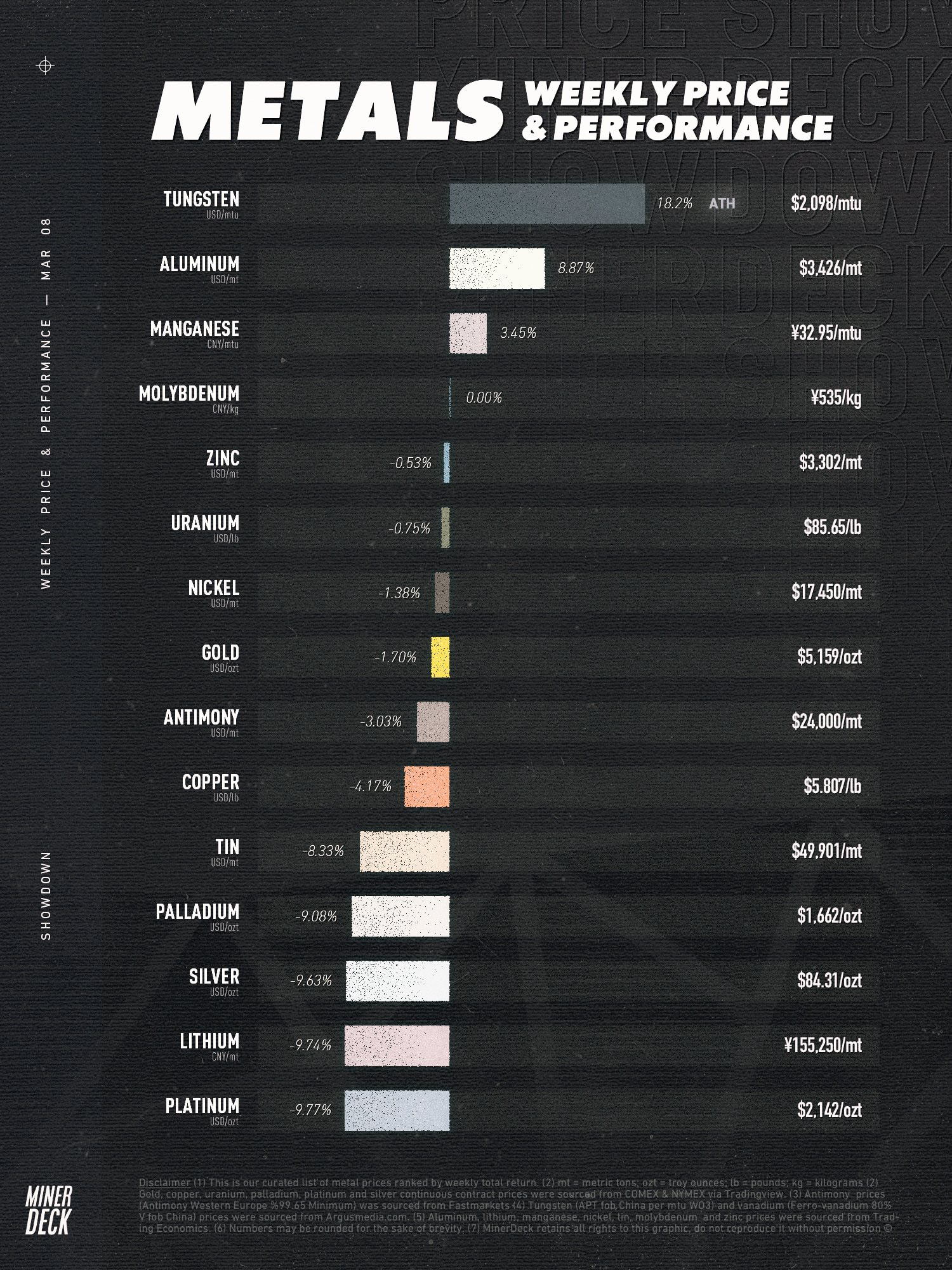
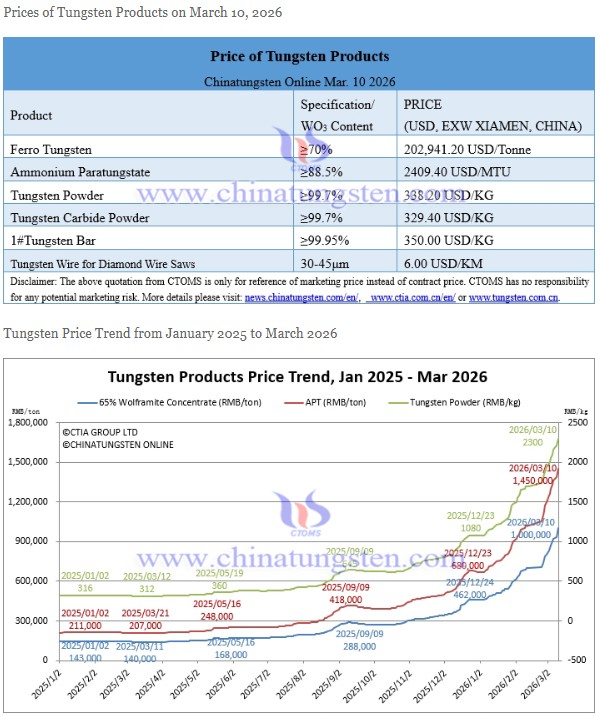
The APT price has risen in a year from $300 > $2200.
The production cost of tungsten is $300-400/APT, and prices are therefore moving directly into the miners’ margins.
Among the miners, Almonty Industries (AII) has risen the most, 816% in a year.
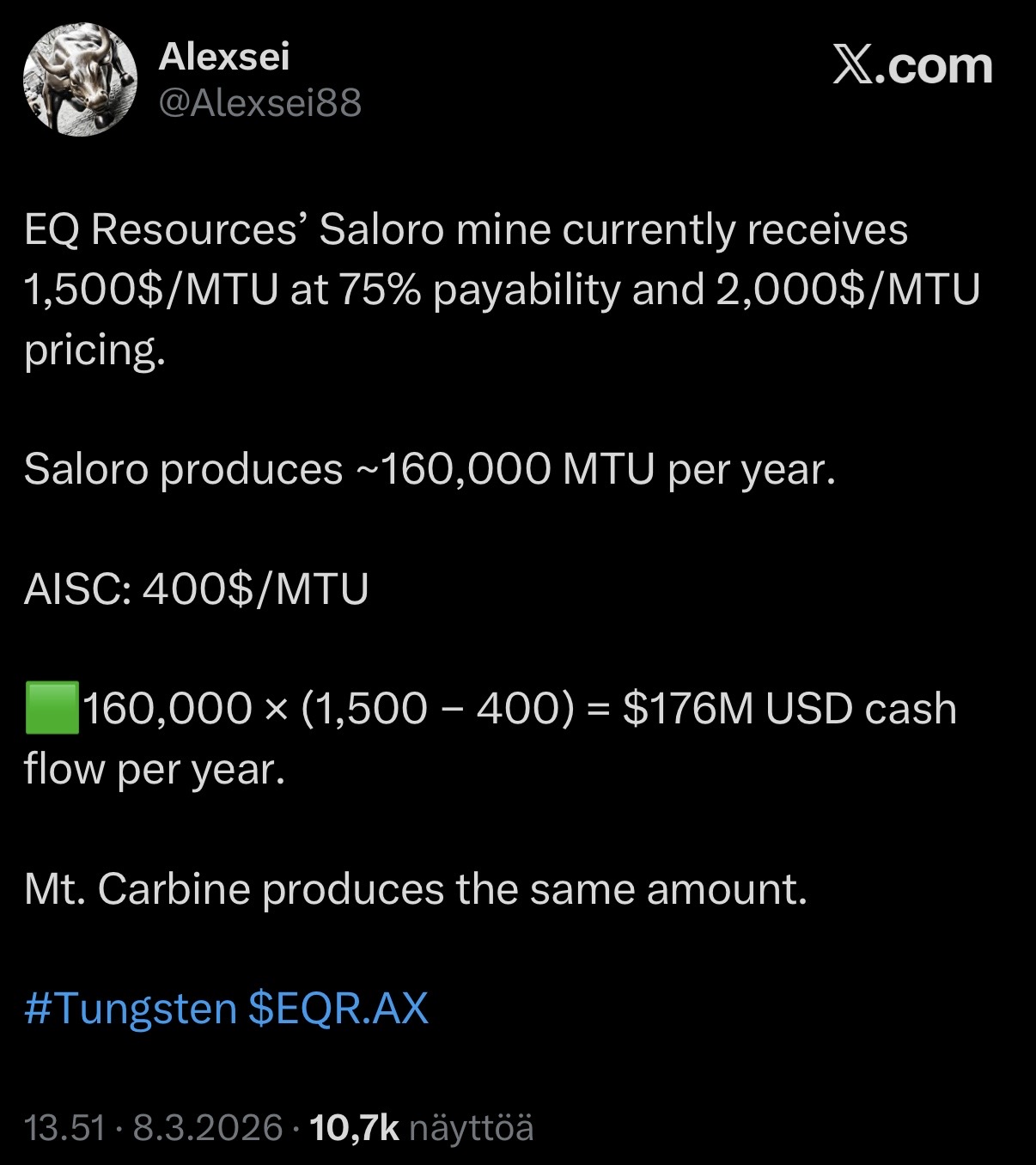
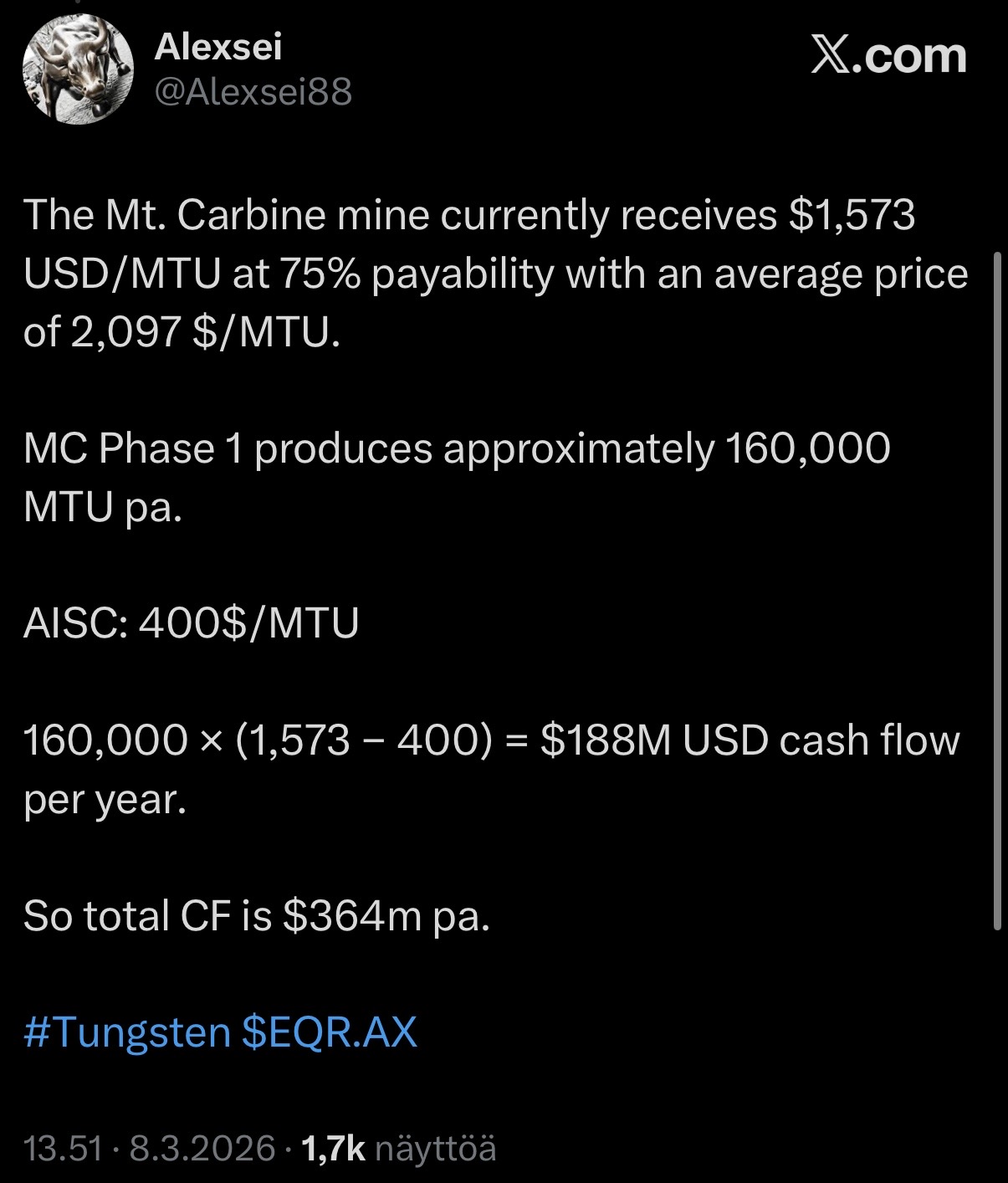
The Western world’s largest tungsten producer in 2026, the Australian company EQ Resources, has risen 597%.
Valuations can be explored later.
Interest in the market is particularly strong on Finnish X, where #finnishtungstenmafia is buzzing and sharing information about the market in Finnish. Especially @alexsei88 has done impressive work for the metal’s visibility in Finland.
The work is so impactful that, based on Google Trends, one can speak of a literal information asymmetry, at least regarding interest. Measured over a period of months, interest in tungsten and EQ Resources is higher in Finland than in Australia or anywhere else in the world.
Competition for tungsten is accelerating. Awareness is not yet widespread, and Finns have a head start. A hard metal requires a tough head; it’s a wild ride. Welcome to the thread.
What are the best ways for Finnish retail investors to get exposure to Tungsten?
For example, searching for “Tungsten” on Nordnet only brings up Fox Tungsten Ltd. (FOXT) osake | Nordnet (and Almonty on Nordnet)
Apparently, you can invest in EQR through Mandatum?
Through Mandatum, there is much better access to, for example, the Australian and London stock exchanges, where many of these mining companies are located.
Noooooo @Pohjolan_Eka EQR is the largest producer. The only one with anything concrete in production. ALM is then more or less promises, e.g. the Sangdong case..
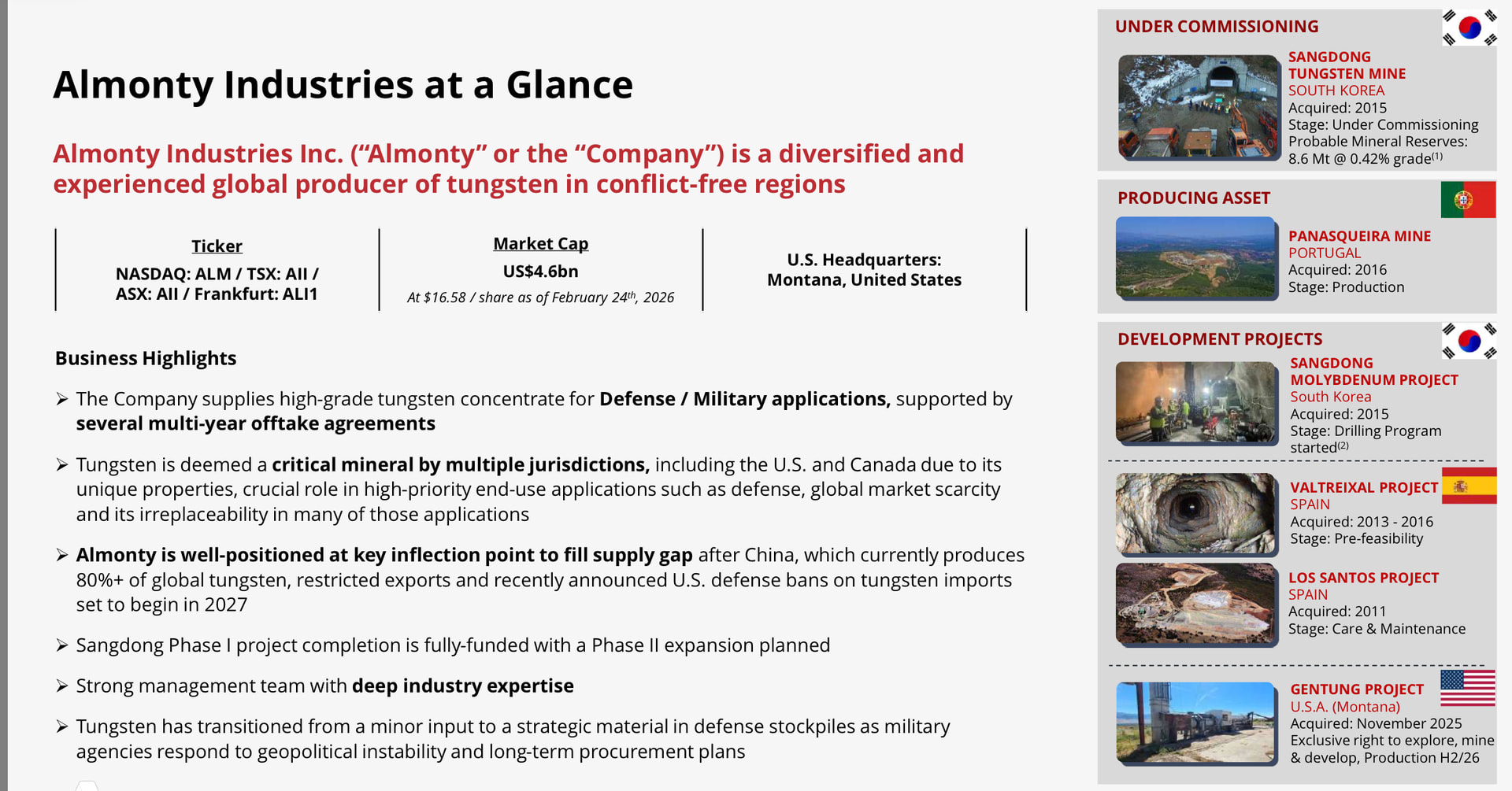
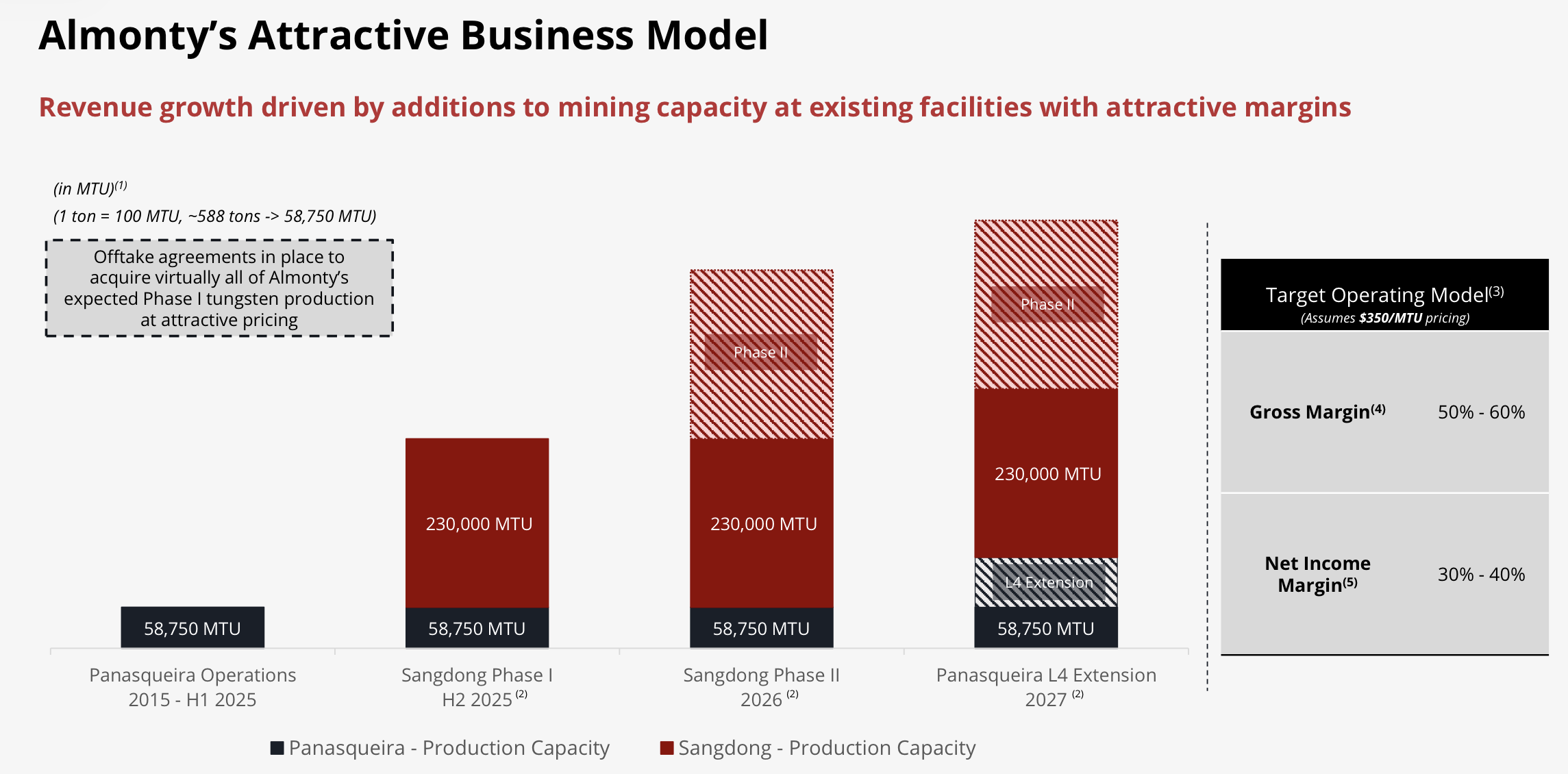
You are of course right that EQR is still the largest producer until Almonty’s projects reach full production. I translated “leading producer” there as “johtava tuottaja” to emphasize that they are one of the major players and not some small operator. After all, they have the Panasqueira mine in production and Sangdong in ramp-up as well, so it’s no longer just about promises.
Let’s wait until they get production going. So far, Almonty has been all talk and promises.. In this global situation, EQR is in a very strong position.
I have to admit that at least the mental hurdle of investing on another platform is significant, but I wouldn’t base an investment decision on avoiding the 10-minute effort of setting up an account with either Interactive Brokers or Mandatum Trader.
On another note:
When considering the valuation difference between Almonty and EQR as an investment thesis, I recognize the risk that Almonty’s ticker (AII) could be confused with the AI hype… there are cautionary examples of this in history.
I apologize at the start for the length and messiness of this message. There was quite a lot of digging through sources involved.
To the matter at hand
I personally view Almonty’s given schedules and promises with a grain of salt. That Phase 1 has indeed been stretched by nearly 5 years from the original schedule. Now it has been promised for Q1 2026. Let’s see if the schedule shifts further. If you think it can’t possibly move anymore since Q1 is underway, I want to remind you that the can has been kicked down the road at the very last minute before. I noticed this while digging for information. Also, in their communication, commercial production and excavation during the ramp-up phase were quite impressively mixed up. Often the message seemed to be “any moment now.” A moment later, the goalposts are moved again. My own uneducated guess is that we will be at the end of 2026 before Phase 1 commercial production begins.
I have very little expertise in the production stages of the mining industry, but @alexsei88, mentioned in the thread’s opening, analyzed the photos presented by Almonty excellently in his X posts. More is likely revealed there than what the company itself describes. His estimate is Phase 1 commercial production in 2027.
I must admit that Lewis Black (Almonty’s CEO) has succeeded very well in marketing. On the other hand, there has been a favorable window for it, as there seemed to be very little competition among Western producers. New projects were in their infancy (including EQR’s projects). The 5-year delays in production (nearly 6 years, if my own guess is correct) haven’t weighed much in the belief in promises for the coming years. Quite a few are certain that Phase 2 will be completed by 2027 at the latest. I wonder if it’s permissible to question that based on the company’s previous track record?
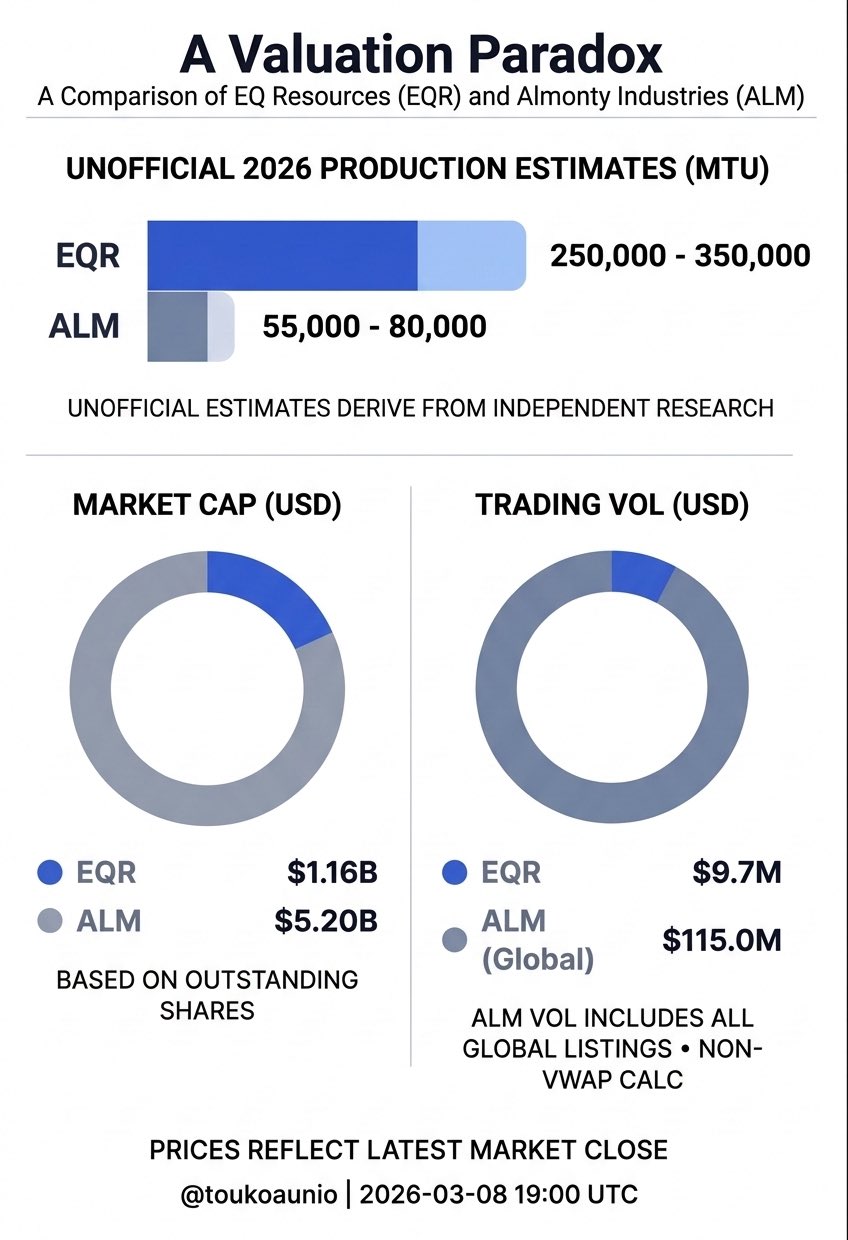
On the other hand, I think the biggest problem with the EQR investment case has been the company’s failure specifically in investor communication. Almonty has wiped the floor with them in this regard. As an example, how strongly all AIs mention Almonty as the largest producer. As another example: it is quite common to mention Almonty as a larger producer than EQR, even though the claim is not true. Or, even more commonly, EQR is not mentioned at all in articles dealing with tungsten, even though it is currently the de facto largest. When you add the nearly 5 times smaller market cap into the calculation… are these sufficient reasons to consider opening a parallel investment account? Who knows.
Below, however, is a list of schedules given by Almonty over the years for the completion of Phase 1 of the Sangdong mine. I don’t know where investors’ patience ends with this kicking of the can. If this kind of behavior started within EQR, my own trust would vanish quite quickly. While looking for information, my most significant question mark concerns the completion of Phase 1 in H1 2026 and Phase 2 in 2027, which are still Almonty’s estimates. Based on this history, I don’t see Phase 2 being ready in 2027.
PROMISES
July 2019:
Delivery of tungsten concentrate will begin in 2021.
February 2020:
Completion of the main part of the concentrator in September 2021 followed by trial production. Thus, actual tungsten concentrate production in April 2022.
August 2021:
In production by mid-2022.
September 2022:
Completion of production and ramp-up in 2023.
May 2023:
Production in 2024. I once read that towards the end of 2023, it had already been moved to 2025, but I couldn’t find a source for this.
December 2024:
There was already talk in interviews earlier in 2024 that it would stretch to at least late 2024. Confirmation of the delays was received in December. The company’s COO mentioned the commissioning of the processing plant before June 2025. In the same sentence, he mentioned “in line with its production targets.” I wonder which year’s production targets?
Contradictions in promises can be found in interviews and elsewhere from 2025. It felt as if the company itself didn’t quite have a consistent line on when commercial production was promised.
January 2025: Production ramp-up before summer 2025.
April 2025:
Production start H2 2025. Same in July 2025. However, the Q1 interim report speaks of the end of 2025.
November 2025:
The Q3 bulletin mentioned that construction is mostly complete and ramp-up is underway. Final commissioning is expected shortly.
January 2026:
The investor letter says that active mining started at the end of 2025. Thus, commercial production did not start in 2025.
February 2026:
Phase 1 was completed in Q4 2025. On the other hand, it is mentioned that it is only in the finishing stages. So it’s ready, but on the other hand: “the final step before commercial tungsten production” and “Finalizing construction; commissioning Q1/2026”
Well… a bit of hair-splitting.
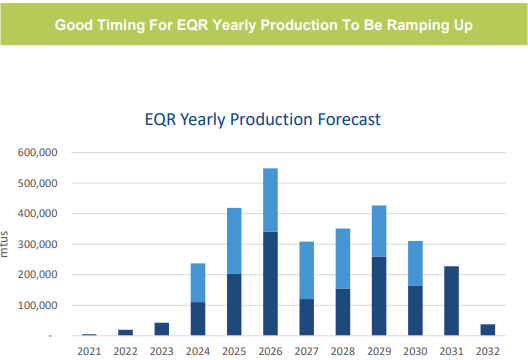
One more thing… I believe EQR’s maximum production potential is 500,000 mtu. Again, an uneducated guess, but I base this on the combined production of Mt Carbine (250,000 mtu) + Barruecopardo (170,000 mtu) + Wolfram Camp (80,000 mtu). Wolfram Camp is its own story, but EQR actually bought it from Almonty, which couldn’t make it profitable. At these tungsten prices, it is very much profitable.
What makes evaluating EQR production difficult is that EQR does not actively list updated production estimates far into the future. I found the latest one in October 2024.
Production estimates haven’t hit the mark perfectly there either. However, there is some direction as to where we are heading. And the Q2 production of the latest interim report (quarters are not by calendar year. If they were, it would be Q4 25) was Barruecopardo 32,408 mtu and Mt Carbine 5,884 mtu. An annual run rate of 153,168 mtu. The most essential thing here is that it is no longer just talk. EQR says production for 2026 will be 300-400k mtu. Growing from there for 2027. Possibly with Wolfram Camp included.
It is true, however, that I would like to hear their estimates for 2027 and 2028. I believe a more accurate estimate will be given during 2026. Not just “growing.”
I do not provide investment recommendations. However, I recommend doing your own research based on the images below. When choosing an investment, I focus on companies that are already in production. The reason for this is the strong growth in tungsten, which I don’t believe will last forever. In 2028-2029, supply can be expected to increase by massive amounts. This will naturally lead to a decrease in price.
The growth in supply is a good point, and rising APT prices have made many defunct projects profitable once again. But do you have any figures to share regarding those upcoming production operations coming online?
Kysyntä vs Tarjonta:
If the defense industry’s requirements are only a fraction of the total demand for tungsten, what is China’s actual incentive to restrict its exports? I’ve heard rumors about massive energy projects and the like, which would suggest that demand won’t drop off even after the rearmament of Europe and the U.S.—which, in itself, will take years after the current wars end.
EQR and Almonty have already been mentioned. There are several companies at an earlier stage, not all of which are pure-plays. There is plenty of discussion online about the first three (the largest ones).
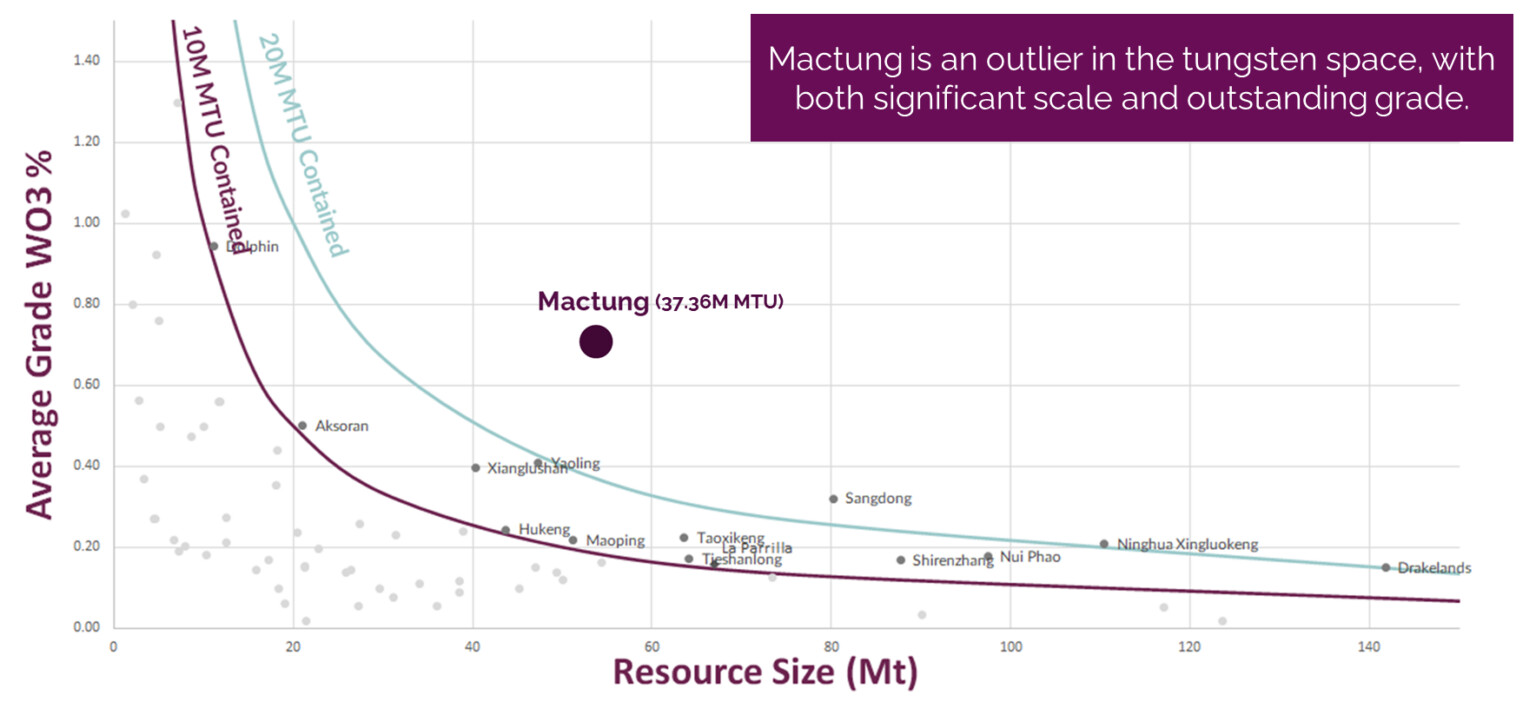
Fireweed Metals $FWZ.V - owns the Mactung deposit in Canada, with very high tungsten grades. So far, they have mainly focused on exploring the Macpass zinc deposit.
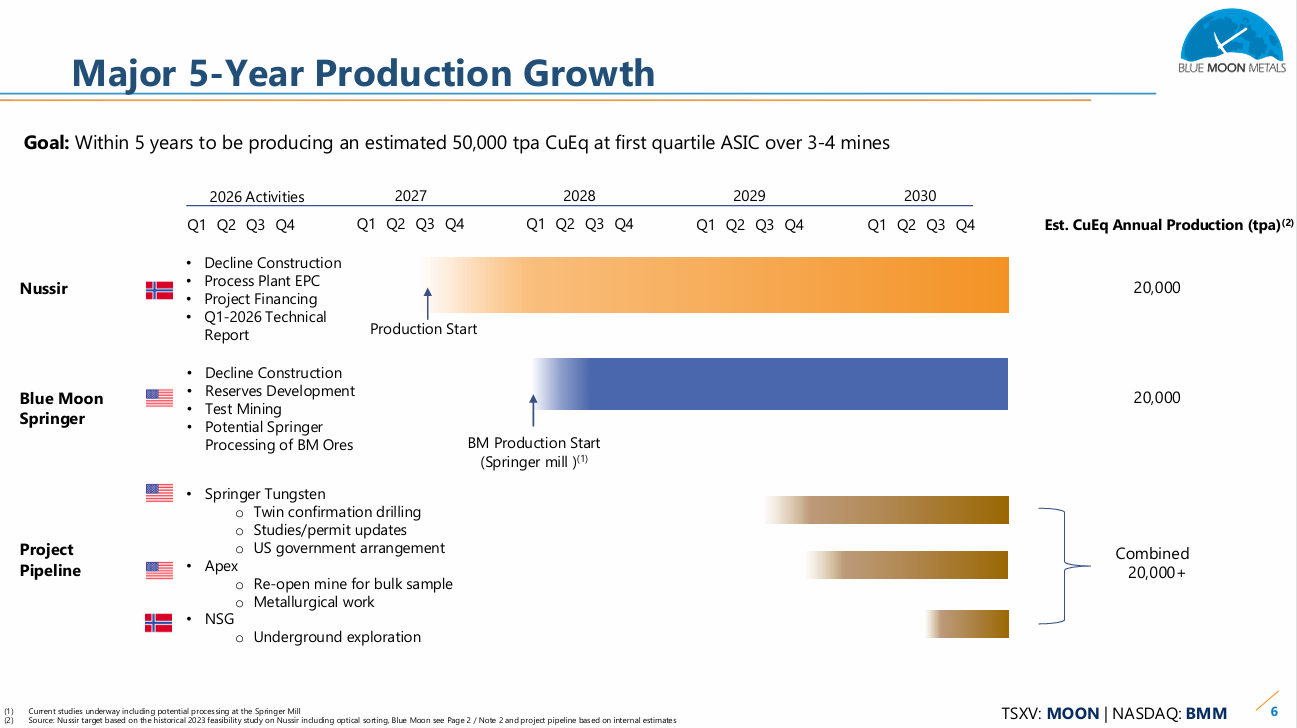
Blue Moon Metals - $BMM or $MOON.V - Recently acquired the old Springer Tungsten mine in the USA. The mine’s deposit might not be that large, but the grades are okay, and the mine came with existing infrastructure and a tungsten processing plant. Other projects include an old gallium/germanium mine in the USA (both critical materials) and two copper mines in Norway, one of which is starting up next year.
Guardian Metal Resources $GMET.L - Two projects in the USA, both have shown decent grades. Druckenmiller joined as an anchor investor last year.
Allied Critical Metals $ACM.C - Development project in Portugal; they published a PEA (Preliminary Economic Assessment) a couple of days ago.
Then there are several early-stage companies that I won’t list here because I don’t know them at all, so to speak.
It’s worth remembering that tungsten (and critical materials in general) is currently highly hyped, and these tungsten projects are starting to pop up everywhere.
As a cautionary example, I’ll mention this one, which I find almost comical given its small size and rapid schedule. They have also applied for EU strategic project status for this, which, considering the size and timeline of the mine, seems like a pump attempt to me.
@turola already mentioned how the supply volume and projections have increased as the price has risen sharply. There are figures to back this up. Like all speculation about the future, these are also guesses—perhaps a bit more informed than my own.
USGS estimates that mine production in 2024 was 84,000 t (10 million mtu). China’s share of this was 67,000 t. It is also worth noting that, according to the USGS, half of the reserves are in China. Australia has the next largest reserves at just over 10%. There is no precise information on the supply deficit, but it is clear from this that 80% of production comes from China. The EU imported about 40% of its tungsten from China, and the United States 27%. I found information from a few different sources indicating that China’s exports fell by 42% in January–June 2025 compared to the previous year (2024). So, there is a fairly severe supply shock in the market.
There are very few estimates for the future. Research and Markets estimates that the tungsten market in 2023 was 126,200 t and would rise to 175,100 t (15 million mtu?) by 2030. That’s an annual growth rate of nearly 5%. So, global consumption is growing by that amount. From an investment perspective, the more important question is how this is distributed geographically. I haven’t found any significant data on consumption either.
The defense industry’s share of demand is, of course, small. Discovery Alert estimates it at 12–15%. We are talking about something in the range of 1,500,000 mtu. However, it already gives China an incentive to restrict exports. These changes are certainly so drastic that I believe there is a lot more behind them.
There is no compiled data on future projections where one could see the potential for future production. I can offer some estimates based on what I’ve found in the depths of the internet. Many of these are still a long way off, but let’s limit the focus to production before 2030. NOTE: China is currently also vacuuming up tungsten from the West. That complicates the situation a bit. No sources are provided for the listing below, as the information involved a lot of combining data and some of my own gut feeling (mutu). Because of this gut feeling, the list and production volumes should be taken with a grain of salt. You can verify them individually if you wish.
Allied Critical Metals (Borralha / Vila verde) = 200,000 mtu
Fireweed metals (Mactung) = 700,000 mtu
Group 6 metals (Dolphin) = 104,700 mtu
Blue moon metals (Springer) no estimate for production
Guardian metal resources (Pilot mountain / Tempiute) 200,000 mtu
In production or declining:
Nui Phao mine 340,000 mtu
Iberian Resources - no information
Wolfram Bergbau - no information
We are looking at a maximum capacity range of somewhere between 3–5 million mtu. This still lacks small projects. Additionally, I suspect many of these will go unrealized. For example, Fireweed’s Mactung mine. Production is still at an extremely theoretical level. It will take quite a lot to reach those production levels. In any case, I believe that by 2029, supply and demand will start to meet.
By 2029-2030 at the latest, supply and demand will likely reach equilibrium when Kazakhstan’s massive North Katpar & Upper Kairakty projects come into production.
Regarding supply, there are also other headwinds:
Nui Phao will produce significantly less for the next couple of years
China may potentially cut its production quotas by 8% (likely to be confirmed within a month)
State stockpiles and easily recyclable scrap have largely been used up.
There is very little expertise in the West for tungsten mining and processing; tungsten is one of the most challenging metals to mine and refine.
However, I believe that tungsten will rise at least 10x, to over $20,000 / MTU (Metric Ton Unit) by then. Here is the thesis:
The current deficit is 30-40 tonnes - both Mark Thompson and Craig Bradshaw have arrived at this figure. Craig has also stated that backlogs are currently around 6 months, so even if half of the demand were destroyed, we would still be in a deficit. According to my own estimates, about 65% of demand is in completely price-inelastic applications. For some use cases, there are no substitutes for tungsten; for others, there are inferior substitutes that degrade quality or can even increase overall costs.
As an example, drill bits used in the mining industry:
If the price of tungsten increases tenfold to the $20,000 level, the price of drill bits will rise by about 300%. This increases drilling costs by 10-15%, which reflects as a 1.5-4% increase in the mine’s total costs. So even if the price of tungsten were to increase tenfold, this demand is unlikely to be completely destroyed.
That was an example of demand that is not completely price-inelastic. Here are a few examples of completely price-inelastic demand:
Defense industry: almost all countries are increasing their budgets. As a practical example, Lockheed Martin is quadrupling the production of M30A1 cluster munitions. The munition contains 50kg of tungsten, and 16,000 units are currently being produced per year. So, the production of just one munition model increases demand from 800t → 3,200t.
Microchips: all microchips under 5nm require tungsten.
China is aiming to buy all the tungsten from the market that it can.
Other nations are also beginning / have begun to build strategic stockpiles.
Tungsten is listed almost everywhere among the most critical metals, but the general public is still completely unaware of the tungsten bull market. China has subsidized tungsten production for nearly 30 years, destroying almost all Western production. Now, for the first time in a long while, tungsten is starting to be in a free market, as China is no longer pushing super cheap material to the West.
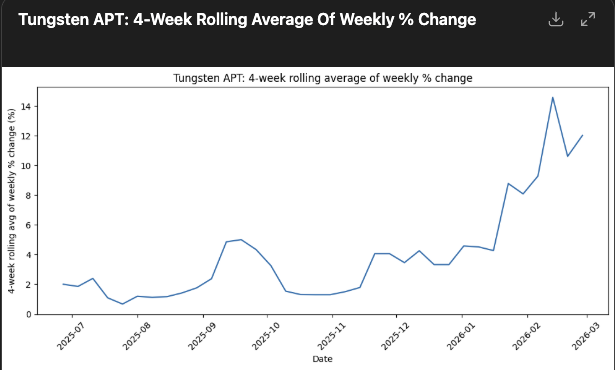
The image shows the rolling 4-week average growth rate of tungsten.
It appears that the deficit is now starting to hit specifically that price-inelastic demand. We can therefore assume that the growth rate will remain the same, or even accelerate.
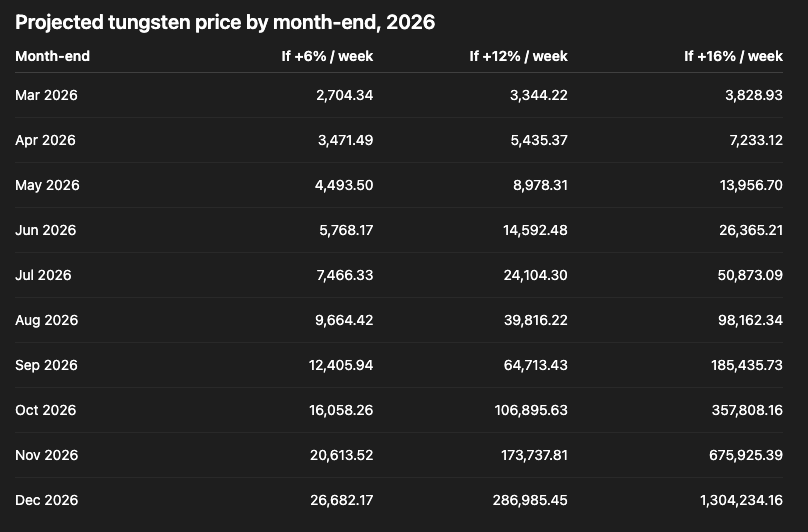
What if the growth rate slows down, halving from the current rate?