When putting everything together, the most likely candidate to close a pulp mill is perhaps Metsä Group, and the finger would point to Joutseno, but one cannot be certain. Of course, as an operator with a cooperative background, closing facilities is more difficult for Metsä Group than for a pure listed company. Furthermore, Metsä Group is already undergoing a severe cost-cutting and downsizing regimen.
A kind of staring contest is now underway regarding Finnish pulp operations. Who will blink first if other softwood pulp operators in the Baltic Sea region do not take action?
For example, China has increased its forest areas by more than 70 million hectares since 1990, according to a recent UN report. This amount is more than twice the total area of Finland.
Joutseno’s recovery line is from 1998 and the fiber line from 2001.
At Kaukas, the same are from 1991 and 1996. At least based on Google. At Kaukas, the clock is running out faster.
I would be surprised if Metsä is the first to give up, because the very foundation of the company’s existence is to create demand for wood. But we will have an answer within less than 5 years.
Suzano is continuing to restrict production this year, just as it did last year, by throttling output by 3.5% or approximately 0.5 million tons, as according to the company, additional tons do not yield sufficient returns. The participation of the market and cost leader in supply restriction efforts may to some extent support pulp price levels or create slight upward pressure, but from the perspective of demand and the demand growth outlook, the move certainly does not paint a good picture. Generally, demand growth is required to fuel a more sustainable and steeper price increase, whereas the leverage of (temporary) supply restriction is smaller, at least in the long term.
Suzano also reported its Q4 results. Lower pulp prices and currencies pushed revenue and EBITDA downward in a year-on-year comparison. I do not have precise information on consensus expectations, but I suspect that at least the direction has been in line with market expectations.
This is being celebrated with a nearly 12% rise in Suzano’s share price. There is also a pulp rally on the stock exchanges in Finland and Sweden today.
All that’s missing now is for demand for the companies’ products to also start rallying…
Sweden’s SCA, or Svenska Cellulosa Aktiebolag, is raising its softwood pulp prices in Europe. Do I, as a stubborn old stump, have to start believing that there really are signs of the market improving?
Look at that, over 6% more.
According to Fastmarkets, the price level had already risen from 1500 to 1600 USD/t between December and January.
Press release
13/02/2026, 08:32 am
SCA will increase the price on NBSK pulp (Northern Bleached Softwood Kraft) in Europe. The new price will be 1,710 USD (+100 USD), effective for March deliveries and invoicing.
I have previously understood from this forum that those European quoted prices are mainly indicative, as the majority is sold at a “discount”. And the real price level in Europe would be close to the level in China. Prices there haven’t really moved much.
No wonder that linked Fast Markets article talks about a very different level for NBSK spot in Europe in relation to the spot markets…
Fastmarkets assessed pulp, northern bleached softwood kraft (NBSK), spot, dap Europe, at $730-745 per tonne net in January on February 10, up by $10-15 per tonne from the December level of $720-730 per tonne. This was based on business transacted on a euro basis more or less unchanged from December, but the exchange rate pushed the dollar level upward.
The winter season is gradually ending, and as the fear of freezing disappears, production can be shut down to wait for better times. The future of the pulp business in Finland doesn’t look very bright.
“We are monitoring the market situation, and the decision to ramp up production will be made based on that.”
If I were an employee there, I’d definitely start looking for a permanent job elsewhere after a statement like that Looks like we found our “bingo” for the next factory to be permanently closed.
The price of pulpwood in Finland has once again been slowly rising for the past 2–4 weeks after a long time. The price floors were about 20–25% higher than the levels seen before the war in Ukraine. This is occurring in a situation where 1–2 pulp mills are idle, either completely or partially, due to demand and profitability issues. Since no further relief is coming from wood prices, the future of pulp production in Finland does not look good. Which of the big three will be the first to give in and close one of their pulp mills?
UPM’s wood procurement staff in certain areas have been temporarily laid off for a couple of weeks. They were allowed to choose the layoff weeks themselves. At least it shows that wood isn’t moving.
@Antti_Viljakainen, how do you see today’s appointment of UPM’s Chief Transformation Officer? I wonder if they are preparing for the future change needs resulting from the separation of the paper business, or what is your take? It’s also interesting that transformation is not part of the strategy team, but that’s just a curiosity.
Timber isn’t moving because companies have a lot of unharvested winter stands, and the reason is that with winters like these, machinery hasn’t been able to get into the forest. Especially marshy/wet areas. The ground would need to be covered in snow and frozen for access. So, reserves are growing. I expect things will pick up a bit in the spring.
To be honest, I thought a Strategy Director had been hired for the company/executive team with a slightly more modern title, but it seems that seat was already filled. No major insights arose from this appointment at this stage. I don’t believe in rapid changes beyond the already announced plans, but in the longer term, it is certainly possible to make transformative moves in UPM’s portfolio game.
By the way, the Transformation Officer is the 13th member of UPM’s executive team, and presumably, one more is on the way when Korpeinen’s CFO and Energy roles are split between two people. Companies can be managed in many ways, but to my taste, it feels like a rather heavy setup despite UPM’s conglomerate structure.
Thanks for the insights! Good point regarding the breadth of the management team. One can hope that the new transformation director helps the CEO streamline the structure now, especially with the paper business divestment and the strategic review of the plywood business already underway.
 market improving?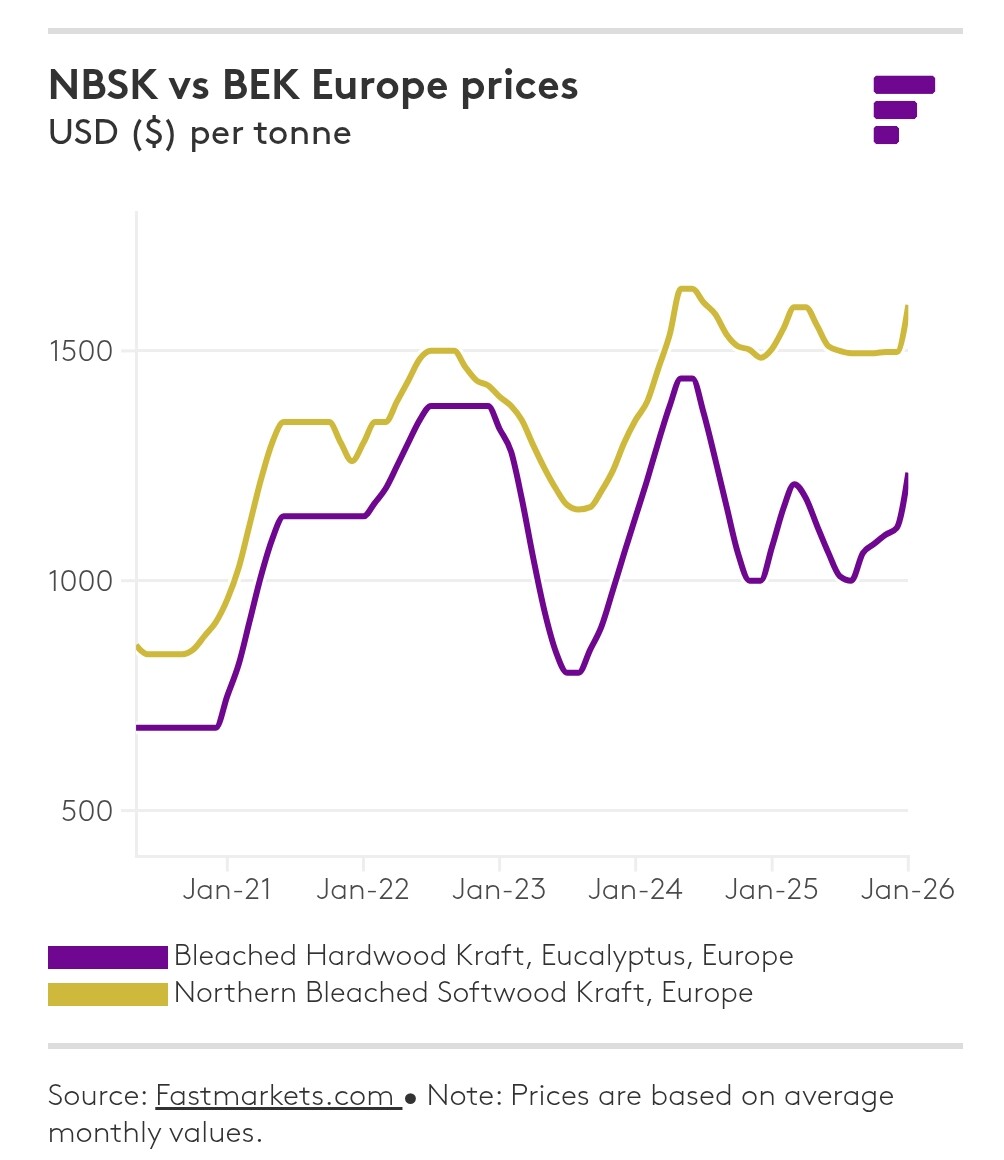
 Looks like we found our “bingo” for the next factory to be permanently closed.