Henkilöstön vaihtuvuus on ilmeisesti ollut myös kovaa ainakin joillain ostoalueilla. Itse tein puunkaupan syyskuussa 2025 ja yhteyshenkilö vaihtui 3 kertaa 6 kuukauden aikana. Näin ei ole ollut ennen.
2 tykkäystä
On kyllä tosi leveä. Oma kokemus työelämästä on, että yli 7 hengen kokoukset alkavat mennä tiedotustilaisuuden puolelle, ei niissä enää päätetä mitään. Yleensä johtoryhmässä on ollut TJ, tuotekehitysjohtaja, markkinointijohtaja, myyntijohtaja, huoltotoiminnan johtaja, tuotantojohtaja, HR-johtaja
Toki UPM on monialayhtiö, mutta silti.
4 tykkäystä
Poikkeuksellisen varhain tullut kevät pakottaa metsäalan yritykset keskeyttämään osan korjuutöistä ja jakamaan lomautusvaroituksia.
4 tykkäystä
Eli ei isoja muutoksia puuraaka-aineen hinnassa viime kuusta, mutta pitemmällä aikavälillä alas.
Aamulla luin myös, että maakaasun hinta tänään 35 % ylös. UPM:n Leuna on käsittääkseni kytketty alueen energiaverkkoon, jossa vähintään yhtenä pääpalkkina maakaasu. Sen lisäksi, että Umpin Leuna käyttää oman laitoksensa puupohjaisia sivuvirtoja. Pohdiskelin, että mitenköhän Umpin Leunan katteisiin ja yleensä toimintavarmuuteen vaikuttaa tällainen riippuvuus fossiilisesta kaasusta, jonka hinta pomppii sinne tänne? Onkohan @Antti_Viljakainen tietoa tästä asiasta tai tullut missään esiin?
10 tykkäystä
Tuli mieleen myös tämä kaasun hinnan mahdollinenvaikutus kierrätyslaatuihin(kartonki)? Oliko näin, että edellisessä energiakriisissä etenkin eurooppalaiset WLC-valmistajat ottivat osumaa kustannusrakenteen reilusta pompsahtamisesta, joka johti ensikuitukartongin kasvaneeseen kysyntään?
2 tykkäystä
Itellä ollu kans mieles, että joko nyt kohonneet hinnat, ja mahdollinen energiakriisi alkaa olemaan viimeinen niitti euroopan yksittäisille perheomisteisille paperitehtaille ?
3 tykkäystä
UPM kulutti viime vuonna 3,9 TWh maakaasuenergiaa, mistä leijonanosa liittynee Saksan (paperitehtaiden) energiahuoltoon. Leunassa energiankulutus oletettavasti kasvaa tänä vuonna, kun taas Saksan paperitehtaiden volyymi voi pienentyä. Ymmärtääkseni UPM ostaa Leunan tehtaan energian (ml. sähkö, höyry, lämpö) koko teollisuuspuiston energiahuoltoa hoitavalta infrayhtiöltä, jonka tuotantomixistä ainakin osa on todennäköisesti saksalaiseen tyyliin maakaasun perässä. Tästä jokainen voi omilla maakaasun kulutus ja keskihinta-arvioillaan ja suojausoletuksilla (näistä ei ole mitään tietoa) tehdä herkkyysanalyysejä, mutta selvää on, että kustannusvaikutus Saksan paperitehtaille ja Leunaan voi olla merkittävä, jos aamun yli 60 €/MWh hinnat pitkittyisivät (vrt. viime vuoden maakaasun keskihinta Euroopassa noin 38 €/MWh). Luonnollisesti käytännössä tilanne ei ole ns. ceteris paribus vaan kohonnutta energiahintaa pyritään vyöryttämään asiakkaille (myös kilpailevien tuotteiden tarjontakäyrät muuttavat energian hinnan nousun takia paikkaansa) ja tällä voi olla kysyntävaikutuksia. Lähtökohtaisesti kustannustason heiluminen ylösajon alkuvaiheen muutenkin herkässä vaiheessa on kuitenkin mielestäni ainakin lyhyellä 1-2 vuoden tähtäimellä negatiivista Leunan tehtaalle.
Kaikkien maakaasupohjaisessa energiatuotannossa kiinni olevien tuotteiden tarjontakäyrät muuttavat energiakulujen nousun takia paikkaa ainakin tilanteen pitkittyessä. Tämä taas tarkoittaa, että tuottajien pitää mahdollisuuksien mukaan nostaa hintoja kannattavuuden puolustamiseksi, mutta hinnan nostoilla (ml. läpivienti arvoketjussa kuluttajille asti) on lähtökohtaisesti negatiivisia kysyntävaikutuksia. Pohjoismaisten metsäyhtiöiden suhteellinen asema on mielestäni hyvä, sillä pohjoismaissa maakaasun rooli tehtaiden energiahuollon kannalta on pieni tai olematon toisin kuin Keski-Euroopassa. Tätä tosin tasoittaa osin se, että pohjoismaiset metsäyhtiöt kärsivät logistiikkakulujen todennäköisestä noususta suhteessa eurooppalaisia kilpailijoitaan enemmän. Toisaalta taas kiinalaisten tuontia logistiikkakulujen nousu voi hillitä, joten kyseessä on hyvin monimutkainen ja ulotteinen kokonaisuus. Edelliseen vuoden 2022 energiakriisiin en välttämättä tilannetta vertaisi, sillä tuolloin koronan luoman tavarakulutuskuplan jälkimainingeissa kysyntää riitti melkein hinnasta piittaamatta lähes kaikille tuotteille ehkä Q4’22:sta lukuunottamatta (vrt. nyt kuluttaja on Euroopassa on valmiiksi hyvin varovainen).
16 tykkäystä
Metsä Board - uusi strategia ja taloudelliset tavoitteet.
Tarkemmin linkin takana, alla taloudelliset tavoitteet.
Investointivaihe takana, tällä jaksolla ei uutta isompaa vaan pyritään ottamaan irti olemassaolevasta.
Taloudelliset tavoitteet vuosille 2026–2030:
- Consumer Packaging -liiketoiminnan vuotuinen liikevaihdon kasvu (CAGR) yli 4 % (vertailuvuosi 2025)
- Vertailukelpoinen sijoitetun pääoman tuotto (ROCE): vuosina 2027–2028 vähintään 8 % ja vuodesta 2029 eteenpäin vähintään 12 %
- Nettovelan suhde vertailukelpoiseen käyttökatteeseen (Net Debt/EBITDA): enintään 2,5 (säilyy ennallaan)
Metsä Board keskittyy nyt investointien tuottaman lisäarvon täysimääräiseen hyödyntämiseen. Strategiakaudelle ei ole suunnitteilla merkittäviä uusia investointeja.
7 tykkäystä
Ja sellusta todetaan näin: “Market Pulp – omavaraisuuteen perustuva kilpailuetu
Yhtiö pyrkii pienentämään nykyistä markkinasellupositiotansa tasapainoisemman ja vakaamman kassavirran saavuttamiseksi. Pitkäkuituisen paperimarkkinasellun kysynnän arvioidaan laskevan strategiakaudella. Metsä Boardin oma markkinasellukapasiteetti on osittain integroitu Consumer Packaging - ja Retail Packaging -liiketoimintojen kanssa ja osakkuusyhtiö Metsä Fibren sellukapasiteetti on erittäin kilpailukykyistä viimeaikaisten kapasiteettia kasvattaneiden investointien sekä edistyneiden sivutuoteratkaisujen ansiosta. Selluomavaraisuus vahvistaa yhtiön kilpailukykyä ja tukee pitkän aikavälin kasvua.”
3 tykkäystä
Luin muutama päivä sitten ruotsalaista arvioita siitä, että päällä oleva energiakriisi on lapasyöttö Pohjoismaissa sijaitsevalle metsäteollisuudelle tai se vähintään tasoittaa kovaa puunhintaa täällä. Keskisen Euroopan fossiilienergiaan tukeutuvat metsäteollisuuslaitokset saavat nyt tuta ja kunnolla. Pitkittyessään voisi lähteä pudotuspeli liikkeelle, jossa riippuvuus korkean hinnan fossiilienergiasta olisi kärkitekijöitä, arvioidaan tuoreeltaan Ruotsissa.
Muistan myös jonkun vuoden takaa ihmettelyä siitä, miksi UPM meni perustamaan Leunan tehtaan Saksaan, energiapoliittiseen konkurssipesään.
16 tykkäystä
En osaa sanoa tarkkoja numeroita, mutta UPM:llä ja muutenkin prosessiteollisuudessa on ollut lämmön- ja höyryntuotannon viimeaikainen trendi korvata polttoaineita sähkökattiloilla, Suomessa varsinkin. Logiikka on vastaava kuin kaukolämmössä eli halvan sähkön aikana lämmitetään - myös maksetaan vähemmän päästömaksuja. Maakaasu ja muut polttoaineet ovat jatkossa varajärjestelmänä.
UPM:llä on ainakin Leuna, Nordland, Schongau ja muut (tietysti myös Suomen) laitokset saaneet sähkökattiloita. Nyt kun Saksan sähkönhinta painuu nollaan keskipäivällä aurinkovoiman vuoksi ja maakaasun hinta nousee, luulen, että UPM laittaa painetta verkkoyhtiöille nostaa liittymäkapasiteettia ja rakentaa lisätehoa sähkökattiloihin.
4 tykkäystä
Tämä on hyvin luonnollinen vastaus tarpeeseen vähentää tuotannon fossiiliriippuvuutta päästö- ja kustannussyistä, vaikka omat ongelmansa uusiutuvien tuotannon vaihtelun aiheuttama hintavolatiliteetti tietenkin luo. Aikaa tämäntyyppiset muutokset varsinkin merkittävässä mittakaavassa tuppaavat tyypillisesti kuitenkin ottamaan enemmän kuin sijoittajilla on kärsivällisyyttä.
Oma näkemys on enemmän jälkimmäistä linjaa. Viime viikkojen pörssireaktioiden valossa myöskään konsensus ei näe kokonaiskuvaa sentään ihan lapasyöttönä.
7 tykkäystä
Tässä on Timo Heikkilän kommentit Metsä Boardin uusista tavoitteista. 
Mitä Metsä Board kertoi – ja miksi se on tärkeää sijoittajalle?
Metsä Board julkaisi päivitetyn strategiansa kaudelle 2026–2030. Strategia painottaa:
- kannattavuuden ja kassavirran parantamista ennen kasvupanostuksia
- fokusta korkeampaan lisäarvoon kuluttajapakkauksissa (Consumer Packaging)
- markkinasellun roolin pienentämistä ja kassavirran vakauden vahvistamista
- tiukkaa velkakuria (nettovelka / käyttökate enintään 2,5).
Käytännössä strategiakausi jakautuu kahteen vaiheeseen: ensin kustannussäästö- ja tulosparannusohjelma (200 M€ EBITDA-parannus vuoteen 2028 mennessä), sen jälkeen kasvu brändivetoisissa kuluttajapakkauksissa orgaanisesti ja mahdollisin yritysostoin.
3 tykkäystä
Maakaasun hintaan liittyen ainakin Metsä Groupilla on ollut jo pitempään ajatuksena rakentaa sellutehtaidensa kylkeen biokaasulaitokset, jolla korvataan kallista Gasgridin verkosta ja muualta ostettavaa maakaasua.
Aikanaan tuli seurattua Metsä Fibren Joutsenon sellutehtaaseen liittyvää projektia, joka taisi olla ensimmäinen laitos laatuaan Suomessa reilut 13 vuotta sitten. Nykyisin vastaavanlainen laitos löytyy ainakin myös Äänekoskelta. Joutsenossa tuotettua biokaasua on mahdollista myydä myös eteenpäin Gasgridin maakaasuverkon kautta muille putken varrella oleville teollisuusasiakkaille.
Ohessa aiheesta kiinnostuneille havainnollistava kuva miten systeemi käytännössä toimii.
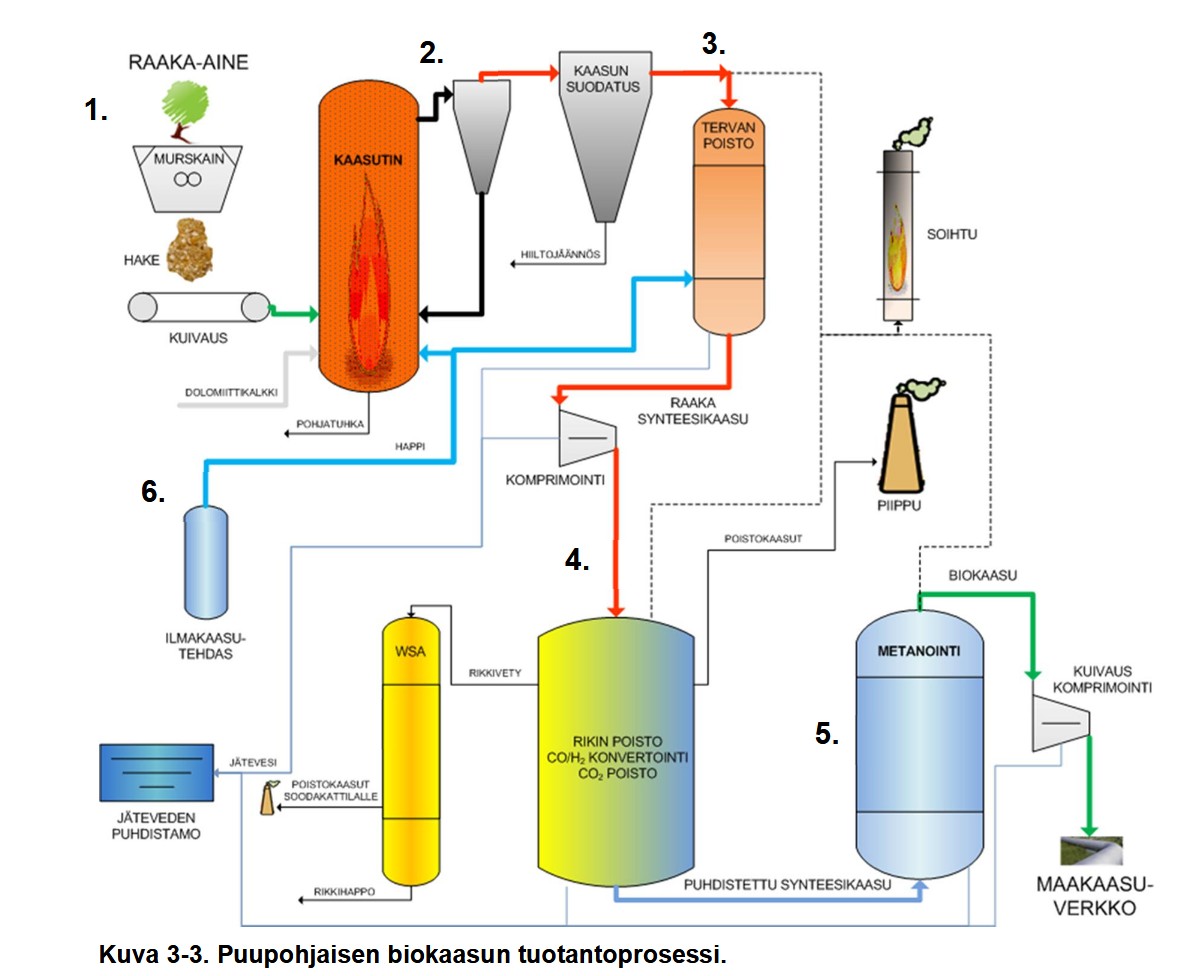
(Kuvan lähde: GASUM OY, HELSINGIN ENERGIA JA METSÄ FIBRE OY. Joutsenon puupohjaista biokaasua tuottava biojalostamo. Ympäristövaikutusten arviointiohjelma. Helmikuu 2013. Pöyry Finland Oy)
11 tykkäystä
Täytyy sen verran korjata sivusta, että Jotsenossa on kuorenkaasutus, mutta sillä tuotetaan puhdistamatonta synteesikaasua (tuotekaasu), joka poltetaan meesauunissa.
Tämä projekti missä helen oli mukana ei toteutunut koskaan, eikä siten kuoresta valmistetaan biokaasua.
Samanlainen kuorenkaasutuslaitteisto on myös Äänekoskella ja silläkään ei tehdä biokaasua, vaan ainoastaan tuotekaasua meeaauunille.
6 tykkäystä
Tässä on Viljakaisen kommentit Metsä Boardin uudesta strategiasta ja uusista tavoitteista.
Metsä Board julkisti torstaina uuden strategiansa ja taloudelliset tavoitteensa vuosille 2026–2030. Strategia painottaa kannattavuuden palauttamista, kustannustehokkuutta ja aiemmin tehtyjen investointien hyödyntämistä. Nämä painopisteet olivat linjassa odotustemme kanssa, sillä todennäköisesti vaikeana pysyvä markkinatilanne ja viime vuosina syntyneet haavat edellyttävät peruspeliin keskittymistä. Arviomme mukaan yhtiön asettamat tavoitteet vuosille 2027–2028 ovat realistisia, mutta hyvin maltillisia, sillä esimerkiksi uusi vuosien 2027–2028 8 %:n ROCE-tavoite on näkemyksemme mukaan yhtiön tämänhetkisen pääomakustannuksen alapuolella. Tiedote ei aiheuta välittömiä muutoksia näkemykseemme yhtiöstä tai ennusteisiimme, sillä yhtiön valintojen isot linjat olivat linjassa arvioidemme kanssa.
3 tykkäystä
Sellumarkkinan alavire jatkuu ja isossa kuvassa havusellua pyritään osittain korvaamaan eukasellulla.
7 tykkäystä
Toimarin katsaus eilisestä yhtiökokouksesta! 
6 tykkäystä
“Voi olla, että lopullista päätöstä Joutsenon tehtaan lakkautuksesta joudutaan odottamaan vielä tovi, kun yhtiöt arvioivat mahdollisia tulevia toimintaympäristön muutoksia.“
Yllämainittu on toki vain yksittäisen toimittajan kommentti.
2 tykkäystä
Tässä on Antin kommentit metsäyhtiöiden konsensusennusteista
Metsäyhtiöiden lähes tauotta jatkunut vuoden 2026 konsensusennusteiden lasku jatkui Q4-tuloskauden yhteydessä. Metsäyhtiöiden kurssikehityksissä on ollut alkuvuodesta tiettyä ristivetoa, joskin Iranin sodan puhkeaminen haihdutti hieman sijoittajien optimismia, joka orasti vielä lopputalvesta konsensusennusteiden laskutrendin jatkumisesta huolimatta. Näkemyksemme sektorista on edelleen hyvin varovainen.
9 tykkäystä