The past week and a half has been interesting, and the coming weeks will likely be the same. Due to the price drop over the past month or so, I’ve been pondering whether the company is somehow worse off now than before. And by the company, I mostly mean the upcoming Resonant, because it so strongly defines the company’s future. A long-winded reflection and stream of consciousness. Read at your own risk.
No “Red Dead Redemption / Baldur’s Gate 3” scenario before release.
Crimson Desert’s release/reviews didn’t reach its absurd expectations—which is a good thing from Remedy’s investors’ perspective. The most optimistic investors and gamers expected a game belonging to the best of the decade, which would be at least spiritually the heir to Red Dead Redemption 2. Even though the game sold 2M copies across all platforms on launch day, this was clearly a disappointment for both gamers (Opencritic 79/100) and the investors of the developer-publisher Pearl Abyss (stock down -40%).
How does this relate to Remedy or Resonant? It would have been a challenge for Resonant if, a couple of months before release, a massive, hundreds-of-hours timesink single-player hit had dropped. Resident Evil Requiem was a deserved commercial hit, even though it relied heavily on nostalgia porn. However, the game’s length is 10-15 hours, which even the slowest players finish in a week or two. Players of endless games stick to their games, but if single-player enthusiasts get a high-quality game containing hundreds of hours of content, it will at least in the short term affect the desire to buy other single-player games.
Even though Alan Wake 2 had other significant AAA competition in its immediate release window in 2023, the massive success of Baldur’s Gate 3’s release a month or two earlier likely ate into the sales of all games releasing in that window to some extent.
Last week’s game releases as benchmarks for Resonant
- The AA co-op shooter project Toxic Commando showed that even with weak review success, a game can sell okay when you don’t make choices that annoy players and mess up the launch (Ahem… Firebreak… Ahem…).
- Monster Hunter Stories 3 is the sequel to a spin-off of the massive Monster Hunter IP. Its predecessor, Monster Hunter Stories 2, sold about 2M copies in three years, which lagged behind the sales pace of Control and Alan Wake 2. Despite weak hype, the newest game received good reviews and a good CCU launch, considering it is likely an AA+/AAA- tier single-player JRPG project.
- Death Stranding 2 was released exclusively for the PS5 9 months ago. Now the game came to PC backed by a short marketing campaign.
- Crimson Desert was discussed above.
By no means perfect comparables, but interesting nonetheless when looking at wishlists and initial sales, among other things.
Other interesting comparables before the assumed release of Resonant include IO Interactive’s James Bond-licensed 007: First Light and Capcom’s new IP Pragmata. Both are AAA single-player games. Once Resonant gets its release date and the first estimates of pre-sales come out, it will be interesting to compare them to these spring AAA comparables. Pre-order figures, after all, offer more concrete signs of a game’s/IP’s appeal than YouTube comments.
| Game | Release date | Opencritic | Peak CCU | Wishlist rank at launch | Wishlists at launch | Followers at launch | Steam Sales estimate |\n|---------------------------------|------------------|----------------|--------------|-----------------------------|-------------------------|-------------------------|--------------------------|\n| John Carpenter’s Toxic Commando | 12.3.2026 | 72% | ~17k | 98. | ~420k | ~33k | ~ 205k week 1 sales |\n| Monster Hunter: Stories 3 | 13.3.2026 | 85% | ~55k | 101. | ~310k | ~24k | ~ 210k week 1 sales |\n| Crimson Desert | 19.3.2026 | 79% | ~240k | 4. | ~2.0M | ~185k | ~ 1M launch day |\n| Death Stranding 2 (PC) | 19.3.2026 | 90% | ~55k | 57. | ~700k | ~46k | ~ 300k launch weekend |\n| Control Resonant | ??? | - | - | 54. (current) | ~685k (current) | ~27k (current) | - |
In my opinion, even with current wishlists, with a baseline performance (80-82% Opencritic), Resonant should achieve at least 300k launch week sales on Steam, corresponding to approx. 600k across all platforms. However, since wishlists continue to grow and the biggest marketing push lies ahead, a baseline performance of approx. 500k launch week Steam sales (1M all platforms) should be achievable. Such performance would likely get close to Atte’s forecasts.
[details=“Week 1 to Month/Year multipliers / Gamesindustry.biz”]
Month 1 / Week 1 $: Median = 1.5x, range (excluding outliers) from 1.2x to 1.9x
Year 1 / Week 1 $: Median = 3x, range (excluding outliers) from 2x to 4.5x
Year 2 / Week 1 $: Median = 4.2x, range (excluding outliers) from 2.8x to 7.5x
Source: What might your Steam 'long tail' revenue be? | GamesIndustry.biz
[/details]## Resonant Wishlist / Game Sales Speculation
The original Control arrived a year late on Steam, achieving just over 9k peak CCU, from which we can very roughly estimate perhaps 75-100k sales in the first week. For AAA single-player games, very roughly launch CCU x10 = week 1 copies, though this obviously depends entirely on the type of game. For a timesink like Crimson Desert, the multiplier can be smaller, and for a contained story like RE9, larger.
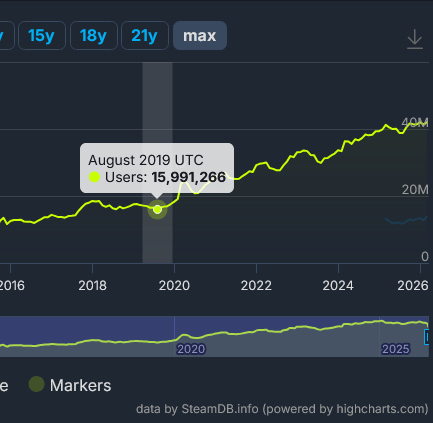
Since Control’s release, however, Steam’s player base has doubled. Furthermore, this time it is a well-known GOTY-level IP arriving day 1 on Steam as a sequel to a game that has sold over 5M copies and reached over 20M players.
My pessimistic scenario is approximately 1M copies sold in 2026. In this case, the game’s quality clearly falls short (below 80% on Opencritic). Based on current information (wishlists, game footage seen so far, likely release window), I consider this a somewhat unlikely scenario (approx. 15%), though still possible. This scenario could correspond to a situation where Resonant’s melee combat simply doesn’t feel good to play, but core fans buy it anyway for the story and world-building. This would roughly correspond to Inderes’ pessimistic scenario, where sales for Resonant and future AAA games clearly fall below the sales velocity of Alan Wake 2.
My baseline expectation is that Resonant will cover its budget within a few months. In this scenario, the story and world-building are guaranteed Remedy quality, but in true familiar Remedy fashion, the gameplay remains at a “Not great. Not terrible” level. In terms of game quality, this would essentially correspond to the Alan Wake 2 scenario, but in the critics’ view, the story wouldn’t quite reach Sam Lake’s meta-nonsense, and Opencritic would land at around 83-85%. I consider the aforementioned scenario the most likely, with the game selling 1.7-2.5M copies in 2026 (approx. 50%). That is, in line with Inderes’ forecasts or slightly above.
I also see a moderate chance of recouping costs as early as the launch week (2.5-3M+ copies in 2026), but that definitely requires a game at an 85-88%+ Opencritic level, depending somewhat on the release window and the success of the marketing. I might get the bears on my back for this, but currently, I would give this scenario up to a 20-25% probability. A release window of June–August 2026 doesn’t look impossible, and even now, wishlists are large enough that with a good game, store algorithm boosts and wishlist conversion can lead to a positive high CCU → launch hype → game sales cycle.
The remaining probabilities are then delays or similar predominantly negative scenarios.
This is the first Remedy game that is being discussed well before release as a contender for GOTY and fits on several lists of the most anticipated games of the year. If the release window is clear of significant competition and Remedy delivers a successful game, I find it hard to come up with reasons why Resonant wouldn’t be Remedy’s best-selling game ever by a clear margin, considering that the addressable market with Steam is nearly 2x compared to Alan Wake 2. Action-RPG is also a clearly larger genre than Survival Horror, which expands the potential market even further.
Sentiment and Valuation
The company could last be bought at Friday’s closing price (€12.18) around the turn of 2019-2020. In my opinion, expectations for the company are not priced to perfection at current valuations. My interpretation is that sales expectations for Resonant fall somewhere between the pessimistic and Inderes’ scenario. Perhaps even leaning closer to the pessimistic scenario, somewhere slightly above a million copies by the end of 2026.
This is not surprising in itself, given that positive commercial news from the company has only come in the form of partnerships, but not from game sales since 2020. With the company investing in its own IPs, publishing rights, self-funding games, and self-publishing, combined with Firebreak write-downs, the earnings trends in recent years’ financial statements have been dreadful to look at. For an investor quickly skimming financial statements, it is likely an easy decision not to invest in the company. The company issued very lazy guidance for 2026 (revenue and EBITDA growth), hopefully to protect itself rather than reflecting weak internal expectations. Still, that’s a signal too. In addition, the new CEO appointment and the lack of a release date for Resonant still cause uncertainty.
On the market side, the stock drop might involve some AI disruption fear, which I think is nonsense. Gamers play familiar games from familiar studios whether the games were made with AI or not. In addition, DRAM/GPU price and oil crises will likely raise fears that, due to inflation, consumers’ money will go even more toward necessities rather than, say, games.
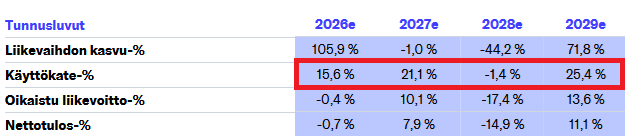
In my opinion, overall sentiment has overshot reality, but I can certainly be (again) wrong. Of course, a drop always feeds more drop and negative sentiment. I noticed on social media that gaming investors/influencers are questioning whether Remedy’s IP has any value. At the time of Firebreak, discussion sentiment was negative. Now the discussion is mostly dead—at least compared to, say, the period leading up to the AW2/Control launches. No wonder, as few current owners are likely in the green at the current price. There probably hasn’t been a line out the door to buy.If the target of investment were any other studio than Remedy, the tone and attitude might be different. However, we are talking about a gaming company capable of almost annual game releases and two simultaneous AAA productions, with self-owned GOTY-level IPs and its own game engine. Therefore, in addition to the 30% distribution costs, there is no need to pay a 10-20% commission to licensed IP owners or 5% to Unreal. All of this can be acquired at quite reasonable game sales forecasts with predicted EV/S of 1.2 and EV/EBITDA of ~5 multiples for this and the coming years. The earnings-based figures are also quite okay for 2027 and 2029 (EV/EBIT 8.8-11.5 and P/E ~14-17.5). In 2028, of course, current forecasts will bring a cold shower, as there is no game release forecasted for that year.

And the multiples above are indeed from Atte’s forecasts adjusted to the current price from Inderes’ website.
The company is targeting a 30% EBITDA margin by 2027, and maintaining this level until the end of the strategy period (i.e., in 2027-2030). The targets were, of course, set before the Firebreak flop, but the company has not yet abandoned these targets, at least not publicly.
In its 2025-2030 strategy period Remedy aims to reach the following financial objectives:
– Double the 2024 revenue by 2027 with continued growth beyond this milestone
– EBITDA margin of 30% by 2027 and maintain that minimum level throughout the strategy period
Atte forecasts, on average, a quite steep falling short of the targets. In my opinion, this is a completely valid view after the Firebreak flop, since the targets were not lowered after the flop. However, there is an interesting and quite significant difference between the analyst’s forecasts and the company’s targets.
As I wrote some time ago, since the company has all its eggs in one basket, some kind of risk discount is also justified in my opinion. Everyone can ponder and draw their own conclusions on whether this risk discount is priced too high, moderately, or too little into the current stock price.
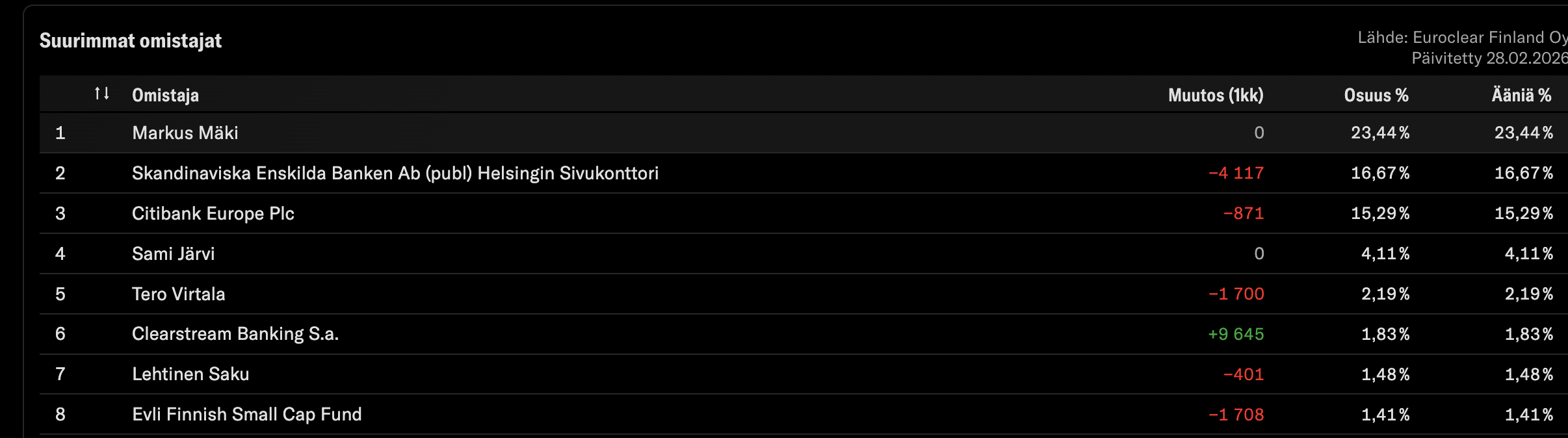
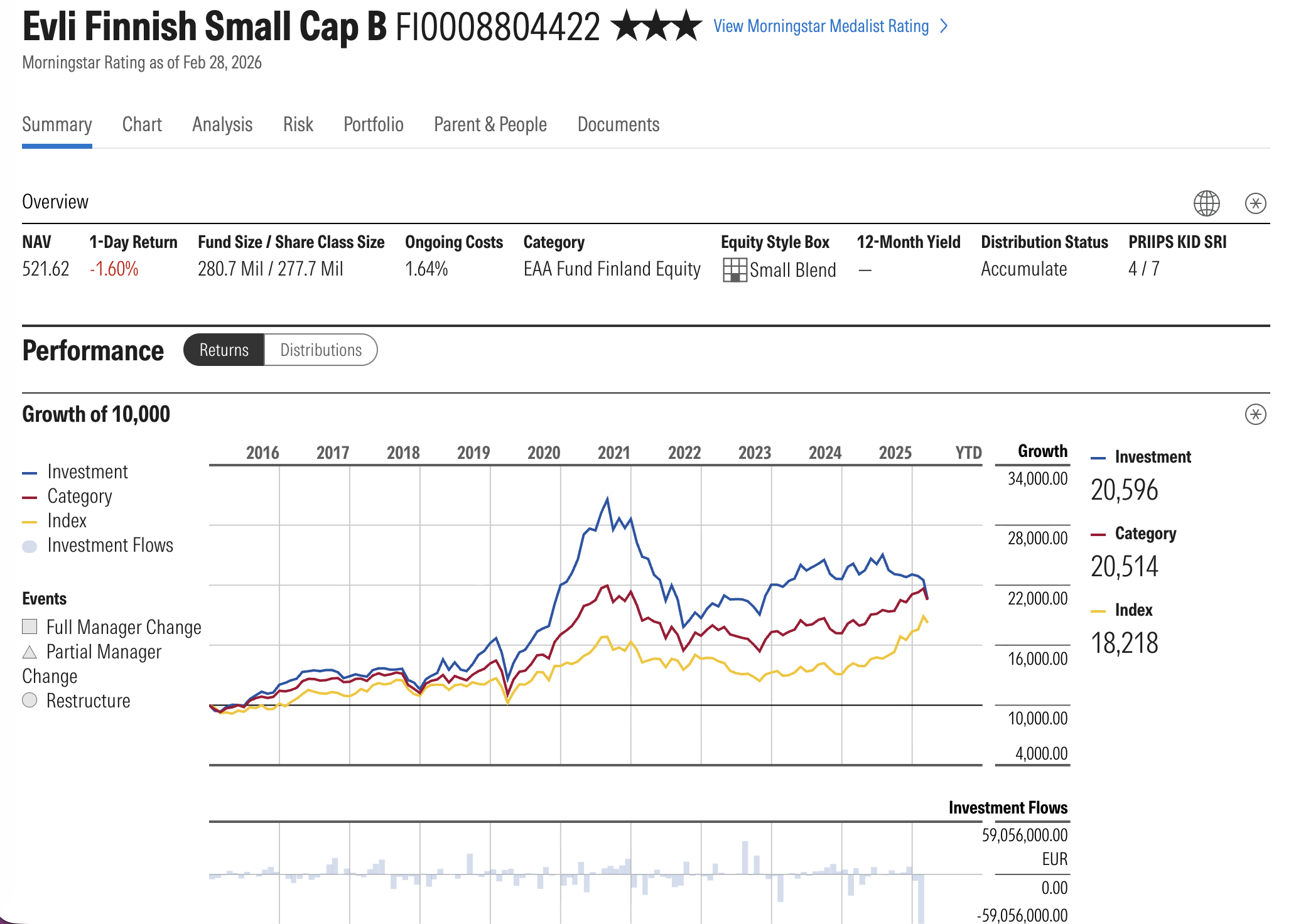
Finally, I tried to look for a reason for the stock price decline from the list of owners, and something might have been found there. The Church Pension Fund (Kirkon Eläkerahasto) was the 22nd largest owner at the end of 2025 with ~47k shares. In January, ~9k and in February ~24k shares were sold. With this trend, it can probably be assumed that the fund exited the owners at the end of March. Either they are more on top of the case than other Remedy owners, or the reason might be something else. The fund’s original stake corresponds to less than a permillage of the entire fund’s equity investment AUM, so the reason could purely be, e.g., rotation out of technology or small caps. Or then not.
Be that as it may, I would certainly believe it has some impact on the stock price when a TOP 20 owner completely exits such a low-liquidity stock.
Related to this, if anything slightly bothers or concerns me, it’s that no one from the insider circle has put skin in the game. Cautious guidance combined with the lack of insider purchases at 5-year lows is one more reason for investors to doubt the company.
Despite this, I still haven’t really come up with any other reasons why the company at €12 or lower prices would be any worse than it was at the €15 price a month ago. I’m also happy to hear others’ views.
What’s Next
Resonant’s wishlist and follower growth has clearly slowed down after the March 12 State of Play trailer and the preview rumble the week before last, which caused small but nice spikes in wishlists and followers. Based on the social media of Remedy folks, some videos have been filmed, and Kasurinen is also teasing in Discord that there will be something to tell soon. We shall see.
This week is Pax East March 26-29, and a couple of weeks later on April 9 is the Triple-i Initiative showcase (Indie-AA). The former usually brings panel discussions rather than big AAA trailers. For the latter, Resonant is too small an event. Sony’s/Xbox’s general events usually do not take place in April. For a AAA game, a pre-order window of usually at least 60-90 days is needed to maximize pre-orders and “day 1” sales.
Unless new surprising digital Sony/Xbox gaming events come up, a release date/preorder trailer on their own social media channels is likely the most probable option if an early summer release is still in the sights. Firebreak got its release date without a pre-order option through Remedy’s live-produced “Developer Update” video on YouTube about 2 months before its release.
If a marketing agreement has been made with PlayStation, as seemed to be the case with the original Control, and what the marketing done so far with Resonant also points to, at best Sony might release a Resonant-specific State of Play “Gameplay Deep Dive” video or similar. However, this is likely only possible IF Sony sees that Resonant could act as a “platform-seller,” i.e., boost PS5 Pro sales with the latest PSSR updates and visuals. Recent AW2 and Control PSSR update news could point to something like this. This probably falls a bit into the realm of wishful thinking, as Sony has historically done similar single-game exclusive State of Play events for 3rd-party games without other games on display for titles such as Hogwarts Legacy and Final Fantasy 16. Interestingly, however, these single-game standalone State of Plays have been in March-April. E.g., FFXVI came out on June 22, 2023, and its standalone State of Play was a good 2 months earlier on April 14, 2023.
 ? Previous speculations on the topic



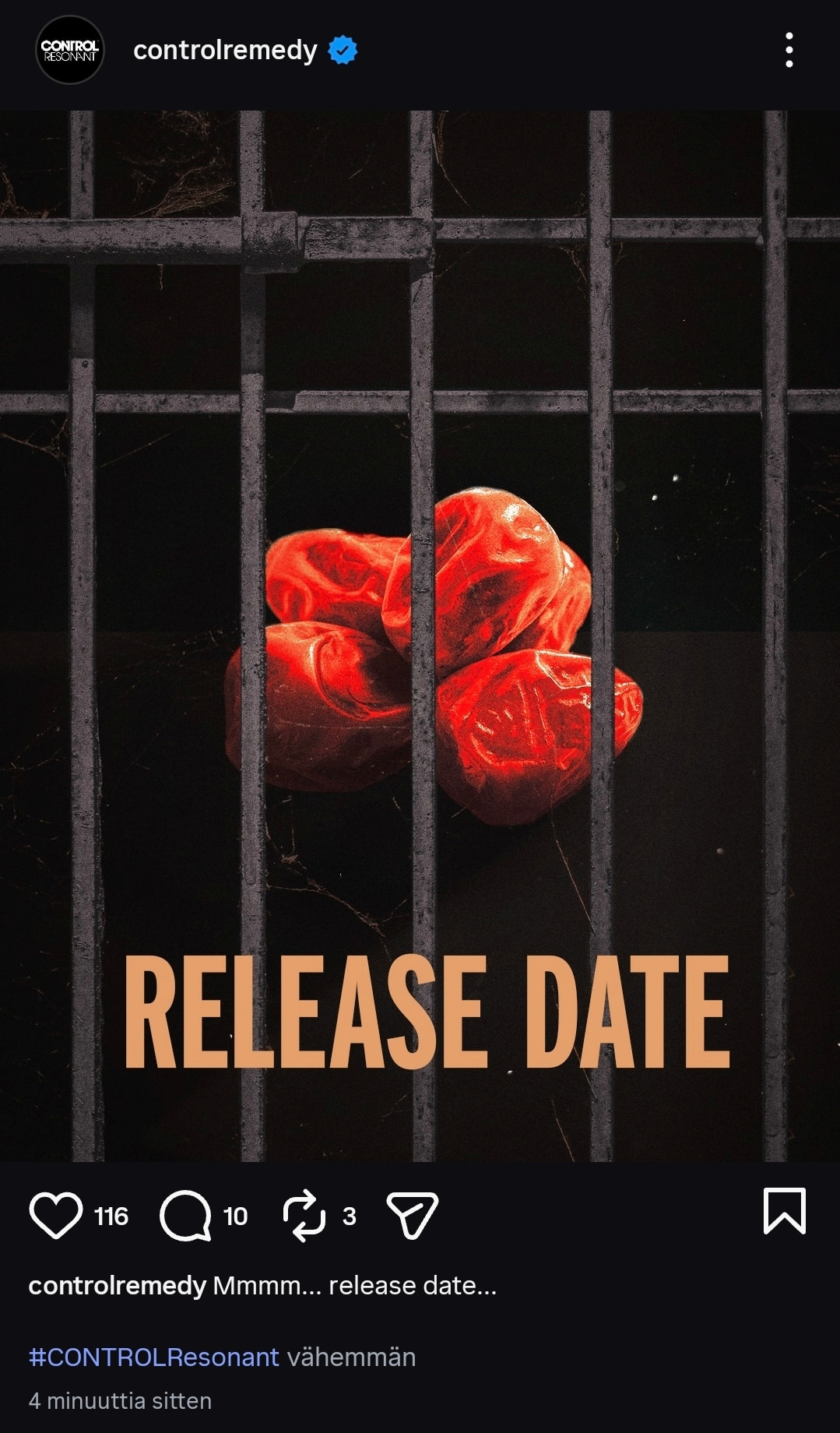

 Many hints have already dropped from Remedy’s side, and that April Fools’ “Release date” joke was excellent, but nothing majorly new yet. Somehow, considering all this activity, it would seem distant if the launch were only after the summer holidays, but with current information, there’s nothing to do but wait and wonder.
