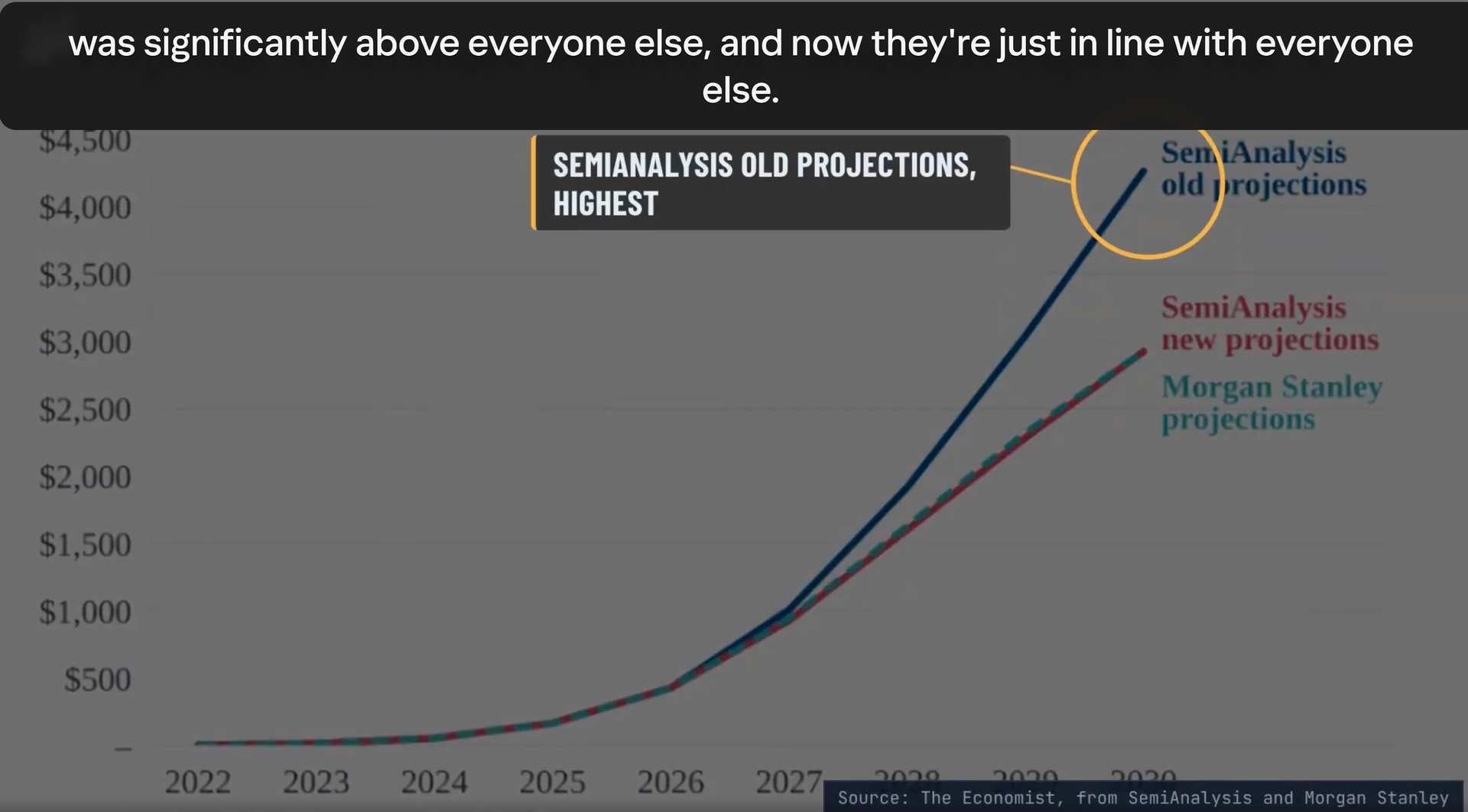
I read Cohen’s piece. It got me thinking about that cycle peak…
In my opinion, AI adoption is still in its infancy, but Nvidia’s profit margins might still be close to their peak. I think the most interesting question is: how much does compute usage need to grow to deliver good returns at the current share price, even with declining margins?
Coding is the first segment where agents have really taken hold. It takes a user one minute to issue a prompt, but the machine can work on it for hours. I believe this same way of working will spread to virtually all fields of science, and in my own companies, top-of-funnel sales, prospecting, account-specific research, and scheduling are already running successfully powered by agents.
Think about it: if a CEO/researcher can come in in the morning and pick the three most promising leads out of a hundred hypotheses tested overnight, you’ll find plenty of additional use cases for that cheaper compute pretty quickly. That, in my view, is the foundation for these infrastructure investments. And I am completely convinced that an insane amount of additional infra investment will be needed over time.
I’d slightly challenge the article’s conclusion regarding neoclouds. Of course it makes sense for a hyperscaler to build custom silicon for a workload they know inside and out. Meta knows best what kind of hardware they should run their ad recommendations on. But if you’re buying capacity today that a cloud customer is expected to run workloads on three years from now, general-purpose GPUs from Nvidia and AMD reign supreme. And why would a neocloud need to design its own chip to compete with Nvidia—and why on earth would anyone want to do that? They can just buy AMD. I also think the enthusiasm for building custom chips might cool down once compute pricing normalizes, bottlenecks open up, and it becomes more commoditized. If the gross margin per chip sold drops low enough, that part of the value chain becomes a lot less attractive.
Personally, I look at this development very much through the lens of the electricity market, which is my core area, and I feel there are many parallels. If your demand is usually 10 MW and occasionally 15 MW, locking in the full 15 megawatts for years or generating it yourself doesn’t necessarily make sense. Demand is also hard to forecast, so it makes sense to source some amount of compute/electricity from the spot market.
In compute, the same flexibility works both ways.
During peak demand, you can buy extra capacity from neoclouds, and non-urgent jobs can be shifted to cheaper, low-demand hours. Meta is building its own chip while simultaneously agreeing to buy $12 billion worth of Nvidia-based capacity from Nebius over five years. Nebius, in turn, sells spare capacity at spot prices for interruptible workloads. I can’t say which neoclouds will succeed here, but I believe there is permanent demand for this kind of flexibility, just like in the energy sector.



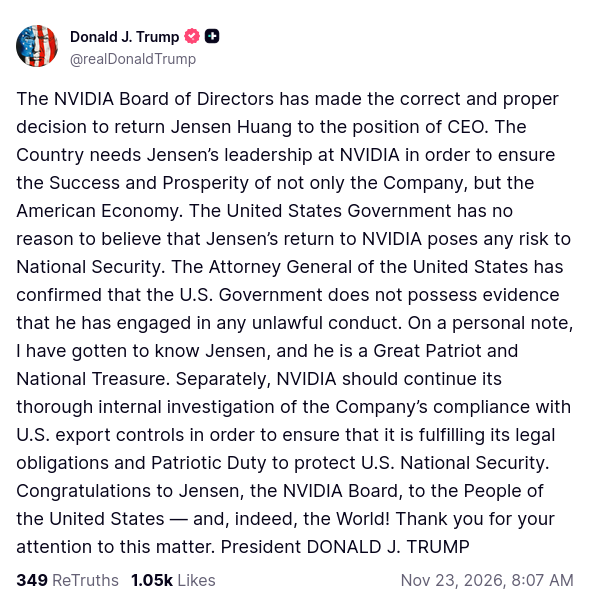
 Certainly hasn’t been boring for a while. What do you reckon happened behind the scenes? Could it have been political pressure from Trump’s side, or did some investigation conclude, finding Jensen innocent?