Nvidia has canceled its flagship consumer graphics card due to a chip shortage. At the same time, it looks like the consumer RTX 60 series will be delayed until 2028, and a Super launch might not necessarily happen during 2027, creating a historic gap between generations.
17 Likes
Unfortunately, I haven’t found any news in English yet, but here Nvidia’s Jeff Fisher dismissed rumors about the discontinuation of RTX 5090 graphics card production and confirmed that Nvidia will continue supplying the product.
“輝達高層駁斥RTX 5090顯卡停產傳聞 輝達個人運算業務資深副總裁費雪(Jeff Fisher)16日 來台出席慶祝RTX Spark架構個人電腦開賣的實體派 對,被問及RTX 5090顯示卡停產傳聞,他強調並非事 實,輝達將持續供貨。”
“Nvidia executives have dismissed rumors regarding the discontinuation of the RTX 5090 graphics card. On the 16th, Jeff Fisher, Senior Vice President of Nvidia’s PC business, attended an in-person event in Taiwan celebrating the launch of PCs featuring the RTX “Spark” architecture. When asked about the rumors that the RTX 5090 had been discontinued, he emphasized that this was not the case and confirmed that Nvidia would continue to supply the product.”
Of course, this could also just be PR talk to downplay constraints and emphasize the scale of operations.
In practice, this could mean that only small batches of 5090 cards will continue to hit the market through carefully selected partners to maximize profit margins, while the majority of dies are allocated to higher-margin professional and enterprise cards.
4 Likes
Or they might stop deliveries of GB202 chips to other board partners while continuing to produce 5090 Founders Edition cards (NVIDIA’s “own” cards manufactured by Foxconn), the production volumes of which have already been quite small. That way, both stories could very well be true.
The problem with the situation is that, in practice, a large portion of 5090 cards are currently being bought up and shipped to China, where the chips (core and memory chips) are desoldered and mounted onto a new PCB designed to be used with a server-friendly “blower”-style cooler, and thus the chips vanish into Chinese AI servers. NVIDIA is left with “worryingly” little margin, while entirely different parties make huge money. This is because completely insane prices are being paid for cards used in AI, and this chip is “too good” to stay in a gaming card.
11 Likes
Here is Jukka’s tweet about the collapse of Nvidia’s forward P/E 
https://x.com/JukkaLepikko/status/2111794976132841976

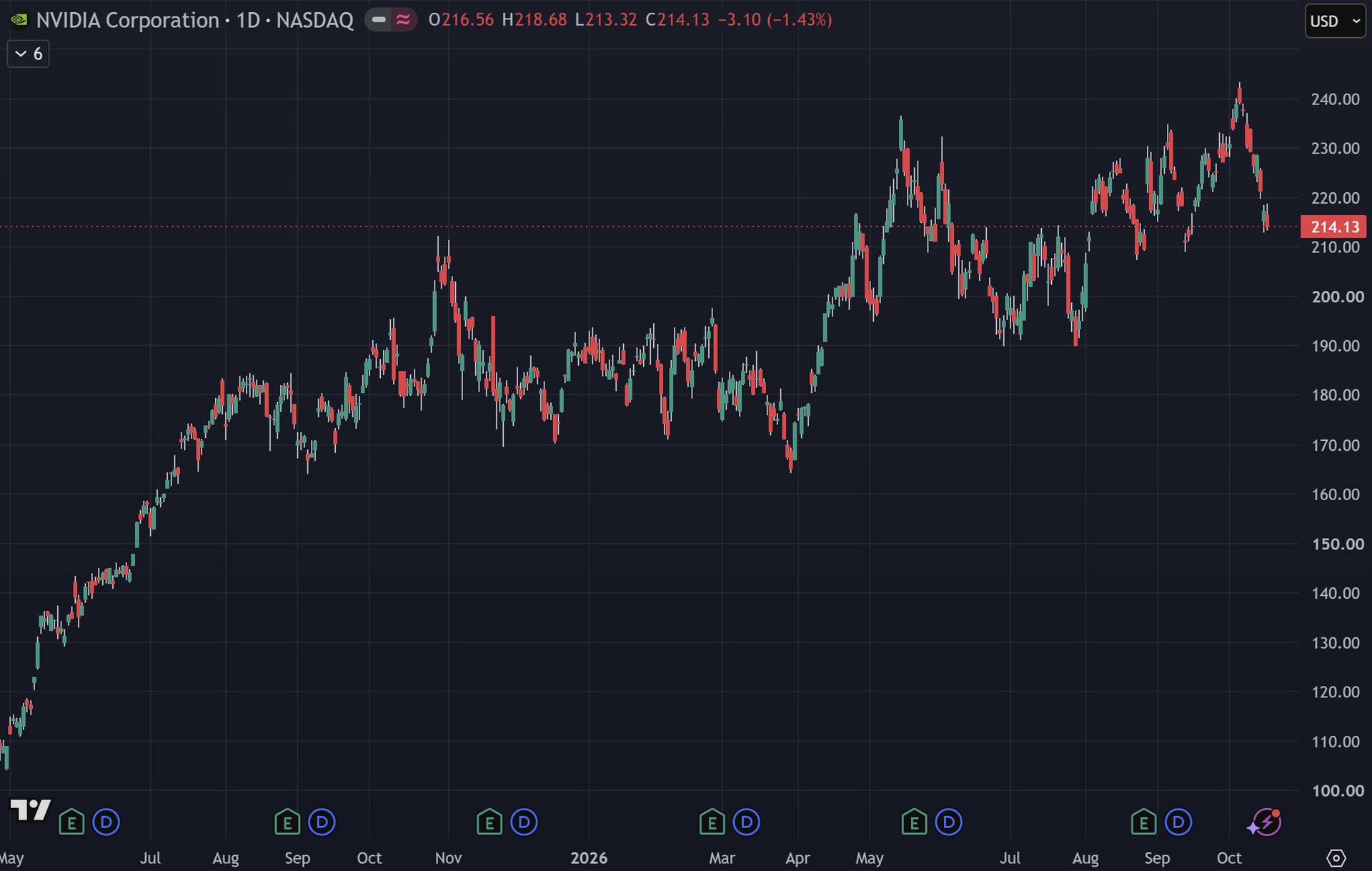
I also included a few of the comments from the tweet:

28 Likes
Below is an article about how Nvidia is boosting its chip sales by financing its customers and backing their major AI projects. Now, share price declines for the likes of CoreWeave and Nebius, along with the rising cost of funding, are making investors nervous.
The article points out that if AI demand falls short of expectations or customers run out of cash, Nvidia could be left facing a massive bill, so to speak. However, company management at least still believes demand remains strong and that further growth simply requires more financing.
Key Points
- As Nvidia has transitioned from chipmaker to industry financier, some investors see the company taking on outsized risk tied to the AI buildout.
- Those concerns are showing up in the market with shares of neoclouds tanking and bond yields rising.
- “If the demand for compute doesn’t meet these really super lofty expectations, we’re going to have a problem,” said David Trainer, founder and CEO of financial research firm New Constructs.
6 Likes
Congratulations on being right. From May, we went on to hit (at least) another peak in October:
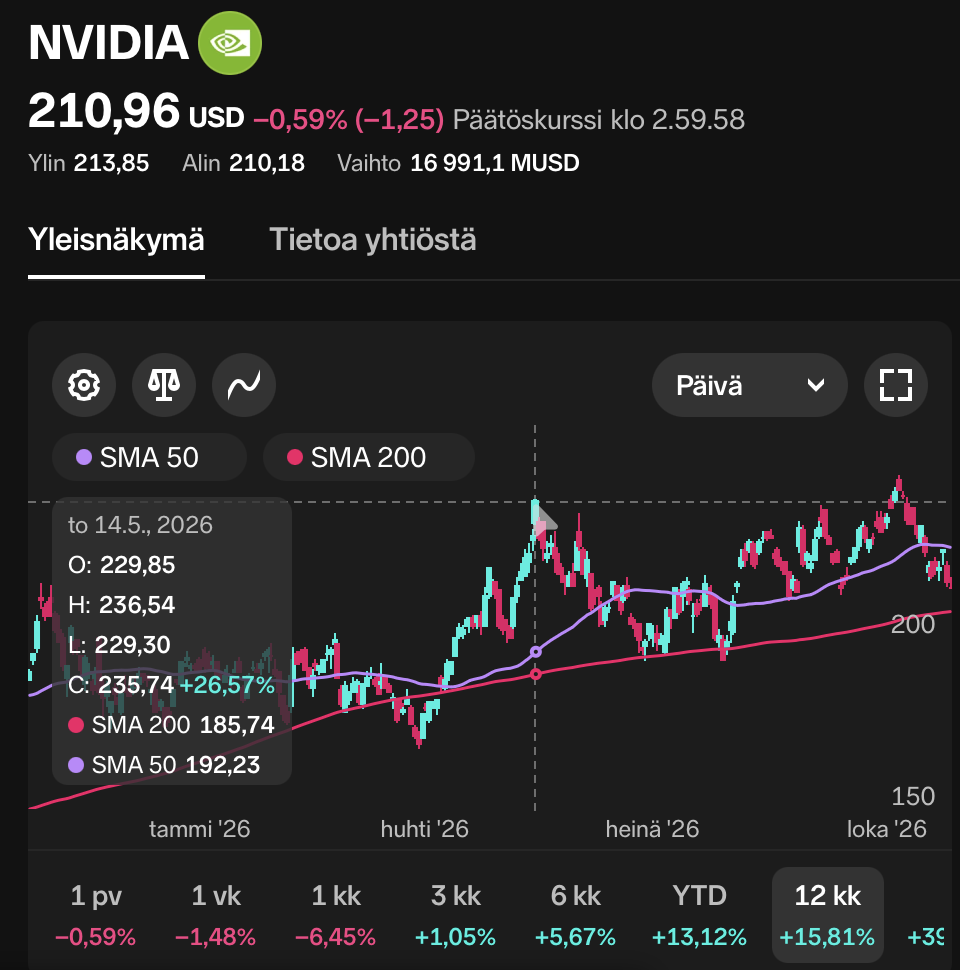
However, the situation doesn’t seem to have eased for Nvidia, as interest rates are on an upward trend and neoclouds are being forced to cancel and/or postpone their IPOs, with CoreWeave, Nebius, and peers down significantly from the public markets. Insofar as/when data center projects dwindle due to tightening financing or are delayed by construction bottlenecks, and GPUs sit idle in warehouses, customers will no longer have to bid at auction for the privilege of buying Nvidia’s overpriced graphics cards.
Nvidia’s guidance and execution have been formidable so far, but there is definitely a zeitgeist in the air that the market is no longer rewarding the other megacap tech names for massive AI capex the way it used to, so the incentives seem to be in place to start tapping the brakes. AI investments don’t need to stop altogether—and they aren’t going to. It’s enough to crash GPU prices if their supply simply outstrips market demand.
In cyclical industries, massive windfall profits from inflated product prices are always temporary, so every Nvidia investor should have some annual estimate in their Excel model for when AI GPU prices come back down to normal levels—or below.
17 Likes
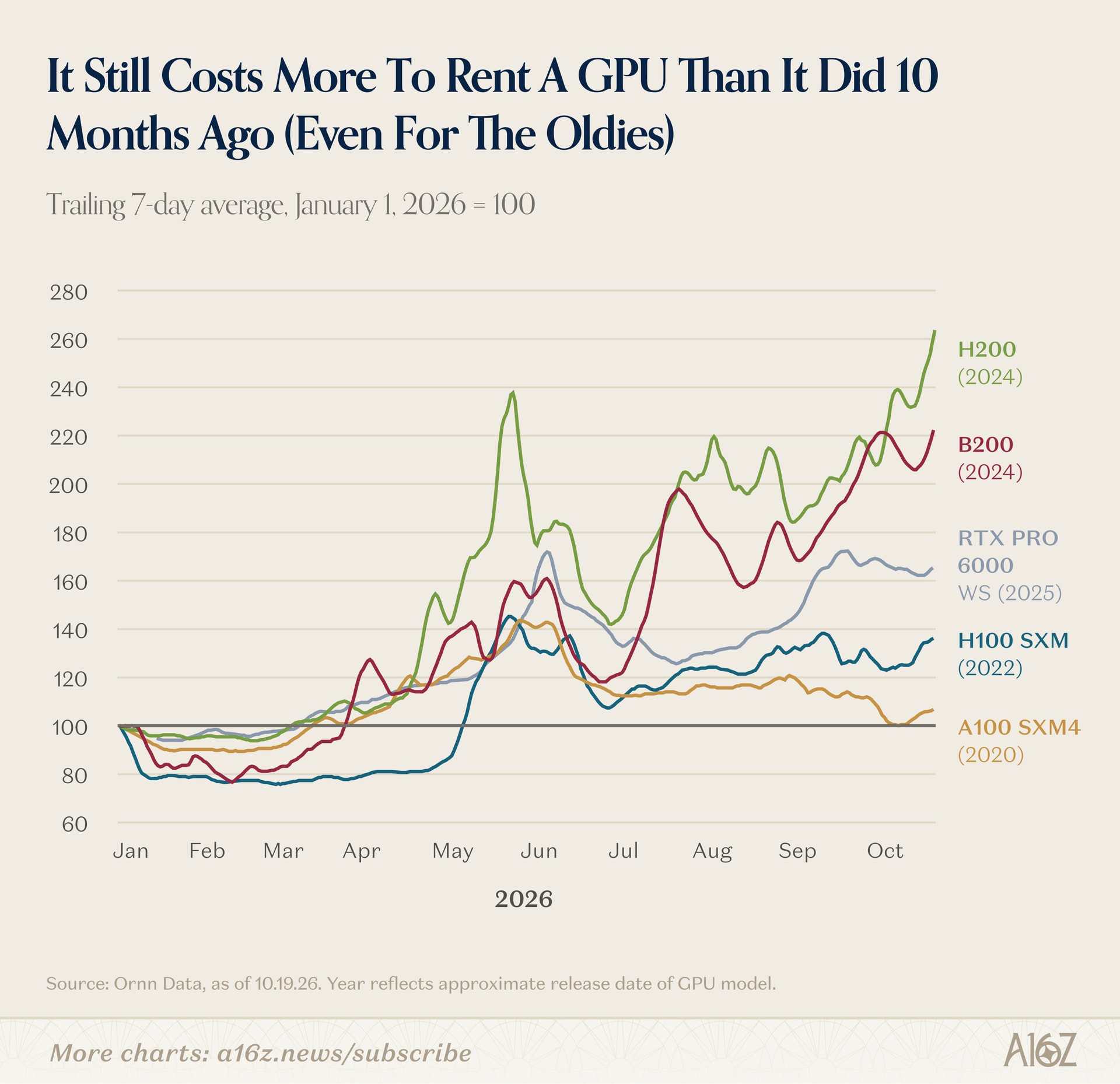
Your chart doesn’t reflect the supply and demand for Nvidia’s new graphics cards, but rather the rental market for GPUs Nvidia has already sold. The supply of new graphics cards could outstrip demand, depressing Nvidia’s margins, even if GPU rentals remain expensive at the same time. If the construction of new data centers is delayed due to a lack of grid connection capacity and tightening regulation, or becomes harder to finance, buyer demand might not hold up even if there were a need for new data centers. In this scenario, the AI market’s cash cow and those high margins would shift from Nvidia to existing data centers and their owners.
20 Likes
Hard to take victory laps on calling new highs when a promising breakout turned into a fakeout and we retreated back into the base. A juicy little shakeout below the base would fit right in here, followed next year by a proper face-ripper rally fueled by frontier lab IPOs and geopolitical tailwinds 
Right now, demand for AI compute outstrips supply, and every player across the value chain is doing their best to capitalize on the situation. Depending on whose forecast you look at, NVDA is priced at around a forward P/E of 13 for fiscal 2028. It will be interesting to see if we even reach single-digit territory at some point in terms of forward P/E. That’s already the case with Micron, for example. At that level, the market must be pricing in not only the end of growth, but an outright decline in revenue. But Micron’s pricing power in the value chain doesn’t compare to Nvidia’s. So it’s genuinely fascinating to try to map out which companies will retain—or preferably strengthen—their pricing power. As I’ve trimmed Nvidia this year, I’ve aimed to diversify into precisely those kinds of targets. Here are my one-sentence pitches My baseline assumption for everything is that Jevons’ paradox holds: an increase in the supply of AI compute will only spawn new applications requiring even more compute. The more there is, the more will be used.
NVDA: “The AI Nation-State. Not just a GPU designer, but a provider of full-stack AI computing solutions and the owner of the core AI architecture (CUDA).”
Apple: Owns the strongest ecosystem for “delivering AI to consumers via physical devices.”
Palantir: Enterprise “AI-as-a-service,” with potentially very high switching costs.
Cloudflare: “Operating environment for AI agents.”
Meta: Owns the world’s largest daily active user base. Owns the application layer for interpersonal communication.
Rubrik: “Data is the most critical asset in an AI future. Rubrik ensures its resilience and preservation.”
Duolingo and Hims & Hers: “Gather proprietary data on their users, leveraged by AI to deliver unmatched value per dollar (a personal doctor/tutor app).”
Planet Labs: “Owner of the Earth-observation data asset.”
Nebius: “Neocloud on steroids—not just compute, but a full turnkey service.”
Genomics and biotech in general: “The so-called ‘problems’ of modern Western humans are largely solved, except for disease. Medicine is the final frontier for applied intelligence, and the companies best positioned to leverage AI will generate decades of alpha.”
Segments that are part of the AI trade, but are unlikely to sustain pricing power:
Power
Cooling
Construction
Memory
Networking
Then comes perhaps the most important yet trickiest part of the value chain: AI models. There are probably around twenty of them on the market right now, and across various benchmarks, the lead between the frontrunners and the runners-up appears to be measured in weeks. So it doesn’t really look like anyone has carved out a significant moat yet. Pricing power might eventually emerge once competition wipes out everyone except the top 1–3 players, creating an oligopoly. Going forward, the barrier to entry will remain exceptionally high due to the sheer compute required to train these models.
All of the above are just my own more-or-less educated, half-baked opinions and gut feelings.
39 Likes
RTX PC Chip. Can anyone comment on the significance of this for Nvidia?
I’m not quite sure what you mean by this. GeForce RTX consumer cards? If that’s what you meant, it’s starting to be on the level of a rounding error in NVIDIA’s overall business. On the other hand, NVIDIA’s market share in discrete GPUs is massive, and these are a critical component in many markets—gaming PCs, workstations, high-end laptops (though Apple-style SoCs have been eating into the market here), etc.
The biggest issue is that it competes with data center products for manufacturing capacity. Regarding GDDR7 memory, pro cards compete with gaming cards for memory supply, meaning gaming cards are the ones whose availability suffers because, margin-wise, it practically doesn’t make sense to allocate manufacturing capacity to them. It’s much more profitable to build RTX Pro 6000-style professional cards until demand for them is met. On the other hand, they have to supply enough gaming cards so that their board partners (AIBs) don’t walk away, and to avoid the risk of AMD taking a significant chunk of the market.
Or were you talking about the RTX Spark SoC? The first iteration of an attempt to break into the same space as Apple laptops, and an effort to stay relevant as AMD and Intel integrated graphics improve and the market for discrete mobile GPUs shrinks. This version is still heavily held together with duct tape, but that’s normal—it usually takes a couple of generations for a product to become more refined. The CPU side is severely outdated, the GPU is decent, and the price is firmly in the “ridiculous” territory.
3 Likes
Or were you talking about the RTX Spark SoC? The first attempt to push into the same space as Apple’s laptops and an effort to stay relevant as integrated GPUs in AMD and Intel processors improve and the market for discrete laptop GPUs shrinks. This iteration is still heavily held together with duct tape, but that’s normal—it usually takes a couple of generations for the product to mature. The CPU side is heavily outdated, the GPU is decent, and the price is firmly in the “ridiculous” territory.
Yep. This is how someone described it on X:
The laptop hasn’t changed in 30 years. NVIDIA just changed it
RTX Spark is their first PC chip ever.
- RTX 5070 level GPU
- 128GB unified memory
- 1 petaflop of local AI
- thin, light, barely throttles unplugged
Your AI agent lives on the machine. 24/7. No cloud.
This is step one of the agentic AI PC, and everyone else is about to copy it
Yep, that’s the marketing spin.
In real life, that chip is slow and overpriced. Its only real advantage is that we finally got a Windows on Arm laptop lineup with plenty of memory for AI models, shared between the CPU and GPU.
In practice, it’s an attempt to compete with Apple’s high-end models—which are also heavily used for AI—but unfortunately, it launched late and is underpowered for that race. That’s often what happens with first-generation products. In the long run, NVIDIA is unlikely to give up, but it might take a couple of generations before these are truly competitive.
And despite all this, they’ll probably sell like hotcakes because the AI hardware market is so red-hot. If Apple is out of stock, AMD is out of stock, and Intel isn’t even in the race when it comes to devices like these, these will find buyers too.
10 Likes
Now the 5080 is gone as well:
3 Likes
A logical reason for the 5080’s departure might be the upcoming 5080 24GB model, which rumors suggest is set to hit the market in January. The recent mooning of the 5080’s price indicates that current stock is running dry, and significant new supply is unlikely to arrive before the new model launches.
The PC graphics card market is completely out of whack right now, and the primary culprit is “mini-clouds” cobbling together rental GPU capacity using consumer hardware. Word is they’ve managed to amortize five-grand 5090s in under six months, after which they just mint money with them like in the peak crypto days. At these prices, hardly anyone is buying them anymore unless A: it’s for professional work, or B: something breaks and you’re “forced” to replace it immediately.
See, for example:
Mainly, they offer 5090 and 4090 cloud instances on consumer hardware, but some individual providers have even started dipping into toy cards. These companies and their buddies in China, combined with constrained production volumes (TSMC wafers are in short supply, and NVIDIA, unsurprisingly, prioritizes datacenter gear), are the reason behind the cards’ price levels.
2 Likes
There have been rumors about the Supers and that RTX 5080 24 GB model for quite a while now, but the business logic behind releasing them seems a bit flawed. What incentives does Nvidia have to slash its own margins by launching an AI-capable version of a flagship gaming card, especially when there’s currently zero competition for it on the market from AMD?
The same rumors suggest that the new GPU releases have been ready for a long time, but Nvidia hasn’t seen any sense in bringing them to market. If they decide to pull that stunt for whatever reason anyway, none of them will end up in consumers’ hands anyway—they’ll all be bought up instantly and shipped to China to cannibalize Nvidia’s AI GPUs.
The market really is harsh right now for those who are broke and don’t hold any GPU capital. I could easily get €1,200 right off the bat for my used RTX 3090 from 2020, but I can’t sell it because I still need something to run my local AI models with. Besides, the card has already paid for itself many times over in local inference savings since I haven’t had to buy services from Altman and Anthropic 
9 Likes
The business logic might be that this is a way to try to keep the companies manufacturing gaming graphics cards at least remotely satisfied with being NVIDIA’s partners. Historically, if you’ve been a manufacturer of NVIDIA cards, you’ve been able to release a new lineup of cards every two years, and then a minor refresh in the off-years (new box design, minor tweaks to the cards themselves). This model has now broken down; the interim models (50xx SUPER), which were supposed to arrive in early 2026, were canceled, and things are somewhat in limbo regarding the 60 series—it’s clear they aren’t coming in early 2027 as they should have under the 2-year cycle.
Rumors have it that, in principle, the consumer dies would be ready in time for a mid-next-year launch—meaning only 1–2 quarters behind the original schedule—but due to the market situation (mainly the price of VRAM), it’s very uncertain when they will ultimately be pushed out. AMD hasn’t applied any pressure so far, meaning the competitive landscape isn’t forcing any moves, and in NVIDIA’s books, gaming GPUs have become a rounding error. At the same time, NVIDIA can manufacture and sell as many 50-series dies as they bother to produce, and they still sell well above MSRP.
The problem is that the card manufacturers (AIBs) are dissatisfied. They have staff geared up to push new models to market on annual cycles, and now things have ground to a halt. They had already invested a fair amount of time and effort into the 50xx SUPER cards before that was canceled, and they are likely already doing some work on the next generation without any clear picture of when mass production will actually start.
Perhaps it’s now clear that we won’t see the 60 series before late 2027 at the earliest, and with the 5080 24GB model, NVIDIA is throwing card manufacturers a small “bone” to keep things ticking along at some level—releasing one or two refresh models (a “5070 16GB” also appears to still be an option on the table) conveniently a year behind the original schedule. This keeps the partnership alive, even though it’s very realistic that we’ll still be waiting a long time for a genuinely new lineup.
4 Likes
I’m sure the partners are annoyed, but adding extra memory to graphics cards doesn’t make those cards any faster or better for the target audience, so the decision would seem odd anyway. Back in the fall, it was reported that memory for the Super cards would be 3x more expensive, and if the memory shortage worsens toward 2027, will even that be enough?
According to our source, a 3GB GDDR7 chip currently costs between $60 and $70. A standard 2GB GDDR7 chip reportedly costs around $20. This means the 3GB version can cost about three times as much despite providing 50% more capacity.
Such pricing would add hundreds of dollars to the memory cost of a graphics card using six or eight modules.
The RTX 60 series won’t arrive until 2028 if it comes at all, but AMD isn’t releasing any competing products before then anyway, so in that regard, there isn’t really any pressure for new launches right now. Maybe they’ll just push out some paper launch with practically non-existent production volume, which will immediately start selling at double or triple the MSRP on the market 
3 Likes
Is there any info on what NVIDIA does with those GB202 chips that don’t make the cut for the RTX 5090 and RTX 5500 PRO cards? Could there be an RTX 5080 Ti model with more memory coming?
Right now, they’re likely just setting them aside, and once enough have piled up, some sort of cut-down model will be released. Most likely in the Pro segment, where you can sell a heavily nerfed card with plenty of memory for an outrageous price. In a way, the RTX 5500 PRO is already such a model.
2 Likes