IonQ - Pioneer of Quantum Computing Commercialization

Well, I could be wrong, but I think after the roadmap, institutions became interested enough that they want a larger number of shares and are willing to pay that premium for them.

There has also been a lot of buzz in the dark pool recently. But who knows about these things

4 Likes

I had to sleep on it to organize my thoughts regarding IonQ. It’s a bit daunting how de Masi keeps his entire corporate empire together. The starting point, however, is that the acquired companies have already managed to create their own independent businesses and have had a growth platform in the quantum ecosystem. I.e., de Masi has not bought bubble companies but quality companies. I’m trying to think of a bear scenario for IonQ. A classic bear slide for a stock happens when a “diversified company” (like IonQ is now a diversified company in the quantum world) can’t sell its services, has debt, and is forced to liquidate, i.e., sell its companies. IonQ is not heading into this scenario. Because it has quality companies and no debt - and 3.6 billion in cash.

As a company, IonQ will no longer run into major difficulties because quantum computing wouldn’t properly take off, for example, for optimization algorithms or private sector needs in general. Because quantum mechanics has been used in atomic clocks, sensors, etc., for many decades. So, within a year, IonQ has transformed from an IonTrap-HW company into a diversified quantum technology company. Former CEO Chapman already spoke of a full stack, but Chapman thought more of a “stack inside the server,” i.e., HW+OS+applications. During de Masi’s tenure, a total stack has emerged, meaning physical dimensions - I mean scalability (Oxford Ionics), space (Capella Space), so-called old/already used quantum technology, i.e., sensing (Vector Atomics), quantum networks (Lightsynq), etc.

Now that I’ve written this down, it’s no longer daunting. When the coffers are full, acquisitions only take a portion of the cash, and knowing that IonQ is a bundle of quality companies. My point is that the stock price could very well drop by a third, but the company won’t collapse and will rise stronger than ever in the next bull market. Here, one has to transform into a new kind of small investor. Because a few years ago, we were discussing in this thread whether there was any substance or sense in this quantum computer business at all. Now, of course, the situation is different, and quantum computers are a respectable topic, except in the opinion of short-sellers. By the way, did you notice when Stubb spoke with Trump on Thursday evening in front of the fireplace. In addition to icebreakers, Stubb mentioned quantum computers as an “accelerator” for AI (Stubb lobbied for VTT’s IQM, good, good!), and Stubb also spoke about 6G telecommunication networks, mentioning Nokia and Ericsson. Icebreakers, 6G, and applications of quantum mechanics are part of US security policy.
11 Likes

The US must invest more broadly in quantum, as China is a few years ahead in networks. They are indeed quietly building a QKD-based quantum network for themselves and between various BRICS countries. It’s also interesting that it’s QKD-based and not PQC-based.

The Yanks realize they need to catch up quickly, and that’s why it wouldn’t be surprising if, in the initial phase, IONQ and other capable players (probably very limited in number) would get revenue from government and defense network traffic… more quantum machines would follow later when more powerful OI-technique machines become available. According to De Massisen, there has been great interest in them.

Recruitments show that they are preparing for all kinds of government/defense projects. For example, yesterday there was news about the recruitment of a person related to counter-intelligence/etc. to the company.

Ultimately, for this company, it’s about the security of the US in many senses of the word, so at least it won’t go under.

Edit. Here’s an excerpt from one tweet about who took those $93 shares offered at a premium. There is interest.

Who bought all those shares?

The entire deal was purchased by Heights Capital Management, a U.S. institutional investor under the umbrella of Citadel, one of Wall Street’s most powerful hedge funds.

So, the same player as in July, increasing their investment by 3x.

8 Likes

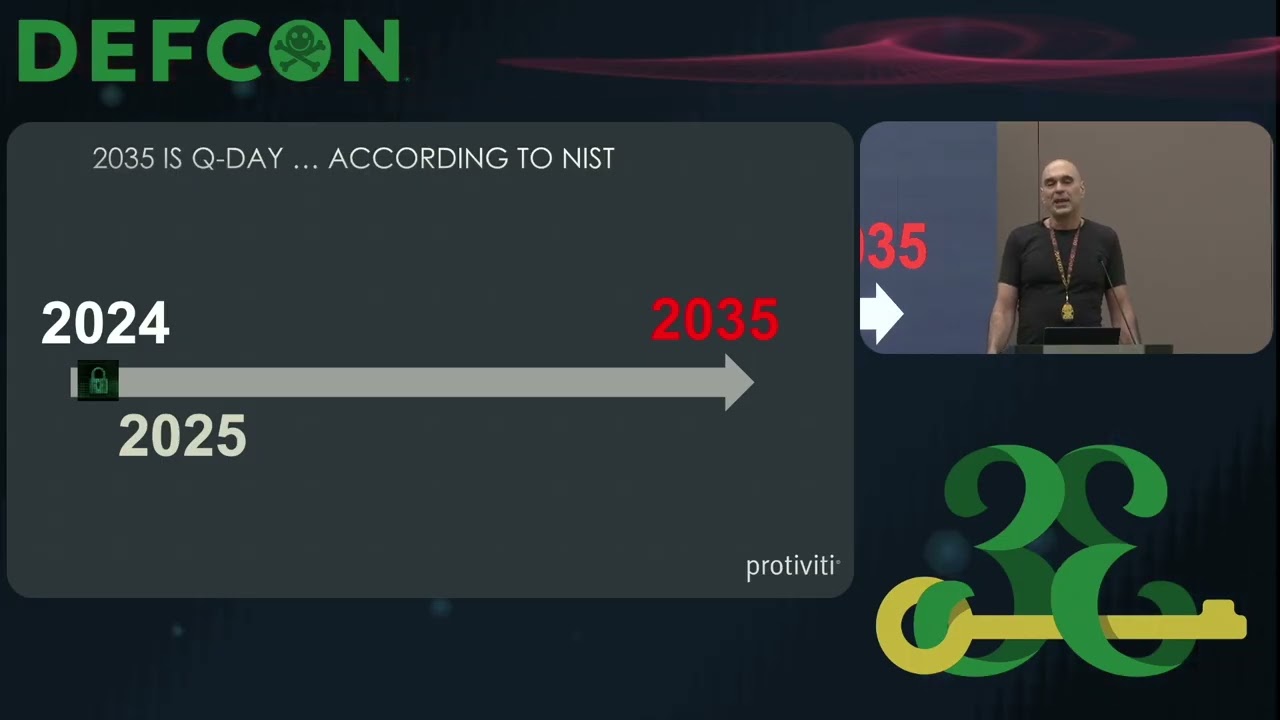
‘this should be basically terrifying’

7 Likes

Mega bump! Every quantum investor should see this, and someone more capable could link it to the QC thread :slight_smile:.

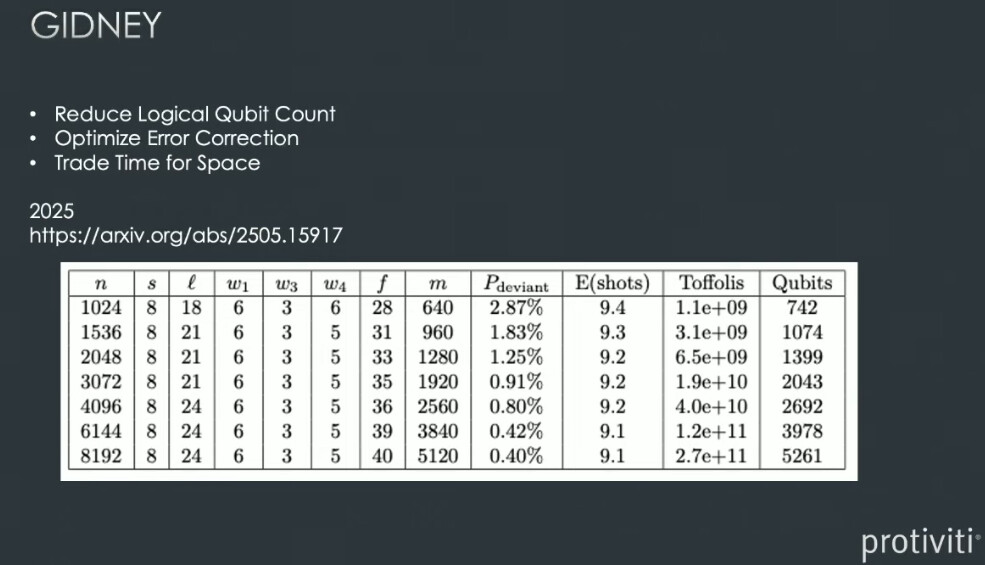
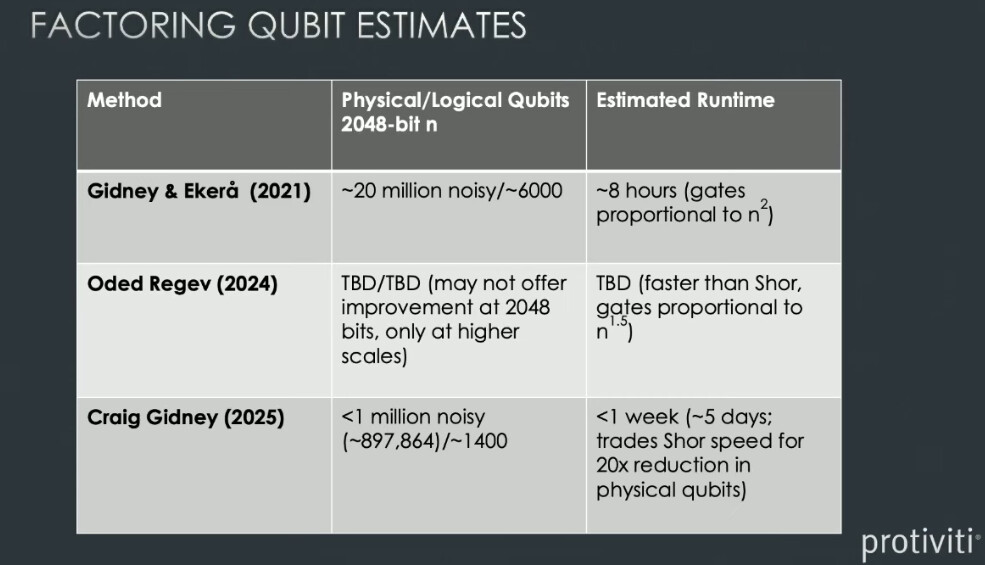
I had also previously referred to that Gidney & Ekerå paper, for example, when I was outlining these milestones against IonQ’s roadmap.

Number of Logical Qubits Enabled Algorithm Year (benchmarked against IonQ’s roadmap)
~1,000 Small quantum demos, simple HHL, small-scale VQE/QPE, early optimization demonstrations 2027-2028
~5,000-10,000 Significant real-world advantage in optimization and quantum chemistry; Grover-type advantages in a broader space, optimistic Shor unlock RSA1024-2048 2029
~20,000 “Certain” Shor-RSA2048 capability, extensive quantum chemistry and HHL applications 2030
~100,000 Industrial quantum utility: large simulations, extensive optimizations, ECC/RSA-4096 etc. No outlook yet

As noted in the presentation using a similar illustration, Shor-unlock will become possible “as early as” 2028, and that would indeed be the point when these devices start to have significant commercial value.

8 Likes

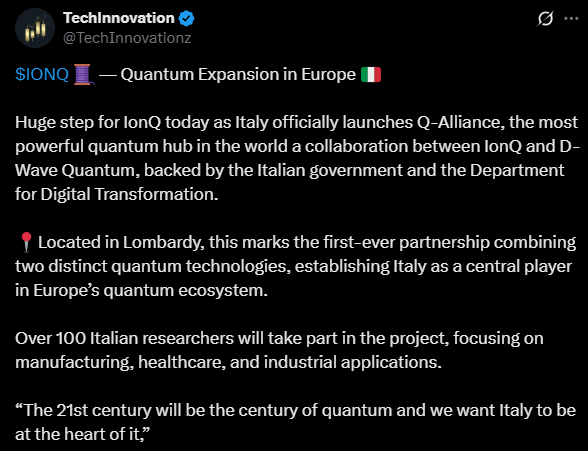
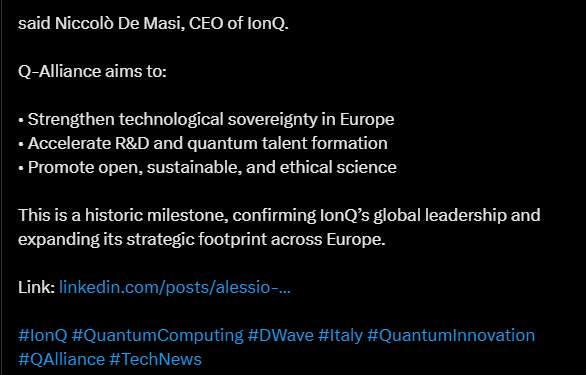
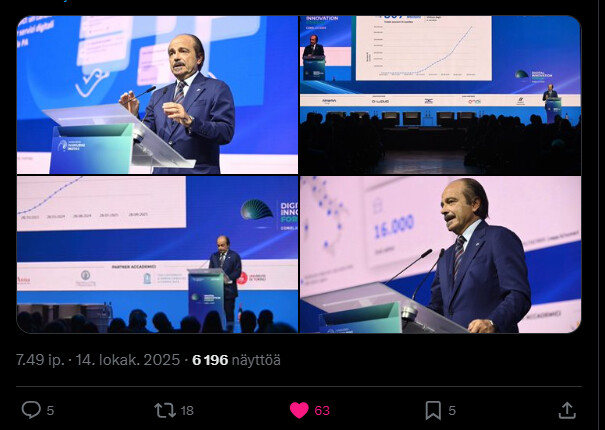
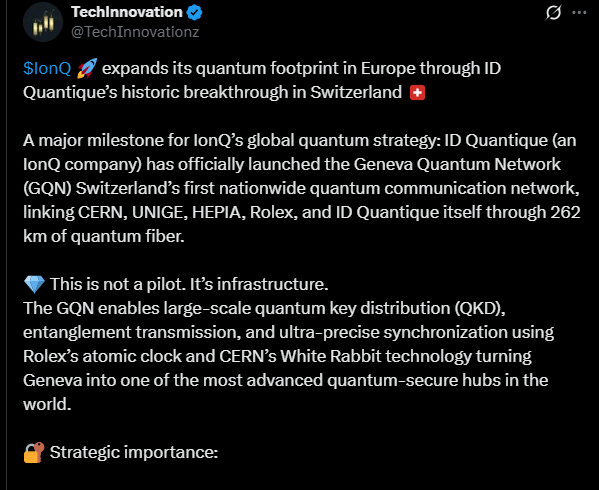
Here’s another tweet about how IonQ is taking a big step in Europe. In Italy, Q-Alliance is launching, a government-backed collaboration between IonQ and D-Wave. The center located in Lombardy combines two quantum technologies for the first time and elevates Italy to the forefront of European quantum development, with a company from this chain involved.

Under IonQ’s leadership, over a hundred researchers are developing applications for industry, healthcare, and manufacturing. The project strengthens Europe’s self-sufficiency and accelerates sustainable & open research.

https://x.com/TechInnovationz/status/1978141159856726348


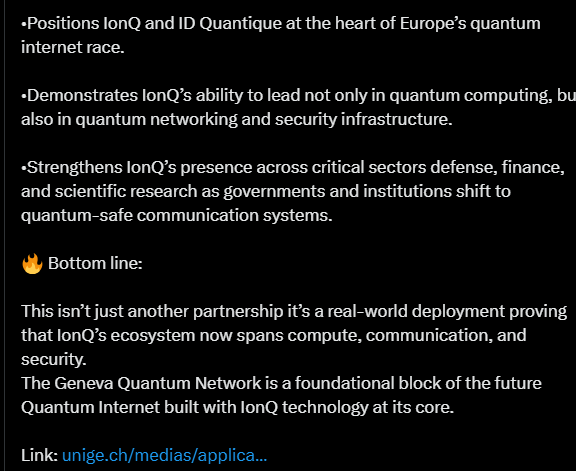
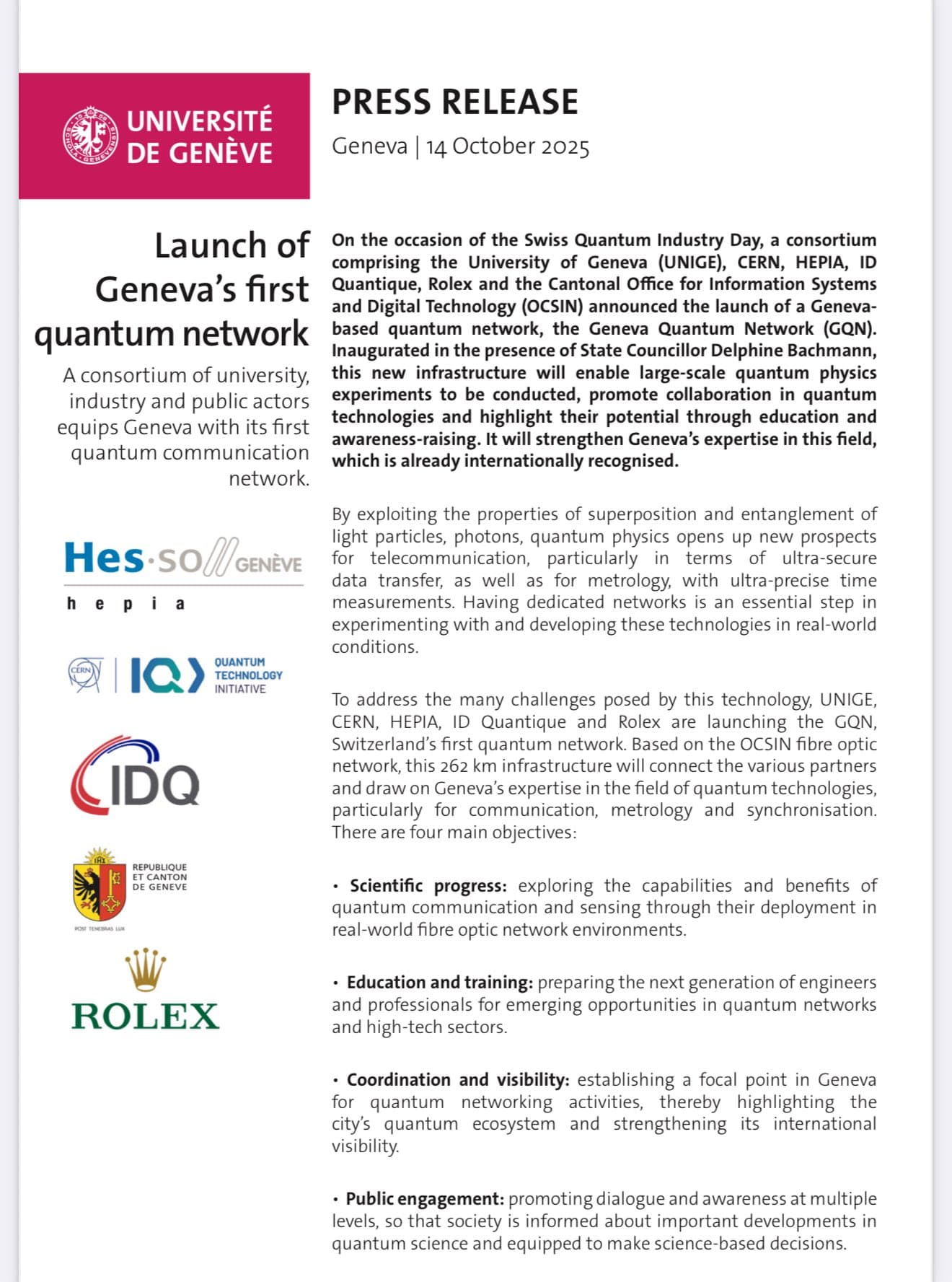
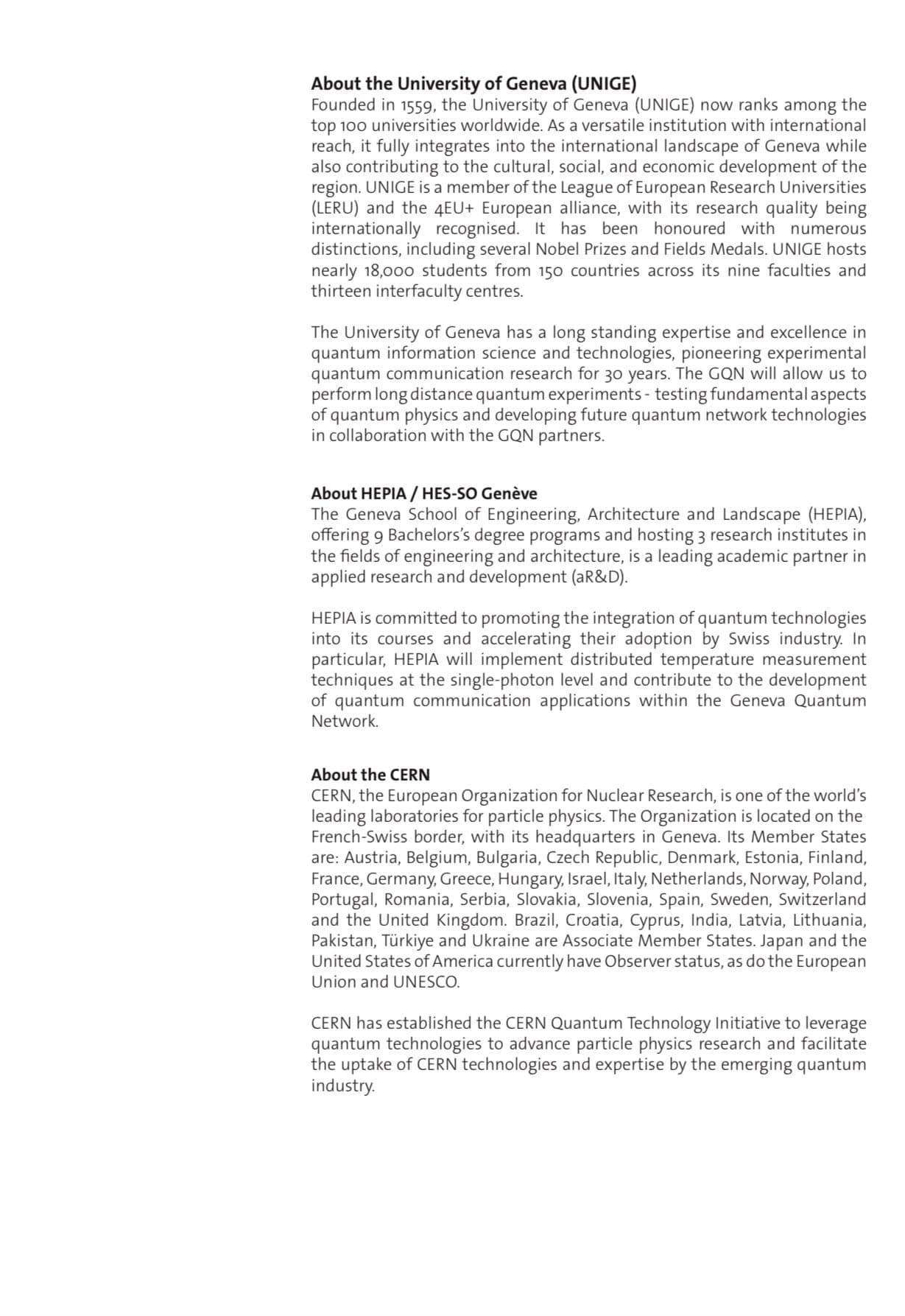
IonQ is conquering Europe; its company ID Quantique has opened the country’s first national quantum communication network in Switzerland. The tweet states that the Geneva Quantum Network connects CERN, Rolex, and local universities via a 262-kilometer fiber route – according to the tweet, this is not a test, but real infrastructure.

IonQ’s technology is now expanding from computation to communication and cybersecurity, and the company is also heavily involved in building the future quantum internet at the heart of Europe.

https://x.com/TechInnovationz/status/1978224659398021228


image

image

9 Likes

Great news for Europe. I’ve been wondering if Finland could also better utilize this good quantum buzz now. We got the icebreakers, but it would be even better to get investments/collaboration (on a large scale) from a big player like IONQ or similar here. However, Finland has developed quantum infrastructure and apparently high-quality research.

Hopefully IONQ (/Rigetti/D-wave) would announce this kind of infrastructure and collaboration project with Finland and a Finnish company. Or did the quantum hub now move to/strengthen along the Italy-Switzerland axis? The quantum sector could be what lifts Finland out of this swamp of economic misery. Help us IONQ!

8 Likes

Indeed it would. IQM’s superconducting machine at VTT in Otaniemi and the Lumi supercomputer in Kainuu could be connected to each other via IonQ’s encrypted quantum network or something similar. Collaborations could be a thing for 2026. Overall, cooperation between quantum companies drives the industry forward. It is already a clear phenomenon that companies do not fiercely compete each other out, but rather partner up. Because these new technologies ultimately bring so much added value that there is enough for many. In the chip world, this phenomenon is already underway; Nvidia finances its former competitor AMD’s operations through OpenAI, this is my conclusion on the matter, which I pondered a few days ago in the Nvidia thread.

3 Likes

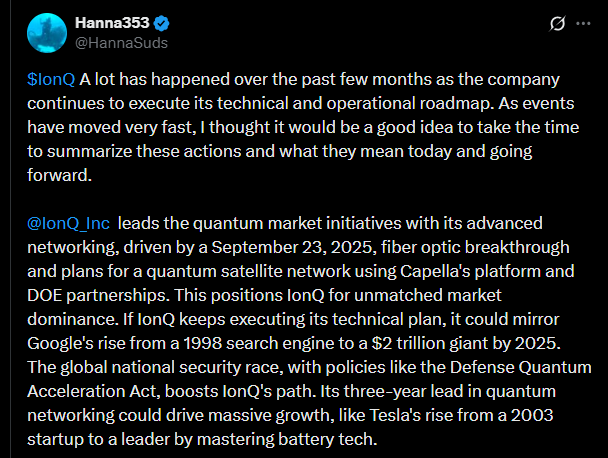
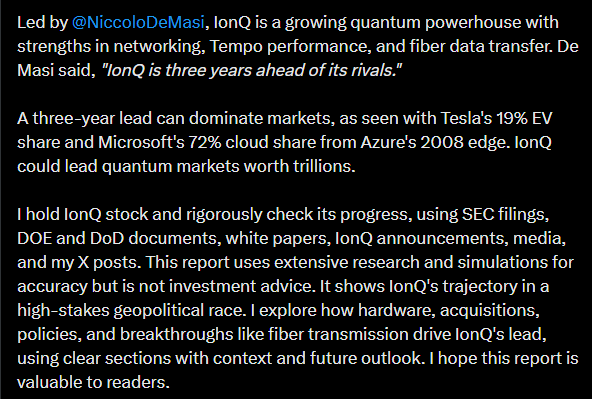
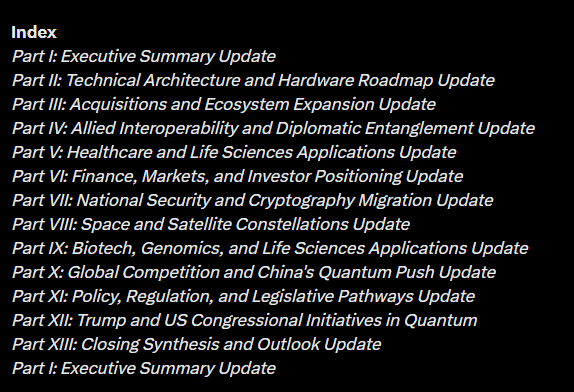
The tweet below discusses how IonQ has been quite a talking point lately, and the company seems to be gaining momentum in the field of quantum computing. This giant tweet states that recent months have seen major technical leaps, such as new acquisitions and agreements, which could shape the future of the entire industry.

The tweet thoroughly covers everything IonQ has done… from fiber optics breakthroughs to the new Tempo system. It also includes updates on the company’s collaborations, funding rounds, and defense sector projects that are already having clear impacts on its market position. The report also explains how these moves link to the quantum strategies of the United States and its allies, and how IonQ is building a lead over competitors such as IBM and Google.

This is a tweet analysis of IonQ’s direction and the opportunities and risks surrounding it. It should provide a good overview of how quickly quantum technology is advancing and why IonQ might be one of the companies that define the industry’s direction in the coming years.

I have copied the beginning of the tweet here.


Here’s a link to the full tweet for those on X:
https://x.com/HannaSuds/status/1978644385022525857
And for those not on X:
https://twitter-thread.com/t/1978644385022525857

5 Likes

https://www.youtube.com/live/ir2CZ_lwcm4?t=8600s

The founder of Oxford Ionics talks about the background

2 Likes

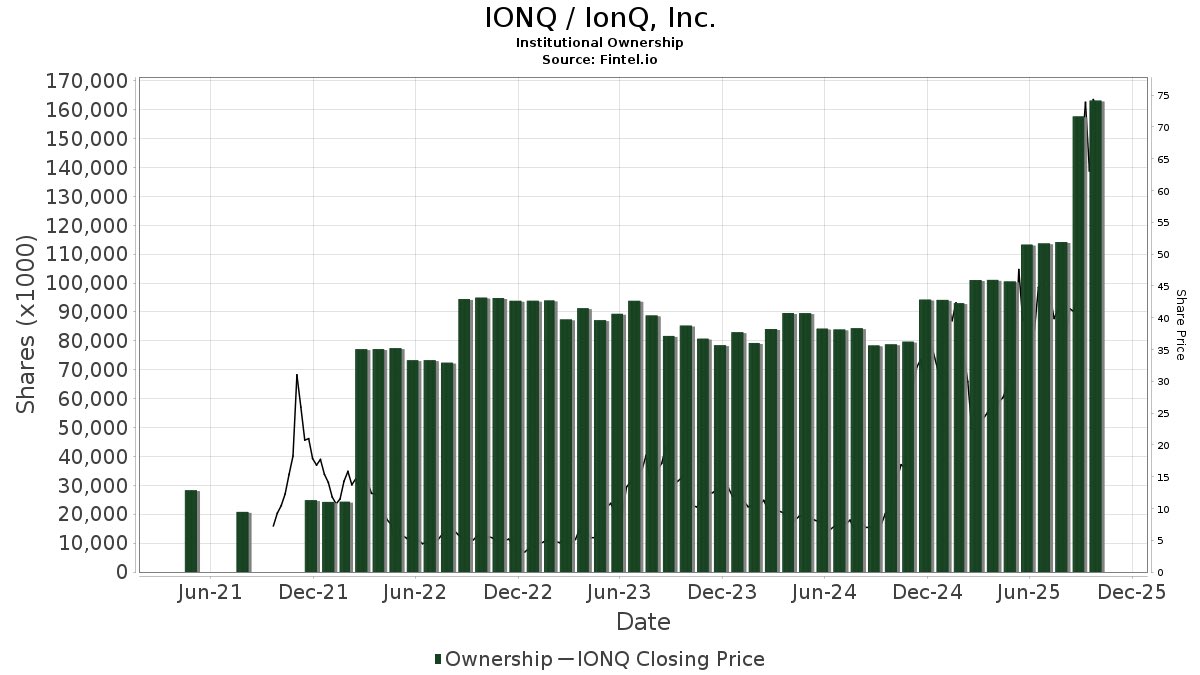
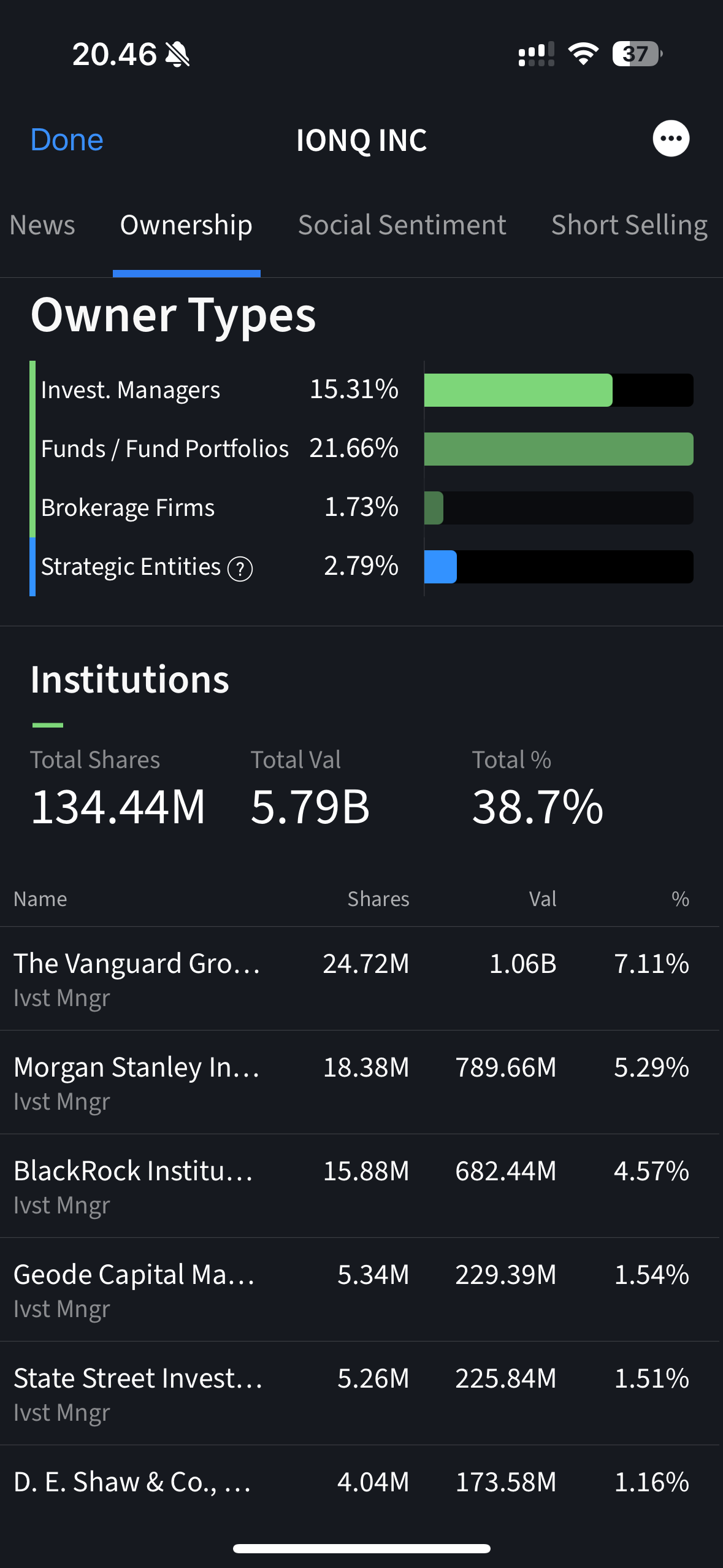
Here’s a blow to the “retail buys into a quant bubble” narrative regarding this company. I won’t comment on other companies.

6 Likes

Question @timontti, can one easily see from these institutional ownership tables what the institutions’ share of the total outstanding shares is?

2 Likes

With 3 minutes of research:

In Q2 earnings, 251 million shares.

Announcement of a new offering; 16.5 million more shares now excl. warrants.

So, approximately 267.5 million shares.

Based on the aforementioned chart, institutions hold 160 million shares. This corresponds to 60% of the share capital.

I spent 5 minutes on this, so there might be errors.

6 Likes

I spent 1 minute on this, so there might be errors, but they’re not mine…

1 Like

The data source you used shows the situation at the end of June compared to the graph I posted. In any case, ownership is significant.

https://www.nasdaq.com/market-activity/stocks/ionq/institutional-holdings

Vs

https://fintel.io/so/us/ionq

The original graph source gives about 52%, although I believe only shares exceeding 5% are listed there. Apologies that I couldn’t do this properly, just a few percentage points off. P.S. After the new offering, we are again closer to 60%

3 Likes

Two five six can change everything…?

2 Likes

https://investors.ionq.com/news/news-details/2025/IonQ-Achieves-Landmark-Result-Setting-New-World-Record-in-Quantum-Computing-Performance/default.aspx

OI 99.99% results

6 Likes

Strong recommendation for investors. This opens up more than just a press release, e.g., cooling requirements are even smaller. The company has protochips for the upcoming 256-qubit machine in the lab, things are progressing

Ultimately, IonQ’s breakthrough marks a defining moment for the quantum computing industry: world-record qubit performance on mass-manufacturable chips built in standard semiconductor fabs. By engineering 99.99% fidelity on devices that are simpler, more stable, and more robust, we have now reached a critical inflection point on our path to scaling millions of qubits by 2030

3 Likes

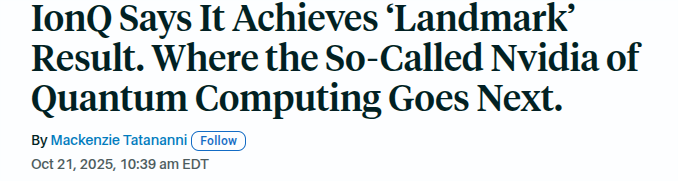
Barron’s has taken notice of IONQ’s achievement in part. Paywall, but the title allows long-term holders to awaken ecstatic fantasies

https://www.barrons.com/articles/ionq-quantum-computing-05120c74?mod=bol-social-tw

6 Likes

Recommended reading

7 Likes