I’ve been reading a bit more about debt recently. What constantly stands out is how public debt, in particular, has practically always been “complained about”:
“At every stage in the growth of debt it has been seriously asserted by wise men that bankruptcy and ruin were at hand. Yet still the debt went on growing, and still bankruptcy and ruin were as remote as ever”
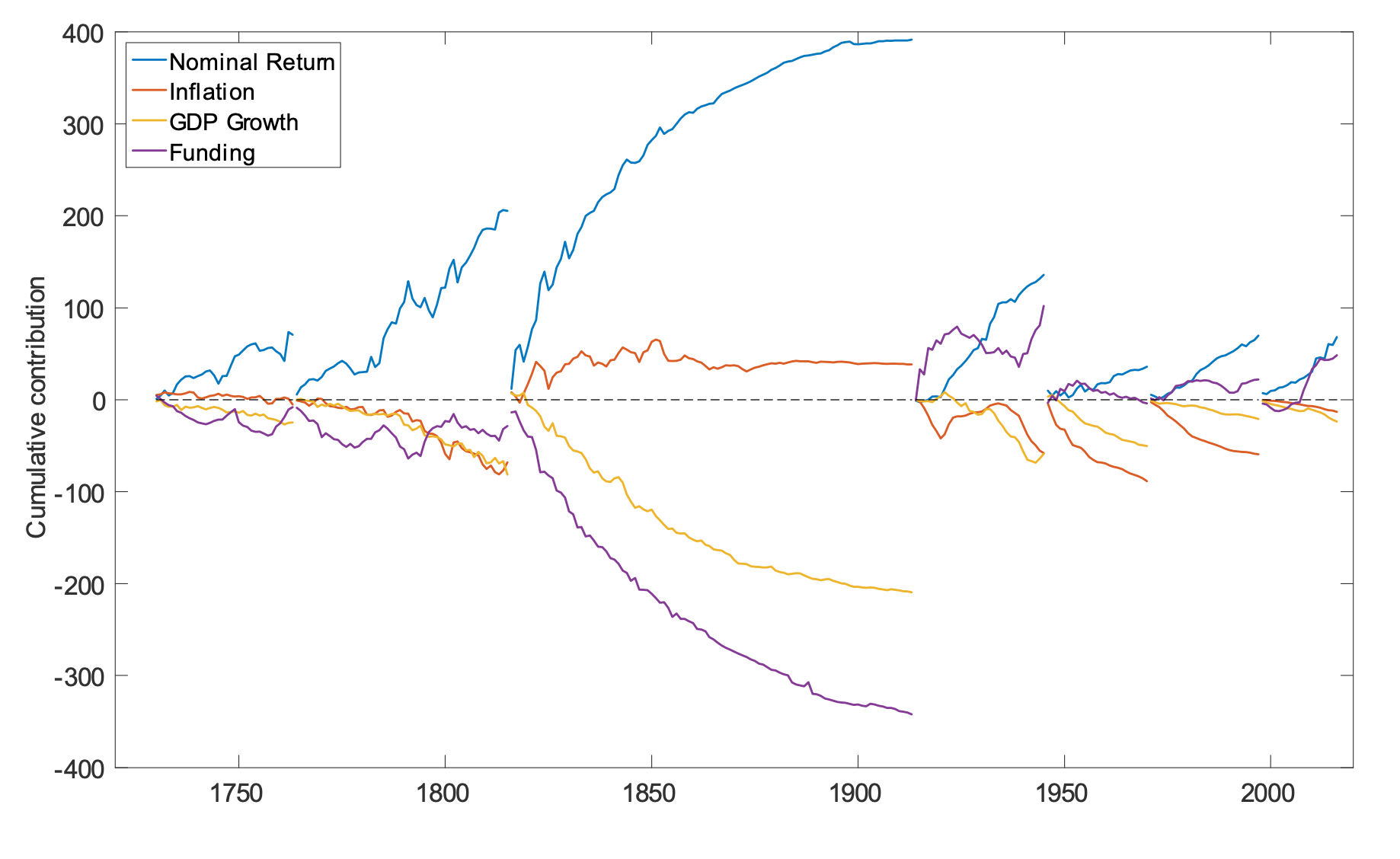
This is how historian Macaulay commented on early 18th-century commentators, when Great Britain began to accumulate heavy debt due to the new central bank and continuous warfare. The development of Great Britain’s debt, the world’s first modern economy, relative to the size of its economy, can be seen in the graph below.

(Source: Centre For Macroeconomics)
The same continued later:
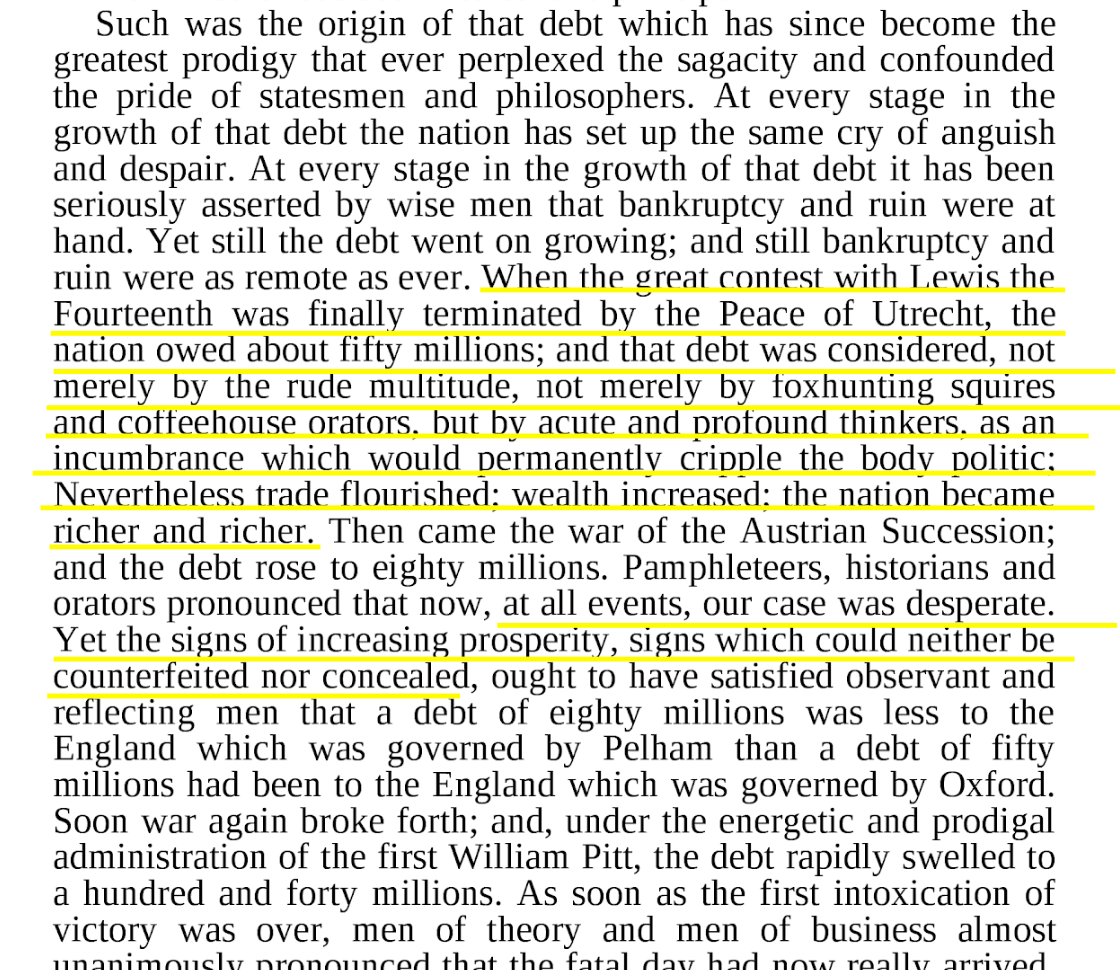
Adam Smith also commented on public debt in his work The Wealth of Nations (1776), how there is always capacity to bear more and more of it, though he warned that the limit would eventually be reached (it hadn’t yet reached 100 percentage points).

Addition:
An interesting graph showing how debts have been managed in Great Britain. In the 19th century, in an environment of stable prices, bonds performed well, and a fiscally disciplined state effectively paid them down over the century. After World War II, debts were managed through inflation. It will be interesting to see how welfare states intend to maintain cost discipline and repay their loans in the future…