I’m copying today’s tidbit here, which I posted in the Stock Investing group:
Today’s tidbit: government debt. I wonder why many commentators often have a black-and-white view of government indebtedness. Too much debt is always too much, but debt is not always a bad thing; on the contrary. There’s a good and concise article on the topic in Alphaville (requires free registration):
“The basic message in the end was: debt is probably not good on net, but you can use it, it’s not the end of the world, but use it for the right things. If the economy is very weak and monetary policy cannot be used, use it. If there is public investment to be done, the infrastructure is in terrible shape, use it. Don’t use it for no reason at all, so don’t have the deficits we have in the US at this point. It doesn’t make any sense. But you can use it. It’s a tool, it’s not a tool you should avoid to use at any price. It’s a tool you should use when you need to.”
https://ftalphaville.ft.com/2019/01/30/1548824403000/Give-the-kids-permission-to-fool-around/
For companies, debt can be a way to expand or “optimize” their capital structure, and everyone accepts that, but government debt is often approached with zeal or shame.
In short: consumption debt and excessively large deficits for too long are bad and limit the national economy’s room for maneuver, while controlled deficits and investments in sensible projects are good.

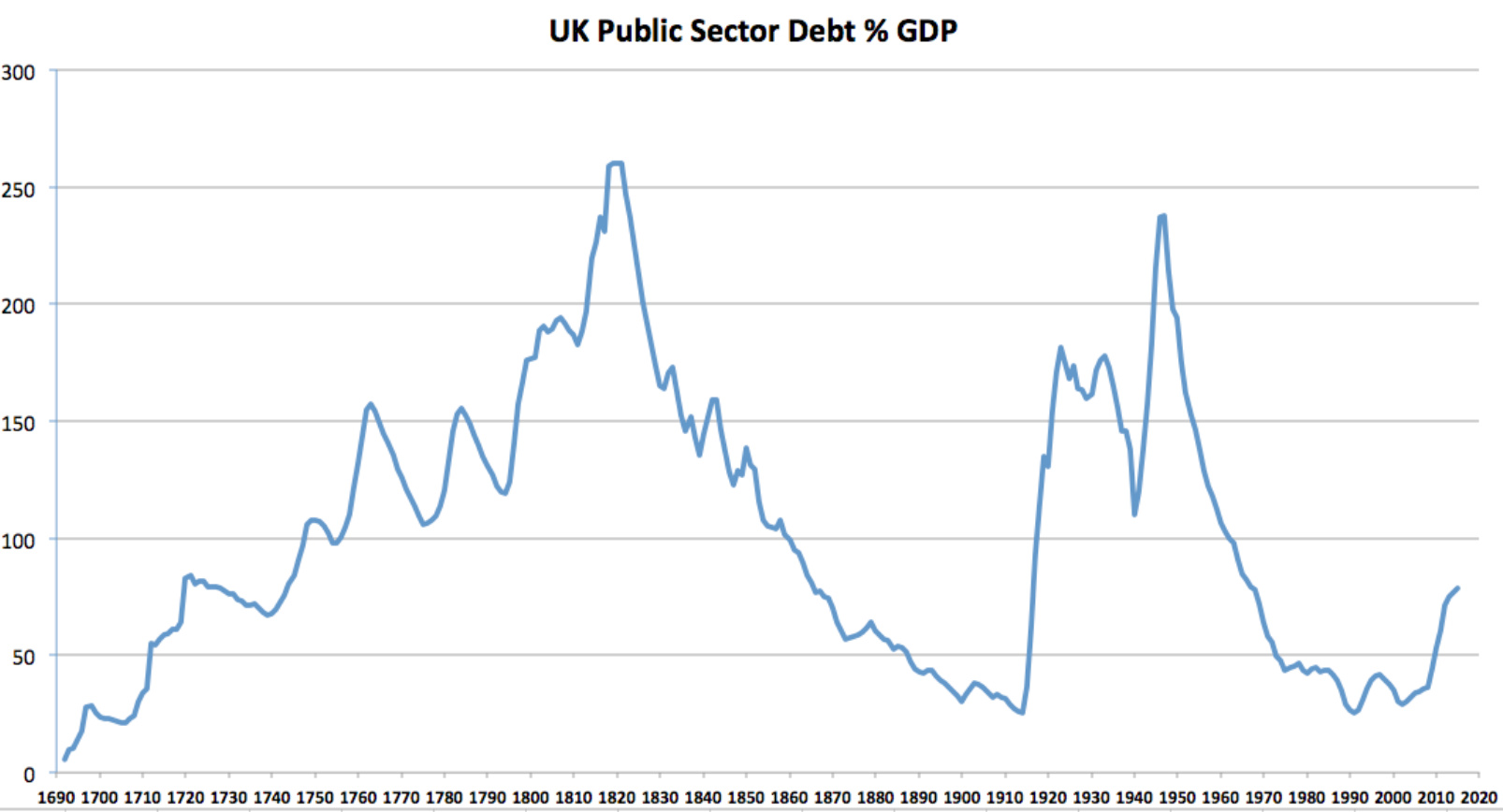
For example, the United Kingdom has managed to overcome large amounts of debt through economic growth. After the Napoleonic Wars, debts were actually reduced, but after the Second World War, the debt pile was shrunk through growth.