I have noticed that prayer often helps with everything. It calms the mind and I feel better. I cope better in everyday life.
8 Likes
This gloomy time is not easy for me. During the day, a short moment of gray outside and then dark again. Next, I’ll try to hobble through a “pointless hour-long walk” to boost my mental strength. On top of that, an intense sauna with a couple of ice-cold showers. That helps for a while.
6 Likes
Back at the cottage again with my daughter to spend Christmas. I just lit the fire in the stove; a live fire is a wonderfully calming element. Soon I’ll start filling the hot tub. In freezing weather, I use an auger to drill a hole in the river ice and lower a borehole pump into the hole, which is a powerful piece of kit. The tub fills in under half an hour. Spending a couple of hours in the tub under the starry sky, alongside some sauna time, is perhaps a kind of meditation. The body relaxes in the warm water. You can watch moving dots in the sky, which are likely some satellites. Yesterday, I fried “Christmas crepes” on gas in the hut; alongside them, we roasted bacon on the embers, croutons for the salad, and I even tried “loimu” style (glow-frying) some pieces of smoked turkey. Last year, we were making food from leftovers and realized the crepe thing: a fresh large griddle crepe with bacon roasted crispy on the embers, fig jam, goat cheese, and salad. It was surprisingly good, at least to me. So we thought, let’s make Christmas crepes now since crepes are the best. They put me in a good mood  These kinds of things would be harder to pull off in the city. The mind really gets refreshed at the cottage by the riverbank! Not everyone would like it since there’s an outhouse. For my daughter, though, there’s a Porta Potti chemical toilet.
16 Likes
Personally, I like writing wish lists to Santa Claus.
News certainly has an impact. Personally, I decided and stopped caring years ago about what the news spews out. The main reasons are that I can’t do anything about the news topics, they have never taken anything away from me or my well-being before, and there have always been these harmful news stories, and they’ve never bothered me before, so why let them bother me now?
I scoop up and grab onto that childhood carefreeness and positive vibe even into adulthood; why on earth should I, as an adult now, be any more worried about things if I am able, can, and am capable of maintaining a carefree life despite all the evil in the world? I’ve gained more age, responsibility, and independence, but I really want to keep that carefree positive feeling going all the way to the crematorium furnace.
Of course, I look at the world “selfishly in a healthy way” through the eyes of an extremely independent bachelor who has organized his life just so that nothing gets in the way of his own well-being and freedom, and that is precisely the well-being I have always aimed for. The latest thing to maximize my well-being is financial carefreeness for the rest of my life, so now everything is in order. Now I just have to hope that I stay healthy for as long as possible and live a long life; I’m trying my best to influence these as well through my habits and stress-free lifestyle.
9 Likes
I think mental well-being is still treated somewhat dismissively, as if it were any more of a personal choice or decision than physical illness. Of course, you can try to influence it through choices and lifestyle, which works at a population level, but for the individual, things don’t always balance out fairly and everyone eventually falls to their knees if they take enough hits. Some sooner, others later, but everyone eventually if it rains hard enough.
And if half a million people in Finland are taking antidepressants, not to mention anxiety which is even more common, there is still a desperate need for better care. I wish the subject were discussed more, as it still feels like anxiety, for example, is treated as just a bit of an “unpleasant feeling,” whereas for some it is as paralyzing as if someone were literally strangling you so you can’t get air, while your heart is racing a mile a minute, a heavy stone is on your chest, and your thoughts are spinning like a dark tunnel full of horror and gloom, and reasoning doesn’t help. A bit like a panic attack that never ends.
So that this doesn’t just turn into meta-babble, here are a few tips that have worked for me:
- Melatonin in larger doses and an acupressure mat. You won’t get 8 hours of sleep with these, but it’s a surprisingly effective combination, especially for falling asleep.
- Intense exercise—and I mean really intense—the kind where you are seriously out of breath for 20-30 minutes; more is not necessarily better in this case.
- Breathing exercises developed for panic disorder, which can be found on YouTube, for example.
- An ice-cold shower or ice swimming, or if you don’t have access to those, a bath cooled with ice cubes to simulate ice swimming.
- Omega-3 EPA in the doses recommended by Dr. Tolonen.
- Medications: they work for some and not for others. Benzos work like a charm for many, but for good reason they aren’t easily prescribed, and daily or continuous use can’t be recommended except in extreme cases. On the other hand, the fear of the harms of benzos often overshadows the fact that antidepressants also have permanent, serious side effects for some, and antidepressants don’t always work for anxiety—they might even make it many times worse. I’m not trying to scare anyone, and if you can get by without medication, that’s great.
- Therapy: works for some and not for others; there are several different approaches and it’s certainly worth trying.
12 Likes
I have suffered from recurrent depression in my adult life. I’m not surprised, as adult life consists of long workdays, stress, performance pressure, etc. Nowadays, I don’t follow the news at all. Nothing positive comes from it, and I don’t need any more negativity. Exercise also helps. I hope to find a new job; I don’t know how much of an impact it will have, but a change of scenery could do me good.
I think it all comes down to balance. You need to have a job, but also free time and good people around you. You need realistic goals and enough money in your account so you don’t have to worry constantly. If one area of life weighs too heavily, the balance suffers and everything comes crashing down.
13 Likes
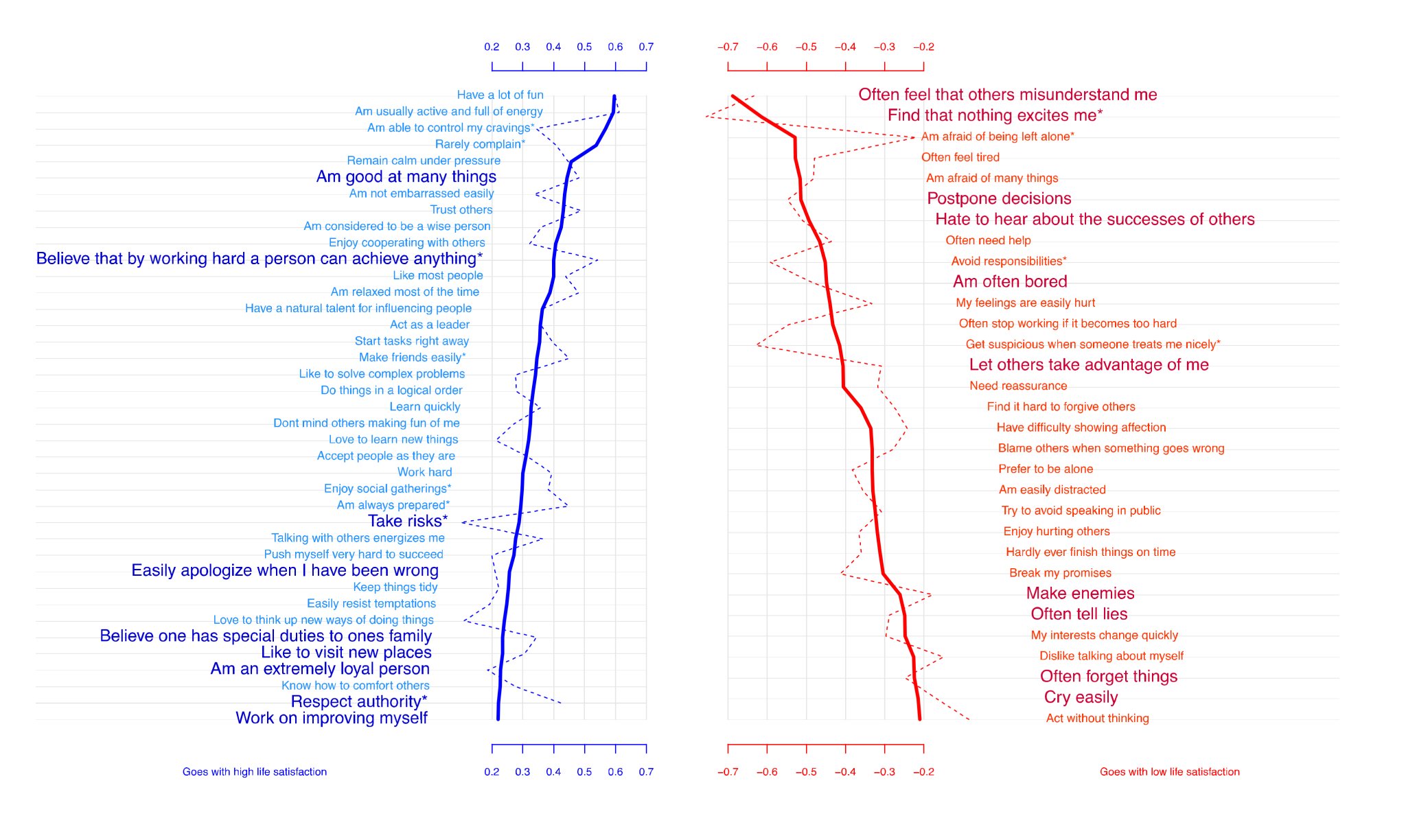
The best ingredients for a good life are on the top left. The worst are on the top right.
To some extent, you can influence these yourself. Regarding the right side: I used to be quite the “analysis paralysis” man. Meaning every decision required an Excel sheet. Nowadays, so to speak, my trigger finger is much itchier when it comes to decisions. This is quite intentional.
7 Likes
It’s incredible how one completely random book can change a life. I once read a book called Nyrkkisankari (The Fist-Fighter) written by Jarkko Stenius. A single story in this book changed the way I use my mind (or rather, how I stop using it) almost completely.
There might be some errors in the case I’m describing since it’s been a while since I read it. In broad strokes, the case went something like this:
The book tells the story of Stenius’s own life, saturated with combat sports and substance abuse. The specific chapter that revolutionized my life deals with a phase in Stenius’s life where he travels to Thailand to fight and mess around. For some reason, he ends up taking a two-week course at a temple where they learn to quiet their own thoughts. The foolish mistakes made in life and the ghosts of his own mind haunt Stenius for the first few days, and he is in a really difficult and bad place. However, Stenius learns to shut out the bad thoughts that had been incessantly troubling his mind. This leads to a life transformation that eventually results in him quitting substances and becoming an author.
This chapter made me reflect on the fact that it IS actually possible to quiet the mind by some means. I started focusing on silencing my thoughts myself and indeed noticed it was possible. At first, it was only for seconds at a time, but the “thoughtless” duration lengthened quickly. The greatest impact this has had on my life has been with falling asleep. Before reading the book, I could toss and turn in bed for hours without falling asleep if negative thoughts were bothering me. After learning to “cut off” thoughts, I have been able to fall asleep—with a few rare exceptions—every night in about five minutes. Another major impact has been in everyday life; if I do or say something that I regret or that weighs on my mind, this resetting helps me get over it immediately.
This isn’t necessarily something everyone can do, but at least in my case, the impact on my life has been so positive that I recommend giving it a try—ideally by reading that book first, so you understand that it is actually possible.
10 Likes
I have successfully managed to return to work from vacation and maintain a sense of relaxation in a way I never have before. Four key insights—or perhaps rather implementations—are largely responsible for this. Finding insights and tricks is easy, but putting them into practice and making them stick is much harder. I have now been testing these in practice for over a month.
TL;DR
- Lowering work intensity: If tasks are completed ahead of schedule, the reward is taking a break rather than taking on more work.
- Mindful and restorative breaks: The 15-minute gaps between meetings are used to calm down (e.g., watching the clouds pass by the window) instead of doing miscellaneous minor tasks.
- Disconnecting from social media and phones: Avoiding unnecessary screen scrolling, doomscrolling, and rage-bait content during breaks to preserve peace of mind.
- Listening to the body and nervous system: Hobbies are chosen based on nervous system load; after heavy mental or physical exertion, more restorative activities are favored.
Lowering Work Intensity
Example: If I have scheduled three roughly one-hour tasks in my calendar for the morning and manage to finish them in two and a half hours, the old me would have thought that there is still half an hour before lunch and I can get something else done before it. Often, this task would have remained unfinished and kept the intensity higher. But the new, reborn me realizes that if tasks are completed efficiently, the reward cannot be more work—it has to be something else.
Another example: I have a one-hour meeting, followed immediately by another one-hour meeting. The meeting ends at the 45-minute mark. The old me would have tried to use these 15 minutes to tinker with some emails and do a few minor chores. Those chores would remain unfinished, and it would ramp up the intensity. The new me states that there is now 15 minutes of time that is actually quite hard to use usefully. So, it’s best to lower the intensity, invest in well-being, and take a short break.
Reducing Phone / Social Media Use
Breaks, and what happens during them, are also key to relaxation. It’s all too easily to pick up the phone and start looking for dopamine hits on Twitter, TikTok, Facebook, or the Inderes discussion forum. And they aren’t necessarily dopamine hits; there is always the danger that some rage-bait headline takes over, or doom and gloom content makes you worry about something you have no control over.
It’s not worth endlessly touching your phone during a break unless you have specifically decided what you are going to do there and understand the consequences. Perhaps phones should come with warning labels stamped on their covers similar to cigarette packs: the cover would feature an image of how it creates a fried state of mind.
Mindful Breaks
One great way to spend a 15-minute break is just looking out the window at clouds drifting far away, doing almost nothing. This kind of break genuinely drops work intensity and helps maintain relaxation.
Linked below is a video where a man, perhaps similar to me, used even harder substances during his breaks: he utilized 15-minute wall-gazing sessions during work breaks. According to the video, work tasted so much better after such breaks. I don’t doubt that claim for a second  . Compared to a wall, clouds are much more versatile content. I haven’t tried wall-gazing myself yet, but the video’s thumbnail is so funny that I’ll leave it below.

Listening to the Body and Nervous System in Hobbies
I also listen more to my body regarding what kind of physical activity is worth taking on at any given moment. For example, on Saturday I went orienteering. It is quite demanding on the nervous system: you run in the forest as fast as you can. While running in the forest, you adjust your steps to varying terrain, and on top of that, you have to simultaneously navigate towards distant targets, read a map, and look around. The overall nervous system load is quite high, but it is a lot of fun.
After such a Saturday orienteering day, I planned to go mountain biking on Sunday. Mountain biking is also quite demanding on the nervous system, at least when compared to road cycling. Mountain biking is a bit like wrestling with the bike among tree roots and rocks, constantly processing lines and executing precise riding maneuvers. In road cycling, the load is much more purely physical, not so much nervous.
I debated going mountain biking, but then my wife asked me to go mushroom picking, and I decided this might be lighter. Guided by my wife, I picked mushrooms and occasionally just stared into the forest.
25 Likes
Let’s post an update, as a few small changes have happened. The biggest one: Household chores as part of breaks. So occasionally, I use my break to fold laundry or empty the dishwasher in a calm, meditative way. It’s extremely important that when doing chores, there’s no rushing, and it shouldn’t feel like a chore/obligation. Chores give your hands something to do, which helps relax the mind. Naturally, relaxation can only happen if there’s no pressure and no rush. In other words, the mental framework for chores cannot be: “this sucks, I want out of this situation, I’ll try to do this really, really fast”. That mindset—which I used to have too—only adds to the mental load. The current mindset is “this is what it is, I’ll do this calmly and mindfully.” More being and self-compassion, and less rush and negativity.
Chores are an endless to-do list where there’s always more you could do. They are truly tasks that never end. I don’t like routines because they turn into obligations, e.g., “weekly cleaning.” Stress, rush, and negativity come along with that. If I don’t have time to clean today, I can always put it off.
Sometimes watching me do chores might be like watching paint dry. Our kids are already adults, even though they still hang around the house from time to time, so there’s no unnecessary rush in my free time. It makes no difference whether cooking takes 20 minutes or 40 minutes. What would I use that extra 20 minutes saved by rushing for anyway? I’d just poison my mind with social media or the news, finding out what stupid thing said this time. Time for chores naturally appears when social media use makes room for more important things.
If the above sounds unhinged, I can comfort you by saying that it would have sounded at least weird to me too just a couple of months ago. Changing mental models isn’t easy.
A bonus for the relationship is that your partner notices this too. “Hey honey, when are you coming home? Dinner will be ready when you get back from work, and oh, by the way, I did your laundry too.” 

That’s so true. And it doesn’t necessarily require FIRE or being a gentleman of leisure ← The thread where I spotted a similar insight.
11 Likes
Personally, I haven’t been able to move forward. Maybe there’s more energy. Going to the gym is back in the picture.
The depression has completely changed. Before, I was tired, calm, and quiet. Now I get fits of rage. I’ve had to call a crisis helpline because I just couldn’t calm down at all. My mind digs up unpleasant things that happened years ago. Every single thought is negative. Self-confidence is gone. I can’t trust people. In a way, it’s a defense mechanism. A wall built out of anger and negative thoughts. The wall doesn’t let love through. It drains my energy. Maybe someday I will still…
6 Likes
What methods do you actually use in practice to quiet your thoughts? Is it some sort of mindfulness, meditation, or something similar? The ability to quiet one’s mind would certainly be welcome for me too. I listened to the book back in the day, but I don’t recall what kind of methods were discussed in it. Great book though, as far as I remember!
1 Like
Arto Pietikäinen’s Joustava Mieli (A Flexible Mind) books are great works. They are based on the “concept” of psychological flexibility and use a so-called diagnosis-free method. There is also research evidence available for those interested in it.
What other books are you reading / do you recommend regarding psychological (thinking + emotions + behavior / action) well-being?
1 Like
I have been listening to various podcasts. If anyone knows of a good book that focuses on thoughts and accepting the past, please let me know.
I have a good therapist. We have gone through very concretely what changes need to be made. I have talked with several psychologists, and finding a good one has been difficult. I called a crisis service once, but I didn’t get anything out of it. To be fair, they are probably better equipped to help people who are suicidal.
1 Like
Well, it has a bit of an idiosyncratic philosophy and it’s a rather edgy, entertaining read, but I personally liked Mark Manson’s book The Subtle Art of Not Giving a F*ck (Nurinkurinen opas hyvään elämään) (A Counterintuitive Approach to Living a Good Life). Naturally, it takes a lot of work to put those lessons into practice and make them part of your life, but it definitely offers some solid ideas.
1 Like
@Rrryy @kivimies @Kaik_man
Over the years, I’ve read books as well. Search Inside Yourself, which was part of Google’s mindfulness program. Then there was Finding Meaning in the Second Half of Life. Those were good. Remembering the book titles off the top of my head.
Nowadays, I use AI more. If you feed it a book and/or explain what you’re interested in at length, the length of your own explanation and the quality of the response kind of correlate. Since typing long texts is tedious, I use voice-to-text, which, at least with Gemini, already works very accurately even in Finnish. AI doesn’t replace a therapist, but it’s always available and accessible whenever you feel like talking. Plus, you can talk to it for as long as you have the energy to. Someone might wonder about privacy. Gemini has a private mode where chats disappear and aren’t used for training. I do trust Google more on this than many others, compare that to the tragic Vastaamo case.
I’ve also used AI to help with my relationship. Often its suggestions are really obvious, but you just don’t think of them yourself. For example, “Have you told your wife about that? She would probably be happy if you did.” Even in a long-term relationship, mind reading just doesn’t work. The cost of speaking up is often negligible compared to the benefit gained or the joy brought to your partner. As a relationship counselor, AI might be even better than as an individual therapist. In this case, too, you need to provide the AI with enough background context about the state of the relationship. I’d argue that divorces would decrease if, instead of arguing, couples occasionally asked an AI for advice.