Global quality companies

I couldn’t find a dedicated thread for so-called “quality companies,” so I decided to open a brand new one for it. The purpose of the thread is to spark a diverse discussion about quality companies that meet strict criteria. Hopefully, the thread will also help other community members find interesting new investment targets! I hope that if you know of a firm that meets the criteria, you’ll submit it here!

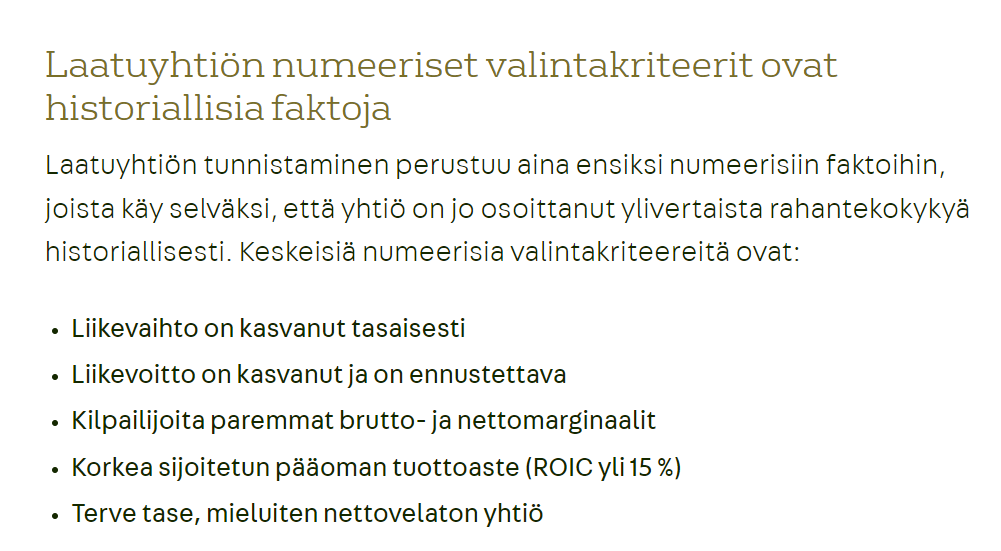
What then is a quality company that this thread is meant to discuss? There are many definitions of a quality company, and no single truth exists. Therefore, as the founder of the thread, I take the liberty of defining a quality company for this thread. This is partly because I don’t want the thread to be flooded with hundreds of firms that another person might think are far from quality firms. I want the best firms from the global stock markets here, because unfortunately, they are hard to find on the Helsinki Stock Exchange! From this, you can already deduce that the criteria are strict. The criteria consist of both quantitative and qualitative factors. When you submit a firm to the thread, you must put in the effort to explain how the company meets the required criteria.

Quantitative criteria:

  • ROIC > 15%
  • Revenue growth > 5% p.a.
  • Earnings growth > 7% p.a.
  • Net profit margin > 12%

These figures should roughly have been realized over the last 5 years, but exceptions are allowed if the deviation can be credibly justified as somehow “one-off” or similar. Cash flow-based metrics (e.g., FCF must not be below 80% of net income) or capex/R&D share relative to revenue could have been added to the quantitative criteria, but I did not include them now.

Qualitative criteria:

  • Credible arguments that the previous earnings growth trend and high return on invested capital will continue for at least years (5-10 years?) to come. Very likely growth must therefore be profitable (high ROIC). This leads to the point…
  • Deep moats. Only genuinely deep moats in a high-quality business enable the requirement above. Why does this specific firm have deep moats, and why are competitors (likely) unable to step on its toes?
  • The business must not be too cyclical. The stock price can fluctuate, but the earnings should be somewhat predictable. Of course, few firms/industries are completely immune to global events, so we aren’t completely blind here. For example, in a single year, earnings/revenue may hit a hiccup, but there must be a clear external reason for it, and it must recover quickly.

EXAMPLES:
On the Helsinki Stock Exchange, for example, Elisa is perceived as a quality firm, and by many metrics and arguments, it is. However, Elisa does not meet the criteria of this thread; revenue growth hasn’t really reached the target, and there isn’t much room to improve profitability. Furthermore, in my view, there aren’t really credible arguments for how the firm could tap into sufficiently high earnings growth. KONE also drops out of this thread because the growth in revenue and earnings is very stagnant. KONE’s net margins are also unnecessarily low.

Another typical quality firm on the Helsinki Stock Exchange is Revenio, which meets the above criteria, at least in a historical light. On the other hand, the growth streak will break this year, so it could well be asked whether Revenio still belongs in this category. In my opinion, it does, if we can credibly justify with the firm’s qualitative factors why this year is an exception and we will return to “normal” quickly. So, a single year doesn’t yet ruin the quality company label; the big picture counts. I will return to Revenio later because I think it meets the criteria, but high-quality arguments are required for this!

I will also return later with a couple of other messages to this thread, including the companies Novo Nordisk and West Pharmaceutical Services, both of which deserve their own posts.

Note! No one will be put down in this thread, even if you submit a company that doesn’t strictly meet the criteria. The purpose is purely to find new high-quality firms to explore. The criteria are strict so that only the highest quality ones are submitted and the workload doesn’t become too large, as there are plenty of firms in the stock markets. For example, a firm that doesn’t have a long enough track record yet, but there are very good reasons to believe it’s precisely the top firm of the future, is very interesting and welcome in this thread :slight_smile: Rather, we’ll be flexible on the numbers if the qualitative side is top-tier. In some way, however, the numbers must already support the narrative, so unfortunately Hyzon drops out :wink:

Once a firm has been suggested, in the spirit of the thread, it is very good to have a constructive discussion about it. So, the thread is not intended to be filled only with “announcement posts,” but quality discussion about these firms is also very welcome.

ADDITION 5.11.2023:

The importance of the growth component was already challenged a bit in the thread. A link that appeared in the thread (Importance of ROIC: “Reinvestment” vs “Legacy” Moats | Saber Capital Management) handled well why this is precisely important from an investor’s point of view. A high ROIC is not automatically a guarantee of happiness for an investor if the firm cannot reinvest the business cash flow again and again at this high ROIC back into growing the business. Highly recommended reading.

88 Likes

Well, to make it simple, would Kempower work for this?

4 Likes

I think Kempower is well worth discussing in this thread; after all, it is an exceptional company, especially from a Finnish perspective! Kempower is also very likely to see strong and profitable growth for years to come, so in that sense, it meets the criteria. As always when discussing the qualitative side, there are differing views, and they are allowed :slight_smile:

Why I don’t personally perceive it as exactly what I’m looking for: Kempower sells equipment for which the market will eventually saturate, and there aren’t very strong moats to protect Kempower’s sales for, say, 2028–2040. The coming years will almost certainly be excellent, but in my opinion, the business lacks such exceptional moats. Additionally, because it involves equipment sales and the share of recurring revenue is so low, there is a significant long-term risk of a sharp decline in both revenue and earnings. And this, in my eyes, destroys the “quality company label.”

If you compare it to the likes of Novo Nordisk, West Pharmaceutical Services, or even Revenio, you notice a big difference in the long-term “reliability” of the business.

20 Likes

@JNivala, is the idea of the thread to generate discussion and/or monitoring of the world’s top quality companies on a general level, or to aim to highlight quality companies that are also affordable? In my opinion, it would be very important to clarify this right in the opening, because 1) the forum already has a FAANG thread for the most obvious super companies, and 2) I can name many very clear quality companies, but the expected returns could be absolutely anything under the sun.

Yep, my first company ideas were wholesalers that have this exact same problem with net margins (Fastenal, SeSa). :grin:

12 Likes

Excellent opening, and it’s great that ROIC is included.

Why do you also keep net profit margin as a criterion if ROIC is already in the mix? Or do you want businesses with a wide margin where the bottom line isn’t dependent on margins of just a few percent? I’m thinking that with this criterion, you’ll miss the Costcos and the Walmarts of the past.

I need to find some time to write in this thread about quality companies so it doesn’t just remain as this kind of shouting from the sidelines. :smiley:

35 Likes

That was exactly the intention there, not to be reliant on margins that are too thin. But, there is flexibility there if the rest of the business clicks perfectly and there is reason to believe why low margins won’t turn into a problem at some point. So if such a company exists, you are welcome to point it out if you can argue well why an investor doesn’t need to worry about low margins in the future either.

I already added to the opening post before your message that the purpose is to discuss the companies belonging to the thread on a very general level; competitive advantages, outlooks, etc. So it’s nice if someone’s view is challenged, thereby generating discussion. Discussing qualitative factors is therefore the primary purpose, not valuation. Everyone can do the pricing and their own valuation themselves and assess the sensibility of the investment :slight_smile:

The FAANG thread only contains a handful of companies that everyone already knows, so I feel it doesn’t quite correspond to the same thing. To here, preferably the FAANGs of the 2030s :wink:

18 Likes

Visa/Mastercard, checks all the boxes
Bahnhof, lacks a moat and the net margin requirement isn’t met. Beats Elisa.
Lam Research, cyclical

These were the first ones that came to mind from my own list.

2 Likes

IMO, this revenue growth criterion primarily screens for companies that have simply been in the right place at the right time. After all, it is usually quite easy to lead a company to that kind of steady (but not explosive) growth. In fact, a 7% earnings growth following 5% revenue growth is actually a rather weak achievement due to fixed costs. Such companies quickly become former “quality companies” when the tailwinds disappear, for example, due to changes in the competitive landscape or customer preferences.

Similarly, this definition leads to the company’s industry largely determining whether it is a quality company or not. In this regard, I don’t see anything wrong from an investor’s perspective with avoiding “difficult” sectors.

In my opinion, a quality company is above all one that consistently delivers strong results even when revenue takes a hit from time to time. After all, it is in these challenging situations that the wheat is separated from the chaff. Likewise, performance is consistently better than that of peer companies. These things are also very difficult to screen flawlessly using specific quantitative criteria.

8 Likes

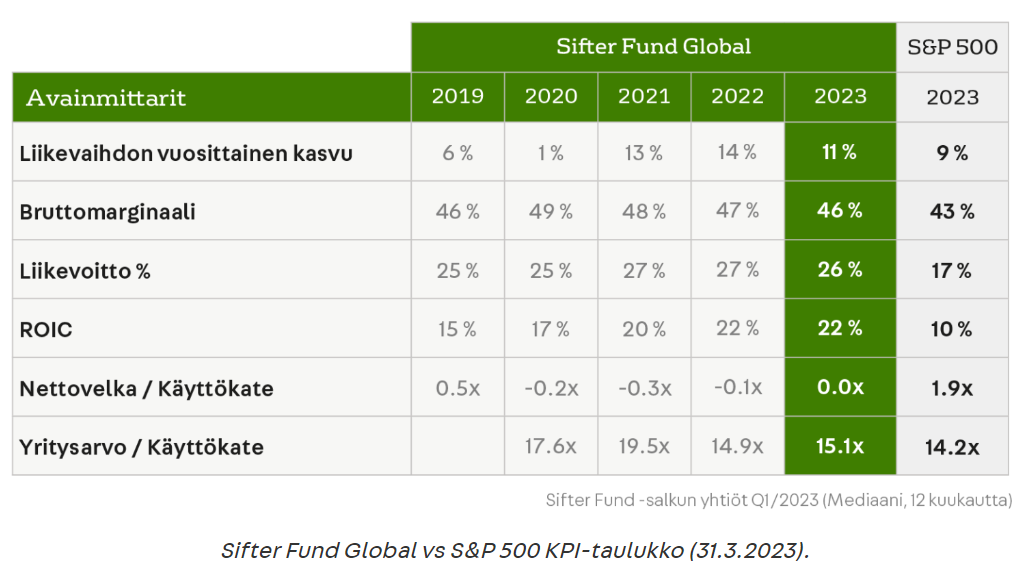
Let’s call this an unpaid advertisement, but the headline already brought to mind the Sifter fund management company and its investment strategy.

I used to run screeners using Sifter’s template, but for the life of me, I can’t remember anymore what kind of companies were caught in the net. I should probably redo the exercise sometime soon, now that valuation multiples have also normalized (at least in Europe).

According to Sifter’s latest fund report, the TOP 10 holdings include familiar names like Novo Nordisk, Lam Research, Microsoft, Alphabet, and Taiwan Semiconductor. But then again, Safran, Disco, Old Dominion Freight Line, Be Semiconductor Industries, and Applied Materials represent companies whose business I am not familiar with. You can scout for those companies outside the top ten in Sifter’s blogs, reports, and videos, which occasionally discuss, for example, a single new holding.

If global quality companies interest you, I highly recommend Sifter’s materials. They are very clear, informative, and high-quality. Few fund management companies have such first-class communication from a retail investor’s perspective.

And if the topic interests you, you might also want to read the book shedding light on Sifter’s background, “Investor - What Hannes Kulvik learned about greed and how you too can prosper in volatile stock markets”, which is considerably more interesting than its title suggests.

This apparently turned into a real Sifter fanboy post, but I’ll forgive myself since Sifter is a partner of Inderes and I am an Inderes shareholder.

58 Likes

Thanks for the great opening!

Right at the start, I’ll take the liberty as a respondent to argue against profit growth as a quality criterion; revenue and operating profit growth are such central parts of a company’s valuation that, in my mind, growth is reduced to merely a component of value. Furthermore, growth can often stop entirely due to factors external to the company itself, whereas “quality” is strongly a denominator for things within the company’s own control.

Secondly, because I have occasionally pondered the same question myself, I have developed a scoring system for the quality factors of the companies I follow. I evaluate the Return on Invested Capital (ROIC 5-year average), investment rate (5y free cash flow/investments), the share of M&A in those figures, cash flow margin, debt ratio, gearing, industry, the company’s position within the industry, and the ownership structure.

I collect data for at least the 6 previous financial years for these; the figures on which I base my calculations I get from Morningstar, and I spot-check them against the financial statements provided by the companies. I want to point out that I may occasionally make my own adjustments and deviate from the company’s own accounting treatment. Additionally, the calculation principles for some key figures may differ from those used by others.

From the Helsinki Stock Exchange, I offer the following for your consideration:

KONE - even at the risk of Mr. Nivala having already rejected it.
More than familiar to Finnish investors, but it simply is a “machine” (kone). In terms of efficient capital utilization, it competes in the global major leagues; a highly profitable business is run year after year not just as net debt-free but also with negative working capital. And an investor does not need to fear an erratic strategy or M&A that is questionable from a shareholder’s perspective.
Despite everything, it is reasonably cyclical, there is geographic concentration in the business, and margins are under heavy pressure.

  • ROIC 22.6%
  • RG 4.11%, EG -2.7%
  • EBIT margin 11.4%, FCF margin 10.7%

ORION
To be honest, the industry is quite distant to me, and my competence in assessing the quality, magnitude, or durability of the company’s competitive advantages is quite limited. I always doubt that surely no business can remain this profitable year after year, but time after time I am proven wrong.

  • ROIC 24.9%
  • RG 7.5%, EG 19.9%
  • EBITm 26.1%, FCFm 19.1%

VAISALA
In my own scoring, it is significantly lower than the two mentioned above, but third among the OMXH25 companies. A leading player in a highly specialized market, though margins are not outrageous, and the reinvestment rate of profits is quite high.

  • ROIC 15.6%
  • RG 10.6%, EG 14.0%
  • EBITm 7.7%, FCFm 7.0%

From our neighbor’s stock exchange, I could apply the quality company label to:
ATLAS COPCO
In our western neighbor, they have succeeded in creating a money printing press powered by compressed air.

  • ROIC 20.0%
  • RG 11.1%, EG 11.2%
  • EBITm 20.9%, FCFm 15.3%

TROAX
Sells metal mesh fences, maintenance platforms, and storage solutions. Sales are mostly B2B, but the customer base is very fragmented across Europe—especially considering the size of the company. The efficiency of sales and how the company makes such margins with inherently simple products continues to baffle me.

  • ROIC 14.48%
  • RG 17.1%, EG 14.5%
  • EBITm 19.3%, FCFm 11.2%

I’ll also include a link to the latest annual report if anyone wants to read it:

SINTERCAST
A company headquartered in Sweden, specializing in the production of compacted graphite iron (CGI) developed by some “crazy Englishmen.” The largest customers are in the automotive industry, for which they make engine blocks. The customer base is highly concentrated, but with these margins, one dares to carry a little risk.

  • ROIC 30.9%
  • RG 8.3%, EG 6.1%
  • EBITm 29.1%, FCF 25.0%

And here is the latest annual report for this curiosity:
https://www.sintercast.com/media/2202/sintercast-annual-report-2022.pdf

35 Likes

Hi, it’s nice that this has sparked messages, criticism, and discussion in general! I would like to clarify right at the start that I did state initially that there isn’t even a universal, all-encompassing definition. Why these criteria? I want specifically quality companies to end up here—those whose earnings grow profitably with a high probability, fueled by good moats for as long as possible. I’m not so interested in so-called quality companies whose earnings stagnate (move sideways) and thus, in the long run, shareholder returns remain modest (or at index levels). This is perhaps as a response to @Jamon and @Uppo-Nalle.

In my opinion, it is also quite credible to argue that a genuine quality company can grow for long periods at such a reasonable pace in terms of both revenue and earnings. In the long run, revenue growth drives earnings development because margins cannot improve forever. Is credible, steady, long-term PROFITABLE growth a sign of a quality company or merely a component of value? That can be discussed, but I’ll stick to the view that it is indeed also a hallmark of a quality company :slight_smile:

Thanks @Uppo-Nalle for your list; there are a couple of slightly less familiar ones here that I need to look into when I have more time :slight_smile:

Btw @Mauri, I am indeed very familiar with Sifter, but I can swear with my hand on my heart that the criteria are my own and not copied directly from Sifter at least :smiley: I am certainly not surprised that Sifter has similar requirements, as I think Sifter’s approach to stock picking is very close to my own thinking: a quality company that can grow profitably for long periods with deep and credible moats is what a stock picker should aim for. And then hold on to it once you get on board at a reasonable price (rarely do you get them cheap).

10 Likes

The concept of a “quality company” has always been somewhat confusing to me, perhaps because the term itself contains an inherent, massive promise. The same applies to this entire thread, as what is being built here is actually perhaps the most interesting section of the whole discussion forum. If successful, this thread will be, in its own way, a collection of true “Top-Gun” companies—meaning that after a strict filtering process, the best of the best will be selected. In principle, this thread is where a beginner should start to find a core set of companies for their portfolio if they lack the time and/or desire for their own company analysis.

This is also where the challenge of the quality company concept lies, and I have always found this concept somewhat alien. This is perhaps because I feel this approach is, in a way, too focused on key ratios and backward-looking. However, equity investing is forward-looking, and quality can be latent in a company today but ready to burst into bloom tomorrow.

On the other hand, I must admit that I also have stocks here and there in my own and my relatives’ portfolios that meet the quality company criteria at least loosely, such as Microsoft, Johnson & Johnson, and Procter & Gamble. I bought these companies somewhat blindly on the principle that, at least according to some, these companies meet the quality criteria. These companies have been in the portfolio for a long time, and the intention is to own them for the next ten years.

At the same time, there have been bitter disappointments over the years with companies that many have perceived as quality companies, including Sampo and Kone. With these companies, I perhaps took the bait, somewhat with the idea that surely Nalle Wahlroos and the Herlins know how to make money. Extremely naive and lazy thinking, which has backfired bitterly. Among other things, the growth of these companies perhaps hasn’t met expectations, and I think this is a bridge to my own perspective.

Fundamentally, I believe the concept of a quality company is, at some level, ultimately married to growth. A high-quality company makes good products profitably and takes market share. A high-quality company is also able to innovate and reinvent itself, such as Microsoft transitioning to cloud-based services or Amazon constantly developing new offerings and business areas. For this reason, I think the above-mentioned percentage floor for growth is a bit low, whereas, as an investor, I would be more willing to accept at least temporary dips in earnings along the way; growth sometimes involves air pockets regarding profit.

For this reason, I would stretch the concept of a quality company towards growth and also, on a non-quantitative level, towards a high-quality corporate culture. This is actually where all innovation and renewal ultimately originate. In a way, this too is something measurable at some level, but I can’t immediately think of a set of ratios and variables with which some AI could separate the wheat from the chaff using these criteria.

So, to summarize, I would tweak the key ratios quoted at the beginning a bit; I would demand stricter growth criteria and be more flexible regarding profit. I would use some obscure AI to set a company’s innovation capability as a criterion—though certainly easier said than done. But who said this was easy?

10 Likes

My own suggestion for screening quality and corporate culture:

  • growing revenue and earnings per share
  • stable/improving profitability (ROIC, EBIT-%)
  • low indebtedness
  • stable/decreasing share count, unless there is a good reason for its growth
  • if the company pays a dividend, a low payout ratio
  • significant management team/founder ownership in the company

If those six points are met, we are already well on the right track. All of them are also verifiable with numbers. Additionally, one could qualitatively examine whether the company utilizes all available capital allocation methods effectively (in/organic growth, debt issuance/repayment, share buybacks, appropriate dividend distribution). It often tends to be that quality companies have at least almost the entire toolbox in use – greetings to the laggard section of the Helsinki Stock Exchange, where the toggle switch alternates between dividend distribution and buying terrible German companies.

Example of the above: Lifco AB, perhaps Europe’s toughest serial acquirer with its dozens of acquisitions. For the last five years, it has progressed with an unchanged share count, and the main owner Carl Bennet calls the shots with a majority stake. Revenue has compounded at an annual rate of over 15 percent, which has consistently consisted of small acquisitions and organic growth in niche industries. When strong growth is combined with steadily improving profitability, EPS growth approaches 20 percent per year. The balance sheet has been kept rock solid, with a debt-to-EBITDA ratio of around 1.5 continuously. Finally, Lifco’s dividend policy is such that it clearly guarantees the standard of living for the main owner and management team – but the company’s growth still takes priority, and therefore the payout ratio is low. Anyone who has seen Lifco’s price chart knows that this recipe has worked quite nicely. Just look at that to see what a high-quality industrial company looks like.

When you think about it, I too would see growth as a completely essential part of a quality company. What do you do with a high-quality business if it doesn’t generate cash flows that grow faster than average for the owner? There are surely those slow-growth companies that have massive moats and a strong market position, but can I benefit from that as an owner – that is the million-dollar question. It’s difficult to achieve alpha through ownership if earnings don’t grow and profit distribution only grows by raising the payout ratio – only valuation remains as a driver for returns. In the worst-case scenario, you end up paying a shocking overprice for that perceived quality of the company – and just like that, capital is destroyed, and capital is destroyed this way! @Sijoittaja-alokas could find the person who paid 76 euros per share for Kone three years ago (P/E 38!!!) for tomorrow’s interview and ask how much the company’s amazing quality has produced in terms of good vibes. It might take a moment for those multiples to melt into something tolerable.

Good management and ownership were already mentioned, but in my opinion, nothing replaces following and interpreting communications. In reporting, it’s good to follow what the management emphasizes – Texas Instruments is an excellent example: the firm highlights the development of free cash flow per share in its reports – and runs its business accordingly, occasionally even with a triple-digit ROIC. The lead horse in my own portfolio, Fairfax, on the other hand, emphasizes that the firm must stand the test of time and that risks threatening the company’s existence are not taken:

We always look at opportunities but emphasize downside protection and look for ways to minimize loss of capital. […] We will never bet the company on any project or acquisition.

Numbers alone don’t tell you these things, fortunately. If they did, those most amazing investment cases wouldn’t be available.

33 Likes

Indeed an excellent list. Next, I will likely present an unpopular opinion. Tesla would meet (depending on the calculation method) several of these criteria, but the company in question isn’t exactly the first one perceived as a quality company. Personally, I would be ready to at least nominate Tesla for this quality company category, even though this might, so to speak, get many investors’ hackles up.

So, is Tesla a quality company? And if not, what would need to change for Tesla to be classified as a quality company?

1 Like

I agree with @Hades that the qualitative analysis of a company’s quality includes an assessment of management and the largest shareholders. As assessment points, I typically use capital allocation skills, alignment of interests with shareholders, and transparency of communication. In my opinion, a criterion regarding management/shareholder structure could be added to the thread’s opening post if the idea gets enough support from others.

Additionally, one point in the opening post caught my eye, where it was mentioned that capex/R&D expenses should be low relative to revenue. Personally, I think it is only a positive thing for a shareholder if the company can reinvest cash flow back into the business with an excellent ROIC. These investments must, of course, be directed sensibly, which circles back to management’s allocation skills. As an example, hardly any Novo shareholder is bothered by the R&D investments put into Wegovy when they have a drug generating over a billion in revenue per quarter and growing at over 100% per year. I also don’t believe that, for instance, the capex costs required for opening new Costco stores weigh on shareholders’ minds when the invested capital yields excellent returns. Naturally, all investments have their saturation point, and Costco’s third store in the same small town is unlikely to be as good an investment as the first one.

Industries of listed companies are not all cut from the same cloth either, and I would be surprised if a quality medical device company (Revenio, Intuitive Surgical, Edwards Lifesciences, etc.) didn’t invest in developing new features, as otherwise the competitive advantage would weaken significantly when patents expire. In that case, the brand and possibly a large installed base of devices would be the only things left to defend the competitive advantage. On the other hand, in industries with slower technological development, such as elevators & escalators (the inventor of the elevator would probably still recognize a modern elevator as an elevator), low R&D costs may be justified. Software companies are, of course, a class of their own, as producing additional products and services costs essentially nothing, to put it bluntly.

Perhaps I’ve nitpicked enough for today, as I am broadly in agreement with the quality criteria set in the opening post. If my writing was too rambling, for those proficient in English, I recommend Saber Capital’s text, which explains the matter better than I can (link: Importance of ROIC: "Reinvestment" vs "Legacy" Moats | Saber Capital Management).

Thanks again @JNivala for the great opening! I hope we get to enjoy high-quality discussion on quality companies for a long time to come.

16 Likes

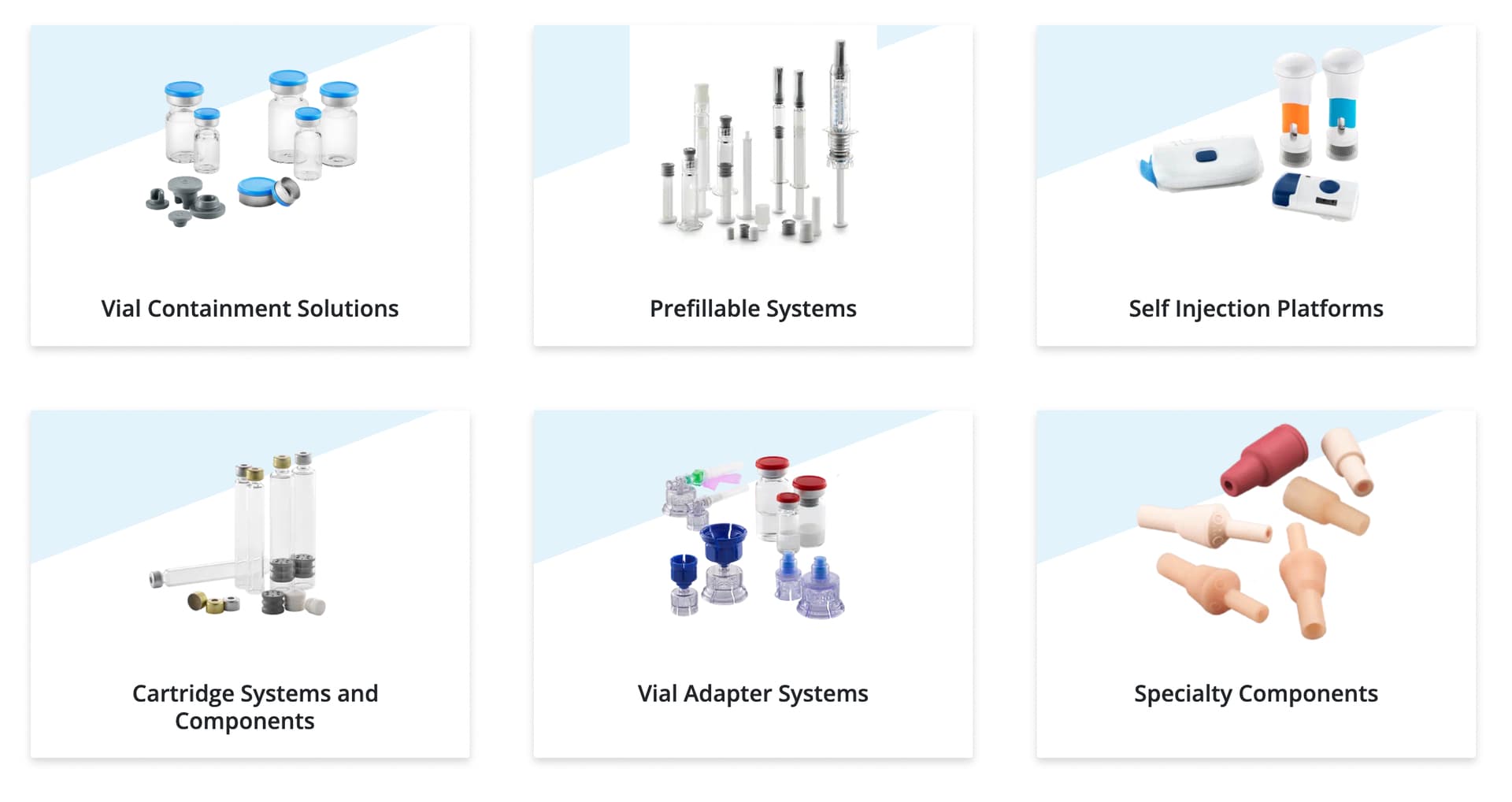
West Pharmaceutical Services
Incredible business, amazing moats.

Operates in the medical industry. The company itself manufactures and distributes highly critical drug delivery and administration components, such as injectors, injection pens, packaging solutions, etc. These are vital small components where the quality standard is extremely important for customers in terms of the functionality of their own products and patient safety (ensuring the medicine reaches the right place safely and without risk of contamination).

Quantitative side:

  • Revenue growth over the last 13 years, CAGR is around 7-8 %
  • Net profit growth over the last 13 years, CAGR is around 17 %
  • The balance sheet is very strong, e.g., there is more cash than interest-bearing debt
  • ROIC in recent years > 15 %
  • Net profit margin also around 15 % in recent years

Qualitative side:

  • The company’s products are business-critical for practically all of the world’s major pharmaceutical companies. Additionally, unit prices are low —> these together clearly create pricing power towards the customers.
  • The business is very predictable (because drugs are used very steadily regardless of the economic cycle); practically, you won’t find a less risky / less cyclical business.
  • The company’s products are particularly critical for the fast-growing segment of new innovative drugs, as many modern drugs in the development pipeline must be injectable (the drug cannot just be packaged into a swallowable tablet), at which point West’s products come into play. The growth of this market is expected to be very strong for a long time. Overall, a clearly growing market.
  • High barriers to entry: requires expertise, capital, and the protection provided by the regulator is also significant.
  • Larger and more global than its competitors, both in terms of production facilities and customer concentrations.

If you had to buy a stock and forget it in your portfolio for 10 years, you certainly wouldn’t be afraid to lose your portfolio credentials for those 10 years with this one :smiley:

EDIT:

Keep an eye on this link; it provides a nice news flow related to the company so you don’t have to actively follow every media outlet yourself! It’s full of interesting articles; it’s worth checking out if (and when) you get to know the company :slight_smile:

35 Likes

I am continuing the list with two Swiss precision mechanics companies that design and manufacture small but essential flow control devices for almost all mechanical equipment—valves!
(Note: the figures are once again five-year averages)

BELIMO
Sells and manufactures actuators, valves, and sensors for HVAC applications. A technical lead is sought not only through leading compatibility with building automation and excellent quality, but also through highly refined sales and distribution. Even small batches move from factories to customers around the world at an incredible pace; favoring direct sales keeps customer prices reasonable, and products aren’t just piled up on shelves in production. Sales are distributed roughly 40/40/20 between Europe, the Americas, and others.
In the Swiss fashion, debt is a dirty word, and despite being publicly listed, the company has a family as an anchor owner with a stake of approximately 20%.

  • ROIC: 22.4%
  • RG 10.6%, EG 6.16%
  • EBITm 17.8%

VAT GROUP
VAT has chosen a different approach to the valve market; instead of operational efficiency, a competitive advantage is sought through specialization—and boy, are these specialized valves! The more challenging the operating environment, the better; ultra-high vacuum tables and cylinder valves for super-efficient internal combustion engines are so routine for VAT that the R&D department gets to spend its time designing valves for space stations and particle accelerators/decelerators. The business has grown from a small workshop into a listed company with a billion-dollar turnover without a single acquisition, and enough cash has always been kept on hand to at least cover all debts.
Half of sales go to Asia and about a quarter to the Americas. The largest customers are in the semiconductor industry, which makes the business quite cyclical. Technical consulting and maintenance services level out the fluctuations slightly (totaling just under 20% of all sales). Although the bottom line fluctuates with the global economy, the fact that the margin remains over 20% even in bad years says everything essential about its profitability.

  • ROIC 34.9%
  • RG 27.1%, EG 30.9%
  • EBITm 26.3%
17 Likes

I don’t have time to write at length right now, but one could be Canadian National Railway; it is also in Sifter’s portfolio.

The barrier to entry in the industry is high, margins are healthy, and earnings per share have grown steadily.

ROIC doesn’t quite reach 15%, but it has reached the 10-12% level in recent years. I’ll try to write a longer post about this later.

16 Likes

Interesting company, you wouldn’t immediately think that the rail business has been such a fantastically good business. On the other hand, there are quite high barriers to entry, and it’s a critical player for the functioning of the entire North American economy. Do you have any information, @Bjorninen, whether CNR will benefit from Biden’s infrastructure package in some way, and if so, in what way?

The companies mentioned by @Uppo-Nalle, which are completely unknown to me, I also need to go through at least on some level in the coming days :slight_smile:

5 Likes

As a suggestion, here is a casino company from next door, since global quality companies don’t seem to be found on our exchange. Evolution AB, an online casino company known to many, likely meets the hallmarks of a quality company, although I can’t say much more about the management and I cannot fully assess what kind of moat this company has. But at least in terms of the numbers, the performance is very convincing. The moral side of the matter is another story; perhaps it doesn’t suit so-called ethical investors. By the way, I don’t know what kind of minimum ethical requirements should be expected from global quality companies.

There already seem to be some great finds in this thread; at a quick glance, it appears you have to pay for quality, and it occurred to me whether the stocks are so-called fully priced. But I am truly impressed by the finds in this thread and the knowledge of the investors. This thread is clearly becoming a real treasure trove.

https://finance.yahoo.com/quote/EVO.ST/financials?p=EVO.ST

19 Likes