A stock portfolio can be grown faster than the general market by a) constantly churning stocks that have risen sharply and exhausted their return potential, or b) sitting long-term on carefully discovered multi-baggers.
The first style is challenging due to timing.
This thread is dedicated to hunting for the latter. This is also challenging, as finding such cases is like looking for a needle in a haystack. And even that isn’t a great analogy: misses eat into portfolio returns. This is like looking for a needle in a haystack filled with finger-slicing blades.
We have at least one similar thread on the forum, Nordic ten-baggers, but the premise and goals here differ slightly.
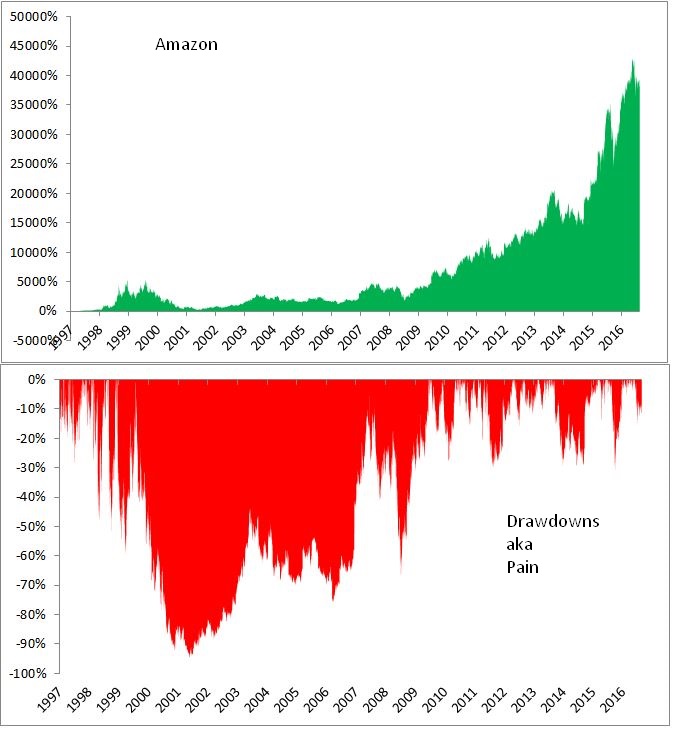
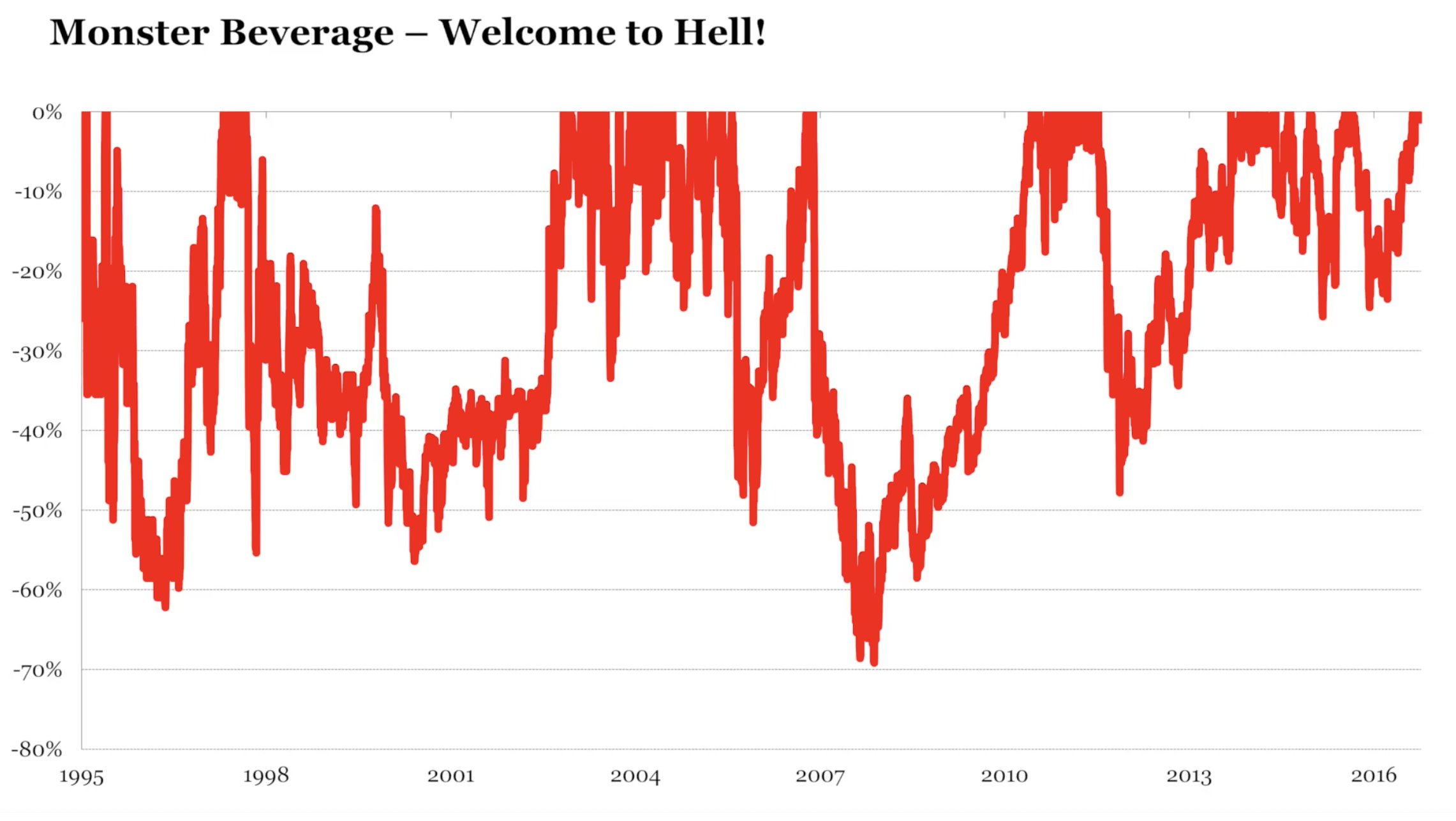
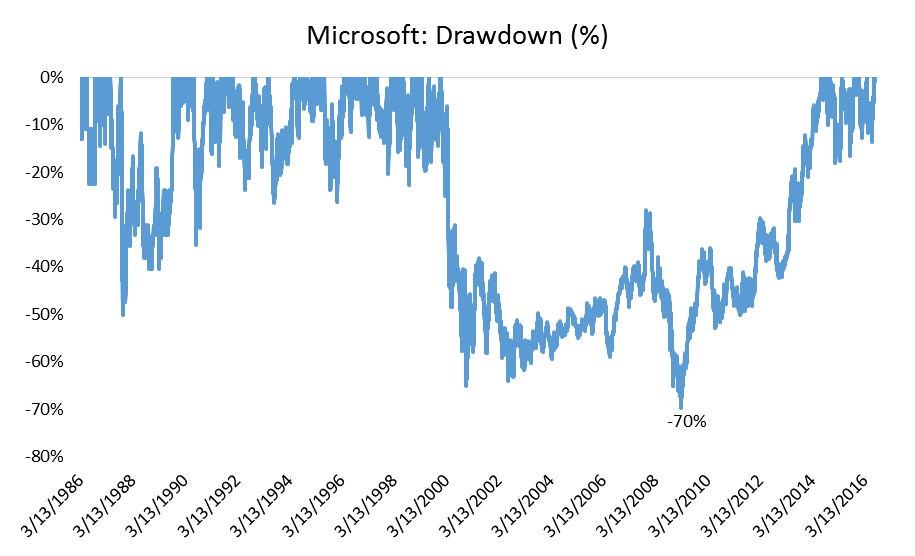
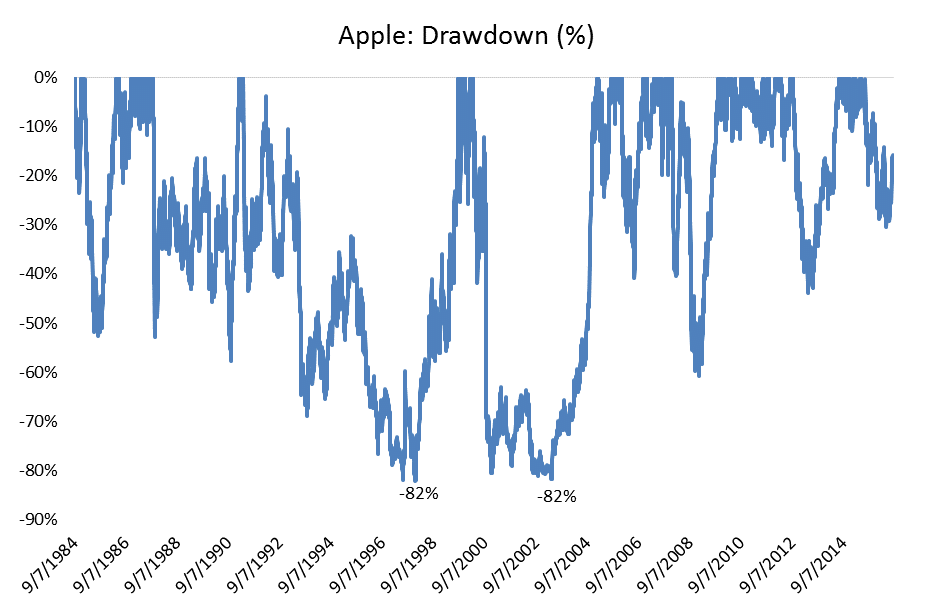
Who wouldn’t want to find the next NVIDIA or Microsoft in its early stages? The challenge is that the company should be relatively small (mcap at most $30 billion: if such a company 100-folds, it would be worth as much as today’s Microsoft). When trying to find a “long shot,” it’s easy to take on too much risk. Furthermore, staying on board with such super-winners is difficult. A super-winner of recent decades, the energy drink company Monster, has dropped by over 70% on a few occasions. For Tesla, corrections of over 50% downwards are commonplace.
Losing money is expensive, which is why risks must be moderate.
Along with inflation and general economic growth, the stock market has doubled on average every 7–10 years.
With a 10% annual return, the market 100-folds in about 49 years. That is why there is a provocatively short timeframe in the title, 10 years. Of course, in practice, it can stretch a bit longer than that.
Rules:
The business must be understandable and possess great growth potential either by disrupting an existing market or creating a new one. If the business is not understandable, it is difficult to assess its true potential and risks.
Company management must be honest and excellent at their jobs (actions match words, good capital allocation), and the principal owners should also be competent.
The company should be profitable or credibly becoming so soon.
The stock must be cheap: P/E (or cash flow multiples) 20x max, preferably closer to ten (see the 11-baggers study in Vartissa).
Continuing with the company examples from the beginning: Microsoft went public in 1986 at a price of $35.50 per share, and with the expanded share count, the fiscal year 1987 (ending in June) EPS was 1.30. Thus, the P/E was 27x.
At the time of opening this thread, NVIDIA, which has reached an eye-watering valuation (market cap $1.5 trillion, revenue $45 billion), could be bought in the early 2010s for under P/E 20x.
Indeed, multi-bagging usually requires buying cheap.
Of course, we are not slaves to the P/E multiple. For example, years ago, Amazon was a budding tech juggernaut generating good cash flow, while its accounting profit was what it was. And of course, we realize where multiples stem from: growth, its profitability (ROIC/RONIC), and the required rate of return (let’s sophisticatedly pull that one out of a hat).
Region: the whole world, but large markets like the United States, Europe (incl. Finland), and India are likely the most potential. I would avoid hard-to-reach or politically risky areas, such as China or many other emerging markets.
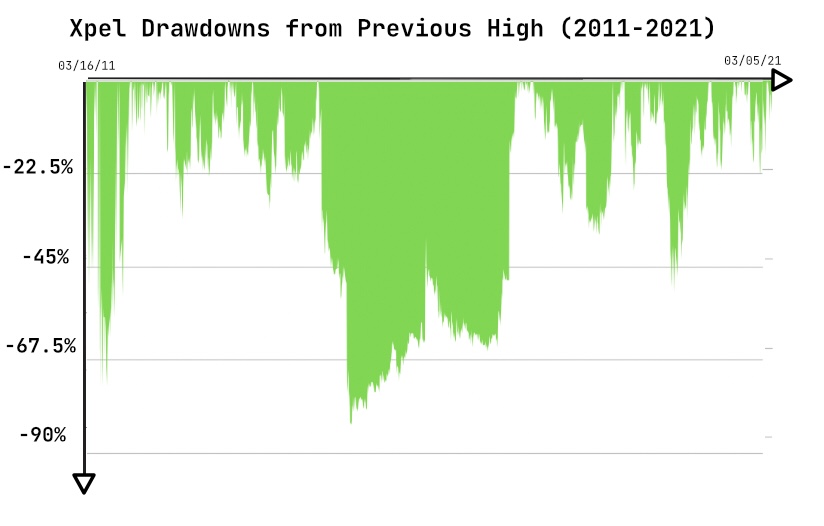
There are no industry restrictions. A 100-bagger I missed in the 2010s (which I managed to sell in a panic at a loss), XPEL, makes protective coatings for car paint. But generally speaking, such companies are preferably capital-light and somewhat scalable. Note, however, that for example Tesla is not a capital-light business, and it operates in an industry traditionally considered… challenging for shareholder value creation.
So, let’s keep an open mind!
Observations, ideas, original research, reflections, and counter-arguments can be posted in this thread. If and when companies are found and discussion about them is active, they can be spun off into their own company threads.
As the creator of the thread, I hope that every comment is analytical and deliberate. There has been a desire for more substantive content on the forum, and since I’m starting the thread myself, I dare to demand even more from the content.
The challenge has now been issued.
Happy hunting for 100-baggers, train your “sitting muscles,” and make good stock picks!

 ). This would admittedly be an opportunity for another chaotic monologue regarding buybacks and dividends, but now is not the time. If we want a 100x return in 10 years, it can be generalized that all possible capital must be funneled into earnings growth. Dividends naturally don’t fit into this equation, and buybacks are also a bit hit-or-miss. If the share count can be reduced, especially in the early stages of the ten-year period, it certainly lowers the bar for earnings growth, but it’s probably not very typical for a large portion of cash flows to be used for regular profit distribution in this profile. Therefore, let’s summarize this criterion as: no dilution should occur, and buybacks are a plus.






 , all possible disclaimers in effect, and here we go: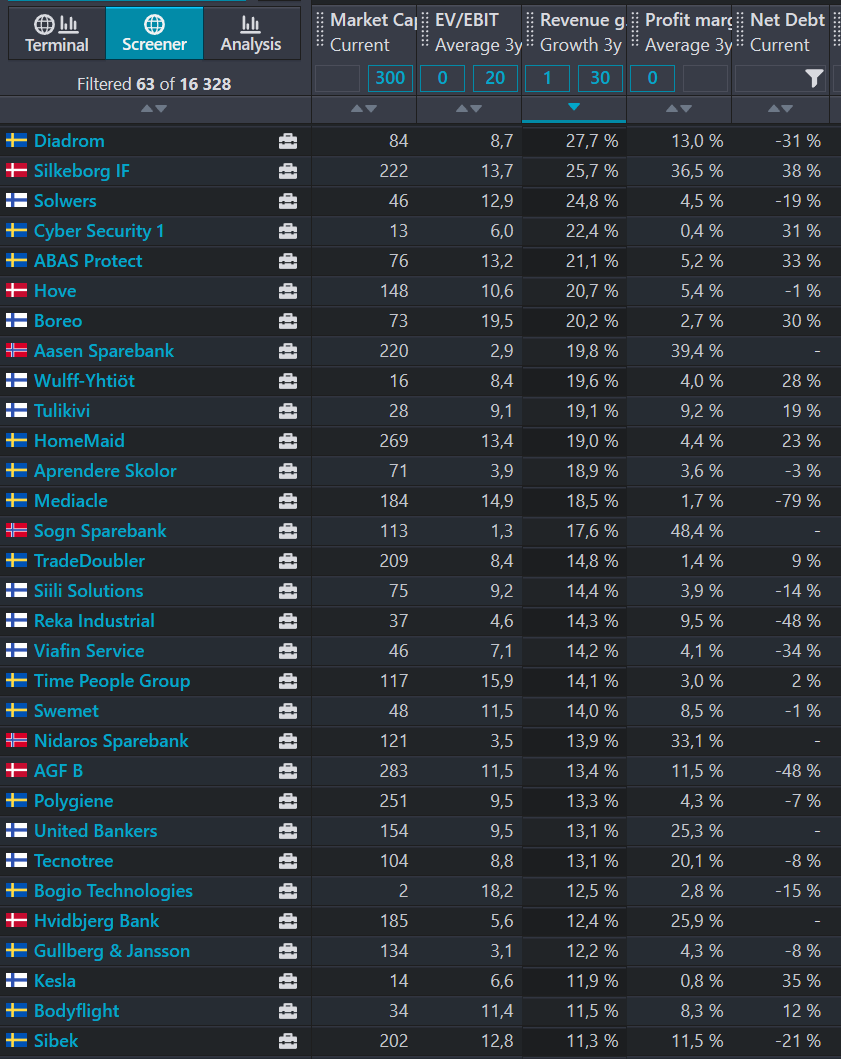

 dealers also possess the optionality to expand their business beyond just selling used cars in the future.