Side note: Now also available in English.
Side note: Now also available in English.
Lectra
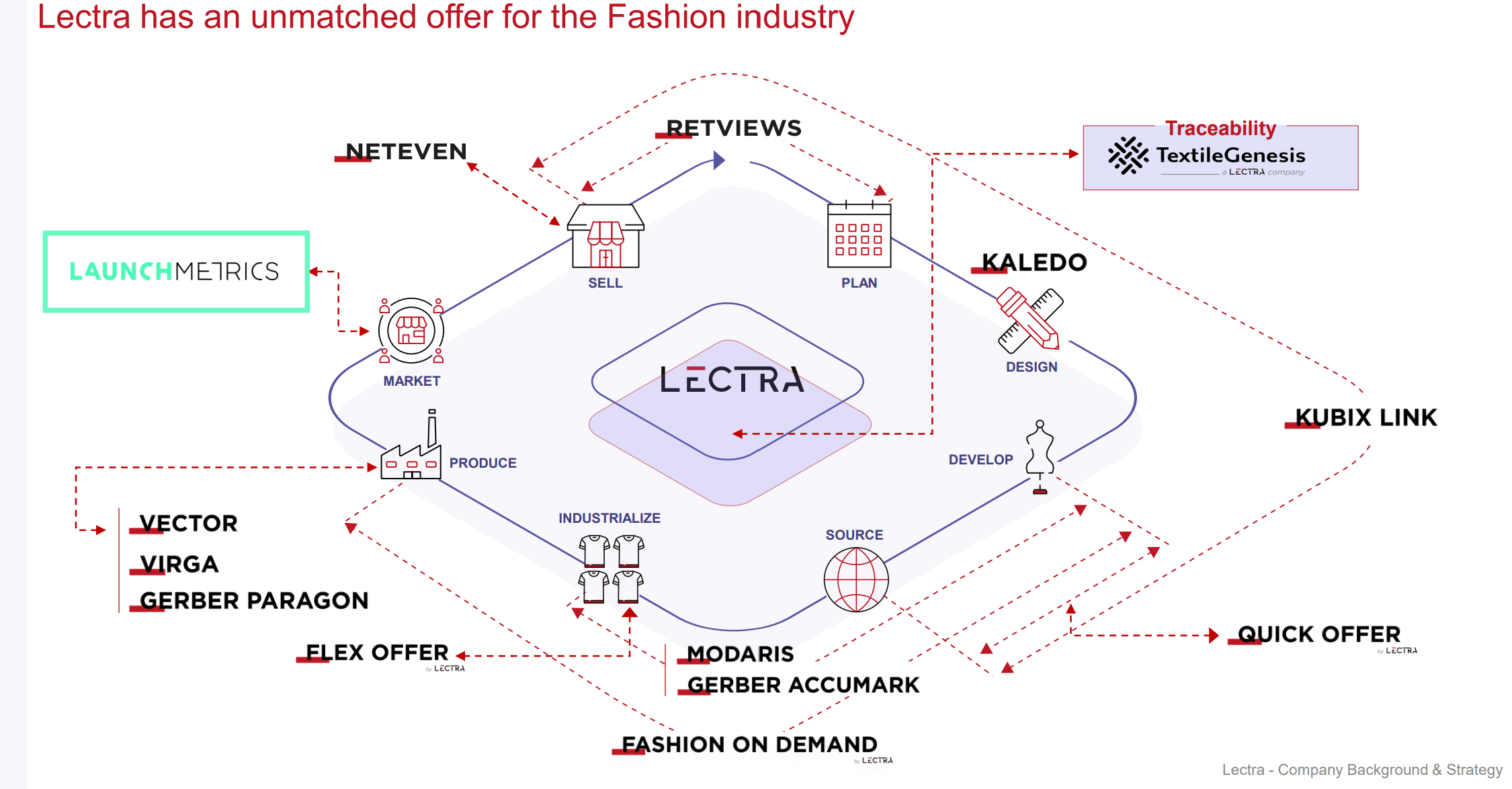
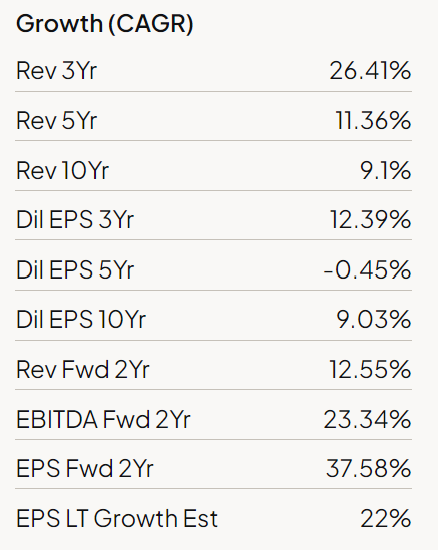
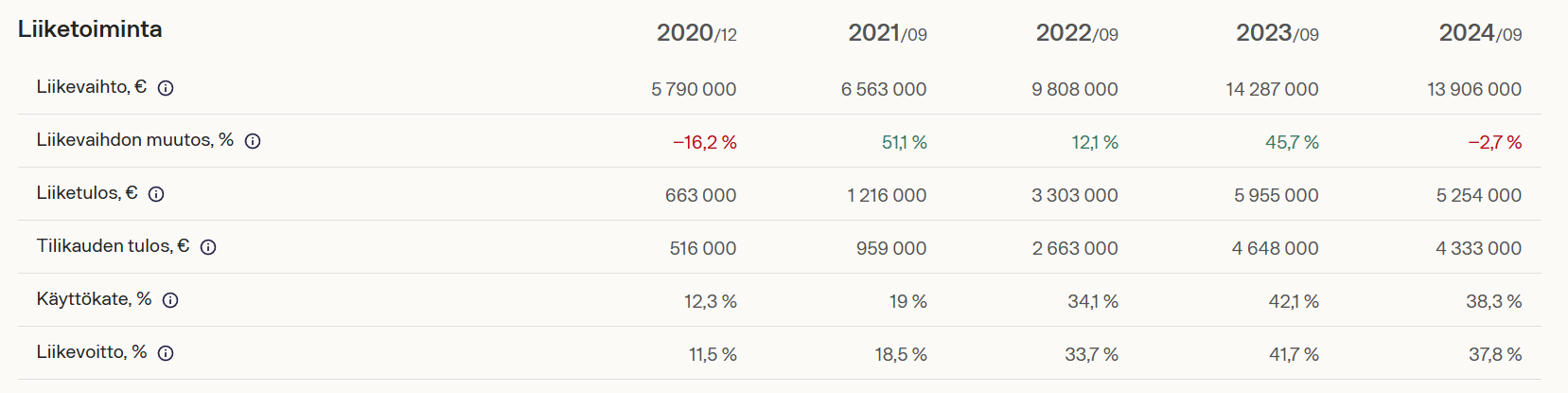
Lectra is a French company founded in 1973 that manufactures automated fabric cutters and related software, primarily for the fashion, automotive, and furniture industries. Lectra’s offering covers the entire pathway from textile design software to production optimization and post-launch product tracking. The industry is cyclical, as demonstrated by the 25% drop in revenue and up to 60% collapse in orders for new cutters during the financial crisis. Lectra has improved its market position and the quality of its revenue since the financial crisis, but it hasn’t completely escaped cyclicality, as shown by an 18% drop in revenue during the COVID-19 pandemic and the current moderate decline in revenue despite a few acquisitions.
So this time, the intention is to test the limits of the quality companies belonging to this thread a bit, with a slightly more cyclical, less known, and smaller company of lower quality compared to the Visa, West, and O’Reilly gang, for example.
Lectra’s story is largely that of current CEO and Chairman Daniel Harari. Harari and his brother became owners of Lectra through their VC vehicle in 1990 and have more or less steered the company ever since. Daniel has been Lectra’s CEO for 25 years after serving as a crisis CEO in the 90s and continuously since 2002. Daniel currently owns 13% of the company.
The biggest transformation in the company’s history occurred during the financial crisis when the company slipped into the red and changes had to be made to the strategy. The company decided to become a manufacturer of the highest-quality cutters in the industry and raised its prices to about 20% above competitors. The strategy worked, and the company doubled in size during the 2010s while printing ROICs between 15 and 25 percent. Since 2019, however, the company’s ROIC and margins have declined to more mundane levels. There are a few explanations for this:
-\tShifting software sales to a SaaS model, which lowers both revenue and profitability in the short term.
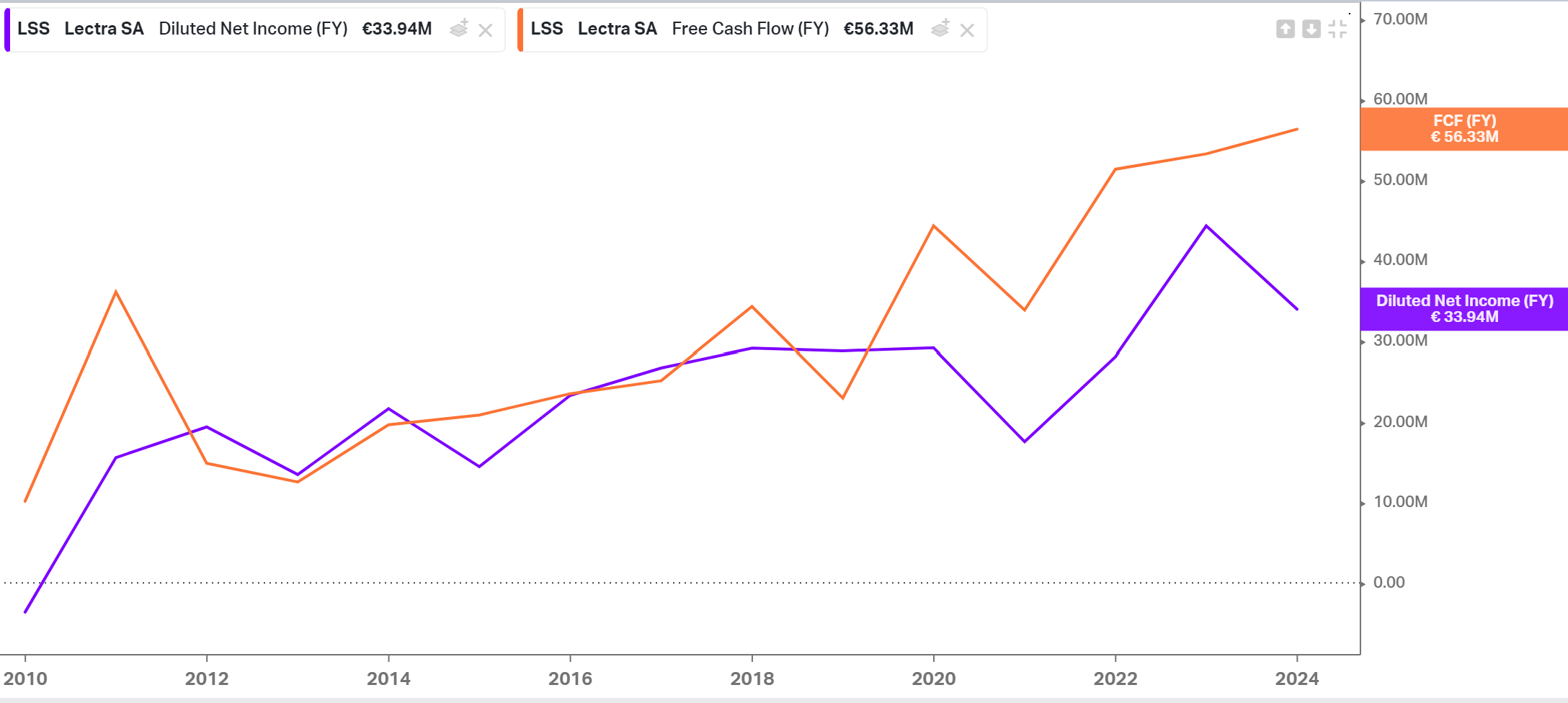
-\tThe transition to IFRS16 accounting in 2019 and depreciation resulting from acquisitions have decoupled the company’s net income from its free cash flow. The company’s normalized free cash flow / invested capital metric has hovered around better levels of about 12% in the post-COVID years, which is a very good level considering the integration costs of the large acquisition, the phase of the cycle, and the fact that all growth investments have been subtracted from the numerator (R&D expenses have been around 10% of revenue in recent years). The normalized free cash flow margin has hovered between 10 and 13 percent in recent years.
The company’s growth in recent years has been fueled by acquisitions. The largest of these was the acquisition of its main competitor, Gerber, in the middle of the COVID crisis, which raised the company’s market share to over 50%. Gerber was paid for with 60% cash and 40% stock. In the deal, Gerber was priced at 1.6x 2019 revenue and 2.7x 2019 gross margin, while Lectra’s share price in the transaction was 2.5x 2019 revenue and 3.6x 2019 gross margin. Even though Gerber’s business quality and growth prospects were slightly weaker than Lectra’s (60 vs. 70 percent gross margin and Gerber’s historical growth investments being lower), I think the former private equity guy Harari made a good deal with good timing. Future long-term growth will mainly consist of customer production volume growth (roughly Western GDP growth, weighed down by the automotive industry and accelerated by luxury fashion), price hikes exceeding inflation (practically a monopoly in higher-quality cutters and, e.g., switching costs in spare parts and software), and the growing adoption of automated cutters, especially in Asia (currently only 22% of revenue). Additional growth may also come from software brought in through acquisitions in recent years and the spread of higher-value-added Fashion On Demand (where the product is manufactured only after a purchase is made) solutions.
Perhaps the non-star-studded numbers side has been defended enough, and it’s time for qualitative analysis.
Lectra’s cutters are the best in the world. They cut faster, more accurately, and through more layers compared to competitors’ machines, which improves customer production efficiency. Management has even mentioned that the savings brought by Lectra’s cutters are so large that competitors could give their machines away for free, and Lectra’s machine would still be cheaper in the long run. The payback period for the cutters is usually less than a year. Lectra’s machines’ superior machine vision and nesting algorithms guarantee about a 3–5% saving in fabric consumption (for many customers, fabric accounts for over 60% of unit costs) and a higher-quality end result (the machine recognizes damaged parts of the fabric and leaves them outside the layout) compared to competing cutters. In addition, all machines are connected to the cloud, and the data they generate can be used by both customers and Lectra. As the cherry on top, Lectra manufactures its cutters 30% cheaper in France than Chinese competitors in China. All of this, combined with a larger share of software in revenue, enables Lectra’s gross margin to be around 70% (lower for cutters) while competitors’ corresponding margins are between 15–30%.
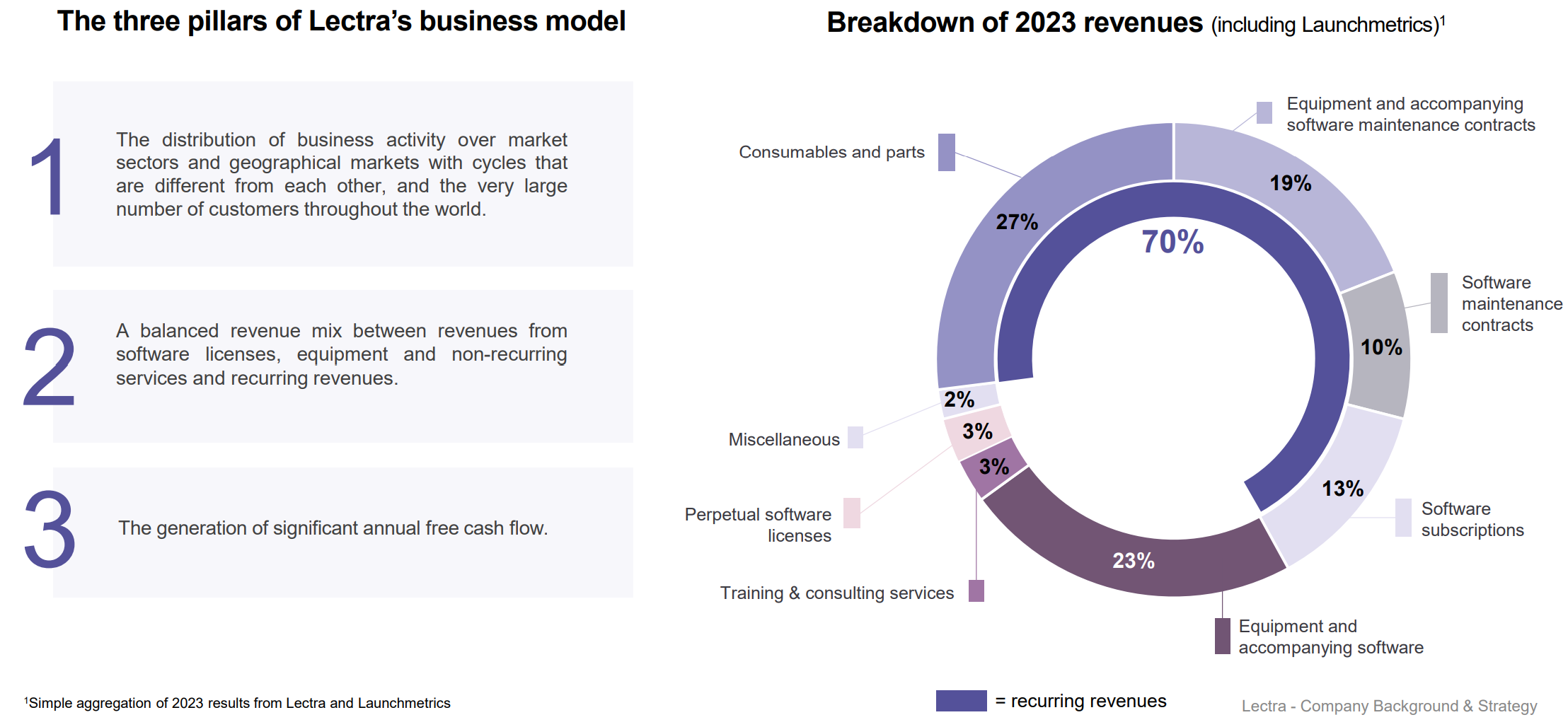
Around 90-100% of French and Italian fashion houses (incl. Hermès, Louis Vuitton, and Dior) use Lectra’s cutters and/or software, which speaks volumes about the quality of the company’s solutions. Customers are also loyal, as according to Harari, the largest voluntary (non-bankruptcy/acquisition) customer churn per year during his career has been 1%.About 70% of Lectra’s revenue is recurring or repeat revenue. The majority of this consists of consumables and spare parts. Anyone even slightly familiar with Finnish engineering shops knows that this is the business where profits are made. It’s already easy with locked-in customers, but in Lectra’s case, it’s even easier than usual because many parts do not have a so-called generic alternative. Software sales and lifecycle services make up the rest of the recurring revenue. The lifecycle services business is very profitable, as over 90% of lifecycle services for the newest cutters are delivered remotely, which is positive both for the customer (cutter back in use faster) and for Lectra (efficiency). The profitability of software sales is currently in a trough due to the SaaS transition.
Lectra’s management focuses on the right things, such as securing the future, customer satisfaction and experience, and cash flows. The company was debt-free throughout the 2010s until the Gerber acquisition changed the picture, but a return to debt-free status is on the target list. Management measures the company’s survival across cycles using the so-called security ratio, which refers to the ratio of the gross profit of recurring revenues to all fixed costs, including all R&D costs. The security ratio is currently 90% and the target is over 100%. Lectra tries to avoid selling its products through intermediaries to improve the customer experience (and margin). The company also develops many products together with customers. Management also gets extra points for Harari’s ownership in the company, conservative accounting practices (R&D is not capitalized on the balance sheet), and a long track record of growing shareholder value and successful strategic choices.
Main risks
Diworsification, i.e., diluting business quality by buying/creating new lower-quality businesses. Gerber is a lower-quality business than old Lectra (albeit the 2nd best in the industry), but on the other hand, the new Lectra now has no competition in high-end cutters and software, so I don’t see the Gerber acquisition weakening the quality of Lectra’s business overall. Integration risk must still be borne. The newest acquisition, Launchmetrics (a valuation of EUR 200-240 million, corresponding to 5-6x ARR), on the other hand, ventures outside Lectra’s traditional area of expertise (design and production), which increases its risk, no matter how much VC background it has and having been in the industry for 30 years. Marketing SaaS is also, as I understand it, a highly competitive field. In addition, introducing adj. EBITDA into metrics is distracting.
Naturally, there is technology risk in a technology company, although Lectra’s niche is not fast-developing buzzword technology (cutter generation 5-7 years).
The development of Chinese cutters and software and intensifying competition are also another natural risk. Visibility into these competitors is, for obvious reasons, extremely weak, so this probably has to be sensed from Lectra’s figures and comments. I would, however, be skeptical that Lectra’s current customers would want to switch Lectra’s software to a Chinese one purely for data security reasons. On the other hand, the improvement of the offering by the Chinese would make the conquest of Asia more difficult when modern textile cutting methods are eventually adopted there as well. It is hard to believe in the entry of new competitors without a massive technological change, as the industry’s technology and service level requirements are too high for smaller competitors and the market size is too small to attract large competitors.
Daniel Harari involves a major key person and cultural risk, because this gentleman has led the company for decades and, at least based on this excellent interview, even authoritatively at times. The company has a culture of open discussion, and Daniel conducts dozens of 1-on-1 discussions before major strategic decisions, but ultimately the decision-making power is his. In the ideal transition, Daniel would transition to Chairman of the Board only, and the successor would come from within the company. If the successor came from outside, it would be a huge red flag for me, at least.
EDIT: Finally, a study from 2008 on Indoor Group’s (now part of Helsinki-listed KH Group) acquisition of an automatic cutter. Old stuff, but a pretty good starting point for a beginner. As the most important takeaway: “In the beginning, it was also investigated whether there are other potential partner companies and brands [than Gerber and Lectra], but it quite quickly became apparent that suitable equipment cannot be found from others.”
Disc: do not own, apologies also for the occasionally popping text.
Finally, the ultimate litmus test!
This thread has been quite quiet lately, so I’m writing down some scattered thoughts about my latest acquisition, Tractor Supply. Also, despite his threats, the leading hydrogen investor @Verneri_Pulkkinen hasn’t managed to write in the thread yet. 
Tractor Supply was founded in 1938 and acts as “America’s Hankkija”, meaning it offers products for home decor, hobby farming, gardening, livestock, and pet care. Notably, the customers are not professional farmers, but specifically hobbyists.
Tractor Supply currently has 2,233 stores in 49 states. A few years ago, Tractor Supply acquired the Petsense chain, which currently has 202 stores in 23 states, bringing the total number of stores to just under 4,500. During this year, the plan is to open 80 new Tractor Supply stores and 10-15 new Petsense stores. In Q1, 17 new Tractor Supply stores were opened.
Another acquisition in Tractor Supply’s history was made a couple of years ago when Tractor Supply bought its competitor Orscheln Farm & Home, and Tractor Supply is now the market leader in its industry.
In Q1 2024, the company’s revenue grew by 2.9% and comparable sales grew by 1.1%. EPS grew by nearly 11% to $1.83. The CEO was in a very positive mood after Q1, as the company’s market share grew and the number of transactions also increased, though only marginally. The customer base is also on a healthy foundation, and customers keep returning to the stores.
Gross margin improved slightly from 35.5% to 36.0%.
The company returns capital to investors through a combination of dividends and share buybacks. The number of shares has decreased at an annual rate of a couple of percent in recent years.
Guidance for 2024:
After Q1 2024, revenue was 3.395 billion (3.299 billion in Q1 2023). The EBIT margin was 7.75%, and after interest expenses and taxes, the net margin was 5.84% (5.55%), which I think is a fairly good level for a retail company.
Growth investments were also recorded for Q1, which is why depreciation and amortization were higher than last year.
The balance sheet seems quite strong; net debt / EBITDA is at a level of approx. 0.8.
The company has also generated a good return on capital. ROA has been 12-13% in recent years, ROE approximately 35-50%, and ROIC over 16% every year for the last ten years, which also meets the criterion in the opening post.
If the company’s figures are compared to the criteria in the opening post, the situation looks like this:
Part of the growth in the ten-year figures is due to COVID-19, but before that, revenue grew by approx. 7% per year, so growth faster than inflation doesn’t seem exceptional in itself.
Growth prospects are reasonable for the coming years. The company clearly benefited from COVID-19, which led to strong revenue growth. I believe the impact of the COVID boost has already faded. The threat from Amazon and other primarily online stores is limited, as Tractor Supply operates mainly in rural centers and sparsely populated areas where online stores find it difficult to compete in efficiency. Of course, part of the sales happens online, but more in a way that the customer pre-orders the items and then picks them up from the store.
Approx. 30% of revenue comes from private labels.
Unfortunately, the company’s quality is also reflected in the valuation. The P/E is over 25 based on this year’s earnings forecast, which implies strong growth expectations for the company to be a good long-term investment at this price. However, I bought a tracking position and intend to add if the valuation becomes more reasonable.
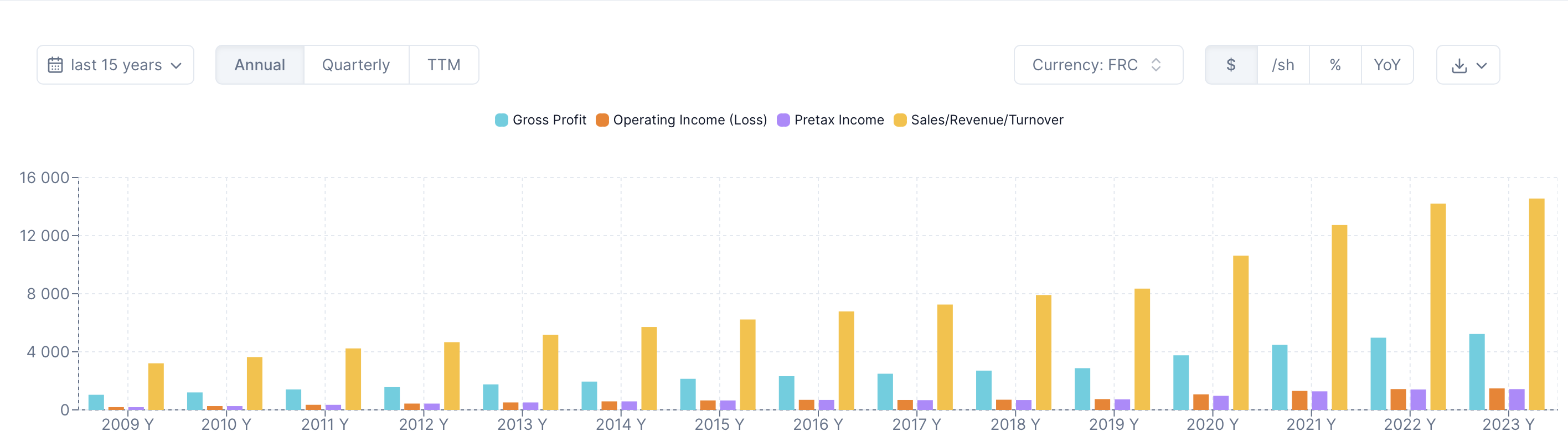
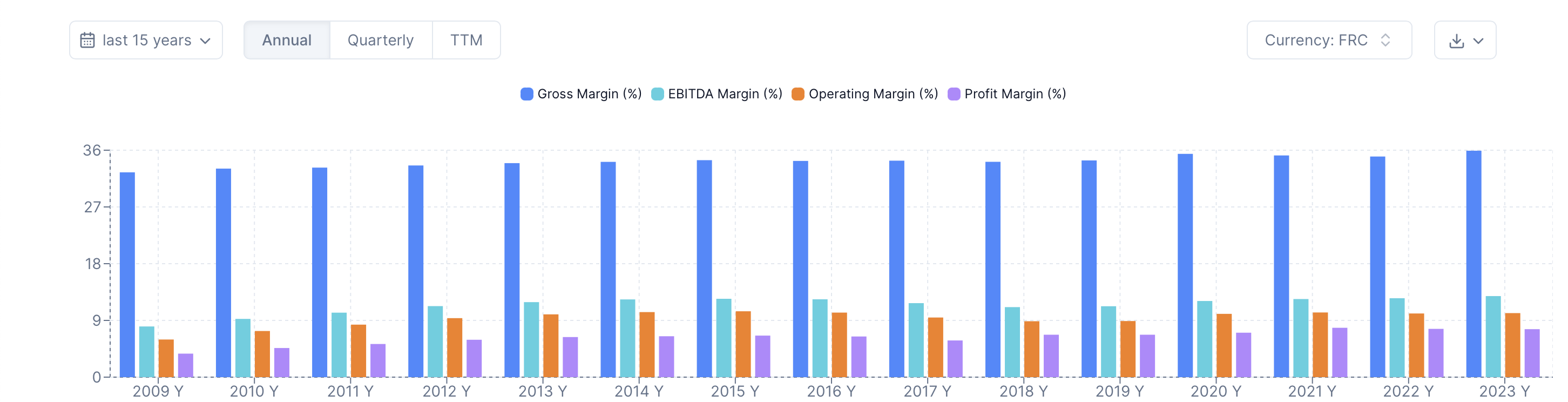
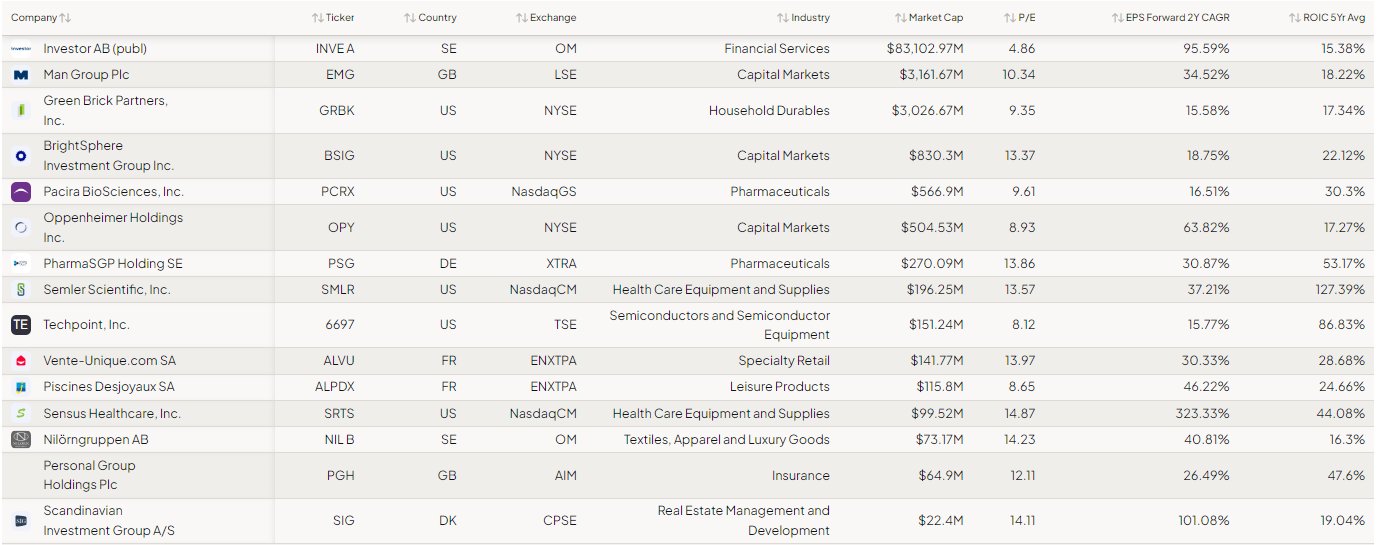
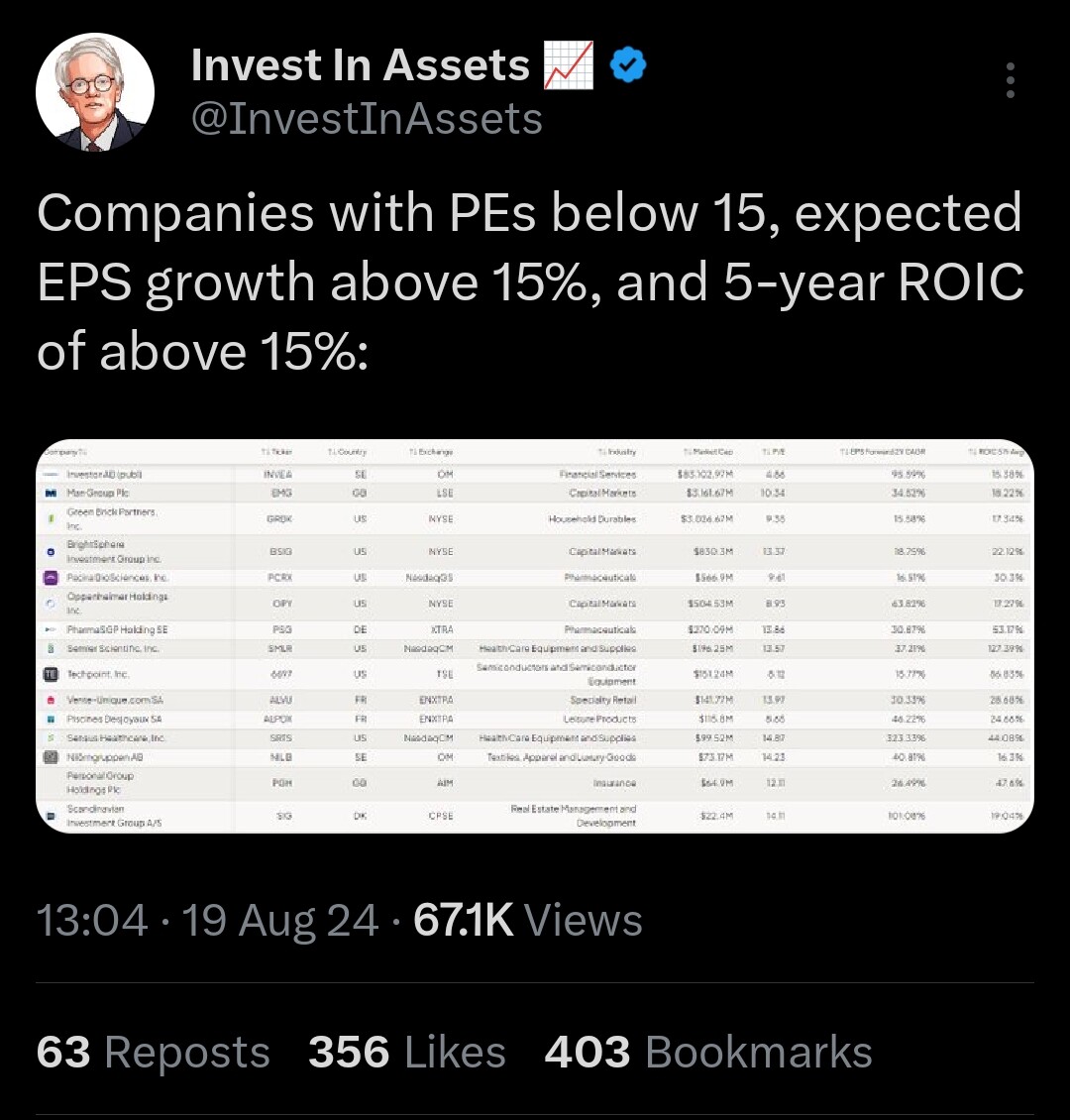
I came across this on X. I thought it might be of interest to the followers of this thread.
Feel free to share if any of them interest you. I’m currently researching Sensus Healthcare.
This thread has been as quiet as a mouse lately.
Among the sources I follow regularly, Synopsys—which was also mentioned in passing in this thread—caught my eye in the form of a company presentation. A blog post about the company by HCP Focus junior analyst Teemu Pakarinen:
Has anyone looked into Copart (CPRT), a “funeral contractor” across the pond, in more detail?

Business in a nutshell: Copart is a multinational company that provides online auction services for damaged or used vehicles. Especially totaled vehicles fit for dismantling are their specialty. Their customers include insurance companies, repair shops, dealerships, and private individuals.
Copart makes money by listing car wrecks on its proprietary platform, where practically anyone can bid on them. Copart gets its fingers into the cash flow at every turn, taking a commission from sales, purchases, storage, and transfer, as well as from additional services (documents, registration, etc.) and information services (data). Vehicles are stored in the company’s own storage yards (over 200 worldwide). These “graveyards” are quite valuable plots of land. Market areas include the USA, Canada, Europe (e.g., UK, Germany), Brazil, the Middle East, and Asia.
The company’s competitive advantages include the aforementioned vehicle storage yards. If I recall correctly, Copart shares the market in the US with another major player, and it’s difficult for new entrants to emerge because permits for these “monstrosities” (storage yards) are not readily granted. NIMBY (Not In My Backyard) thinking is strong, and it’s difficult to acquire new storage yards anymore.
I’m not pitching it further here, but I’ve been following the company for a few months now. The only problem with this ‘rascal’ seems to be that it’s chronically damn expensive. The company grows by about 10% annually, its EBIT margin hovers between 31-35%, and it generates strong cash flow. The company is practically debt-free.
How much should one pay for this ‘beast’? Based on current year forecasts: P/E 33x, EV/EBIT 27x, EV/GP 21.6x. Without the valuation challenges, this would be exactly the kind of case @Verneri_Pulkkinen would like. Too bad he still seems to glance at valuations sometimes… 

E. As an addition, there have been scattered mentions of the company in some threads. Apparently, no broader discussion. Do you still own it, @Perttu_Hamalainen?
That other one is IAA (Insurance Auto Auctions), whose parent company RB Global / Ritchie Bros. Auctioneers is listed on the Toronto and New York stock exchanges. RB bought IAA in 2023.
For those interested in Copart, I can recommend this podcast 
The company is not cheap, but considering its competitive advantages, it is very exceptional. Unfortunately, one often has to pay a higher price for these. Copart is also an interesting company because it is prepared for truly major catastrophes. When hurricanes and other natural phenomena strike, Copart has a strong ability to serve insurance companies and quickly process damaged cars. The current idle use of land areas is the company’s way of preparing. The company also has a significant amount of cash waiting for more land to come up for sale, M&A opportunities, or the ability to survive difficult economic times / increased costs due to natural disasters. In my eyes, this is long-term thinking, even though many would point out that capital should be allocated efficiently and cash should not be idle. The company has not paid dividends for a long time. Another significant competitive advantage from which the company benefits is network effects. Since the company connects car sellers and buyers, both want the largest and best offering. Because of this, it is difficult for new players to enter the market. In addition, competitors find it difficult to match the same capacity offering that Copart can provide in terms of speed and volume. Copart also offers insurance companies tools to help them decide what to do with cars.
Many interesting nuances in a very unsexy industry😅
Unfortunately, I don’t own it anymore🫣 I did make a nice profit, but this should have been a ‘buy and forget’ type of thing. My purchases were probably around 120 dollars before the split.
A slightly larger corporate arrangement, as railway companies Union Pacific and Norfolk Southern are planning a merger. The combined market value of the companies is approximately $196 billion at current exchange rates.
https://edition.cnn.com/2025/07/29/business/union-pacific-norfolk-southern-deal
North American freight railways are currently dominated by six companies: Union Pacific and BNSF, which compete in the western half of the United States; CSX and Norfolk Southern, which compete in the eastern half of the United States; and Canadian National Railway and Canadian Pacific Kansas City, which compete in Canada and on north-south routes in the United States.
Here are maps of the rail networks of all six companies to give an idea of the situation:
Union Pacific (the larger party in the merger news):

Norfolk Southern (the smaller party in the merger news):

BNSF (owned by Berkshire Hathaway and a competitor of Union Pacific):

CSX (a competitor of Norfolk Southern):

Canadian National:

Canadian Pacific Kansas City:

I was wondering, since the Dollar is “cheap,” wouldn’t it be cheaper/more reasonable to buy quality companies from the United States now? If one thinks of Coca-Cola, which is now around 65%, wouldn’t it be affordable due to the cheap dollar?
Are there any writers on the forum who are familiar with Transdigm Group (TDG)? I came across this about six months ago while looking for quality companies, but at the time, my research enthusiasm quickly waned when I saw how much debt the company had. Well, last week, for some reason, it popped up on my radar again, so let me write down some thoughts.
Transdigm designs, manufactures, and sells components and systems for aviation and the defense industry. For example, when Boeing and Airbus design a new aircraft type, certain components from a specific manufacturer are approved for them. For many parts, only one option is approvable due due to the time and costs involved in the approval process. Examples of Transdigm’s products include various sensors, pumps, valves, radio systems, and safety-related products. The average unit price is less than $10k, so in the scale of an airplane, these parts are not among the most significant. Transdigm sells its products to OEMs, who have often approved only one supplier, and about 90% of revenue comes from products for which the company holds a patent or otherwise protected position. When selling to OEMs, margins are low, but once the aircraft ends up with an airline, regular maintenance and spare parts replacement begin, and at this stage, Transdigm can charge practically whatever it wants because maintenance is highly regulated, and the airline is practically forced to buy parts from Transdigm due to a lack of alternatives. Thus, aftermarket margins are many times higher compared to OEM sales. Aftermarket business accounts for over 75% of the company’s operating profit, meaning it is very dominant and largely the company’s true “gold mine.”
Some competition arises from parts manufactured by third parties, for which competitors can, under certain circumstances, seek regulatory approvals. These parts must meet the same safety and compatibility requirements as the original parts. Transdigm mentions this so-called “3rd party PMA” competition as one risk, but so far, its impact has been minor: at the 2024 investor day, the company estimated that PMA parts accounted for less than 2% of the company’s own aftermarket business and about 1.5–2.5% of the entire industry’s aftermarket. So, this is not a significant threat yet, but developments are being closely monitored. One of the largest PMA players is Heico, which itself could also be a worthwhile investment to explore.
With its free cash flow, Transdigm aims to acquire new companies operating in the same field that manufacture patented products for aviation and/or the defense industry and have significant aftermarket business. This acquisition model has long been the engine of the company’s growth. In 2024, Transdigm spent over two billion dollars on acquisitions, and the company’s strategy is specifically to acquire small, highly profitable companies whose products are critical but receive little attention.
The long-term growth prospects for air travel remain positive. International air travel is expected to grow by 4–5% annually, and demand in the defense sector has also grown significantly, although this is likely a more uncertain segment in terms of long-term demand. Transdigm benefits from both trends: components installed in new aircraft bring continuous OEM sales, and an aging fleet increases aftermarket revenue. This year (with only one quarter left to report), the company guides for approximately 11% revenue growth and approximately 13% EBITDA growth, with margins remaining above 50%. This speaks volumes about the company’s strong pricing power and product portfolio, even though the OEM side is still recovering slowly.
As I mentioned at the beginning, my initial interest in the company stalled due to debt. And indeed, the debt load is still considerable. Net debt is over five times operating profit and 13 times free cash flow. Interest expenses on debt consume about 40% of operating profit, but on the other hand, most of the debt is fixed-rate or hedged until the end of 2027, so short-term interest rate risks are not dramatic. Perhaps returning to this investment case says more about how my own criteria flex when a sufficiently interesting investment case comes along 
In addition to debt, two other obvious risks are regulation and valuation. Transdigm has repeatedly had to explain its high margins and price increases to authorities, and especially in the defense sector, pricing transparency has raised questions. Valuation is naturally high for a company with a long-term track record of value creation, a near-monopolistic position in many cases, and a presumably growing market. P/FCF is currently around 38 and EV/FCF around 50.
What fascinates me about this company is its goal of aggressive value creation in all its dullness: leverage is taken generously, and prices are raised quite brazenly because the company’s position allows it. The company’s motto, “Private equity-like returns with the liquidity of public markets,” in my opinion, well describes its philosophy. This is not a “pleasant” company, but rather a cold and efficient machine for generating shareholder value. The long-term incentives for management are, in my opinion, quite well aligned with the interests of shareholders. Management is required to grow EBITDA, and net debt is considered in compensation, so the return on capital from acquisitions is an important factor. In addition, dilution of share capital is penalized, which curbs unnecessary use of options. A minimum bonus requires approximately 10% annual EBITDA growth (with other components remaining constant), and maximum rewards are earned with 17.5% growth.
All in all, Transdigm evokes conflicting but interesting thoughts. On the one hand, it is an excellent quality company with a nearly unique competitive position and a strong culture of value creation. On the other hand, leverage is high, and valuation is stretched. Perhaps the question is how long a “private equity-like” approach can work in a public company without the market starting to doubt its sustainability. So far, the model has worked excellently. What thoughts does the company evoke in others? Do you see more opportunities or risks at current prices?
Good opening on Transdigm! Aerospace & Defence is an industry that all quality investors should dig into. Heico and Transdigm are definitely already material for this thread, and perhaps Loar and Standard Aero in the future once they gain a public track record. I’m always a bit skeptical of these newcomers, as PE has had so many A&D sector schemes, from which all (?) skilled operators (primarily Heico and Transdigm) have wiped the floor. I wouldn’t be too concerned about Transdigm’s debt burden, as the company’s track record from the COVID era is very convincing, and management has demonstrated the ability to make difficult decisions quickly. However, it is an industry with relatively stable demand, as long as another pandemic doesn’t occur.
The growth of 3rd party PMAs, on the other hand, would certainly be bad for Transdigm, but perspective is provided by the fact that Transdigm itself creates or acquires approximately 20,000 PMAs annually through acquisitions, on top of the existing approximately 300,000 active PMAs. In recent years, about 130 PMAs replacing Transdigm parts have been granted annually. Additionally, protection comes from Transdigm’s focus on smaller products, whose profit pools are so small that it makes no sense to even start a multi-year PMA project.
Nor do I see Transdigm’s pricing as a greater risk than before. After an acquisition, Transdigm renegotiates bad contracts, and this is where the big price jump, if any, occurs. After that, Transdigm raises prices by 2% more than inflation, just like credit rating agencies. Transdigm does not make the same mistakes as, for example, FICO, which raised prices by tens of percent for many years in a row and has now become a bigger target of scrutiny than Transdigm ever has. Indeed, the prices of seemingly simple products are an easy target for populist politicians when ordinary people don’t understand why things are this way. This excellent tweet and Red Bull’s video illustrate those processes well. Even in the Red Bull example, it’s about a simple bolt whose purpose is to keep one guy’s car on the road. I can only imagine what the processes are like when trying to fly a hundreds-of-ton metal tube with tens or hundreds of people inside, while regulators are rightfully breathing down your neck constantly. However, if there were significant cuts in the US, Transdigm would be well below the threshold and thus likely wouldn’t become a target of scrutiny. It’s also worth noting that Transdigm’s pricing has been reviewed periodically since the turn of the millennium by order of some decision-maker, and no significant deviations from industry norms have ever been found, even though Transdigm has had to pay small “voluntary” fees to keep the business going.
What would concern me more (at least at these multiples) is the state of the M&A pipeline. Transdigm has already grown quite large, and the gold rush in the industry means that sufficiently large acquisition targets are becoming fewer and fewer. Management has indeed talked about expanding the scope, for example, into medical, and some might call an acquisition focused on services like Calspan’s an expansion of scope. Transdigm also shouldn’t start supplying larger systems, because their pricing receives more attention and the PMA risk is higher. Of course, some of these larger systems are already in the portfolio due to acquisitions, but in my understanding, they came somewhat as a necessary evil along with other good product lines. On the other hand, Transdigm also has a track record of their operating model working in other sectors. For example, the Finnish company Mastsystem, which came as part of the Cobham acquisition. If Mastsystem is valued at the same revenue multiple as the entire Cobham (in my opinion, a conservative estimate, as it was not particularly profitable or part of the core that TDG wanted), then Transdigm achieved an annual return of 14% on the investment over a little more than four years (end of 2020 - end of 2024). And even if someone were to say that European defense sector companies heated up during that period, the EV/EBITA multiple of 7x for the exit to Lagercrantz doesn’t sound like a bubble price. At the same time, operations proceeded “just fine,” and a company like Lagercrantz wouldn’t have bought it if Mastsystem had been put into a PE-style milking mode.
Furthermore, confidence in success in other sectors is built by the experiments of long-time CEO and current Chairman Nick Howley with the new company Perimeter Solutions, which operates with Transdigm’s playbook but without industry limitations (also an interesting one to research).
Airbus’s and especially Boeing’s production challenges also concern me. Many welders, among others, retired and left the industry during COVID, and the already fragile training pipeline (young people don’t want to weld) experienced a sudden collapse when training lines were closed. Welding aircraft parts cannot simply be taught, even if there were enough trainees, because in addition to certifications, the work naturally requires extreme precision, even if the welding spot is around a corner and visibility to the target is through a mirror. Additionally, one would have to work with various gases to keep the process stable and prevent micro-fractures. Quality standards are typically strict for the industry. Production challenges are probably initially positive for Transdigm, as the aviation industry puts even the most worn-out parts into use, but what happens to volumes when planes have to be retired and new ones are not available? The silver lining here, however, is that when an OEM’s own operations are in trouble, they have no desire to influence aftermarket pricing or increase PMA projects that could cause supply chain challenges.
A brief word on valuation, although it doesn’t strictly belong in this thread. Transdigm recently bought back a small amount of its own shares, which is rare for the company. Previous buybacks have been excellently timed, and the same 20% target has been set for them as for acquisitions. So either the management team, which has proven to be skilled capital allocators, sees something the market doesn’t (otherwise they would distribute it as dividends, as usual), or 50x FCF is 50x FCF, and the party has arrived in Cleveland too.
Transdigm is one of the world’s most well-known quality companies, and a lot of information about it is available online. However, in addition to the company’s own materials, I can recommend 50X podcasts, which delve into Transdigm’s unique corporate culture, as well as InPractise podcasts and tweets. It would be nice to activate the thread and hear especially about Zoetis from @JNivala or others who know the company better. Multiples are at historically low levels while the rest of the market is rallying. However, markets are reasonably efficient for companies the size of Zoetis, so reasons for the decline can probably be found. Something internal to the company or external (e.g., the pet trend slowing down or US government matters)? Are the challenges more temporary, or has the company’s star finally faded from the firmament of global quality companies?
That was an excellent post from you, you clearly know the company and the market well. It’s precisely messages like these that are the best content on the forum, as one learns a lot of new things about an interesting topic 
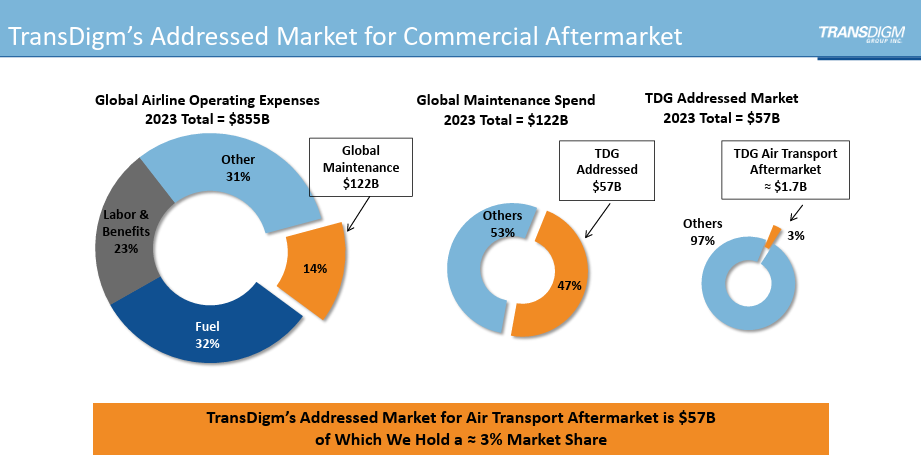
One new thing for me, among others, was that Transdigm has talked about expanding its scope beyond aviation and defense. The same strategy can certainly work in other industries, but risks probably inevitably increase when moving outside the core area of expertise. Regarding that MA pool, the slide from last year’s investor day below came to mind, where the company states it controls 3% of the aviation aftermarket. As you mentioned, it might not be worth pursuing larger and more expensive systems due to a weaker competitive position and higher regulatory risk, so the attractive market is likely clearly smaller than the entire market.
I’ll have to add those podcasts you mentioned to my playlist alongside the earnings calls from recent quarters.
Personally, I wouldn’t see the case as attractive anymore if such an expansion were to be made. What interests me about Transdigm is precisely that it is a serial acquirer that acquires businesses with a strong competitive advantage (regulation + small share of the total cost of the final product) and an attractive business model, and further improves them. This is in contrast to, for example, consolidators of distributors or service companies, whose competitive advantage is not as clear to me. I’ve been following Howley’s new project, Perimeter Solutions, to some extent, and regarding it, I’m not as convinced about the competitive advantages of all its operations. Of course, I have to admit that in that company, I’m also bothered by the radically different rewarding of the actors behind the SPAC acquisition, which deviates from Transdigm’s extreme investor-friendliness 
I also generally avoid very indebted companies, but in Transdigm’s case, I actually see it as a positive thing. The company has a clear playbook for its capital structure, which it faithfully follows with concrete actions (very rare nowadays). This is reflected in opportunistic share buybacks (though quite rarely done in recent years) and special dividends (more common, most recently paid $90 per share in September, or about 6.5% of the market value at the time). New debt was specifically taken for that September dividend.
Regarding valuation, as a clarification, it is customary to use unlevered free cash flow or free cash flow to firm value with EV-based figures, i.e., free cash flow from which interest expenses have not been deducted. Calculated this way, EV/FCF with next year’s forecasts would be 26x (FCF calculated here as EBIT * (1-0.21) + D&A - CapEx - net working capital growth). Instead of the US corporate tax of 21%, Transdigm has generally paid about 14% tax due to interest expenses. The 2026 EBIT here is according to consensus, with an expected 13% growth.
P/FCF is indeed roughly 37x even with next year’s earnings. Of course, if one uses the lower tax rate mentioned above when calculating this, which can be considered fair since interest expenses are also deducted, the result is a multiple of 33.5x. Such companies, where a significant portion of the cash flow belongs to others than us shareholders, at least requires some getting used to for me. The company itself guides EBITDA, and most analysts/investors seem to look at EV/EBITDA multiples.
The company’s next results are on November 6th. After the previous quarter, guidance was lowered for revenue but raised for operating profit. The decrease in revenue was due to lower OEM sales, which is a less profitable segment.
In summary, I like Transdigm for its management, capital allocation, and competitive advantages, as well as its clear growth path. Air travel grows faster than GDP, and spare parts are the most attractive sub-segment here, let’s say 4% earnings growth from this. From pricing, one can confidently calculate an additional 2-3% growth, and from margins at least 1%. The result is 7-8% long-term earnings growth conservatively estimated before acquisitions and with minimal disruption risk. On top of that, capital returns to shareholders.
I thought I’d introduce a couple of new companies and, at the same time, an entire industry in this thread. We’re talking about insurance brokers, specifically those operating in the B2B market.
What makes the industry attractive?
An intermediary in insurance sales doesn’t sound particularly appealing at first glance, as many will surely think of personal insurance and their own purchasing behavior in that regard. However, the situation is completely different on the corporate side: terms are not standardized, and finding insurance suitable for a company’s needs is laborious. For example, in the US, various liability insurances must also be perfectly in order for companies. It would also be challenging for small and medium-sized companies to get service directly from large insurance giants. Towards insurance companies, brokers, in turn, offer a convenient channel for customer acquisition, as they don’t have to meet and serve these millions of small businesses. Gallagher and Brown & Brown have existed for over 100 years and have still not been replaced by insurance companies’ own direct sales channels, even though this has often been speculated.
Financial Profile
Brown & Brown and Arthur J. Gallagher are well-known companies in the industry that specifically serve so-called “mid-market” sized clients (1,000 employees or fewer). For example, Brown’s enterprise value is approximately 30 billion and revenue is 5 billion. Over the last 10 years, revenue has grown by 11% per year and net income by 17%. The strategy of both companies includes acquiring numerous small brokerage firms (dozens per year), which, together with occasional larger deals, brings a lot of goodwill to the balance sheet. Therefore, considering this, Brown’s ROIC is only 10%, but significantly better without goodwill. Gallagher’s revenue has grown by approximately 10% and profit by 12% over the last 10 years. However, the best metric for tracking the earnings growth of these companies is EBITDAC, which is operating profit, to which changes in estimated additional purchase prices, which fluctuate annually and are not cash flow-affecting, have also been added back. For good brokers, this operating profit margin is between 30-35%, meaning they are very profitable companies.
A brief look at the large corporate side. Here, the market is dominated by 3 large companies: Marsh, AON, and Willis Towers Watson (WTW). WTW has performed significantly weaker than the other two in recent years. AON attempted to acquire WTW in '21, but competition authorities prohibited the deal. The report related to that prohibition is a very interesting document, and it well describes the competitive advantages and necessity of insurance brokers in general. In any case, the market in the large corporate sector is highly oligopolistic. Here, companies make fewer acquisitions, although, for example, AON has just begun expanding into the mid-market segment by acquiring NFP, which operated in the sector, for a 13 billion deal. For example, Marsh’s revenue has grown by just under 7% and profit by 12% over the last 10 years.
Growth Drivers
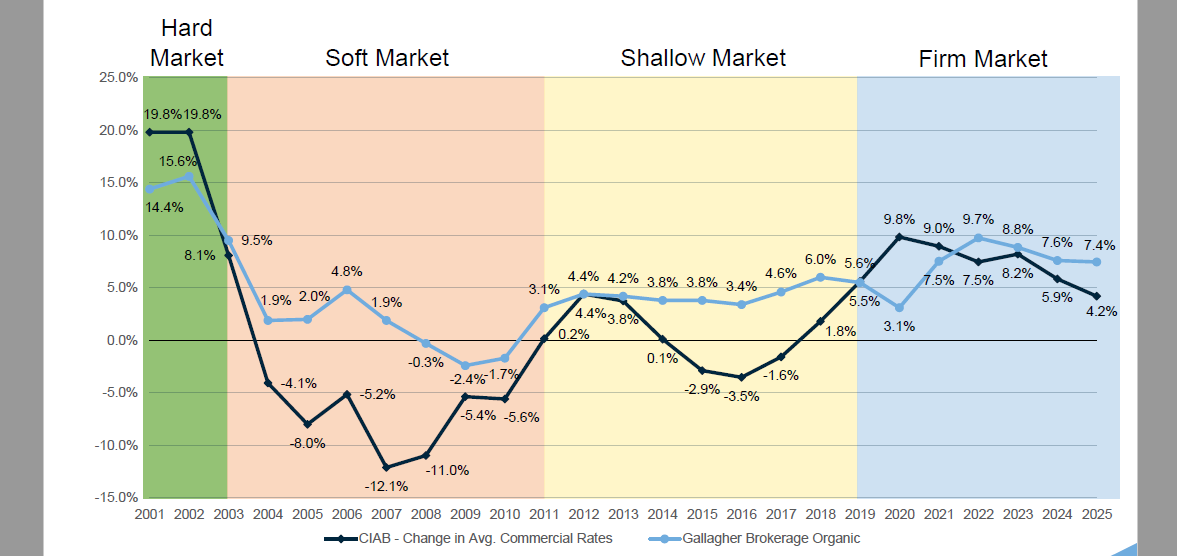
Organic growth is determined by changes in insurance prices and the value of insured assets. Thus, brokers are cyclical to some extent, but insurance prices, based on supply and demand, follow their own cycle rather than general economic cycles. In mid-market client relationships, brokers receive a commission of 10-15% of the insurance premium value. In other words, the more expensive the insurance, the larger the commission. This also provides the business with inherent inflation protection. In the large corporate sector, however, the fee is not tied to the amount of the insurance premium. The good chart below from Gallagher’s investor presentation illustrates its organic growth in relation to changes in commercial insurance prices.
The chart also shows how much prices in the industry can rise at their best in so-called “hard” markets and, conversely, fall in soft markets. The big question for the coming years is the direction of the pricing cycle, with signs already pointing downwards. Over the last approximately 10 years, for example, Brown and Gallagher have performed excellently as stocks, but during a softer market, roughly between 2006-13, Brown’s stock practically stagnated. In addition, over the last approximately 2 years, larger deals have also been made, with Gallagher acquiring Assured Partners for 13 billion this year, in addition to AON, and Brown acquiring Accession Risk Management Group for 10 billion.
When acquiring smaller brokers, Brown and Gallagher have typically paid single-digit EBITDAC multiples, which have, however, risen closer to ten over the years, depending on the deal size. The aforementioned large deals have all been executed at approximately 13x EV/EBITDAC multiples, considering synergies. Furthermore, there are numerous active private equity investors in the industry, which is likely to push multiples higher.
I plan to write more deeply about one of the companies in the industry in the future. Let this be a more general introduction to the sector. In summary, insurance brokers (especially those operating in the mid-market) are a kind of “toll collector,” taking a commission from the insurance premium amount, thereby offering investors built-in inflation protection. The position of brokers, both towards end-customers and insurance companies, has so far been indispensable, and growth in scale offers economies of scale and thus an advantage against smaller competitors. Brokers largely follow their own cycle, which may now be turning for the worse. In the long term, however, these companies offer steady organic growth of a few percent with high margins and good cash flow conversion.
Here are some sources for those interested in learning more about the industry
The mentioned U.S. Department of Justice antitrust complaint regarding the merger of Willis Towers Watson and AON: https://www.justice.gov/atr/case-document/file/1425181/dl?inline
Business Breakdowns episode on Gallagher (2024): https://joincolossus.com/episode/hayward-gallagher-insurance-broking/
The same podcast, episode from 2025 on the industry in general from a private equity investor’s perspective and on Assured Partners, which Gallagher acquired in '25: https://joincolossus.com/episode/pe-perspective-on-insurance-brokers/
Which international quality companies are you currently researching, or which ones have recently been added to your portfolio? Here are my quick thoughts based on today’s prices.
Under investigation/waiting for a price drop
Netflix: (Waiting for a price of $76)
FICO: (Waiting for a price of $1000)
Amazon: (I’ve been looking at this company using operating and free cash flow calculations, but I can’t quite determine a reasonable price for it. It might not fit my portfolio as the business is quite investment-heavy. In your opinion, what has been the right metric to track this company? And would you like to share what would be a good spot for DCA (Dollar Cost Averaging) based on that metric? I wouldn’t be investing based on that alone, of course, but perhaps it would open up a new perspective for researching the company.)
MSCI: Research is just beginning.
Added to the portfolio
ASML: +58.2 %
S&P Global +12.2 %
Alphabet +42.4 %
Mastercard +3.27 %
Adobe - 4.39 %
Salesforce -1.89 %
Rejected
QT: I don’t see very good predictability, sufficient moats, or particularly good management that would collectively prioritize shareholders in this company.
Meta: The investment horizon is too short. I don’t believe in long-term success unless a new growth engine is found alongside Instagram and Facebook.
Novo Nordisk: Simply put, I cannot predict it because I don’t understand enough about consumer behavior and product pricing in the future.
Karo and Sifter are creating an educational series about quality investing. The first episode has now been released.
The educational series also has its own website:
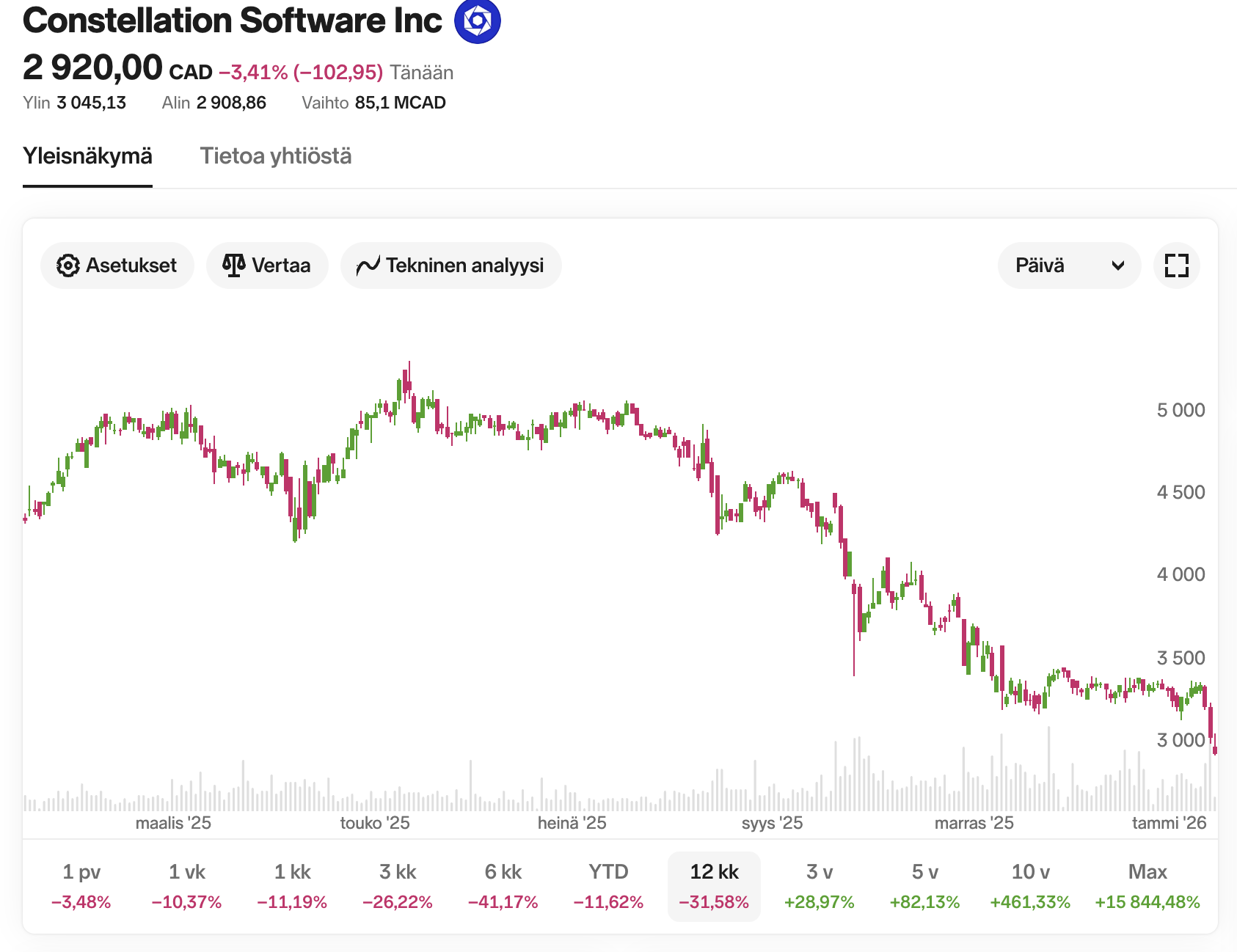
One of the most epic companies in the quality category, Constellation Software, is falling like a knife in the stock market. This is, of course, familiar to us hardened “Hesulists” (Helsinki investors), whose hands are adorned with countless scars from catching everything from kitchen knives to large machetes and full-sized spears.
I’ve estimated that the company would generate about a couple of billion dollars in free cash flow at 2025 levels. Adjusted EPS from analysts’ models is also hovering around the 100 USD, or 130 CAD, level.
The company has a couple of billion in net debt.
With 21.2 million shares plus debt, the enterprise value would be around 46 billion USD. EV/FCF 23x…

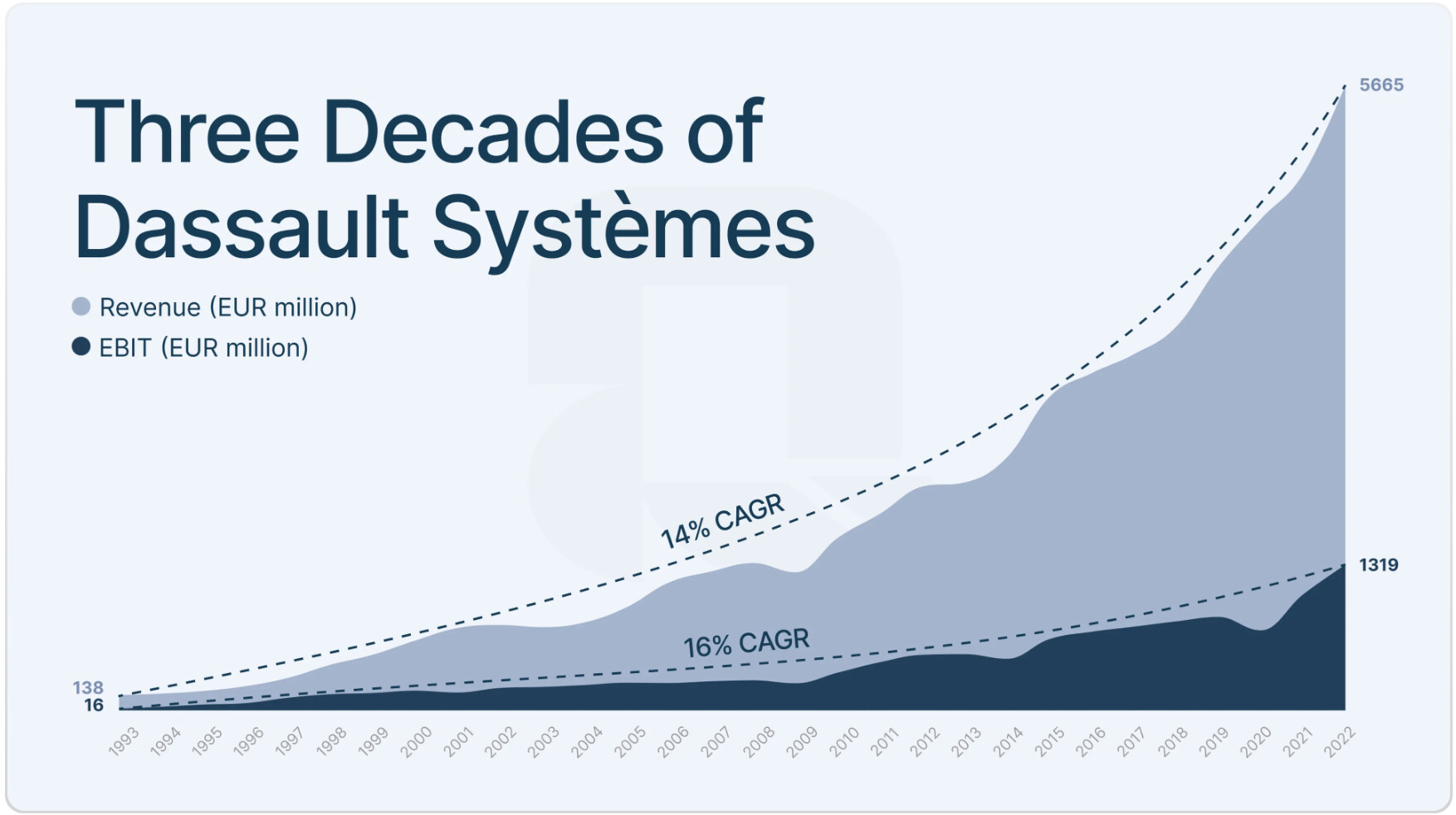
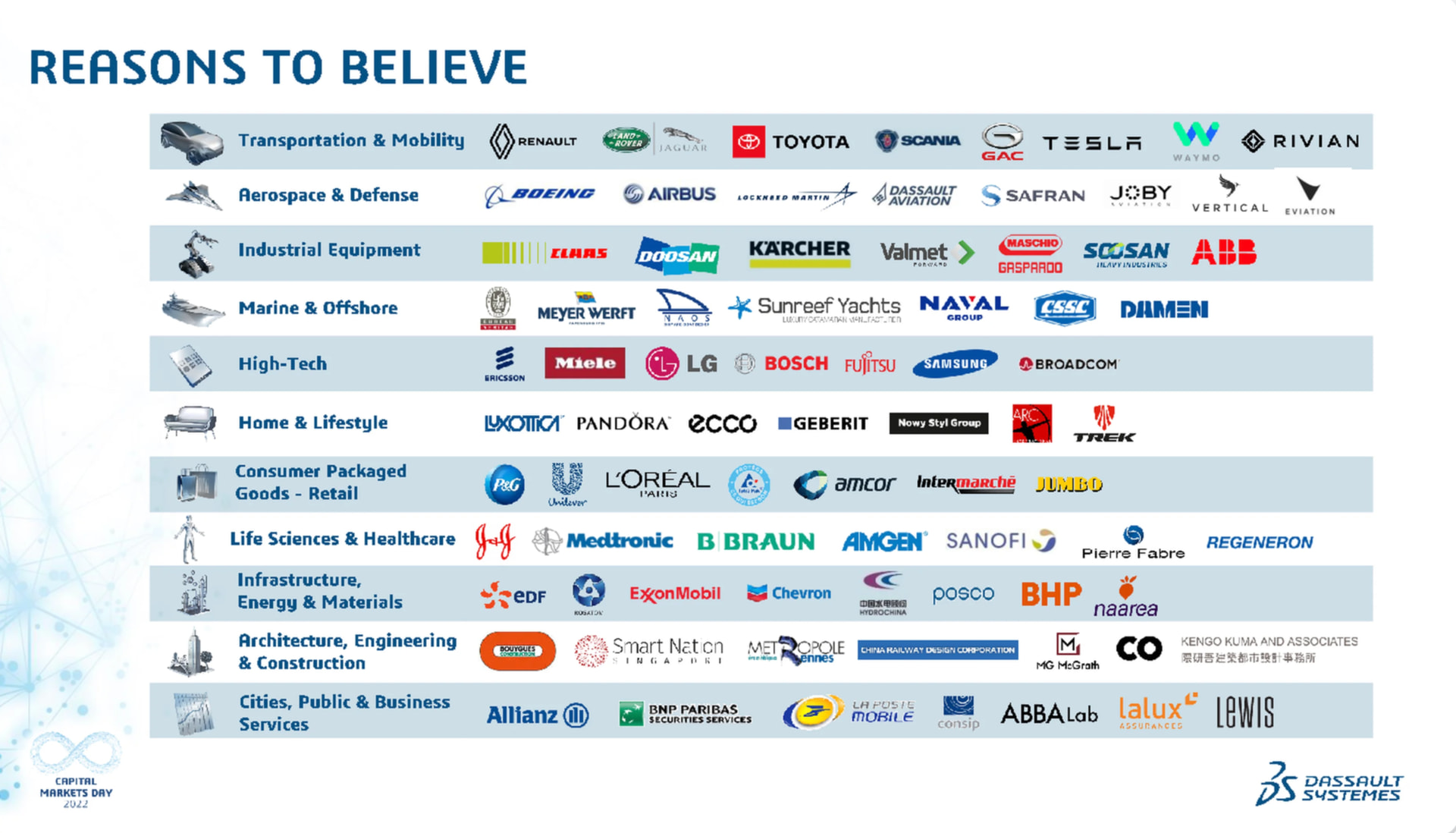
Interesting thread. I would like to highlight Dassault Systèmes here, which I consider to be of very high quality. It’s a software house for design, similar to Autodesk. The company has a strong position in, for example, the defense industry, the automotive industry, and the aerospace sector in general.
Dassault’s CAD model is an asymmetric competitive advantage where expertise, data, and processes accumulate for the customer in a way that makes switching difficult, even though getting started is relatively easy. This is typical for many software companies. However, training and such for this software takes a relatively long time, so the lock-in effect is very strong. Morningstar has assigned the company a “Wide Moat” rating, which is not easily given. This likely reflects the depth of the moats better than my own attempts to explain the source of the competitive advantages.
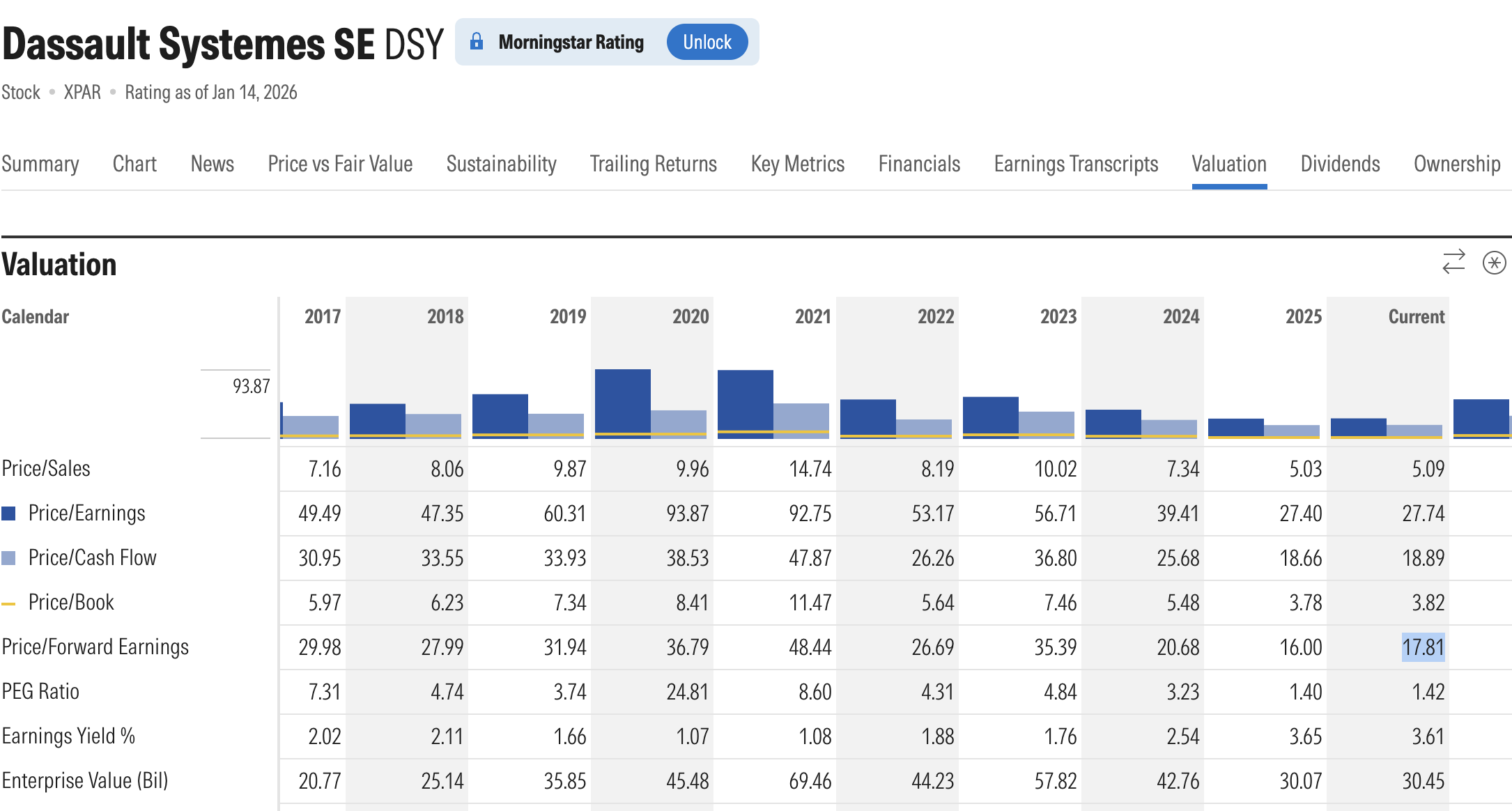
The company’s market cap is a bit over 30 billion, and free cash flow is approaching the level of approximately 1.5 billion euros. Compared to the company’s history, it’s a reasonable level to jump in. I am biased, though, as I own the company.
Quality costs. In this case, it is justified, and right now it seems you can get it with a 10-year horizon at quite reasonable multiples. Not cheap. Reasonable.