Mettler-Toledo could be added to the thread, which Sifter has also recently added to its portfolio.
Mettler-Toledo is originally a US company, but its headquarters are in Switzerland. The company is a multinational manufacturer of scales and analytical instruments and is the largest supplier of scales used in laboratory, industrial, and food retail applications. Additionally, the range includes various analytical instruments and process analytics equipment.
Slightly over half (55%) of the revenue comes from laboratory supplies, which include weighing solutions, precision scales, pipetting systems, pH meters, spectrometers, etc.
A slightly smaller portion (approx. 40%) comes from industry, including industrial scales and inspection and monitoring systems. These can be utilized, for example, in wastewater quality monitoring at water treatment plants, energy production, and solid waste processing.
The smallest business segment (approx. 5%) relates to weighing and label printing in grocery stores. This covers scales in produce departments, checkout scales, etc.
Approximately 37% of revenue comes from the USA, 21% from Western Europe, 19% from China (+ 13% from the rest of Asia), and the rest from the rest of the world.
The company is a market leader in its field. The market is otherwise fragmented. In addition to a wide product range, the company has one of the world’s largest sales and service organizations among precision instrument companies, which I believe provides at least some form of competitive advantage. The company also makes bolt-on acquisitions when necessary.
In Q4 2023, revenue and earnings decreased due to logistics delays, but this is largely expected to recover during Q1 2024. Revenue fell by 12% and adjusted EPS fell by 22% year-on-year. The company guides for 1-2% growth for this year, which is historically low. The beginning of the year is still a challenging time. Behind this is increased economic uncertainty, which makes forecasting difficult. Regarding EPS, the guidance is for 4-6% growth compared to the previous year.
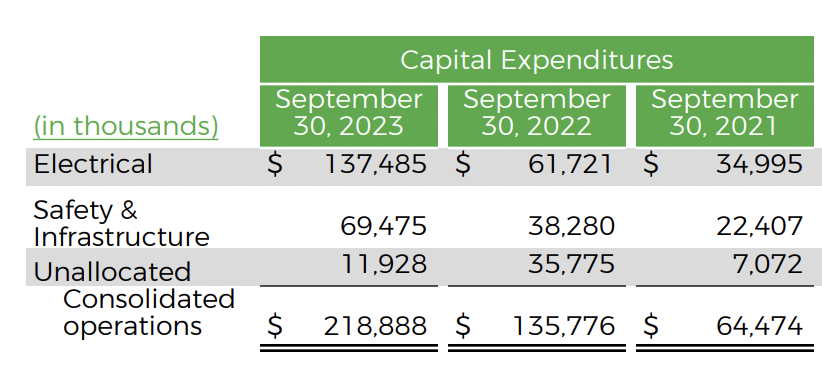
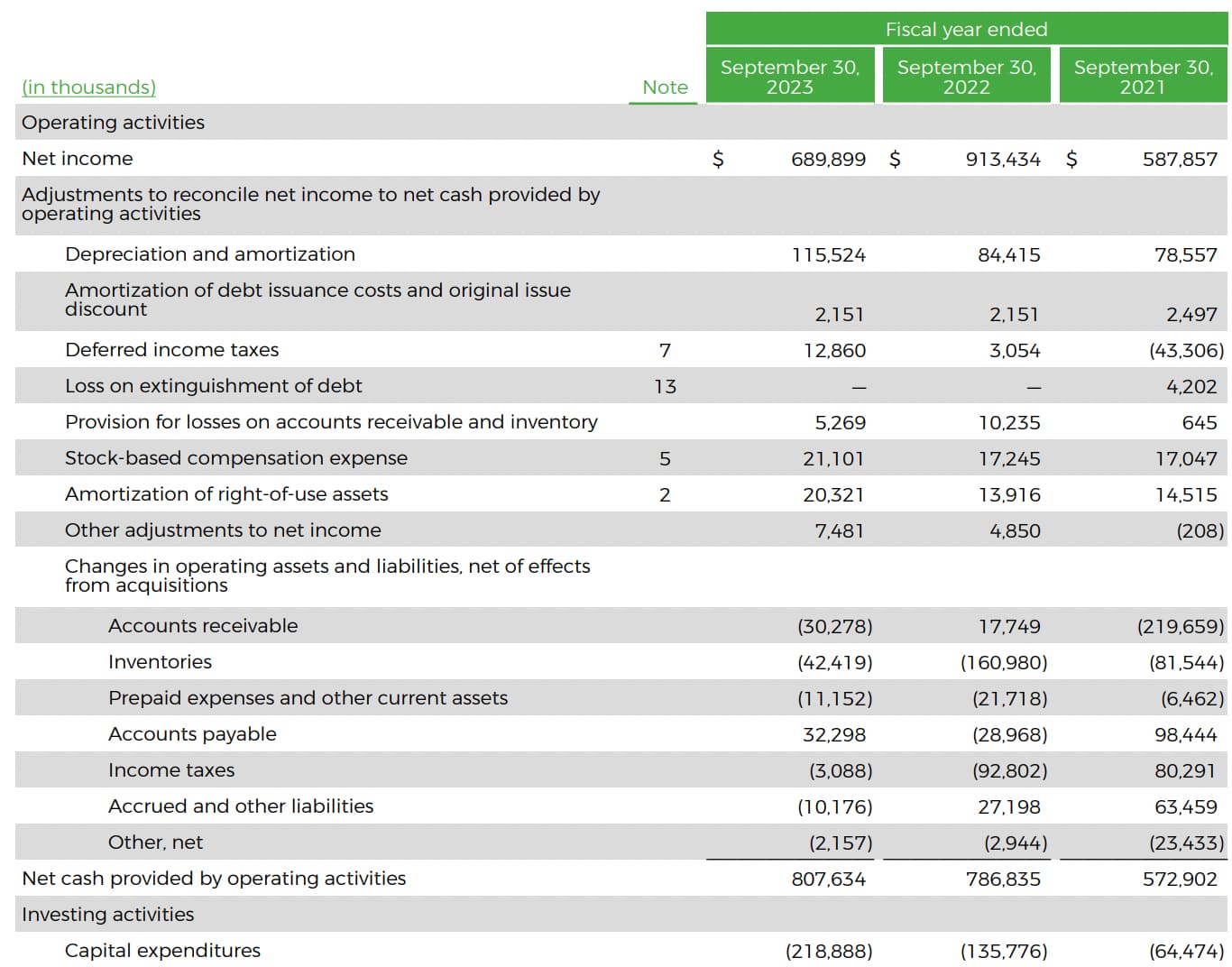
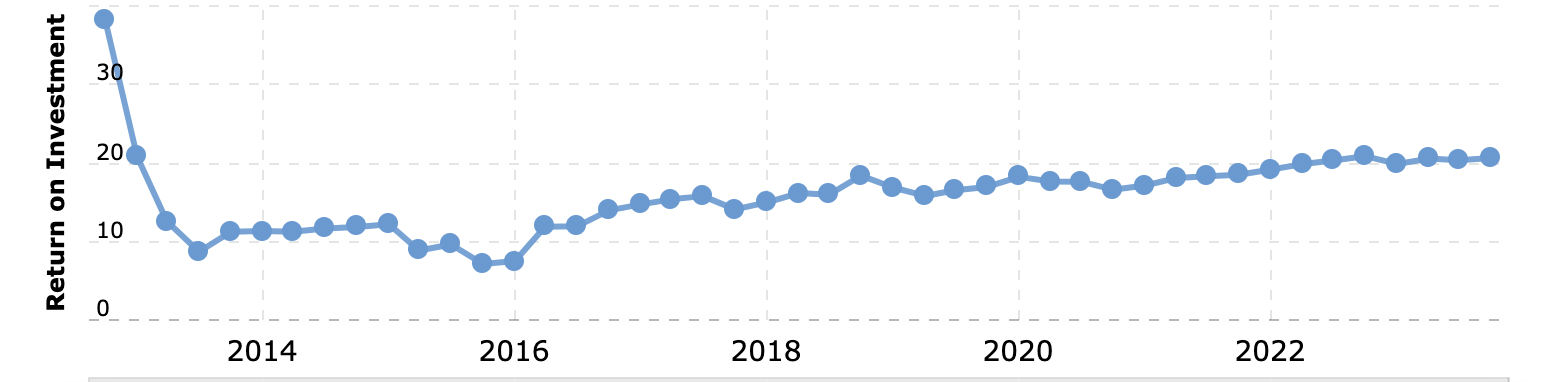
The ratio of operating cash flow to depreciation was 10.9x last year. (H. Keskiväli’s Twitter thread). Last year’s ROIC calculated from EBITA was approximately 19.0%.
Cash flow is strong and is distributed to shareholders through share buybacks.
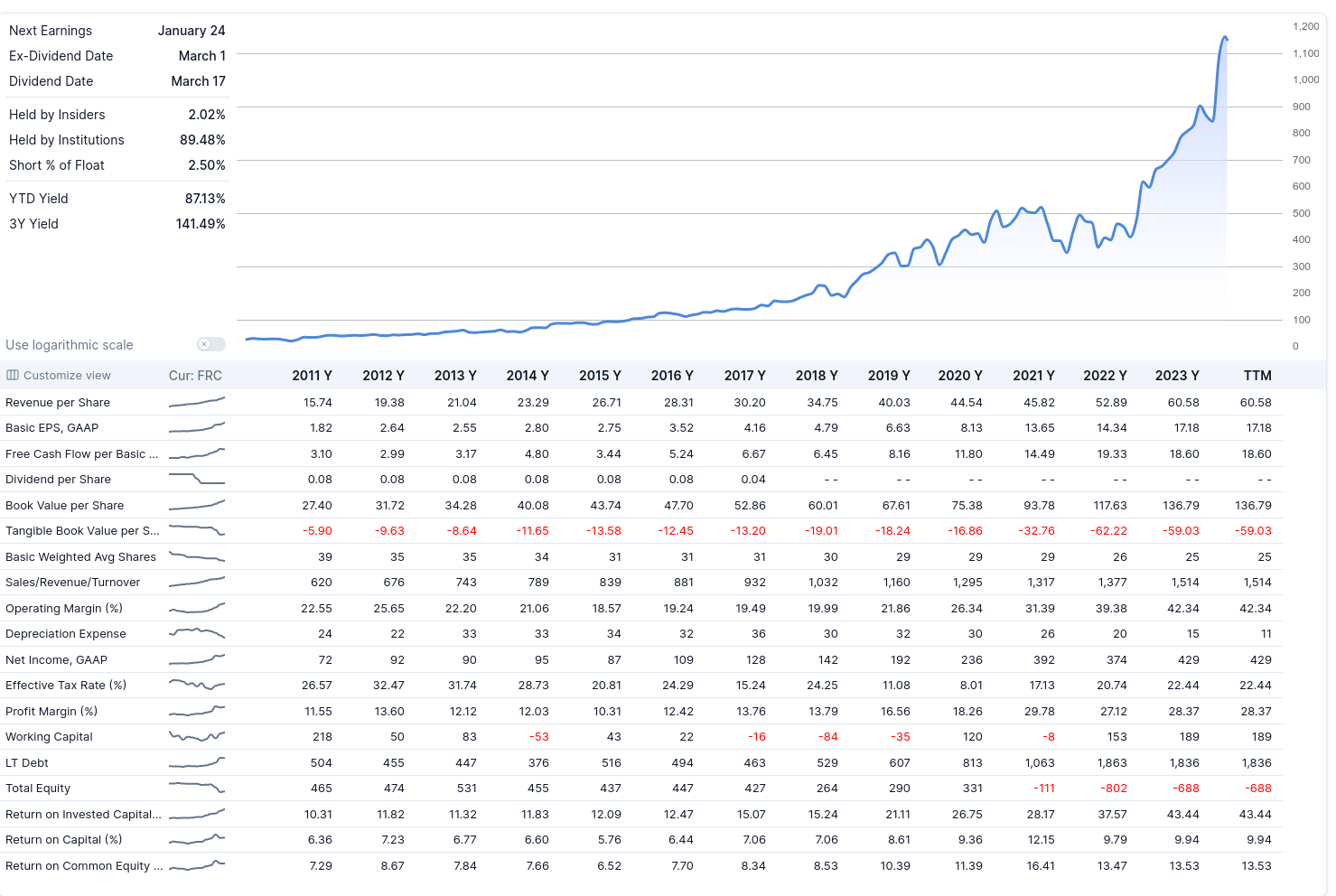
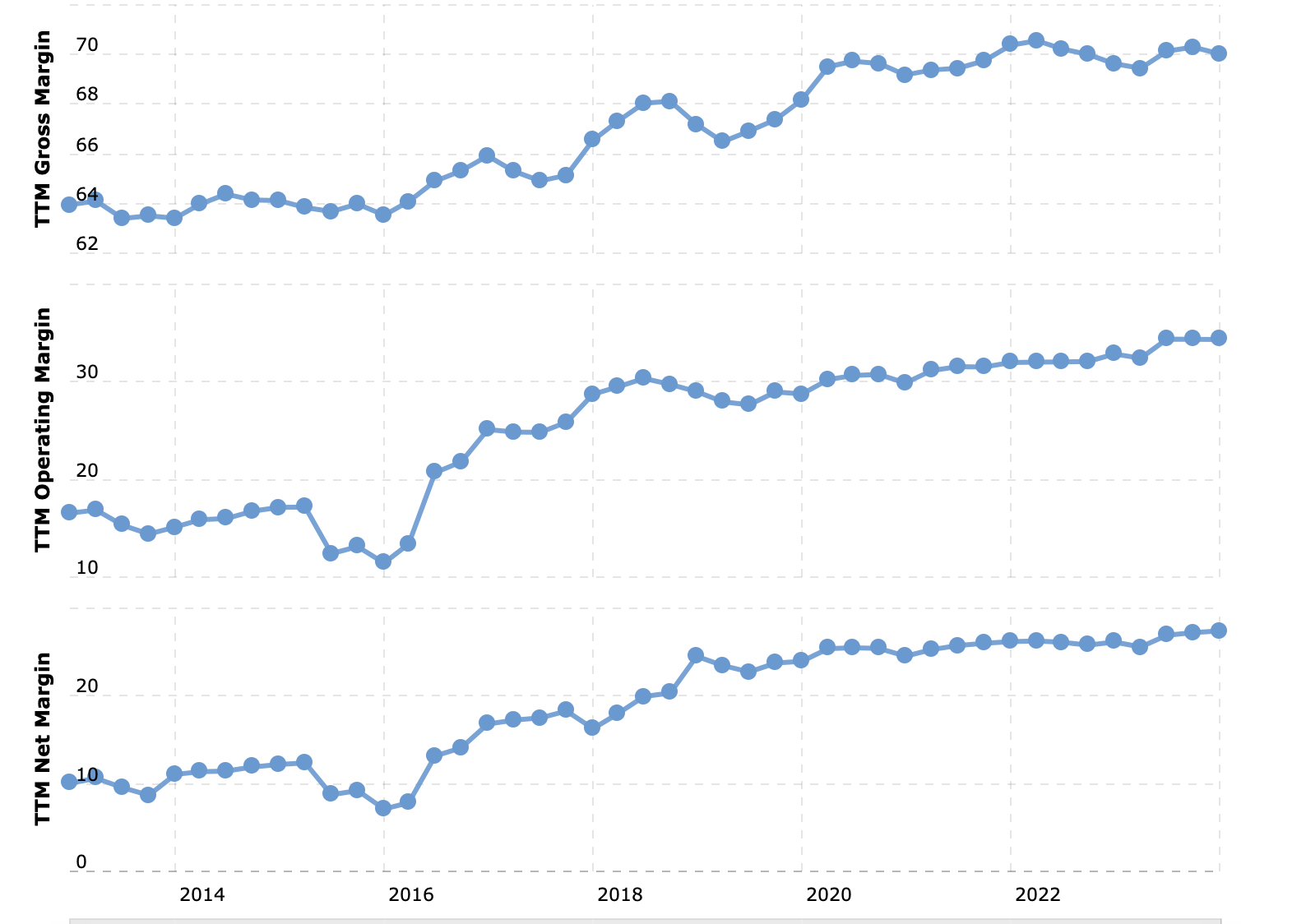
Over the last 10 years, revenue has grown (CAGR) at an average of 9.1% per year and EPS at an average of 15.2% per year. The net profit margin has fluctuated between approximately 18-22%.
Based on earnings forecasts for the coming years (2024-2026), the P/E is approx. 34x, 30x, and 26x. EV/EBITDA, on the other hand, is slightly lower: 24.6x, 22.7x, and 21.3x. FCF Yield is at the level of approx. 3%. The number of shares has decreased by a couple of percent per year as a result of buybacks.
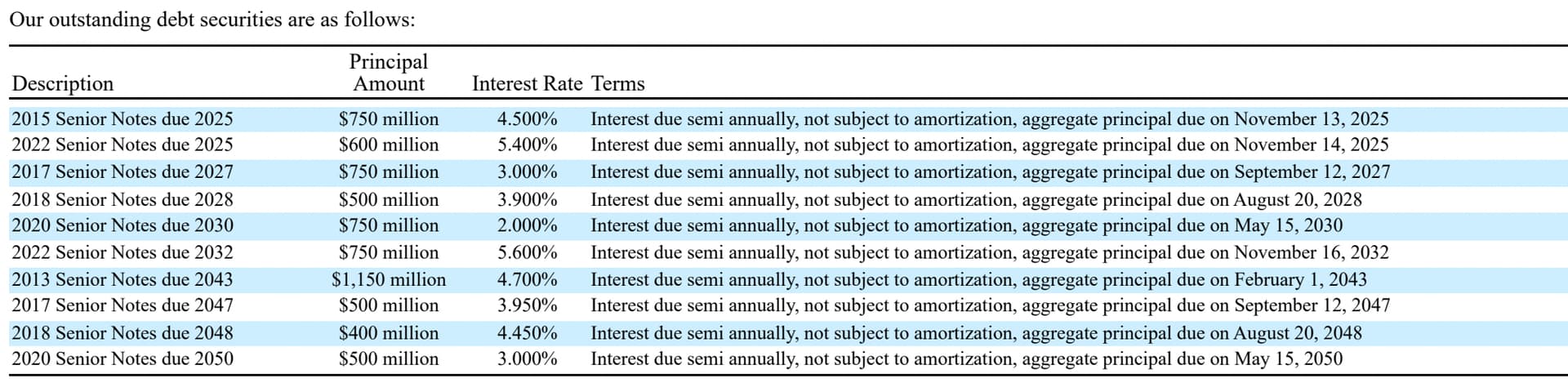
Debt is fairly moderate at approx. 1.3x EBITDA. ROIC has been above the 30% level in recent years.
However, quite a lot of growth is priced into the current stock price, and the company should be able to maintain the growth rate of recent years for the investment to be sensible at the current price.