Space as an investment

INTRODUCTION

In February, during a break between hockey games, I spent some time at Harvard Business School, where there happened to be a book launch for Space to Grow: Unlocking the Final Economic Frontier.


The topic itself hasn’t been a major interest of mine, but since it was the only somewhat interesting event on any campus and I could also satisfy the needs of a real dividend hawk, why not go and listen to what the gentlemen had to say.

Space is fascinating due to its mystique, but I’ve rarely considered it as an investment target. Previously, space technology was developed by saber-rattling states, and since then, probably for the same purpose, by billionaire men.

However, the industry has gradually commercialized and thus probably started to attract more investors. Space is infinite, so in principle, the sector’s EV/TAM (TAM = Total Addressable Market) is 0. The sector should therefore also be suitable for value investors!

INCREASING INTEREST

The book launch itself didn’t bring any mind-blowing observations and thus didn’t evoke strong emotions. However, the topic has been on my mind, for example, when the Startup Ministry did a couple of episodes on it.

And now that @Ilkka6’s post related to the topic sparked discussion…

@Heikki_Keskivali also tweeted about the topic…

https://x.com/hkeskiva/status/1914199671309840483?t=f_BNwFfWKrQqKYgkAoM33r&s=19

…and @everlaastia is also bullish

…so perhaps the topic deserves its own thread on the forum as well.

COSTS ARE DECREASING

At the book launch, it was mentioned that cash flows in many space businesses are still far in the future. My notes indicate that the cost of launching a satellite has decreased to one-hundredth over time, which naturally increases their popularity. Currently, several launches are made per week. This video illustrates the matter quite nicely.
https://www.youtube.com/shorts/JFKA2w-Xyi4
Google states that there are already over 5200 of Musk’s Starlink satellites alone.

SEGMENTS

Primarily, the sector naturally aims to produce technologies that help people. Currently, this is mainly done by satellites.

Since the sun will explode in a few billion years, at some point we will also have to leave this planet. Musk has spoken about moving to Mars initially, and once I attended a TedX event where they discussed building such a space ring, whose rotational motion would also create gravity there. They had even calculated a somewhat understandable budget for it.

However, if we stick to cash flows related to the near future, the sector currently includes, for example, the following industries:

  • Satellite manufacturing, sales, and maintenance
  • Launches
  • Communications
  • Earth observation
  • Space tourism

In the future, there could be industries such as:

  • Space debris cleanup
  • Mining
  • In-space manufacturing

COMPANIES IN THE SECTOR

Since I haven’t actually delved into this topic more than writing this, I won’t try to be any wiser but will leave their presentation to other forum members. Let the discussion begin!


36 Likes

Perhaps a comment on this, the market is expected to triple in 10 years to 1.8 trillion.

https://www.weforum.org/stories/2024/04/space-economy-technology-invest-rocket-opportunity/

Trump and his cronies naturally also cut funding from NASA. I don’t know if that then has a negative impact on the private sector.

Trump's cuts to NASA budget would slash science research in half.

The list of largest companies naturally includes the same names as from the defense sector.

6 Likes

Good topic and start to the thread! :rocket:

SpaceX_logo_black.svg

First, of course, I must mention the industry’s unlisted giant SpaceX. I’ll keep this concise, maybe more later. The company was founded in 2002 and was the first (and still practically the only) to successfully operate reusable launch vehicles in space launches. The first launch vehicle was returned intact in 2015, and the first reuse of a previously flown launch vehicle occurred in 2017. Now, the same launch vehicle has flown a record 27 times.

Last year, SpaceX accumulated 138 launches, and the company’s launch vehicles carried 84% of all mass launched from Earth into orbit (most of the remaining 16 percent were Chinese and Russian launches, so SpaceX’s market share in Western countries is even more staggering). In the space launch business, SpaceX’s workhorse is currently the Falcon 9 rocket. For crewed spaceflights, the company has the Dragon spacecraft, which is used for, among other things, crew and cargo transport to the International Space Station.

The company is also developing a much larger Starship system, which has already undergone several test flights, generally with good, albeit so far varying, success.

The company’s approach to rocket development differs from the traditional aerospace industry style, which aims to develop the most reliable solution possible on the drawing board at once and only build and test at the very end; in the development phase, SpaceX continuously builds and tests prototype versions of rockets, collects data from test flights, and modifies and refines designs based on the experience gained.

SpaceX also has a space internet subsidiary, Starlink, which provides satellite internet connections, especially in sparsely populated areas, at sea, and in other places where there is no proper fixed network or mobile phone network. The system is based on a large number of satellites orbiting the Earth in low orbit, acting like mobile base stations; currently, there are about 7100 of them.

As an unlisted American company, SpaceX is not obligated to publish financial statements or other financial data, so only third-party estimates are publicly available, according to which last year’s revenue would have been in the range of $10-15 billion, and the result narrowly profitable.

Based on private stock trades, the company’s valuation was most recently $350 billion. With this figure, it is the world’s most valuable unlisted startup company. Company founder Elon Musk owns 42% of SpaceX. Musk at least divides opinions these days. :grimacing:

Since the company is not publicly traded, it is practically inaccessible to the average private investor.

(As a curiosity, Alphabet owns ~7% of SpaceX, so with the mentioned $350 billion valuation, that ownership computationally accounts for just over one percent of Alphabet’s current market capitalization.)

10 Likes

In some thread, I previously came across a company/fund called Scottish Mortgage Investment Trust, whose largest holding, with a 7.8% stake, is SpaceX. It can be bought, for example, from Nordnet.

9 Likes

I’ve been looking into satellite operators a bit more closely for some time now. Starlink cannot be invested in, unlike Eutelsat. Eutelsat is a publicly listed operator with French-British partial ownership, whose shares can be bought at least on the Paris stock exchange.

Eutelsat has long been “under fire” from analysts and the media due to its indebtedness (and rightly so), but now, following last week’s additional investment from the French state-owned entity, that situation has fundamentally changed, and the company’s financial performance has begun to be widely trusted more by analysts and especially investors.

I believe this article is the right place for a comparison between the two main satellite operators (Starlink-Eutelsat). I got the inspiration for this comparison from how Eutelsat is often compared in uninformed media, and often by analysts, with almost completely wrong values and premises. We read in the media that Eutelsat is not capable of competing with Starlink because it has only a fraction of the satellites in space compared to Starlink (among other reasons), and the head start is so large that Eutelsat can never be a viable competitor to Starlink. This is hardly true at all, and more on that below…:

The first fundamental difference between the operators is the sector they serve. Starlink focuses on providing broadband connections to the consumer sector, and a large part (if not most) of its satellite capacity is used for this. Eutelsat does not offer broadband connections to consumers; instead, its entire satellite capacity is used for its core areas, namely military, maritime, and aviation traffic, as well as classified use by governments.

The second fundamental difference is in the coverage area of individual satellites. Starlink’s satellites are in a 600 km orbit, whereas Eutelsat’s satellites are in a 1200 km orbit. Due to the higher altitude, Eutelsat’s current 650 satellites already provide coverage equivalent to Starlink’s approximately 2000 satellites! Of course, there is some difference in latency, but not so much that it would matter to Eutelsat’s customer base. There is also some difference in connection speed in Starlink’s favor, but that is not a significant difference either.

The third difference is that Eutelsat has already piloted a 5G-level connection, and it will offer this 5G connectivity in the new digital Gen2 satellites to be delivered next year, for which Starlink has no equivalent to offer, or at least none is known yet.

Below is a bit of a table comparing them. I don’t claim these are precisely correct, but at least in terms of direction…:

1. Target Markets and Service Strategy

Feature Starlink Eutelsat / OneWeb
Primary Market Consumers, SMEs Enterprises, Governments, Aviation, Maritime, Defense
Traffic Model Shared bandwidth, “best-effort” SLA-based, closed and prioritized connections
Installation Solutions Lightweight, rapidly scalable More robust, specially equipped devices

2. Satellite Coverage and Capacity

Factor Starlink (~550 km) Eutelsat / OneWeb (~1,200 km)
Coverage Area / satellite approx. 3.1 million km² approx. 9.6 million km²
Satellites Required ~7,600 satellites (June 2025) ~650 satellites (Gen-1)
Coverage Efficiency Low (requires thousands of satellites) High (one equals approx. 3 Starlink satellites)
Network Open, for mass use Restricted, segmentable, secure

3. Technical Competitiveness: Aviation, Maritime, and Defense

Feature Starlink / Starshield Eutelsat / OneWeb
Latency 20–60 ms <70 ms
Speed 200–500 Mbps (aviation/maritime) 100–220 Mbps (Gen-1), up to 400 Mbps tested
Military Suitability USA DoD, Starshield protocols EU & France, IRIS² integration, NATO-compliant
5G-NTN Support No standardized official support Gen-2: 3GPP-compliant 5G integration (2026)

4. Conclusions

  • Media and investor comparisons erroneously emphasize only the number of satellites, completely overlooking the effects of segment targeting and orbital geometry.
  • Eutelsat is structurally optimized for B2B/B2G services and is capable of offering more sovereign solutions, especially for European and allied needs.
  • Coverage and capacity efficiency combined with 2026 Gen-2 5G compatibility can significantly elevate Eutelsat’s position in global strategic infrastructure.

Final Summary: Starlink dominates the consumer market, but Eutelsat is a viable and in some areas superior alternative in critical sectors, especially for European defense, aviation, and government needs.

8 Likes

The space business seems to be a really profitable business, and we might only be at the very beginning of conquering space?

It’s also positive that others are doing well in competition with Starlink. This bodes well for the entire industry:

2 Likes

Even though I myself have invested in several “space companies”, I only just now noticed that a sector ETF is available for this in Finland. VanEck Space Innovators UCITS ETF (ticker Jedi). It can be bought through Nordea, Nordnet, and Degiro, at least.

5 Likes

Based on a recent stock offer aimed at employee shareholders, SpaceX’s valuation would now be approximately $400 billion. The last similar one was in December with a $350 billion valuation. :face_with_monocle:

3 Likes

The UK is now also involved in Eutelsat’s funding, alongside France and the EU…

https://www.reuters.com/business/aerospace-defense/britain-invest-163-million-euros-frances-eutelsat-les-echos-reports-2025-07-10/?utm_source=chatgpt.com

Additionally, Eutelsat’s LEO satellites’ orbits, which are twice as high compared to Starlink, are now starting to receive well-deserved attention in military and public administration circles. More stable, less interrupted, and less interference-prone connections…

4 Likes

Thanks for the tip! I’ll have to look into this French Eutelsat a bit more closely.

2 Likes

Many have recently jumped on the Eutelsat rocket, so I became interested and decided to read analyses of the company. Honestly, I would personally be quite cautious about this stock, so I’m highlighting these risks here:

  1. There is a perception that due to the geopolitical situation + Europe’s desire to get its own “Starlink”, Eutelsat will receive a large number of so-called government contracts, but will this really happen? In reality, Eutelsat has already previously cooperated and continues to cooperate with several European countries, so how could this now accelerate cooperation? I’m not saying it couldn’t happen, but perhaps the upside potential is a bit exaggerated regarding additional sales. DB’s report highlights that the most concrete way European governments might support the company is through financing – and this is already being done with a share issue. So what I was left wondering is, how much additional sales can Eutelsat truly gain from this situation?

  2. Currently, Eutelsat’s government contracts account for approximately 15% of the company’s revenue, but 70% of this actually comes from the US Department of Defense (DoD). This actually poses a significant risk to the company; what if the Americans and Trumps (referring to US administration/politics) believe this is a risk to them? So, in light of the geopolitical situation, not everything is just upside potential; there are clearly also risks to revenue.

  3. Before the share issue, the company was – and still is – heavily indebted; before the issue, net debt/EBITDA was 3.9x. With the issue, this improves significantly… BUT… the company also has CAPEX requirements of 2–2.2 billion euros over the next two years, and it must be remembered that Eutelsat’s revenue is not growing, and furthermore, the business is heavily loss-making. DB predicts that the company will achieve FCFE-positive cash flow only in… 2032E !!!

In summary:

a. It is unclear if Eutelsat will generate significant revenue from the situation
b. The company is heavily indebted, loss-making, and CAPEX are high
c. Backlog was now, according to the latest information, 3.6 bln vs 3.9 bln earlier (is it growing now?)
d. On the government side, the largest customer is the US DoD
e. The capital injection from the French and British keeps the company afloat

Deutsche also has a SELL recommendation and a TP of 1.95 per share, if I remember correctly, so I admit the report is quite bearish.

9 Likes

Of course, one should be careful when investing in this, but that applies to many other things as well. However, this is not some Summa Defence. It has also been profitable and even distributed dividends previously. Now, with the LEO acquisition and investments, a lot more debt has accumulated, but as I understand it, it is still under control, especially now that governments have strongly committed to bearing financial responsibility.

Morgan Stanley has a target price of over €6, and for example, Bernstein has it at €3.7. The dispersion is high and ranges from one extreme to the other. Someone might have even had €1 (?).

The revenue share from the DoD is about 10%, so even if it ceased entirely, it would not be the end of Eutelsat. The revenue share from EU country governments is also growing and could partly compensate for the effects of a potential withdrawal by Trump.

For me, the fact that the French and UK governments own over 40% of the company and also provide funding (as we have heard) is significant and reassuring. Generally, Eutelsat is expected to turn profitable again within 2-3 years, i.e., sometime in 2027 or 2028.

2 Likes

Still related to Eutelsat’s net debt/EBITDA figure. It is not exceptionally large, especially for a company generating decent EBITDA (which Eutelsat is and will continue to be). For comparison, one could take, for example, the national company Neste’s net debt/EBITDA figure, which is over 6x. Different industries, not directly comparable to each other as such, but still give an indication of valuations. What these have in common are large government ownership stakes and also national interests to influence the success of the companies through them. I don’t know if state ownership is a stabilizing factor for Neste, but it certainly is for Eutelsat, as evidenced by the additional investments from France and the UK. When the EU’s interests in Eutelsat with Iris2 are added to this, the investment risk is, in my opinion, reasonable, especially when compared to the potential for return.

I have been invested in Eutelsat since last year and have even increased my holdings during dips in the spring and summer. Around the time of Trump’s first tariff frenzies and Zelezny’s harsh criticism becoming public, I outsourced all US stocks and other direct equity investments except Eutelsat and moved my investment assets into equity funds and interest-bearing bank accounts. Now I have cautiously returned as a shareholder for a few companies with a longer-term perspective (funding these from the realization of equity funds). However, the main part is still in interest-bearing bank accounts.

In summary, one way or another, I am involved with Eutelsat not only for profit-seeking but also because it is potentially the only real counterforce to Musk’s Starlink’s global dominance, which, if fully realized, could lead to various horror scenarios. In this way, I want to contribute my small part to the fight against Trump’s and Musk’s dictatorial power aspirations. For this reason, I also do not own US stocks – and will not own them as long as the Trump clan is in power there.

Feel free to move this elsewhere if there was too much off-topic content…

2 Likes

I’m updating my views on satellite operator Eutelsat and the EU’s IRIS² satellite project a few days before Eutelsat’s Q2 results are published.

The “deal of deals” between Von der Leyen and Trump – in which a gigantic defense procurement from the United States was promised on behalf of the EU – largely arose from German pressure and is, in my opinion, a major blow to Europe’s self-sufficiency goal. In France, this has sparked internal fury, and no wonder. Italy and some Eastern European countries (including Finland?) also support a line that tears apart EU unity.

The IRIS² project, which was supposed to be the EU’s own Starlink counterpart, now appears to be primarily a project driven by France. The situation is exacerbated by France’s own economic distress and the expectation of a government change in the autumn. The German competition authority has launched an investigation into Eutelsat’s role in the project, and messages from Germany suggest that the project is too expensive.

Amidst this, Eutelsat will publish its Q2 figures next week. Whether the result is good or bad, the company’s valuation is increasingly driven by politics – not quarterly figures.

Germany seems to be continuing its predecessor’s line: prostrate before the USA and ambiguous in its support for Ukraine. Actions are still awaited.

This is not an investment recommendation. But from my perspective, Eutelsat’s risk-reward profile changed significantly after the Von der Leyen deal. Is building “Europe’s Starlink” still genuinely possible?

4 Likes

I’ve been looking for a while for an investment target in the new space trend, but I haven’t really found a viable one. Either the valuation has gotten out of hand (Rocket Lab) or the companies are deeply unprofitable and their financial situation is challenging (Eutelsat).

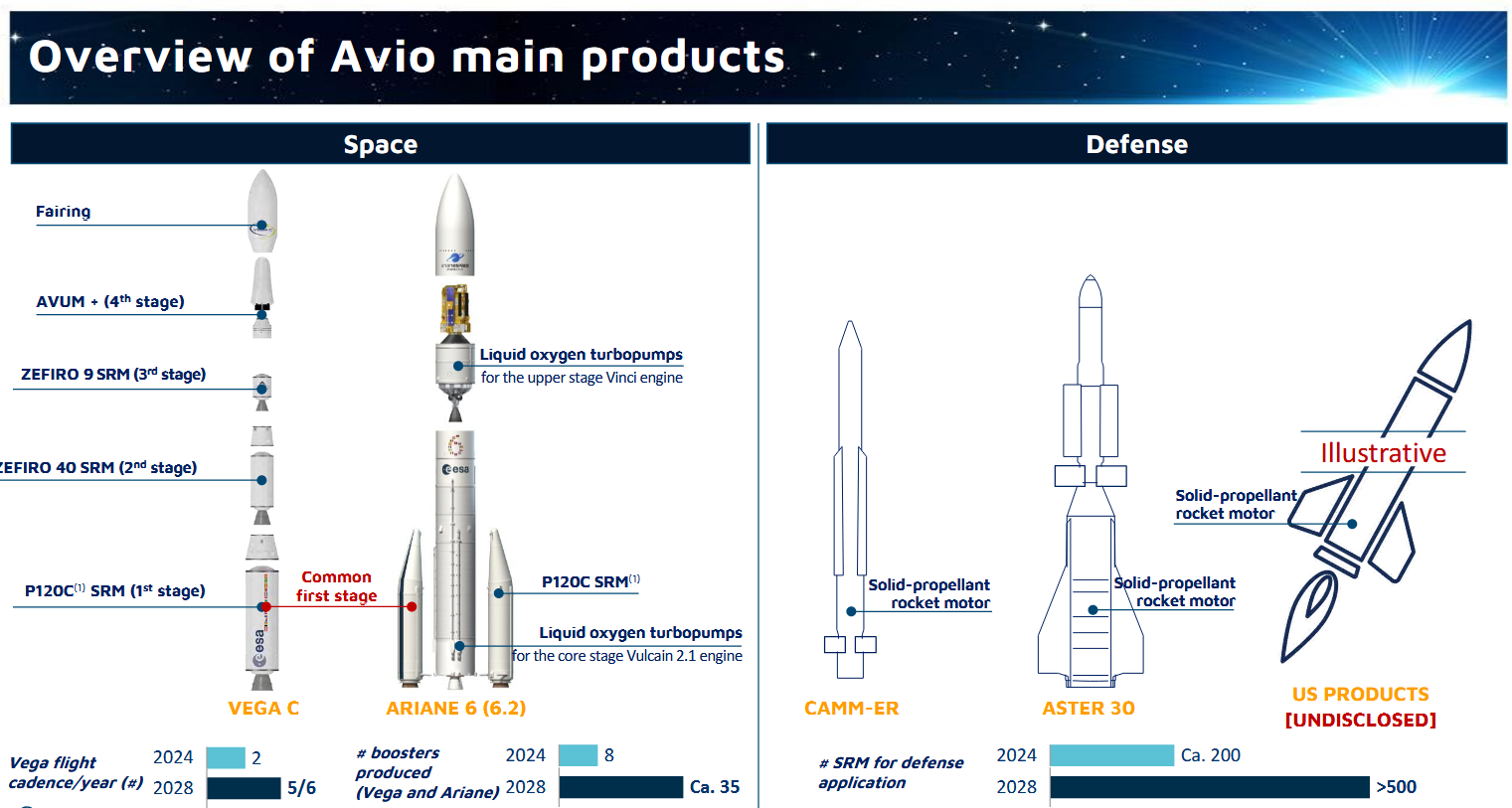
I was very surprised when I came across Avio spa’s pitch. Avio develops launch vehicles and is particularly favored by ESA.
nimetön

Thus, 86% of last year’s revenue came from the public sector and 70% from Europe.
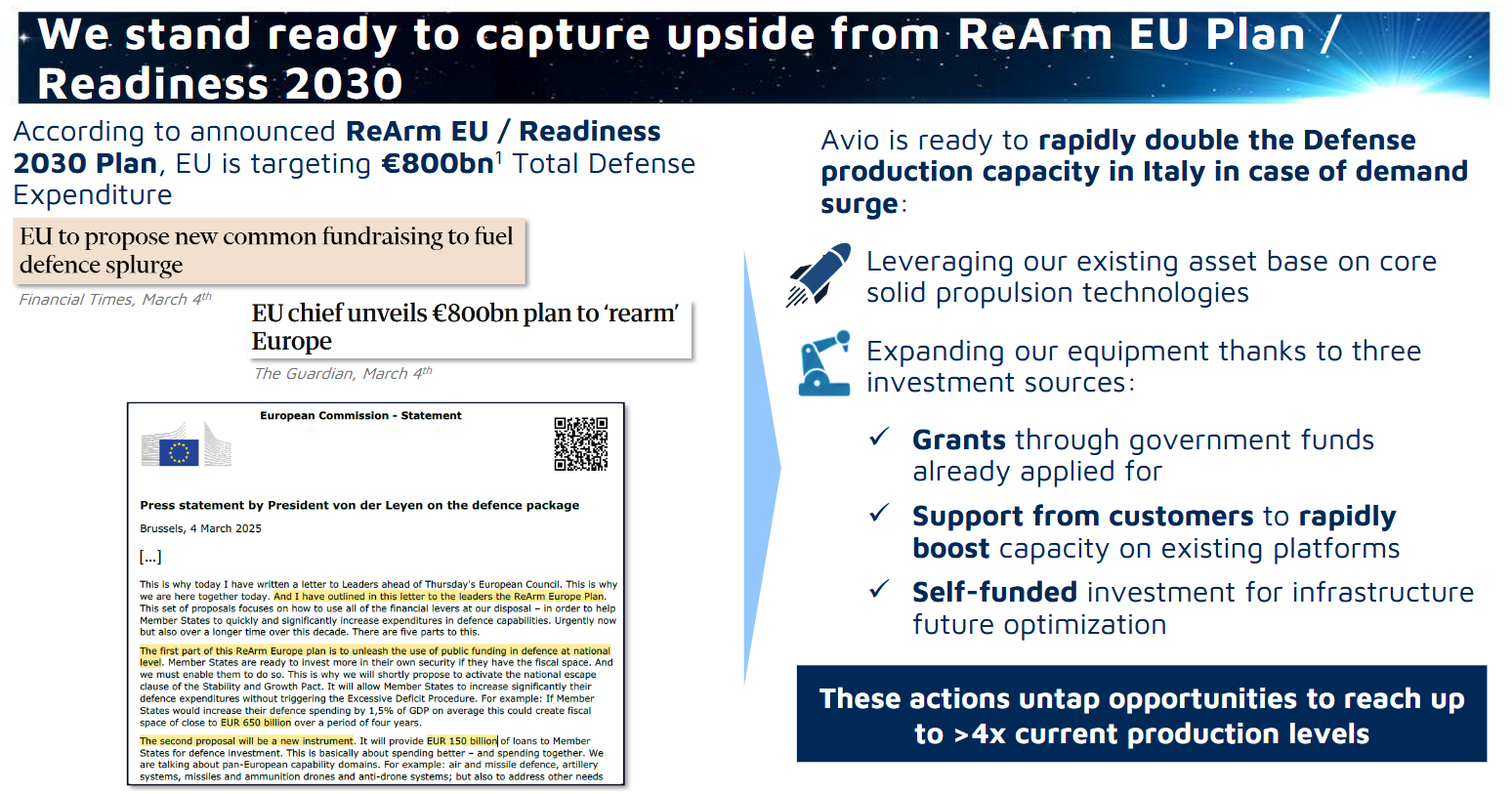
It’s understandable that the stock started to rocket in the spring when Germany and other states began opening their wallets. The company, not surprisingly, benefits from the growing budgets of both the space sector and the defense sector.

avio spa
The stock has optionality if the EU genuinely starts investing in defense.
avio spa.png222

Figures and Notes

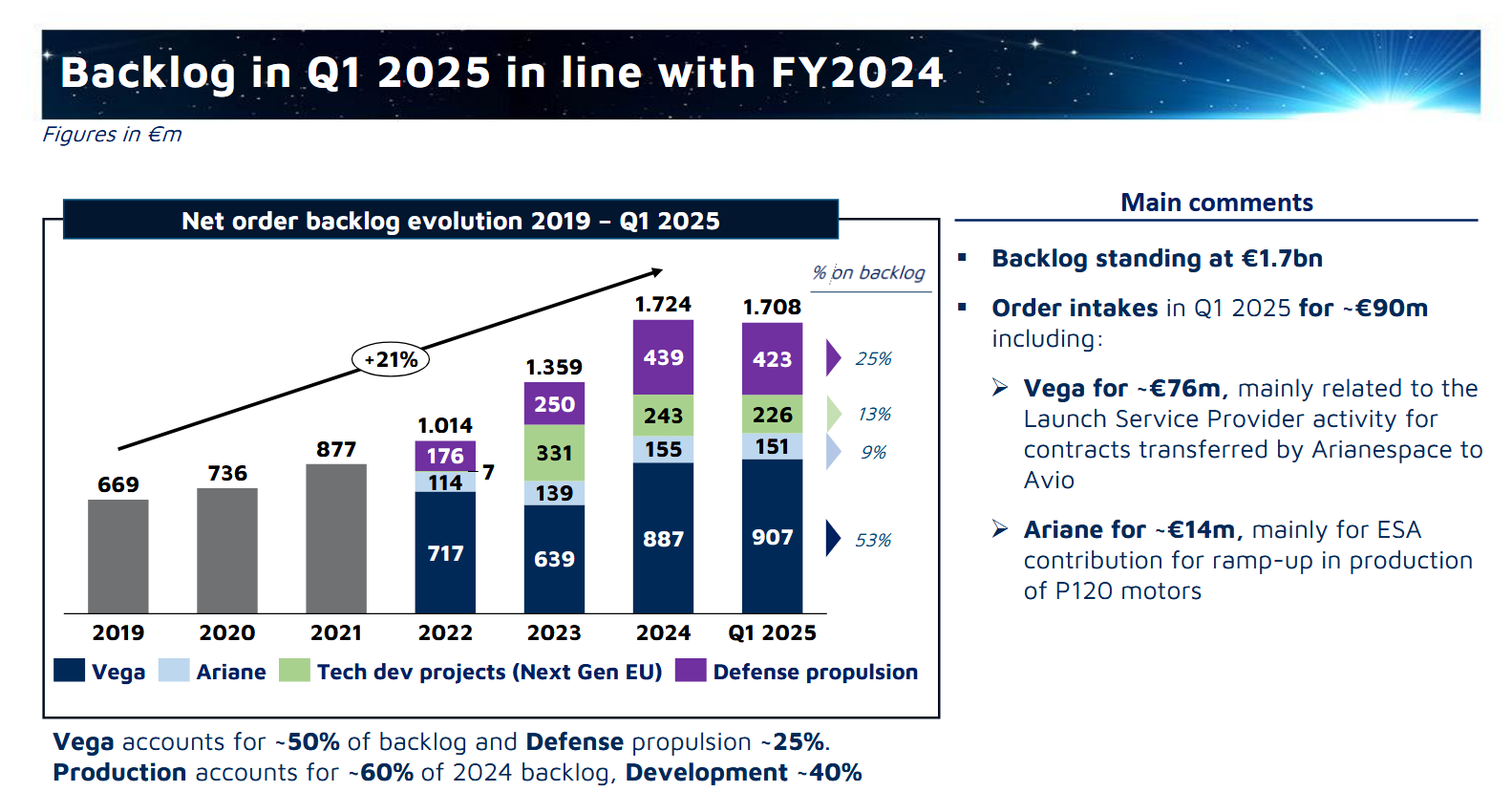
  • Order backlog: €1.7–1.8 billion (before expected state investments).
  • 2025 revenue guidance: €450–480 million.
  • Market capitalization: approx. €800 million (approx. 1× forecasted sales and 14× EBITDA).

The company has consistently generated net profit and free cash flow, which I believe is a good omen for growth. Something might even be left on the bottom line.

  • Compared to RKLB’s (Rocket Lab) 20× sales multiple, Avio is priced more as a component supplier than a core player.

In Europe, the only competitor is ArianeGroup, which also buys Avio’s boosters.

The company is also in discussions with the US government about expanding launch operations in the United States. I would gladly take this as an option that Trump might try to clip Space X’s wings, but most likely, demand is high enough that the company might find a place in the US market as well.

Behind a paywall.
https://www.bloomberg.com/news/articles/2025-07-24/italian-rocket-maker-avio-seeks-new-space-launches-in-virginia

10 Likes

I have Redwire in my portfolio, which, to put it simply, builds infrastructure for space (among other things, of course). The company generates revenue from the USA as well as Europe, especially through EDGE Autonomy, acquired in the autumn.

Access to the US Golden Dome project could be a big catalyst for the stock.

4 Likes

Didn’t seem to make it… or does anyone have information about this big drop? I didn’t have time to look into it myself :bowing_man:

Other defense industry players have also been on a downward trend for some time, at least on this side of the pond. Today, for example…

  • Eutelsat -6%
  • Leonardo - 6%
  • Thales -3%
  • Rheinmetall -6%

Could it be related in any way to Von der Leyen’s promise to Trump regarding defense equipment purchases? Leyen broke the consensus on developing EU self-sufficiency with that promise…?

Almost all of them are now at 3-month lows, and Eutelsat is also heading there…

3 Likes

The reason for Redwire’s decline is an extremely poor quarterly result and a decrease in the previously communicated full-year revenue forecast. Reflecting this, the management’s communication to investors was somewhat unethical —> I sold my entire position.

1 Like

This comment by Jesper Hagman might fit this thread. :slight_smile:

The global space industry is already worth over 600 billion dollars, and several forecasts indicate that the market could exceed the 1 trillion dollar mark in the 2030s. Growth is driven by commercial innovations and geopolitical competition, and launch services, which were previously mainly state-owned, have rapidly become a growing market for private players.

3 Likes